37 Results for "

cellular survival

" in MedChemExpress (MCE) Product Catalog:
Products (37)

37 Results for "cellular survival" in MCE Product Catalog:

97
97 Publications Verification
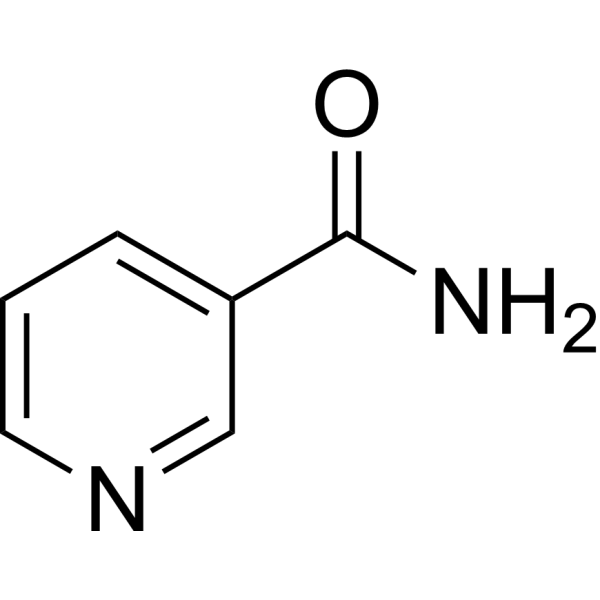
Cat. No.: HY-B0150
CAS No.: 98-92-0
Synonyms: Niacinamide; Nicotinic acid amide
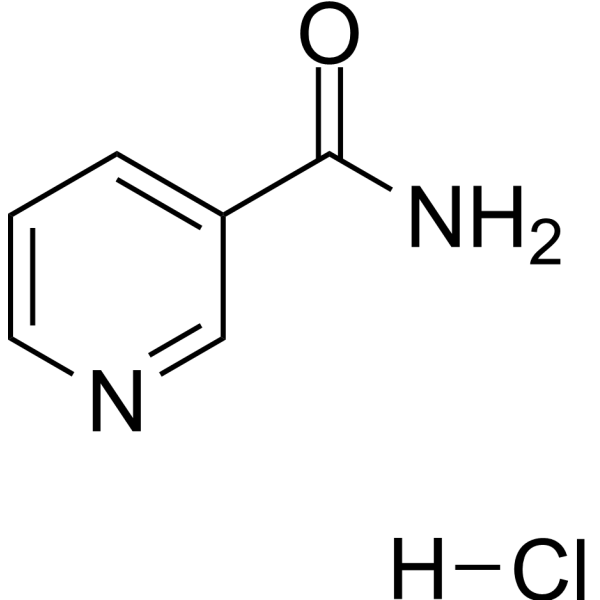
Nicotinamide is a form of vitamin B3 or niacin. Nicotinamide Hydrochloride inhibits SIRT2 activity (IC50: 2 μM). Nicotinamide also inhibits SIRT1. Nicotinamide increases cellular NAD+, ATP, ROS levels. Nicotinamide inhibits tumor growth and improves survival. Nicotinamide also has anti-HBV activity .
loading...
    loading...
19
19 Cited Publications
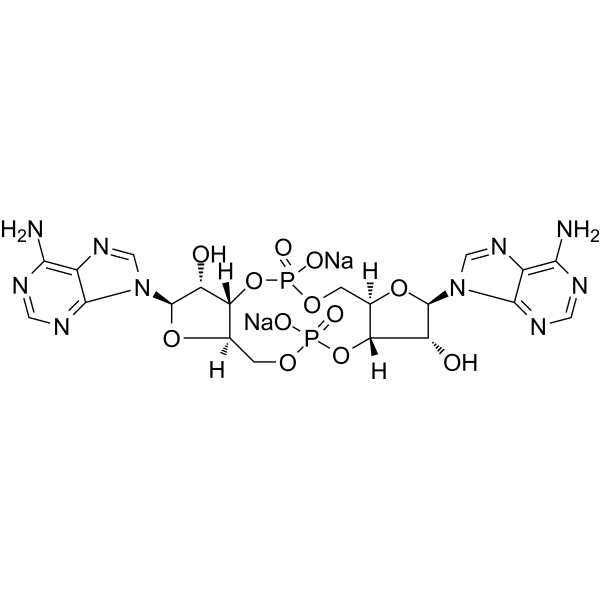
Cat. No.: HY-12326A
CAS No.: 2734909-87-4
Synonyms: Cyclic diadenylate disodium; Cyclic-di-AMP disodium
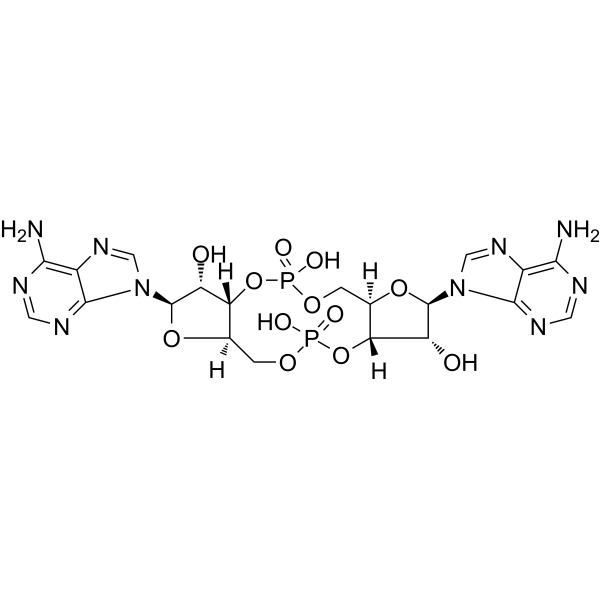
c-di-AMP (Cyclic diadenylate) sodium is a STING agonist, which binds to the transmembrane protein STING thereby activating the TBK3-IRF3 signaling pathway, subsequently triggering the production of type I IFN and TNF. c-di-AMP sodium is also a bacterial second messenger, which regulates cell growth, survival, and virulence, primarily within Gram-positive bacteria, and also regulates host immune response. c-di-AMP sodium acts as a potent mucosal adjuvant stimulating both humoral and cellular responses .
loading...
    loading...
19
19 Cited Publications
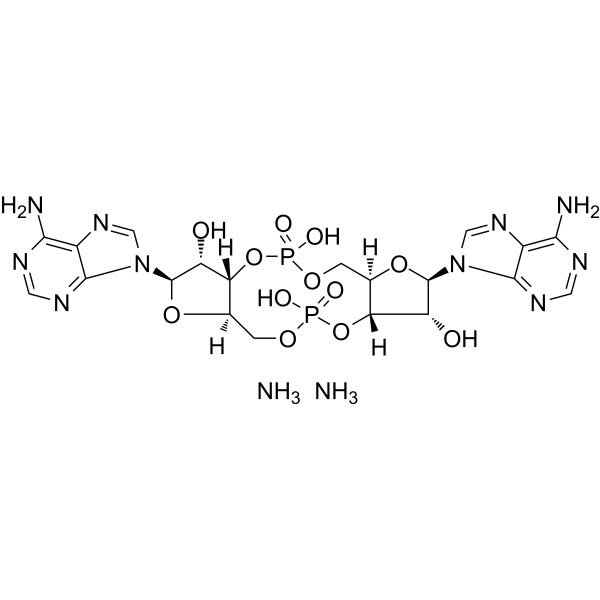
Cat. No.: HY-12326B
Purity:  99.36%
Synonyms: Cyclic diadenylate diammonium; Cyclic-di-AMP diammonium
c-di-AMP diammonium is a STING agonist, which binds to the transmembrane protein STING thereby activating the TBK3-IRF3 signaling pathway, subsequently triggering the production of type I IFN and TNF. c-di-AMP diammonium is also a bacterial second messenger, which regulates cell growth, survival, and virulence, primarily within Gram-positive bacteria, and also regulates host immune response. c-di-AMP diammonium acts as a potent mucosal adjuvant stimulating both humoral and cellular responses .
loading...
    loading...
1
1 Cited Publications
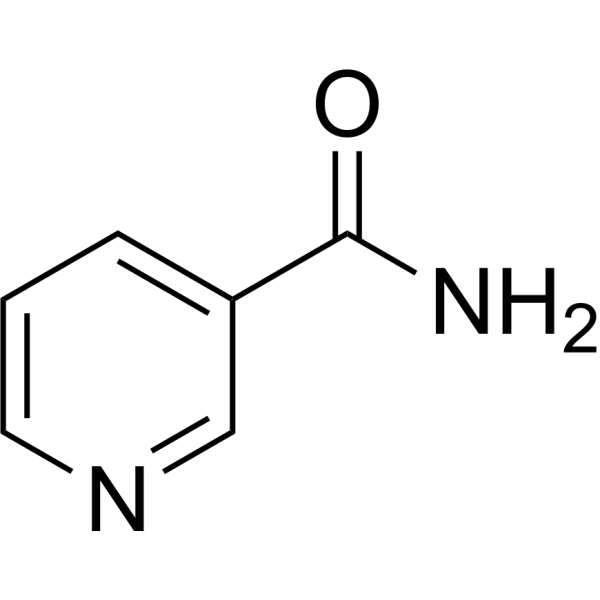
Cat. No.: HY-B0150R
CAS No.: 98-92-0
Synonyms: Niacinamide(Standard); Nicotinic acid amide (Standard)
Research Areas:  

Cancer

Nicotinamide (Standard) is the analytical standard of Nicotinamide. This product is intended for research and analytical applications. Nicotinamide is a form of vitamin B3 or niacin. Nicotinamide Hydrochloride inhibits SIRT2 activity (IC50: 2 μM). Nicotinamide also inhibits SIRT1. Nicotinamide increases cellular NAD+, ATP, ROS levels. Nicotinamide inhibits tumor growth and improves survival. Nicotinamide also has anti-HBV activity .
loading...
    loading...
Cat. No.: HY-12326
CAS No.: 54447-84-6
Synonyms: Cyclic diadenylate; Cyclic-di-AMP
c-di-AMP (Cyclic diadenylate) is a STING agonist, which binds to the transmembrane protein STING thereby activating the TBK3-IRF3 signaling pathway, subsequently triggering the production of type I IFN and TNF. c-di-AMP (Cyclic diadenylate) is also a bacterial second messenger, which regulates cell growth, survival, and virulence, primarily within Gram-positive bacteria, and also regulates host immune response. c-di-AMP (Cyclic diadenylate) acts as a potent mucosal adjuvant stimulating both humoral and cellular responses .
loading...
    loading...
Cat. No.: HY-P9983
CAS No.: 166089-32-3
Synonyms: SGN-33; HuM-195; GLK-33 Antibody
Lintuzumab (HUM-195) is an anti-CD33 humanized monoclonal antibody. Lintuzumab reduces the production of TNFα-induced pro-inflammatory cytokines and chemokines by AML cells. Lintuzumab promotes tumor cell killing through antibody-dependent cellular cytotoxicity (ADCC) and phagocytosis (ADCP) activities against MDR and MDR+ AML cell lines and primary AML patient samples. Lintuzumab enhances survival and reduces tumor burden in mice .
loading...
    loading...
Cat. No.: HY-P991149
CAS No.: 2966936-23-0
Synonyms: YH32367; ABL105

Target:  

TNF Receptor

Research Areas:  

Cancer

Nesfrotamig (YH32367; ABL105) is a bispecific activator targeting HER2 and 4-1BB. The Kd values of Nesfrotamig for human HER2 and human 4-1BB are 0.48 nM and 3.36 nM, respectively. By blocking tumor cell growth signals, activating HER2-dependent local 4-1BB in tumors to maintain T cell survival, and inducing NK cell-mediated antibody-dependent cellular cytotoxicity, Nesfrotamig enhances the cytotoxicity and tumor infiltration ability of immune cells. Nesfrotamig promotes the generation of tumor-specific memory T cells, drives T cell-mediated tumor lysis, exhibits significant anti-tumor efficacy against both HER2-positive and HER2-low-expressing tumors, and shows synergistic activity when combined with anti-PD-1 antibodies. In cynomolgus monkey studies, Nesfrotamig demonstrates good safety and is suitable for research related to HER2-positive and HER2-low-expressing tumors .
loading...
    loading...
Cat. No.: HY-N2217
CAS No.: 20137-37-5
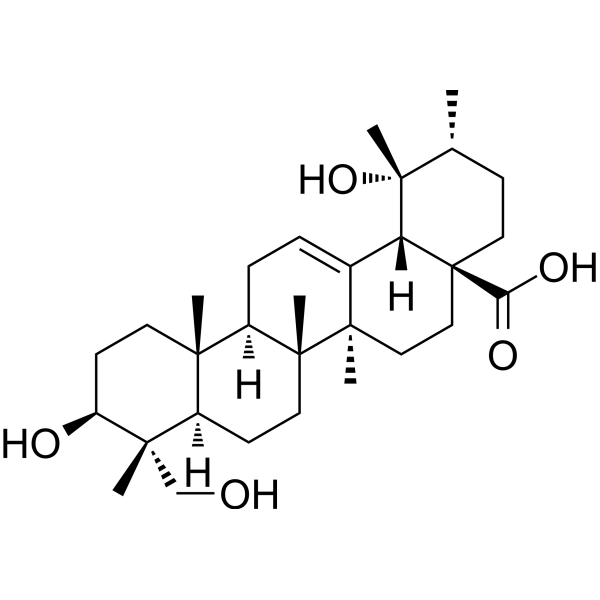
Rotundic acid is an orally effective triterpenoid with a Kd value of 51.3 µM for PTP1B. Rotundic acid downregulates the AKT/mTOR pro-survival pathway and modulates the MAPK pathway. Rotundic acid induces cell cycle S-phase arrest, DNA damage and apoptosis; it inhibits migration, invasion, angiogenesis and proliferation of cancer cells. Rotundic acid improves leptin sensitivity, regulates gut microbiota and reduces cellular senescence. Rotundic acid can be used in research related to hepatocellular carcinoma, obesity, aging, acute lung injury and type 2 diabetes .
loading...
    loading...
Cat. No.: HY-157693
CAS No.: 799268-69-2
Target:  

Endogenous Metabolite

Research Areas:  

Cancer

C18:1 Cyclic LPA is a naturally occurring analog of the growth factor-like phospholipid mediator, lysophosphatidic acid (LPA), characterized by the formation of a 5-membered ring between its sn-2 hydroxy group and the sn-3 phosphate. This unique structure allows C18:1 Cyclic LPA to influence a variety of cellular functions, such as inhibiting cell cycle progression, promoting the formation of stress fibers, curtailing tumor cell invasiveness and metastasis, and modulating the differentiation and survival of neuronal cells. Notably, many of these cellular effects elicited by C18:1 Cyclic LPA appear to counter those induced by LPA, despite the activation of seemingly similar receptor populations.
loading...
    loading...
Cat. No.: HY-175341
CAS No.: 694515-65-6
Target:  

Acyltransferase Ras Akt

Research Areas:  

Cancer

Rac1-IN-5 is a specific, reversible inhibitor of RAC1 (KD = 30 nM). Rac1-IN-5 competes with guanine nucleotides for specific binding to RAC proteins, effectively blocking RAC1 activity and RAC1-dependent cellular functions. Rac1-IN-5 exhibits anti-tumor metastasis effects in vivo and can improve survival. Rac1-IN-5 can be used to study invasive cancers such as triple-negative breast cancer and colon cancer .
loading...
    loading...
Cat. No.: HY-165099
CAS No.: 158983-53-0
C-8 Ceramide-1-phosphate is a cell apoptosis inhibitor and a cell survival inducer that can stimulate DNA synthesis and cell division. C-8 Ceramide-1-phosphate can inhibit acidic sphingomyelinase (SMase) and stimulate PI3-K, which in turn produces PIP3; PIP3 can also inhibit acidic SMase. The C-8 Ceramide-1-phosphate and ceramide can be interconverted in cells through kinase and phosphatase activity, and maintaining the balance between the two is crucial for cellular and tissue homeostasis .
loading...
    loading...
Cat. No.: HY-119715
CAS No.: 486414-35-1
Target:  

CDK Apoptosis

Research Areas:  

Inflammation/Immunology Cancer

AG-012986 is a pan-CDK inhibitor with Ki values of 44 nM (CDK1), 9.2 nM (CDK4), 94 nM (CDK2), and IC50 values of 22 nM (CDK5), 4 nM (CDK9). AG-012986 causes apoptosis of T-cells by targeting upstream kinases in the p38 Mitogen-activated protein kinase (MAPK) pathway and impairing cellular survival. AG-012986 induces cell cycle arrest, retinoblastoma protein hypophosphorylation, and reduces Ki-67 expression. AG-012986 exerts antiproliferative activity in tumor cells, demonstrates antitumor efficacy in human xenograft models, and causes retinal and peripheral neurotoxicity, plus immune cell toxicity. AG-012986 can be used for the research of colon carcinoma, non-small cell lung carcinoma, lung carcinoma, breast carcinoma, ovarian tumor, pancreatic carcinoma, osteosarcoma, lymphoma, leukemia, retinotoxicity .
loading...
    loading...
Cat. No.: HY-172741
Target:  

Drug Derivative

Research Areas:  

Metabolic Disease

Dioctanoyl PI(3,5)P2 sodium is a synthetic analog of PI(3,5)P2 (a natural phosphatidylinositol). Phosphatidylinositol phosphates (PIPs) are intracellular amphiphilic molecules implicated in numerous cellular responses including growth, division, movement, differentiation, neuro-exocytosis, and survival .
loading...
    loading...
Cat. No.: HY-P2948
CAS No.: 9026-43-1
Synonyms: Ser/Thr protein kinase
Research Areas:  

Infection

Protein serine/threonine kinase (Ser/Thr protein kinase) is a signal transduction molecule. Protein serine/threonine kinase phosphorylates specific residues on target substrates, regulates phosphorylation-dependent signal cascades, modulates cellular processes of mycobacteria, blocks phagosome-lysosome fusion, promotes meiotic maturation of Xenopus laevis (African clawed frog) oocytes, rescues the phenotype of Saccharomyces cerevisiae (budding yeast) CDC5 mutants, and exhibits cell cycle phase-specific kinase activity. Protein serine/threonine kinase maintains a tightly regulated cell cycle expression pattern, and sustains the growth and survival of mycobacteria. Protein serine/threonine kinase can be used in studies related to tuberculosis .
loading...
    loading...
Cat. No.: HY-P99759
CAS No.: 1622189-43-8
Synonyms: IL-15N72D

Target:  

Interleukin Related

Research Areas:  

Inflammation/Immunology Cancer

Nogapendekin alfa his tag is an immunostimulant that binds to the IL-2RβγC complex on immune cells. Nogapendekin alfa his tag stimulates the proliferation and activation of natural killer cells and CD8 + T cells, upregulates the expression of granzyme B and perforin, and activates the innate and adaptive immune branches. Nogapendekin alfa his tag forms ALT-803 with IL-15RαSuFc; this complex has an extended biological half-life, improved biodistribution and retention in lymphoid tissues, enhances natural killer cell-mediated rituximab-dependent cellular cytotoxicity, and reduces tumor burden and improves survival when combined with anti-CD20 monoclonal antibody therapy. Nogapendekin alfa his tag can be used in the research of non-Hodgkin's lymphoma .
loading...
    loading...
Cat. No.: HY-E70625
Target:  

Casein Kinase

Research Areas:  

Cancer

Casein Kinase 2 (CK2) is a serine/threonine protein kinase that is highly conserved among eukaryotes and has roles in many different cellular processes, such as cell survival, cell cycle regulation, cell polarity, stress responses, transcription and translation .
loading...
    loading...
Cat. No.: HY-125197
CAS No.: 2446154-91-0
Target:  

Autophagy

Research Areas:  

Inflammation/Immunology

BRD5631 is an autophagy enhancer, enhances autophagy through an mTOR-independent pathway. BRD5631 affects several cellular disease phenotypes previously linked to autophagy, including protein aggregation, cell survival, bacterial replication, and inflammatory cytokine production .
loading...
    loading...
Cat. No.: HY-120434
CAS No.: 949963-04-6
Synonyms: HGS1029
Target:  

IAP

Research Areas:  

Cancer

AEG40826 (HGS1029), a second mitochondria-derived activator of caspases (SMAC) mimetic, is an inhibitor of apoptosis (IAP) inhibitor. AEG40826 degrades cellular IAP1 (cIAP1) and blocks TNF-α pro-survival signaling. AEG40826 can be used for cancer research .
loading...
    loading...
Cat. No.: HY-B0150A
CAS No.: 25334-23-0
Synonyms: Niacinamide hydrochloride; Nicotinic acid amide hydrochloride
Nicotinamide hydrochloride is a form of vitamin B3 or niacin. Nicotinamide hydrochloride inhibits SIRT2 activity (IC50: 2 μM). Nicotinamide hydrochloride also inhibits SIRT1. Nicotinamide hydrochloride increases cellular NAD+, ATP, ROS levels. Nicotinamide hydrochloride inhibits tumor growth and improves survival. Nicotinamide hydrochloride also has anti-HBV activity .
loading...
    loading...
Cat. No.: HY-W012856
CAS No.: 620-14-4
Synonyms: 3-Methylethylbenzene
3-Ethyltoluene (3-Methylethylbenzene) is an isomer of Ethyltoluenes. 3-Ethyltoluene inhibits cell survival and proliferation and increases ROS production. 3-Ethyltoluene upregulates cellular inflammatory gene expression. 3-Ethyltoluene induces cell fibrosis with increased level of AST, FGF-23, Cyt-7 p21, TGFβ, TIMP2, and MMP2. 3-Ethyltoluene can be used for liver diseases such as NAFLD research .
loading...
    loading...

