1. Search Result
Search Result
Results for "

corneal angiogenesis

" in MedChemExpress (MCE) Product Catalog:

9

Inhibitors & Agonists

2

Biochemical Assay Reagents

2

Peptides

Cat. No. 상품명 Target 연구분야 Chemical Structure
  • HY-B0633D

    CD44 Endogenous Metabolite Bacterial Akt PI3K Neurological Disease Metabolic Disease Inflammation/Immunology Cancer
    Hyaluronic acid sodium (MW 200-1560) is a biopolymer composed of repeating disaccharide units, with a molecular weight of 200-1560. Hyaluronic acid sodium is a major component of the extracellular matrix (ECM). It is synthesized on the plasma membrane. Hyaluronic acid sodium exerts its effects by binding to receptors CD44 and RHAMM. Hyaluronic acid sodium activates PI3K-Akt signaling. Hyaluronic acid sodium also enhances cell invasion and angiogenesis by promoting or stimulating the binding of proteolytic MMP-9 to the cell surface. Elevated hyaluronic acid levels are associated with tumor cell growth, adhesion, migration, invasion, and angiogenesis in digestive system cancers. Hyaluronic acid sodium is involved in tissue remodeling and rapid cell proliferation in several physiological processes, including embryonic morphogenesis and wound healing. Hyaluronic acid sodium can be used as a regulator of cancer-associated lymphangiogenesis. Hyaluronic acid sodium can be used as a drug delivery carrier for sodium butyrate, enhancing its anti-proliferative activity against breast cancer cell lines. Hyaluronic acid sodium can lubricate the corneal endothelium. Hyaluronic acid sodium can improve tissue hydration and enhance the resistance of cells to mechanical damage. Hyaluronic acid sodium has been conjugated with antibodies to ensure that the active compound continues to exert its effects at the site of inflammation. Hyaluronic acid sodium can be used in research in the fields of osteoarthritis, ophthalmology, cosmetic dermatology, oncology, and liver diseases .
    Hyaluronic acid sodium (MW 200-1560)
  • HY-B0633E

    Hyaluronan, low endotoxin; Hyaluronate, low endotoxin

    Endogenous Metabolite CD44 Bacterial Akt PI3K Neurological Disease Metabolic Disease Inflammation/Immunology Cancer
    Hyaluronic acid, low endotoxin (Hyaluronan, low endotoxin) is a biopolymer composed of repeating disaccharide units containing low levels of endotoxin. Hyaluronic acid is a major component of the extracellular matrix (ECM). It is synthesized on the plasma membrane. Hyaluronic acid exerts its effects by binding to receptors CD44 and RHAMM. Hyaluronic acid activates PI3K-Akt signaling. Hyaluronic acid also enhances cell invasion and angiogenesis by promoting or stimulating the binding of proteolytic MMP-9 to the cell surface. Elevated hyaluronic acid levels are associated with tumor cell growth, adhesion, migration, invasion, and angiogenesis in digestive system cancers. Hyaluronic acid is involved in tissue remodeling and rapid cell proliferation in several physiological processes, including embryonic morphogenesis and wound healing. Hyaluronic acid can be used as a regulator of cancer-associated lymphangiogenesis. Hyaluronic acid can be used as a drug delivery carrier for sodium butyrate, enhancing its anti-proliferative activity against breast cancer cell lines. Hyaluronic acid can lubricate the corneal endothelium. Hyaluronic acid can improve tissue hydration and enhance the resistance of cells to mechanical damage. Hyaluronic acid has been conjugated with antibodies to ensure that the active compound continues to exert its effects at the site of inflammation. Hyaluronic acid can be used in research in the fields of osteoarthritis, ophthalmology, cosmetic dermatology, oncology, and liver diseases .
    Hyaluronic acid, low endotoxin
  • HY-116116

    SIM010603

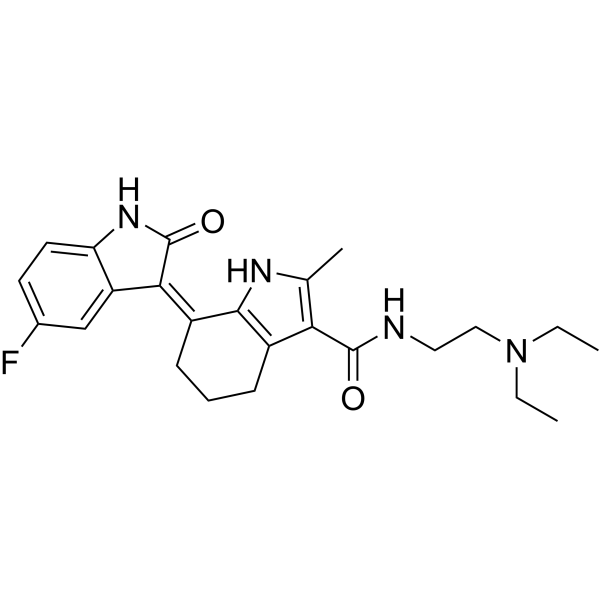
    c-Kit RET VEGFR Cancer
    Tafetinib (SIM010603) is an oral multi-targets receptor tyrosine kinases inhibitor. Tafetinib inhibitsstem cell factor receptor (Kit),vascular endothelial growth factor receptor-2 (VEGFR-2),platelet-derived growth factor receptor-β (PDGFR-β),glial cell line-derived neurotrophic factor receptor (Rearranged during Transfection; RET), andFms-like tyrosine kinase-3 (FLT3)withIC50values between 5.0 and 68.1 nmol/l. Tafetinib inhibits the phosphorylation ofPDGFR-βandVEGFR-2. Tafetinib inhibits endothelial cell proliferation, endothelial cells chemotaxis, and corneal angiogenesis .
    Tafetinib
  • HY-131420

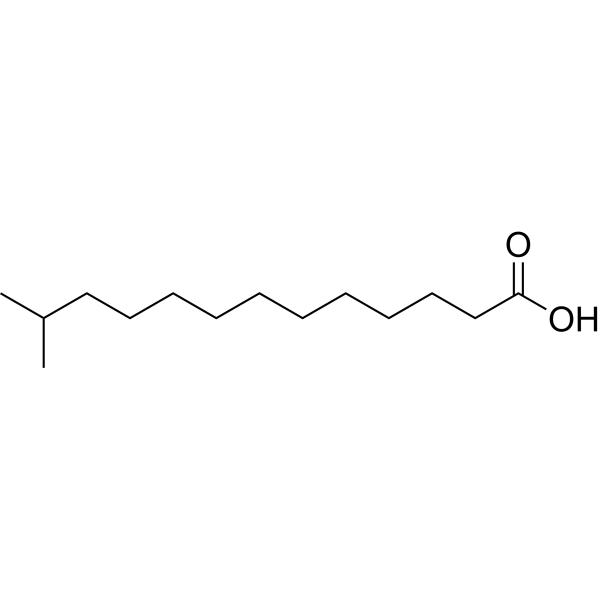
    Aseanostatin P1; Isotetradecanoic acid

    Biochemical Assay Reagents Others
    12-Methyltridecanoic acid is a methylated fatty acid that has been found in milk. 12-Methyltridecanoic acid (200 μM) reduces angiogenesis and corneal opacity in alkaline or Pseudomonas aeruginosa-induced ocular mouse models.
    12-Methyltridecanoic acid
  • HY-123639

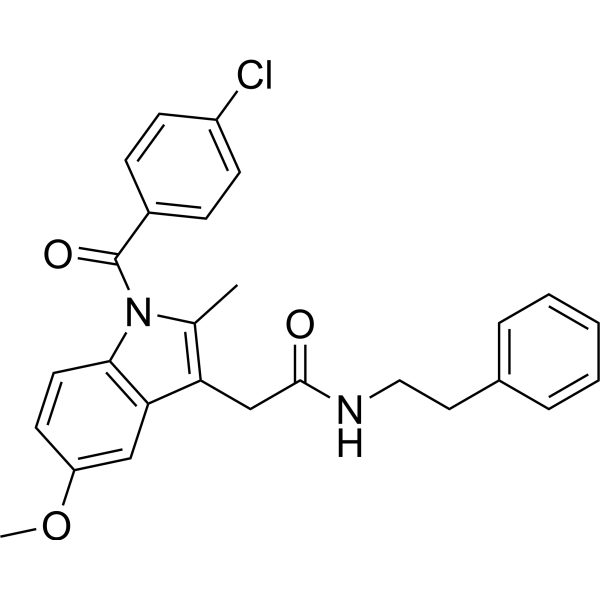
    N-(2-Phenylethyl)-indomethacin amide

    COX Inflammation/Immunology Cancer
    LM-4108 (N-(2-Phenylethyl)-indomethacin amide) is a selective and orally active COX-2 inhibitor with an IC50 of 0.06 μM for purified human COX-2. LM-4108 shows anti-inflammatory activity and may be effective in prevention of cancer. Half-lives for the disappearance of 10 μM LM-4108 in rat, human, and mouse liver microsomes were 11 min, 21 min, and 51 min, respectively .
    LM-4108
  • HY-164525

    SC-81490; PF-02881307

    MMP Cancer
    SD-7300 (SC-81490) is an orally active inhibitor of MMP-2, MMP-9, and MMP-13 with Ki values ??of 0.03, 0.01, and 0.03 nM, respectively. SD-7300 can reduce the degradation of extracellular matrix by tumor cells, thereby inhibiting the invasion and metastasis of tumor cells. In addition, SD-7300 is also a dose-dependent inhibitor of mouse corneal angiogenesis and an inhibitor of interleukin-1-induced bovine cartilage degradation. SD-7300 can be used in breast cancer research .
    SD-7300
  • HY-123864

    S 448

    Integrin Cardiovascular Disease Cancer
    SC-68448 (S 448) is a selective αvβ3 antagonist (IC50 = 1 nM). SC-68448 inhibits αvβ3-mediated endothelial cell proliferation. SC-68448 reduces the total level of αvβ6 in NHBE cells. SC-68448 inhibits angiogenesis in a rat corneal neoplasia model. SC-68448 inhibits tumor growth and completely prevents the development of hypercalcemia in a rat Ledich cell tumor model. SC-68448 can be used in research on cardiovascular and cerebrovascular diseases such as hypercalcemia and cancers such as testicular interstitial cell tumors .
    SC-68448
  • HY-P11775A

    VEGFR Cardiovascular Disease
    Peptide HRH acetate is a polypeptide that specifically binds to VEGF receptors. Peptide HRH acetate inhibits VEGF-stimulated endothelial cell proliferation. Peptide HRH acetate inhibits angiogenesis and suppresses corneal neovascularization. Peptide HRH acetate can be used in anti-angiogenesis related studies .
    Peptide HRH acetate
  • HY-P11775

    VEGFR Cardiovascular Disease
    Peptide HRH is a polypeptide that specifically binds to VEGF receptors. Peptide HRH inhibits VEGF-stimulated endothelial cell proliferation. Peptide HRH inhibits angiogenesis and suppresses corneal neovascularization. Peptide HRH can be used in anti-angiogenesis related studies .
    Peptide HRH

온라인 문의

Your information is safe with us. * Required Fields.

호칭


Country or Region *

고객명 *


회사명 *

Department *


메일주소 *


상품명 *

Cat. No.


Requested quantity *

전화번호 *


비고

온라인 문의

Inquiry Information

상품명:
Cat. No.:
수량:
MCE Japan Authorized Agent:

