33 Results for "

cucurbitacin

" in MedChemExpress (MCE) Product Catalog:
Products (33)

33 Results for "cucurbitacin" in MCE Product Catalog:

13
13 Publications Verification
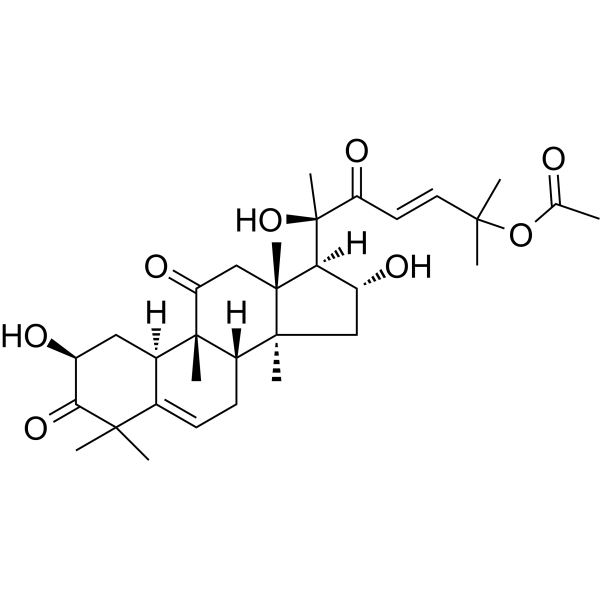
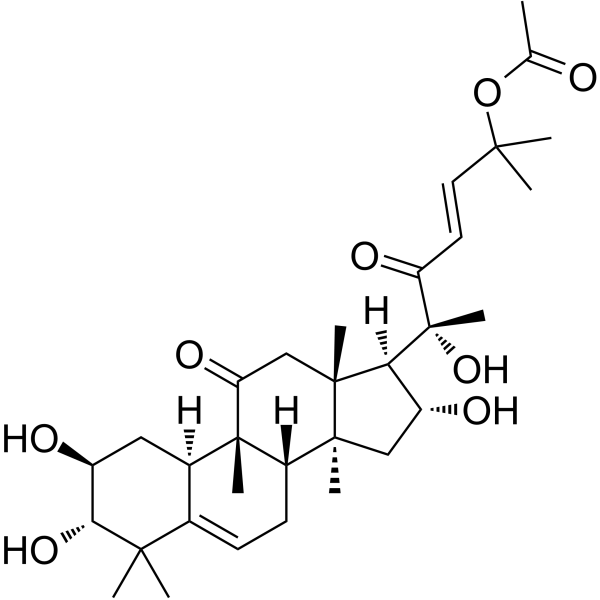
Cat. No.: HY-N0416
CAS No.: 6199-67-3
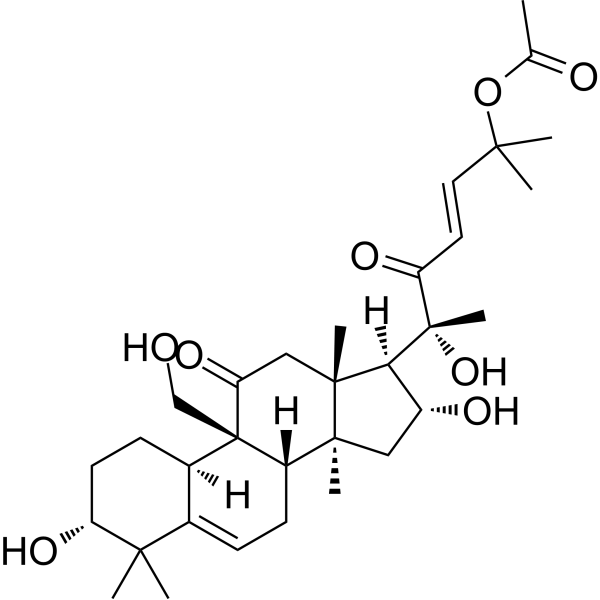
Cucurbitacin B belongs to a class of highly oxidized tetracyclic triterpenoids and is oral active. Cucurbitacin B inhibits tumor cell growth, migration and invasion and cycle arrest, but induces cell apoptosis. Cucurbitacin B has potent anti-inflammatory, antioxidant, antiviral, hypoglycemic, hepatoprotective, neuroprotective activity .
loading...
    loading...
13
13 Publications Verification
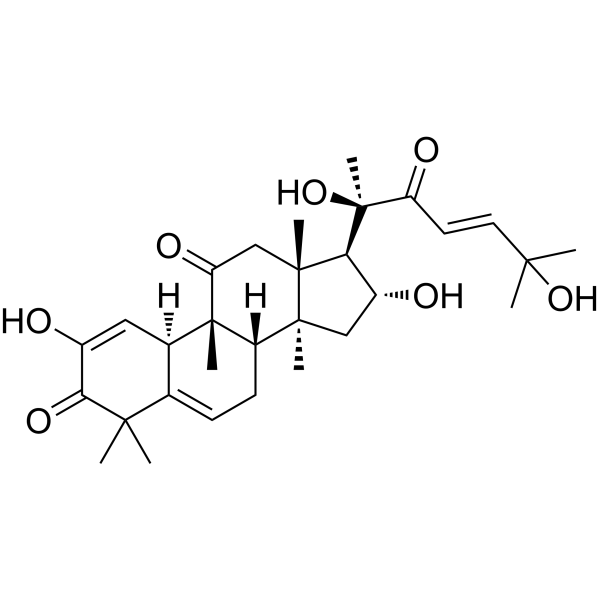
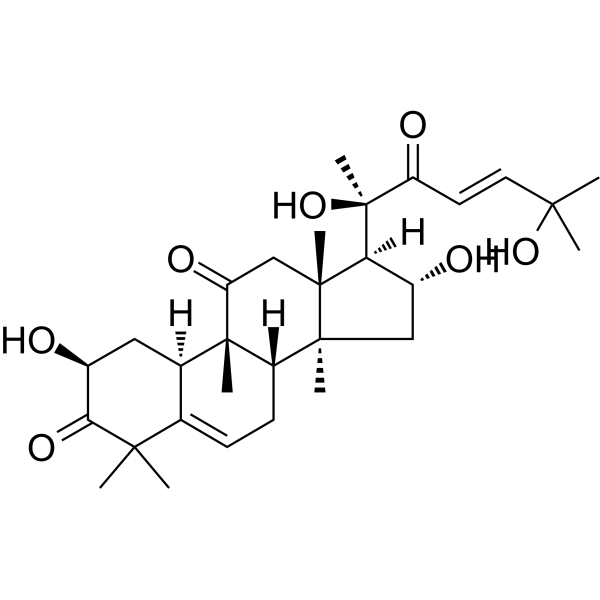
Cat. No.: HY-N1405
CAS No.: 2222-07-3
Synonyms: Elatericin B; JSI-124; NSC-521777
Cucurbitacin I is a natural selective inhibitor of JAK2/STAT3, with potent anti-cancer activity.
loading...
    loading...
6
6 Cited Publications
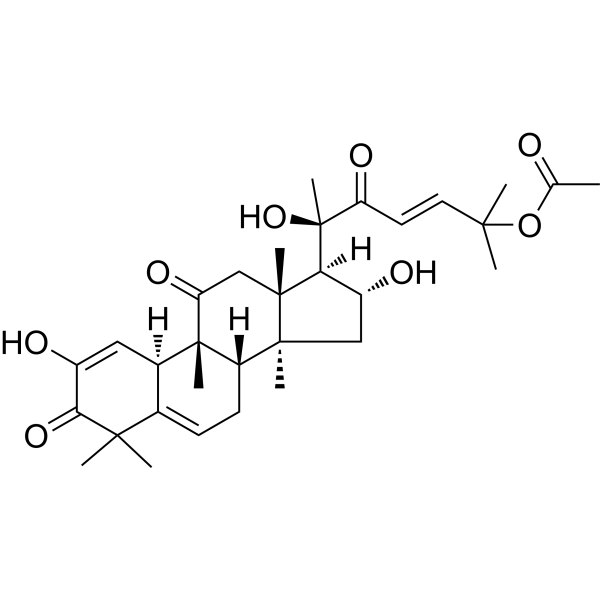
Cat. No.: HY-N0417
CAS No.: 18444-66-1
Synonyms: α-Elaterin; α-Elaterine
Cucurbitacin E is a CDK1 inhibitor that significantly inhibits the activity of the cyclin B1/CDC2 complex. Cucurbitacin E also induces PANoptosis in adrenocortical carcinoma cells in a ZBP1-dependent manner. Cucurbitacin E exhibits synergistic effects with Mitotane (HY-13690); when used in combination, they effectively eliminate tumors .
loading...
    loading...
2
2 Cited Publications
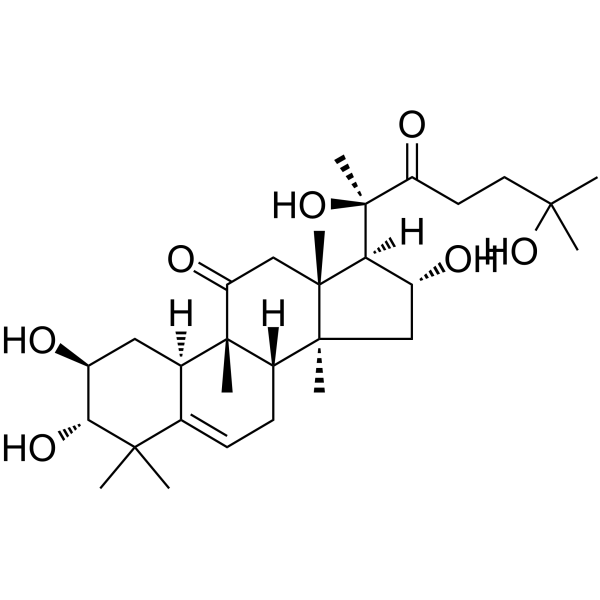
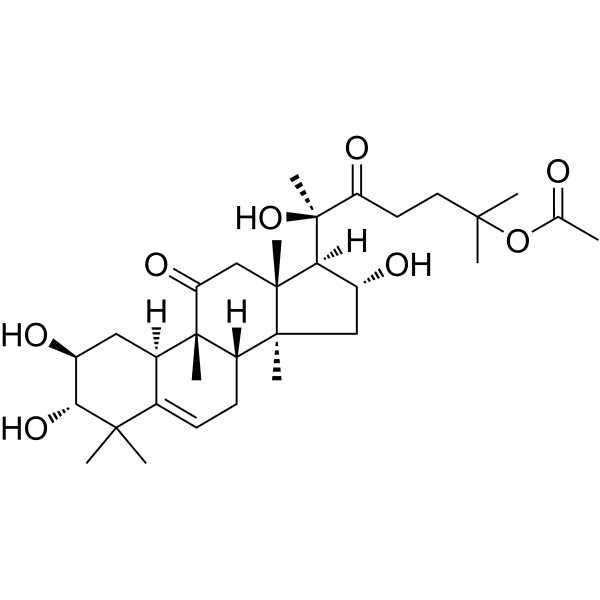
Cat. No.: HY-N1987
CAS No.: 50298-90-3
Cucurbitacin IIb is an active component isolated from Hemsleya amabilis, induces apoptosis with anti-inflammatory activity. Cucurbitacin IIb inhibits phosphorylation of STAT3, JNK and Erk1/2, enhances the phosphorylation of IκB and NF-κB (p65), blocks nuclear translocation of NF-κB (p65) and decreases mRNA levels of IκBα and TNF-α .
loading...
    loading...
1
1 Cited Publications
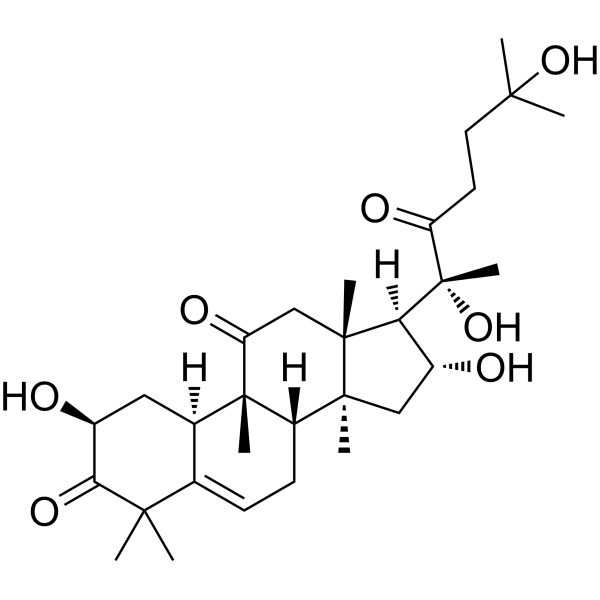
Cat. No.: HY-N1986
CAS No.: 3877-86-9
Cucurbitacin D is the active ingredient in Trichosanthes kirilowii and can disrupt the interaction between Hsp90 and two co-chaperones, Cdc37 and p23. Cucurbitacin D is an inflammasome activator. Cucurbitacin D induces cell cycle arrest and cell apoptosis, exhibiting anti-tumor and anti-inflammatory effects .
loading...
    loading...
1
1 Cited Publications
Cat. No.: HY-N1988
CAS No.: 58546-34-2
Synonyms: Hemslecin A
Cucurbitacin IIa (Hemslecin A) is an orally active, blood-brain barrier-permeable EGFR inhibitor with an IC50 of 1.455 nM against human EGFR. Cucurbitacin IIa induces caspase-3-dependent apoptosis, downregulates survivin expression, enhances autophagy levels, disrupts the actin cytoskeleton via actin aggregation, arrests the cell cycle at the G2/M phase, and exerts anti-inflammatory activity by inhibiting the EGFR-MAPK signaling pathway. Cucurbitacin IIa can be used in the research of inflammation-related diseases, depression, and cancers such as non-small cell lung cancer .
loading...
    loading...
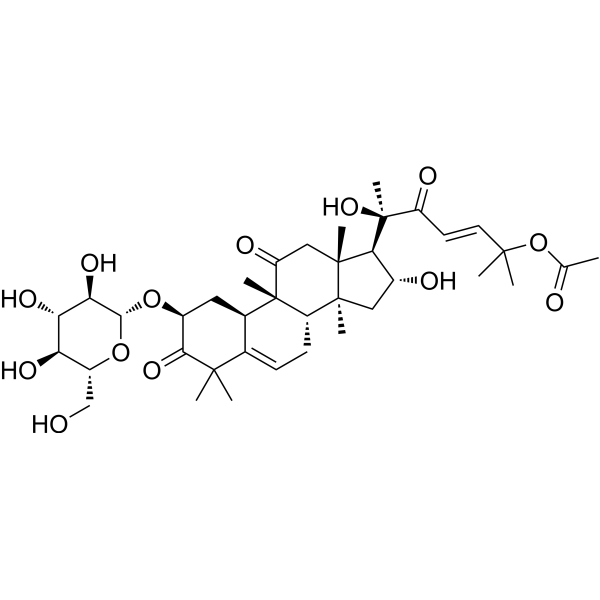
Cat. No.: HY-N6579
CAS No.: 65247-27-0
Arvenin I is a natural cucurbitacin glucoside that activates T cells within the cancer-competitive environment. Arvenin I covalently reacts with and hyperactivates MKK3, thereby reviving the mitochondrial fitness of exhausted T cells through the activation of the p38MAPK pathway . Arvenin I exhibits broad-spectrum antiproliferative against cancer cells . Arvenin I enhances antitumor effects both as a monotherapy and in combination with immune checkpoint inhibitors in mice . Arvenin I can be used for cancer research, such as colon cancer, breast cancer, lung cancer, and ovarian cancer [1][2].
loading...
    loading...
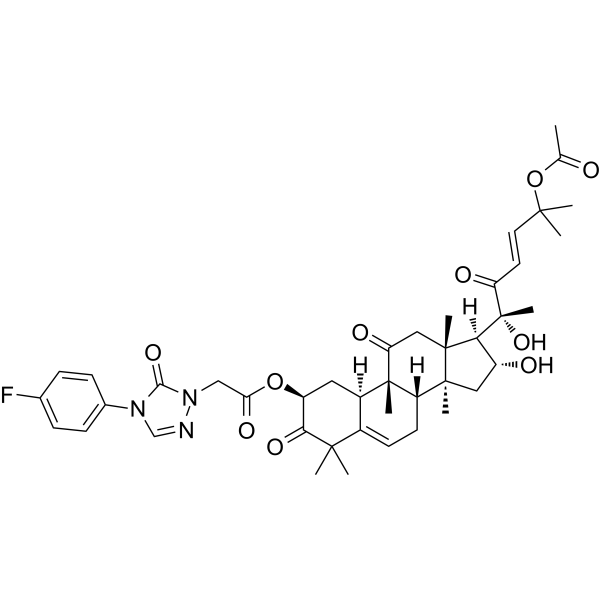
Cat. No.: HY-156110
CAS No.: 3029447-08-0
Purity:  99.94%
IGF2BP1-IN-1, a Cucurbitacin B (HY-N0416) derivative, is a potent IGF2BP1 inhibitor (KD = 2.88 nM). IGF2BP1-IN-1 binds directly to IGF2BP1, thereby inducing tumor cell cycle arrest, increasing apoptosis, and reducing autophagy. IGF2BP1-IN-1 can be used in research on NSLSC, colon, breast, liver, ovarian, pancreatic, and cervical cancers .
loading...
    loading...
Cat. No.: HY-N12461
CAS No.: 5939-57-1
Cucurbitacin F is a tetracyclic protostane-type triterpenoid with low toxicity, antibacterial and anti-inflammatory activities, and is also a related compound of Cucurbitacin B (HY-N0416). Cucurbitacin F widely exists in plants such as Cucurbitaceae plants, Quisqualis indica and Sorbaria sorbifolia. Cucurbitacin F acts as an actin aggregator and reduces cell viability in a dose-dependent manner. Cucurbitacin F induces apoptosis by triggering G2/M phase cell cycle arrest and activating the caspase-3-dependent apoptosis .
loading...
    loading...
Cat. No.: HY-N8137
CAS No.: 99530-82-2
Cucurbitacin Q1 is a tetracyclic triterpene that can be found in Cucumis prophetarum .
loading...
    loading...
Cat. No.: HY-N11080
CAS No.: 55903-92-9
Cucurbitacin R is a cucurbitacin. Cucurbitacin R can be isolated from the roots of Cayaponia tayuya. Cucurbitacin R can be used for the research of pain and inflammation .
loading...
    loading...
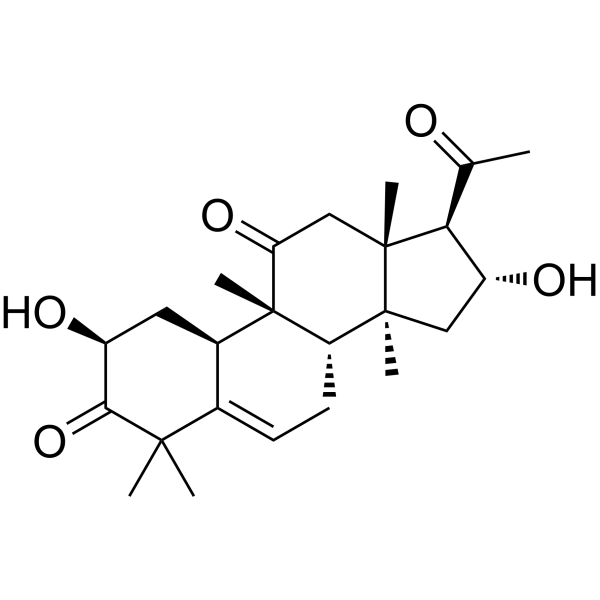
Cat. No.: HY-N11081
CAS No.: 29065-05-2
Hexanorcucurbitacin D, a cucurbitacin, is a weak ecdysteroid receptor agonist. Hexanorcucurbitacin D can be isolated from Trichosanthes cucumeroides roots. Hexanorcucurbitacin D can be used for the research of cardiovascular disease (CVD) .
loading...
    loading...
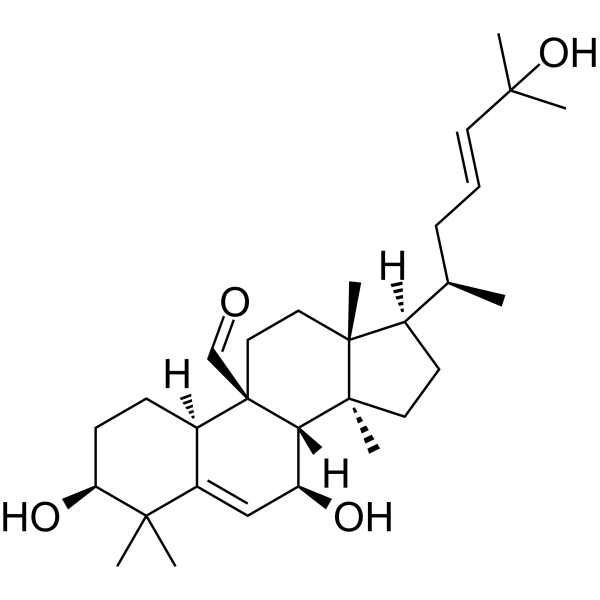
Cat. No.: HY-N10685
CAS No.: 85372-65-2
Synonyms: TCD
3,7,25-Trihydroxycucurbita-5,23-dien-19-al (TCD) is a natural product, that can be isolated from the chloroform extract of the leaves of Momordica foetida .
loading...
    loading...
Cat. No.: HY-N0416R
CAS No.: 6199-67-3
Cucurbitacin B (Standard) is the analytical standard of Cucurbitacin B. This product is intended for research and analytical applications. Cucurbitacin B belongs to a class of highly oxidized tetracyclic triterpenoids and is oral active. Cucurbitacin B inhibits tumor cell growth, migration and invasion and cycle arrest, but induces cell apoptosis. Cucurbitacin B has potent anti-inflammatory, antioxidant, antiviral, hypoglycemic, hepatoprotective, neuroprotective activity .
loading...
    loading...
Cat. No.: HY-N9968
CAS No.: 5988-76-1
Synonyms: CuC
Cucurbitacin C is a triterpenoid calabinoid that can be isolated from Cucurbitaceae plants. Cucurbitacin C has anti-cancer activity in vivo and in vitro. Cucurbitacin C can induce cell cycle arrest in G1 or G2/M phase and apoptosis by inhibiting Akt signaling .
loading...
    loading...
Cat. No.: HY-N0417R
CAS No.: 18444-66-1
Synonyms: α-Elaterin (Standard); α-Elaterine (Standard)
Cucurbitacin E (Standard) is the analytical standard of Cucurbitacin E. This product is intended for research and analytical applications. Cucurbitacin E is a natural compound which from Cucurbitaceae plants. Cucurbitacin E significantly suppresses the activity of the cyclin B1/CDC2 complex.
loading...
    loading...
Cat. No.: HY-N12552
CAS No.: 77704-34-8
Synonyms: Hemslecin A 2-O-β-d-glucopyranoside
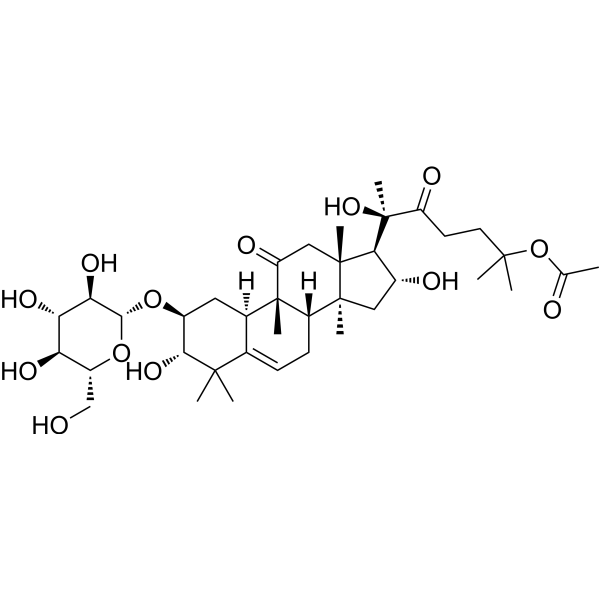
Cucurbitacin IIa 2-O-β-D-glucoside is a glycoside cucurbitacin isolated from the genus Hemsleya (Cucurbitaceae). Extracts of Hemsleya have the potential to be used in research on bronchitis, bacillary dysentery, and tuberculosis .
loading...
    loading...
Cat. No.: HY-N12011
CAS No.: 2149606-15-3
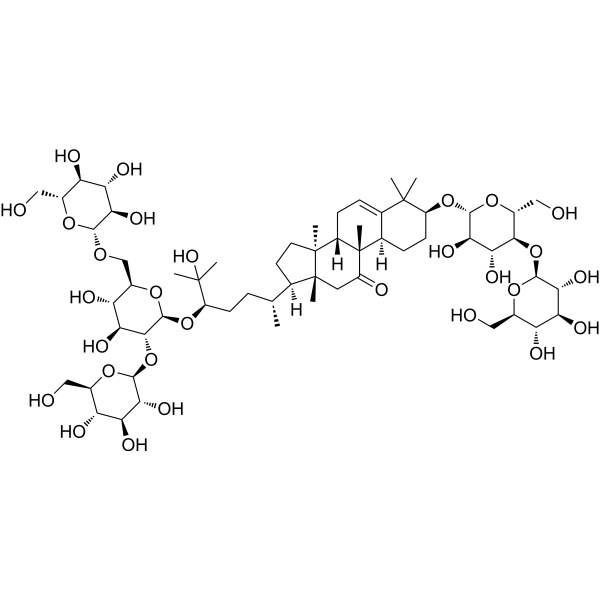
11-Oxoisomogroside V (compound 3) is a cucurbitacin isolated from the crude extract of Luo Han Guo. 11-Oxoisomogroside V activates the transcriptional activity of PGC-1α. In the luciferase experiment, the results showed that 10 μM and 20 μM 11-Oxoisomogroside V could increase the luciferase activity to 133.79% and 143.81% .
loading...
    loading...
Cat. No.: HY-N1986R
CAS No.: 3877-86-9
Cucurbitacin D (Standard) is the analytical standard of Cucurbitacin D. This product is intended for research and analytical applications. Cucurbitacin D is the active ingredient in Trichosanthes kirilowii and can disrupt the interaction between Hsp90 and two co-chaperones, Cdc37 and p23. Cucurbitacin D is an inflammasome activator. Cucurbitacin D induces cell cycle arrest and cell apoptosis, exhibiting anti-tumor and anti-inflammatory effects .
loading...
    loading...
Cat. No.: HY-N1987R
CAS No.: 50298-90-3
Cucurbitacin IIb (Standard) is the analytical standard of Cucurbitacin IIb. This product is intended for research and analytical applications. Cucurbitacin IIb is an active component isolated from Hemsleya amabilis, induces apoptosis with anti-inflammatory activity. Cucurbitacin IIb inhibits phosphorylation of STAT3, JNK and Erk1/2, enhances the phosphorylation of IκB and NF-κB (p65), blocks nuclear translocation of NF-κB (p65) and decreases mRNA levels of IκBα and TNF-α .
loading...
    loading...

