

1. Search Result
Search Result
Results for "

db/db mice

" in MedChemExpress (MCE) Product Catalog:

25

Inhibitors & Agonists

4

Peptides

3

Inhibitory Antibodies

2

Natural
Products

2

Isotope-Labeled Compounds

Cat. No. Product Name Target Research Areas Chemical Structure
  • HY-113365

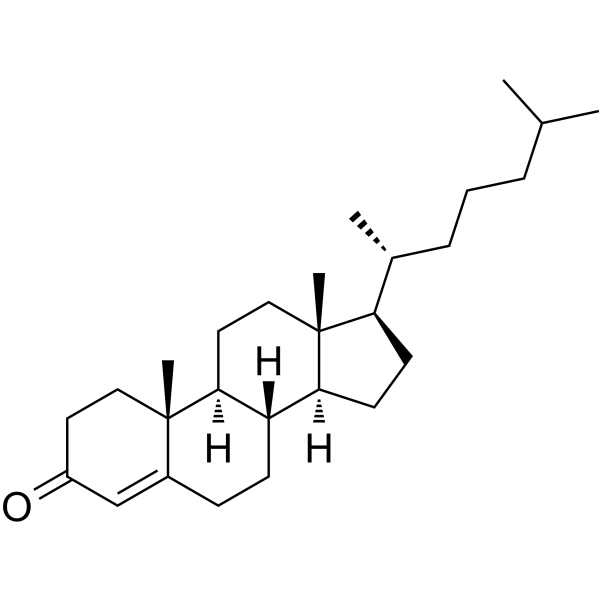
    4-Cholesten-3-one

    Endogenous Metabolite Infection Metabolic Disease
    Cholestenone (4-cholesten-3-one) is an orally available antimicrobial agent that is metabolized primarily in the liver as an intermediate oxidation product of cholesterol. Cholestenone inhibits human dermal fibroblast migration and fights Helicobacter pylori infection in vitro and in mouse models by inhibiting cholesterol-α-D-glucopyranoside (CGL). Cholestenone also alleviates metabolic disorders caused by obesity in db/db mice .
    Cholestenone
  • HY-161834
    RG100204
    1 Publications Verification

    Pyroptosis Aquaporin NOD-like Receptor (NLR) p38 MAPK Infection Metabolic Disease Inflammation/Immunology
    RG100204 is a selective, orally available inhibitor of the aquaporin AQP9. RG100204 directly inhibits AQP9 channel function, preventing the transmembrane transport of water, glycerol, and H 2O 2. RG100204 reduces the activation of the NLRP3 inflammasome and p38 MAPK signaling pathways, thereby alleviating inflammation and pyroptosis. RG100204 reduces multi-organ dysfunction in a mouse sepsis model and shows glucose-regulating effects in diabetic db/db mice .
    RG100204
  • HY-112234
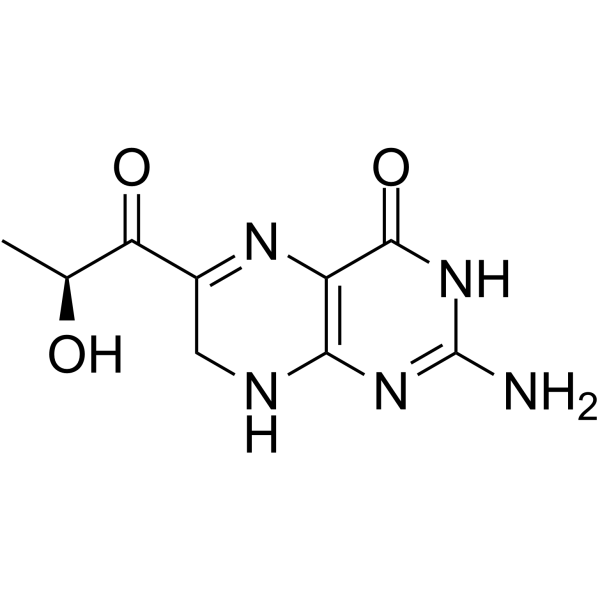
    L-Sepiapterin
    1 Publications Verification

    Sepiapterin

    Endogenous Metabolite Cancer
    L-Sepiapterin (Sepiapterin), is a phenylalanine hydroxylase activator, is a precursor of the endothelial nitric oxide synthase (eNOS) cofactor tetrahydrobiopterin (BH4). L-Sepiapterin improves endothelial dysfunction in small mesenteric arteries from db/db mice, and induces angiogenesis. L-Sepiapterin inhibits cell proliferation and migration of ovarian cancer cells via down-regulation of p70 S6K-dependent VEGFR-2 expression. L-Sepiapterin can be used for the study of hyperphenylalaninemia .
    L-Sepiapterin
  • HY-153617
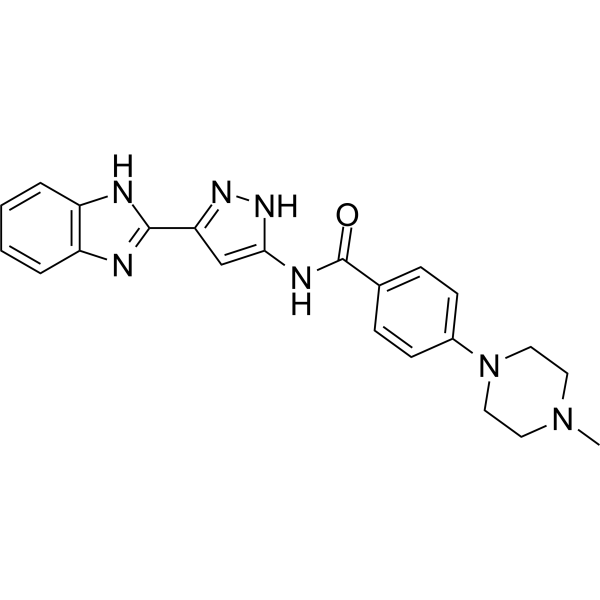
    FOXO1-IN-3
    1 Publications Verification

    FOXO Metabolic Disease
    FOXO1-IN-3 is a highly-selective and orally active FOXO1 inhibitor. FOXO1-IN-3 reduces hepatic glucose production in mice. FOXO1-IN-3 improves insulin sensitivity and glucose control in db/db mice without causing weight gain .
    FOXO1-IN-3
  • HY-101064S3

    PPAR Metabolic Disease
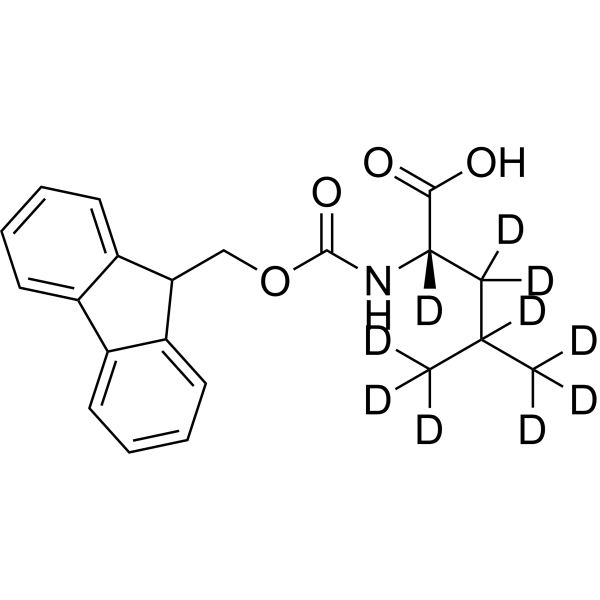
    Fmoc-leucine-d10 is the deuterium labeled Fmoc-leucine. Fmoc-leucine is a selective PPARγ modulator. Fmoc-leucine activates PPARγ with a lower potency but a similar maximal efficacy than rosiglitazone. Fmoc-leucine improves insulin sensitivity in normal, diet-induced glucose-intolerant, and in diabetic db/db mice. Fmoc-leucine has a lower adipogenic activity .
    Fmoc-leucine-d10
  • HY-18555
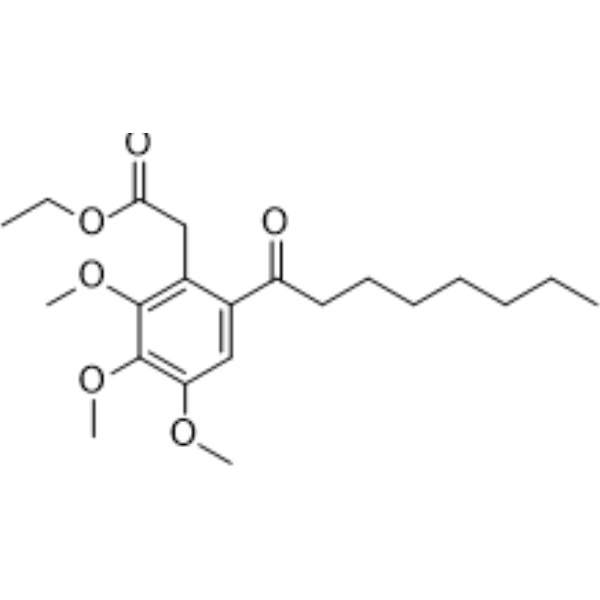
    TMPA
    3 Publications Verification

    Nuclear Hormone Receptor 4A/NR4A AMPK Metabolic Disease Inflammation/Immunology Cancer
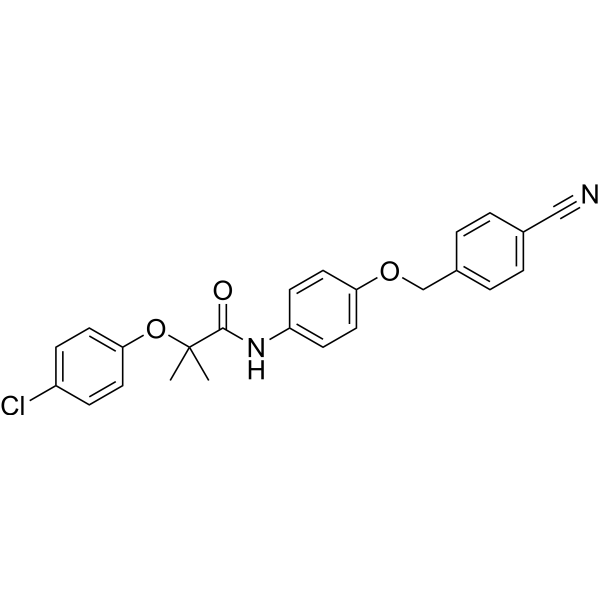
    TMPA is a high-affinity Nur77 antagonist that binds to Nur77 leading to the release and shuttling of LKB1 in the cytoplasm to activate AMPKα. TMPA effectively lowers blood glucose and attenuates insulin resistance in type II db/db, high-fat diet and streptozotocin-induced diabetic mice. TMPA reduces RICD (restimulation-induced cell death) in human T cells, can also be used in studies of cancer and T-cell apoptosis dysregulation .
    TMPA
  • HY-131334

    AMPK Metabolic Disease
    AMPK activator 4 is a potent AMPK activator without inhibition of mitochondrial complex I. AMPK activator 4 selectively activates AMPK in the muscle tissues. AMPK activator 4 dose-dependently improves glucose tolerance in normal mice, and significantly lowers fasting blood glucose level and ameliorates insulin resistance in db/db diabetic mice. Anti-hyperglycemic effect .
    AMPK activator 4
  • HY-101064S2

    N-FMOC-leucine-d3; NPC 15199-d3; NSC 334290-d3

    PPAR Metabolic Disease
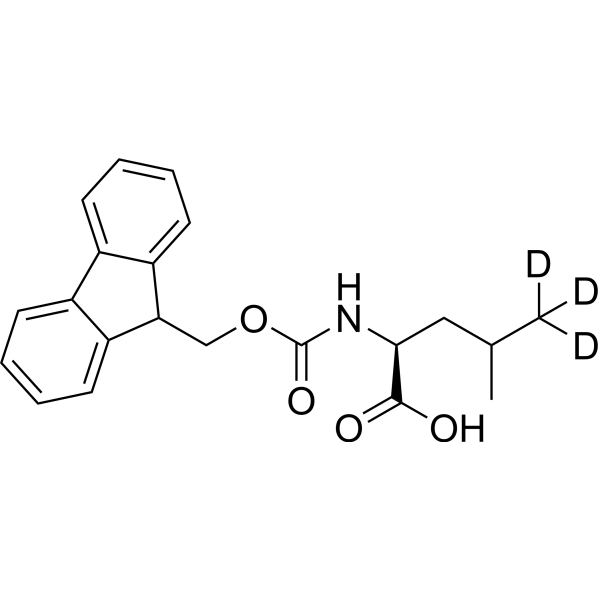
    Fmoc-leucine-d3 is the deuterium labeled Fmoc-leucine. Fmoc-leucine is a selective PPARγ modulator. Fmoc-leucine activates PPARγ with a lower potency but a similar maximal efficacy than rosiglitazone. Fmoc-leucine improves insulin sensitivity in normal, diet-induced glucose-intolerant, and in diabetic db/db mice. Fmoc-leucine has a lower adipogenic activity .
    Fmoc-leucine-d3
  • HY-P99959

    MT-3921; rH116A3

    TGF-β Receptor Neurological Disease
    Unasnemab (MT-3921) is a humanised IgG1 monoclonal antibody that binds to repulsive guidance molecule A (RGMa). Unasnemab improves locomotor function and promotes neuroregeneration. Unasnemab exerts ameliorative effects on hippocampal neurogenesis impairment and cognitive decline in db/db mice, Streptozotocin (STZ) (HY-13753)-induced type 1 diabetic and bilateral common carotid artery stenosis (BCAS)-induced mice. Unasnemab can be used for the research of spinal cord injury, diabetes-induced neurological impairments .
    Unasnemab
  • HY-124244

    PPARδ/γ agonist 1

    PPAR Neurological Disease
    DB-959 (PPARδ/γ agonist 1) is a potent PPAR agonist targeting PPARδ/γ. DB-959 improves spatial learning and memory in mice induced by Streptozotocin (HY-13753) and has the potential to improve Alzheimer's disease (AD). .
    DB-959
  • HY-17538A

    PGC-1α Metabolic Disease
    ZLN005 (hydrochloride) is a peroxisome proliferator-activated receptor-g coactivator-1a (PGC-1α) activator. ZLN005 (hydrochloride) can stimulate the expression of PGC-1α and downstream genes in skeletal muscle cells, improve glucose utilization and fatty acid oxidation. ZLN005 (hydrochloride) can increase the transcription of PGC-1α and downstream genes in skeletal muscle of diabetic db/db mice, increase fat oxidation and improve glucose tolerance, pyruvate tolerance and insulin sensitivity .
    ZLN005 hydrochloride
  • HY-P10312

    GLP Receptor Metabolic Disease
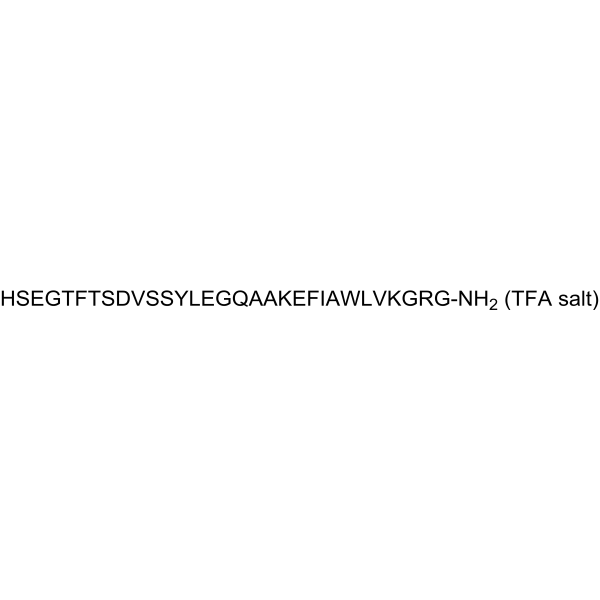
    SPN009 (Sequence 3) is a GLP-1 Receptor agonist, with EC50 of 2.84 nM. SPN009 attenuates the type II diabetes in DB/DB mice models .
    SPN009
  • HY-P5578

    GCGR Metabolic Disease
    A8SGLP-1 is an orally active GLP-1 analogue that the alanine at position 8 substituted with serine. A8SGLP-1 reduces blood glucose in db/db mice without affecting its function .
    A8SGLP-1
  • HY-P5578A

    GCGR Metabolic Disease
    A8SGLP-1 TFA is an orally active GLP-1 analogue that the alanine at position 8 substituted with serine. A8SGLP-1 TFA reduces blood glucose in db/db mice without affecting its function .
    A8SGLP-1 TFA
  • HY-117446

    GPR119 Metabolic Disease
    AS-1669058 is a GPR119 agonist and a potential inhibitor of type 2 diabetes. AS-1669058 induces insulin secretion in response to high blood glucose levels in vitro and in vivo and increases insulin promoter activity. In animal studies, AS-1669058 improved glucose tolerance and reduced blood glucose levels in db/db mice .
    AS-1669058
  • HY-117446A

    GPR119 Metabolic Disease
    AS-1669058 free base is a GPR119 agonist and a potential inhibitor of type 2 diabetes. AS-1669058 free base induces insulin secretion induced by high blood glucose levels in vitro and in vivo and increases insulin promoter activity. In animal studies, AS-1669058 free base improved glucose tolerance and reduced blood glucose levels in db/db mice.
    AS-1669058 free base
  • HY-138842

    Insulin Receptor Akt ERK Metabolic Disease
    DDN is a selective insulin receptor (Insulin Receptor) activator, an insulin sensitizer, and a glucose-lowering insulin mimetic with oral bioavailability. DDN can directly bind to the receptor kinase domain and induce Akt and ERK phosphorylation, and it can also enhance insulin's effect on glucose uptake. DDN significantly reduces blood glucose levels in wild-type and diabetic ob/ob and db/db mice .
    DDN
  • HY-161926

    PPAR Metabolic Disease
    YGT-31 is a modulator for PPARγ with an IC50 of 1.72 μM, and a Ki of 0.62 μM. YGT-31 reduces blood glucose levels and improves insulin resistance in db/db mice type 2 diabetes models, through inhibition of CDK5-mediated PPARγ-Ser273 phosphorylation. YGT-31 exhibits anti-hepatic steatosis effect in mice non-alcoholic fatty liver disease (NAFLD) model .
    YGT-31
  • HY-114598

    SGLT Metabolic Disease
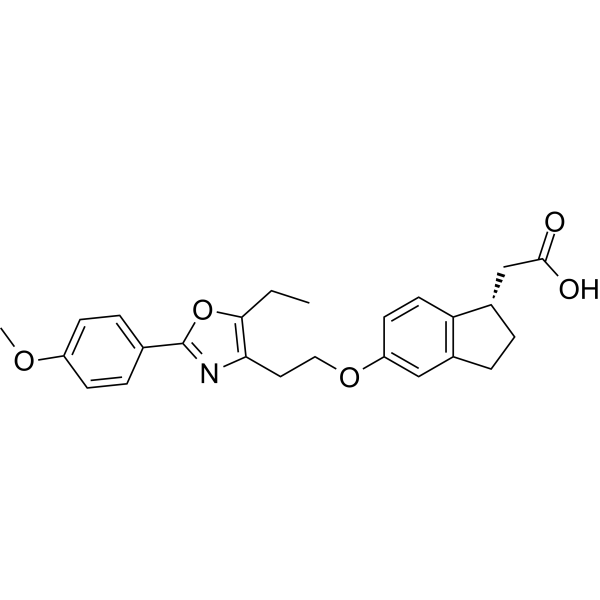
    WAY-123783 is a potent, selective and orally active sodium-dependent glucose cotransporter 2 (SGLT2) inhibitor producing activity after metabolism. WAY-123783 can increase the excretion of sugar in urine and at the same time lower the blood sugar level in db/db mice (ED50 = 9.85 mg/kg). WAY-123783 can be used for the research of metabolic disease, such as diabetes .
    WAY-123783
  • HY-126969

    PPAR Metabolic Disease
    C333H is a selective PPARγ modulator with insulin-sensitizing and hypoglycemic activities. C333H exhibits similar insulin-sensitizing effects to thiazolidinediones (TZDs) in diabetic mouse models without significantly increasing body weight or adipose tissue weight. C333H increases circulating high molecular weight adiponectin isoform levels in diabetic db/db mice, reduces serine phosphorylation of PPARγ 273 in brown adipose tissue, and selectively modulates the expression of specific PPARγ target genes in adipose tissue. Express. C333H exhibits weak recruitment of co-activators and weak dissociation of co-repressors in vitro. These properties suggest that C333H may be a potential inhibitor of type 2 diabetes .
    C333H
  • HY-P991751

    MHC Inflammation/Immunology
    Anti-Mouse MHC Class I (H-2Db) Antibody (28-14-8S) reacts with the α3 domains of H-2Db of the MHC class I alloantigen expressed on nucleated cells from mice of the H-2Db haplotype. Recommend Isotype Controls: Mouse IgG2a kappa, Isotype Control (HY-P99978) .
    Anti-Mouse MHC Class I (H-2Db) Antibody (28-14-8S)
  • HY-101064R

    N-FMOC-leucine (Standard); NPC 15199 (Standard); NSC 334290 (Standard)

    PPAR Reference Standards Metabolic Disease
    Fmoc-leucine (Standard) is the analytical standard of Fmoc-leucine (HY-101064). This product is intended for research and analytical applications. Fmoc-leucine is a selective PPARγ modulator. Fmoc-leucine activates PPARγ with a lower potency but a similar maximal efficacy than rosiglitazone. Fmoc-leucine improves insulin sensitivity in normal, diet-induced glucose-intolerant, and in diabetic db/db mice. Fmoc-leucine has a lower adipogenic activity .
    Fmoc-leucine (Standard)
  • HY-17604
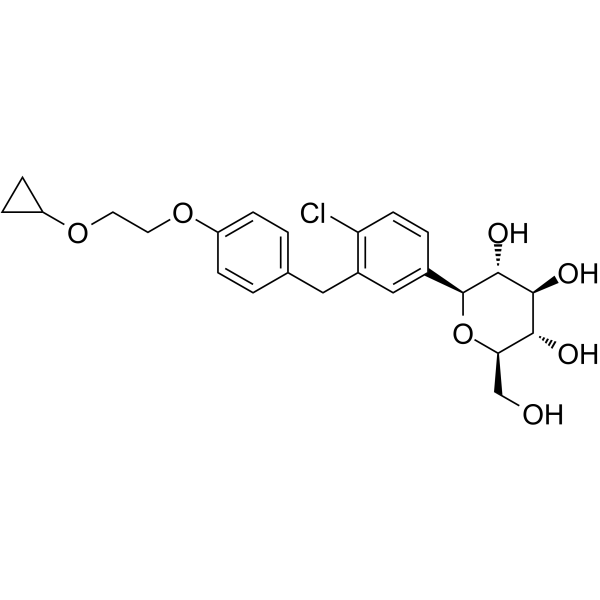
    Bexagliflozin
    1 Publications Verification

    EGT1442; EGT0001442; THR-1442

    SGLT Cardiovascular Disease Metabolic Disease
    Bexagliflozin (EGT1442) is an orally active and selective SGLT2 inhibitor with IC50 values of 0.002 μM and 5.6 μM for SGLT2 and SGLT1, respectively. Bexagliflozin selectively inhibits SGLT2-mediated sodium-dependent glucose uptake. Bexagliflozin induces saturable urinary glucose excretion in normal rats and dogs. Bexagliflozin reduces blood glucose and HbA1c levels in db/db mice without affecting body mass or insulin level. Bexagliflozin can be used for the research of type 2 diabetes mellitus, hypertensive stroke .
    Bexagliflozin
  • HY-P11604

    Phosphatase Inflammation/Immunology
    C16 acid-I-{Lys (C10 diacid)}-KQELRRIGDEF is a cell-permeable and internalizable PTPN1/2 inhibitor, with IC50 values of 107.6 nM and 3375 nM, respectively. C16 acid-I-{Lys (C10 diacid)}-KQELRRIGDEF restores insulin signaling in HepG2 cells. C16 acid-I-{Lys (C10 diacid)}-KQELRRIGDEF achieves glycemic control in db/db diabetic mice. C16 acid-I-{Lys (C10 diacid)}-KQELRRIGDEF can be used in the research of type 2 diabetes .
    C16 acid-I-{Lys(C10 diacid)}-KQELRRIGDEF
  • HY-P992159

    SLC39 (Zinc Transporter) Metabolic Disease Inflammation/Immunology
    Anti-ZnT8 Antibody (mAb43) is a monoclonal antibody targeting the zinc transporter ZnT8, with islet-specific biodistribution characteristics. Anti-ZnT8 Antibody (mAb43) binds to extracellular ZnT8 on the surface of pancreatic β-cells and masks its insulin-co-localizing sites to block autoimmune recognition. Anti-ZnT8 Antibody (mAb43) also promotes an increase in the proportion of regulatory T cells and inhibits B cell antigen presentation, thereby effectively blocking the T cell-mediated cascade of β-cell destruction. Anti-ZnT8 Antibody (mAb43) eliminates insulitis, preserves β-cell mass and induces seroconversion of autoantibodies, without directly altering the insulin secretion function or content of β-cells. Anti-ZnT8 Antibody (mAb43) can be used for research related to type 1 diabetes .
    Anti-ZnT8 Antibody (mAb43)

Inquiry Online

Your information is safe with us. * Required Fields.

Salutation


Country or Region *

Applicant Name *


Organization Name *

Department *


Email Address *


Product Name *

Cat. No.


Requested quantity *

Phone Number *


Remarks

Inquiry Online

Inquiry Information

Product Name:
Cat. No.:
Quantity:
MCE Japan Authorized Agent:

