



Unasnemab

Based on 1 Customer Validation
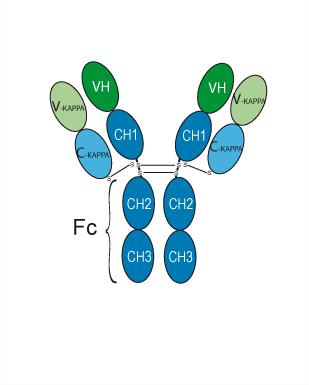
Unasnemab (MT-3921) is a humanised IgG1 monoclonal antibody that binds to repulsive guidance molecule A (RGMa). Unasnemab improves locomotor function and promotes neuroregeneration. Unasnemab exerts ameliorative effects on hippocampal neurogenesis impairment and cognitive decline in db/db mice, Streptozotocin (STZ) (HY-13753)-induced type 1 diabetic and bilateral common carotid artery stenosis (BCAS)-induced mice. Unasnemab can be used for the research of spinal cord injury, diabetes-induced neurological impairments.
For research use only. We do not sell to patients.
- Purity : 99.00%
- CAS No.: 2379805-59-9
- Molecular Weight:144.88 kDa
-
Storage:
Please store the product under the recommended conditions in the Certificate of Analysis.


To place orders, for customer services and technical support, please contact: MedChemExpress USA
Tel: 609-228-6898 E-mail: [email protected] [email protected]


-
 Biological Activity
-
Chemical Information
- Protocols
- Purity & Documentation
- References
-
 Help & FAQs




Biological Activity
Description
Isotype
Human IgG1 kappa
Recommend Isotype Controls
Species Reactivity
Human
IC50 & Target
RGMA
In Vitro
Unasnemab (48 h) significantly alleviated the reduction in average neurite length of NB-1 human neuronal cells cocultured with Tax-expressing JPX9 cells (a Tax-inducible cell line) in a dose-dependent manner[1].
Unasnemab (0.001-10 μg/mL, 72 h) significantly reversed the increased concentration of neurofilament light chain (NF-L) in the culture medium of NB-1 cells cocultured with PBMCs with HTLV-1-associated myelopathy (HAM) in a dose-dependent manner[1].
MedChemExpress (MCE) has not independently confirmed the accuracy of these methods. They are for reference only.
In Vivo
Unasnemab (10 mg/kg, i.p., twice weekly, starting 3 days post-surgery for a total of 9 injections) significantly ameliorates bilateral common carotid artery stenosis (BCAS)-induced pathological changes and cognitive deficits in mice[3].
MedChemExpress (MCE) has not independently confirmed the accuracy of these methods. They are for reference only.
-
Animal Model:6-week-old db/db mice (type 2 diabetes model) and STZ-induced type 1 diabetic 8-week-old C57BL/6JJmsSlc mice[2]
-
Dosage:30 mg/kg
-
Administration:i.v., once weekly, 6 weeks
-
Result:Increased the number and density of DCX-positive immature neurons in the hippocampal granular cell layer (GCL), and improved their morphological defects.
Significantly increased the Discrimination Index (DI) in both Novel Object Recognition Test (NORT) and Object Placement Test (OPT) to restore hippocampus-dependent memory.
Showed no significant effects on STZ-induced body weight loss and blood glucose elevation.
-
Animal Model:Adult male C57BL/6J mice (8-10 weeks old) were used to establish the vascular dementia (VaD) model via bilateral common carotid artery stenosis (BCAS)[3]
-
Dosage:10 mg/kg
-
Administration:i.p., twice weekly, starting 3 days post-surgery for a total of 9 injections
-
Result:Reversed the reduction of doublecortin (DCX)-positive immature neurons in the hippocampal granular cell layer (GCL) and subgranular zone (SGZ).
Decreased the number of cleaved caspase-3/DCX double-positive apoptotic cells.
Promoted the survival and maturation of newborn neurons.
Attenuated the loss of cholinergic innervation in the hippocampal dentate gyrus.
Improved cognitive function.
Did not affect cerebral blood flow (CBF) in BCAS mice.
Clinical Trial
| NCT Number | Sponsor | Condition | Start Date |
Phase

|
|---|---|---|---|---|
| NCT01329991 | 2011-05 | PHASE1 |
Gene ID
Accession
Q96B86-1
Conjugated
Unconjugated
Reconsititution
The product can be reconstituted/diluted with sterile PBS or saline.
Format
-
Human IgG1 kappa
Application
ELISA, FACS, Functional assay
Verified Bioactivity
-
 Loaded Unasnemab on AHC2 biosensor, can bind RGMA Protein, Human (HEK293, His, HY-P76572) with an affinity constant of 1.418E-08 M as determined in BLI assay.


Chemical Information
-
CAS No. 2379805-59-9
-
Appearance Liquid
-
Molecular Weight 144.88 kDa
-
Color Colorless to light yellow
-
SMILES
[Unasnemab]
-
Synonyms
MT-3921; rH116A3
-
Shipping
Shipping with dry ice.
-
Formulation
Please refer to the lot-specific COA for specific buffer information.
-
Storage
Please store the product under the recommended conditions in the Certificate of Analysis.


Purity & Documentation
-
Data Sheet (262 KB)
-
SDS (251 KB)
- English - EN (251 KB)
- Français - FR (251 KB)
- Deutsch - DE (251 KB)
- Norwegian - NO (251 KB)
- Español - ES (251 KB)
- Swedish - SV (251 KB)
- Italian - IT (251 KB)
- Korean - KR (251 KB)
- Portuguese - PT (251 KB)
-
Inhibitory Antibodies User Guide (603 KB)
References
[1]. Araya N, et al. Virus-induced RGMa expression drives neurodegeneration in HTLV-1-associated myelopathy. JCI Insight. 2025 Apr 24;10(11):e184530. [Content Brief]
[2]. Uno H, et al. Inhibition of repulsive guidance molecule A ameliorates diabetes-induced cognitive decline and hippocampal neurogenesis impairment in mice. Commun Biol. 2025 Feb 19;8(1):263. [Content Brief]
[3]. Yamamoto M, et al. Anti-RGMa neutralizing antibody ameliorates vascular cognitive impairment in mice. Neurotherapeutics. 2025 Mar;22(2):e00500. [Content Brief]

Calculators
Concentration (start) × Volume (start) = Concentration (final) × Volume (final)


Unasnemab Related Classifications
HY-P99959 Related Classifications
 Powered by Bioz