
5 Results for "

enteric species

" in MedChemExpress (MCE) Product Catalog:
Products (5)

5 Results for "enteric species" in MCE Product Catalog:

Cat. No.: HY-W075770
CAS No.: 1313-99-1
Synonyms: Nickel monoxide
Nickel(II) oxide (nickel monoxide) is a chemical warfare agent that can enter the body through the respiratory tract and other routes, distributing to organs such as the lungs and testes. The nanoparticle form of nickel(II) oxide (NiO NPs) exhibits antibacterial, anti-leishmanial, anti-diabetic, and anti-cancer activities. NiO NPs can be activated by ultraviolet and visible light, generating reactive oxygen species (ROS). Nickel(II) oxide induces oxidative stress by generating reactive oxygen species, activating the TGF-β1-mediated MAPK and PI3K/AKT pathways, disrupting the MMPs/TIMPs balance, and upregulating the expression of inflammatory factors (IL-1β, IL-6) and apoptosis-related molecules (Bax, caspase-3, p53), while inhibiting the activity of the anti-apoptotic molecule Bcl-2. Nickel(II) oxide induces cytotoxicity, promotes fibrosis, triggers inflammatory responses, and causes apoptosis. Nickel(II) oxide can be applied in research on the safety assessment of nanomaterials, such as in the context of pulmonary fibrosis and reproductive system toxicity .
loading...
    loading...
Cat. No.: HY-157346A
LB Agar is a nutrient-rich bacterial medium prepared by adding Agar to lysogeny broth (LB). LB Agar supports the growth of Enterobacteriaceae, Escherichia coli, related intestinal species, and various facultative microorganisms. LB Agar is used for Escherichia coli plaque assays .
loading...
    loading...
Cat. No.: HY-W247098
CAS No.: 217176-83-5
Synonyms: DHR 6G
Research Areas:  

Cancer

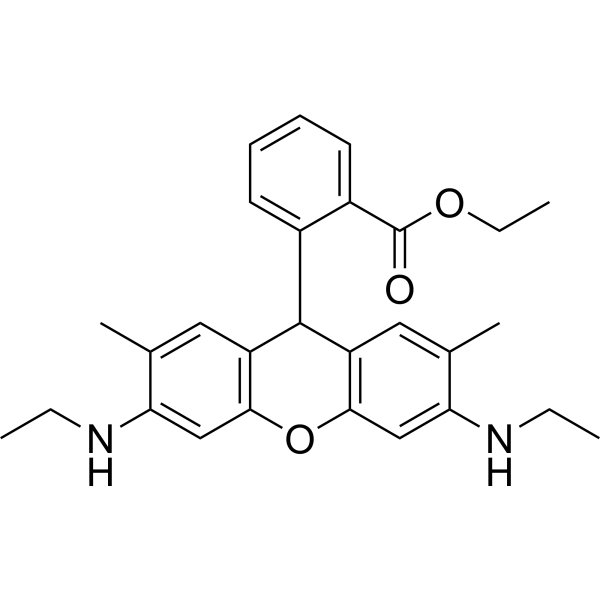
Dihydrorhodamine 6G (DHR 6G) is the reduced form of Rhodamine 6G, which is used as fluorescent mitochondrial dye. It is nonfluorescent, but it readily enters most of the cells and is oxidized by oxidative species or by cellular redox systems to the fluorescent rhodamine 6G that accumulates in mitochondrial membranes. Dihydrorhodamine 6G is useful for detecting reactive oxygen species (ROS) including superoxide .
loading...
    loading...
Cat. No.: HY-15007
CAS No.: 138382-23-7
Target:  

Oxytocin Receptor

Research Areas:  

Endocrinology

L 366509 is a spiroindenylpiperidine camphorsulfonamide oxytocin (OT) antagonist. Modifications led to a new series of o-tolylpiperazine (TP) camphorsulfonamides, exhibiting high affinity for OT receptors and selectivity over arginine vasopressin receptors. Notably, compound 7 (L-368,899) showed excellent OT receptor affinity, potency in inhibiting OT-stimulated uterine contractions, good aqueous solubility, and oral bioavailability in multiple species. Compound 7 has entered clinical testing as an oral and intravenous tocolytic agent. Molecular modeling suggests the TP camphorsulfonamide structure mimics the D-AA2-Ile3 dipeptide, crucial in potent OT antagonists .
loading...
    loading...
Cat. No.: HY-W051199
CAS No.: 4210-66-6
Synonyms: o-Phosphohomoserine
O-Phosphono-L-homoserine (o-Phosphohomoserine) is an intermediate in threonine synthesis in bacteria and plants, and can also be hijacked by MetM in some Streptomyces species to enter a novel methionine synthesis pathway. O-Phosphono-L-homoserine acts as a weak antagonist of the NMDA receptor. O-Phosphono-L-homoserine can be used as a substrate for studies on amino acid metabolism of the aspartate family, a control for mechanism studies of PLP enzymes, and a reference for structure-activity relationship studies of NMDA receptor ligands .
loading...
    loading...

