



L 366509
L 366509 is a spiroindenylpiperidine camphorsulfonamide oxytocin (OT) antagonist. Modifications led to a new series of o-tolylpiperazine (TP) camphorsulfonamides, exhibiting high affinity for OT receptors and selectivity over arginine vasopressin receptors. Notably, compound 7 (L-368,899) showed excellent OT receptor affinity, potency in inhibiting OT-stimulated uterine contractions, good aqueous solubility, and oral bioavailability in multiple species. Compound 7 has entered clinical testing as an oral and intravenous tocolytic agent. Molecular modeling suggests the TP camphorsulfonamide structure mimics the D-AA2-Ile3 dipeptide, crucial in potent OT antagonists.
商品は「研究用試薬」です。人や動物の医療用・臨床診断用・食品用の製品ではありません。
研究用途以外に使用した場合、当社は一切の責任を負いかねます。
- CAS 番号: 138382-23-7
- 分子式: C25H33NO5S
- 分子量:459.60
-
保管条件:
Please store the product under the recommended conditions in the Certificate of Analysis.


To place orders, for customer services and technical support, please contact: MedChemExpress USA
Tel: 609-228-6898 E-mail: [email protected] [email protected]


-
 生物活性
生物活性
-
化学情報
- プロトコル
- 純度とドキュメンテーション
- 参考文献
-
 Help & FAQs


-
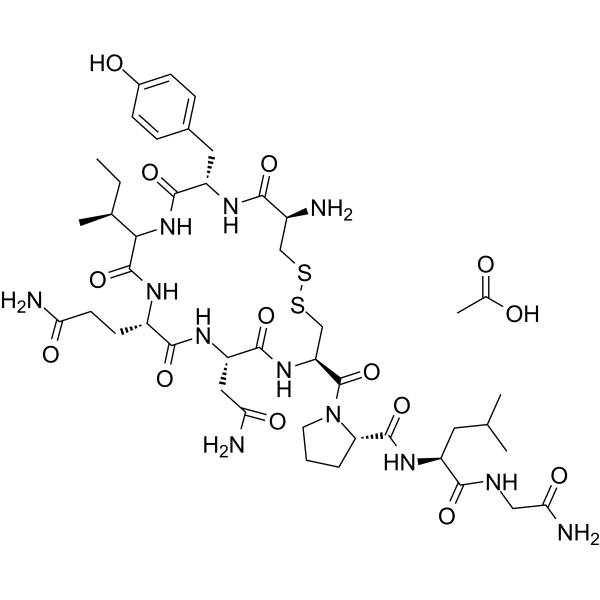
HY-17571A
Oxytocin acetateHypothalamic Peptide -
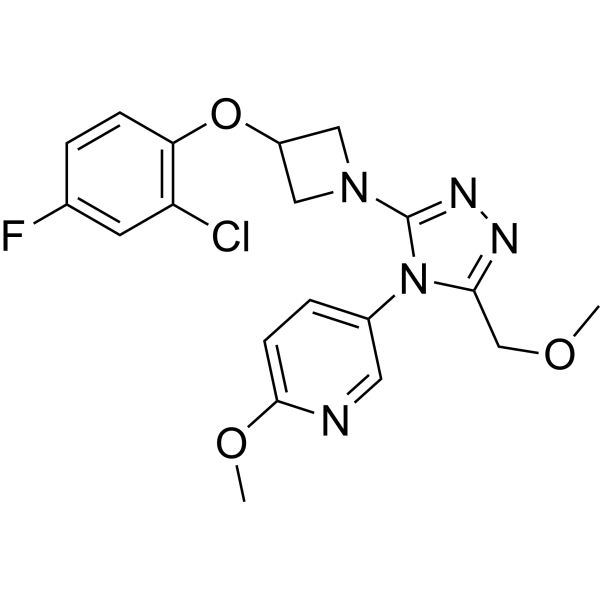
HY-15023
CligosibanOxytocin Receptor Antagonist -
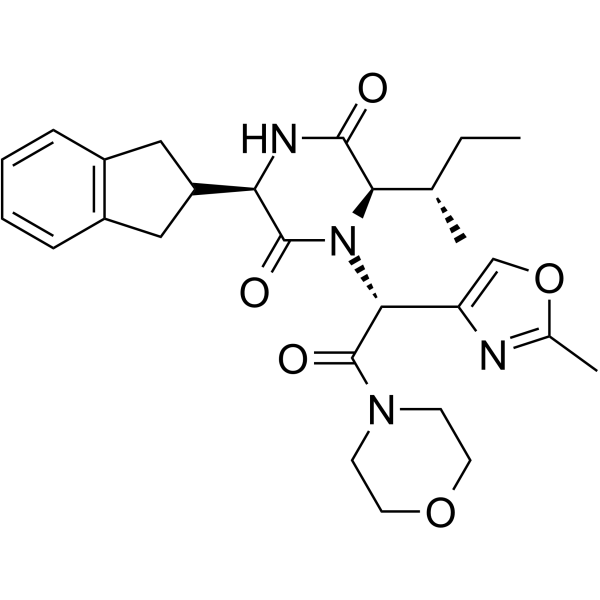
HY-14778
RetosibanOxytocin Receptor Antagonist -
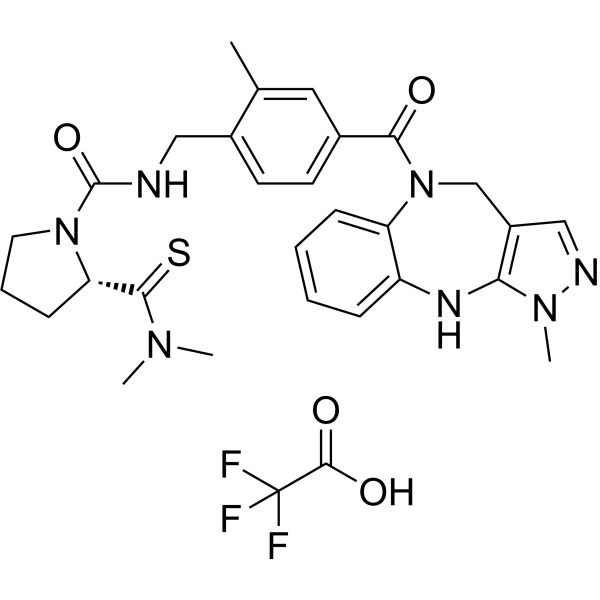
HY-124733A
LIT-001Oxytocin Receptor Agonist -
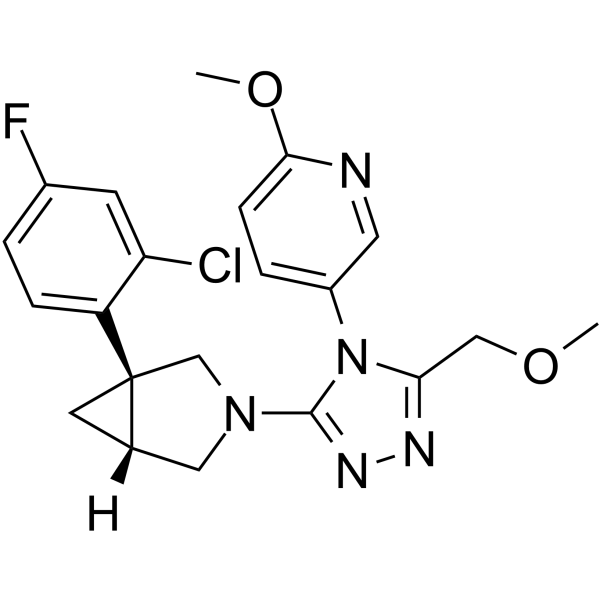
HY-128351
SHR1653Oxytocin Receptor Antagonist -
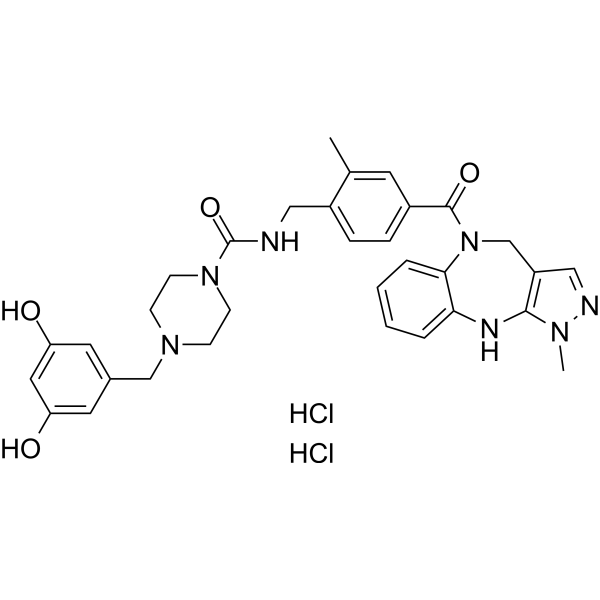
HY-108679
WAY-267464 hydrochlorideOxytocin Receptor Agonist -
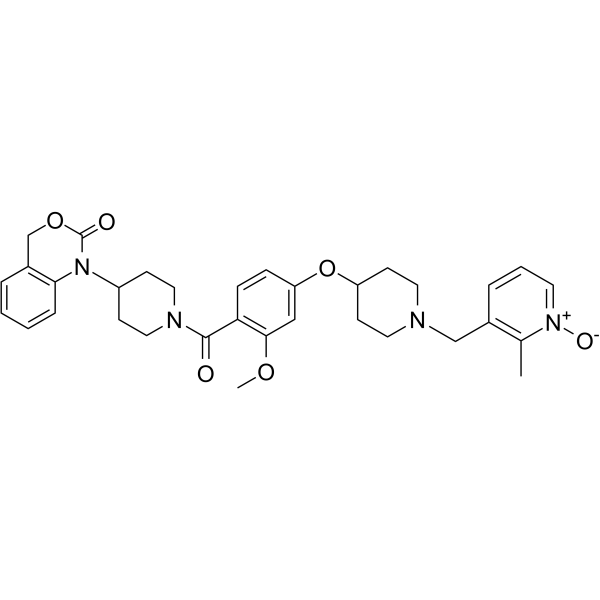
HY-15011
L-372662Oxytocin Antagonist -
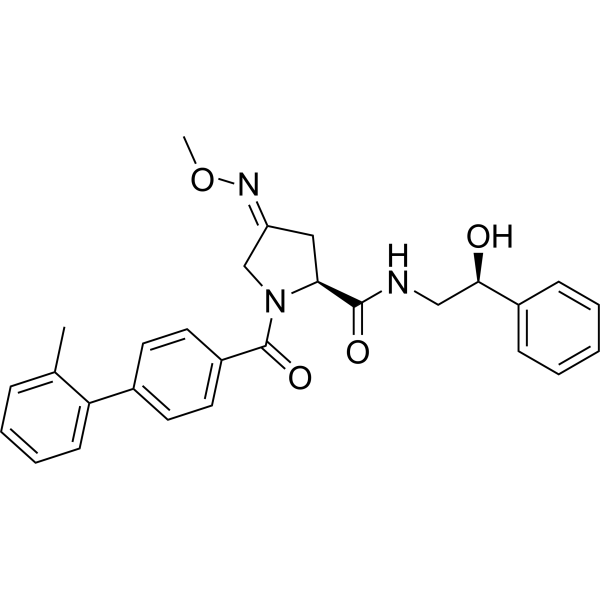
HY-15015
OT-R antagonist 1Oxytocin Receptor Antagonist -
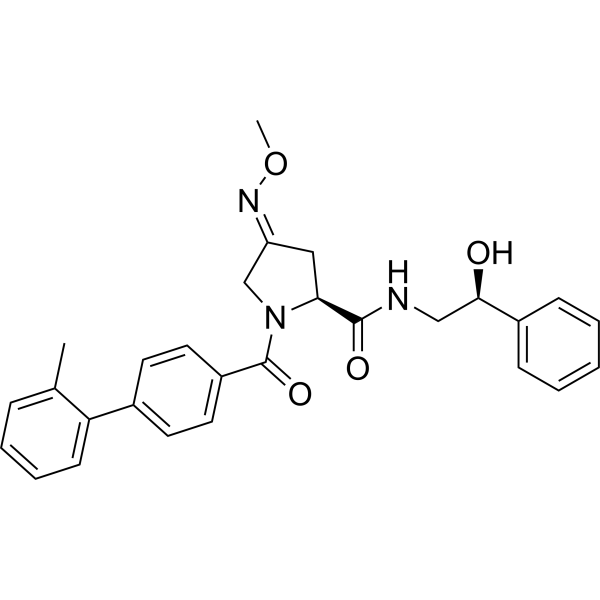
HY-15015A
OT-R antagonist 2Oxytocin Receptor Antagonist -
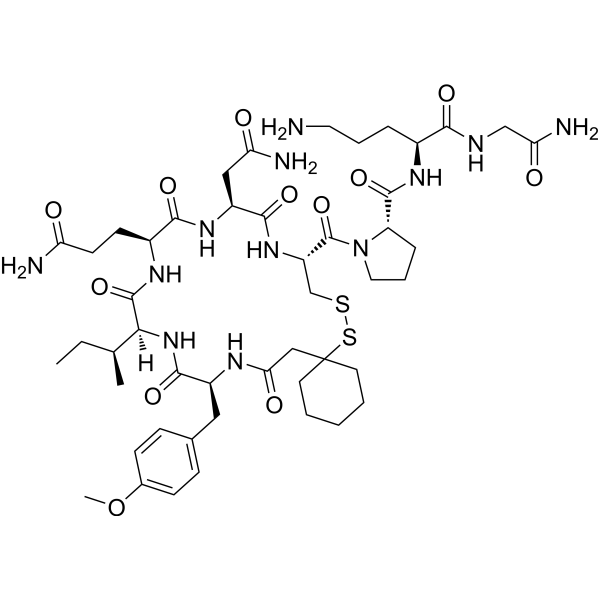
HY-P4895
(d(CH2)51,Tyr(Me)2,Orn8)-OxytocinOxytocin Receptor Antagonist -
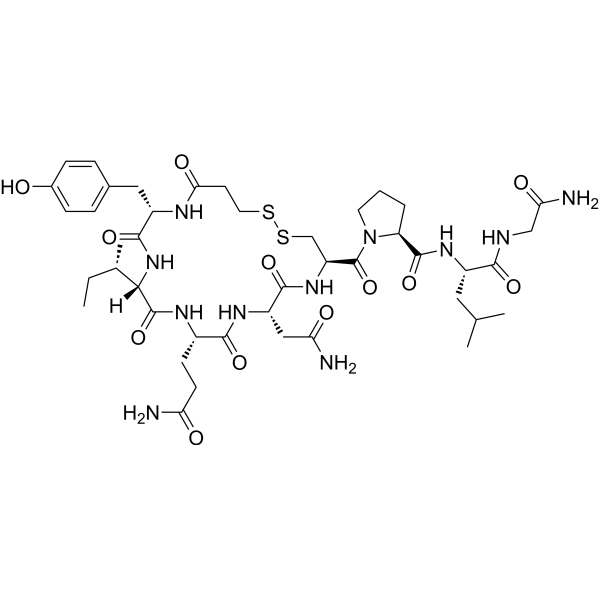
HY-P2168
DemoxytocinOxytocin Analog -

HY-15023R
Cligosiban (Standard)Oxytocin Receptor Antagonist


生物活性
製品説明


化学情報
-
CAS 番号 138382-23-7
-
分子量 459.60
-
分子式 C25H33NO5S
-
SMILES
O=S(N(CC1)CCC21C3=CC=CC=C3C=C2)(C[C@]4(C5(C)C)CC[C@@H]5C[C@@]4(CC(O)=O)O)=O
-
輸送条件
Room temperature in continental US; may vary elsewhere.
-
保管条件
Please store the product under the recommended conditions in the Certificate of Analysis.

プロトコル
-
How to Select the Route of Administration for Mammals
Route-of-administration selection in mammals is a pharmacokinetic, pharmacodynamic, formulation, animal-welfare, and translational decision, not a default technical choice. The selected route should match the study goal: intravenous dosing is most useful when complete systemic exposure and rapid onset are required, oral dosing is most translational for orally intended medicines but is affected by absorption and first-pass metabolism, subcutaneous or intramuscular dosing can provide slower systemic exposure, and intraperitoneal dosing can be useful in rodent proof-of-concept studies but may have limited clinical translation. Published route-comparison studies show that the same compound can produce different exposure, onset, bioavailability, tissue distribution, and tolerability depending on route; therefore, route choice should be supported by pilot pharmacokinetic or pharmacodynamic evidence when the literature is insufficient. Unresolved questions include how to standardize route sel
-
Protocol for Pharmacokinetic Study
Pharmacokinetic studies quantify how an organism handles a drug over time through absorption, distribution, metabolism, and excretion, and the core experimental readout is the concentration-time profile of parent drug and, when relevant, metabolites in biological matrices such as plasma, whole blood, urine, bile, or tissue. Pharmacokinetic analysis links dose, route, exposure, clearance, half-life, distribution, bioavailability, and systemic exposure to drug efficacy and toxicity hypotheses rather than measuring a signaling pathway directly. The literature links pharmacokinetics to drug-development phenotypes by showing that drug metabolism and pharmacokinetics influence compound progression, exposure-response interpretation, safety margins, dosing strategy, and failure risk during discovery and development. DMPK science contributes to compound optimization by integrating physicochemical properties, in vitro metabolism, transporter behavior, in vivo exposure, and pharmacodynamic contex


純度とドキュメンテーション
参考文献

Calculators
濃度 (開始) × 体積 (開始) = 濃度 (終了) × 体積 (終了)


L 366509 関連分類
HY-15007 関連分類
 Powered by Bioz