

From 11:00 pm to 12:00 pm EST ( 8:00 pm to 9:00 pm PST ) on January 6th, the website will be under maintenance. We are sorry for the inconvenience. Please arrange your schedule properly.
DSPE-PEG-Folate, MW 3350 is a PEG derivative containing folic acid. DSPE-PEG-Folate has a targeting effect and bind to folate receptors in cancer cells. DSPE-PEG-Folate form micelles/lipid bilayer and can be used to targeted drug delivery system research .
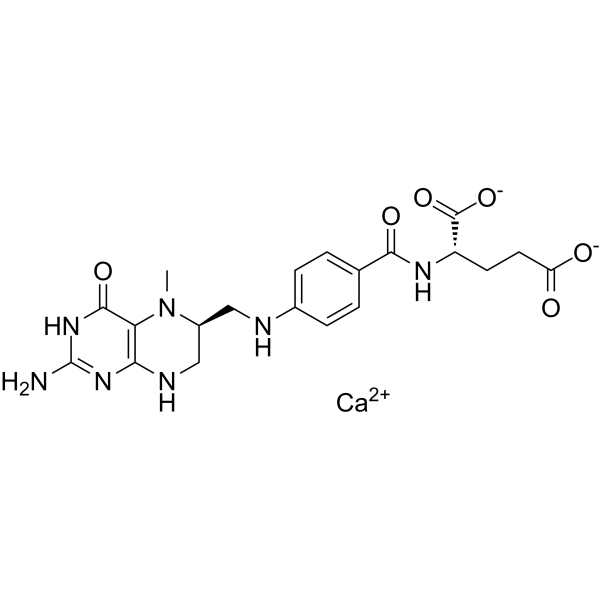
Levomefolate calcium is a synthetic calcium salt of L-5-methyltetrahydrofolate and an orally active and brain-penetrant folate supplement. Levomefolate calcium incorporates into body folate pools to increase plasma and red blood cell folate levels over time. Levomefolate calcium does not significantly increase folate concentrations in breast milk. Levomefolate calcium can be used for the research of neural tube defects and megaloblastic anemia .
Plevitrexed (ZD 9331; BGC 9331) is an orally active and potent thymidylate synthase (TS) inhibitor with a Ki of 0.44 nM. Plevitrexed is taken up via the α-folate receptor as well as the reduced folate carrier. Plevitrexed is used for gastric cancer in clinical . Plevitrexed is a click chemistry reagent, it contains an Alkyne group and can undergo copper-catalyzed azide-alkyne cycloaddition (CuAAc) with molecules containing Azide groups.
DSPE-PEG2000-Folate (DSPE-PEG2000 Folate) is a folate-containing PEG derivative. DSPE-PEG2000-Folate possesses targeting activity and binds to folate receptors in cancer cells. DSPE-PEG2000-Folate can be post-inserted into preformed liposomal bilayers to prepare folate-targeted liposomal formulations. DSPE-PEG2000-Folate forms micelles/lipid bilayers and can be used in studies of targeted drug delivery systems [2].
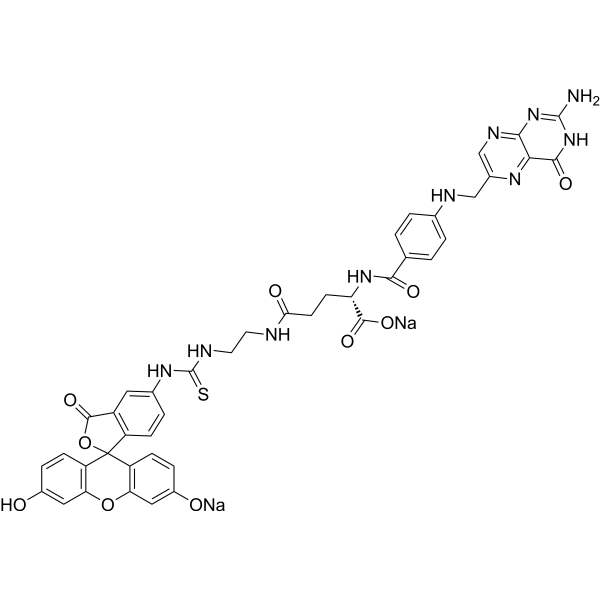
Folate-FITC (EC-17) is a folate receptor alpha (FRα) targeting contrast agent with fluorescent properties in the visible light spectrum. The Folate-FITC maximum excitation and emission wavelengths are 490 nm and 520 nm, respectively .
Pterin-6-carboxylic acid serves as a precursor for the formation of folate, which plays a critical role in cell growth, development, and repair. Pterine-6-carboxylic acid has been studied for its potential as a fluorescent dye .
DBCO-PEG1000-FA (DBCO-PEG1000-Folate) is a multifunctional bioconjugation reagent, which is a copolymer of DBCO and Folic acid (FA) (HY-16637) and can target folate receptors (FR). Folate receptors are highly overexpressed on the surface of many cancer cells (such as lung cancer, nasopharyngeal cancer, ovarian cancer, etc.), but exhibit extremely low expression levels in normal tissues. DBCO-PEG-FA can be used for click chemistry conjugation via its DBCO terminal, and thus applies to various bioconjugation and drug delivery applications .
DSPE-PEG-Folate, MW 5000 is a PEG derivative containing folic acid. DSPE-PEG-Folate, MW 5000 has a targeting effect and bind to folate receptors in cancer cells. DSPE-PEG-Folate, MW 5000 form micelles/lipid bilayer and can be used to targeted drug delivery system research .
DBCO-PEG2000-FA (DBCO-PEG2000-Folate) is a multifunctional bioconjugation reagent, which is a copolymer of DBCO and Folic acid (FA) (HY-16637) and can target folate receptors (FR). Folate receptors are highly overexpressed on the surface of many cancer cells (such as lung cancer, nasopharyngeal cancer, ovarian cancer, etc.), but exhibit extremely low expression levels in normal tissues. DBCO-PEG-FA can be used for click chemistry conjugation via its DBCO terminal, and thus applies to various bioconjugation and drug delivery applications .
Folate-PEG3-alkyne is a PEG-based PROTAC linker that can be used in the synthesis of PROTACs . Folate-PEG3-alkyne is a click chemistry reagent, it contains an Alkyne group and can undergo copper-catalyzed azide-alkyne cycloaddition (CuAAc) with molecules containing Azide groups.
Arfolitixorin is a potent 5-Fluorouracil (5-FU) moderator. Arfolitixorin is an immediately active form of Folate, [6R]-5,10-methylenetetrahydrofolate ([6R]-MTHF). Arfolitixorin is potent for the research of metastatic colorectal cancer .
DBCO-PEG-FA (DBCO-PEG-Folate) (MW 3400) is a multifunctional bioconjugation reagent, which is a copolymer of DBCO and Folic acid (FA) (HY-16637) and can target folate receptors (FR). Folate receptors are highly overexpressed on the surface of many cancer cells (such as lung cancer, nasopharyngeal cancer, ovarian cancer, etc.), but exhibit extremely low expression levels in normal tissues. DBCO-PEG-FA can be used for click chemistry conjugation via its DBCO terminal, and thus applies to various bioconjugation and drug delivery applications .
mPEG2000-FA (mPEG2000-Folate) is a polyethylene glycol derivative of Folic acid (HY-16637). Folic acid has a high affinity for folate receptors and can be used for cell membrane receptors for targeted drug delivery .
Folate-PEG3-C2-acid is the acid fragment of Folate-PEG3-NHS ester (HY-133493), which belongs to the PEG-type PROTAC linker and is used to synthesize PROTAC molecules.
EC-0225, a folate conjugate of two agents- one a potent microtubule inhibiting agent, and the second a DNA alkylating agent. EC-0225 inhibits the growth of folate receptor (FR)-positive KB cells with an IC50 of ~1 nM. EC-0225 can be selectively delivered to advanced FR-positive tumors without causing overt toxicity, such as lung carcinoma .
Idetrexed (ONX 0801) trisodium is a thymidylate synthase (TS) inhibitor with a Ki of 1.2 nM. Idetrexed trisodium can be specifically transported into α-folate receptor (α-FR)-overexpressing tumors, such as ovarian cancer .
DSPE-PEG3400-Folate is a PEG derivative containing folic acid. DSPE-PEG-Folate has a targeting effect and bind to folate receptors in cancer cells. DSPE-PEG-Folate form micelles/lipid bilayer and can be used to targeted drug delivery system research .
DSPE-PEG1000-Folate is a PEG derivative containing folic acid. DSPE-PEG-Folate has a targeting effect and bind to folate receptors in cancer cells. DSPE-PEG-Folate form micelles/lipid bilayer and can be used to targeted drug delivery system research .
DSPE-PEG5000-Folate is a PEG derivative containing folic acid. DSPE-PEG-Folate has a targeting effect and bind to folate receptors in cancer cells. DSPE-PEG-Folate form micelles/lipid bilayer and can be used to targeted drug delivery system research .
DBCO-PEG10000-FA (DBCO-PEG10000-Folate) is a multifunctional bioconjugation reagent, which is a copolymer of DBCO and Folic acid (FA) (HY-16637) and can target folate receptors (FR). Folate receptors are highly overexpressed on the surface of many cancer cells (such as lung cancer, nasopharyngeal cancer, ovarian cancer, etc.), but exhibit extremely low expression levels in normal tissues. DBCO-PEG-FA can be used for click chemistry conjugation via its DBCO terminal, and thus applies to various bioconjugation and drug delivery applications .
DBCO-PEG5000-FA (DBCO-PEG5000-Folate) is a multifunctional bioconjugation reagent, which is a copolymer of DBCO and Folic acid (FA) (HY-16637) and can target folate receptors (FR). Folate receptors are highly overexpressed on the surface of many cancer cells (such as lung cancer, nasopharyngeal cancer, ovarian cancer, etc.), but exhibit extremely low expression levels in normal tissues. DBCO-PEG-FA can be used for click chemistry conjugation via its DBCO terminal, and thus applies to various bioconjugation and drug delivery applications .
mPEG1000-FA (mPEG1000-Folate) is a polyethylene glycol derivative of Folic acid (HY-16637). Folic acid has a high affinity for folate receptors and can be used for cell membrane receptors for targeted drug delivery .
BOC-NH-PEG400-FA (BOC-NH-PEG400-Folate) is a PEG derivative modified with Folic acid (HY-16637). Folic acid (-FA) has a high affinity for folate receptors and can be used for cell membrane receptors for targeted drug delivery .
BOC-NH-PEG1000-FA (BOC-NH-PEG1000-Folate) is a PEG derivative modified with Folic acid (HY-16637). Folic acid (-FA) has a high affinity for folate receptors and can be used for cell membrane receptors for targeted drug delivery .
8-Arm-PEG400-FA (8-Arm-PEG400-Folate) is a PEG derivative with one Folic acid (HY-16637) molecule attached to each end of the PEG chain. Folic acid has a high affinity for folate receptors and can be used for targeted drug delivery to cell membrane receptors .
Glutamate carboxypeptidase is an endo/exopeptidase targeting folate and antifolate agents. Glutamate carboxypeptidase regulates intracellular folate homeostasis by hydrolyzing γ-polyglutamate chains. Glutamate carboxypeptidase is promising for research of antifolate agents and cancers .
Levomefolate disodium is a synthetic disodium salt of L-5-methyltetrahydrofolate and an orally active and brain-penetrant folate supplement. Levomefolate disodium incorporates into body folate pools to increase plasma and red blood cell folate levels over time. Levomefolate disodium does not significantly increase folate concentrations in breast milk. Levomefolate disodium can be used for the research of neural tube defects and megaloblastic anemia .
Pteropterin (Pteroyltriglutamic) monohydrate is an active form of folate. Pteropterin monohydrate shows inhibiting effect on tumor growth and has broad anticancer activity .
FA-PEG2000-COOH (Folate-PEG2000-COOH) is a Folic acid (HY-16637)-modified PEG derivative containing a carboxyl group (-COOH). The carboxyl group can easily form a stable amide bond with an amino group, or an ester bond with a hydroxyl group. Folic acid (-FA) has a high affinity for the folate receptor and can be used to target cell membrane receptors for drug delivery .
FA-PEG3400-COOH (Folate-PEG3400-COOH) is a Folic acid (HY-16637)-modified PEG derivative containing a carboxyl group (-COOH). The carboxyl group can easily form a stable amide bond with an amino group, or an ester bond with a hydroxyl group. Folic acid (-FA) has a high affinity for the folate receptor and can be used to target cell membrane receptors for drug delivery .
Arfolitixorin sulfate is a potent 5-Fluorouracil (5-FU) moderator. Arfolitixorin sulfate is an immediately active form of Folate, [6R]-5,10-methylenetetrahydrofolate ([6R]-MTHF). Arfolitixorin sulfate is potent for the research of metastatic colorectal cancer .
8-Deazahomofolic acid is an inhibitor of thymidylate synthase (TS) and other folate-related enzymes. 8-Deazahomofolic acid shows inhibitory activity against folate-dependent S. faecium, L. casei, and MTX (HY-14519) resistant strains. 8-Deazahomofolic acid also inhibits the growth of L1210 leukemia cells, with an IC50 value of 87.5 μM. 8-Deazahomofolic acid can be used in research on bacterial infections and tumors .
Cholesterol-PEG5000-Folate is a cholesterol PEG derivative that can form micelles through molecular self-assembly and has a longer half-life in vivo. Cholesterol-PEG5000-Folate can be used in drug delivery research .
Cholesterol-PEG3400-Folate is a cholesterol PEG derivative that can form micelles through molecular self-assembly and has a longer half-life in vivo. Cholesterol-PEG3400-Folate can be used in drug delivery research .
N-TETAMINE-pSar45-Folate is a lipid that is composed of a Folic acid (HY-16637) unit conjugated to a N-TETAMINE-pSar45. N-TETAMINE-pSar45-Folate can be used to prepare lipid nanoparticles for drug delivery.
mPEG5000-FA (mPEG5000-Folate) is a polyethylene glycol derivative of Folic acid (HY-16637). Folic acid has a high affinity for folate receptors and can be used for cell membrane receptors for targeted drug delivery .
16:0 Folate cap PE is a lipid layer containing phospholipid surfactant. 16:0 Folate cap PE can be used to prepare lipid nanoparticles for drug delivery .
BOC-NH-PEG3400-FA (BOC-NH-PEG3400-Folate) is a PEG derivative modified with Folic acid (HY-16637). Folic acid (-FA) has a high affinity for folate receptors and can be used for cell membrane receptors for targeted drug delivery .
BOC-NH-PEG5000-FA (BOC-NH-PEG5000-Folate) is a PEG derivative modified with Folic acid (HY-16637). Folic acid (-FA) has a high affinity for folate receptors and can be used for cell membrane receptors for targeted drug delivery .
BOC-NH-PEG2000-FA (BOC-NH-PEG2000-Folate) is a PEG derivative modified with Folic acid (HY-16637). Folic acid (-FA) has a high affinity for folate receptors and can be used for cell membrane receptors for targeted drug delivery .
BOC-NH-PEG10000-FA (BOC-NH-PEG10000-Folate) is a PEG derivative modified with Folic acid (HY-16637). Folic acid (-FA) has a high affinity for folate receptors and can be used for cell membrane receptors for targeted drug delivery .
BOC-NH-PEG600-FA (BOC-NH-PEG600-Folate) is a PEG derivative modified with Folic acid (HY-16637). Folic acid (-FA) has a high affinity for folate receptors and can be used for cell membrane receptors for targeted drug delivery .
4-Arm-PEG5000-FA (4-Arm-PEG5000-Folate) is a PEG derivative with one Folic acid (HY-16637) molecule attached to each end of the PEG chain. Folic acid has a high affinity for folate receptors and can be used for targeted drug delivery to cell membrane receptors .
8-Arm-PEG2000-FA (8-Arm-PEG2000-Folate) is a PEG derivative with one Folic acid (HY-16637) molecule attached to each end of the PEG chain. Folic acid has a high affinity for folate receptors and can be used for targeted drug delivery to cell membrane receptors .
4-Arm-PEG2000-FA (4-Arm-PEG2000-Folate) is a PEG derivative with one Folic acid (HY-16637) molecule attached to each end of the PEG chain. Folic acid has a high affinity for folate receptors and can be used for targeted drug delivery to cell membrane receptors .
8-Arm-PEG10000-FA (8-Arm-PEG10000-Folate) is a PEG derivative with one Folic acid (HY-16637) molecule attached to each end of the PEG chain. Folic acid has a high affinity for folate receptors and can be used for targeted drug delivery to cell membrane receptors .
8-Arm-PEG3400-FA (8-Arm-PEG3400-Folate) is a PEG derivative with one Folic acid (HY-16637) molecule attached to each end of the PEG chain. Folic acid has a high affinity for folate receptors and can be used for targeted drug delivery to cell membrane receptors .
4-Arm-PEG600-FA (4-Arm-PEG600-Folate) is a PEG derivative with one Folic acid (HY-16637) molecule attached to each end of the PEG chain. Folic acid has a high affinity for folate receptors and can be used for targeted drug delivery to cell membrane receptors .
8-Arm-PEG5000-FA (8-Arm-PEG5000-Folate) is a PEG derivative with one Folic acid (HY-16637) molecule attached to each end of the PEG chain. Folic acid has a high affinity for folate receptors and can be used for targeted drug delivery to cell membrane receptors .
8-Arm-PEG600-FA (8-Arm-PEG600-Folate) is a PEG derivative with one Folic acid (HY-16637) molecule attached to each end of the PEG chain. Folic acid has a high affinity for folate receptors and can be used for targeted drug delivery to cell membrane receptors .
4-Arm-PEG400-FA (4-Arm-PEG400-folate) is a PEG derivative with one Folic acid (HY-16637) molecule attached to each end of the PEG chain. Folic acid has a high affinity for folate receptors and can be used for targeted drug delivery to cell membrane receptors .
8-Arm-PEG1000-FA (8-Arm-PEG1000-Folate) is a PEG derivative with one Folic acid (HY-16637) molecule attached to each end of the PEG chain. Folic acid has a high affinity for folate receptors and can be used for targeted drug delivery to cell membrane receptors .
4-Arm-PEG1000-FA (4-Arm-PEG1000-Folate) is a PEG derivative with one Folic acid (HY-16637) molecule attached to each end of the PEG chain. Folic acid has a high affinity for folate receptors and can be used for targeted drug delivery to cell membrane receptors .
4-Arm-PEG10000-FA (4-Arm-PEG10000-Folate) is a PEG derivative with one Folic acid (HY-16637) molecule attached to each end of the PEG chain. Folic acid has a high affinity for folate receptors and can be used for targeted drug delivery to cell membrane receptors .
4-Arm-PEG3400-FA (4-Arm-PEG3400-Folate) is a PEG derivative with one Folic acid (HY-16637) molecule attached to each end of the PEG chain. Folic acid has a high affinity for folate receptors and can be used for targeted drug delivery to cell membrane receptors .
6-Arm-PEG5000-FA (6-Arm-PEG5000-Folate) is a PEG derivative modified with Folic acid (HY-16637). Polyethylene glycol can increase solubility and stability and reduce the immunogenicity of peptides and proteins. It can also inhibit the nonspecific binding of charged molecules to modified surfaces. Folic acid (-FA) has a high affinity for folate receptors and can be used for cell membrane receptors for targeted drug delivery .
6-Arm-PEG1000-FA (6-Arm-PEG1000-Folate) is a PEG derivative modified with Folic acid (HY-16637). Polyethylene glycol can increase solubility and stability and reduce the immunogenicity of peptides and proteins. It can also inhibit the nonspecific binding of charged molecules to modified surfaces. Folic acid (-FA) has a high affinity for folate receptors and can be used for cell membrane receptors for targeted drug delivery .
6-Arm-PEG2000-FA (6-Arm-PEG2000-Folate) is a PEG derivative modified with Folic acid (HY-16637). Polyethylene glycol can increase solubility and stability and reduce the immunogenicity of peptides and proteins. It can also inhibit the nonspecific binding of charged molecules to modified surfaces. Folic acid (-FA) has a high affinity for folate receptors and can be used for cell membrane receptors for targeted drug delivery .
6-Arm-PEG600-FA (6-Arm-PEG600-Folate) is a PEG derivative modified with Folic acid (HY-16637). Polyethylene glycol can increase solubility and stability and reduce the immunogenicity of peptides and proteins. It can also inhibit the nonspecific binding of charged molecules to modified surfaces. Folic acid (-FA) has a high affinity for folate receptors and can be used for cell membrane receptors for targeted drug delivery .
6-Arm-PEG3400-FA (6-Arm-PEG3400-Folate) is a PEG derivative modified with Folic acid (HY-16637). Polyethylene glycol can increase solubility and stability and reduce the immunogenicity of peptides and proteins. It can also inhibit the nonspecific binding of charged molecules to modified surfaces. Folic acid (-FA) has a high affinity for folate receptors and can be used for cell membrane receptors for targeted drug delivery .
6-Arm-PEG400-FA (6-Arm-PEG400-Folate) is a PEG derivative modified with Folic acid (HY-16637). Polyethylene glycol can increase solubility and stability and reduce the immunogenicity of peptides and proteins. It can also inhibit the nonspecific binding of charged molecules to modified surfaces. Folic acid (-FA) has a high affinity for folate receptors and can be used for cell membrane receptors for targeted drug delivery .
6-Arm-PEG10000-FA (6-Arm-PEG10000-Folate) is a PEG derivative modified with Folic acid (HY-16637). Polyethylene glycol can increase solubility and stability and reduce the immunogenicity of peptides and proteins. It can also inhibit the nonspecific binding of charged molecules to modified surfaces. Folic acid (-FA) has a high affinity for folate receptors and can be used for cell membrane receptors for targeted drug delivery .
EET analog 7 is an epoxyeicosatrienoic acid (EET) analog that can be conjugated with folate receptor ligands to target kidney cells expressing high levels of folate receptors. EET analog 7 can be used for constructing kidney-targeted drug conjugates .
FA-PEG1000-COOH (Folate-PEG1000-COOH) is a Folic acid (HY-16637)-modified PEG derivative containing a carboxyl group (-COOH). The carboxyl group can easily form a stable amide bond with an amino group, or an ester bond with a hydroxyl group. Folic acid (-FA) has a high affinity for the folate receptor and can be used to target cell membrane receptors for drug delivery .
FA-PEG5000-COOH (Folate-PEG5000-COOH) is a Folic acid (HY-16637)-modified PEG derivative containing a carboxyl group (-COOH). The carboxyl group can easily form a stable amide bond with an amino group, or an ester bond with a hydroxyl group. Folic acid (-FA) has a high affinity for the folate receptor and can be used to target cell membrane receptors for drug delivery .
FA-PEG10000-COOH (Folate-PEG10000-COOH) is a Folic acid (HY-16637)-modified PEG derivative containing a carboxyl group (-COOH). The carboxyl group can easily form a stable amide bond with an amino group, or an ester bond with a hydroxyl group. Folic acid (-FA) has a high affinity for the folate receptor and can be used to target cell membrane receptors for drug delivery .
FA-PEG400-COOH (Folate-PEG400-COOH) is a Folic acid (HY-16637)-modified PEG derivative containing a carboxyl group (-COOH). The carboxyl group can easily form a stable amide bond with an amino group, or an ester bond with a hydroxyl group. Folic acid (-FA) has a high affinity for the folate receptor and can be used to target cell membrane receptors for drug delivery .
FA-PEG600-COOH (Folate-PEG600-COOH) is a Folic acid (HY-16637)-modified PEG derivative containing a carboxyl group (-COOH). The carboxyl group can easily form a stable amide bond with an amino group, or an ester bond with a hydroxyl group. Folic acid (-FA) has a high affinity for the folate receptor and can be used to target cell membrane receptors for drug delivery .
FA-PEG10000-ACA (Folate-PEG10000-ACA) is a compound composed of Folic acid (HY-16637), PEG, and acrylamide. Folic acid (-FA) has a high affinity for folic acid receptors and can be used to target cell membrane receptors for drug delivery.
FA-PEG2000-ACA (Folate-PEG2000-ACA) is a compound composed of Folic acid (HY-16637), PEG, and acrylamide. Folic acid (-FA) has a high affinity for folic acid receptors and can be used to target cell membrane receptors for drug delivery.
FA-PEG3400-ACA (Folate-PEG3400-ACA) is a compound composed of Folic acid (HY-16637), PEG, and acrylamide. Folic acid (-FA) has a high affinity for folic acid receptors and can be used to target cell membrane receptors for drug delivery.
FA-PEG5000-ACA (Folate-PEG5000-ACA) is a compound composed of Folic acid (HY-16637), PEG, and acrylamide. Folic acid (-FA) has a high affinity for folic acid receptors and can be used to target cell membrane receptors for drug delivery.
FA-PEG1000-ACA (Folate-PEG1000-ACA) is a compound composed of Folic acid (HY-16637), PEG, and acrylamide. Folic acid (-FA) has a high affinity for folic acid receptors and can be used to target cell membrane receptors for drug delivery.
FA-PEG400-ACA (Folate-PEG400-ACA) is a compound composed of Folic acid (HY-16637), PEG, and acrylamide. Folic acid (-FA) has a high affinity for folic acid receptors and can be used to target cell membrane receptors for drug delivery.
FA-PEG600-ACA (Folate-PEG600-ACA) is a compound composed of Folic acid (HY-16637), PEG, and acrylamide. Folic acid (-FA) has a high affinity for folic acid receptors and can be used to target cell membrane receptors for drug delivery.
FA-PEG600-Cholesterol (Folate-PEG600-Cholesterol) is a multifunctional drug delivery system composed of Folic acid (HY-16637), polyethylene glycol (PEG), and Cholesterol (HY-N0322). Folic acid (FA) has a high affinity for folic acid receptors and can be used to target cell membrane receptors for drug delivery. Cholesterol can improve the circulation time of encapsulated drugs .
FA-PEG400-Cholesterol (Folate-PEG400-Cholesterol) is a multifunctional drug delivery system composed of Folic acid (HY-16637), polyethylene glycol (PEG), and Cholesterol (HY-N0322). Folic acid (FA) has a high affinity for folic acid receptors and can be used to target cell membrane receptors for drug delivery. Cholesterol can improve the circulation time of encapsulated drugs .
FA-PEG10000-Cholesterol (Folate-PEG10000-Cholesterol) is a multifunctional drug delivery system composed of Folic acid (HY-16637), polyethylene glycol (PEG), and Cholesterol (HY-N0322). Folic acid (FA) has a high affinity for folic acid receptors and can be used to target cell membrane receptors for drug delivery. Cholesterol can improve the circulation time of encapsulated drugs .
FA-PEG5000-Cholesterol (Folate-PEG5000-Cholesterol) is a multifunctional drug delivery system composed of Folic acid (HY-16637), polyethylene glycol (PEG), and Cholesterol (HY-N0322). Folic acid (FA) has a high affinity for folic acid receptors and can be used to target cell membrane receptors for drug delivery. Cholesterol can improve the circulation time of encapsulated drugs .
FA-PEG2000-Cholesterol (Folate-PEG2000-Cholesterol) is a multifunctional drug delivery system composed of Folic acid (HY-16637), polyethylene glycol (PEG), and Cholesterol (HY-N0322). Folic acid (FA) has a high affinity for folic acid receptors and can be used to target cell membrane receptors for drug delivery. Cholesterol can improve the circulation time of encapsulated drugs .
FA-PEG3400-Cholesterol (Folate-PEG3400-Cholesterol) is a multifunctional drug delivery system composed of Folic acid (HY-16637), polyethylene glycol (PEG), and Cholesterol (HY-N0322). Folic acid (FA) has a high affinity for folic acid receptors and can be used to target cell membrane receptors for drug delivery. Cholesterol can improve the circulation time of encapsulated drugs .
FA-PEG1000-Cholesterol (Folate-PEG1000-Cholesterol) is a multifunctional drug delivery system composed of Folic acid (HY-16637), polyethylene glycol (PEG), and Cholesterol (HY-N0322). Folic acid (FA) has a high affinity for folic acid receptors and can be used to target cell membrane receptors for drug delivery. Cholesterol can improve the circulation time of encapsulated drugs .
FA-PEG1000-NH2 (Folate-PEG1000-NH2) is a multifunctional drug delivery system composed of Folic acid (HY-16637), polyethylene glycol (PEG), and NH2. Folic acid (FA) has a high affinity for folic acid receptors and can be used to target cell membrane receptors for drug delivery.
FA-PEG5000-NH2 (Folate-PEG5000-NH2) is a multifunctional drug delivery system composed of Folic acid (HY-16637), polyethylene glycol (PEG), and NH2. Folic acid (FA) has a high affinity for folic acid receptors and can be used to target cell membrane receptors for drug delivery.
FA-PEG2000-NH2 (Folate-PEG2000-NH2) is a multifunctional drug delivery system composed of Folic acid (HY-16637), polyethylene glycol (PEG), and NH2. Folic acid (FA) has a high affinity for folic acid receptors and can be used to target cell membrane receptors for drug delivery.
FA-PEG3400-NH2 (Folate-PEG3400-NH2) is a multifunctional drug delivery system composed of Folic acid (HY-16637), polyethylene glycol (PEG), and NH2. Folic acid (FA) has a high affinity for folic acid receptors and can be used to target cell membrane receptors for drug delivery.
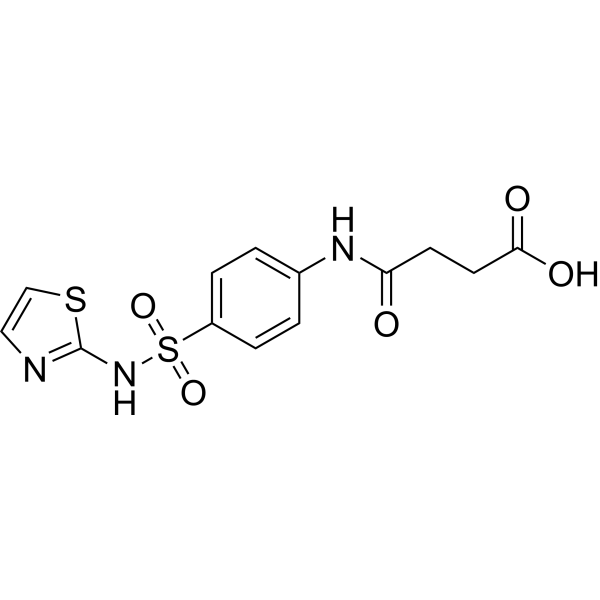
Succinylsulfathiazole (Succinylsulphathiazole) is a long-acting sulfonamide antibiotic with localized gut-specific antibacterial activity and is orally active. Succinylsulfathiazole inhibits bacterial folate synthesis, reduces coliform counts, suppresses intestinal bacterial growth and vitamin biosynthesis, and depletes gut folate-producing bacteria. Succinylsulfathiazole modulates hepatic mTOR signaling, diminishes cecal fermentation, decreases hepatic folate levels and total folate excretion, elevates nitrogen excretion and reduces the fermentability of certain dietary fibers. Succinylsulfathiazole induces folate deficiency and triggers biotin- and folate-related nutritional deficiency symptoms in rats and C57BL/6 mice .
Chlorasquin inhibits thymidylate synthetase with an approximate Ki value of 4.9 μM. Chlorasquin is also a folate antagonist, testing the Methotrexate (HY-14519) effect. Chlorasquin binds tighter to dihydrofolate reductase at alkaline pH than does Methotrexate, which is promising for research of antipsoriatic agents .
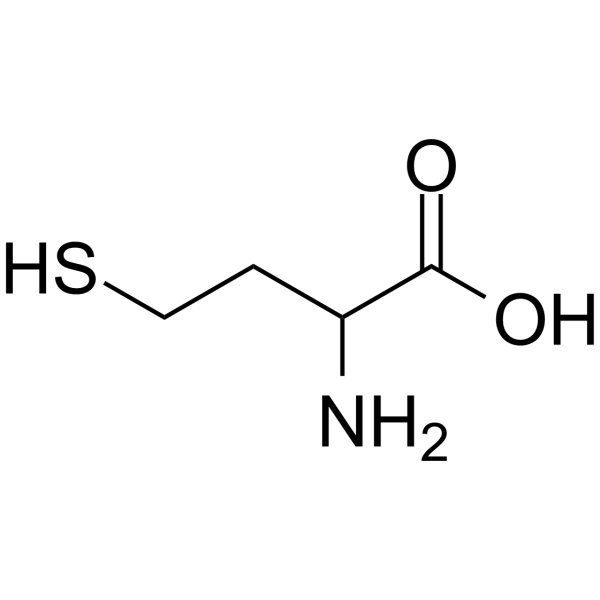
DL-Homocysteine is a weak neurotoxin, and can affect the production of kynurenic acid in the brain. DL-Homocysteine is correlated with Vitamin B12, renal functions and folate levels, affects the cross-sectional cognition indirectly through white matter microstructural integrity .
PLLA5000-PEG2000-FOL is a polylactic acid derivative. Polylactic acid derivatives have strong binding affinity to folate receptors and clear biodegradability. PLLA5000-PEG2000-FOL can be used in drug delivery research .
PLLA10000-PEG5000-FOL is a polylactic acid derivative. Polylactic acid derivatives have strong binding affinity to folate receptors and clear biodegradability. PLLA10000-PEG5000-FOL can be used in drug delivery research .
PLLA5000-PEG5000-FOL is a polylactic acid derivative. Polylactic acid derivatives have strong binding affinity to folate receptors and clear biodegradability. PLLA5000-PEG5000-FOL can be used in drug delivery research .
PLLA20000-PEG5000-FOL is a polylactic acid derivative. Polylactic acid derivatives have strong binding affinity to folate receptors and clear biodegradability. PLLA20000-PEG5000-FOL can be used in drug delivery research .
PLLA10000-PEG2000-FOL is a polylactic acid derivative. Polylactic acid derivatives have strong binding affinity to folate receptors and clear biodegradability. PLLA10000-PEG2000-FOL can be used in drug delivery research .
PLLA20000-PEG2000-FOL is a polylactic acid derivative. Polylactic acid derivatives have strong binding affinity to folate receptors and clear biodegradability. PLLA20000-PEG2000-FOL can be used in drug delivery research .
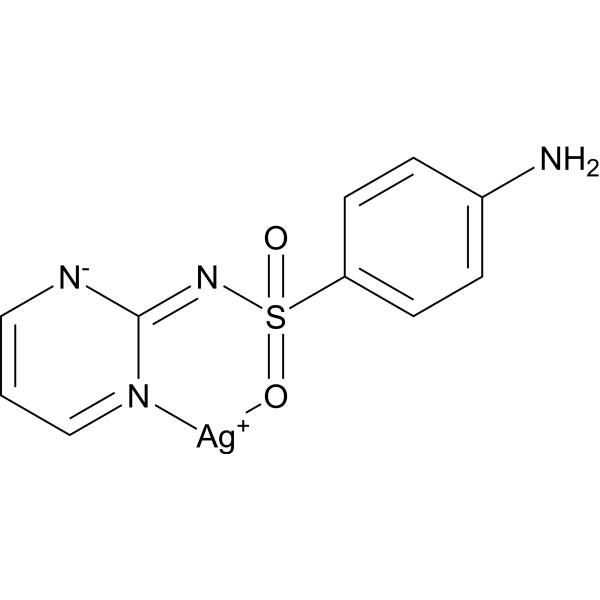
Silver sulfadiazine (AgSD), a sulfonamide antibiotic, effects a dual inhibitory action on bacterial growth by its sulfa moiety (SD-SDZ) that prevents bacterial folate absorption and subsequent DNA synthesis. The silver that is released from Silver sulfadiazine binds and disrupts the DNA structure, precluding bacterial DNA replication .
FRα-targeting peptide C7 is a selective peptide ligand for folate receptor α (FRα) that has specific binding to FRα expressing cells and in vivo tumor targeting ability. FRα-targeting peptide C7 can be used in the research of tumor diagnosis and treatment .
FRα-targeting peptide C7 TFA is a selective peptide ligand for folate receptor α (FRα) that has specific binding to FRα expressing cells and in vivo tumor targeting ability. FRα-targeting peptide C7 TFA can be used in the research of tumor diagnosis and treatment .
4A-BFA-11 is a folate-targeted PEG-MMAE conjugate that exhibits specific binding affinity for the folate receptor α (FR-α) (KD = 106.7 nM). 4A-BFA-11 achieves tumor enrichment by combining PEG-mediated long circulation (EPR effect) and folate receptor targeting. 4A-BFA-11 undergoes enzymatic cleavage at the tumor site to release the active payload, enabling precise action. 4A-BFA-11 sefficiently carries, targets, and controls the release of MMAE in tumor tissues in a HeLa mouse model. 4A-BFA-11 can be used for cervical cancer, ovarian cancer, and lung cancer research .
Farletuzumab (MORAb-003) is a potent folate receptor-alpha (FRα) inhibitor. Farletuzumab is a humanized monoclonal antibody with high affinity for FRα. Farletuzumab possesses growth-inhibitory functions on cells overexpressing FRα. Farletuzumab can be used in research of cancer .
Silver sulfadiazine (Standard) is the analytical standard of Silver sulfadiazine. This product is intended for research and analytical applications. Silver sulfadiazine (AgSD), a sulfonamide antibiotic, effects a dual inhibitory action on bacterial growth by its sulfa moiety (SD-SDZ) that prevents bacterial folate absorption and subsequent DNA synthesis. The silver that is released from Silver sulfadiazine binds and disrupts the DNA structure, precluding bacterial DNA replication .
Talotrexin (PT523), an analog of Aminopterin (HY-14518), is a nonpolyglutamatable classic antifolate. Talotrexin is a RFC (reduced folate carrier) specific inhibitor and selectively inhibits RFC transport. Talotrexin shows antitumor activity by targeting DHFR to inhibit tumor growth .
Onvontatug (BAT8006 Antibody) is a humanized monoclonal antibody targeting folate receptor α (FRα). Onvontatug can be used to construct antibody-drug conjugates (ADCs), such as BAT8006. It is applicable to research related to platinum-resistant ovarian cancer .
AMT-151 Antibody is a monoclonal antibody inhibitor targeting folate receptor α. AMT-151 Antibody can be used to synthesize the antibody-drug conjugate (ADC) AMT-151. AMT-151 Antibody can be used to research related to cancer .
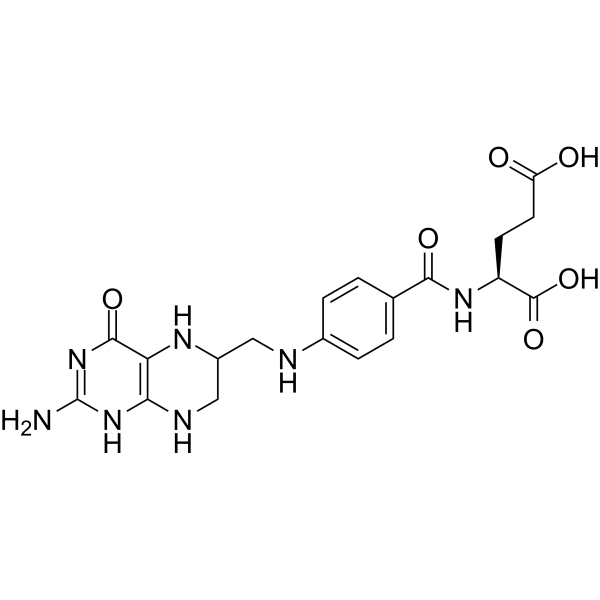
Tetrahydrofolic acid (L-5,6,7,8-Tetrahydrofolic acid) trihydrochloride is the biologically active vitamin B9 folate derivative. Tetrahydrofolic acid trihydrochloride is a donor of one-carbon groups for amino acids, nucleic acids, and lipids. Tetrahydrofolic acid trihydrochloride serves as an acceptor of free formaldehyde, producing 5,10-methylenetetrahydrofolate-Tetrahydrofolic acid .
Tetrahydrofolic acid (L-5,6,7,8-Tetrahydrofolic acid) is the biologically active vitamin B9 folate derivative. Tetrahydrofolic acid is a donor of one-carbon groups for amino acids, nucleic acids, and lipids. Tetrahydrofolic acid serves as an acceptor of free formaldehyde, producing 5,10-methylenetetrahydrofolate-Tetrahydrofolic acid .
Talotrexin monoammonium is the monoammonium salt form of Talotrexin (HY-10824). Talotrexin monoammonium is an analog of Aminopterin (HY-14518), and is a nonpolyglutamatable classic antifolate. Talotrexin monoammonium is a reduced folate carrier (RFC) specific inhibitor and selectively inhibits RFC transport. Talotrexin monoammonium shows antitumor activity by targeting DHFR to inhibit tumor growth .
IKS012 Antibody (Isumab01) is a monoclonal antibody inhibitor targeting folate receptor α (FRA). IKS012 Antibody can be used to synthesize the antibody-drug conjugate (ADC) IKS012. IKS012 Antibody can be used to research related to platinum-resistant ovarian cancer .
Farletuzumab ecteribulin (MORAb-202) is an antibody-drug conjugate (ADC), consisting of the humanized anti-human folate receptor alpha (FRA) antibody Farletuzumab (HY-P99153) conjugated via reduced interchain disulfide bonds to Mal-PEG2-Val-Cit-PAB-eribulin. Farletuzumab ecteribulin has a agent-to-antibody ratio of 4.0. Farletuzumab ecteribulin is highly cytotoxic to FRA-positive cells in vitro. Farletuzumab ecteribulin has potent antitumor activity.
Sulfathiourea is an inhibitor of Pneumocystis carinii dihydropteroate synthetase (dihydropteroate synthetase), with an IC50 of 0.022 μM and a Ki of 16.5 nM. Sulfathiourea blocks folate biosynthesis by inhibiting the enzyme that links 7,8-dihydro-6-hydroxymethylpterin pyrophosphate with p-aminobenzoic acid to form dihydropteroate. Sulfathiourea can be used in research related to *Pneumocystis carinii* pneumonia .
Sulfaproxyline (Sulfaproxylin; Sulfaproxyline) is a sulfonamide antibiotic that inhibits bacterial dihydropteroate synthase, thereby blocking folate biosynthesis required for nucleic acid production. Sulfaproxyline shows antimicrobial activity primarily against Staphylococcus species and common uropathogens. Sulfaproxyline reduces bacterial growth by impairing DNA and protein synthesis. Sulfaproxyline can be used for research of staphylococcal and urinary tract infections .
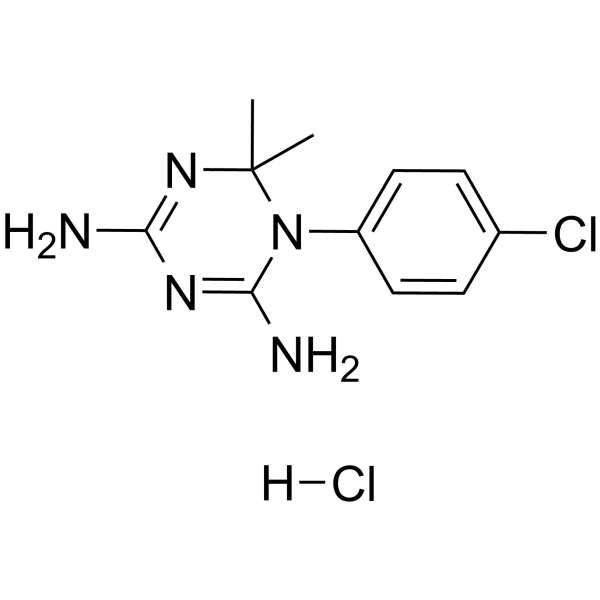
Cycloguanil (Chlorguanide triazine) is a dihydrofolate reductase (DHFR) inhibitor with an IC50 of 10.8 μM against human DHFR. Cycloguanil blocks the folate metabolic pathway, thereby affecting nucleotide synthesis and interfering with DNA replication. Cycloguanil inhibits DHFR in Plasmodium and is thus used in malaria research. Cycloguanil also potently inhibits DHFR in human cancer cells and blocks the transcriptional activity of STAT3, thereby exhibiting anticancer activity .
Cycloguanil (Chlorguanide triazine) hydrochloride is a dihydrofolate reductase (DHFR) inhibitor with an IC50 of 10.8 μM against human DHFR. Cycloguanil hydrochloride blocks the folate metabolic pathway, thereby affecting nucleotide synthesis and interfering with DNA replication. Cycloguanil inhibits DHFR in Plasmodium and is thus used in malaria research. Cycloguanil hydrochloride also potently inhibits DHFR in human cancer cells and blocks the transcriptional activity of STAT3, thereby exhibiting anticancer activity .
Succinylsulfathiazole (Standard) (Succinylsulphathiazole) is the analytical standard of Succinylsulfathiazole (HY-B0921). This product is intended for research and analytical applications. Succinylsulfathiazole is a long-acting sulfonamide antibiotic with localized gut-specific antibacterial activity and is orally active. Succinylsulfathiazole inhibits bacterial folate synthesis, reduces coliform counts, suppresses intestinal bacterial growth and vitamin biosynthesis, and depletes gut folate-producing bacteria. Succinylsulfathiazole modulates hepatic mTOR signaling, diminishes cecal fermentation, decreases hepatic folate levels and total folate excretion, elevates nitrogen excretion and reduces the fermentability of certain dietary fibers. Succinylsulfathiazole induces folate deficiency and triggers biotin- and folate-related nutritional deficiency symptoms in rats and C57BL/6 mice .
MMV675968 is an inhibitor of Acinetobacter baumannii dihydrofolate reductase (AbDHFR) with an IC50 of 8.5 nM, and it exhibits selectivity against human DHFR. MMV675968 inhibits dihydrofolate reductase in Cryptosporidium, Plasmodium, and Escherichia coli, disrupting the thymidylate cycle and folate biosynthesis pathway. MMV675968 inhibits the growth of multiple A. baumannii strains, including clinical isolates and environmental isolates. MMV675968 is applicable to research related to A. baumannii infections .
Levomefolate calcium (Standard) is the analytical standard of Levomefolate calcium. This product is intended for research and analytical applications. Levomefolate calcium is a synthetic calcium salt of L-5-methyltetrahydrofolate and an orally active and brain-penetrant folate supplement. Levomefolate calcium incorporates into body folate pools to increase plasma and red blood cell folate levels over time. Levomefolate calcium does not significantly increase folate concentrations in breast milk. Levomefolate calcium can be used for the research of neural tube defects and megaloblastic anemia .
mPEG3400-amine can synthesize folate-conjugated polymer micelles for encapsulation of anticancer agent 9-nitrocamptothecin (HY-16560). folate-conjugated polymer micelles are effective carriers of insoluble anticancer drugs, which can avoid macrophages and play a role in endocytosis of tumor cells mediated by folate receptors (FR).
mPEG4000-amine can be used to synthesize folate-conjugated polymer micelles for encapsulating anticancer agent 9-nitrocamptothecin (HY-16560). folate-conjugated polymer micelles are effective carriers of insoluble anticancer drugs, which can avoid macrophages and play a role in endocytosis of tumor cells mediated by folate receptors (FR).
mPEG350-amine can synthesize folate-conjugated polymer micelles for encapsulation of anticancer agent 9-nitrocamptothecin (HY-16560). folate-conjugated polymer micelles are effective carriers of insoluble anticancer drugs, which can avoid macrophages and play a role in endocytosis of tumor cells mediated by folate receptors (FR).
Opugotamig olatansine (IMGN151) is a folate receptor alpha (FRα)-targeting antibody-drug conjugate (ADC). Opugotamig olatansine comprises antibody Opugotamig (HY-P990935) and linker-payload NMS-P945 (HY-185569). Opugotamig olatansine binds to two independent epitopes of FRα and promotes antibody binding, internalization, and processing. Opugotamig olatansine can be used for the research of FRα-positive ovarian cancer .
Levomefolate- 13C5 calcium)is the 13C-labeled Levomefolate calcium (HY-17383). Levomefolate calcium is a synthetic calcium salt of L-5-methyltetrahydrofolate and an orally active and brain-penetrant folate supplement. Levomefolate calcium incorporates into body folate pools to increase plasma and red blood cell folate levels over time. Levomefolate calcium does not significantly increase folate concentrations in breast milk. Levomefolate calcium can be used for the research of neural tube defects and megaloblastic anemia .
EC1454 is a peptide compound with anticancer activity that targets folate receptor-expressing cancers. EC1454 is a folate-tubulysin conjugate that can be used to prepare drug delivery conjugates for targeted therapy .
Desacetylvinblastine hydrazide (Deacetylvinblastine hydrazide; DAVLBH) is an active component of EC145, a folate-targeted drug conjugate. Desacetylvinblastine hydrazide interferes with the formation of the mitotic spindle, and thus inhibits cell division and leads to cell death. Desacetylvinblastine hydrazide exhibits antitumor activity against folate receptor (FR)-positive tumor .
Mirvetuximab (M9346A) is an anti-FOLR1 (folate receptor 1) monoclonal antibody. Mirvetuximab is the antibody moiety of folate receptor alpha (FRα)-targeting ADC (Mirvetuximab soravtansine). Mirvetuximab soravtansine can be used in ovarian and other FRα-positive cancer research .
Mirvetuximab (M9346A) (powder) is an anti-FOLR1 (folate receptor 1) monoclonal antibody. Mirvetuximab (powder) is the antibody moiety of folate receptor alpha (FRα)-targeting ADC (Mirvetuximab soravtansine). Mirvetuximab soravtansine can be used in ovarian and other FRα-positive cancer research .
5-Methyltetrahydrofolic acid- 13C5 is the 13C-labeled 5-Methyltetrahydrofolic acid. 5-Methyltetrahydrofolic acid (5-Methyl THF) is a biologically active form of folic acid. 5-Methyltetrahydrofolic acid is a methylated derivate of tetrahydrofolate. 5-Methyltetrahydrofolic acid is the predominant natural dietary folate and the principal form of folate in plasma and cerebrospinal fluid .
PEG-bis-amine (MW 1000) synthesizes folate-conjugated polymeric micelles for encapsulation of the anticancer agent 9-nitrocamptothecin HY-16560 (HY-16560). Folic acid-conjugated polymer micelles are effective carriers of insoluble anticancer drugs, which can avoid macrophages and play a role in endocytosis of tumor cells mediated by folate receptors (FR).
Arfolitixorin calcium is a bioactive compound that acts as an enzyme substrate. Arfolitixorin calcium is used as a substrate for methylenetetrahydrofolate reductase to generate 5-methyltetrahydrofolate. Arfolitixorin calcium may have potential applications in neurobiological research, particularly in studies related to gene expression and metabolism. Research on arfolitixorin calcium helps reveal the functional genetics of bird genes .
Methotrexate metabolite (DAMPA) is an active metabolite of Methotrexate. Methotrexate is a Folic acid (HY-16637) antagonist, widely used as an immunosuppressant. Methotrexate metabolite is an antimalarial agent that inhibits parasite growth under physiological folic acid conditions, with IC50 values of 446 nM and 812 nM against folic acid-sensitive strains and highly resistant strains, respectively. Methotrexate metabolite exhibits pharmacokinetic characteristics of rapid clearance and extensive metabolism, with a mean clearance rate of 1.9 l/kg/h and a mean terminal half-life of 51 minutes. Methotrexate metabolite is promising for research in the field of inflammation .
Antifolate C2 is an anti-folate compound that has inhibitory effects on the proliferation of non-squamous non-small cell lung cancer (NS-NSCLC). Antifolate C2 achieves tumor selectivity by targeting proton-coupled folate transporter (PCFT), which is more selective to PCFT than the commonly used anti-folate drug Pemetrexed (HY-10820). Antifolate C2 blocks the biosynthesis of deoxypurine nucleotides by inhibiting glycinamide ribonucleotide formyltransferase (GARFTase), ultimately inhibiting the proliferation of tumor cells. Antifolate C2 can be used in studies of NS-NSCLC, especially in patients who do not respond well to Pemetrexed .
PEG4000-bis-amine synthesizes folate-conjugated polymeric micelles for encapsulation of the anticancer agent 9-nitrocamptothecin HY-16560 (HY-16560). Folic acid-conjugated polymer micelles are effective carriers of insoluble anticancer drugs, which can avoid macrophages and play a role in endocytosis of tumor cells mediated by folate receptors (FR).
Dihydrofolate reductase is a key enzyme in folate metabolism and, therefore, in the production of thymidine. Its role in thymidine biosynthesis is the reduction of dihydrofolate to tetrahydrofolate using the cofactor NADPH .
Cy3-PEG2000-FA is a fluorescent folate-PEG derivative with excitation/emission wavelengths of ~550 nm/~570 nm. Cy3-PEG2000-FA can be readily traced by its intense red fluorescent signal. Cy3-PEG2000-FA can be used for cell imaging, folate receptor targeting and detection.
Acetylpyrazine (2-Acetylpyrazine) is used to form many polycyclic compounds, as useful structures in pharmaceuticals and perfumes. Acetylpyrazine is a component of the folates (vitamin B compounds) .
DHFR-IN-26 is an Escherichia coli dihydrofolate reductase (ecDHFR) inhibitor with an IC50 of 0.75 nM. DHFR-IN-26 exerts broad-spectrum antibacterial activity. DHFR-IN-26 disrupts folate metabolism, nucleotide synthesis, and bacterial amino acid metabolic pathways. DHFR-IN-26 disrupts bacterial inner membranes, inhibited biofilm formation, and attenuated phage-related processes. DHFR-IN-26 shows lower toxicity to non-cancerous cells. DHFR-IN-26 can be used for the research of bacterial infections (including infections caused by methicillin-resistant Staphylococcus aureus, multidrug-resistant Escherichia coli, multidrug-resistant Pseudomonas aeruginosa, and lysogenic bacteria) .
4-Aminobenzoic acid-d4 is the deuterium labeled 4-Aminobenzoic acid. 4-Aminobenzoic acid is an intermediate in the synthesis of folate by bacteria, plants, and fungi.
Mirvetuximab soravtansine (IMGN853) solution is an anti-folate receptor α (FRα) antibody drug-conjugate (ADC) consisting of the cytotoxic maytansinoid, DM4, covalently linked to the humanized monoclonal antibody M9346A, and the drug-linker conjugate for ADC is sulfo-SPDB-DM4 (HY-101141). Mirvetuximab soravtansine selectively binds to folate receptor 1 (FOLR1). Mirvetuximab soravtansine has an anti-proliferative effect via growth arrest and augmented DNA damage .
Etarfolatide (EC 20) is a valuable noninvasive imaging agent. Etarfolatide identifies folate receptor expression. Etarfolatide can be used in research on ovarian cancer and disease diagnosis after being radiolabeled .
(6R)-Leucovorin is a derivative of Folic Acid, a vitamin that plays a crucial role in DNA synthesis, DNA repair, and DNA methylation, and also serves as a cofactor in biological reactions involving folate .
LY 345899 is a Folate analog and is a methylene tetrahydrofolate dehydrogenase (MTHFD1; DC301) and MTHFD2 inbhibitor with IC50 values of 96 nM and 663 nM, respectively and a Ki of 18 nM for MTHFD1 .
Idetrexed (ONX 0801) is a thymidylate synthase (TS) inhibitor with a Ki of 1.2 nM. Idetrexed can be specifically transported into α-folate receptor (α-FR)-overexpressing tumors, such as ovarian cancer .
Tetrahydromethotrexate is a more potent folate antagonist than Methotrexate (HY-14519) in studies against certain bacteria (Streptococcus faecalis, Pediococcus erevisiae) and in animal models. Tetrahydromethotrexate is used in the research of cancer and autoimmune diseases .
DHFS-IN-1 (Compound 3) is a dihydrofolate synthetase (DHFS) inhibitor with an IC50 value of 2.6 μM. DHFS-IN-1 can be used in research on infectious diseases related to bacterial folate synthesis .
(4-Aminobenzoyl)-D-glutamic acid (Compound 17) exhibits competitive inhibitory activity against H2-pteroate synthesis system, which affects the synthesis of folate, thereby inhibiting growth of bacteria .
8-Deazafolic acid is an antimicrobial drug for the folate-dependent bacteria, Streptococcus faecium (ATCC 8043) and Lactobacillus casei (ATCC 74691). 8-Deazafolic acid has activity against lymphoid leukemia L1210 in mice .
EC-17 disodium salt is a folate receptor alpha (FRα) targeting contrast agent with fluorescent properties in the visible light spectrum. The EC-17 maximum excitation and emission wavelengths are 490 nm and 520 nm, respectively .
Acetylpyrazine-d3 is deuterated labeled Acetylpyrazine (HY-W007692). Acetylpyrazine (2-Acetylpyrazine) is used to form many polycyclic compounds, as useful structures in pharmaceuticals and perfumes. Acetylpyrazine is a component of the folates (vitamin B compounds) .
mPEG750-amine (mPEG750-NH2) is a chemical modification reagent for nanoparticles, capable of covalently binding to Ad-PVA to form Ad-PVA-PEG polymers. mPEG750-amine stabilizes gene delivery complexes by providing steric hindrance, reducing particle aggregation, while enhancing the water solubility and serum stability of the complex, reducing carrier cytotoxicity, and assisting in the efficient condensation of pDNA by cationic components to form nanoparticles that can be endocytosed by cells. mPEG750-amine can also be used to synthesize folate-conjugated polymer micelles for encapsulating the anticancer agent Camptothecin (HY-16560). Folate-conjugated polymer micelles are effective carriers for poorly soluble anticancer drugs, capable of avoiding macrophages and acting through folate receptor (FR)-mediated endocytosis to target tumor cells. mPEG750-amine can be applied to research in the field of non-viral gene delivery, as a component of gene delivery vectors, facilitating the safe and efficient delivery of nucleic acid drugs to target cells .
Eliroptamig is a multispecific antibody targeting albumin, folate receptor α (FOLR1) and cluster of differentiation 3 (CD3). Eliroptamig extends its half-life by binding to albumin, while targeting FOLR1 on tumor cells and activating T cells to achieve precise tumor killing .
LY 345899 (Standard) is the analytical standard of LY 345899 (HY-101943). This product is intended for research and analytical applications. LY 345899 is a Folate analog and is a methylene tetrahydrofolate dehydrogenase (MTHFD1; DC301) and MTHFD2 inbhibitor with IC50 values of 96 nM and 663 nM, respectively and a Ki of 18 nM for MTHFD1 .
Nolatrexed dihydrochloride (AG 337) is an orally active and non-competitive lipophilic inhibitor of thymidylate synthase with a Ki of 11 nM for human thymidylate synthase. Nolatrexed dihydrochloride interacts at the folate cofactor binding site of the enzyme. Nolatrexed dihydrochloride increases sulfotransferases. Nolatrexed dihydrochloride induces cell cycle arrest in S phase of cancer cells. Nolatrexed dihydrochloride exhibits anticancer activity against cervical cancer.
Antifolate agent 1 is a 6-substituted pyrrolopyrimidine antifolate with a 1-carbon bridge. Antifolate agent 1 shows no activity against cells expressing FRα and FRβ, and has no GARFTase inhibitory activity. Antifolate agent 1 can be used as a negative control in the development of folate receptor-targeted antifolates .
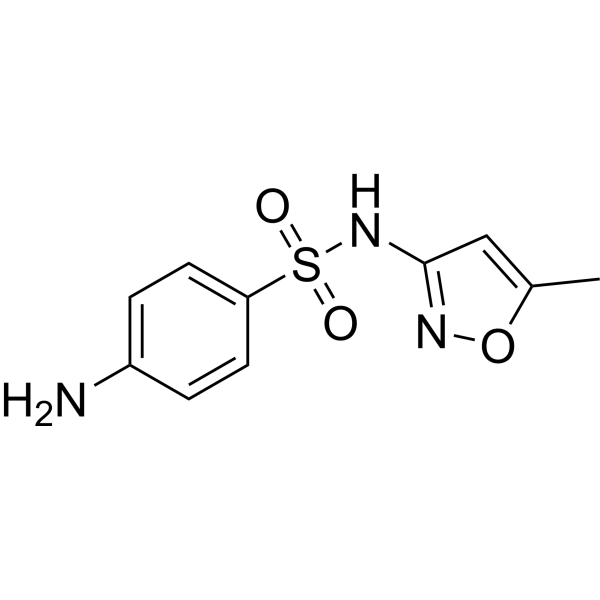
Sulfamethoxazole (Ro 4-2130) is a sulfonamide antibiotic with a widespread antibacterial activity. Sulfamethoxazole inhibits bacterial folate metabolism by competing with 4-Aminobenzoic acid (HY-B1008) (PABA) to act on dihydropteroate synthetase and dihydropteroate reductase. Sulfamethoxazole can be used for the study of urinary tract infections (UTIs), prostatitis, and bronchitis .
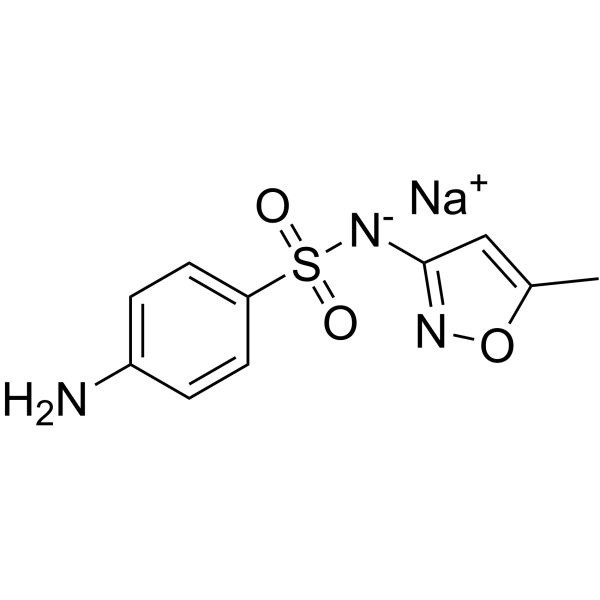
Sulfamethoxazole (Ro 4-2130) sodium is a sulfonamide antibiotic with a widespread antibacterial activity. Sulfamethoxazole sodium inhibits bacterial folate metabolism by competing with 4-Aminobenzoic acid (HY-B1008) (PABA) to act on dihydropteroate synthetase and dihydropteroate reductase. Sulfamethoxazole sodium can be used for the study of urinary tract infections (UTIs), prostatitis, and bronchitis .
Carboxymethyl-β-cyclodextrin sodium salt is a negatively charged β-cyclodextrin derivative, as well as a metal ion chelator and solubilizing reagent. Carboxymethyl-β-cyclodextrin sodium salt forms stable aqueous complexes with Ba 2+, Ca 2+, Cd 2+, Ni 2+, Pb 2+, Sr 2+, and Zn 2+ ions. Carboxymethyl-β-cyclodextrin sodium salt derived hydrogel carriers support oral insulin delivery via paracellular permeation across Caco-2 monolayers and produce sustained hypoglycemic effects in diabetic mice. Carboxymethyl-β-cyclodextrin sodium salt can be conjugated onto folate-modified BSA nanoparticles to boost folate receptor-mediated endocytosis, elevate intracellular anticancer drug uptake and trigger cell apoptosis. Carboxymethyl-β-cyclodextrin sodium salt can be utilized for chiral separation in capillary electrophoresis, development of nanoscale drug carriers and nucleic acid transfection research .
(6S)-Tetrahydrofolic acid is 1000-fold more active than the (6R) form at promoting the binding of fluorodeoxyuridylate to thymidylate synthase and 600-fold more active as a growth factor of P. cerevisiae. (6S)-Tetrahydrofolic acid also has a low affinity and high dissociation rate for folate-binding protein .
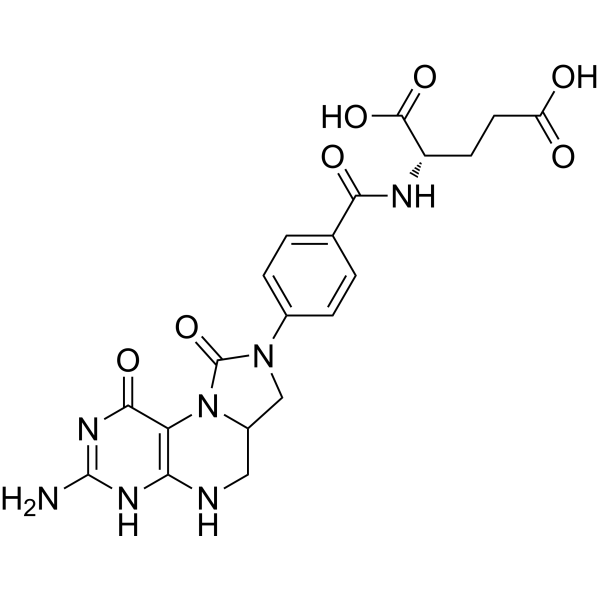
Folitixorin (5,10-methylenetetrahydrofolate) is a cofactor and an analog of leucovorin. Folitixorin is a promising agent for modulation of 5-FU cytotoxicity in adjuvant cancer research .
Folitixorin calcium is a cofactor and an analog of leucovorin. Folitixorin calcium is a promising agent for modulation of 5-FU cytotoxicity in adjuvant cancer research .
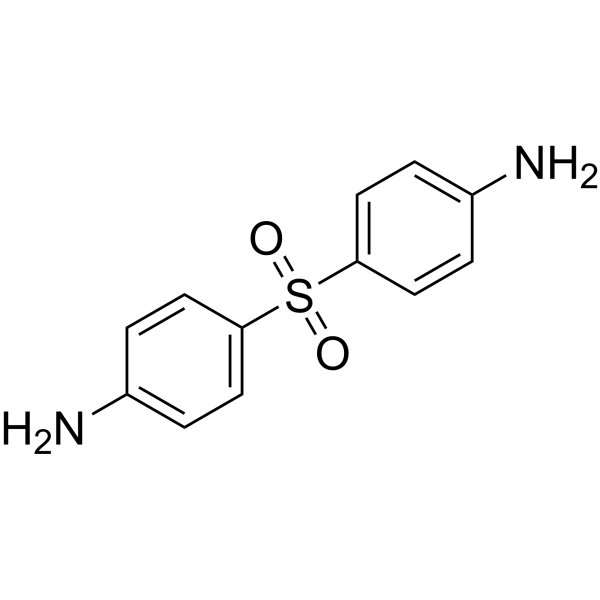
Dapsone (4,4′-Diaminodiphenyl sulfone) is an orally active and blood-brain penetrant sulfonamide antibiotic with bacteriostatic, antimycobacterial and antiprotozoal activities . Dapsone?exerts effective antileprosy activity?and inhibits folate synthesis in cell extracts of?M. leprae. Dapsone is used for dermatologic disorder research, including leprosy, dermatitis herpetiformis, acne vulgaris et al .
S0456 is a raw material that plays a crucial role in the construction of the folate receptor-targeted near-infrared dye OTL 38 (HY-139579). S0456 is connected to the modified folic acid to form OTL 38, endowing OTL 38 with good optical properties, high affinity, and specificity. S0456 can be used in the research of tumor optical imaging agents .
Tetrahydrofolic acid-d4 is the deuterium labeled Tetrahydrofolic acid. Tetrahydrofolic acid (L-5,6,7,8-Tetrahydrofolic acid) is the biologically active vitamin B9 folate derivative. Tetrahydrofolic acid is a donor of one-carbon groups for amino acids, nucleic acids, and lipids. Tetrahydrofolic acid serves as an acceptor of free formaldehyde, producing 5,10-methylenetetrahydrofolate-Tetrahydrofolic acid .
Mtb-IN-2 (compound 10c) is an antimicrobial agent against Mycobacterium tuberculosis (Mtb), without cytotoxicity. Mtb-IN-2 significantly decreases colony-forming units (CFU) in spleen of murine tuberculosis models, and distinguishes both drug-sensitive and drug-resistant Mtb H37Rv strains. Mtb-IN-2 affects methionine metabolism but not folate pathway directly.
Dapsone-d8 is a deuterium labeled Dapsone. Dapsone is an orally active and blood-brain penetrant sulfonamide antibiotic with antibacterial, antigenic and anti-inflammatory activities . Dapsone?exerts effective antileprosy activity?and inhibits folate synthesis in cell extracts of?M. leprae. Dapsone can be used as an anticonvulsant and also in the research of skin and glioblastoma diseases .
Pteroic acid is a precursor to significant compounds like Folic acid (HY-16637) and Vitamin B12 (HY-B0315). Pteroic acid facilitates the examination of how different compounds influence cell growth and development .
Trimethoprim lactate is a bacteriostatic antibiotic and an orally active dihydrofolate reductase inhibitor. Trimethoprim lactate is active against a wide range of Gram-positive and Gram-negative aerobic bacteria. Trimethoprim lactate has the potential for the research of urinary tract infections, Shigellosis and Pneumocystis pneumonia. Trimethoprim lactate can inhibit infection of Influenza A virus in chick embryo when combinated with zinc .
Trimethoprim sulfate is a bacteriostatic antibiotic and an orally active dihydrofolate reductase inhibitor. Trimethoprim sulfate is active against a wide range of Gram-positive and Gram-negative aerobic bacteria. Trimethoprim sulfate has the potential for the research of urinary tract infections, Shigellosis and Pneumocystis pneumonia. Trimethoprim sulfate can inhibit infection of Influenza A virus in chick embryo when combinated with zinc .
SC239 is a cleavable 2-aminophenyl hemiasterlin agent-linker. SC239 can be as the agent-linker for ADC . SC239 is a click chemistry reagent, it contains a DBCO group that can undergo strain-promoted alkyne-azide cycloaddition (SPAAC) with molecules containing Azide groups.
Actein (Standard) is the analytical standard of Actein. This product is intended for research and analytical applications. Actein, a triterpene glycoside, shows an inhibitory effect on cancer cells, which is isolated from the rhizomes of Cimicifuga foetida. Actein suppresses cell proliferation, induces autophagy and apoptosis through promoting ROS/JNK activation, and blunting AKT pathway in bladder cancer. Actein has little toxicity in vivo .
Metoprolol acid (Standard) is the analytical standard of Metoprolol acid. This product is intended for research and analytical applications. Metoprolol acid (Atenolol acid) is a urinary metabolite with no pharmacological activity. Metoprolol acid does not exert its pharmacological effects in vivo. Metoprolol acid can be detected by solid phase extraction and reversed phase high performance liquid chromatography. The analysis of metoprolol acid requires specific conditions, such as the use of fluorescence detection and specific eluents .
Sulfamethoxazole (Ro 4-2130) 1000 μg/mL in methanol is a sulfonamide antibiotic with a widespread antibacterial activity. Sulfamethoxazole 1000 μg/mL in methanol inhibits bacterial folate metabolism by competing with 4-Aminobenzoic acid (HY-B1008) (PABA) to act on dihydropteroate synthetase and dihydropteroate reductase. Sulfamethoxazole 1000 μg/mL in methanol can be used for the study of urinary tract infections (UTIs), prostatitis, and bronchitis .
RB-PEG2000-FA (Rhodamine B-PEG2000-FA) is a fluorescent dye composed of Rhodamine B (HY-Y0016), PEG and Folic acid (FA) (HY-16637). RB-PEG2000-FA can be used for cell imaging, folate receptor targeting and detection (Ex/Em=546/610 nm) .
RB-PEG5000-FA (Rhodamine B-PEG5000-FA) is a fluorescent dye composed of Rhodamine B (HY-Y0016), PEG and Folic acid (FA) (HY-16637). RB-PEG5000-FA can be used for cell imaging, folate receptor targeting and detection (Ex/Em=546/610 nm) .
RB-PEG400-FA (Rhodamine B-PEG400-FA) is a fluorescent dye composed of Rhodamine B (HY-Y0016), PEG and Folic acid (FA) (HY-16637). RB-PEG400-FA can be used for cell imaging, folate receptor targeting and detection (Ex/Em=546/610 nm) .
RB-PEG600-FA (Rhodamine B-PEG600-FA) is a fluorescent dye composed of Rhodamine B (HY-Y0016), PEG and Folic acid (FA) (HY-16637). RB-PEG600-FA can be used for cell imaging, folate receptor targeting and detection (Ex/Em=546/610 nm) .
RB-PEG1000-FA (Rhodamine B-PEG1000-FA) is a fluorescent dye composed of Rhodamine B (HY-Y0016), PEG and Folic acid (FA) (HY-16637). RB-PEG1000-FA can be used for cell imaging, folate receptor targeting and detection (Ex/Em=546/610 nm) .
Antileishmanial agent-13 is a quinoline-isatin hybrid, acts as an antileishmanial agent against L. Major Leishmania strain. Antileishmanial agent-13 acquires the antileishmanial activity via the anti-folate mechanism. Antileishmanial agent-13 has potent inhibition against both promastigote and amastigote forms with IC50s of 0.604 μM and 0.508 μM, respectively .
RB-PEG3400-FA (Rhodamine B-PEG3400-FA) is a fluorescent dye composed of Rhodamine B (HY-Y0016), PEG and Folic acid (FA) (HY-16637). RB-PEG3400-FA can be used for cell imaging, folate receptor targeting and detection (Ex/Em=546/610 nm) .
RB-PEG10000-FA (Rhodamine B-PEG10000-FA) is a fluorescent dye composed of Rhodamine B (HY-Y0016), PEG and Folic acid (FA) (HY-16637). RB-PEG10000-FA can be used for cell imaging, folate receptor targeting and detection (Ex/Em=546/610 nm) .
Dapsone-d4 is the deuterium labeled Dapsone. Dapsone (4,4′-Diaminodiphenyl sulfone) is an orally active and blood-brain penetrant sulfonamide antibiotic with bacteriostatic, antimycobacterial and antiprotozoal activities . Dapsone?exerts effective antileprosy activity?and inhibits folate synthesis in cell extracts of?M. leprae. Dapsone is used for dermatologic disorder research, including leprosy, dermatitis herpetiformis, acne vulgaris et al .
Antileishmanial agent-17 is a coumarin hybrid compound with antileishmanial effects (IC50 <0.78 μM). Antileishmanial agent-17 is safe to normal VERO cells. Antileishmanial agent-17 binds to folate pathway enzymes pteridine reductase and DHFR-TS. And Antileishmanial agent-17 shows the most potent with IC50 value of 0.40 μM against promastigote and 0.68 μM against amastigote, respectivley.
Sulfamethoxazole (Standard) (Ro 4-2130 (Standard)) sodium is the analytical standard of Sulfamethoxazole sodium (HY-B0322A). This product is intended for research and analytical applications. Sulfamethoxazole (Ro 4-2130) sodium is a sulfonamide antibiotic with a widespread antibacterial activity. Sulfamethoxazole sodium inhibits bacterial folate metabolism by competing with 4-Aminobenzoic acid (HY-B1008) (PABA) to act on dihydropteroate synthetase and dihydropteroate reductase. Sulfamethoxazole sodium can be used for the study of urinary tract infections (UTIs), prostatitis, and bronchitis.
Sulfamethoxazole (Standard) (Ro 4-2130 (Standard)) is the analytical standard of Sulfamethoxazole (HY-B0322). This product is intended for research and analytical applications. Sulfamethoxazole (Ro 4-2130) is a sulfonamide antibiotic with a widespread antibacterial activity. Sulfamethoxazole inhibits bacterial folate metabolism by competing with 4-Aminobenzoic acid (HY-B1008) (PABA) to act on dihydropteroate synthetase and dihydropteroate reductase. Sulfamethoxazole can be used for the study of urinary tract infections (UTIs), prostatitis, and bronchitis.
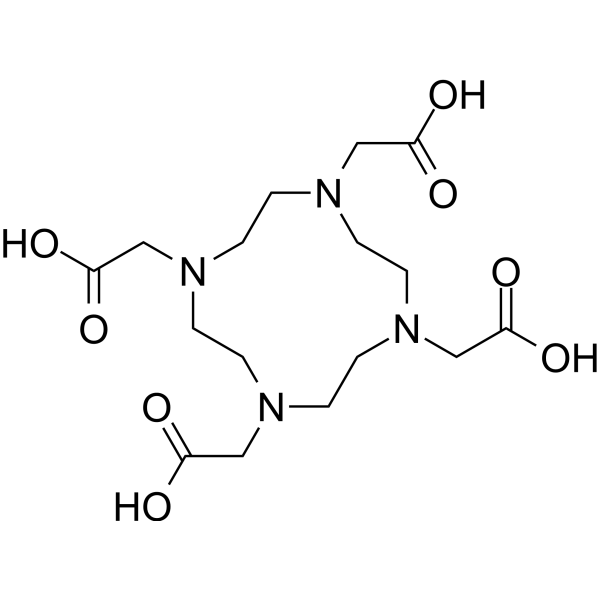
Tetraxetan (DOTA) is a macrocyclic chelating agent. Tetraxetan can form stable coordination complexes with a variety of metal ions (e.g., 68Ga, 111In, 177Lu). Tetraxetan can be conjugated with targeting molecules (e.g., RGD peptide, folic acid) to enable the complex to target specific biomolecules or cells. Tetraxetan can be used for imaging studies of tumors, including melanoma and folate receptor-positive tumors (e.g., cervical cancer) .
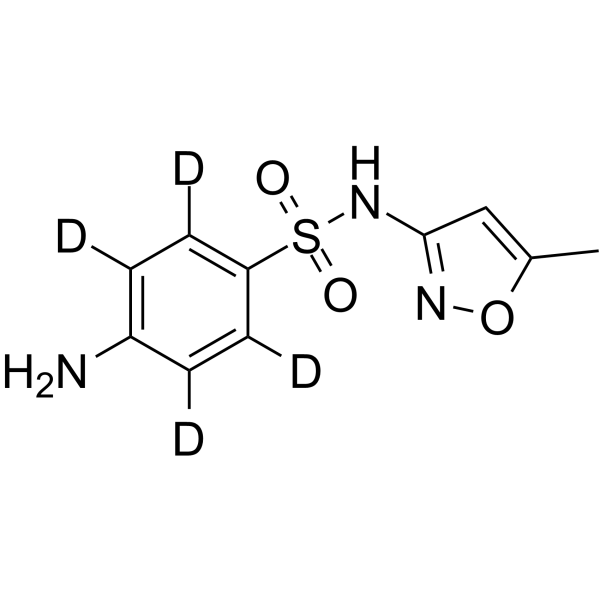
Sulfamethoxazole-d4 (Ro 4-2130-d4) is a deuterium labeled Sulfamethoxazole (HY-B0322). Sulfamethoxazole (Ro 4-2130) is a sulfonamide antibiotic with a widespread antibacterial activity. Sulfamethoxazole inhibits bacterial folate metabolism by competing with 4-Aminobenzoic acid (HY-B1008) (PABA) to act on dihydropteroate synthetase and dihydropteroate reductase. Sulfamethoxazole can be used for the study of urinary tract infections (UTIs), prostatitis, and bronchitis .
Antileishmanial agent-21 (compound 4e) is an antileishmanial agent that targets the Leishmania pteridine reductase 1 (Lm-PTR1). Antileishmanial agent-21 has an anti-folate mechanism, and folic acid and leucovorin can reverse the anti-leishmanial activity of Antileishmanial agent-21. Antileishmanial agent-21 inhibits the Chloroquine (HY-17589A)-resistant strain of Plasmodium falciparum (RKL9) with an IC50 of 0.0198-0.096 μM .
AG2034 is an inhibitor of glycinamide ribonucleotide formyltransferase (GARFT), with a Ki of 28 nM against human GARFT, and it binds with high affinity to the folate receptor (Kd of 0.0042 nM). Additionally, AG2034 is a substrate for rat liver folylpolyglutamate synthetase, with a Km of 6.4 µM. AG2034 inhibits the growth of L1210 and CCRF-CEM cells, with IC50 values of 4 nM and 2.9 nM, respectively, and it has demonstrated antitumor activity in xenograft models such as 6C3HED .
Dapsone (Standard) is the analytical standard of Dapsone. This product is intended for research and analytical applications. Dapsone (4,4′-Diaminodiphenyl sulfone) is an orally active and blood-brain penetrant sulfonamide antibiotic with bacteriostatic, antimycobacterial and antiprotozoal activities . Dapsone exerts effective antileprosy activity and inhibits folate synthesis in cell extracts of M. leprae. Dapsone is used for dermatologic disorder research, including leprosy, dermatitis herpetiformis, acne vulgaris et al .
(S)-2-Aminopent-4-ynoic acid is a synthetic amino acid. (S)-2-Aminopent-4-ynoic acid can be used in synthesis of folate-conjugates and corresponding metal-chelate complexes . (S)-2-Aminopent-4-ynoic acid is a click chemistry reagent, it contains an Alkyne group and can undergo copper-catalyzed azide-alkyne cycloaddition (CuAAc) with molecules containing Azide groups.
Tetrahydrofolic acid- 13C5 (L-5,6,7,8-Tetrahydrofolic acid- 13C5) is 13C labeled Tetrahydrofolic acid. Tetrahydrofolic acid (L-5,6,7,8-Tetrahydrofolic acid) is the biologically active vitamin B9 folate derivative. Tetrahydrofolic acid is a donor of one-carbon groups for amino acids, nucleic acids, and lipids. Tetrahydrofolic acid serves as an acceptor of free formaldehyde, producing 5,10-methylenetetrahydrofolate-Tetrahydrofolic acid .
Sulfamethoxazole- 13C6 (Ro 4-2130- 13C6) is a 13C labeled Sulfamethoxazole (HY-B0322). Sulfamethoxazole (Ro 4-2130) is a sulfonamide antibiotic with a widespread antibacterial activity. Sulfamethoxazole inhibits bacterial folate metabolism by competing with 4-Aminobenzoic acid (HY-B1008) (PABA) to act on dihydropteroate synthetase and dihydropteroate reductase. Sulfamethoxazole can be used for the study of urinary tract infections (UTIs), prostatitis, and bronchitis .
Levoleucovorin (Levofolinic acid; Levofolene) is the pharmacologically and orally active levoisomer of Folinic acid (HY-17556), a synthetic folate analogue. Levoleucovorin can inhibit LOXL2 with an IC50 of 68.81 μM. Levoleucovorin can inhibit cancer cells proliferation, migration and induce apoptosis. Levoleucovorin can be used as a rescue agent for high-dose Methotrexate (HY-14519). Levoleucovorin can reduce the frequency of embryonic malformations. Levoleucovorin can be used for the research of can and endocrinology, such as breast cancer and osteosarcoma .
Dapsone- 13C12 is the 13C12 labeled Dapsone (HY-B0688). Dapsone (4,4′-Diaminodiphenyl sulfone) is an orally active and blood-brain penetrant sulfonamide antibiotic with bacteriostatic, antimycobacterial and antiprotozoal activities. Dapsone exerts effective antileprosy activity and inhibits folate synthesis in cell extracts of M. leprae. Dapsone is used for dermatologic disorder research, including leprosy, dermatitis herpetiformis, acne vulgaris et al .
Cycloguanil hydrochloride (Standard) is the analytical standard of Cycloguanil hydrochloride (HY-12784A). This product is intended for research and analytical applications. Cycloguanil hydrochloride is a dihydrofolate reductase (DHFR) inhibitor with an IC50 of 10.8 μM against human DHFR. Cycloguanil hydrochloride blocks the folate metabolic pathway, thereby affecting nucleotide synthesis and interfering with DNA replication. Cycloguanil hydrochloride inhibits DHFR in Plasmodium and is thus used in malaria research. Cycloguanil hydrochloride also potently inhibits DHFR in human cancer cells and blocks the transcriptional activity of STAT3, thereby exhibiting anticancer activity .
Dapsone- 15N2 (4,4′-Diaminodiphenyl sulfone- 15N2) is 15N labeled Dapsone. Dapsone (4,4′-Diaminodiphenyl sulfone) is an orally active and blood-brain penetrant sulfonamide antibiotic with bacteriostatic, antimycobacterial and antiprotozoal activities . Dapsone?exerts effective antileprosy activity?and inhibits folate synthesis in cell extracts of?M. leprae. Dapsone is used for dermatologic disorder research, including leprosy, dermatitis herpetiformis, acne vulgaris et al .
Cycloguanil-d6 (Chlorguanide triazine-d6) hydrochloride is the deuterium labeled Cycloguanil hydrochloride (HY-12784A). Cycloguanil hydrochloride is a dihydrofolate reductase (DHFR) inhibitor with an IC50 of 10.8 μM against human DHFR. Cycloguanil hydrochloride blocks the folate metabolic pathway, thereby affecting nucleotide synthesis and interfering with DNA replication. Cycloguanil hydrochloride inhibits DHFR in Plasmodium and is thus used in malaria research. Cycloguanil hydrochloride also potently inhibits DHFR in human cancer cells and blocks the transcriptional activity of STAT3, thereby exhibiting anticancer activity .
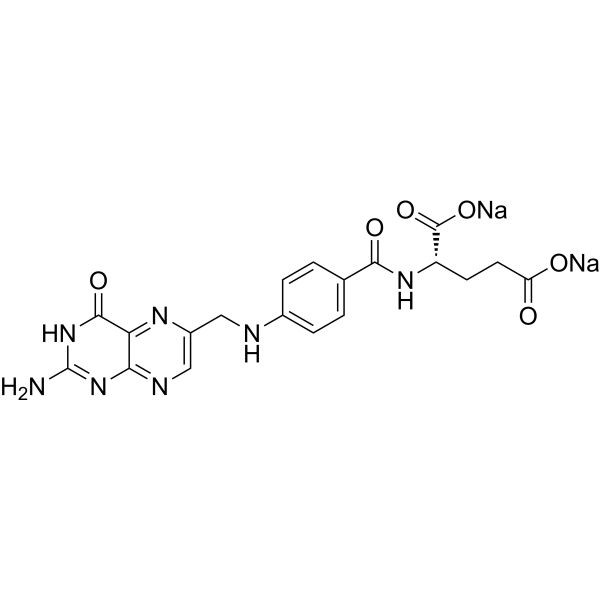
Folic acid disodium (Vitamin B9 disodium; Vitamin M disodium) is an orally active disodium salt form of Folic acid (HY-16637) with an intrinsic dissolution rate (IDR) of 4.96·10 5 g/s . Folic acid disodium serves as cofactor in single-carbon transfer reactions and exhibits protective effects against neural tube defects, ischemic events, and cancer. Folate acid disodium overload leads to impaired brain development in embryogenesis and promotes growth of precancerous altered cells. Folic acid deficiency leads to megaloblastic anemia .
Cycloguanil-d4 (Chlorguanide triazine-d4) hydrochloride is the deuterium labeled Cycloguanil hydrochloride (HY-12784A). Cycloguanil hydrochloride is a dihydrofolate reductase (DHFR) inhibitor with an IC50 of 10.8 μM against human DHFR. Cycloguanil hydrochloride blocks the folate metabolic pathway, thereby affecting nucleotide synthesis and interfering with DNA replication. Cycloguanil hydrochloride inhibits DHFR in Plasmodium and is thus used in malaria research. Cycloguanil hydrochloride also potently inhibits DHFR in human cancer cells and blocks the transcriptional activity of STAT3, thereby exhibiting anticancer activity .
Cycloguanil-d6 (Chlorguanide triazine-d6) is the deuterium labeled Cycloguanil (HY-12784). Cycloguanil is a dihydrofolate reductase (DHFR) inhibitor with an IC50 of 10.8 μM against human DHFR. Cycloguanil blocks the folate metabolic pathway, thereby affecting nucleotide synthesis and interfering with DNA replication. Cycloguanil inhibits DHFR in Plasmodium and is thus used in malaria research. Cycloguanil also potently inhibits DHFR in human cancer cells and blocks the transcriptional activity of STAT3, thereby exhibiting anticancer activity .
Ricorfotide vedotin (CBP-1008) is a dual-ligand peptide-drug conjugate (PDC) conjugated to MMAE (HY-15162), targeting Folate receptor α (FRα) and TRPV6. Ricorfotide vedotin binds to FRα with high affinity and TRPV6 with low affinity. Ricorfotide vedotin has antitumor activity, and can be used in advanced solid tumor research (eg: colorectal cancer, breast cancer, non-small cell lung cancer, ovarian cancer, adrenocortical carcinoma and follicular dendritic cell sarcoma) .
TRITC-dextran (Tetramethyl rhodamine isothiocyanate glucan), MW 40000 is a TRITC (HY-D0791)-labeled neutral 40 kDa fluorescent polysaccharide probe. TRITC-dextran, MW 40000 forms a membrane layer on the surface of protocells composed of protamine/folate condensates, and is used to assess membrane fluidity via fluorescence recovery after photobleaching. TRITC-dextran, MW 40000 can also be used to evaluate the anti-bacterial invasion ability and colloidal stability of coated condensates, as well as analyze the permeability of vascular and lymphatic endothelial cell layers .
Tetraxetan (Standard) is the analytical standard of Tetraxetan (HY-W053583). This product is intended for research and analytical applications. Tetraxetan (DOTA) is a macrocyclic chelating agent. Tetraxetan can form stable coordination complexes with a variety of metal ions (e.g., 68Ga, 111In, 177Lu). Tetraxetan can be conjugated with targeting molecules (e.g., RGD peptide, folic acid) to enable the complex to target specific biomolecules or cells. Tetraxetan can be used for imaging studies of tumors, including melanoma and folate receptor-positive tumors (e.g., cervical cancer) .
KHK2805 (RA15-7) is a humanized antibody against folate receptor α (FOLR1), with a Kd of 0.647 nM for human FOLR1. KHK2805 binds to a unique epitope of FOLR1 and mediates antibody-dependent cellular cytotoxicity and complement-dependent cytotoxicity against FOLR1-expressing cells. KHK2805 exhibits cytotoxicity against both ovarian cancer cells and Platinum (HY-W096169D)-resistant ovarian cancer cells. KHK2805 can be used for the research of tumors such as ovarian cancer .
Cycloguanil-d6 (Chlorguanide triazine-d6) nitrate is the deuterium labeled Cycloguanil nitrate. Cycloguanil nitrate is a dihydrofolate reductase (DHFR) inhibitor with an IC50 of 10.8 μM against human DHFR. Cycloguanil nitrate blocks the folate metabolic pathway, thereby affecting nucleotide synthesis and interfering with DNA replication. Cycloguanil nitrate inhibits DHFR in Plasmodium and is thus used in malaria research. Cycloguanil nitrate also potently inhibits DHFR in human cancer cells and blocks the transcriptional activity of STAT3, thereby exhibiting anticancer activity .
10-Formyl-7,8-dihydrofolic acid is a biologically active folic acid and growth promoter. 10-Formyl-7,8-dihydrofolic acid serves as a substrate for aminoimidazolecarboxamide ribonucleotide transformylase and dihydrofolate reductase (DHFR) to support catalytic reactions (with detection wavelengths of 552 nm and 340 nm, respectively). 10-Formyl-7,8-dihydrofolic acid not only promotes the growth of leukemia cells, but also effectively reverses the growth inhibition induced by antifolate drugs under folate-deficient conditions. 10-Formyl-7,8-dihydrofolic acid can be used in the research of leukemia .
Trimethoprim (Standard) is the analytical standard of Trimethoprim. This product is intended for research and analytical applications. Trimethoprim is a bacteriostatic antibiotic and an orally active dihydrofolate reductase inhibitor. Trimethoprim is active against a wide range of Gram-positive and Gram-negative aerobic bacteria. Trimethoprim has the potential for the research of urinary tract infections, Shigellosis and Pneumocystis pneumonia. Trimethoprim can inhibit infection of Influenza A virus in chick embryo when combinated with zinc .
Trimethoprim is a bacteriostatic antibiotic and an orally active dihydrofolate reductase inhibitor. Trimethoprim is active against a wide range of Gram-positive and Gram-negative aerobic bacteria. Trimethoprim has the potential for the research of urinary tract infections, Shigellosis and Pneumocystis pneumonia. Trimethoprim can inhibit infection of Influenza A virus in chick embryo when combinated with zinc .
Trimethoprim hydrochloride is a bacteriostatic antibiotic and an orally active dihydrofolate reductase inhibitor. Trimethoprim hydrochloride is active against a wide range of Gram-positive and Gram-negative aerobic bacteria. Trimethoprim hydrochloride has the potential for the research of urinary tract infections, Shigellosis and Pneumocystis pneumonia. Trimethoprim hydrochloride can inhibit infection of Influenza A virus in chick embryo when combinated with zinc .
5,6,7,8-Tetrahydro-8-deazahomofolic acid is a potential thymidylate synthase (TS) inhibitor with inhibitory activity against other folate-related enzymes. 5,6,7,8-Tetrahydro-8-deazahomofolic acid showed mild growth inhibition against enterococci, lactic acid bacteria, and L1210 cells in culture. 5,6,7,8-Tetrahydro-8-deazahomofolic acid also showed weak inhibition against thymidylate synthase, dihydrofolate reductase, glycyl-ribonucleoside aminotransferase, and aminoimidazole-carboxyacyl-ribonucleoside aminotransferase. 5,6,7,8-Tetrahydro-8-deazahomofolic acid showed low substrate activity for thymidylate synthase .
FGT-4 is a folate receptor β (FR-β) targeting chimeric molecule. FGT-4 is a TLR7 agonist. FGT-4 facilitates the secretion of iNOS and proinflammatory cytokine IL-6 associated with M1 macrophages and enhances the proliferation of cytotoxic CD8 + T cells. FGT-4 has anti-tumor activity in the 4T1 breast cancer mouse model. FGT-4 can be used for the study of cancer immunity. (Pink: target protein TLR7/8 agonist 1 ligand (HY-103698); black: linker (HY-172936); blue: FR-β ligand (HY-172935)) .
SHMT2-IN-1 is a potent serine hydroxymethyltransferase 2 (SHMT2) inhibitor with an IC50 of 1.21 μM and a KD of 10.6 μM. SHMT2-IN-1 binds to the folate binding site of SHMT2. SHMT2-IN-1 also inhibits SHMT1 with an IC50 of 1.83 μM. SHMT2-IN-1 can inhibit cancer cells proliferation, migration and invasion. SHMT2-IN-1 can induce cells apoptosis and ROS production and cause G2/M phase arrest. SHMT2-IN-1 can be used for the research of cancer, such as esophageal cancer .
Biotin-PEG-CHO (with a molecular weight of 5000) is a biotin-attached PEG derivative that can be used for biotinylation of biological molecules or other material surfaces. Biotin can be easily detected through the biotin/streptavidin binding test, and is widely used in molecular targeted detection.
MOTS-c (human) acetate is a blood-brain barrier-penetrating, mitochondrial-derived peptide that modulates the AMPK/PGC-1α pathway to enhance insulin sensitivity. MOTS-c (human) acetate inhibits the folate cycle and de novo purine synthesis, increases AICAR levels to activate AMPK, and then regulates the Nrf2/Keap1 antioxidant pathway and inhibits the NF-κB inflammatory pathway, while promoting mitochondrial biogenesis and energy metabolism. MOTS-c (human) acetate has the effects of improving glucose and lipid metabolism, anti-oxidative stress, anti-inflammatory and neuroprotection, and can be used in the study of type 2 diabetes, traumatic brain injury, inflammatory diseases and aging-related metabolic disorders .
MOTS-c (human) is a blood-brain barrier-penetrating, mitochondrial-derived peptide that modulates the AMPK/PGC-1α pathway to enhance insulin sensitivity. MOTS-c (human) inhibits the folate cycle and de novo purine synthesis, increases AICAR levels to activate AMPK, and then regulates the Nrf2/Keap1 antioxidant pathway and inhibits the NF-κB inflammatory pathway, while promoting mitochondrial biogenesis and energy metabolism. MOTS-c (human) has the effects of improving glucose and lipid metabolism, anti-oxidative stress, anti-inflammatory and neuroprotection, and can be used in the study of type 2 diabetes, traumatic brain injury, inflammatory diseases and aging-related metabolic disorders .
CBP-1018 is a PDC (peptide-drug conjugate) formed by conjugating Monomethyl auristatin E (HY-15162) to a dual-targeting ligand of FLOR1/PSMA (prostate-specific membrane antigen) via a linker (HY-78738). CBP-1018 binds to FLOR1 and prostate-specific membrane antigen (PSMA). CBP-1018 is applicable to the research of solid tumors and metastatic castration-resistant prostate cancer .
Anticancer agent 310 is an antitumor agent. Anticancer agent 310 releases nitric oxide to induce mitochondrial ROS burst, triggers mitochondrial dysfunction and activates the Bax/Bcl-2-Cyt c-Caspase-9/Caspase-3 apoptotic pathway. Anticancer agent 310 also reduces the levels of SHMT2 and MTHFD2, decreases the ratios of NADPH/NADP + and GSH/GSSG, thereby disrupting redox homeostasis and exacerbating intracellular ROS accumulation. Anticancer agent 310 can be used in research related to gastric cancer .
OSI-7904L (GW1843; 1843U89; OSI-7904) is a thymidylate synthase (TS) inhibitor with a Ki of 90 pM. OSI-7904L blocks de novo synthesis of thymidine nucleotides, DNA synthesis and induces cell death. OSI-7904L inhibits the growth of human cells, induces tumor regression, and achieves durable antitumor effects in mouse xenograft models. OSI-7904L can be used in research related to colon adenocarcinoma .
S0456 is a raw material that plays a crucial role in the construction of the folate receptor-targeted near-infrared dye OTL 38 (HY-139579). S0456 is connected to the modified folic acid to form OTL 38, endowing OTL 38 with good optical properties, high affinity, and specificity. S0456 can be used in the research of tumor optical imaging agents .
Cy3-PEG2000-FA is a fluorescent folate-PEG derivative with excitation/emission wavelengths of ~550 nm/~570 nm. Cy3-PEG2000-FA can be readily traced by its intense red fluorescent signal. Cy3-PEG2000-FA can be used for cell imaging, folate receptor targeting and detection.
RB-PEG400-FA (Rhodamine B-PEG400-FA) is a fluorescent dye composed of Rhodamine B (HY-Y0016), PEG and Folic acid (FA) (HY-16637). RB-PEG400-FA can be used for cell imaging, folate receptor targeting and detection (Ex/Em=546/610 nm) .
RB-PEG600-FA (Rhodamine B-PEG600-FA) is a fluorescent dye composed of Rhodamine B (HY-Y0016), PEG and Folic acid (FA) (HY-16637). RB-PEG600-FA can be used for cell imaging, folate receptor targeting and detection (Ex/Em=546/610 nm) .
RB-PEG3400-FA (Rhodamine B-PEG3400-FA) is a fluorescent dye composed of Rhodamine B (HY-Y0016), PEG and Folic acid (FA) (HY-16637). RB-PEG3400-FA can be used for cell imaging, folate receptor targeting and detection (Ex/Em=546/610 nm) .
RB-PEG2000-FA (Rhodamine B-PEG2000-FA) is a fluorescent dye composed of Rhodamine B (HY-Y0016), PEG and Folic acid (FA) (HY-16637). RB-PEG2000-FA can be used for cell imaging, folate receptor targeting and detection (Ex/Em=546/610 nm) .
RB-PEG5000-FA (Rhodamine B-PEG5000-FA) is a fluorescent dye composed of Rhodamine B (HY-Y0016), PEG and Folic acid (FA) (HY-16637). RB-PEG5000-FA can be used for cell imaging, folate receptor targeting and detection (Ex/Em=546/610 nm) .
RB-PEG1000-FA (Rhodamine B-PEG1000-FA) is a fluorescent dye composed of Rhodamine B (HY-Y0016), PEG and Folic acid (FA) (HY-16637). RB-PEG1000-FA can be used for cell imaging, folate receptor targeting and detection (Ex/Em=546/610 nm) .
RB-PEG10000-FA (Rhodamine B-PEG10000-FA) is a fluorescent dye composed of Rhodamine B (HY-Y0016), PEG and Folic acid (FA) (HY-16637). RB-PEG10000-FA can be used for cell imaging, folate receptor targeting and detection (Ex/Em=546/610 nm) .
DSPE-PEG-Folate, MW 3350 is a PEG derivative containing folic acid. DSPE-PEG-Folate has a targeting effect and bind to folate receptors in cancer cells. DSPE-PEG-Folate form micelles/lipid bilayer and can be used to targeted drug delivery system research .
Tetraxetan (DOTA) is a macrocyclic chelating agent. Tetraxetan can form stable coordination complexes with a variety of metal ions (e.g., 68Ga, 111In, 177Lu). Tetraxetan can be conjugated with targeting molecules (e.g., RGD peptide, folic acid) to enable the complex to target specific biomolecules or cells. Tetraxetan can be used for imaging studies of tumors, including melanoma and folate receptor-positive tumors (e.g., cervical cancer) .
DSPE-PEG2000-Folate (DSPE-PEG2000 Folate) is a folate-containing PEG derivative. DSPE-PEG2000-Folate possesses targeting activity and binds to folate receptors in cancer cells. DSPE-PEG2000-Folate can be post-inserted into preformed liposomal bilayers to prepare folate-targeted liposomal formulations. DSPE-PEG2000-Folate forms micelles/lipid bilayers and can be used in studies of targeted drug delivery systems [2].
mPEG750-amine (mPEG750-NH2) is a chemical modification reagent for nanoparticles, capable of covalently binding to Ad-PVA to form Ad-PVA-PEG polymers. mPEG750-amine stabilizes gene delivery complexes by providing steric hindrance, reducing particle aggregation, while enhancing the water solubility and serum stability of the complex, reducing carrier cytotoxicity, and assisting in the efficient condensation of pDNA by cationic components to form nanoparticles that can be endocytosed by cells. mPEG750-amine can also be used to synthesize folate-conjugated polymer micelles for encapsulating the anticancer agent Camptothecin (HY-16560). Folate-conjugated polymer micelles are effective carriers for poorly soluble anticancer drugs, capable of avoiding macrophages and acting through folate receptor (FR)-mediated endocytosis to target tumor cells. mPEG750-amine can be applied to research in the field of non-viral gene delivery, as a component of gene delivery vectors, facilitating the safe and efficient delivery of nucleic acid drugs to target cells .
TRITC-dextran (Tetramethyl rhodamine isothiocyanate glucan), MW 40000 is a TRITC (HY-D0791)-labeled neutral 40 kDa fluorescent polysaccharide probe. TRITC-dextran, MW 40000 forms a membrane layer on the surface of protocells composed of protamine/folate condensates, and is used to assess membrane fluidity via fluorescence recovery after photobleaching. TRITC-dextran, MW 40000 can also be used to evaluate the anti-bacterial invasion ability and colloidal stability of coated condensates, as well as analyze the permeability of vascular and lymphatic endothelial cell layers .
DBCO-PEG1000-FA (DBCO-PEG1000-Folate) is a multifunctional bioconjugation reagent, which is a copolymer of DBCO and Folic acid (FA) (HY-16637) and can target folate receptors (FR). Folate receptors are highly overexpressed on the surface of many cancer cells (such as lung cancer, nasopharyngeal cancer, ovarian cancer, etc.), but exhibit extremely low expression levels in normal tissues. DBCO-PEG-FA can be used for click chemistry conjugation via its DBCO terminal, and thus applies to various bioconjugation and drug delivery applications .
DSPE-PEG-Folate, MW 5000 is a PEG derivative containing folic acid. DSPE-PEG-Folate, MW 5000 has a targeting effect and bind to folate receptors in cancer cells. DSPE-PEG-Folate, MW 5000 form micelles/lipid bilayer and can be used to targeted drug delivery system research .
mPEG3400-amine can synthesize folate-conjugated polymer micelles for encapsulation of anticancer agent 9-nitrocamptothecin (HY-16560). folate-conjugated polymer micelles are effective carriers of insoluble anticancer drugs, which can avoid macrophages and play a role in endocytosis of tumor cells mediated by folate receptors (FR).
mPEG4000-amine can be used to synthesize folate-conjugated polymer micelles for encapsulating anticancer agent 9-nitrocamptothecin (HY-16560). folate-conjugated polymer micelles are effective carriers of insoluble anticancer drugs, which can avoid macrophages and play a role in endocytosis of tumor cells mediated by folate receptors (FR).
mPEG350-amine can synthesize folate-conjugated polymer micelles for encapsulation of anticancer agent 9-nitrocamptothecin (HY-16560). folate-conjugated polymer micelles are effective carriers of insoluble anticancer drugs, which can avoid macrophages and play a role in endocytosis of tumor cells mediated by folate receptors (FR).
Tetraxetan (Standard) is the analytical standard of Tetraxetan (HY-W053583). This product is intended for research and analytical applications. Tetraxetan (DOTA) is a macrocyclic chelating agent. Tetraxetan can form stable coordination complexes with a variety of metal ions (e.g., 68Ga, 111In, 177Lu). Tetraxetan can be conjugated with targeting molecules (e.g., RGD peptide, folic acid) to enable the complex to target specific biomolecules or cells. Tetraxetan can be used for imaging studies of tumors, including melanoma and folate receptor-positive tumors (e.g., cervical cancer) .
DBCO-PEG2000-FA (DBCO-PEG2000-Folate) is a multifunctional bioconjugation reagent, which is a copolymer of DBCO and Folic acid (FA) (HY-16637) and can target folate receptors (FR). Folate receptors are highly overexpressed on the surface of many cancer cells (such as lung cancer, nasopharyngeal cancer, ovarian cancer, etc.), but exhibit extremely low expression levels in normal tissues. DBCO-PEG-FA can be used for click chemistry conjugation via its DBCO terminal, and thus applies to various bioconjugation and drug delivery applications .
PEG-bis-amine (MW 1000) synthesizes folate-conjugated polymeric micelles for encapsulation of the anticancer agent 9-nitrocamptothecin HY-16560 (HY-16560). Folic acid-conjugated polymer micelles are effective carriers of insoluble anticancer drugs, which can avoid macrophages and play a role in endocytosis of tumor cells mediated by folate receptors (FR).
PEG4000-bis-amine synthesizes folate-conjugated polymeric micelles for encapsulation of the anticancer agent 9-nitrocamptothecin HY-16560 (HY-16560). Folic acid-conjugated polymer micelles are effective carriers of insoluble anticancer drugs, which can avoid macrophages and play a role in endocytosis of tumor cells mediated by folate receptors (FR).
DBCO-PEG-FA (DBCO-PEG-Folate) (MW 3400) is a multifunctional bioconjugation reagent, which is a copolymer of DBCO and Folic acid (FA) (HY-16637) and can target folate receptors (FR). Folate receptors are highly overexpressed on the surface of many cancer cells (such as lung cancer, nasopharyngeal cancer, ovarian cancer, etc.), but exhibit extremely low expression levels in normal tissues. DBCO-PEG-FA can be used for click chemistry conjugation via its DBCO terminal, and thus applies to various bioconjugation and drug delivery applications .
mPEG2000-FA (mPEG2000-Folate) is a polyethylene glycol derivative of Folic acid (HY-16637). Folic acid has a high affinity for folate receptors and can be used for cell membrane receptors for targeted drug delivery .
DSPE-PEG3400-Folate is a PEG derivative containing folic acid. DSPE-PEG-Folate has a targeting effect and bind to folate receptors in cancer cells. DSPE-PEG-Folate form micelles/lipid bilayer and can be used to targeted drug delivery system research .
DSPE-PEG1000-Folate is a PEG derivative containing folic acid. DSPE-PEG-Folate has a targeting effect and bind to folate receptors in cancer cells. DSPE-PEG-Folate form micelles/lipid bilayer and can be used to targeted drug delivery system research .
DSPE-PEG5000-Folate is a PEG derivative containing folic acid. DSPE-PEG-Folate has a targeting effect and bind to folate receptors in cancer cells. DSPE-PEG-Folate form micelles/lipid bilayer and can be used to targeted drug delivery system research .
DBCO-PEG10000-FA (DBCO-PEG10000-Folate) is a multifunctional bioconjugation reagent, which is a copolymer of DBCO and Folic acid (FA) (HY-16637) and can target folate receptors (FR). Folate receptors are highly overexpressed on the surface of many cancer cells (such as lung cancer, nasopharyngeal cancer, ovarian cancer, etc.), but exhibit extremely low expression levels in normal tissues. DBCO-PEG-FA can be used for click chemistry conjugation via its DBCO terminal, and thus applies to various bioconjugation and drug delivery applications .
DBCO-PEG5000-FA (DBCO-PEG5000-Folate) is a multifunctional bioconjugation reagent, which is a copolymer of DBCO and Folic acid (FA) (HY-16637) and can target folate receptors (FR). Folate receptors are highly overexpressed on the surface of many cancer cells (such as lung cancer, nasopharyngeal cancer, ovarian cancer, etc.), but exhibit extremely low expression levels in normal tissues. DBCO-PEG-FA can be used for click chemistry conjugation via its DBCO terminal, and thus applies to various bioconjugation and drug delivery applications .
mPEG1000-FA (mPEG1000-Folate) is a polyethylene glycol derivative of Folic acid (HY-16637). Folic acid has a high affinity for folate receptors and can be used for cell membrane receptors for targeted drug delivery .
BOC-NH-PEG400-FA (BOC-NH-PEG400-Folate) is a PEG derivative modified with Folic acid (HY-16637). Folic acid (-FA) has a high affinity for folate receptors and can be used for cell membrane receptors for targeted drug delivery .
BOC-NH-PEG1000-FA (BOC-NH-PEG1000-Folate) is a PEG derivative modified with Folic acid (HY-16637). Folic acid (-FA) has a high affinity for folate receptors and can be used for cell membrane receptors for targeted drug delivery .
8-Arm-PEG400-FA (8-Arm-PEG400-Folate) is a PEG derivative with one Folic acid (HY-16637) molecule attached to each end of the PEG chain. Folic acid has a high affinity for folate receptors and can be used for targeted drug delivery to cell membrane receptors .
FA-PEG2000-COOH (Folate-PEG2000-COOH) is a Folic acid (HY-16637)-modified PEG derivative containing a carboxyl group (-COOH). The carboxyl group can easily form a stable amide bond with an amino group, or an ester bond with a hydroxyl group. Folic acid (-FA) has a high affinity for the folate receptor and can be used to target cell membrane receptors for drug delivery .
FA-PEG3400-COOH (Folate-PEG3400-COOH) is a Folic acid (HY-16637)-modified PEG derivative containing a carboxyl group (-COOH). The carboxyl group can easily form a stable amide bond with an amino group, or an ester bond with a hydroxyl group. Folic acid (-FA) has a high affinity for the folate receptor and can be used to target cell membrane receptors for drug delivery .
Cholesterol-PEG5000-Folate is a cholesterol PEG derivative that can form micelles through molecular self-assembly and has a longer half-life in vivo. Cholesterol-PEG5000-Folate can be used in drug delivery research .
Cholesterol-PEG3400-Folate is a cholesterol PEG derivative that can form micelles through molecular self-assembly and has a longer half-life in vivo. Cholesterol-PEG3400-Folate can be used in drug delivery research .
mPEG5000-FA (mPEG5000-Folate) is a polyethylene glycol derivative of Folic acid (HY-16637). Folic acid has a high affinity for folate receptors and can be used for cell membrane receptors for targeted drug delivery .
BOC-NH-PEG3400-FA (BOC-NH-PEG3400-Folate) is a PEG derivative modified with Folic acid (HY-16637). Folic acid (-FA) has a high affinity for folate receptors and can be used for cell membrane receptors for targeted drug delivery .
BOC-NH-PEG5000-FA (BOC-NH-PEG5000-Folate) is a PEG derivative modified with Folic acid (HY-16637). Folic acid (-FA) has a high affinity for folate receptors and can be used for cell membrane receptors for targeted drug delivery .
BOC-NH-PEG2000-FA (BOC-NH-PEG2000-Folate) is a PEG derivative modified with Folic acid (HY-16637). Folic acid (-FA) has a high affinity for folate receptors and can be used for cell membrane receptors for targeted drug delivery .
BOC-NH-PEG10000-FA (BOC-NH-PEG10000-Folate) is a PEG derivative modified with Folic acid (HY-16637). Folic acid (-FA) has a high affinity for folate receptors and can be used for cell membrane receptors for targeted drug delivery .
BOC-NH-PEG600-FA (BOC-NH-PEG600-Folate) is a PEG derivative modified with Folic acid (HY-16637). Folic acid (-FA) has a high affinity for folate receptors and can be used for cell membrane receptors for targeted drug delivery .
4-Arm-PEG5000-FA (4-Arm-PEG5000-Folate) is a PEG derivative with one Folic acid (HY-16637) molecule attached to each end of the PEG chain. Folic acid has a high affinity for folate receptors and can be used for targeted drug delivery to cell membrane receptors .
4-Arm-PEG2000-FA (4-Arm-PEG2000-Folate) is a PEG derivative with one Folic acid (HY-16637) molecule attached to each end of the PEG chain. Folic acid has a high affinity for folate receptors and can be used for targeted drug delivery to cell membrane receptors .
8-Arm-PEG10000-FA (8-Arm-PEG10000-Folate) is a PEG derivative with one Folic acid (HY-16637) molecule attached to each end of the PEG chain. Folic acid has a high affinity for folate receptors and can be used for targeted drug delivery to cell membrane receptors .
4-Arm-PEG600-FA (4-Arm-PEG600-Folate) is a PEG derivative with one Folic acid (HY-16637) molecule attached to each end of the PEG chain. Folic acid has a high affinity for folate receptors and can be used for targeted drug delivery to cell membrane receptors .
8-Arm-PEG5000-FA (8-Arm-PEG5000-Folate) is a PEG derivative with one Folic acid (HY-16637) molecule attached to each end of the PEG chain. Folic acid has a high affinity for folate receptors and can be used for targeted drug delivery to cell membrane receptors .
4-Arm-PEG400-FA (4-Arm-PEG400-folate) is a PEG derivative with one Folic acid (HY-16637) molecule attached to each end of the PEG chain. Folic acid has a high affinity for folate receptors and can be used for targeted drug delivery to cell membrane receptors .
4-Arm-PEG1000-FA (4-Arm-PEG1000-Folate) is a PEG derivative with one Folic acid (HY-16637) molecule attached to each end of the PEG chain. Folic acid has a high affinity for folate receptors and can be used for targeted drug delivery to cell membrane receptors .
4-Arm-PEG10000-FA (4-Arm-PEG10000-Folate) is a PEG derivative with one Folic acid (HY-16637) molecule attached to each end of the PEG chain. Folic acid has a high affinity for folate receptors and can be used for targeted drug delivery to cell membrane receptors .
4-Arm-PEG3400-FA (4-Arm-PEG3400-Folate) is a PEG derivative with one Folic acid (HY-16637) molecule attached to each end of the PEG chain. Folic acid has a high affinity for folate receptors and can be used for targeted drug delivery to cell membrane receptors .
6-Arm-PEG5000-FA (6-Arm-PEG5000-Folate) is a PEG derivative modified with Folic acid (HY-16637). Polyethylene glycol can increase solubility and stability and reduce the immunogenicity of peptides and proteins. It can also inhibit the nonspecific binding of charged molecules to modified surfaces. Folic acid (-FA) has a high affinity for folate receptors and can be used for cell membrane receptors for targeted drug delivery .
6-Arm-PEG1000-FA (6-Arm-PEG1000-Folate) is a PEG derivative modified with Folic acid (HY-16637). Polyethylene glycol can increase solubility and stability and reduce the immunogenicity of peptides and proteins. It can also inhibit the nonspecific binding of charged molecules to modified surfaces. Folic acid (-FA) has a high affinity for folate receptors and can be used for cell membrane receptors for targeted drug delivery .
6-Arm-PEG2000-FA (6-Arm-PEG2000-Folate) is a PEG derivative modified with Folic acid (HY-16637). Polyethylene glycol can increase solubility and stability and reduce the immunogenicity of peptides and proteins. It can also inhibit the nonspecific binding of charged molecules to modified surfaces. Folic acid (-FA) has a high affinity for folate receptors and can be used for cell membrane receptors for targeted drug delivery .
6-Arm-PEG600-FA (6-Arm-PEG600-Folate) is a PEG derivative modified with Folic acid (HY-16637). Polyethylene glycol can increase solubility and stability and reduce the immunogenicity of peptides and proteins. It can also inhibit the nonspecific binding of charged molecules to modified surfaces. Folic acid (-FA) has a high affinity for folate receptors and can be used for cell membrane receptors for targeted drug delivery .
6-Arm-PEG3400-FA (6-Arm-PEG3400-Folate) is a PEG derivative modified with Folic acid (HY-16637). Polyethylene glycol can increase solubility and stability and reduce the immunogenicity of peptides and proteins. It can also inhibit the nonspecific binding of charged molecules to modified surfaces. Folic acid (-FA) has a high affinity for folate receptors and can be used for cell membrane receptors for targeted drug delivery .
6-Arm-PEG400-FA (6-Arm-PEG400-Folate) is a PEG derivative modified with Folic acid (HY-16637). Polyethylene glycol can increase solubility and stability and reduce the immunogenicity of peptides and proteins. It can also inhibit the nonspecific binding of charged molecules to modified surfaces. Folic acid (-FA) has a high affinity for folate receptors and can be used for cell membrane receptors for targeted drug delivery .
6-Arm-PEG10000-FA (6-Arm-PEG10000-Folate) is a PEG derivative modified with Folic acid (HY-16637). Polyethylene glycol can increase solubility and stability and reduce the immunogenicity of peptides and proteins. It can also inhibit the nonspecific binding of charged molecules to modified surfaces. Folic acid (-FA) has a high affinity for folate receptors and can be used for cell membrane receptors for targeted drug delivery .
FA-PEG1000-COOH (Folate-PEG1000-COOH) is a Folic acid (HY-16637)-modified PEG derivative containing a carboxyl group (-COOH). The carboxyl group can easily form a stable amide bond with an amino group, or an ester bond with a hydroxyl group. Folic acid (-FA) has a high affinity for the folate receptor and can be used to target cell membrane receptors for drug delivery .
FA-PEG5000-COOH (Folate-PEG5000-COOH) is a Folic acid (HY-16637)-modified PEG derivative containing a carboxyl group (-COOH). The carboxyl group can easily form a stable amide bond with an amino group, or an ester bond with a hydroxyl group. Folic acid (-FA) has a high affinity for the folate receptor and can be used to target cell membrane receptors for drug delivery .
FA-PEG10000-COOH (Folate-PEG10000-COOH) is a Folic acid (HY-16637)-modified PEG derivative containing a carboxyl group (-COOH). The carboxyl group can easily form a stable amide bond with an amino group, or an ester bond with a hydroxyl group. Folic acid (-FA) has a high affinity for the folate receptor and can be used to target cell membrane receptors for drug delivery .
FA-PEG400-COOH (Folate-PEG400-COOH) is a Folic acid (HY-16637)-modified PEG derivative containing a carboxyl group (-COOH). The carboxyl group can easily form a stable amide bond with an amino group, or an ester bond with a hydroxyl group. Folic acid (-FA) has a high affinity for the folate receptor and can be used to target cell membrane receptors for drug delivery .
FA-PEG600-COOH (Folate-PEG600-COOH) is a Folic acid (HY-16637)-modified PEG derivative containing a carboxyl group (-COOH). The carboxyl group can easily form a stable amide bond with an amino group, or an ester bond with a hydroxyl group. Folic acid (-FA) has a high affinity for the folate receptor and can be used to target cell membrane receptors for drug delivery .
FA-PEG10000-ACA (Folate-PEG10000-ACA) is a compound composed of Folic acid (HY-16637), PEG, and acrylamide. Folic acid (-FA) has a high affinity for folic acid receptors and can be used to target cell membrane receptors for drug delivery.
FA-PEG2000-ACA (Folate-PEG2000-ACA) is a compound composed of Folic acid (HY-16637), PEG, and acrylamide. Folic acid (-FA) has a high affinity for folic acid receptors and can be used to target cell membrane receptors for drug delivery.
FA-PEG3400-ACA (Folate-PEG3400-ACA) is a compound composed of Folic acid (HY-16637), PEG, and acrylamide. Folic acid (-FA) has a high affinity for folic acid receptors and can be used to target cell membrane receptors for drug delivery.
FA-PEG5000-ACA (Folate-PEG5000-ACA) is a compound composed of Folic acid (HY-16637), PEG, and acrylamide. Folic acid (-FA) has a high affinity for folic acid receptors and can be used to target cell membrane receptors for drug delivery.
FA-PEG1000-ACA (Folate-PEG1000-ACA) is a compound composed of Folic acid (HY-16637), PEG, and acrylamide. Folic acid (-FA) has a high affinity for folic acid receptors and can be used to target cell membrane receptors for drug delivery.
FA-PEG400-ACA (Folate-PEG400-ACA) is a compound composed of Folic acid (HY-16637), PEG, and acrylamide. Folic acid (-FA) has a high affinity for folic acid receptors and can be used to target cell membrane receptors for drug delivery.
FA-PEG600-ACA (Folate-PEG600-ACA) is a compound composed of Folic acid (HY-16637), PEG, and acrylamide. Folic acid (-FA) has a high affinity for folic acid receptors and can be used to target cell membrane receptors for drug delivery.
FA-PEG600-Cholesterol (Folate-PEG600-Cholesterol) is a multifunctional drug delivery system composed of Folic acid (HY-16637), polyethylene glycol (PEG), and Cholesterol (HY-N0322). Folic acid (FA) has a high affinity for folic acid receptors and can be used to target cell membrane receptors for drug delivery. Cholesterol can improve the circulation time of encapsulated drugs .
FA-PEG400-Cholesterol (Folate-PEG400-Cholesterol) is a multifunctional drug delivery system composed of Folic acid (HY-16637), polyethylene glycol (PEG), and Cholesterol (HY-N0322). Folic acid (FA) has a high affinity for folic acid receptors and can be used to target cell membrane receptors for drug delivery. Cholesterol can improve the circulation time of encapsulated drugs .
FA-PEG10000-Cholesterol (Folate-PEG10000-Cholesterol) is a multifunctional drug delivery system composed of Folic acid (HY-16637), polyethylene glycol (PEG), and Cholesterol (HY-N0322). Folic acid (FA) has a high affinity for folic acid receptors and can be used to target cell membrane receptors for drug delivery. Cholesterol can improve the circulation time of encapsulated drugs .
FA-PEG5000-Cholesterol (Folate-PEG5000-Cholesterol) is a multifunctional drug delivery system composed of Folic acid (HY-16637), polyethylene glycol (PEG), and Cholesterol (HY-N0322). Folic acid (FA) has a high affinity for folic acid receptors and can be used to target cell membrane receptors for drug delivery. Cholesterol can improve the circulation time of encapsulated drugs .
FA-PEG2000-Cholesterol (Folate-PEG2000-Cholesterol) is a multifunctional drug delivery system composed of Folic acid (HY-16637), polyethylene glycol (PEG), and Cholesterol (HY-N0322). Folic acid (FA) has a high affinity for folic acid receptors and can be used to target cell membrane receptors for drug delivery. Cholesterol can improve the circulation time of encapsulated drugs .
FA-PEG3400-Cholesterol (Folate-PEG3400-Cholesterol) is a multifunctional drug delivery system composed of Folic acid (HY-16637), polyethylene glycol (PEG), and Cholesterol (HY-N0322). Folic acid (FA) has a high affinity for folic acid receptors and can be used to target cell membrane receptors for drug delivery. Cholesterol can improve the circulation time of encapsulated drugs .
FA-PEG1000-Cholesterol (Folate-PEG1000-Cholesterol) is a multifunctional drug delivery system composed of Folic acid (HY-16637), polyethylene glycol (PEG), and Cholesterol (HY-N0322). Folic acid (FA) has a high affinity for folic acid receptors and can be used to target cell membrane receptors for drug delivery. Cholesterol can improve the circulation time of encapsulated drugs .
FA-PEG1000-NH2 (Folate-PEG1000-NH2) is a multifunctional drug delivery system composed of Folic acid (HY-16637), polyethylene glycol (PEG), and NH2. Folic acid (FA) has a high affinity for folic acid receptors and can be used to target cell membrane receptors for drug delivery.
FA-PEG5000-NH2 (Folate-PEG5000-NH2) is a multifunctional drug delivery system composed of Folic acid (HY-16637), polyethylene glycol (PEG), and NH2. Folic acid (FA) has a high affinity for folic acid receptors and can be used to target cell membrane receptors for drug delivery.
FA-PEG2000-NH2 (Folate-PEG2000-NH2) is a multifunctional drug delivery system composed of Folic acid (HY-16637), polyethylene glycol (PEG), and NH2. Folic acid (FA) has a high affinity for folic acid receptors and can be used to target cell membrane receptors for drug delivery.
FA-PEG3400-NH2 (Folate-PEG3400-NH2) is a multifunctional drug delivery system composed of Folic acid (HY-16637), polyethylene glycol (PEG), and NH2. Folic acid (FA) has a high affinity for folic acid receptors and can be used to target cell membrane receptors for drug delivery.
PLLA5000-PEG2000-FOL is a polylactic acid derivative. Polylactic acid derivatives have strong binding affinity to folate receptors and clear biodegradability. PLLA5000-PEG2000-FOL can be used in drug delivery research .
PLLA10000-PEG5000-FOL is a polylactic acid derivative. Polylactic acid derivatives have strong binding affinity to folate receptors and clear biodegradability. PLLA10000-PEG5000-FOL can be used in drug delivery research .
PLLA5000-PEG5000-FOL is a polylactic acid derivative. Polylactic acid derivatives have strong binding affinity to folate receptors and clear biodegradability. PLLA5000-PEG5000-FOL can be used in drug delivery research .
PLLA20000-PEG5000-FOL is a polylactic acid derivative. Polylactic acid derivatives have strong binding affinity to folate receptors and clear biodegradability. PLLA20000-PEG5000-FOL can be used in drug delivery research .
PLLA10000-PEG2000-FOL is a polylactic acid derivative. Polylactic acid derivatives have strong binding affinity to folate receptors and clear biodegradability. PLLA10000-PEG2000-FOL can be used in drug delivery research .
PLLA20000-PEG2000-FOL is a polylactic acid derivative. Polylactic acid derivatives have strong binding affinity to folate receptors and clear biodegradability. PLLA20000-PEG2000-FOL can be used in drug delivery research .
Biotin-PEG-CHO (with a molecular weight of 5000) is a biotin-attached PEG derivative that can be used for biotinylation of biological molecules or other material surfaces. Biotin can be easily detected through the biotin/streptavidin binding test, and is widely used in molecular targeted detection.
MOTS-c (human) is a blood-brain barrier-penetrating, mitochondrial-derived peptide that modulates the AMPK/PGC-1α pathway to enhance insulin sensitivity. MOTS-c (human) inhibits the folate cycle and de novo purine synthesis, increases AICAR levels to activate AMPK, and then regulates the Nrf2/Keap1 antioxidant pathway and inhibits the NF-κB inflammatory pathway, while promoting mitochondrial biogenesis and energy metabolism. MOTS-c (human) has the effects of improving glucose and lipid metabolism, anti-oxidative stress, anti-inflammatory and neuroprotection, and can be used in the study of type 2 diabetes, traumatic brain injury, inflammatory diseases and aging-related metabolic disorders .
(S)-2-Aminopent-4-ynoic acid is a synthetic amino acid. (S)-2-Aminopent-4-ynoic acid can be used in synthesis of folate-conjugates and corresponding metal-chelate complexes . (S)-2-Aminopent-4-ynoic acid is a click chemistry reagent, it contains an Alkyne group and can undergo copper-catalyzed azide-alkyne cycloaddition (CuAAc) with molecules containing Azide groups.
Ricorfotide vedotin (CBP-1008) is a dual-ligand peptide-drug conjugate (PDC) conjugated to MMAE (HY-15162), targeting Folate receptor α (FRα) and TRPV6. Ricorfotide vedotin binds to FRα with high affinity and TRPV6 with low affinity. Ricorfotide vedotin has antitumor activity, and can be used in advanced solid tumor research (eg: colorectal cancer, breast cancer, non-small cell lung cancer, ovarian cancer, adrenocortical carcinoma and follicular dendritic cell sarcoma) .
MOTS-c (human) acetate is a blood-brain barrier-penetrating, mitochondrial-derived peptide that modulates the AMPK/PGC-1α pathway to enhance insulin sensitivity. MOTS-c (human) acetate inhibits the folate cycle and de novo purine synthesis, increases AICAR levels to activate AMPK, and then regulates the Nrf2/Keap1 antioxidant pathway and inhibits the NF-κB inflammatory pathway, while promoting mitochondrial biogenesis and energy metabolism. MOTS-c (human) acetate has the effects of improving glucose and lipid metabolism, anti-oxidative stress, anti-inflammatory and neuroprotection, and can be used in the study of type 2 diabetes, traumatic brain injury, inflammatory diseases and aging-related metabolic disorders .
FRα-targeting peptide C7 TFA is a selective peptide ligand for folate receptor α (FRα) that has specific binding to FRα expressing cells and in vivo tumor targeting ability. FRα-targeting peptide C7 TFA can be used in the research of tumor diagnosis and treatment .
CBP-1018 is a PDC (peptide-drug conjugate) formed by conjugating Monomethyl auristatin E (HY-15162) to a dual-targeting ligand of FLOR1/PSMA (prostate-specific membrane antigen) via a linker (HY-78738). CBP-1018 binds to FLOR1 and prostate-specific membrane antigen (PSMA). CBP-1018 is applicable to the research of solid tumors and metastatic castration-resistant prostate cancer .
FRα-targeting peptide C7 is a selective peptide ligand for folate receptor α (FRα) that has specific binding to FRα expressing cells and in vivo tumor targeting ability. FRα-targeting peptide C7 can be used in the research of tumor diagnosis and treatment .
Mirvetuximab (M9346A) is an anti-FOLR1 (folate receptor 1) monoclonal antibody. Mirvetuximab is the antibody moiety of folate receptor alpha (FRα)-targeting ADC (Mirvetuximab soravtansine). Mirvetuximab soravtansine can be used in ovarian and other FRα-positive cancer research .
Farletuzumab (MORAb-003) is a potent folate receptor-alpha (FRα) inhibitor. Farletuzumab is a humanized monoclonal antibody with high affinity for FRα. Farletuzumab possesses growth-inhibitory functions on cells overexpressing FRα. Farletuzumab can be used in research of cancer .
Mirvetuximab (M9346A) (powder) is an anti-FOLR1 (folate receptor 1) monoclonal antibody. Mirvetuximab (powder) is the antibody moiety of folate receptor alpha (FRα)-targeting ADC (Mirvetuximab soravtansine). Mirvetuximab soravtansine can be used in ovarian and other FRα-positive cancer research .
Onvontatug (BAT8006 Antibody) is a humanized monoclonal antibody targeting folate receptor α (FRα). Onvontatug can be used to construct antibody-drug conjugates (ADCs), such as BAT8006. It is applicable to research related to platinum-resistant ovarian cancer .
AMT-151 Antibody is a monoclonal antibody inhibitor targeting folate receptor α. AMT-151 Antibody can be used to synthesize the antibody-drug conjugate (ADC) AMT-151. AMT-151 Antibody can be used to research related to cancer .
IKS012 Antibody (Isumab01) is a monoclonal antibody inhibitor targeting folate receptor α (FRA). IKS012 Antibody can be used to synthesize the antibody-drug conjugate (ADC) IKS012. IKS012 Antibody can be used to research related to platinum-resistant ovarian cancer .
Eliroptamig is a multispecific antibody targeting albumin, folate receptor α (FOLR1) and cluster of differentiation 3 (CD3). Eliroptamig extends its half-life by binding to albumin, while targeting FOLR1 on tumor cells and activating T cells to achieve precise tumor killing .
KHK2805 (RA15-7) is a humanized antibody against folate receptor α (FOLR1), with a Kd of 0.647 nM for human FOLR1. KHK2805 binds to a unique epitope of FOLR1 and mediates antibody-dependent cellular cytotoxicity and complement-dependent cytotoxicity against FOLR1-expressing cells. KHK2805 exhibits cytotoxicity against both ovarian cancer cells and Platinum (HY-W096169D)-resistant ovarian cancer cells. KHK2805 can be used for the research of tumors such as ovarian cancer .
Tetrahydrofolic acid (L-5,6,7,8-Tetrahydrofolic acid) is the biologically active vitamin B9 folate derivative. Tetrahydrofolic acid is a donor of one-carbon groups for amino acids, nucleic acids, and lipids. Tetrahydrofolic acid serves as an acceptor of free formaldehyde, producing 5,10-methylenetetrahydrofolate-Tetrahydrofolic acid .
Folitixorin (5,10-methylenetetrahydrofolate) is a cofactor and an analog of leucovorin. Folitixorin is a promising agent for modulation of 5-FU cytotoxicity in adjuvant cancer research .
DL-Homocysteine is a weak neurotoxin, and can affect the production of kynurenic acid in the brain. DL-Homocysteine is correlated with Vitamin B12, renal functions and folate levels, affects the cross-sectional cognition indirectly through white matter microstructural integrity .
Levoleucovorin (Levofolinic acid; Levofolene) is the pharmacologically and orally active levoisomer of Folinic acid (HY-17556), a synthetic folate analogue. Levoleucovorin can inhibit LOXL2 with an IC50 of 68.81 μM. Levoleucovorin can inhibit cancer cells proliferation, migration and induce apoptosis. Levoleucovorin can be used as a rescue agent for high-dose Methotrexate (HY-14519). Levoleucovorin can reduce the frequency of embryonic malformations. Levoleucovorin can be used for the research of can and endocrinology, such as breast cancer and osteosarcoma .
Folic acid disodium (Vitamin B9 disodium; Vitamin M disodium) is an orally active disodium salt form of Folic acid (HY-16637) with an intrinsic dissolution rate (IDR) of 4.96·10 5 g/s . Folic acid disodium serves as cofactor in single-carbon transfer reactions and exhibits protective effects against neural tube defects, ischemic events, and cancer. Folate acid disodium overload leads to impaired brain development in embryogenesis and promotes growth of precancerous altered cells. Folic acid deficiency leads to megaloblastic anemia .
10-Formyl-7,8-dihydrofolic acid is a biologically active folic acid and growth promoter. 10-Formyl-7,8-dihydrofolic acid serves as a substrate for aminoimidazolecarboxamide ribonucleotide transformylase and dihydrofolate reductase (DHFR) to support catalytic reactions (with detection wavelengths of 552 nm and 340 nm, respectively). 10-Formyl-7,8-dihydrofolic acid not only promotes the growth of leukemia cells, but also effectively reverses the growth inhibition induced by antifolate drugs under folate-deficient conditions. 10-Formyl-7,8-dihydrofolic acid can be used in the research of leukemia .
Arfolitixorin is a potent 5-Fluorouracil (5-FU) moderator. Arfolitixorin is an immediately active form of Folate, [6R]-5,10-methylenetetrahydrofolate ([6R]-MTHF). Arfolitixorin is potent for the research of metastatic colorectal cancer .
(6S)-Tetrahydrofolic acid is 1000-fold more active than the (6R) form at promoting the binding of fluorodeoxyuridylate to thymidylate synthase and 600-fold more active as a growth factor of P. cerevisiae. (6S)-Tetrahydrofolic acid also has a low affinity and high dissociation rate for folate-binding protein .
Arfolitixorin sulfate is a potent 5-Fluorouracil (5-FU) moderator. Arfolitixorin sulfate is an immediately active form of Folate, [6R]-5,10-methylenetetrahydrofolate ([6R]-MTHF). Arfolitixorin sulfate is potent for the research of metastatic colorectal cancer .
Metoprolol acid (Standard) is the analytical standard of Metoprolol acid. This product is intended for research and analytical applications. Metoprolol acid (Atenolol acid) is a urinary metabolite with no pharmacological activity. Metoprolol acid does not exert its pharmacological effects in vivo. Metoprolol acid can be detected by solid phase extraction and reversed phase high performance liquid chromatography. The analysis of metoprolol acid requires specific conditions, such as the use of fluorescence detection and specific eluents .
N-TETAMINE-pSar45-Folate is a lipid that is composed of a Folic acid (HY-16637) unit conjugated to a N-TETAMINE-pSar45. N-TETAMINE-pSar45-Folate can be used to prepare lipid nanoparticles for drug delivery.
16:0 Folate cap PE is a lipid layer containing phospholipid surfactant. 16:0 Folate cap PE can be used to prepare lipid nanoparticles for drug delivery .
The FOLR1 protein is an important mediator of folate uptake, binding to folate and promoting the delivery of 5-methyltetrahydrofolate into cells. Studies show high affinity at neutral pH. FOLR1 Protein, Human (Biotinylated, HEK293, His-Avi) is the recombinant human-derived FOLR1 protein, expressed by HEK293 , with C-Avi, C-6*His labeled tag.
FOLR1 Protein, binding to folate and reduced folic acid derivatives, facilitates their delivery into cells. It maintains high affinity under neutral pH but undergoes a conformational change upon endocytosis, reducing affinity and releasing folates in slightly acidic pH. Crucial for embryonic development, cell proliferation, and renal folate reabsorption. FOLR1 Protein, Mouse (HEK293, His) is the recombinant mouse-derived FOLR1 protein, expressed by HEK293 , with C-6*His labeled tag.
FOLR1 Protein, binding to folate and reduced folic acid derivatives, facilitates their delivery into cells. It maintains high affinity under neutral pH but undergoes a conformational change upon endocytosis, reducing affinity and releasing folates in slightly acidic pH. Crucial for embryonic development, cell proliferation, and renal folate reabsorption. FOLR1 Protein, Mouse (HEK293, Fc) is the recombinant mouse-derived FOLR1 protein, expressed by HEK293, with C-hFc labeled tag.
The FOLR1 protein is an important mediator of folate uptake, binding to folate and promoting the delivery of 5-methyltetrahydrofolate into cells. Studies show high affinity at neutral pH. FOLR1 Protein, Human (HEK293, His) is the recombinant human-derived FOLR1 protein, expressed by HEK293 , with C-His labeled tag.
The FOLR1 protein is an important mediator of folate uptake, binding to folate and promoting the delivery of 5-methyltetrahydrofolate into cells. Studies show high affinity at neutral pH. FOLR1 Protein, Human (HEK293, Fc) is the recombinant human-derived FOLR1 protein, expressed by HEK293, with C-hFc labeled tag.
FOLR2 Protein binds folate, enabling the transport of 5-methyltetrahydrofolate into cells with high affinity under neutral pH. Upon endocytosis, exposure to slightly acidic pH induces a conformational change, substantially reducing FOLR2's folate affinity and releasing it from the receptor. FOLR2 Protein, Human (HEK293, His) is the recombinant human-derived FOLR2 protein, expressed by HEK293 , with C-His labeled tag.
FOLR3 protein is crucial in folate metabolism, binding to folate and aiding 5-methyltetrahydrofolate delivery into cells. Notably, the Isoform Short of FOLR3 lacks folate-binding capabilities, indicating diverse functional roles among FOLR3 isoforms. This highlights nuanced regulation in cellular folate transport processes. FOLR3 Protein, Human (HEK293, His) is the recombinant human-derived FOLR3 protein, expressed by HEK293 , with C-His labeled tag.
The SLC19A1 protein acts as an antiporter, importing reduced folate and cyclic dinucleotides by exporting organic anions. It acts as a secondary active transporter, exporting intracellular organic anions to facilitate substrate uptake. SLC19A1 Protein, Human (HEK293, His-MBP, Flag) is the recombinant human-derived SLC19A1 protein, expressed by HEK293 , with N-8*His, C-Flag, N-MBP labeled tag.
The FOLR1 protein is a member of the folate receptor family. Folate receptors are cell surface proteins that bind folate (vitamin B9) and transport it into cells. FOLR1 Protein, Rat (HEK293, Fc) is the recombinant rat-derived FOLR1 protein, expressed by HEK293 , with C-hFc labeled tag.
The FOLR1 protein is a member of the folate receptor family. Folate receptors are cell surface proteins that bind folate (vitamin B9) and transport it into cells. FOLR1 Protein, Rat (HEK293, His) is the recombinant rat-derived FOLR1 protein, expressed by HEK293 , with C-His labeled tag.
FOLR1 is a folic acid receptor that binds to folic acid and reductive folic acid derivatives and promotes the entry of 5-methyltetrahydrofolate and folate analogs into the cell interior. FOLR1 enhances the stability and nuclear translocation of β-catenin through the EGFR/AKT/GSK3β axis, thereby promoting the proliferation and migration of laryngeal squamous cell carcinoma (LSCC). FOLR1 is highly expressed in a variety of tumors and is a potential prognostic and therapeutic target for many cancers. FOLR1 Protein, Canine (HEK293, His) is the recombinant canine-derived FOLR1 protein, expressed by HEK293 , with C-His labeled tag.
FOLR1 is a folic acid receptor that binds to folic acid and reductive folic acid derivatives and promotes the entry of 5-methyltetrahydrofolate and folate analogs into the cell interior. FOLR1 enhances the stability and nuclear translocation of β-catenin through the EGFR/AKT/GSK3β axis, thereby promoting the proliferation and migration of laryngeal squamous cell carcinoma (LSCC). FOLR1 is highly expressed in a variety of tumors and is a potential prognostic and therapeutic target for many cancers. FOLR1 Protein, Canine (HEK293, Fc) is the recombinant canine-derived FOLR1 protein, expressed by HEK293 , with C-hFc labeled tag.
The FOLR4 protein serves as a receptor for IZUMO1 on the egg membrane and plays a crucial role in species-specific gamete recognition and fertilization. The interaction between IZUMO1 and FOLR4 (IZUMO1R/JUNO) is an important adhesion event that is required for fertilization but not sufficient for cell fusion. FOLR4 Protein, Human (HEK293, His) is the recombinant human-derived FOLR4 protein, expressed by HEK293 , with C-His labeled tag.
FOLR4 is a receptor on the egg membrane that interacts with IZUMO1 and is essential for species-specific gamete recognition and fertilization. Although it is essential for fertilization, it is not sufficient by itself to achieve cell fusion. FOLR4 Protein, Mouse (HEK293, His) is the recombinant mouse-derived FOLR4 protein, expressed by HEK293 , with C-His labeled tag.
PSMA Protein, a multifunctional enzyme, acts as a folate hydrolase and NAALADase with a preference for tri-alpha-glutamate peptides. In the intestine, it aids folate uptake for metabolic processes. In the brain, PSMA modulates neurotransmission by hydrolyzing NAAG, releasing glutamate. It also shows dipeptidyl-peptidase IV type activity and effectively cleaves Gly-Pro-AMC, highlighting its versatile enzymatic functions. PSMA Protein, Mouse (HEK293, His) is the recombinant mouse-derived PSMA protein, expressed by HEK293 , with N-6*His labeled tag.
PSMA protein, with a preference for tri-alpha-glutamate peptides, acts as a folate hydrolase and NAALADase enzyme. It uptakes folate in the intestines, modulates excitatory neurotransmission by hydrolyzing NAAG to release glutamate in the brain, and exhibits dipeptidyl-peptidase IV type activity by cleaving Gly-Pro-AMC in vitro. PSMA Protein, Human (HEK293, His) is the recombinant human-derived PSMA protein, expressed by HEK293 , with N-6*His labeled tag.
PSMA protein, with a preference for tri-alpha-glutamate peptides, acts as a folate hydrolase and NAALADase enzyme. It uptakes folate in the intestines, modulates excitatory neurotransmission by hydrolyzing NAAG to release glutamate in the brain, and exhibits dipeptidyl-peptidase IV type activity by cleaving Gly-Pro-AMC in vitro. PSMA Protein, Human (Biotinylated, HEK293, His) is the recombinant human-derived PSMA protein, expressed by HEK293 , with N-6*His labeled tag.
PSMA Protein is a type II transmembrane glycoprotein highly expressed on the surface of prostate cancer cells. PSMA Protein hydrolyzes extracellular polyglutamic acid folate into monoglutamic acid folate through folate hydrolase activity, improving the uptake efficiency of folate by tumor cells to support proliferation; and participates in neuropeptide metabolism through NAALADase activity. PSMA Protein, Human (HEK293, His, solution) is a recombinant PSMA protein expressed by HEK293 with an N-6*His tag.
PSMA protein is an important peptidase M28 family member in the M28B subfamily and plays an important role as a peptidase involved in the hydrolysis of peptide bonds. PSMA may share conserved features with related proteins, emphasizing its role in cellular processes related to peptide metabolism. PSMA Protein, Cynomolgus (HEK293, His) is the recombinant cynomolgus-derived PSMA protein, expressed by HEK293 , with N-His labeled tag.
The PSMA protein is a multifunctional enzyme with folate hydrolase and NAALADase activities and a preference for tri-alpha-glutamic acid peptides. It absorbs folate in the intestines, aids in important metabolic processes, and modulates excitatory neurotransmission in the brain by hydrolyzing NAAG to release glutamate. PSMA Protein, Mouse (Biotinylated, HEK293, His) is the recombinant mouse-derived PSMA protein, expressed by HEK293 , with N-His labeled tag.
The SLC46A1 protein is a proton-coupled folate symporter that utilizes the H(+) gradient in the proximal jejunum to drive folate absorption. It transports folate from the blood to the cerebrospinal fluid and exhibits alternating outward- and inward-open conformational states at acidic pH. SLC46A1 Protein, Human (HEK293, His, MBP, FLAG) is the recombinant human-derived SLC46A1 protein, expressed by HEK293 , with N-MBP, C-Flag, N-8*His labeled tag.
Sulfamethoxazole-d4 (Ro 4-2130-d4) is a deuterium labeled Sulfamethoxazole (HY-B0322). Sulfamethoxazole (Ro 4-2130) is a sulfonamide antibiotic with a widespread antibacterial activity. Sulfamethoxazole inhibits bacterial folate metabolism by competing with 4-Aminobenzoic acid (HY-B1008) (PABA) to act on dihydropteroate synthetase and dihydropteroate reductase. Sulfamethoxazole can be used for the study of urinary tract infections (UTIs), prostatitis, and bronchitis .
4-Aminobenzoic acid-d4 is the deuterium labeled 4-Aminobenzoic acid. 4-Aminobenzoic acid is an intermediate in the synthesis of folate by bacteria, plants, and fungi.
Tetrahydrofolic acid-d4 is the deuterium labeled Tetrahydrofolic acid. Tetrahydrofolic acid (L-5,6,7,8-Tetrahydrofolic acid) is the biologically active vitamin B9 folate derivative. Tetrahydrofolic acid is a donor of one-carbon groups for amino acids, nucleic acids, and lipids. Tetrahydrofolic acid serves as an acceptor of free formaldehyde, producing 5,10-methylenetetrahydrofolate-Tetrahydrofolic acid .
5-Methyltetrahydrofolic acid- 13C5 is the 13C-labeled 5-Methyltetrahydrofolic acid. 5-Methyltetrahydrofolic acid (5-Methyl THF) is a biologically active form of folic acid. 5-Methyltetrahydrofolic acid is a methylated derivate of tetrahydrofolate. 5-Methyltetrahydrofolic acid is the predominant natural dietary folate and the principal form of folate in plasma and cerebrospinal fluid .
Sulfamethoxazole- 13C6 (Ro 4-2130- 13C6) is a 13C labeled Sulfamethoxazole (HY-B0322). Sulfamethoxazole (Ro 4-2130) is a sulfonamide antibiotic with a widespread antibacterial activity. Sulfamethoxazole inhibits bacterial folate metabolism by competing with 4-Aminobenzoic acid (HY-B1008) (PABA) to act on dihydropteroate synthetase and dihydropteroate reductase. Sulfamethoxazole can be used for the study of urinary tract infections (UTIs), prostatitis, and bronchitis .
Tetrahydrofolic acid- 13C5 (L-5,6,7,8-Tetrahydrofolic acid- 13C5) is 13C labeled Tetrahydrofolic acid. Tetrahydrofolic acid (L-5,6,7,8-Tetrahydrofolic acid) is the biologically active vitamin B9 folate derivative. Tetrahydrofolic acid is a donor of one-carbon groups for amino acids, nucleic acids, and lipids. Tetrahydrofolic acid serves as an acceptor of free formaldehyde, producing 5,10-methylenetetrahydrofolate-Tetrahydrofolic acid .
Dapsone- 13C12 is the 13C12 labeled Dapsone (HY-B0688). Dapsone (4,4′-Diaminodiphenyl sulfone) is an orally active and blood-brain penetrant sulfonamide antibiotic with bacteriostatic, antimycobacterial and antiprotozoal activities. Dapsone exerts effective antileprosy activity and inhibits folate synthesis in cell extracts of M. leprae. Dapsone is used for dermatologic disorder research, including leprosy, dermatitis herpetiformis, acne vulgaris et al .
Dapsone-d8 is a deuterium labeled Dapsone. Dapsone is an orally active and blood-brain penetrant sulfonamide antibiotic with antibacterial, antigenic and anti-inflammatory activities . Dapsone?exerts effective antileprosy activity?and inhibits folate synthesis in cell extracts of?M. leprae. Dapsone can be used as an anticonvulsant and also in the research of skin and glioblastoma diseases .
Dapsone-d4 is the deuterium labeled Dapsone. Dapsone (4,4′-Diaminodiphenyl sulfone) is an orally active and blood-brain penetrant sulfonamide antibiotic with bacteriostatic, antimycobacterial and antiprotozoal activities . Dapsone?exerts effective antileprosy activity?and inhibits folate synthesis in cell extracts of?M. leprae. Dapsone is used for dermatologic disorder research, including leprosy, dermatitis herpetiformis, acne vulgaris et al .
Levomefolate- 13C5 calcium)is the 13C-labeled Levomefolate calcium (HY-17383). Levomefolate calcium is a synthetic calcium salt of L-5-methyltetrahydrofolate and an orally active and brain-penetrant folate supplement. Levomefolate calcium incorporates into body folate pools to increase plasma and red blood cell folate levels over time. Levomefolate calcium does not significantly increase folate concentrations in breast milk. Levomefolate calcium can be used for the research of neural tube defects and megaloblastic anemia .
Acetylpyrazine-d3 is deuterated labeled Acetylpyrazine (HY-W007692). Acetylpyrazine (2-Acetylpyrazine) is used to form many polycyclic compounds, as useful structures in pharmaceuticals and perfumes. Acetylpyrazine is a component of the folates (vitamin B compounds) .
Dapsone- 15N2 (4,4′-Diaminodiphenyl sulfone- 15N2) is 15N labeled Dapsone. Dapsone (4,4′-Diaminodiphenyl sulfone) is an orally active and blood-brain penetrant sulfonamide antibiotic with bacteriostatic, antimycobacterial and antiprotozoal activities . Dapsone?exerts effective antileprosy activity?and inhibits folate synthesis in cell extracts of?M. leprae. Dapsone is used for dermatologic disorder research, including leprosy, dermatitis herpetiformis, acne vulgaris et al .
Cycloguanil-d6 (Chlorguanide triazine-d6) is the deuterium labeled Cycloguanil (HY-12784). Cycloguanil is a dihydrofolate reductase (DHFR) inhibitor with an IC50 of 10.8 μM against human DHFR. Cycloguanil blocks the folate metabolic pathway, thereby affecting nucleotide synthesis and interfering with DNA replication. Cycloguanil inhibits DHFR in Plasmodium and is thus used in malaria research. Cycloguanil also potently inhibits DHFR in human cancer cells and blocks the transcriptional activity of STAT3, thereby exhibiting anticancer activity .
Cycloguanil-d4 (Chlorguanide triazine-d4) hydrochloride is the deuterium labeled Cycloguanil hydrochloride (HY-12784A). Cycloguanil hydrochloride is a dihydrofolate reductase (DHFR) inhibitor with an IC50 of 10.8 μM against human DHFR. Cycloguanil hydrochloride blocks the folate metabolic pathway, thereby affecting nucleotide synthesis and interfering with DNA replication. Cycloguanil hydrochloride inhibits DHFR in Plasmodium and is thus used in malaria research. Cycloguanil hydrochloride also potently inhibits DHFR in human cancer cells and blocks the transcriptional activity of STAT3, thereby exhibiting anticancer activity .
Cycloguanil-d6 (Chlorguanide triazine-d6) hydrochloride is the deuterium labeled Cycloguanil hydrochloride (HY-12784A). Cycloguanil hydrochloride is a dihydrofolate reductase (DHFR) inhibitor with an IC50 of 10.8 μM against human DHFR. Cycloguanil hydrochloride blocks the folate metabolic pathway, thereby affecting nucleotide synthesis and interfering with DNA replication. Cycloguanil hydrochloride inhibits DHFR in Plasmodium and is thus used in malaria research. Cycloguanil hydrochloride also potently inhibits DHFR in human cancer cells and blocks the transcriptional activity of STAT3, thereby exhibiting anticancer activity .
Cycloguanil-d6 (Chlorguanide triazine-d6) nitrate is the deuterium labeled Cycloguanil nitrate. Cycloguanil nitrate is a dihydrofolate reductase (DHFR) inhibitor with an IC50 of 10.8 μM against human DHFR. Cycloguanil nitrate blocks the folate metabolic pathway, thereby affecting nucleotide synthesis and interfering with DNA replication. Cycloguanil nitrate inhibits DHFR in Plasmodium and is thus used in malaria research. Cycloguanil nitrate also potently inhibits DHFR in human cancer cells and blocks the transcriptional activity of STAT3, thereby exhibiting anticancer activity .
Plevitrexed (ZD 9331; BGC 9331) is an orally active and potent thymidylate synthase (TS) inhibitor with a Ki of 0.44 nM. Plevitrexed is taken up via the α-folate receptor as well as the reduced folate carrier. Plevitrexed is used for gastric cancer in clinical . Plevitrexed is a click chemistry reagent, it contains an Alkyne group and can undergo copper-catalyzed azide-alkyne cycloaddition (CuAAc) with molecules containing Azide groups.
(S)-2-Aminopent-4-ynoic acid is a synthetic amino acid. (S)-2-Aminopent-4-ynoic acid can be used in synthesis of folate-conjugates and corresponding metal-chelate complexes . (S)-2-Aminopent-4-ynoic acid is a click chemistry reagent, it contains an Alkyne group and can undergo copper-catalyzed azide-alkyne cycloaddition (CuAAc) with molecules containing Azide groups.
SC239 is a cleavable 2-aminophenyl hemiasterlin agent-linker. SC239 can be as the agent-linker for ADC . SC239 is a click chemistry reagent, it contains a DBCO group that can undergo strain-promoted alkyne-azide cycloaddition (SPAAC) with molecules containing Azide groups.
DBCO-PEG1000-FA (DBCO-PEG1000-Folate) is a multifunctional bioconjugation reagent, which is a copolymer of DBCO and Folic acid (FA) (HY-16637) and can target folate receptors (FR). Folate receptors are highly overexpressed on the surface of many cancer cells (such as lung cancer, nasopharyngeal cancer, ovarian cancer, etc.), but exhibit extremely low expression levels in normal tissues. DBCO-PEG-FA can be used for click chemistry conjugation via its DBCO terminal, and thus applies to various bioconjugation and drug delivery applications .
Idetrexed (ONX 0801) is a thymidylate synthase (TS) inhibitor with a Ki of 1.2 nM. Idetrexed can be specifically transported into α-folate receptor (α-FR)-overexpressing tumors, such as ovarian cancer .
DBCO-PEG2000-FA (DBCO-PEG2000-Folate) is a multifunctional bioconjugation reagent, which is a copolymer of DBCO and Folic acid (FA) (HY-16637) and can target folate receptors (FR). Folate receptors are highly overexpressed on the surface of many cancer cells (such as lung cancer, nasopharyngeal cancer, ovarian cancer, etc.), but exhibit extremely low expression levels in normal tissues. DBCO-PEG-FA can be used for click chemistry conjugation via its DBCO terminal, and thus applies to various bioconjugation and drug delivery applications .
Folate-PEG3-alkyne is a PEG-based PROTAC linker that can be used in the synthesis of PROTACs . Folate-PEG3-alkyne is a click chemistry reagent, it contains an Alkyne group and can undergo copper-catalyzed azide-alkyne cycloaddition (CuAAc) with molecules containing Azide groups.
DBCO-PEG-FA (DBCO-PEG-Folate) (MW 3400) is a multifunctional bioconjugation reagent, which is a copolymer of DBCO and Folic acid (FA) (HY-16637) and can target folate receptors (FR). Folate receptors are highly overexpressed on the surface of many cancer cells (such as lung cancer, nasopharyngeal cancer, ovarian cancer, etc.), but exhibit extremely low expression levels in normal tissues. DBCO-PEG-FA can be used for click chemistry conjugation via its DBCO terminal, and thus applies to various bioconjugation and drug delivery applications .
Idetrexed (ONX 0801) trisodium is a thymidylate synthase (TS) inhibitor with a Ki of 1.2 nM. Idetrexed trisodium can be specifically transported into α-folate receptor (α-FR)-overexpressing tumors, such as ovarian cancer .
DBCO-PEG10000-FA (DBCO-PEG10000-Folate) is a multifunctional bioconjugation reagent, which is a copolymer of DBCO and Folic acid (FA) (HY-16637) and can target folate receptors (FR). Folate receptors are highly overexpressed on the surface of many cancer cells (such as lung cancer, nasopharyngeal cancer, ovarian cancer, etc.), but exhibit extremely low expression levels in normal tissues. DBCO-PEG-FA can be used for click chemistry conjugation via its DBCO terminal, and thus applies to various bioconjugation and drug delivery applications .
DBCO-PEG5000-FA (DBCO-PEG5000-Folate) is a multifunctional bioconjugation reagent, which is a copolymer of DBCO and Folic acid (FA) (HY-16637) and can target folate receptors (FR). Folate receptors are highly overexpressed on the surface of many cancer cells (such as lung cancer, nasopharyngeal cancer, ovarian cancer, etc.), but exhibit extremely low expression levels in normal tissues. DBCO-PEG-FA can be used for click chemistry conjugation via its DBCO terminal, and thus applies to various bioconjugation and drug delivery applications .
DSPE-PEG-Folate, MW 3350 is a PEG derivative containing folic acid. DSPE-PEG-Folate has a targeting effect and bind to folate receptors in cancer cells. DSPE-PEG-Folate form micelles/lipid bilayer and can be used to targeted drug delivery system research .
DSPE-PEG2000-Folate (DSPE-PEG2000 Folate) is a folate-containing PEG derivative. DSPE-PEG2000-Folate possesses targeting activity and binds to folate receptors in cancer cells. DSPE-PEG2000-Folate can be post-inserted into preformed liposomal bilayers to prepare folate-targeted liposomal formulations. DSPE-PEG2000-Folate forms micelles/lipid bilayers and can be used in studies of targeted drug delivery systems [2].
mPEG750-amine (mPEG750-NH2) is a chemical modification reagent for nanoparticles, capable of covalently binding to Ad-PVA to form Ad-PVA-PEG polymers. mPEG750-amine stabilizes gene delivery complexes by providing steric hindrance, reducing particle aggregation, while enhancing the water solubility and serum stability of the complex, reducing carrier cytotoxicity, and assisting in the efficient condensation of pDNA by cationic components to form nanoparticles that can be endocytosed by cells. mPEG750-amine can also be used to synthesize folate-conjugated polymer micelles for encapsulating the anticancer agent Camptothecin (HY-16560). Folate-conjugated polymer micelles are effective carriers for poorly soluble anticancer drugs, capable of avoiding macrophages and acting through folate receptor (FR)-mediated endocytosis to target tumor cells. mPEG750-amine can be applied to research in the field of non-viral gene delivery, as a component of gene delivery vectors, facilitating the safe and efficient delivery of nucleic acid drugs to target cells .
DSPE-PEG-Folate, MW 5000 is a PEG derivative containing folic acid. DSPE-PEG-Folate, MW 5000 has a targeting effect and bind to folate receptors in cancer cells. DSPE-PEG-Folate, MW 5000 form micelles/lipid bilayer and can be used to targeted drug delivery system research .
mPEG3400-amine can synthesize folate-conjugated polymer micelles for encapsulation of anticancer agent 9-nitrocamptothecin (HY-16560). folate-conjugated polymer micelles are effective carriers of insoluble anticancer drugs, which can avoid macrophages and play a role in endocytosis of tumor cells mediated by folate receptors (FR).
mPEG4000-amine can be used to synthesize folate-conjugated polymer micelles for encapsulating anticancer agent 9-nitrocamptothecin (HY-16560). folate-conjugated polymer micelles are effective carriers of insoluble anticancer drugs, which can avoid macrophages and play a role in endocytosis of tumor cells mediated by folate receptors (FR).
mPEG350-amine can synthesize folate-conjugated polymer micelles for encapsulation of anticancer agent 9-nitrocamptothecin (HY-16560). folate-conjugated polymer micelles are effective carriers of insoluble anticancer drugs, which can avoid macrophages and play a role in endocytosis of tumor cells mediated by folate receptors (FR).
PEG-bis-amine (MW 1000) synthesizes folate-conjugated polymeric micelles for encapsulation of the anticancer agent 9-nitrocamptothecin HY-16560 (HY-16560). Folic acid-conjugated polymer micelles are effective carriers of insoluble anticancer drugs, which can avoid macrophages and play a role in endocytosis of tumor cells mediated by folate receptors (FR).
PEG4000-bis-amine synthesizes folate-conjugated polymeric micelles for encapsulation of the anticancer agent 9-nitrocamptothecin HY-16560 (HY-16560). Folic acid-conjugated polymer micelles are effective carriers of insoluble anticancer drugs, which can avoid macrophages and play a role in endocytosis of tumor cells mediated by folate receptors (FR).
DSPE-PEG5000-Folate is a PEG derivative containing folic acid. DSPE-PEG-Folate has a targeting effect and bind to folate receptors in cancer cells. DSPE-PEG-Folate form micelles/lipid bilayer and can be used to targeted drug delivery system research .
Cholesterol-PEG5000-Folate is a cholesterol PEG derivative that can form micelles through molecular self-assembly and has a longer half-life in vivo. Cholesterol-PEG5000-Folate can be used in drug delivery research .
Cholesterol-PEG3400-Folate is a cholesterol PEG derivative that can form micelles through molecular self-assembly and has a longer half-life in vivo. Cholesterol-PEG3400-Folate can be used in drug delivery research .
16:0 Folate cap PE is a lipid layer containing phospholipid surfactant. 16:0 Folate cap PE can be used to prepare lipid nanoparticles for drug delivery .
Inquiry Online
Your information is safe with us. * Required Fields.
Western blot analysis of extracts from THP-1(lane 2(20μg), Jurkat (lane 3(20μg) and NIH3T3(lane 4(20μg) using FOXO1A (HY-P80132) Rabbit mAb. Proteins were transferred
to a PVDF membrane and blocked with 5% non-fat milk in TBST for 2 hour at room temperature. The primary antibody (1/1000) and Loading control antibody (Beta Actin, HY-P80438, 1/10000) was
used in 5% non-fat milk in TBST at 4°C overnight. Goat Anti-Mouse/Rabbit IgG-HRP Secondary Antibody (1/10000) was used for 1 hour at room temperature.
Western blot analysis of extracts from THP-1(lane 2(20μg), Jurkat (lane 3(20μg) and NIH3T3(lane 4(20μg) using FOXO1A (HY-P80132) Rabbit mAb. Proteins were transferred
to a PVDF membrane and blocked with 5% non-fat milk in TBST for 2 hour at room temperature. The primary antibody (1/1000) and Loading control antibody (Beta Actin, HY-P80438, 1/10000) was
used in 5% non-fat milk in TBST at 4°C overnight. Goat Anti-Mouse/Rabbit IgG-HRP Secondary Antibody (1/10000) was used for 1 hour at room temperature.
Western blot analysis of extracts from THP-1(lane 2(20μg), Jurkat (lane 3(20μg) and NIH3T3(lane 4(20μg) using FOXO1A (HY-P80132) Rabbit mAb. Proteins were transferred
to a PVDF membrane and blocked with 5% non-fat milk in TBST for 2 hour at room temperature. The primary antibody (1/1000) and Loading control antibody (Beta Actin, HY-P80438, 1/10000) was
used in 5% non-fat milk in TBST at 4°C overnight. Goat Anti-Mouse/Rabbit IgG-HRP Secondary Antibody (1/10000) was used for 1 hour at room temperature.
Western blot analysis of extracts from THP-1(lane 2(20μg), Jurkat (lane 3(20μg) and NIH3T3(lane 4(20μg) using FOXO1A (HY-P80132) Rabbit mAb. Proteins were transferred
to a PVDF membrane and blocked with 5% non-fat milk in TBST for 2 hour at room temperature. The primary antibody (1/1000) and Loading control antibody (Beta Actin, HY-P80438, 1/10000) was
MedchemExpress Validation 03
Western blot analysis of extracts from THP-1(lane 2(20μg), Jurkat (lane 3(20μg) and NIH3T3(lane 4(20μg) using FOXO1A (HY-P80132) Rabbit mAb. Proteins were transferred
MedchemExpress Validation 04
Western blot analysis of extracts from THP-1(lane 2(20μg), Jurkat (lane 3(20μg) and NIH3T3(lane 4(20μg) using FOXO1A (HY-P80132) Rabbit mAb. Proteins were transferred
to a PVDF membrane and blocked with 5% non-fat milk in TBST for 2 hour at room temperature. The primary antibody (1/1000) and Loading control antibody (Beta Actin, HY-P80438, 1/10000) was
used in 5% non-fat milk in TBST at 4°C overnight. Goat Anti-Mouse/Rabbit IgG-HRP Secondary Antibody (1/10000) was used for 1 hour at room temperature.
MedchemExpress Validation
Western blot analysis of extracts from THP-1(lane 2(20μg), Jurkat (lane 3(20μg) and NIH3T3(lane 4(20μg) using FOXO1A (HY-P80132) Rabbit mAb. Proteins were transferred
to a PVDF membrane and blocked with 5% non-fat milk in TBST for 2 hour at room temperature. The primary antibody (1/1000) and Loading control antibody (Beta Actin, HY-P80438, 1/10000) was
used in 5% non-fat milk in TBST at 4°C overnight. Goat Anti-Mouse/Rabbit IgG-HRP Secondary Antibody (1/10000) was used for 1 hour at room temperature.
Western blot analysis of extracts from THP-1(lane 2(20μg), Jurkat (lane 3(20μg) and NIH3T3(lane 4(20μg) using FOXO1A (HY-P80132) Rabbit mAb. Proteins were transferred
to a PVDF membrane and blocked with 5% non-fat milk in TBST for 2 hour at room temperature. The primary antibody (1/1000) and Loading control antibody (Beta Actin, HY-P80438, 1/10000) was
used in 5% non-fat milk in TBST at 4°C overnight. Goat Anti-Mouse/Rabbit IgG-HRP Secondary Antibody (1/10000) was used for 1 hour at room temperature.
MedchemExpress Validation
Western blot analysis of extracts from THP-1(lane 2(20μg), Jurkat (lane 3(20μg) and NIH3T3(lane 4(20μg) using FOXO1A (HY-P80132) Rabbit mAb. Proteins were transferred
to a PVDF membrane and blocked with 5% non-fat milk in TBST for 2 hour at room temperature. The primary antibody (1/1000) and Loading control antibody (Beta Actin, HY-P80438, 1/10000) was
used in 5% non-fat milk in TBST at 4°C overnight. Goat Anti-Mouse/Rabbit IgG-HRP Secondary Antibody (1/10000) was used for 1 hour at room temperature.
MedchemExpress Validation
Western blot analysis of extracts from THP-1(lane 2(20μg), Jurkat (lane 3(20μg) and NIH3T3(lane 4(20μg) using FOXO1A (HY-P80132) Rabbit mAb. Proteins were transferred
to a PVDF membrane and blocked with 5% non-fat milk in TBST for 2 hour at room temperature. The primary antibody (1/1000) and Loading control antibody (Beta Actin, HY-P80438, 1/10000) was
used in 5% non-fat milk in TBST at 4°C overnight. Goat Anti-Mouse/Rabbit IgG-HRP Secondary Antibody (1/10000) was used for 1 hour at room temperature.
MedchemExpress Validation
Western blot analysis of extracts from THP-1(lane 2(20μg), Jurkat (lane 3(20μg) and NIH3T3(lane 4(20μg) using FOXO1A (HY-P80132) Rabbit mAb. Proteins were transferred
to a PVDF membrane and blocked with 5% non-fat milk in TBST for 2 hour at room temperature. The primary antibody (1/1000) and Loading control antibody (Beta Actin, HY-P80438, 1/10000) was
used in 5% non-fat milk in TBST at 4°C overnight. Goat Anti-Mouse/Rabbit IgG-HRP Secondary Antibody (1/10000) was used for 1 hour at room temperature.
MedchemExpress Validation
Western blot analysis of extracts from THP-1(lane 2(20μg), Jurkat (lane 3(20μg) and NIH3T3(lane 4(20μg) using FOXO1A (HY-P80132) Rabbit mAb. Proteins were transferred
to a PVDF membrane and blocked with 5% non-fat milk in TBST for 2 hour at room temperature. The primary antibody (1/1000) and Loading control antibody (Beta Actin, HY-P80438, 1/10000) was
used in 5% non-fat milk in TBST at 4°C overnight. Goat Anti-Mouse/Rabbit IgG-HRP Secondary Antibody (1/10000) was used for 1 hour at room temperature.
MedchemExpress Validation
Western blot analysis of extracts from THP-1(lane 2(20μg), Jurkat (lane 3(20μg) and NIH3T3(lane 4(20μg) using FOXO1A (HY-P80132) Rabbit mAb. Proteins were transferred
to a PVDF membrane and blocked with 5% non-fat milk in TBST for 2 hour at room temperature. The primary antibody (1/1000) and Loading control antibody (Beta Actin, HY-P80438, 1/10000) was
used in 5% non-fat milk in TBST at 4°C overnight. Goat Anti-Mouse/Rabbit IgG-HRP Secondary Antibody (1/10000) was used for 1 hour at room temperature.
MedchemExpress Validation
Western blot analysis of extracts from THP-1(lane 2(20μg), Jurkat (lane 3(20μg) and NIH3T3(lane 4(20μg) using FOXO1A (HY-P80132) Rabbit mAb. Proteins were transferred
to a PVDF membrane and blocked with 5% non-fat milk in TBST for 2 hour at room temperature. The primary antibody (1/1000) and Loading control antibody (Beta Actin, HY-P80438, 1/10000) was
used in 5% non-fat milk in TBST at 4°C overnight. Goat Anti-Mouse/Rabbit IgG-HRP Secondary Antibody (1/10000) was used for 1 hour at room temperature.
MedChemExpress values your privacy and your trust is important to us. We use cookies to enhance your website experience. Some cookies are necessary to run the website.
Privacy and Cookie Policy

