1. Search Result
Search Result
Results for "

gastrointestinal spasm

" in MedChemExpress (MCE) Product Catalog:

14

Inhibitors & Agonists

2

Natural
Products

3

Isotope-Labeled Compounds

Cat. No. Product Name Target Research Areas Chemical Structure
  • HY-N0340
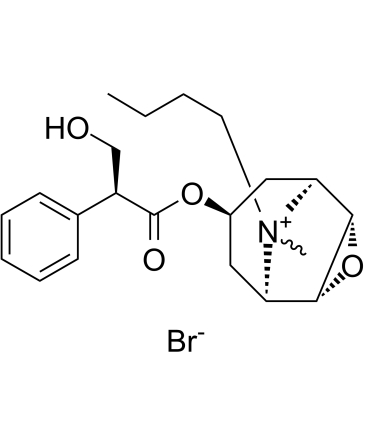
    Scopolamine butylbromide
    1 Publications Verification

    Hyoscine butylbromide; (-)-Scopolamine butylbromide; Butylscopolamine bromide

    mAChR Neurological Disease Inflammation/Immunology
    Scopolamine butylbromide (Hyoscine butylbromide) is an orally active anticholinergic agent and spasmolytic. Scopolamine butylbromide binds with high affinity to rat cardiac M2 (Ki 83 nmol/L), hM2 (Ki 233 nmol/L), rat intestinal M3 (Ki 290 nmol/L) and hM3 (Ki 643 nmol/L) muscarinic receptors. Scopolamine butylbromide exerts a dose-dependent antagonistic effect on Carbachol-induced gastrointestinal smooth muscle spasm. Scopolamine butylbromide can be used for the research of abdominal colic and pain associated with gastrointestinal spasm, functional abdominal pain, chronic gastropathy and gastric ulcer .
    Scopolamine butylbromide
  • HY-B1339

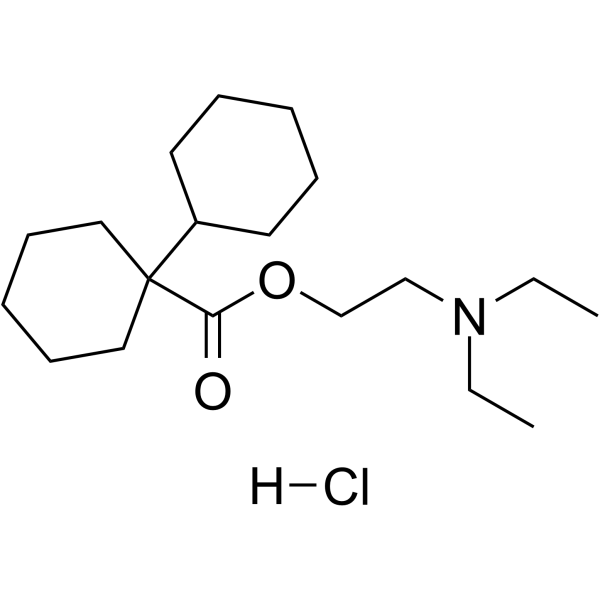
    Dicycloverine hydrochloride

    mAChR Neurological Disease
    Dicyclomine hydrochloride is a potent and orally active muscarinic cholinergic receptors antagonist. Dicyclomine hydrochloride shows high affinity for muscarinic M1 receptor subtype (Ki=5.1 nM) and M2 receptor subtype (Ki=54.6 nM) in brush-border membrane and basal plasma membranes, respectively . Dicyclomine is an antispasmodic agent and relieves smooth muscle spasm of the gastrointestinal tract in vivo .
    Dicyclomine hydrochloride
  • HY-107349

    spasmopriv

    Calcium Channel Neurological Disease
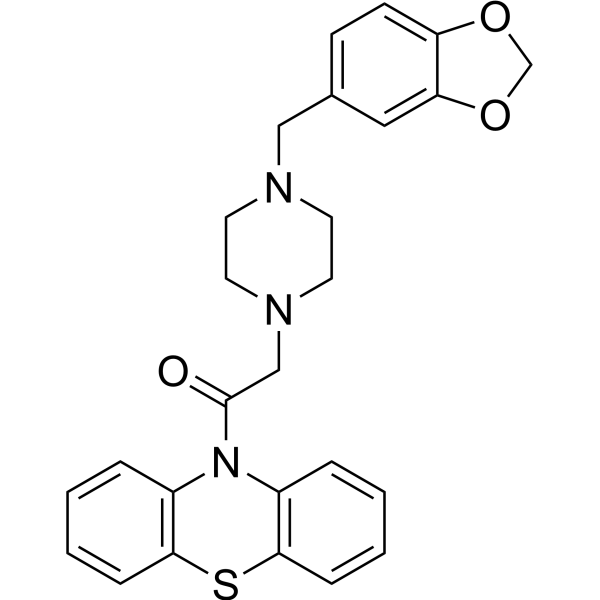
    Fenoverine (Spasmopriv) is an orally active and powerful anti-spasmodic drug. Fenoverine reduces calcium ion influx by suppressing voltage dependent calcium channels. Fenoverine has antiemetic, analgesic, and antidiarrheal effects. Fenoverine induces rhabdomyolysis. Fenoverine can be used to study smooth muscle overexcitation related conditions such as gastrointestinal spasms .
    Fenoverine
  • HY-B1339A

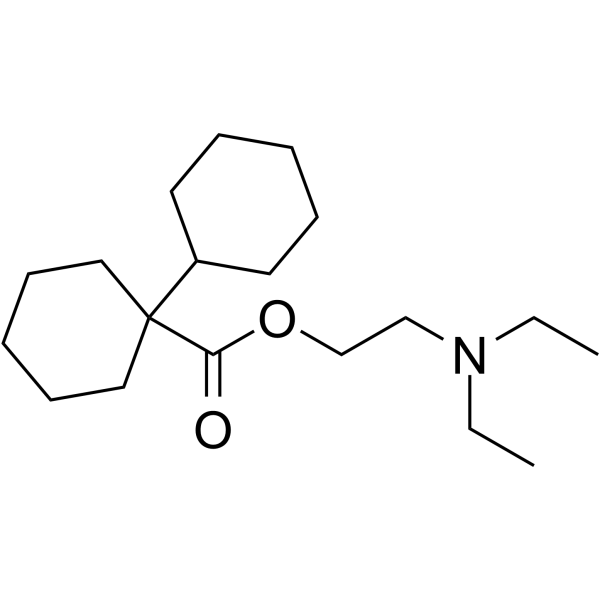
    Dicycloverine

    mAChR Neurological Disease
    Dicyclomine (Dicycloverine) is a potent and orally active muscarinic cholinergic receptors antagonist. Dicyclomine (Dicycloverine) shows high affinity for muscarinic M1 receptor subtype (Ki=5.1 nM) and M2 receptor subtype (Ki=54.6 nM) in brush-border membrane and basal plasma membranes, respectively . Dicyclomine is an antispasmodic agent and relieves smooth muscle spasm of the gastrointestinal tract in vivo .
    Dicyclomine
  • HY-B0954A

    mAChR Endocrinology
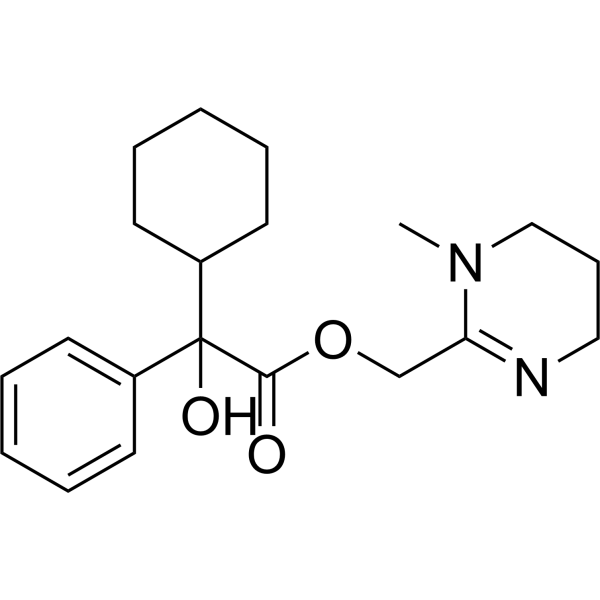
    Oxyphencyclimine is an orally active muscarinic receptor (mAChR) antagonist. Oxyphencyclimine is effective in reducing ulceration index and increasing pepsin activity in rat gastric ulcer model. Oxyphencyclimine can be used in studies of peptic ulcer disease and gastrointestinal spasm .
    Oxyphencyclimine
  • HY-107349S

    spasmopriv-d8

    Calcium Channel Isotope-Labeled Compounds Neurological Disease
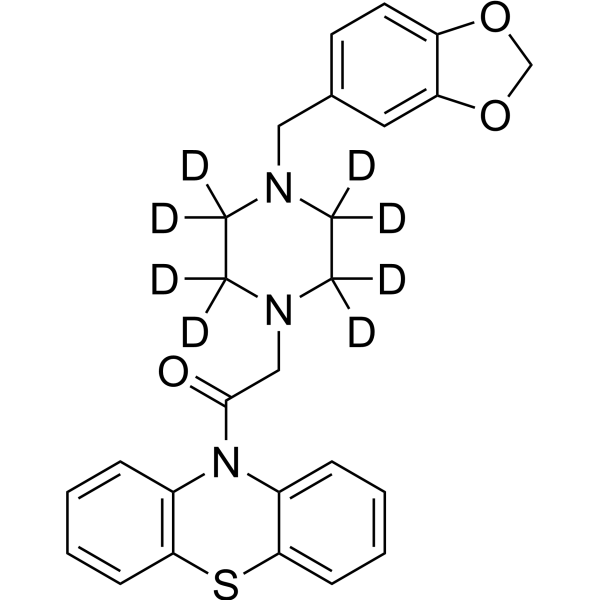
    Fenoverine-d8 is the deuterium labeled Fenoverine. Fenoverine (Spasmopriv) is an orally active and powerful anti-spasmodic drug. Fenoverine reduces calcium ion influx by suppressing voltage dependent calcium channels. Fenoverine has antiemetic, analgesic, and antidiarrheal effects. Fenoverine induces rhabdomyolysis. Fenoverine can be used to study smooth muscle overexcitation related conditions such as gastrointestinal spasms .
    Fenoverine-d8
  • HY-107349R

    spasmopriv (Standard)

    Reference Standards Calcium Channel Neurological Disease
    Fenoverine (Standard) is the analytical standard of Fenoverine. This product is intended for research and analytical applications. Fenoverine (Spasmopriv) is an orally active and powerful anti-spasmodic drug. Fenoverine reduces calcium ion influx by suppressing voltage dependent calcium channels. Fenoverine has antiemetic, analgesic, and antidiarrheal effects. Fenoverine induces rhabdomyolysis. Fenoverine can be used to study smooth muscle overexcitation related conditions such as gastrointestinal spasms .
    Fenoverine (Standard)
  • HY-120403A

    Calcium Channel Neurological Disease
    Pramiverine hydrochloride is a long-acting anticholinergic agent. Pramiverine hydrochloride exerts a tonic inhibitory effect on esophageal peristalsis during swallowing. Pramiverine hydrochloride can be used for research on gastrointestinal spasms .
    Pramiverine hydrochloride
  • HY-124515

    Histamine Receptor mAChR Neurological Disease
    Dihexyverine hydrochloride is a compound belonging to the amino alcohol ester class. Dihexyverine hydrochloride possesses anticholinergic, smooth muscle relaxant, antihistaminic, and antiemetic effects. Dihexyverine hydrochloride can also shorten the duration of labor. Dihexyverine hydrochloride can be used in research related to gastrointestinal spasms, obstetrics, and other fields .
    Dihexyverine hydrochloride
  • HY-N0340R

    Hyoscine butylbromide (Standard); (-)-Scopolamine butylbromide (Standard); Butylscopolamine bromide (Standard)

    Reference Standards mAChR Neurological Disease Inflammation/Immunology
    Scopolamine butylbromide (Standard) is the analytical standard of Scopolamine butylbromide (HY-N0340). This product is intended for research and analytical applications. Scopolamine butylbromide (Hyoscine butylbromide) is an orally active anticholinergic agent and spasmolytic. Scopolamine butylbromide binds with high affinity to rat cardiac M2 (Ki 83 nmol/L), hM2 (Ki 233 nmol/L), rat intestinal M3 (Ki 290 nmol/L) and hM3 (Ki 643 nmol/L) muscarinic receptors. Scopolamine butylbromide exerts a dose-dependent antagonistic effect on Carbachol-induced gastrointestinal smooth muscle spasm. Scopolamine butylbromide can be used for the research of abdominal colic and pain associated with gastrointestinal spasm, functional abdominal pain, chronic gastropathy and gastric ulcer .
    Scopolamine butylbromide (Standard)
  • HY-122991

    Histone Methyltransferase Neurological Disease
    Prospasmine hydrochloride is an anticholinergic drug that has the activity of inhibiting glandular secretions and relaxing smooth muscles. Prospasmine hydrochloride is mainly used to inhibit certain types of gastrointestinal disorders. Prospasmine hydrochloride helps relieve pain caused by smooth muscle spasms. Prospasmine hydrochloride is also used as an anesthetic adjuvant in some cases .
    Prospasmine hydrochloride
  • HY-B1339AS

    Dicycloverine-d4

    mAChR Neurological Disease
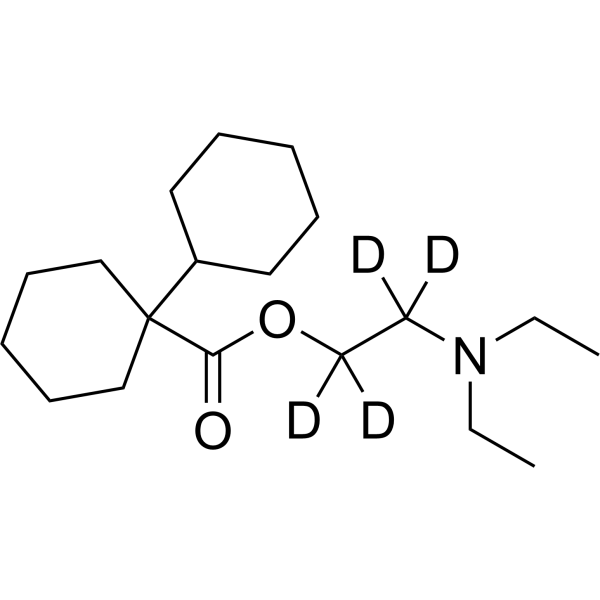
    Dicyclomine-d4 is the deuterium labeled Dicyclomine . Dicyclomine (Dicycloverine) is a potent and orally active muscarinic cholinergic receptors antagonist. Dicyclomine (Dicycloverine) shows high affinity for muscarinic M1 receptor subtype (Ki=5.1 nM) and M2 receptor subtype (Ki=54.6 nM) in brush-border membrane and basal plasma membranes, respectively . Dicyclomine is an antispasmodic agent and relieves smooth muscle spasm of the gastrointestinal tract in vivo .
    Dicyclomine-d4
  • HY-B1339R

    Dicycloverine hydrochloride (Standard)

    Reference Standards mAChR Neurological Disease
    Dicyclomine (hydrochloride) (Standard) is the analytical standard of Dicyclomine (hydrochloride). This product is intended for research and analytical applications. Dicyclomine hydrochloride is a potent and orally active muscarinic cholinergic receptors antagonist. Dicyclomine hydrochloride shows high affinity for muscarinic M1 receptor subtype (Ki=5.1 nM) and M2 receptor subtype (Ki=54.6 nM) in brush-border membrane and basal plasma membranes, respectively . Dicyclomine is an antispasmodic agent and relieves smooth muscle spasm of the gastrointestinal tract in vivo .
    Dicyclomine hydrochloride (Standard)
  • HY-B1339S

    Dicycloverine-d4 hydrochloride

    Isotope-Labeled Compounds mAChR Neurological Disease
    Dicyclomine-d4 hydrochloride (Dicycloverine-d4 hydrochloride) is the deuterium labeled Dicyclomine hydrochloride (HY-B1339). Dicyclomine hydrochloride is a potent and orally active muscarinic cholinergic receptors antagonist. Dicyclomine hydrochloride shows high affinity for muscarinic M1 receptor subtype (Ki=5.1 nM) and M2 receptor subtype (Ki=54.6 nM) in brush-border membrane and basal plasma membranes, respectively . Dicyclomine is an antispasmodic agent and relieves smooth muscle spasm of the gastrointestinal tract in vivo .
    Dicyclomine-d4 hydrochloride

Inquiry Online

Your information is safe with us. * Required Fields.

Salutation


Country or Region *

Applicant Name *


Organization Name *

Department *


Email Address *


Product Name *

Cat. No.


Requested quantity *

Phone Number *


Remarks

Inquiry Online

Inquiry Information

Product Name:
Cat. No.:
Quantity:
MCE Japan Authorized Agent:

