15 Results for "

histidine-decarboxylase

" in MedChemExpress (MCE) Product Catalog:
Products (15)

15 Results for "histidine-decarboxylase" in MCE Product Catalog:

15
15 Publications Verification
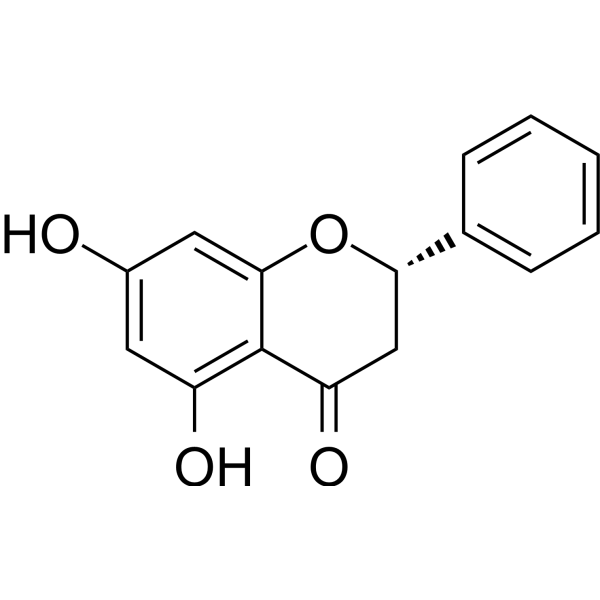
Cat. No.: HY-N0575
CAS No.: 480-39-7
Synonyms: (+)-Pinocoembrin; Dihydrochrysin; Galangin flavanone
Pinocembrin ((+)-Pinocoembrin) is a flavonoid found in propolis, acts as a competitive inhibitor of histidine decarboxylase, and is an effective anti-allergic agent, with antioxidant, antimicrobial and anti-inflammatory properties .
loading...
    loading...
2
2 Cited Publications
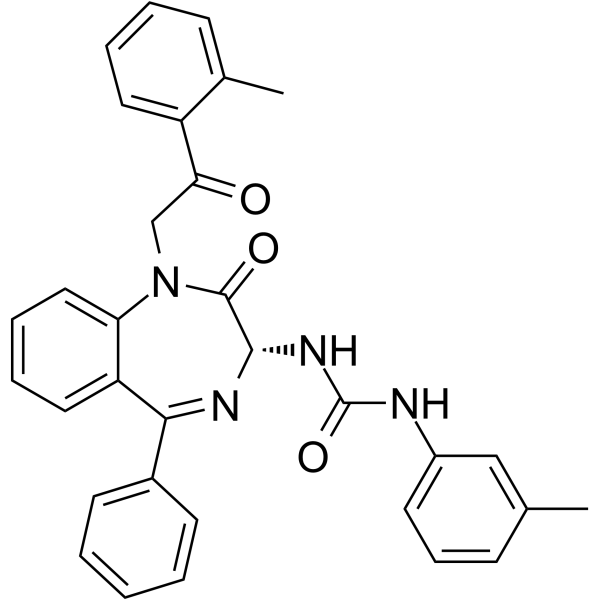
Cat. No.: HY-103355
CAS No.: 145084-28-2
Purity:  99.87%
Target:  

CCR

Research Areas:  

Metabolic Disease

YM022 is a highly potent, selective and orally active gastrin/cholecystokinin (CCK)-B receptor (CCK-BR) antagonist. YM022 shows the Ki values of 68 pM and 63 nM for CCK-B and CCK-A receptor, respectively . YM022 can inhibit gastrin-induced gastric acid secretion and histidine decarboxylase activation in vivo .
loading...
    loading...
1
1 Cited Publications
Cat. No.: HY-N0575R
CAS No.: 480-39-7
Synonyms: (+)-Pinocoembrin (Standard); Dihydrochrysin (Standard); Galangin flavanone (Standard)
Pinocembrin (Standard) is the analytical standard of Pinocembrin. This product is intended for research and analytical applications. Pinocembrin ((+)-Pinocoembrin) is a flavonoid found in propolis, acts as a competitive inhibitor of histidine decarboxylase, and is an effective anti-allergic agent, with antioxidant, antimicrobial and anti-inflammatory properties .
loading...
    loading...
Cat. No.: HY-114118S
Semaglutide-d8 is the deuterium labeled Semaglutide (HY-114118). Semaglutide is a long-acting, selective, competitive GLP-1R agonist that can penetrate the blood-brain barrier. After activating GLP-1R, Semaglutide promotes insulin secretion, inhibits gastric emptying and appetite, and at the same time enhances autophagy, inhibits oxidative stress and apoptosis. Semaglutide also regulates mitochondrial function and lipid metabolism (such as reducing de novo lipogenesis in the liver). Semaglutide has activities such as lowering blood sugar, reducing weight, neuroprotection (such as improving motor function in Parkinson's disease models, reducing α-synuclein aggregation) and improving hepatic steatosis. Semaglutide can be used for the study of neurodegenerative diseases and liver diseases such as type 2 diabetes, obesity, Parkinson's disease, metabolic associated fatty liver disease (MASLD), and cancer .
loading...
    loading...
Cat. No.: HY-114118S1
Semaglutide-d8 tetraTFA is the deuterium labeled Semaglutide (HY-114118). Semaglutide is a long-acting, selective, competitive GLP-1R agonist that can penetrate the blood-brain barrier. After activating GLP-1R, Semaglutide promotes insulin secretion, inhibits gastric emptying and appetite, and at the same time enhances autophagy, inhibits oxidative stress and apoptosis. Semaglutide also regulates mitochondrial function and lipid metabolism (such as reducing de novo lipogenesis in the liver). Semaglutide has activities such as lowering blood sugar, reducing weight, neuroprotection (such as improving motor function in Parkinson's disease models, reducing α-synuclein aggregation) and improving hepatic steatosis. Semaglutide can be used for the study of neurodegenerative diseases and liver diseases such as type 2 diabetes, obesity, Parkinson's disease, metabolic associated fatty liver disease (MASLD), and cancer .
loading...
    loading...
Cat. No.: HY-115822
CAS No.: 81839-27-2
Purity:  ≥99.0%
α-Fluoromethylhistidine dihydrochloride is an orally active histidine decarboxylase inhibitor. α-Fluoromethylhistidine dihydrochloride depletes histamine in enterochromaffin-like (ECL) cells, reduces the number and volume density of secretory vesicles in ECL cells, and does not affect histamine storage in mast cells. α-Fluoromethylhistidine dihydrochloride abolishes Omeprazole (HY-B0113)-induced vacuolization of ECL cells and decreases gastrin-induced histamine efflux from ECL cells. α-Fluoromethylhistidine dihydrochloride does not alter the granular characteristics of ECL cells, omeprazole-induced hypertrophy of ECL cells, gastrin-induced pancreastatin-like immunoreactivity efflux, nor does it affect gastric acid secretion induced by histamine or vagal stimulation. α-Fluoromethylhistidine dihydrochloride inhibits basal and gastrin-stimulated gastric acid secretion, reduces acid output induced by gastrin+IBMX (HY-12318), but does not directly affect acid generation in isolated parietal cells .
loading...
    loading...
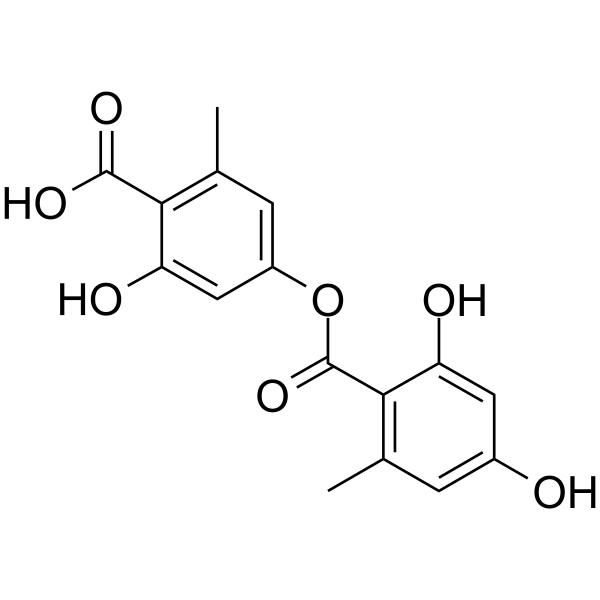
Cat. No.: HY-N3394
CAS No.: 480-56-8
Lecanoric acid is a histidine-decarboxylase inhibitor isolated from fungus. The inhibition by lecanoric acid is competitive with histidineand noncompetitive with pyridoxal phosphate. Lecanoric acid did not inhibit aromatic amino acid decarboxylase .
loading...
    loading...
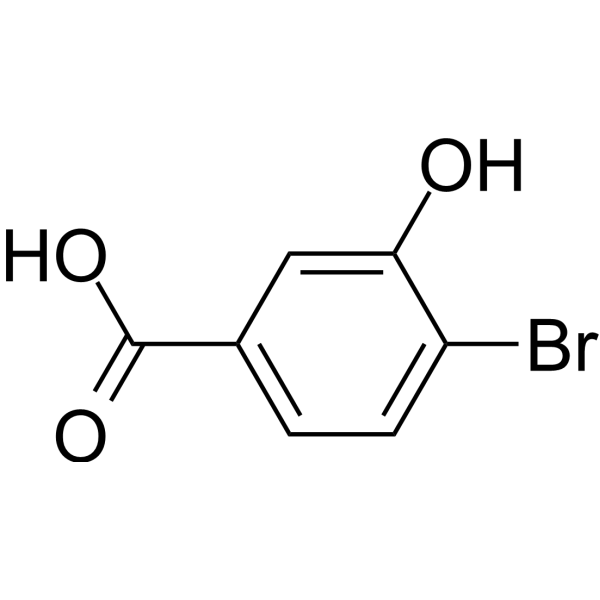
Cat. No.: HY-W003445
CAS No.: 14348-38-0
4-Bromo-3-hydroxybenzoic acid is a metabolite of Brocresine and a histidine decarboxylase (HDC) inhibitor with IC50s of 1 mM for both rat fetal and rat gastric HDC. 4-Bromo-3-hydroxybenzoic acid also inhibits aromatic-L-amino acid decarboxylase from hog kidney and rat gastric mucosa in vitro with IC50s of 1 mM for both enzymes .
loading...
    loading...
Cat. No.: HY-W1015419
CAS No.: 73804-75-8
Synonyms: α-Fluoromethylhistidine
α-FMH (α-Fluoromethylhistidine) is an orally active histidine decarboxylase inhibitor. α-FMH depletes histamine in enterochromaffin-like (ECL) cells, reduces the number and volume density of secretory vesicles in ECL cells, and does not affect histamine storage in mast cells. α-FMH abolishes Omeprazole (HY-B0113)-induced vacuolization of ECL cells and decreases gastrin-induced histamine efflux from ECL cells. α-FMH does not alter the granular characteristics of ECL cells, omeprazole-induced hypertrophy of ECL cells, gastrin-induced pancreastatin-like immunoreactivity efflux, nor does it affect gastric acid secretion induced by histamine or vagal stimulation. α-FMH inhibits basal and gastrin-stimulated gastric acid secretion, reduces acid output induced by gastrin+IBMX (HY-12318), but does not directly affect acid generation in isolated parietal cells .
loading...
    loading...
Cat. No.: HY-U00065
CAS No.: 14504-73-5
Synonyms: Inhibostamin; Hypostamine
Research Areas:  

Inflammation/Immunology

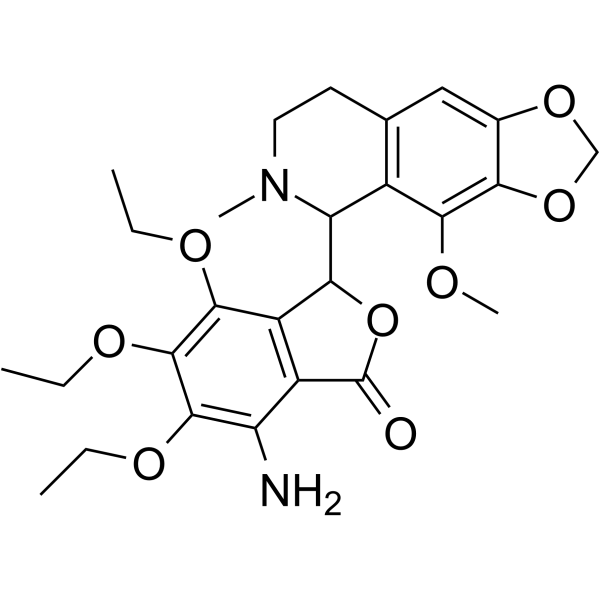
Tritoqualine is a histidine decarboxylase inhibitor, that inhibits the release of histidine .
loading...
    loading...
Cat. No.: HY-122968
CAS No.: 555-65-7
Synonyms: NSD-1065
Target:  

Endogenous Metabolite

Research Areas:  

Neurological Disease

Brocresine (NSD-1065) is an orally active histidine decarboxylase inhibitor and inhibits the formation of histamine from histidine. Brocresine is also a L-amino acid decarboxylase inhibitor with both a peripheral and central action. Brocresine inhibits gastric secretory response to administration of exogenous gastrin .
loading...
    loading...
Cat. No.: HY-E70999
Target:  

Endogenous Metabolite

Research Areas:  

Metabolic Disease

L-Histidine Decarboxylase, Lactobacillus 30a (EC 4.1.1.22) catalyzes the conversion of histidine to histamine with the help of vitamin B6. The specific reaction is as follows: Histidine decarboxylase catalyzes the conversion of histidine to histamine.
loading...
    loading...
Cat. No.: HY-121625
CAS No.: 16662-56-9
Target:  

Histamine Receptor

Research Areas:  

Inflammation/Immunology

MK-785 is a histidine decarboxylase inhibitor. MK-785 interacts with the cofactor Pyridoxal phosphate (HY-B1744). MK-785 reduces basal and gastrin-stimulated gastric acid secretion. MK-785 decreases the formation of stress ulcers induced by cold stress and restraint stress. MK-785 inhibits gastric histidine decarboxylase activity in brown rats. MK-785 can be used in studies related to stress ulcers .
loading...
    loading...
Cat. No.: HY-103355R
CAS No.: 145084-28-2
Target:  

Reference Standards CCR

Research Areas:  

Metabolic Disease

YM022 (Standard) is the analytical standard of YM022 (HY-103355). This product is intended for research and analytical applications. YM022 is a highly potent, selective and orally active gastrin/cholecystokinin (CCK)-B receptor (CCK-BR) antagonist. YM022 shows the Ki values of 68 pM and 63 nM for CCK-B and CCK-A receptor, respectively . YM022 can inhibit gastrin-induced gastric acid secretion and histidine decarboxylase activation in vivo .
loading...
    loading...
Cat. No.: HY-W003445R
CAS No.: 14348-38-0
4-Bromo-3-hydroxybenzoic acid (Standard) is the analytical standard of 4-Bromo-3-hydroxybenzoic acid (HY-W003445). This product is intended for research and analytical applications. 4-Bromo-3-hydroxybenzoic acid is a metabolite of Brocresine and a histidine decarboxylase (HDC) inhibitor with IC50s of 1 mM for both rat fetal and rat gastric HDC. 4-Bromo-3-hydroxybenzoic acid also inhibits aromatic-L-amino acid decarboxylase from hog kidney and rat gastric mucosa in vitro with IC50s of 1 mM for both enzymes .
loading...
    loading...
  • 1

