1. Search Result
Search Result
Results for "

human cerebrospinal fluid

" in MedChemExpress (MCE) Product Catalog:

15

Inhibitors & Agonists

2

Peptides

1

Inhibitory Antibodies

2

Isotope-Labeled Compounds

Cat. No. Product Name Target Research Areas Chemical Structure
  • HY-B0590
    Tetrabenazine
    1 Publications Verification

    Ro 1-9569

    Monoamine Transporter Dopamine Receptor Neurological Disease
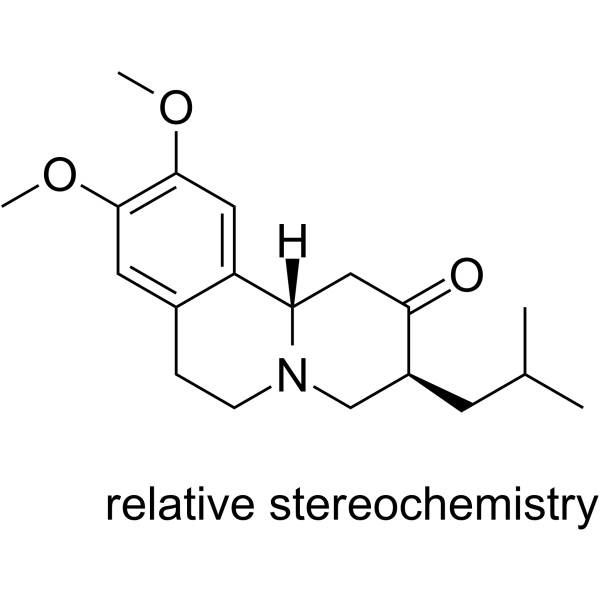
    Tetrabenazine (Ro 1-9569) is a brain-penetrant and orally active VMAT2-selective ligand with human VMAT2 Ki 100 nM. Tetrabenazine binds VMAT2 to block monoamine uptake into synaptic vesicles, potentiates cytoplasmic monoamine degradation. Tetrabenazine weakly blocks dopamine D2 receptors, and increases dopamine turnover via elevated cerebrospinal fluid homovanillic acid. Tetrabenazine can be used for the research of Huntington’s disease, tardive dyskinesia, and Tourette’s syndrome .
    Tetrabenazine
  • HY-B0590S

    Ro 1-9569-d6

    Monoamine Transporter Neurological Disease
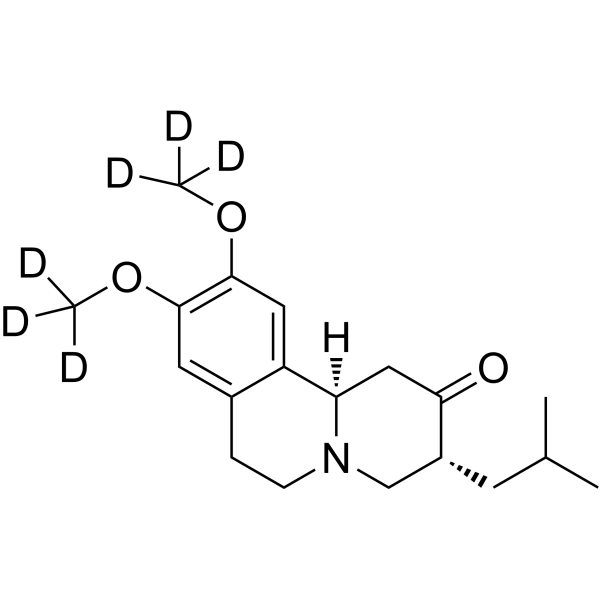
    Tetrabenazine-d6 (Deutetrabenazine) is a deuterium-labled Tetrabenazine (HY-B0590). Tetrabenazine (Ro 1-9569) is a brain-penetrant and orally active VMAT2-selective ligand with human VMAT2 Ki 100 nM. Tetrabenazine binds VMAT2 to block monoamine uptake into synaptic vesicles, potentiates cytoplasmic monoamine degradation. Tetrabenazine weakly blocks dopamine D2 receptors, and increases dopamine turnover via elevated cerebrospinal fluid homovanillic acid. Tetrabenazine can be used for the research of Huntington’s disease, tardive dyskinesia, and Tourette’s syndrome .
    Tetrabenazine-d6
  • HY-B0590A

    Ro 1-9569 Racemate

    Monoamine Transporter Dopamine Receptor Neurological Disease
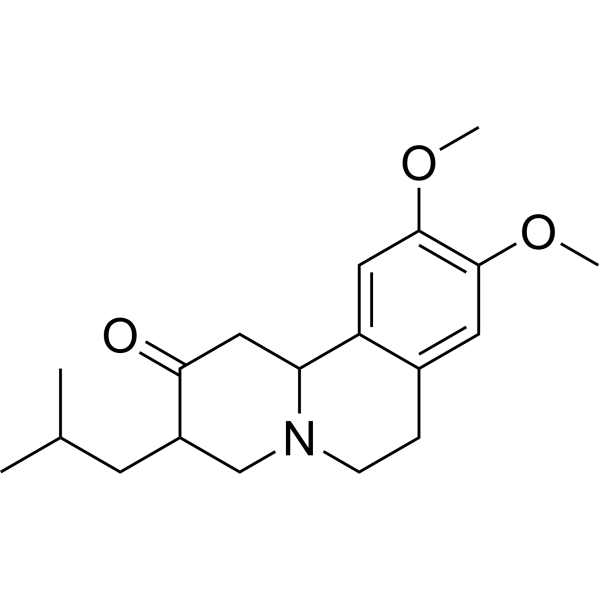
    Tetrabenazine (Ro 1-9569) Racemate is a brain-penetrant and orally active VMAT2-selective ligand with human VMAT2 Ki 100 nM. Tetrabenazine Racemate binds VMAT2 to block monoamine uptake into synaptic vesicles, potentiates cytoplasmic monoamine degradation. Tetrabenazine Racemate weakly blocks dopamine D2 receptors, and increases dopamine turnover via elevated cerebrospinal fluid homovanillic acid. Tetrabenazine Racemate can be used for the research of Huntington’s disease, tardive dyskinesia, and Tourette’s syndrome .
    Tetrabenazine Racemate
  • HY-109183

    TAK-831

    Xanthine Oxidase Others
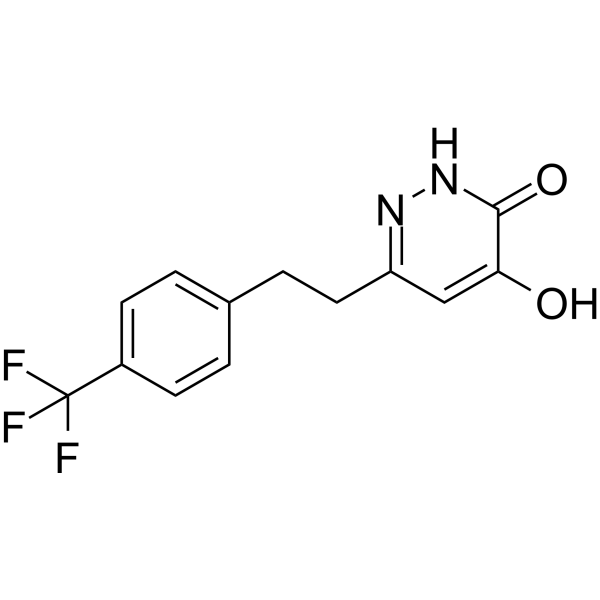
    Luvadaxistat (TAK-831) is an orally active, highly selective, potent D-amino acid oxidase (DAAO) inhibitor. Luvadaxistat inhibits oxidative deamination of D-serine via the human recombinant DAAO enzyme with an IC50 of 14 nM. Luvadaxistat significantly increases D-serine levels in the rodent brain, plasma, and cerebrospinal fluid. Luvadaxistat has the potential for schizophrenia research .
    Luvadaxistat
  • HY-16632

    γ-secretase Amyloid-β Metabolic Disease
    ELND 006 (Compound 30) is a metabolically stable γ-secretase inhibitor designed to selectively inhibit amyloid beta (Aβ) generation while sparing Notch signaling. It was developed through a synthetic strategy emphasizing diversity and chirality. ELND 006, along with its analog ELND007 (Compound 34), progressed into human clinical trials. In preclinical studies, both compounds demonstrated effective reduction of Aβ levels in vitro and in vivo. Comparisons with other γ-secretase inhibitors like Semagacestat, Begacestat, and Avagacestat underscored their potency and specificity in lowering Aβ levels in cerebrospinal fluid (CSF) of healthy human volunteers, suggesting potential therapeutic efficacy in Alzheimer's disease .
    ELND 006
  • HY-P5183

    Sodium Channel Neurological Disease
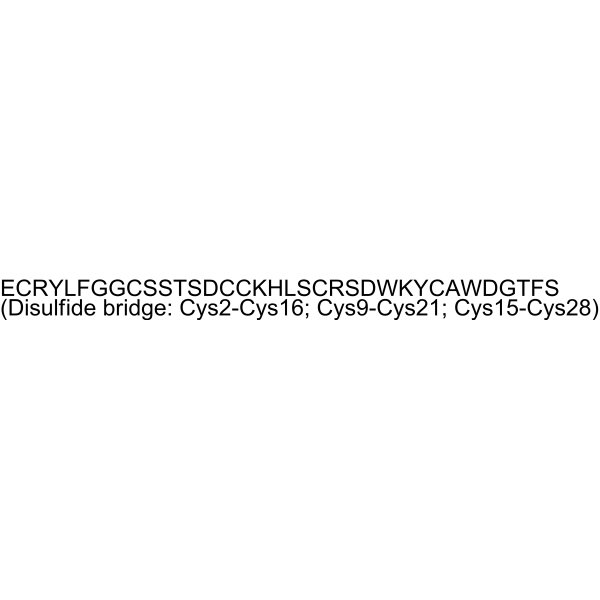
    Hm1a is a venom peptide and a selective hNaV1.1 activator with an EC50 of 7.5 nM. Hm1a enhances hNaV1.1 and hNaV1.3 channel currents via delayed inactivation. Hm1a restores action potential firing in Dravet syndrome GABAergic inhibitory interneurons, reduces interictal epileptiform discharges and whole-brain hyperexcitability, lowers seizure frequency, and rescues premature death in Dravet syndrome mice. Hm1a can be used for the research of neurological disease, such as Dravet syndrome .
    Hm1a
  • HY-B0590E

    Ro 1-9569 mesylate

    Monoamine Transporter Dopamine Receptor Neurological Disease
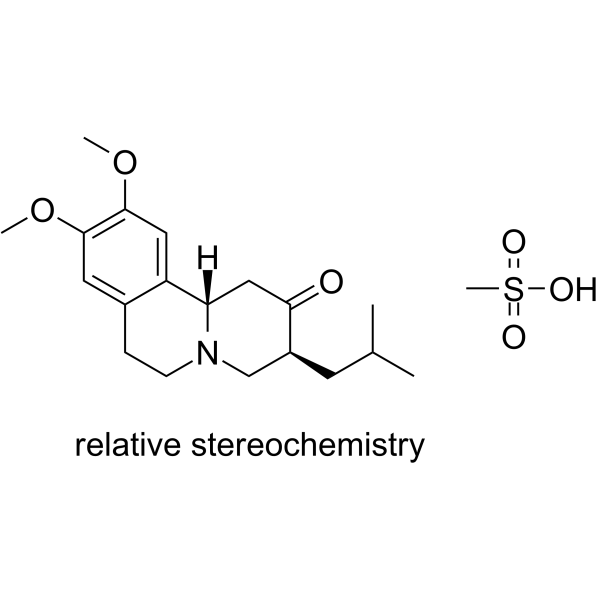
    Tetrabenazine (Ro 1-9569) mesylate is a brain-penetrant and orally active VMAT2-selective ligand with human VMAT2 Ki 100 nM. Tetrabenazine mesylate binds VMAT2 to block monoamine uptake into synaptic vesicles, potentiates cytoplasmic monoamine degradation. Tetrabenazine mesylate weakly blocks dopamine D2 receptors, and increases dopamine turnover via elevated cerebrospinal fluid homovanillic acid. Tetrabenazine mesylate can be used for the research of Huntington’s disease, tardive dyskinesia, and Tourette’s syndrome .
    Tetrabenazine mesylate
  • HY-B0590R

    Ro 1-9569 (Standard)

    Reference Standards Monoamine Transporter Dopamine Receptor Neurological Disease
    Tetrabenazine (Standard) is the analytical standard of Tetrabenazine (HY-B0590). This product is intended for research and analytical applications. Tetrabenazine (Ro 1-9569) is a brain-penetrant and orally active VMAT2-selective ligand with human VMAT2 Ki 100 nM. Tetrabenazine binds VMAT2 to block monoamine uptake into synaptic vesicles, potentiates cytoplasmic monoamine degradation. Tetrabenazine weakly blocks dopamine D2 receptors, and increases dopamine turnover via elevated cerebrospinal fluid homovanillic acid. Tetrabenazine can be used for the research of Huntington’s disease, tardive dyskinesia, and Tourette’s syndrome .
    Tetrabenazine (Standard)
  • HY-B0590S3

    TBZ-d7-d7; Ro 1-9569-d7

    Isotope-Labeled Compounds Monoamine Transporter Dopamine Receptor Neurological Disease
    Tetrabenazine-d7 (TBZ-d7-d7) is deuterium labeled Tetrabenazine (HY-B0590). Tetrabenazine (Ro 1-9569) is a brain-penetrant and orally active VMAT2-selective ligand with human VMAT2 Ki 100 nM. Tetrabenazine binds VMAT2 to block monoamine uptake into synaptic vesicles, potentiates cytoplasmic monoamine degradation. Tetrabenazine weakly blocks dopamine D2 receptors, and increases dopamine turnover via elevated cerebrospinal fluid homovanillic acid. Tetrabenazine can be used for the research of Huntington’s disease, tardive dyskinesia, and Tourette’s syndrome .
    Tetrabenazine-d7
  • HY-P10498

    Opioid Receptor Neurological Disease
    [Des-Tyr1]-gamma-Endorphin is a neuropeptide, which can be found in human cerebrospinal fluid. [Des-Tyr1]-gamma-Endorphin exhibits antidepressant efficacy, facilitates the extinction of active avoidance and attenuates the passive avoidance behavior in rats .
    [Des-Tyr1]-gamma-Endorphin
  • HY-117637

    Oxytocin Receptor Neurological Disease
    ALS-I-41 is a novel, potent and selective oxytocin receptor antagonist with the potential to modulate biological activities related to social behavior and mental disorders. ALS-I-41 is being evaluated for behavioral pharmacology experiments in non-human primates and can be administered via intranasal or intramuscular injection. The central nervous system penetration and metabolic rate of ALS-I-41 were studied by mass spectrometry analysis in cerebrospinal fluid and plasma of macaque monkeys .
    ALS-I-41
  • HY-137863

    Histamine Receptor Cardiovascular Disease Inflammation/Immunology
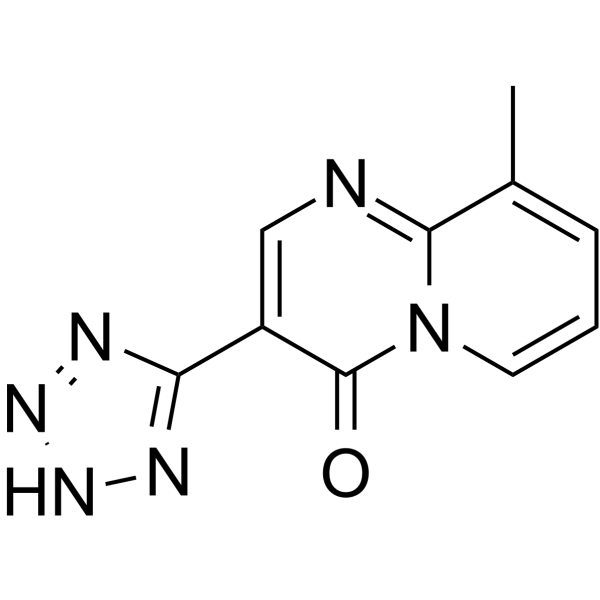
    Pemirolast is an orally active antiallergic agent. Pemirolast attenuates Paclitaxel (HY-B0015) hypersensitivity reactions. Pemirolast can be used for bronchial asthma and conjunctivitis research - .
    Pemirolast
  • HY-16633

    γ-secretase Amyloid-β Metabolic Disease
    ELND 007 (Compound 34) is a metabolically stable γ-secretase inhibitor designed to selectively inhibit amyloid beta (Aβ) generation while minimizing Notch inhibition. Developed alongside ELND 006 (Compound 30), it underwent human clinical trials following a synthetic strategy emphasizing diversity and chirality. In preclinical studies, ELND 007 showed promising in vitro and in vivo characteristics, effectively reducing Aβ levels. Comparative studies with other γ-secretase inhibitors like Semagacestat, Begacestat, and Avagacestat highlighted its efficacy in lowering Aβ production, particularly demonstrated by reduced Aβ levels in the cerebrospinal fluid (CSF) of healthy human volunteers, suggesting potential therapeutic benefit for Alzheimer's disease .
    ELND 007
  • HY-106021

    ILX651 free base

    Microtubule/Tubulin Prolyl Endopeptidase (PREP) Cancer
    Tasidotin (ILX651 free base) is a tubulin inhibitor and competitive Prolyl Endopeptidase (PREP) inhibitor, with an IC50 of 10 μM against bovine tubulin. Tasidotin exhibits high cerebrospinal fluid penetration in non-human primates. Tasidotin antagonizes microtubule assembly and induces an extended assembly lag phase, thereby inhibiting mitosis and cell proliferation, and exerts cytotoxic and oncolytic effects on cancer cells. Tasidotin is metabolized into polypeptides and proline inside cells, and its in vivo metabolism is mediated by prolyl endopeptidase. Tasidotin can be applied in research related to Burkitt's lymphoma, breast cancer, leukemia, melanoma, central nervous system malignancies and various solid tumors .
    Tasidotin
  • HY-P990995A

    7G6 Antibody; 7G6-IgG2a

    Tau Protein Neurological Disease
    Etalanetug (Mouse IgG2a) (7G6 Antibody) is a mouse monoclonal antibody targeting the HVPGG motif in the microtubule-binding domain of tau protein. Etalanetug (Mouse IgG2a) reduces the levels of insoluble tau protein in multiple brain regions and inhibits the seeding and spread of pathological tau protein. Etalanetug (Mouse IgG2a) is applicable to research related to Alzheimer's disease .
    Etalanetug (Mouse IgG2a)

Inquiry Online

Your information is safe with us. * Required Fields.

Salutation


Country or Region *

Applicant Name *


Organization Name *

Department *


Email Address *


Product Name *

Cat. No.


Requested quantity *

Phone Number *


Remarks

Inquiry Online

Inquiry Information

Product Name:
Cat. No.:
Quantity:
MCE Japan Authorized Agent: