



1. Search Result
Search Result
Results for "

immune rejection

" in MedChemExpress (MCE) Product Catalog:

17

阻害剤およびアゴニスト

1

ペプチド

6

阻害性抗体

2

天然物

製品番号 製品名 Target 研究分野 構造式
  • HY-P990083

    AT-1501

    TNF Receptor Inflammation/Immunology
    Tegoprubart (AT-1501) is a CD40 ligand inhibitor (EC50=100 ng/mL) and immunosuppressant that selectively inhibits the CD40 ligand, a co-stimulatory molecule involved in T cell activation. Tegoprubart suppresses immune rejection, prevents rejection in animal transplantation models, and reduces cell-mediated and antibody-mediated immune responses to create a more immunotolerant environment. Tegoprubart preserves renal function when combined with Mycophenolate (HY-B0421) and Corticosteroids, and maintains graft function in preclinical studies. Tegoprubart is applicable to research related to kidney transplantation and kidney transplant rejection .
    Tegoprubart
  • HY-P99488

    JSP-191; AMG-191

    c-Kit Inflammation/Immunology Cancer
    Briquilimab (JSP-191 or AMG-191) is a humanized IgG1 monoclonal antibody that binds human CD117 (c-Kit). Briquilimab blocks the interaction between CD117 receptor and stem cell factor on various CD117 expressing tissues. Briquilimab can lead to inhibition of SCF/c-Kit signaling and MC apoptosis. Briquilimab is a non-toxic approach to target and deplete HSC, enabling blood and immune reconstitution with minimal toxicity with the other agents being used for transient immune suppression to prevent immunologic rejection. Briquilimab can be used in various disease research such as severe combined immunodeficiency (SCID), myelodyplastic syndromes (MDS), acute myeloid leukemia (AML), chronic spontaneous urticarial (CSU), chronic inducible urticarial (CIndU) and asthema .
    Briquilimab
  • HY-P99152

    Muromanab-CD3

    CD3 Interleukin Related IFNAR Inflammation/Immunology Cancer
    Muromonab (Muromonab-CD3; OKT3) is a mouse monoclonal antibody targeting the CD3 antigen. Muromonab specifically binds to the CD3 antigen on the surface of human and higher primate T cells. Muromonab blocks the function of T cell receptors to recognize foreign antigens and inhibits T cell-mediated immune responses, including cell-mediated lymphocyte lysis and T cell proliferation responses. Muromonab can be used to study acute kidney, liver, heart and combined kidney-pancreas transplant rejection, and can also be used to study graft-versus-host disease in bone marrow transplant patients .
    Muromonab
  • HY-P99257

    ASKP 1240

    TNF Receptor Inflammation/Immunology
    Bleselumab (ASKP 1240) is a human anti-CD40 monoclonal antibody (mAb). Bleselumab binds to human CD40 with high affinity (Kd: 0.24 nM). Bleselumab inhibits immune responses by blocking the interaction of CD40 with its ligand CD40L. Bleselumab prevents organ transplant rejection .
    Bleselumab
  • HY-157746
    CTPS1-IN-1
    1 Publications Verification

    DNA/RNA Synthesis Inflammation/Immunology Cancer
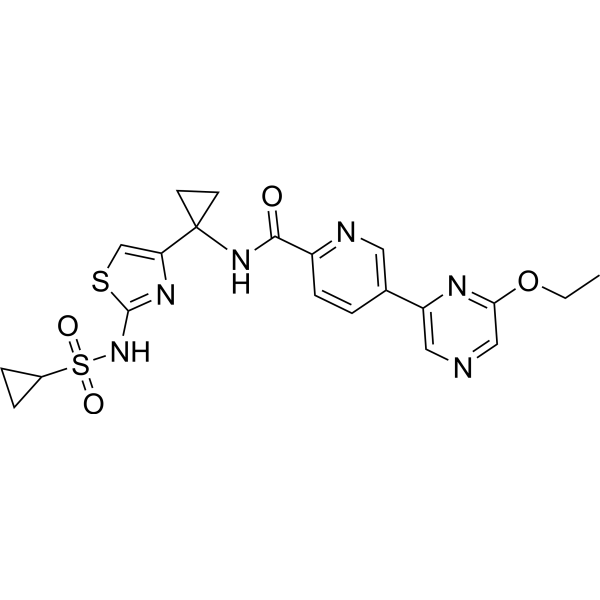
    CTPS1-IN-1 (compound R80) is a CTPS1 inhibitor. CTPS1-IN-1 has the potential to research cancer (such as promoting vascular injury or surgical recovery) and immune system diseases (such as rejection of transplanted cells and tissues, transplant-related diseases or disorders, allergies, and autoimmune diseases) .
    CTPS1-IN-1
  • HY-32340

    KH1060

    VD/VDR Inflammation/Immunology Cancer
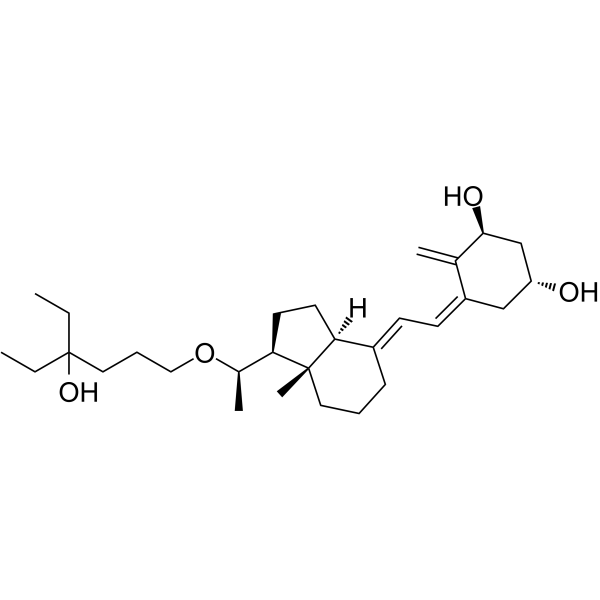
    Lexacalcitol (KH1060), a vitamin D analog, is a potent regulator of cell growth and immune responses. Lexacalcitol can be used for the research of graft rejection, psoriasis, cancer and auto-immune diseases .
    Lexacalcitol
  • HY-155100

    STING Inflammation/Immunology Cancer
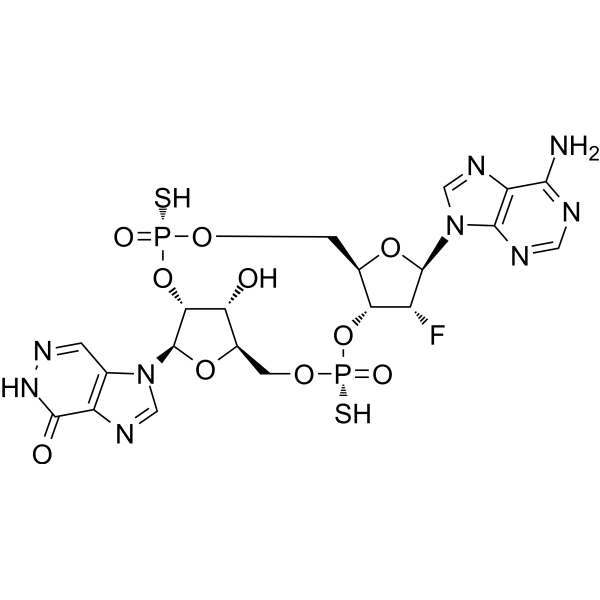
    BI 7446 is a cyclic dinucleotide (CDN)-based potent and selective stimulator of interferon genes (STING) agonist. BI 7446 can activate all five STING variants in cells and induce tumor-specific immune-mediated tumor rejection. BI 7446 can be used for immuno-oncology research .
    BI 7446
  • HY-P991557

    TNF Receptor Inflammation/Immunology
    ABI793 is a human IgG1 anti-human CD154 (CD40 ligand) monoclonal antibody. ABI793 inhibits immune response by blocking the CD154-CD40 (IC50 = 75 nM) signaling pathway. ABI793 effectively prevents kidney transplant rejection. ABI793 can be used for research on immunological rejection .
    ABI793
  • HY-162490

    ROR Inflammation/Immunology
    TF-S14 is a reverse agonist of RORγt. TF-S14 reduces Th17 cell-associated cytokine production, including IL-17A, IL-21, and IL-22 by binding to and inhibiting RORγt activity. TF-S14 can be used in the study of autoimmune diseases and rejection in allotransplantation .
    TF-S14
  • HY-P11340

    MHC Infection Inflammation/Immunology
    VMAPRTLFL is a 9-mer peptide derived from the signal peptide of HLA-G and can serve as a peptide ligand for HLA-E. VMAPRTLFL plays a crucial role in regulating the functions of adaptive natural killer (NK) cells. Specifically, VMAPRTLFL enriches FcεRγ - adaptive NK cells, upregulates the expression of CD25, and enhances their proliferative activity, antibody-dependent cellular cytotoxicity (ADCC), and IFN-γ release. VMAPRTLFL can be used in research related to human cytomegalovirus (HCMV) infection, transplant rejection, and pregnancy immunity .
    VMAPRTLFL
  • HY-401475

    PKC Cardiovascular Disease Inflammation/Immunology Cancer
    Protein kinase inhibitor 9 (Compound example 175) is an inhibitor of serine/threonine and tyrosine kinase activity. Protein kinase inhibitor 9 can be used for the research of cancer, hyper proliferative disorders, rheumatoid arthritis, disorders of the immune system, transplant rejections and imflammatory disorders .
    Protein kinase inhibitor 9
  • HY-119681

    Others Inflammation/Immunology
    YM 11124 is an orally active selective immunosuppressive agent. YM 11124 can inhibit cell-mediated immune responses (type IV allergic reactions, such as delayed-type hypersensitivity and allogenic skin graft rejection) and type III allergic reactions (such as passive Arthus reaction). YM 11124 has no effect on type I, type II allergic reactions or acute inflammation. YM 11124 can be used in research related to organ transplantation and immune hypersensitivity .
    YM 11124
  • HY-N0699R

    Dephnoretin (Standard); Thymelol (Standard)

    Reference Standards PKC NOD-like Receptor (NLR) Apoptosis HBV Caspase Akt JNK PI3K CDK Influenza Virus Bcl-2 Family Infection Inflammation/Immunology Cancer
    Daphnoretin (Dephnoretin; Thymelol) (Standard) is the analytical standard of Daphnoretin (HY-N0699). This product is used for research and analytical applications. Daphnoretin is a protein kinase C (PKC) activator that can inhibit the expression of hepatitis B virus (HBV) surface antigen (HBsAg) and has antiviral activity. Daphnoretin exerts its anti-tumor effect by inhibiting the activation of the PI3K/AKT signaling pathway, triggering the mitochondrial apoptosis pathway. Daphnoretin alleviates chondrocyte apoptosis and inflammatory responses by inhibiting endoplasmic reticulum stress and the activation of the NLRP3 inflammasome. Daphnoretin can regulate the differentiation and maturation of dendritic cells, by down-regulating the phosphorylation level of JNK, inhibiting its immune stimulating function, thereby playing a protective role in skin transplant rejection reactions.
    Daphnoretin (Standard)
  • HY-P990801

    Integrin Parasite Bacterial Infection Neurological Disease Inflammation/Immunology Cancer
    Anti-Mouse CD11a/LFA-1α Antibody (M17/4) is an anti-mouse CD11a/LFA-1α IgG2a monoclonal antibody. Anti-Mouse CD11a/LFA-1α Antibody (M17/4) can reduce the recruitment of effector memory CD8 T cells. Anti-Mouse CD11a/LFA-1α Antibody (M17/4) promotes the formation of xenograft tumors by reducing immune rejection reactions. Anti-Mouse CD11a/LFA-1α Antibody (M17/4) can be used for researches on cancer, infection conditions and immunology such as glioblastoma, parasitic and bacterial infections. The recommend isotype control of Anti-Mouse CD11a/LFA-1α Antibody (M17/4): Rat IgG2a kappa, Isotype Control (HY-P990679) .
    Anti-Mouse CD11a/LFA-1α Antibody (M17/4)
  • HY-N9753

    Others
    Tsukubamycin B is discovered from Streptomyces tsukubaensis and exhibits immunosuppressive activity by inhibiting T-cell activation. Tsukubamycin B can be used for immune rejection reaction research .
    Tsukubamycin B
  • HY-19090

    NO Synthase HSP Cardiovascular Disease Inflammation/Immunology
    FK 409 is a NO donor that can penetrate cell membranes. FK 409 has a vasodilatory effect on bovine retinal arteries. FK 409 alleviates acute-phase inflammation, induces HSP, and mitigates liver transplantation injury in a rat model of orthotopic liver transplantation. FK 409 can be used in research on cardiovascular diseases and liver transplant rejection and inflammatory immune system disorders .
    FK 409
  • HY-183074

    CDK Interleukin Related Inflammation/Immunology
    RO8323 is an orally active, selective CDK8/CDK19 inhibitor, with an IC50 of 2 nM against CDK8 and 3 nM against CDK19. RO8323 promotes regulatory T cell differentiation, inhibits effector T cell generation, reverses the Teff/Treg ratio, upregulates IL-10 production in myeloid cells, and suppresses the production of TNF-α, IL-6 and IL-12. RO8323 enhances immune reconstitution and prolongs cardiac allograft survival in a dose-dependent manner. RO8323 can be used in the research of chronic graft-versus-host disease, cardiac allograft rejection, acute graft-versus-host disease and experimental autoimmune encephalomyelitis .
    RO8323

オンラインお問い合わせ

入力情報は安全に管理されます. 必須入力項目.

タイトル


国或いは地域 *

お名前 *


組纖名 *

デパートメント *


メールアドレス *


製品名 *

製品番号


カスタマ需要量 *

電話番号 *


必ず会社名を記載ください。個人への返信は行いません。

備考

バルクお問い合わせ

Inquiry Information

製品名:
製品番号:
数量:
MCE 日本正規代理店:

