



Muromonab

Based on 1 Customer Validation
Muromonab (Muromonab-CD3; OKT3) is a mouse monoclonal antibody targeting the CD3 antigen. Muromonab specifically binds to the CD3 antigen on the surface of human and higher primate T cells. Muromonab blocks the function of T cell receptors to recognize foreign antigens and inhibits T cell-mediated immune responses, including cell-mediated lymphocyte lysis and T cell proliferation responses. Muromonab can be used to study acute kidney, liver, heart and combined kidney-pancreas transplant rejection, and can also be used to study graft-versus-host disease in bone marrow transplant patients.
For research use only. We do not sell to patients.
- Purity : 98.74%
- CAS No.: 140608-64-6
- Molecular Weight:146.34 kDa
-
Storage:
Please store the product under the recommended conditions in the Certificate of Analysis.

To place orders, for customer services and technical support, please contact: MedChemExpress USA
Tel: 609-228-6898 E-mail: [email protected] [email protected]


-
 Biological Activity
-
Chemical Information
- Protocols
- Purity & Documentation
- References
-
 Help & FAQs


-

HY-P99222
TeplizumabAnti-human CD3 Antibody -

HY-P99033
MosunetuzumabCD20/CD3 Inhibitor -

HY-P9948
AlemtuzumabAnti-CD52 Antibody -

HY-P9975
TheralizumabCD28 Superagonist -

HY-P99211
OtelixizumabAnti-CD3 Antibody -

HY-P99038
OdronextamabCD20/CD3 Inhibitor -
HY-P99001
Human IgG1 kappa, Isotype ControlIgG1κ Isotype Control -

HY-P99394
TalquetamabAnti-GPRC5D/CD3 Antibody -

HY-P99575
Tarlatamabanti-DLL3/CD3 BiTE antibody -

HY-P9963
BlinatumomabAntineoplastic Agent -

HY-P99931
EpcoritamabAnti-CD3/CD20 Antibody -
HY-P99978
Mouse IgG2a kappa, Isotype ControlIgG2aκ Isotype Control


Biological Activity
Description
Isotype
Mouse IgG2a kappa
Recommend Isotype Controls
Species Reactivity
Human
IC50 & Target
|
IL-2 |
IFN-γ |
In Vitro
Muromonab blocks cytotoxic T cell function and inhibits T cell proliferation[1].
Muromonab binds to the CD3 antigen on T cells, resulting in rapid clearance/depletion of CD3+ T cells in the extracorporeal circulation and reduction of CD4+ and CD8+ subsets[1].
Muromonab blocks both the induction and effector phases of cell-mediated lympholysis, inhibits T cell proliferation in response to major histocompatibility complex antigens, and modulates CD3 antigen expression on the surface of T cells.[1]
Muromonab also induces the release of cytokines such as IL-2 and IFN-γ, thereby promoting the production of early immune activation markers[1].
Curcumin (HY-N0005) and Sirolimus (HY-10219) inhibit muromonab-induced human peripheral blood mononuclear cell (PBMC) proliferation in a concentration-dependent manner (IC50=2.8 μM and 1.1 ng/mL), respectively, and their combined use at low concentrations had a synergistic effect[6].
MedChemExpress (MCE) has not independently confirmed the accuracy of these methods. They are for reference only.
In Vivo
The average steady-state plasma trough concentration of Muromonab (5 mg; intravenous injection; 2-3 times) is approximately 0.9 mg/L, a plasma concentration that has the function of blocking cytotoxic T cells[1].
Muromonab (0.1 mg/kg/day; intravenous; 10-14 days) causes massive lymphocyte depletion[5].
MedChemExpress (MCE) has not independently confirmed the accuracy of these methods. They are for reference only.
- BrdU Incorporation Assay
- Somatic Cell Culture
- CFSE Dye Dilution Proliferation Assay
- Dye-dilution cell tracking and proliferation staining
- CCK-8/WST-8 Cell Proliferation Assay
- Protocol for Cell Cycle
- Cell Counting-Based Growth Curve Assay
- Colony Formation (Clonogenic) Assay
- Research Protocol for Cancer Immunology
- Cell Viability Determination by MTT Colorimetric Assay
- EdU Incorporation Assay (Click Chemistry-Based DNA Synthesis Measurement)
- Ki-67 Immunostaining Proliferation Assay
- PCNA Immunodetection Proliferation Assay
- Protocol for Cell Counting and Cell Density Analysis
- MTT Cell Proliferation Assay
Clinical Trial
| NCT Number | Sponsor | Condition | Start Date |
Phase

|
|---|---|---|---|---|
| NCT01329991 | 2011-05 | PHASE1 |
Gene ID
Accession
Conjugated
Unconjugated
Reconsititution
The product can be reconstituted/diluted with sterile PBS or saline.
Format
-
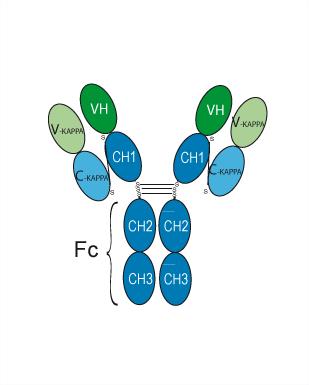
IgG2a-G1-kappa
Application
ELISA, FACS, Functional assay
Verified Bioactivity
-
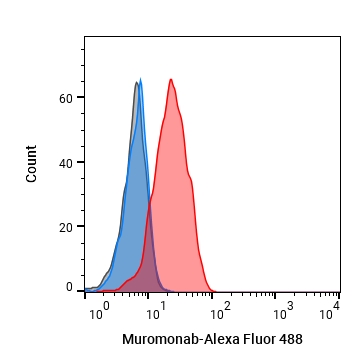 Flow cytometric analysis of 106 Jurkat cells labeling Muromonab (HY-P99152, red). Cells were fixed with 4% paraformaldehyde. Then stained with the primary antibody at 1/200 dilution for an hour at 4℃. Alexa Fluor® 488-conjugated AffiniPure Goat Anti-Mouse IgG H&L (HY-P8005) was used as the secondary antibody at 1/1,000 dilution for 30 minutes at 4℃. Mouse IgG2a (HY-P99978, blue) was used as the isotype control, cells without incubation with primary antibody were used as the unlabeled control (black).


Chemical Information
-
CAS No. 140608-64-6
-
Appearance Liquid
-
Molecular Weight 146.34 kDa
-
Color Colorless to light yellow
-
SMILES
[Muromonab]
-
Synonyms
Muromanab-CD3
-
Shipping
Shipping with dry ice.
-
Formulation
Please refer to the lot-specific COA for specific buffer information.
-
Storage
Please store the product under the recommended conditions in the Certificate of Analysis.


Purity & Documentation
-
Data Sheet (261 KB)
-
SDS (251 KB)
- English - EN (251 KB)
- Français - FR (251 KB)
- Deutsch - DE (251 KB)
- Norwegian - NO (251 KB)
- Español - ES (251 KB)
- Swedish - SV (251 KB)
- Italian - IT (251 KB)
- Korean - KR (251 KB)
- Portuguese - PT (251 KB)
-
Inhibitory Antibodies User Guide (603 KB)
References
[1]. P A Todd, et al. Muromonab CD3. A review of its pharmacology and therapeutic potential. Drugs. 1989 Jun;37(6):871-99. [Content Brief]
[2]. Lahdou I, et al. Role of human corneal endothelial cells in T-cell-mediated alloimmune attack in vitro. Invest Ophthalmol Vis Sci. 2014 Mar 3;55(3):1213-21. [Content Brief]
[3]. Yan H, et al. Bone marrow-liver-thymus (BLT) immune humanized mice as a model to predict cytokine release syndrome. Transl Res. 2019 Aug;210:43-56. [Content Brief]
[4]. Ménoret S, et al. Efficient generation of human immune system rats using human CD34+ cells. Stem Cell Reports. 2024 Sep 10;19(9):1255-1263. [Content Brief]
[6]. Deters M, et al. Synergistic immunosuppressive effects of the mTOR inhibitor sirolimus and the phytochemical curcumin. Phytomedicine. 2013 Jan 15;20(2):120-3. [Content Brief]

Calculators
Concentration (start) × Volume (start) = Concentration (final) × Volume (final)


Muromonab Related Classifications
HY-P99152 Related Classifications
 Powered by Bioz