7 Results for "

immunomodulatory mechanism

" in MedChemExpress (MCE) Product Catalog:
Products (7)

7 Results for "immunomodulatory mechanism" in MCE Product Catalog:

7
7 Cited Publications
Cat. No.: HY-B0412
CAS No.: 50-27-1
Synonyms: Oestriol
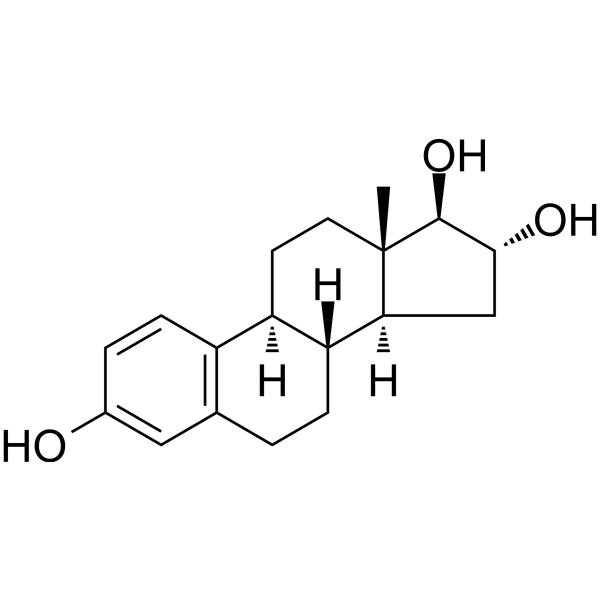
Estriol (Oestriol), an orally active estrogen, is a ERα and ERβ agonist. Estriol is a potent GPR30 antagonist in estrogen receptor-negative breast cancer cells. Estriol can ameliorate disease severity through immunomodulatory mechanisms that decrease tissue inflammation. Estriol has powerful proconvulsant effects .
loading...
    loading...
1
1 Cited Publications
Cat. No.: HY-N0313
CAS No.: 514-47-6
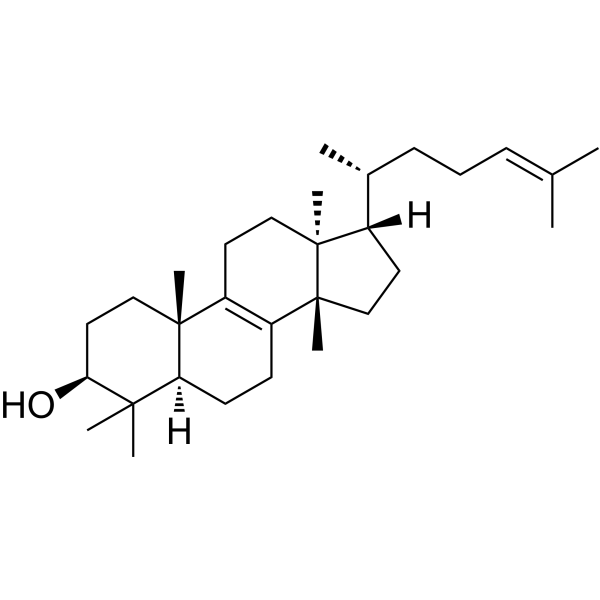
Euphol is a tetracyclic triterpene alcohol isolated from the sap of Euphorbia tirucalli with anti-mutagenic, anti-inflammatory and immunomodulatory effects, orally active. Euphol inhibits the monoacylglycerol lipase (MGL) activity via a reversible mechanism (IC50=315 nM). MGL inhibition in the periphery modulates the endocannabinoid system to block the development of inflammatory pain .
loading...
    loading...
Cat. No.: HY-W746708
CAS No.: 79335-75-4
FK-565 is a synthetic immunomodulatory peptide with a nucleotide oligomerization domain-1 (NOD1) ligand. FK-565 can activate macrophages, NK cells, and peritoneal exudative cells, enhancing the innate immune response. FK-565 has antiviral activity against a variety of viruses in vivo, and its effect is achieved through immunomodulation rather than direct viral inhibition. FK-565 can induce mouse models of arteritis and coronary arteritis (Kawasaki disease-like disease) through a NOD1-mediated mechanism. FK-565 can be used for research on viral infections and inflammatory vascular diseases .
loading...
    loading...
Cat. No.: HY-N0313R
CAS No.: 514-47-6
Euphol (Standard) is the analytical standard of Euphol. This product is intended for research and analytical applications. Euphol is a tetracyclic triterpene alcohol isolated from the sap of Euphorbia tirucalli with anti-mutagenic, anti-inflammatory and immunomodulatory effects, orally active. Euphol inhibits the monoacylglycerol lipase (MGL) activity via a reversible mechanism (IC50=315 nM). MGL inhibition in the periphery modulates the endocannabinoid system to block the development of inflammatory pain .
loading...
    loading...
Cat. No.: HY-P2170
CAS No.: 316805-65-9
Synonyms: XOMA-629
Target:  

Antibiotic Bacterial

Research Areas:  

Infection Inflammation/Immunology

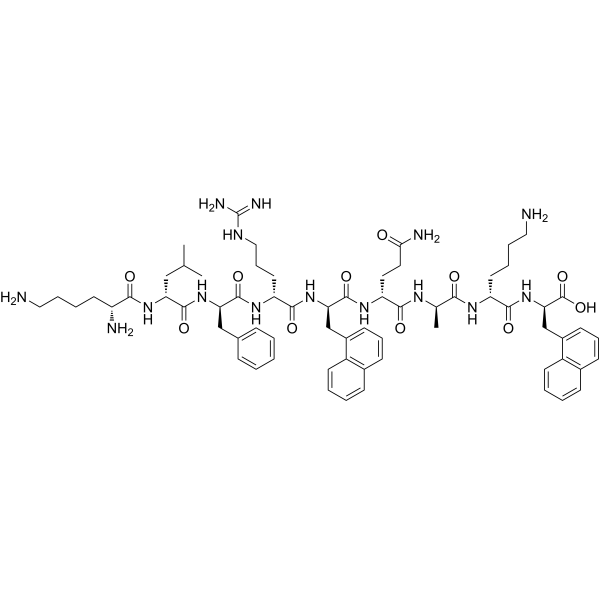
XMP-629 (XOMA-629), a cationic α-helical peptide, is a potent endotoxin inhibitor. XMP-629 exhibits broad-spectrum antimicrobial activity via an immunomodulatory mechanism. XOMA 629 has antimicrobial activity against Propionibacterium acnes, Staphylococcus aureus and Streptococcus pyogenesand .
loading...
    loading...
Cat. No.: HY-137007
CAS No.: 1496553-39-9
Target:  

Interleukin Related

Research Areas:  

Others Inflammation/Immunology

SMA-12b is a small molecule analogue of the parasitic worm compound ES-62. SMA-12b has immunomodulatory activity, acting by regulating the expression of multiple inflammatory response genes, especially those associated with inflammatory bodies. SMA-12b significantly reduces the expression of cytokine IL-1β associated with inflammatory bodies and inhibites the production of IL-1β through a mechanism mediated by NRF2. SMA-12b can be used in the study of rheumatoid arthritis (RA) and other autoimmune diseases .
loading...
    loading...
Cat. No.: HY-L255
72 compounds

Dipeptide compounds have attracted extensive attention in drug discovery and life science research due to their simple structures, ease of modification, and favorable biocompatibility. As small peptides composed of two amino acids, dipeptides exhibit diverse biological activities, including anti-inflammatory, antioxidant, antimicrobial, anticancer, and immunomodulatory effects, showing significant application potential in metabolic disorders, neurological diseases, and cancer research. Compared with traditional small molecules, dipeptide compounds possess favorable target-binding properties and high structural plasticity, making them valuable tools for drug screening and mechanism studies.

The MCE Dipeptide Compound Library contains 72 dipeptide compounds and can be applied to peptide drug discovery and development.

