



1. Search Result
Search Result
Results for "

immunosuppressive tumor microenvironment

" in MedChemExpress (MCE) Product Catalog:

14

Inhibitors & Agonists

1

Peptides

7

Inhibitory Antibodies

Cat. No. Product Name Target Research Areas Chemical Structure
  • HY-P99144A
    Anti-Mouse PD-1 Antibody (S-5001)
    1 Publications Verification

    PD-1/PD-L1 Inflammation/Immunology Cancer
    Anti-Mouse PD-1 Antibody (S-5001) is a selective inhibitor targeting PD-1, blocking the PD-1/PD-L1 immune checkpoint axis through competitive binding to PD-1. Anti-Mouse PD-1 Antibody (S-5001) works by reversing the tumor immunosuppressive microenvironment and reactivating the anti-tumor activity of cytotoxic T lymphocytes. It can be used in research on tumors such as melanoma and HPV-positive oropharyngeal squamous cell carcinoma. Anti-Mouse PD-1 Antibody (S-5001) is often combined with photothermal therapy, chemotherapy, etc., to enhance efficacy .
    Anti-Mouse PD-1 Antibody (S-5001)
  • HY-W075517

    2-Methylimidazole zinc salt

    MOFs Caspase Pyroptosis Cancer
    ZIF-8 (2-Methylimidazole zinc salt) is a pyroptosis inducer that activates the caspase-1/gasdermin D-dependent pyroptosis pathway. ZIF-8 induces pyroptotic cell death accompanied by necrosis and immunogenic cell death. ZIF-8 initiates in situ immunity, activates anti-tumor immunity, and reprograms the immunosuppressive tumor microenvironment to inhibit tumor growth. ZIF-8 acts as a pH-responsive and stimulus-responsive drug release inducer. ZIF-8 is applicable to cancer-related research .
    ZIF-8
  • HY-160421

    Apoptosis Inflammation/Immunology Cancer
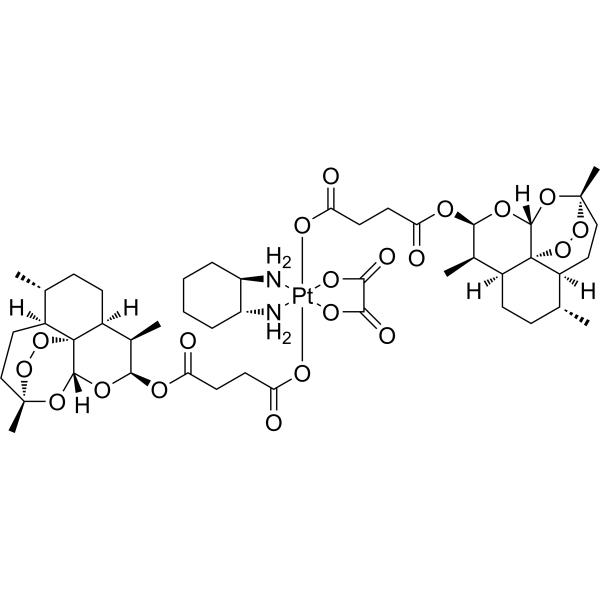
    TREM2-IN-1 (OPA) is a TREM2 inhibitor derived from oxaliplatin and artesunate. TREM2-IN-1 can relieves immunosuppressive tumor microenvironment and enhancing chemical anticancer efficiency. TREM2-IN-1 deters the tumor growth in mice models bearing MC38 colorectal tumor by reducing the number of CD206 + and CX3CR1 + immunosuppressive macrophages. TREM2-IN-1 also promotes the expansion and infiltration of immunostimulatory dendritic, cytotoxic T and natural killer cells .
    TREM2-IN-1
  • HY-153358

    HDAC Cancer
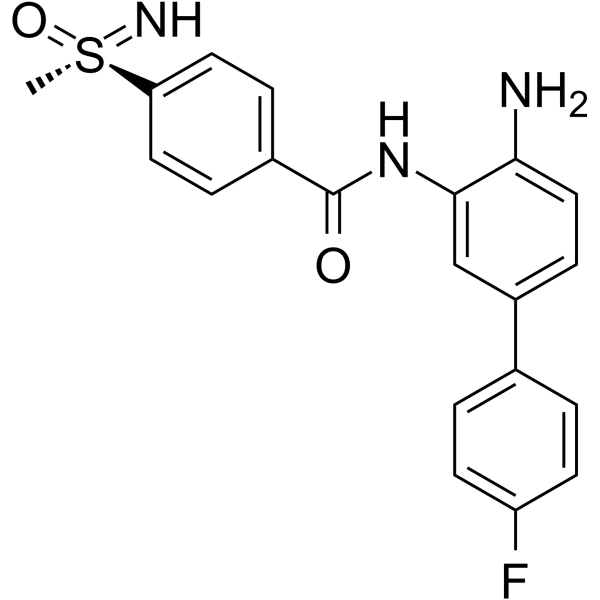
    TNG260 is a selective, orally effective inhibitor of HDAC1 and CoREST complex, with a 10-fold selectivity for HDAC1 over HDAC3 and a 500-fold selectivity for CoREST complex over NuRD and Sin3 complex. TNG260 reshapes the tumor immune microenvironment, reduces immunosuppressive neutrophil infiltration, promotes effector T cell recruitment, and reverses anti-PD-1 resistance caused by STK11 deficiency by inhibiting the activity of the CoREST-HDAC1 complex. TNG260 induces durable tumor regression in combination with α-PD1 in MC38 tumor-bearing mice with STK11 mutations, and has lower toxicity to bone marrow cells than non-selective HDAC inhibitors .
    TNG260
  • HY-160696

    CD73 Cancer
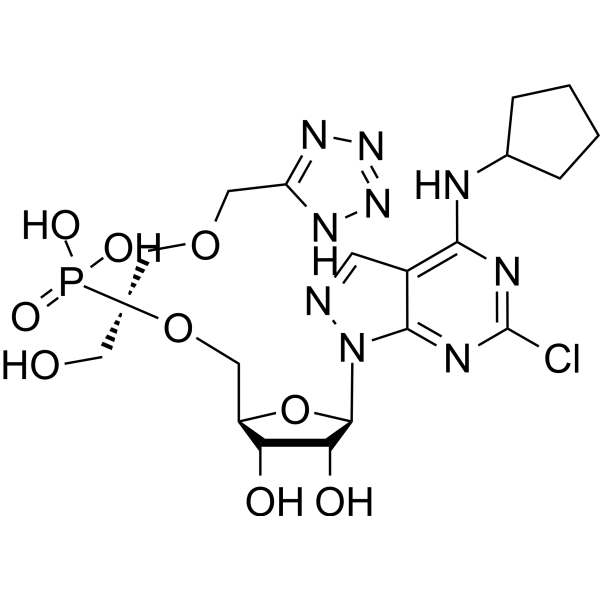
    ORIC-533 is an orally active, highly selective, AMP-competitive CD73 inhibitor that potently blocks adenosine production with sub-nanomolar affinity (Ka=0.03 nM). In multiple myeloma, ORIC-533 restores and enhances the cytotoxicity of the immune system against tumor cells through multiple immunological mechanisms, including reversing the immunosuppressive microenvironment, inducing immunogenic cell death, and activating dendritic cells, T cells and NK cells, with no direct toxicity to normal cells. The combination of ORIC-533 with Daratumumab (HY-P9915) synergistically enhances anti-tumor efficacy, significantly increases intratumoral CD8 + T cell infiltration and inhibits tumor growth in vivo .
    ORIC-533
  • HY-P99242
    Alsevalimab
    1 Publications Verification

    CD276/B7-H3 Cancer
    Alsevalimab is a humanized, afucosylated IgG1 monoclonal antibody against B7-H4. Alsevalimab blocks the binding of the B7-H4 protein to the receptors on the surface of T cells, reversing the immunosuppressive state in the tumor microenvironment, thereby activating the killing effect of T cells on cancer cells. Alsevalimab can be used in combination with Pembrolizumab (HY-P9902), and shows good safety profiles .
    Alsevalimab
  • HY-158057

    Adenosine Receptor Cancer
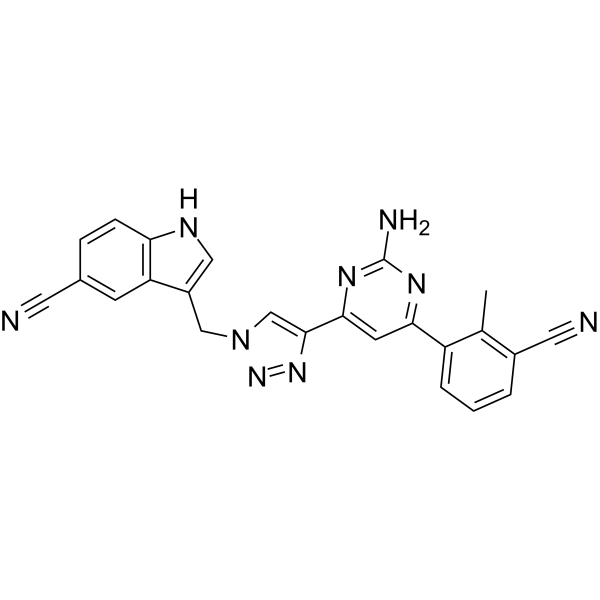
    A2AR/A2BR antagonist 1 (compound 7ai) has a dual antagonistic effect on A2AR/A2BR, with the IC50 values of 11.2 nM and 6.4 nM for A2AR and A2BR, respectively. A2AR/A2BR antagonist 1 promotes T cell-mediated cancer cell death .
    A2AR/A2BR antagonist 1
  • HY-175660

    Heme Oxygenase (HO) Cancer
    KCL-HO-1i is an orally active heme oxygenase-1 (HO-1) inhibitor (rat HO-1: IC50 = 123 nM) and human HO-1: IC50 = 128 nM). KCL-HO-1i targets immunosuppressive LYVE-1 + perivascular tumor-associated macrophages (PvTAMs) in the tumor microenvironment (TME), reduces PvTAM-mediated immune exclusion. KCL-HO-1i demonstrates synergistic anti-tumor efficacy with chemotherapy in MMTV-PyMT spontaneous breast cancer mice or C57Bl/6 mice bearing subcutaneous MN-MCA1 sarcomas. KCL-HO-1i can be used for the study of cancer .
    KCL-HO-1i
  • HY-P99963

    HS636

    PD-1/PD-L1 Cancer
    Sudubrilimab (HS636) is an Ig G1-kappa monoclonal antibody against PDL1. Sudubrilimab is fused at the C terminus of the heavy chain to a TGF-β1 receptor Ⅱ ectodomain (TGFBR2-ECD), and which can sequester the PD-1/PD-L1 pathway and TGF-β bioactivity in the immunosuppressive tumor microenvironment .
    Sudubrilimab
  • HY-P990038

    ES002023

    NTPDase Neurological Disease
    Eurestobart (ES002023) is a recombinant human IgG1 antibody against CD39. Eurestobart restores antitumor immunity by stabilizing the pro-inflammatory extracellular ATP (eATP) and interfering with synthesis of the immunosuppressive adenosine within the tumor microenvironment (TME). Eurestobart is used in the research of locally advanced and metastatic solid tumors .
    Eurestobart
  • HY-P992344

    Transmembrane Glycoprotein Cancer
    DNP002 is a humanized IgG1 monoclonal antibody targeting tumor-associated CEACAM6. DNP002 binds to CEACAM1, CEACAM5 and CEACAM6, and exhibits antibody-dependent cellular cytotoxicity against tumor cells overexpressing these targets. DNP002 binds to CEACAM6 on the surface of tumor-associated neutrophils (including MDSCs) to reverse the immunosuppressive effect in the tumor microenvironment. DNP002 shows anti-tumor activity in advanced solid tumors. DNP002 can be used for the research of advanced solid tumors. The recommended isotype control is human IgG1 kappa (HY-P99001) .
    DNP002
  • HY-P992511

    PD-1/PD-L1 CTLA-4 VEGFR Cancer
    CS2009 is a trispecific antibody targeting PD-1, CTLA-4 and VEGFA. CS2009 blocks the interactions of PD-1/PD-L1, CTLA-4/CD80 and VEGFA/VEGFR2, mediates checkpoint inhibition, and suppresses tumor angiogenesis. CS2009 reactivates PD-1/CTLA-4 double-positive tumor-infiltrating T lymphocytes, induces T cell activation, enhances tumor growth inhibition, promotes vascular normalization, improves T lymphocyte infiltration, and converts the immunosuppressive tumor microenvironment into an immunocompetent one. CS2009 can be used for the research of various advanced solid tumors .
    CS2009
  • HY-182239

    PD-1/PD-L1 Cancer
    PDL1 degrader-3 (comppund e24) is a PD-L1 degrader. PDL1 degrader-3 inhibits CSN5 enzymatic activity, increases PD-L1 ubiquitination, and induces PD-L1 degradation via the ubiquitin-proteasome pathway, reducing PD-L1 expression on tumor cell membranes. PDL1 degrader-3 blocks PD-1/PD-L1 interaction, activates the tumor immune microenvironment, enhances tumor-infiltrating T-cell immunity, and inhibits activation of immunosuppressive MDSCs and Tregs. PDL1 degrader-3 exerts antitumor effects in mouse tumor models. PDL1 degrader-3 can be used for the research of colorectal cancer, lung cancer .
    PDL1 degrader-3
  • HY-P991911

    Scavenger Receptor Class B type I (SR-BI) Cancer
    PLT012 is a humanized IgG4 antibody targeting CD36. PLT012 inhibits the lipid-binding domain of CD36. PLT012 blocks CD36-mediated metabolic adaptation in regulatory T cells (Tregs) and CD8 + tumor-infiltrating lymphocytes (TILs), thereby inhibiting tumor growth and shifting the tumor microenvironment from immunosuppressive to immunosupportive. PLT012 reduces intratumoral Tregs, enhances CD8 + T cell infiltration and cytotoxic function, and increases the abundance of progenitor-exhausted T cells. PLT012 exerts robust antitumor activity and synergizes with anti-PD-L1 or standard-of-care regimens (anti-VEGF + anti-PD-L1). PLT012 can be used for hepatocellular carcinoma, colorectal cancer and solid tumor research .
    PLT012

Inquiry Online

Your information is safe with us. * Required Fields.

Salutation


Country or Region *

Applicant Name *


Organization Name *

Department *


Email Address *


Product Name *

Cat. No.


Requested quantity *

Phone Number *


Remarks

Inquiry Online

Inquiry Information

Product Name:
Cat. No.:
Quantity:
MCE Japan Authorized Agent:

