



1. Search Result
Search Result
Results for "

innate immune system

" in MedChemExpress (MCE) Product Catalog:

18

Inhibitors & Agonists

3

Screening Libraries

4

Biochemical Assay Reagents

4

Peptides

1

Inhibitory Antibodies

2

Natural
Products

1

Oligonucleotides

Targets Recommended:
Cat. No. Product Name Target Research Areas Chemical Structure
  • HY-P99396

    BI 655130

    Interleukin Related Inflammation/Immunology
    Spesolimab (BI 655130) is a mouse-derived humanized IgG1k antibody against IL-36R. IL-36 plays an important role in the immune system and Spesolimab is being investigated in palmoplantar pustulosis (PPP). Spesolimab was associated with a reduction in biomarkers associated with the innate, Th1/Th17 and neutrophil pathways .
    Spesolimab
  • HY-109035
    Inarigivir soproxil
    1 Publications Verification

    SB9200; GS-9992

    HCV HBV Infection
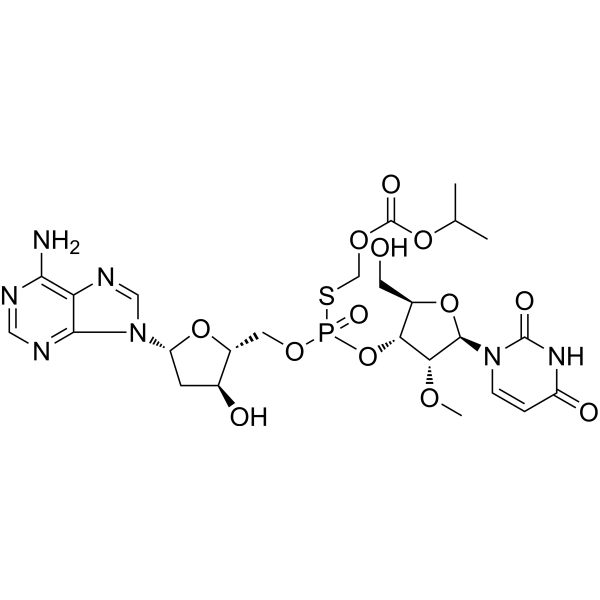
    Inarigivir soproxil (SB9200) is an agonist of innate immunity and shows potent antiviral activity against resistant HCV variants, with EC50s of 2.2 and 1.0 μM for HCV 1a/1b in cells of genotype 1 HCV replicon systems. Inarigivir soproxil, an orally bioavailable proagent of SB 9000, has broad-spectrum antiviral activity against RNA viruses including HCV, norovirus, respiratory syncytial virus and influenza and HBV .
    Inarigivir soproxil
  • HY-128570

    Complement System Inflammation/Immunology
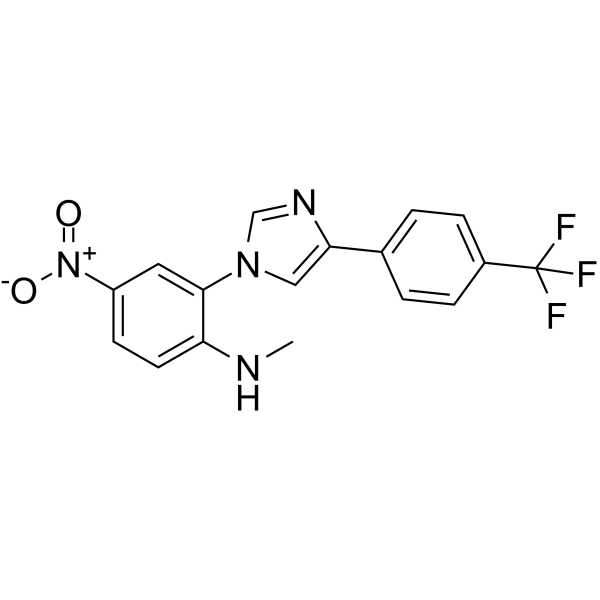
    FD-IN-1 (Compound 12) is an orally bioavailable and selective factor D (FD) inhibitor with an IC50 of 12 nM. Complement FD, a highly specific S1 serine protease, plays a central role in the alternative complement pathway of the innate immune system. FD-IN-1 also inhibits factor XIa (FXIa) and Tryptase β2 with IC50s of 7.7 and 6.5 µM, respectively .
    FD-IN-1
  • HY-P2076

    SGX942

    p62 Bacterial Infection Cancer
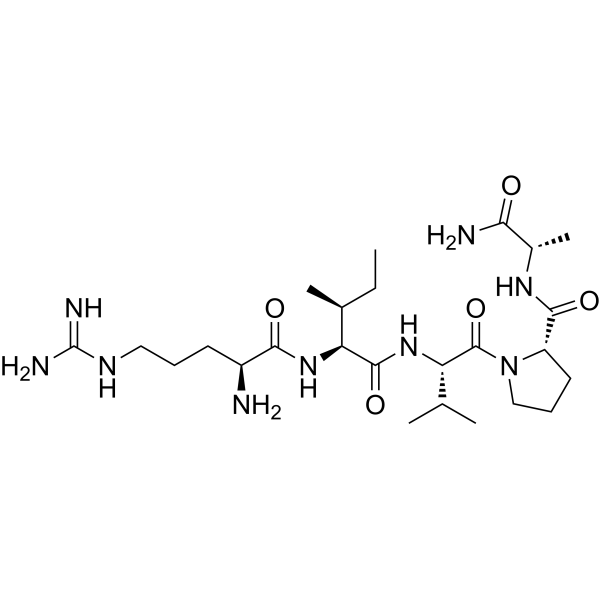
    Dusquetide (SGX942) is a first-in-class innate defense regulator (IDR). Dusquetide modulates the innate immune response to both PAMPs and DAMPs by binding to p62. Dusquetide shows activity in both reducing inflammation and increasing clearance of bacterial infection . DAMPs: damage-associated molecular patterns; PAMPs: pathogen-associated molecular patterns
    Dusquetide
  • HY-110353
    CU-T12-9
    Maximum Cited Publications
    13 Publications Verification

    Toll-like Receptor (TLR) Inflammation/Immunology Cancer
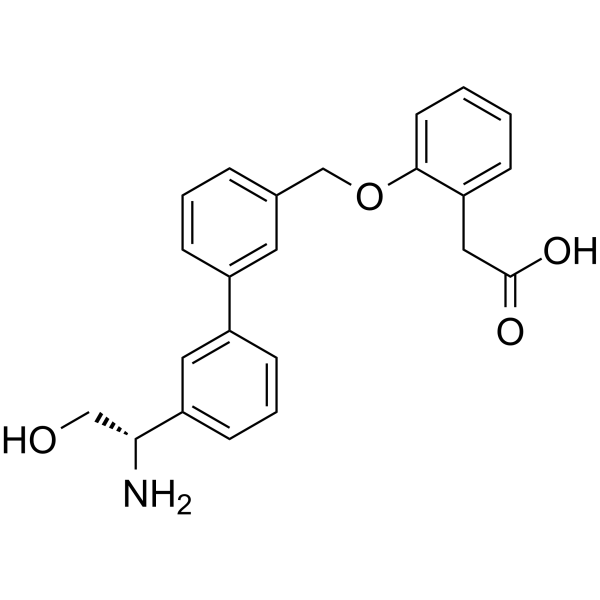
    CU-T12-9 is a specific TLR1/2 agonist with EC50 of 52.9 nM in HEK-Blue hTLR2 SEAP assay. CU-T12-9 activates both the innate and the adaptive immune systems. CU-T12-9 selectively activates the TLR1/2 heterodimer, not TLR2/6. CU-T12-9 signals through NF-κB and invokes an elevation of the downstream effectors TNF-α, IL-10, and iNOS .
    CU-T12-9
  • HY-139410

    c-Fms Inflammation/Immunology
    Sodium caseinates is a kind of sodium salts of major milk proteins, which act as protein-based biopolymers and innate immune system activators. Sodium caseinates induce granulopoiesis, activation and differentiation, promote the production of M-CSF, and increase serum levels of G-CSF and GM-CSF. Sodium caseinates inhibit the proliferation and reduce the viability of leukemia macrophage-like cells, thereby significantly improving the survival rate of mice inoculated with leukemia cells. Sodium caseinates can serve as carriers for probiotics in edible films and exhibit anti-Listeria activity. Sodium caseinates effectively protect vitamin A from degradation, enhance its stability, bioaccessibility and bioavailability, and regulate protein digestibility when complexed with vitamin A. Sodium caseinates can be applied to research related to acute monocytic leukemia and vitamin A deficiency .
    Sodium caseinates
  • HY-D1056H
    Lipopolysaccharides, from S. marcescens
    1 Publications Verification

    LPS, from Serratia marcescens

    Toll-like Receptor (TLR) Inflammation/Immunology
    Lipopolysaccharides, from S. marcescens (Serratia marcescens) are lipopolysaccharide endotoxins and TLR-4 activators derived from Serratia marcescens, classified as S-type LPS, which can activate pathogen-associated molecular patterns (PAMP) of the immune system and induce cellular secretion of migrasomes. Lipopolysaccharides, from S. marcescens exhibit a typical three-part structure: O-antigen (O-antigen), core oligosaccharide (core oligosaccharide), and lipid A (Lipid A). Lipopolysaccharides, from S. marcescens induce NF-κB activation in mouse cells via Toll-like receptor (TLR4)/MD-2. The lipopolysaccharides of S. marcescens can induce apoptosis in host immune cells, thereby suppressing the host's innate immunity .
    It is recommended to prepare a solution with concentration ≥2 mg/mL. Vortex thoroughly for more than 10 minutes. Due to the adsorption characteristics of LPS, silanized container or low adsorption centrifuge tubes should be used for aliquoting and storage, and mix thoroughly before use.
    Lipopolysaccharides, from S. marcescens
  • HY-P5557

    Bacterial Necroptosis Infection Inflammation/Immunology
    TP4 (Nile tilapia piscidin) is an orally active amphipathic α-helical cationic antimicrobial peptide. TP4 (Nile tilapia piscidin) exerts broad-spectrum bactericidal activity against Gram-positive and Gram-negative bacteria by disrupting cell membrane structures, and also exhibits certain hemolytic activity. TP4 (Nile tilapia piscidin) regulates the innate immune system and enhances the expression of lysozymes, cytokines and antioxidant enzymes to resist bacterial infection. TP4 (Nile tilapia piscidin) also stimulates the proliferation of keratinocytes and fibroblasts, and significantly promotes the healing of wounds infected with MRSA. TP4 (Nile tilapia piscidin) can be used in research related to bacterial infection, peritonitis, wound healing and other fields .
    TP4 (Nile tilapia piscidin)
  • HY-101092A

    Toll-like Receptor (TLR) Infection Cancer
    QS-21 is a mixture of QS-21-Xyl (HY-101092B) and QS-21-Api (HY-101092), with a ratio of 35:65. QS-21 is an innate immune system-targeted adjuvant. QS-21 is promising for research of oncology vaccines (e.g., melanoma) and infectious disease vaccines (e.g., HIV, malaria) .
    QS-21
  • HY-159114

    Biochemical Assay Reagents Inflammation/Immunology
    Whole Glucan Particles is a Dectin-1a agonist. Whole Glucan Particles activates the innate immune system to improve the function of macrophages, monocytes and other immune cells .
    Whole Glucan Particles
  • HY-N16463

    Drug Intermediate Others
    QS-S2 is the impurity of QS-21 (HY-101092A). QS-21 is an innate immune system-targeted adjuvant .
    QS-S2
  • HY-148420

    STING Inflammation/Immunology
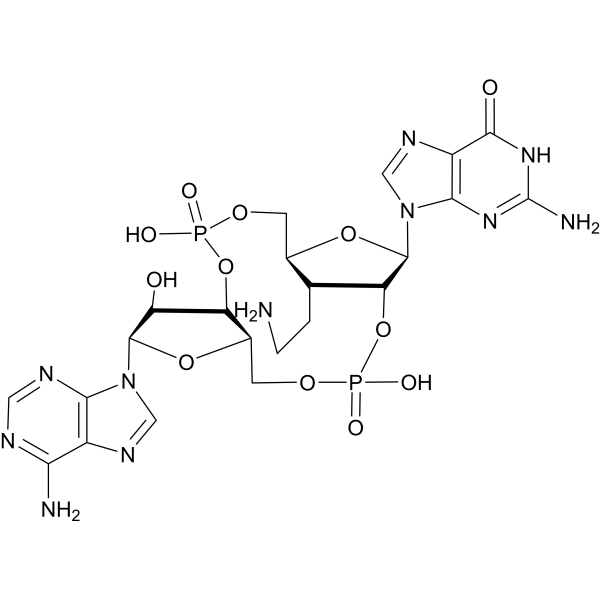
    CDN-A is a cyclic di-nucleotide, it can be used to synthesis antibody-drug conjugate (ADC). Cyclic di-nucleotides are potent stimulators of innate and adaptive immune responses. In humans, cyclic di-nucleotide, which are either produced endogenously in response to foreign DNA or by invading bacterial pathogens, trigger the innate immune system by activating the expression of interferon genes .
    CDN-A
  • HY-144002

    RC-529

    Biochemical Assay Reagents Inflammation/Immunology
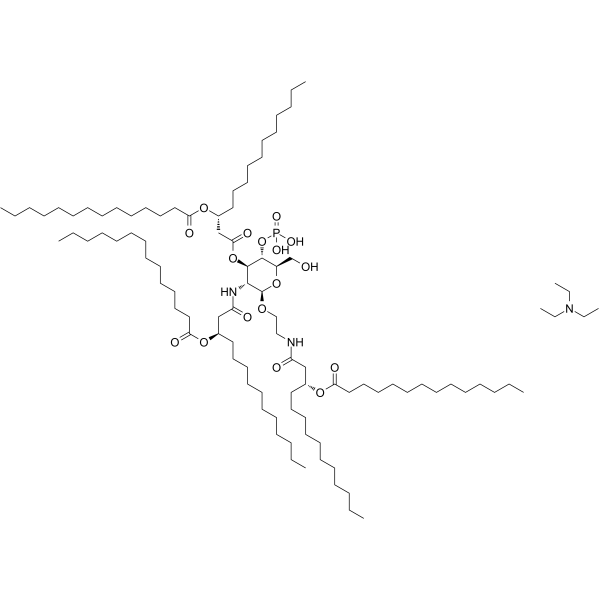
    RIBI-529 (RC-529), a lipid A mimetic (aminoalkyl glucosaminide 4-phosphate), is a adjuvant with a similar efficacy to MPL (Corixa). RIBI-529 signals through Toll-like receptor 4 to stimulate the innate immune system .
    RIBI-529
  • HY-P2076A

    SGX942 TFA

    p62 Bacterial Infection Cancer
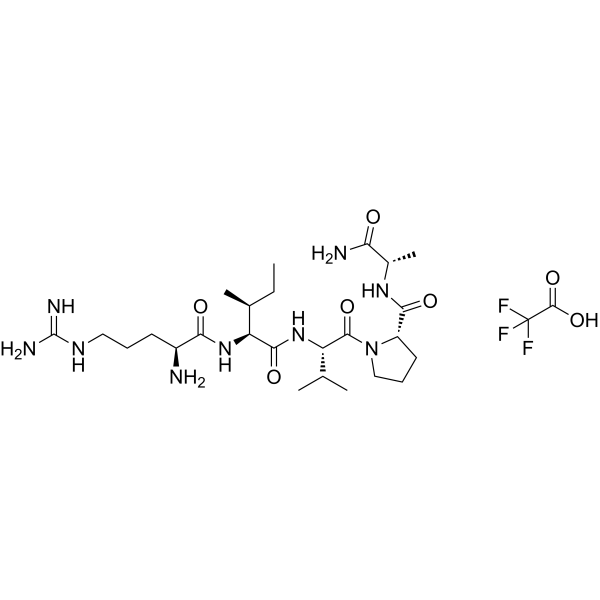
    Dusquetide (SGX942) TFA is a first-in-class innate defense regulator (IDR). Dusquetide TFA modulates the innate immune response to both PAMPs and DAMPs by binding to p62. Dusquetide TFA shows activity in both reducing inflammation and increasing clearance of bacterial infection . DAMPs: damage-associated molecular patterns; PAMPs: pathogen-associated molecular patterns
    Dusquetide TFA
  • HY-121397

    ROS Kinase Inflammation/Immunology
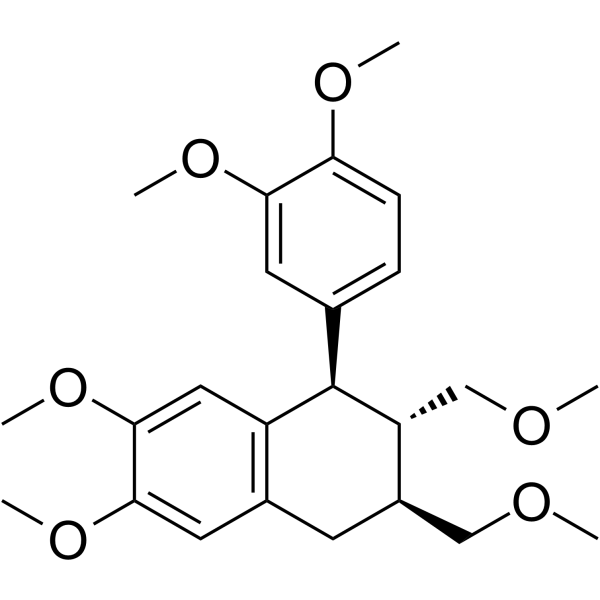
    Phyltetralin (Compound 10) is a natural product than can be isolated from the hexane-ethyl acetate extract of Phyllanthus amarus leaves. Phyltetralin possesses immunosuppressive effects on different lineages of innate immune system .
    Phyltetralin
  • HY-P2457

    Bacterial Infection Inflammation/Immunology
    rCRAMP (rat) is the rat cathelin-related antimicrobial peptide. rCRAMP (rat) contributes to the antibacterial activity in rat brain peptide/protein extracts. rCRAMP (rat) is a potential key player in the innate immune system of rat CNS .
    rCRAMP (rat)
  • HY-116426

    Tau Protein TNF Receptor Neurological Disease Inflammation/Immunology
    IDT is a safe and effective TNFα and innate immune system modulator. IDT significantly reduced paired helical filament tau and fibrillar amyloid accumulation and increased the infiltrating neutrophil population while reducing TNFα expression in this population. IDT can be used in Alzheimer's disease research .
    IDT
  • HY-174662

    mRNA Inflammation/Immunology
    Human IFNG mRNA encodes the human interferon gamma (IFNG) protein, a member of the type II interferon class. IFNG is secreted by cells of both the innate and adaptive immune systems. The active protein is a homodimer that binds to the interferon gamma receptor which triggers a cellular response to viral and microbial infections.
    Human IFNG mRNA

Inquiry Online

Your information is safe with us. * Required Fields.

Salutation


Country or Region *

Applicant Name *


Organization Name *

Department *


Email Address *


Product Name *

Cat. No.


Requested quantity *

Phone Number *


Remarks

Inquiry Online

Inquiry Information

Product Name:
Cat. No.:
Quantity:
MCE Japan Authorized Agent:

