1. Search Result
Search Result
Results for "

ischemia/reperfusion

" in MedChemExpress (MCE) Product Catalog:

342

Inhibitors & Agonists

1

Fluorescent Dyes

4

Biochemical Assay Reagents

34

Peptides

8

Inhibitory Antibodies

75

Natural
Products

16

Isotope-Labeled Compounds

1

Click Chemistry

3

Oligonucleotides

1

GMP Molecules

Cat. No. Product Name Target Research Areas Chemical Structure
  • HY-17443
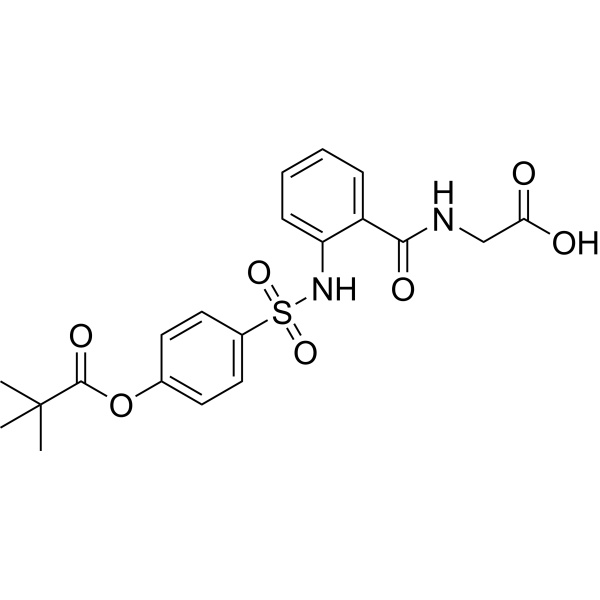
    Sivelestat
    25+ Cited Publications

    EI546; LY544349; ONO5046

    Elastase SARS-CoV Cancer
    Sivelestat (EI546) is a competitive inhibitor of human neutrophil elastase, with an IC50 of 44 nM and a Ki of 200 nM. Sivelestat (EI546) has the potential for the study of acute lung injury/acute respiratory distress syndrome or disseminated intravascular coagulation in COVID-19 .
    Sivelestat
  • HY-111475
    Mitochondrial fusion promoter M1
    2 Publications Verification

    Mitochondrial Metabolism Cardiovascular Disease
    Mitochondrial fusion promoter M1 is a mitochondrial dynamic modulator. Mitochondrial fusion promoter M1 preserves the mitochondrial function and promotes cellular respiration. Mitochondrial fusion promoter M1 alleviates cardiac and brain damage in rats with cardiac ischemia/reperfusion injury .
    Mitochondrial fusion promoter M1
  • HY-A0134
    Isoflurane
    15+ Cited Publications

    Reactive Oxygen Species (ROS) Cardiovascular Disease Neurological Disease Inflammation/Immunology Endocrinology
    Isoflurane is a volatile anaesthetic. Isoflurane diminishs the effect of ROS activity. Isoflurane suppresses respiration. Isoflurane enables rapid anesthesia induction and emergence. Isoflurane protects against noise-induced hearing loss and tissue damage in mice. Isoflurane protects against renal ischemia and reperfusion injury and modulates leukocyte infiltration .
    Isoflurane
  • HY-B1218
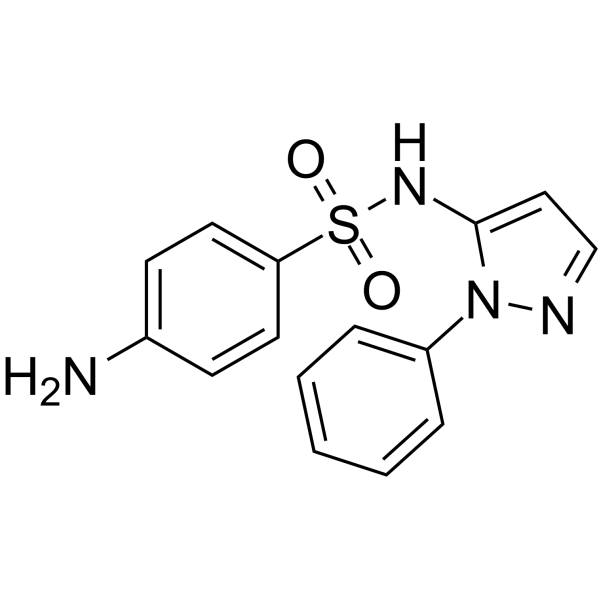
    Sulfaphenazole
    10+ Cited Publications

    Cytochrome P450 Antibiotic Bacterial Necroptosis Apoptosis Infection Cardiovascular Disease
    Sulfaphenazole is a selective inhibitor of human cytochrome P450 (CYP) 2C9 enzyme. Sulfaphenazole is a cytoprotective agent against light-induced death of photoreceptors. Sulfaphenazole inhibits light-induced necrosis and mitochondrial stress-initiated apoptosis. Sulfaphenazole is an off patent sulfonamide antibiotic and demonstrates bactericidal activity through enhanced M1 macrophage activity. Sulfaphenazole can significantly reduce infarct size and restore post-ischemic coronary flow following ischemia and reperfusion .
    Sulfaphenazole
  • HY-W015061
    Phenylacetylglycine
    1 Publications Verification

    Adrenergic Receptor Apoptosis Endogenous Metabolite Cardiovascular Disease Metabolic Disease
    Phenylacetylglycine is a gut microbial metabolite that can activate β2AR. Phenylacetylglycine protects against cardiac injury caused by ischemia/reperfusion .
    Phenylacetylglycine
  • HY-A0119
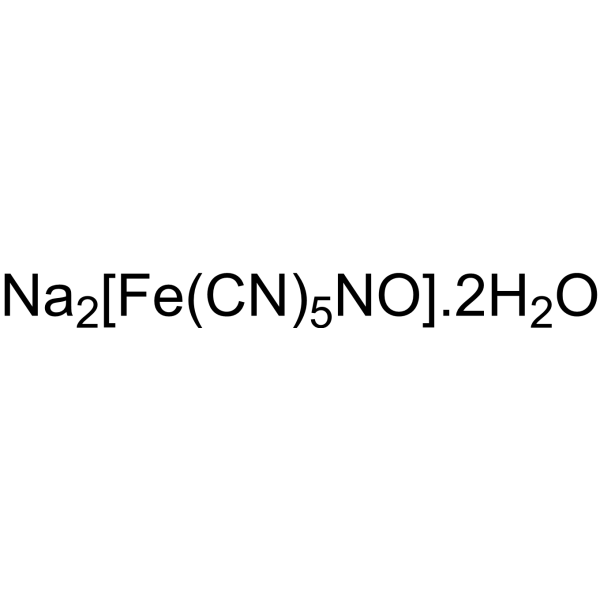
    Nitroprusside disodium dihydrate
    15+ Cited Publications

    Sodium nitroprusside dihydrate; Sodium Nitroferricyanide(III) Dihydrate

    Autophagy Cardiovascular Disease Cancer
    Nitroprusside disodium dehydrate (Sodium nitroprusside dihydrate) is a vasodilator that available for the research of acute hypertension, heart failure. Nitroprusside disodium dehydrate induces autophagy in glutathione-depleted osteoblasts. Nitroprusside disodium dehydrate acts as a nitric oxide (NO) donor in a rat intestinal ischemia reperfusion model .
    Nitroprusside disodium dihydrate
  • HY-139397
    TJ-M2010-5
    30+ Cited Publications

    MyD88 Cardiovascular Disease
    TJ-M2010-5 is a MyD88 inhibitor that binds to the TIR domain of MyD88 to interfere with its homodimerization, and the TLR/MyD88 signal pathway . TJ-M2010-5 can be used for the research of myocardial ischemia/reperfusion injury (MIRI) .
    TJ-M2010-5
  • HY-17443A
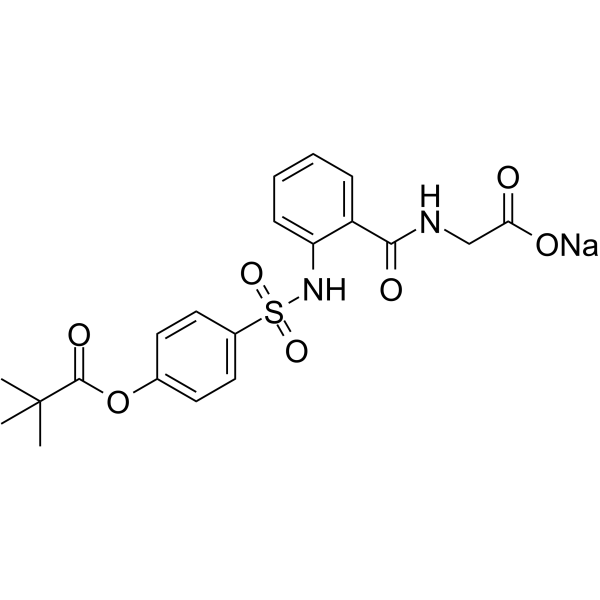
    Sivelestat sodium
    25+ Cited Publications

    ONO5046-Na; Sodium sivelestat; EI546 sodium; LY544349 sodium

    Elastase SARS-CoV Cancer
    Sivelestat (EI546) sodium is a competitive inhibitor of human neutrophil elastase, with an IC50 of 44 nM and a Ki of 200 nM. Sivelestat (EI546) sodium has the potential for the study of acute lung injury/acute respiratory distress syndrome or disseminated intravascular coagulation in COVID-19 .
    Sivelestat sodium
  • HY-101016
    17-ODYA
    1 Publications Verification

    Cytochrome P450 Apoptosis Cardiovascular Disease
    17-ODYA is a CYP450 ω-hydroxylase inhibitor. 17-ODYA is also a potent inhibitor (IC50<100 nM) of the formation of 20-hydroxyeicosatetraenoic acid (20-HETE), epoxyeicosatrienoic acids and dihydroxyeicosatrienoic acids by rat renal cortical microsomes incubated with arachidonic acid. 17-ODYA completely attenuates the isoproterenol (ISO)-induced apoptosis, and necrosis in cultured cardiomyocytes . 17-ODYA is a click chemistry reagent, it contains an Alkyne group and can undergo copper-catalyzed azide-alkyne cycloaddition (CuAAc) with molecules containing Azide groups.
    17-ODYA
  • HY-108457
    9-Phenanthrol
    3 Publications Verification

    9-Hydroxyphenanthrene; NSC 50554

    TRP Channel Cardiovascular Disease
    9-Phenanthrol (9-Hydroxyphenanthrene) is a selective TRPM4 inhibitor with an IC50 of 17 μM. 9-Phenanthrol has no inhibitory activity on TRPM5, TRPC6, and CFTR. 9-Phenanthrol can be used for the research of ischemia-reperfusion injury .
    9-Phenanthrol
  • HY-N6996
    Methyl Eugenol
    1 Publications Verification

    Environmental Pollutants Autophagy mTOR Akt PI3K Inflammation/Immunology Cancer
    Methyl Eugenol is a bait that has oral activity against oriental fruit fly (Hendel).Methyl Eugenol has anti-cancer and anti-inflammatory activities. Methyl Eugenol can induce Autophagy in cells. Methyl Eugenol can be used in the study of intestinal ischemia/reperfusion injury .
    Methyl Eugenol
  • HY-125773

    Beta-cyano-l-alanine

    Endogenous Metabolite Neurological Disease
    β-cyano-L-Alanine (Beta-cyano-l-alanine), a nitrile of widespread occurrence in higher plants, is enzymatically produced by cyanoalanine synthase from cyanide and cysteine as substrates . β-cyano-L-Alanine abolishes the protective effect of ethanol on cerebral ischemia/reperfusion (I/R) injury .
    β-cyano-L-Alanine
  • HY-N0745

    Caspase ERK Keap1-Nrf2 Heme Oxygenase (HO) Apoptosis Neurological Disease Inflammation/Immunology
    Senkyunolide I is an orally active, blood-brain barrier-permeable metabolite of Z-ligustilide (HY-N0401A) . Senkyunolide I is isolated from Ligusticum chuanxiong. Senkyunolide I upregulates p-Erk1/2 and Nrf2/HO-1, and inhibits Caspase 3. Senkyunolide I alleviates Apoptosis. Senkyunolide I increases the pain threshold in mice and reduces acetic acid-induced writhing responses in mice. Senkyunolide I improves neurological deficits, reduces infarct volume and alleviates cerebral edema in rats with focal cerebral ischemia-reperfusion injury. Senkyunolide I protects renal function and structural integrity in a mouse model of renal ischemia-reperfusion injury. Senkyunolide I is applicable to research related to focal cerebral ischemia-reperfusion injury, migraine, and renal ischemia-reperfusion injury .
    Senkyunolide I
  • HY-17443B
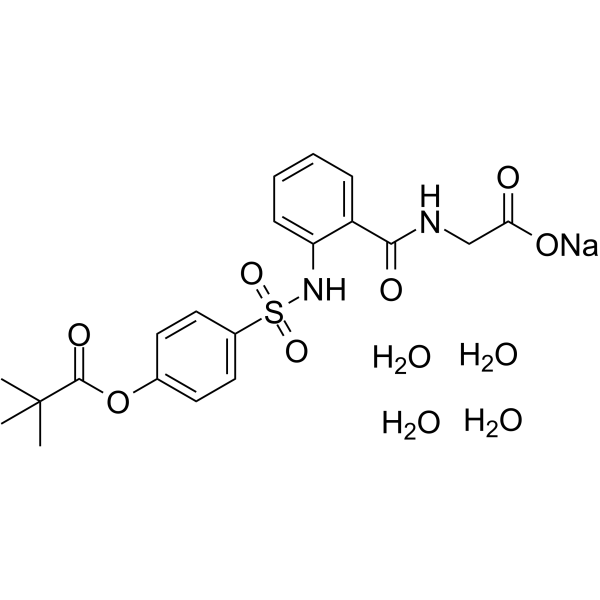
    Sivelestat sodium tetrahydrate
    25+ Cited Publications

    EI546 sodium tetrahydrate; LY544349 sodium tetrahydrate; ONO5046 sodium tetrahydrate

    Elastase SARS-CoV Cancer
    Sivelestat (EI546) sodium tetrahydrate is a competitive inhibitor of human neutrophil elastase, with an IC50 of 44 nM and a Ki of 200 nM. Sivelestat (EI546) sodium tetrahydrate has the potential for the study of acute lung injury/acute respiratory distress syndrome or disseminated intravascular coagulation in COVID-19 .
    Sivelestat sodium tetrahydrate
  • HY-W250116
    Co(III) protoporphyrin IX chloride
    1 Publications Verification

    Protoporphyrin IX cobaltic chloride; CoPPIX-Cl

    Heme Oxygenase (HO) Apoptosis Bcl-2 Family Caspase Cytochrome P450 Bacterial Keap1-Nrf2 Infection Cardiovascular Disease Inflammation/Immunology
    Co(III) protoporphyrin IX chloride (Protoporphyrin IX cobaltic chloride) is an inducer of HO-1. Co(III) protoporphyrin IX chloride has activities such as anti-inflammation and antibacterial properties. Co(III) protoporphyrin IX chloride can also be used in the research of ischemia-reperfusion injury models .
    Co(III) protoporphyrin IX chloride
  • HY-W016733

    H-D-Cit-OH

    Endogenous Metabolite Cardiovascular Disease
    D-Citrulline (H-D-Cit-OH) is a stereoisomer of L-citrulline (HY-N0391). D-Citrulline significantly attenuates polymorphonuclear leukocyte (PMN)-induced cardiac contractile dysfunction in the isolated perfused rat heart subjected to ischemia/reperfusion via a non-NO-mediated mechanism .
    D-Citrulline
  • HY-B0079

    Org25969

    Drug Derivative Cardiovascular Disease Neurological Disease Cancer
    Sugammadex sodium is a synthetic γ-cyclodextrin derivative, and acts as a reversal agent for neuromuscular block. Sugammadex sodium shows nephroprotective effect in ischemia-reperfusion injury .
    Sugammadex sodium
  • HY-148226

    Apoptosis Reactive Oxygen Species (ROS) Cardiovascular Disease
    20-5,14-HEDGE is a 20-HETE analog. 20-5,14-HEDGE induces cell death in organotypic hippocampal slice cultures (OHSCs). 20-5,14-HEDGE enhances ROS production and reduces hypoxia-reoxygenation (HR)-induced apoptosis in ex vivo rat lung slices. 20-5,14-HEDGE protects against lung ischemic reperfusion injury in rats. 20-5,14-HEDGE can be used for the study of pulmonary vascular signaling and lung injury-related research .
    20-5,14-HEDGE
  • HY-153999A

    BT200 sodium

    Integrin Apoptosis Cardiovascular Disease Inflammation/Immunology
    Rondaptivon pegol (BT200) sodium is an aptamer targeting von Willebrand factor (VWF), with an EC50 of 33 nM in humans. Rondaptivon pegol sodium effectively alleviates acute myocardial ischemia-reperfusion injury in mice by inhibiting VWF activity, reducing microvascular obstruction, inflammatory responses and cardiomyocyte apoptosis (apoptosis). Rondaptivon pegol sodium inhibits the binding of VWF to platelet glycoprotein GPIb, thereby preventing arterial thrombosis in cynomolgus monkeys. Rondaptivon pegol sodium can be used in research related to arterial thrombosis, stroke, myocardial infarction and myocardial ischemia-reperfusion injury .
    Rondaptivon pegol sodium
  • HY-116442

    Xanthine Oxidase Cardiovascular Disease Inflammation/Immunology
    Azapropazone is an orally active nonsteroidal anti-inflammatory agent. Azapropazone inhibits Xanthine oxidase activity with an IC50 of 70-140 μg/mL. Azapropazone exerts significant cardiomyocyte protective effects on dogs with ischemia-reperfusion injury . Azapropazone reduces arthritis. Azapropazone inhibits Adrenaline-induced platelet aggregation. Azapropazone can be used for the research of myocardial ischemia and reperfusion injury, adjuvant arthritis, and gouty arthritis .
    Azapropazone
  • HY-N10424
    Brazilein
    2 Publications Verification

    Na+/K+ ATPase Apoptosis Interleukin Related NO Synthase Bacterial Parasite Cardiovascular Disease Infection Neurological Disease Inflammation/Immunology
    Brazilein is a compound with anti-inflammatory and neuroprotective activities, with an IC50 of 500 μM against guinea pig Na +,K +-ATPase. Brazilein reduces iNOS mRNA expression, thereby inhibiting nitric oxide production in immune cells. Brazilein suppresses inflammatory responses by reducing the mRNA expression of TNF-α and IL-6, but has no effect on IL-1β expression. Brazilein reduces the cerebral infarction volume and improves the neurological function scores of rats with cerebral ischemia-reperfusion injury. Brazilein induces apoptosis of splenic lymphocytes in mice. Brazilein inhibits humoral immune responses in mice, and causes thymus and spleen atrophy as well as body weight loss in mice. Brazilein also possesses antimalarial and antibacterial activities. Brazilein is also a red dye. Brazilein can be used in studies related to the infection, nervous system, cardiovascular system and inflammatory diseases .
    Brazilein
  • HY-P6442

    Chemerin Receptor Syk ERK Src p38 MAPK P-selectin Cardiovascular Disease Neurological Disease Inflammation/Immunology
    Chemerin15 is an anti-inflammatory peptide derived from Chemerin. Chemerin15 binds to ChemR23. Chemerin15 inhibits TNFα-induced activation of Syk, ERK and Src kinases. Chemerin15 increases the expression of p-p38 mRNA and protein. Chemerin15 mediates phagocytosis, resolution of inflammation, CD62L shedding and downregulation of PSGL-1 expression in macrophages and microglia. Chemerin15 inhibits neutrophil-mediated vascular inflammation and myocardial ischemia-reperfusion injury via ChemR23. Chemerin15 enhances microglial phagocytosis, thereby alleviating cerebral ischemia-reperfusion injury .
    Chemerin15
  • HY-113248

    Endogenous Metabolite Adrenergic Receptor Reactive Oxygen Species (ROS) Cardiovascular Disease Inflammation/Immunology
    3-Nitro-L-tyrosine serves as a biomarker of oxidative stress. 3-Nitro-L-tyrosine attenuates the pressor and vasoconstrictive effects of angiotensin II by inhibiting the α1-adrenergic receptor-mediated signaling pathway, and participates in hemodynamic regulation under pathological conditions such as inflammation and ischemia. 3-Nitro-L-tyrosine can be used in studies related to atherosclerosis, ischemia-reperfusion and sepsis .
    3-Nitro-L-tyrosine
  • HY-N0385
    Gomisin J
    3 Publications Verification

    NO Synthase AMPK CaMK NF-κB Keap1-Nrf2 Cardiovascular Disease Inflammation/Immunology
    Gomisin J is a Schisandra chinensis-derived lignan that can inhibit multiple targets such as eNOS, AMPK (LKB1, CaMKIIβ), fetuin-A, NF-κB, Nrf2/HO-1, and can pass through the blood-brain barrier. Gomisin J increases NO bioavailability by activating eNOS, regulates lipid metabolism by activating the AMPK pathway, inhibits fetuin-A and NF-κB to exert anti-inflammatory effects, and activates Nrf2/HO-1 to enhance antioxidant capacity. Gomisin J has the activities of anti-hypertension, regulating liver lipid metabolism, and reducing cerebral ischemia-reperfusion injury, and can be used for research on hypertension, non-alcoholic fatty liver disease, cerebral ischemia-reperfusion injury, etc .
    Gomisin J
  • HY-W006566

    5-Aminoisoquinolin-1-one

    PARP Cancer
    5-AIQ (5-Aminoisoquinolin-1-one) is a PARP-1 inhibitor. 5-AIQ is an important functional group in various drugs. 5-AIQ reduces the tissue injury associated with ischemia-reperfusion of the liver, it can be used for the research of the research conditions associated with ischemia-reperfusion of the liver .
    5-AIQ
  • HY-W011082

    NOD-like Receptor (NLR) Cardiovascular Disease
    NLRP3-IN-2, an intermediate substrate in the synthesis of glyburide, inhibits the formation of the NLRP3 inflammasome in cardiomyocytes and limits the infarct size following myocardial ischemia/reperfusion in the mouse, without affecting glucose metabolism .
    NLRP3-IN-2
  • HY-136744
    Caspase-9 Inhibitor III
    1 Publications Verification

    Ac-LEHD-cmk

    Caspase Cardiovascular Disease
    Caspase-9 Inhibitor III (Ac-LEHD-cmk) is a caspase-9 inhibitor. Caspase-9 Inhibitor III exhibits protective effects on ischemia-reperfusion-induced myocardial injury .
    Caspase-9 Inhibitor III
  • HY-101481

    COX Apoptosis MEK ERK PPAR AMPK NF-κB Interleukin Related TNF Receptor STAT Wnt Neurological Disease Inflammation/Immunology Cancer
    Flurbiprofen axetil is a non-selective COX inhibitor and a nonsteroidal anti-inflammatory agent with anti-inflammatory and analgesic effects. Flurbiprofen axetil inhibits basal-like breast cancer metastasis by inhibiting the MEK/ERK signaling pathway. Flurbiprofen axetil can promote neuroprotection after focal cerebral ischemia in rats by partially activating PPAR-γ. Flurbiprofen axetil alleviates cerebral ischemia/reperfusion injury by reducing inflammation in a transient global cerebral ischemia/reperfusion rat model. Flurbiprofen axetil can alleviate inflammatory responses and cognitive function in a mild cognitive impairment (MCI) SD rat model through the AMPKα/NF-κB signaling pathway .
    Flurbiprofen axetil
  • HY-P5762

    PNX-14

    GnRH Receptor Neurological Disease
    Phoenixin-14 (PNX-14) is one of the endogenous active isoform, and generates anxiolytic effect via the activation of the AHA GnRH system in mice. Phoenixin-14 inhibits ischemia/reperfusion-induced cytotoxicity in microglia .
    Phoenixin-14
  • HY-10655
    Palosuran
    4 Publications Verification

    ACT-058362

    Urotensin Receptor Cardiovascular Disease
    Palosuran (ACT-058362) is a potent, selective, and orally active antagonist of urotensin II receptor, with an IC50 of 3.6 nM for CHO cell membranes expressing human recombinant receptors. Palosuran can improves pancreatic and renal function in diabetic rats .
    Palosuran
  • HY-161119

    Dynamin Reactive Oxygen Species (ROS) Cardiovascular Disease Cancer
    Drpitor1a is a potent Drp1 inhibitor. Drpitor1a inhibits mitochondrial ROS production, preventes mitochondrial fission, and improves right ventricular diastolic dysfunction during IR (ischemia reperfusion) injury. Drpitor1a has the potential for the research of lung cancer [1]
    Drpitor1a
  • HY-164304

    Pyroptosis Interleukin Related NOD-like Receptor (NLR) Cardiovascular Disease Inflammation/Immunology
    INF 195 is an NLRP3 inhibitor. INF 195 can inhibit NLRP3 driven macrophage pyroptosis and IL-1β release, with an EC50 value of 0.15 μM. INF 195 can reduce the infarct size of isolated mouse hearts at low doses, effectively preventing myocardial ischemia/reperfusion injury .
    INF 195
  • HY-106275

    Fibrin-derived peptide Bβ15-42

    Flavivirus Dengue Virus Cardiovascular Disease
    FX-06 (Fibrin-derived peptide Bβ15-42) is a fibrin Bbeta chain-derived peptide. FX-06 binds to VE-cadherin and inhibits leukocyte transmigration and initiates VE-cadherin-mediated signaling. FX-06 can be used in the research of ischemia/reperfusion injury, Dengue shock syndrome (DSS) .
    FX-06
  • HY-118960

    ATP Synthase Cardiovascular Disease
    BMS-199264 hydrochloride is an inhibitor of F1F0 ATP hydrolase (IC50=0.5 μM) without inhibitory effect on F1F0 ATP synthase. BMS-199264 hydrochloride selectively inhibits ATP decline during ischemia to reduces cardiac necrosis. BMS-199264 hydrochloride also enhances the recovery of contractile function following reperfusion .
    BMS-199264 hydrochloride
  • HY-119909

    Mitochondrial Metabolism Cardiovascular Disease
    GNX-865 is a mitochondrial permeability transition pore (mPTP) inhibitor that protects against ischemia-reperfusion injury in vivo .
    GNX-865
  • HY-E70008

    Sirtuin Inflammation/Immunology
    Lumbokinase attenuates myocardial ischemia-reperfusion (I-R) injury through the activation of Sirt1 signaling, and thus enhances autophagic flux and reduces I-R-induced oxidative damage, inflammation and apoptosis .
    Lumbokinase
  • HY-106262B
    Delcasertib hydrochloride
    3 Publications Verification

    KAI-9803 hydrochloride; BMS-875944 hydrochloride

    PKC Cardiovascular Disease Inflammation/Immunology
    Delcasertib (KAI-9803) hydrochloride is a potent and selective δ-protein kinase C (δPKC) inhibitor. Delcasertib (KAI-9803) hydrochloride could ameliorate injury associated with ischemia and reperfusion in animal models of acute myocardial infarction (MI) .
    Delcasertib hydrochloride
  • HY-12829
    SR-3306
    1 Publications Verification

    JNK Neurological Disease Metabolic Disease Inflammation/Immunology
    SR-3306 is a brain-penetrant and selective pan-JNK (JNK1/2/3) inhibitor. SR-3306 is a neuroprotective agent that can be used for the study of Parkinson's disease, ischemia/reperfusion (I/R) injury and obesity .
    SR-3306
  • HY-101205

    Opioid Receptor Cardiovascular Disease Neurological Disease
    ICI-199441 hydrochloride is a potent and selective κ-opioid receptor agonist with analgesic effects. ICI 199441 hydrochloride can improve heart resistance to ischemia/reperfusion .
    ICI-199441 hydrochloride
  • HY-117243

    MAP3K Cardiovascular Disease
    GSK329 is a potent and selective diarylurea inhibitor of the cardiac-specific kinase TNNI3K. GSK329 exhibits positive cardioprotective outcomes in the model of ischemia/reperfusion cardiac injury .
    GSK329
  • HY-153999

    BT200

    Integrin Apoptosis Cardiovascular Disease Inflammation/Immunology
    Rondaptivon pegol (BT200) is an aptamer targeting von Willebrand factor (VWF), with an EC50 of 33 nM in humans. Rondaptivon pegol effectively alleviates acute myocardial ischemia-reperfusion injury in mice by inhibiting VWF activity, reducing microvascular obstruction, inflammatory responses and cardiomyocyte apoptosis (apoptosis). Rondaptivon pegol inhibits the binding of VWF to platelet glycoprotein GPIb, thereby preventing arterial thrombosis in cynomolgus monkeys. Rondaptivon pegol can be used in research related to arterial thrombosis, stroke, myocardial infarction and myocardial ischemia-reperfusion injury .
    Rondaptivon pegol
  • HY-170747A

    Bacterial Infection Inflammation/Immunology
    9-tert-Butyldoxycycline hydrochloride exhibits immunomodulatory activity, alters the polarization states polymorphonuclear neutrophils, and ameliorates the inflammatory response in ischemia-reperfusion injury model. 9-tert-Butyldoxycycline hydrochloride is the ligand for ‘Tet-On’ switch system .
    9-tert-Butyldoxycycline hydrochloride
  • HY-W015061R

    Reference Standards Adrenergic Receptor Apoptosis Endogenous Metabolite Cardiovascular Disease Metabolic Disease
    Phenylacetylglycine (Standard) is the analytical standard of Phenylacetylglycine. This product is intended for research and analytical applications. Phenylacetylglycine is a gut microbial metabolite that can activate β2AR. Phenylacetylglycine protects against cardiac injury caused by ischemia/reperfusion .
    Phenylacetylglycine (Standard)
  • HY-106262

    KAI-9803; BMS-875944

    PKC Cardiovascular Disease Inflammation/Immunology
    Delcasertib (KAI-9803) is a potent and selective δ-protein kinase C (δPKC) inhibitor. Delcasertib (KAI-9803) could ameliorate injury associated with ischemia and reperfusion in animal models of acute myocardial infarction (MI) .
    Delcasertib
  • HY-134266
    8-Bromo-AMP
    1 Publications Verification

    8-Bromoadenosine 5'-monophosphate; 8-Bromoadenylic acid

    Endogenous Metabolite Cardiovascular Disease
    8-Bromo-AMP (8-Bromoadenosine 5'-monophosphate) is a membrane permeable cAMP analogue. 8-Bromo-AMP can improve the ability of the heart to recover from ischemia and reperfusion by increasing the levels of ATP, ADP, and total adenine nucleotides .
    8-Bromo-AMP
  • HY-76144

    4-Aminothiobenzamide

    Biochemical Assay Reagents Cardiovascular Disease
    3-Aminobenzothioamide is a small H2S donor. 3-Aminobenzothioamide has the potential for the research of myocardial ischemia-reperfusion injury .
    4-Aminobenzothioamide
  • HY-P11315

    Biochemical Assay Reagents Cardiovascular Disease Neurological Disease
    MG1 peptide is an M1 microglia-targeting peptide with blood-brain barrier permeability. MG1 peptide can be used in studies related to ischemic stroke and cerebral ischemia-reperfusion injury .
    MG1 peptide
  • HY-170790

    TRP Channel Neurological Disease
    HZS60 is a NMDAR/TRPM4 inhibitor with brain permeability that can improve cerebral ischemia. HZS60 has significant neuroprotective effects on primary neuronal ischemic damage caused by NMDA and oxygen-glucose deprivation/reoxygenation. HZS60 exhibits good pharmacokinetic characteristics and can inhibit cerebral ischemia-reperfusion injury. HZS60 can be used as a potential inhibitor of ischemic stroke .
    HZS60
  • HY-175640

    Pyroptosis Reactive Oxygen Species (ROS) Interleukin Related Caspase Cardiovascular Disease
    Troponin-IN-1 is a troponin inhibitor. Troponin-IN-1 protects OGD/R-injured H9c2 cardiomyocytes by reducing LDH leakage, pyroptosis and ROS accumulation. Troponin-IN-1 inhibits NO production and IL-1β/TNF-α/IL-18 release in LPS (HY-D1056)-induced RAW264.7 cells. Troponin-IN-1 acts via caspase-1/GSDMD/IL-18 pathway. Troponin-IN-1 reduces myocardial infarct size in LAD-induced myocardial ischemia/reperfusion (MI/R) male rats. Troponin-IN-1 can be used for the study of myocardial ischemia/reperfusion (MI/R) injury .
    Troponin-IN-1
  • HY-114671

    CG-4203

    Prostaglandin Receptor Cardiovascular Disease
    Taprostene (CG-4203) is a synthetic, chemically stable analogue of Prostacyclin (PGI2). Taprostene exhibits endothelium and myocardial protecting actions after acute myocardial ischemia and reperfusion in cats. Taprostene enhances cytoprotective actions, while minimizing unwanted hemodynamic effects .
    Taprostene

Inquiry Online

Your information is safe with us. * Required Fields.

Salutation


Country or Region *

Applicant Name *


Organization Name *

Department *


Email Address *


Product Name *

Cat. No.


Requested quantity *

Phone Number *


Remarks

Inquiry Online

Inquiry Information

Product Name:
Cat. No.:
Quantity:
MCE Japan Authorized Agent:

