16 Results for "

kojic acid

" in MedChemExpress (MCE) Product Catalog:
Products (16)

16 Results for "kojic acid" in MCE Product Catalog:

2
2 Cited Publications
Cat. No.: HY-W050154
CAS No.: 501-30-4
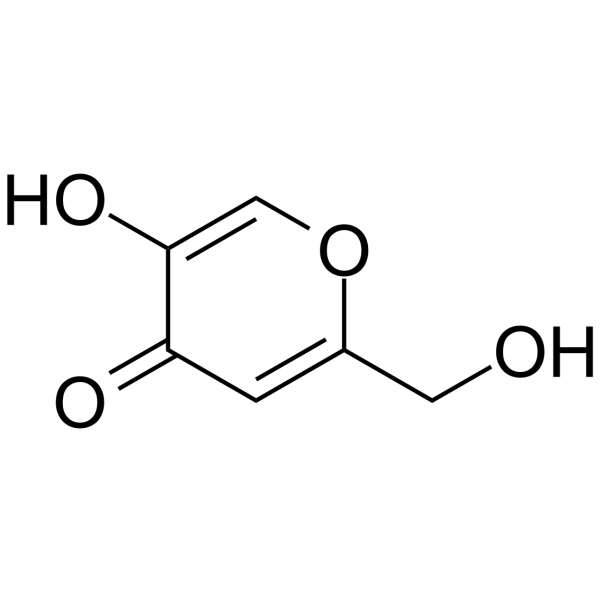
Kojic acid is a substance produced by Aspergillus oryzae that is orally effective and can also be absorbed transdermally. Kojic acid exhibits various biological activities, including anti-aging, anti-nematode, antimicrobial, antioxidant, and anti-inflammatory effects. Kojic acid is a Tyrosinase inhibitor with an Mushroom Tyrosinase IC50 of 182.7 μM. Kojic acid prevents melanin production by capturing copper ions that bind to the tyrosinase active site, thus inhibiting its activation. Kojic acid also suppresses the NF-κB and p21 signaling pathways in human keratinocytes. Kojic acid derivatives have anticancer activity .
loading...
    loading...
Cat. No.: HY-113404
CAS No.: 63-84-3
Purity:  98.58%
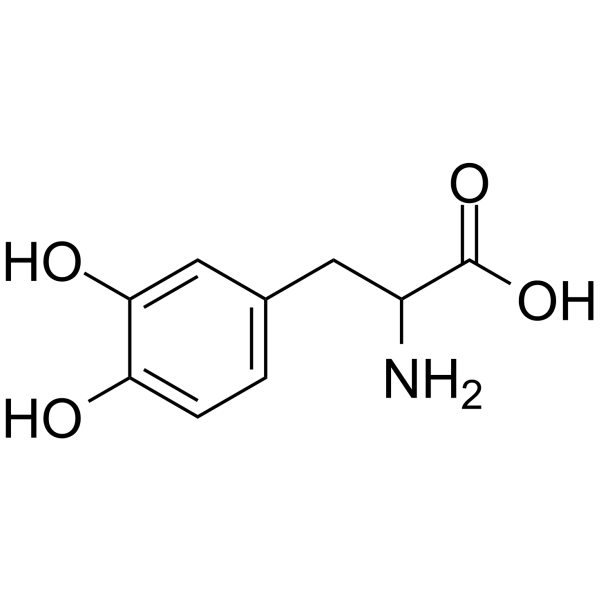
DL-Dopa is a dopamine precursor. It serves as a substrate for Mushroom Tyrosinase, which oxidizes it to dopaquinone, an intermediate in the DOPA-melanin polymerization process, and this reaction can be detected at 475 nm. DL-Dopa also forms synergistic hydrophobic and π-π stacking interactions with cationic surfactants. Its binding to cetylpyridinium chloride (HY-B1464) is stronger and exhibits better thermodynamic stability than its binding to benzalkonium chloride (HY-B2232). DL-Dopa can compensate for dopamine depletion in the brain and is applicable to research related to Parkinson's disease .
loading...
    loading...
Cat. No.: HY-W099579
CAS No.: 79725-98-7
Synonyms: kojic dipalmitate
Target:  

Tyrosinase

Research Areas:  

Endocrinology

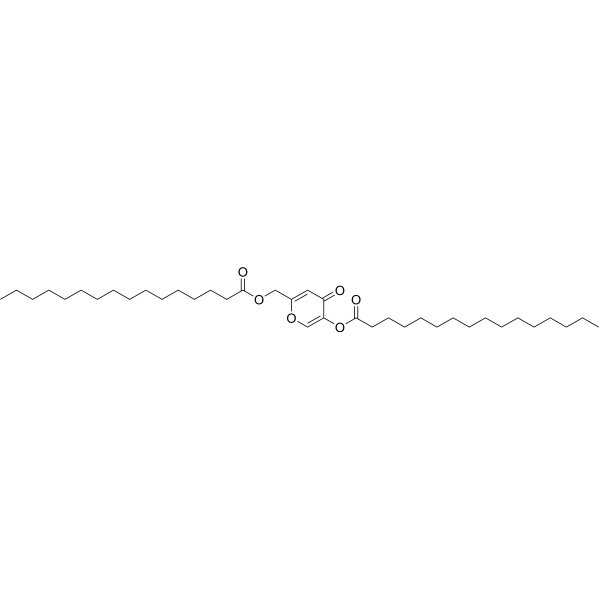
Kojic acid dipalmitate (Kojic dipalmitate) is a derivative of Kojic acid (HY-W050154), a fungal metabolite that can be produced by species of Aspergillus, Acetobacter and Penicillium. Kojic acid dipalmitate is a slow and reversible competitive inhibitor of tyrosinase. Kojic acid dipalmitate can be used for skin‐lightening agent research .
loading...
    loading...
Cat. No.: HY-W050154R
CAS No.: 501-30-4
Kojic acid (Standard) is the analytical standard of Kojic acid. This product is intended for research and analytical applications. Kojic acid is a substance produced by Aspergillus oryzae, with various biological activities including antitumor, insecticidal, antibacterial, antioxidant, and radioprotective effects. Kojic acid exhibits tyrosinase inhibition activity by capturing copper ions that bind to the active site of tyrosinase, preventing its activation. Tyrosinase is a key enzyme in the biosynthesis of melanin, so kojic acid can block melanin production. Additionally, kojic acid shows potential inhibition of NF-κB activity in human keratinocytes, which may also be related to the anti-melanogenic effect induced by kojic acid. Kojic acid is effective when administered orally and can also be absorbed transdermally. Nano-carrier systems prepared with kojic acid demonstrate effective delivery of anticancer drugs. Kojic acid holds promise for research in cancer, infectious diseases, and skin whitening among other fields .
loading...
    loading...
Cat. No.: HY-W050154S
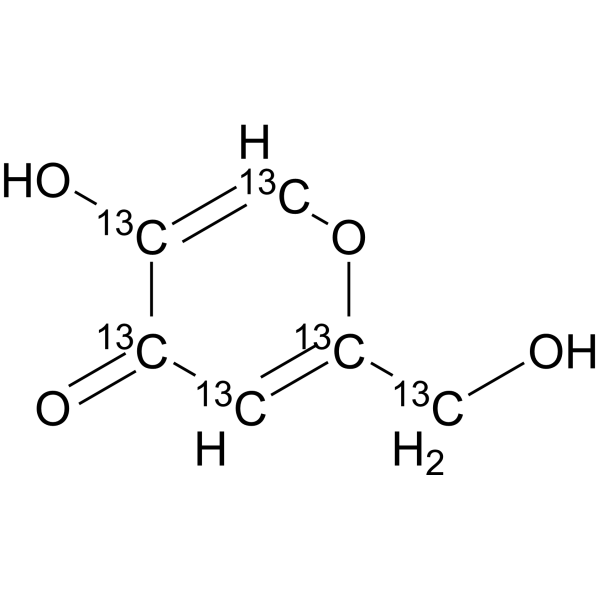
Kojic acid- 13C6 is 13C labeled Kojic acid (HY-W050154). Kojic acid is a substance produced by Aspergillus oryzae that is orally effective and can also be absorbed transdermally. Kojic acid exhibits various biological activities, including anti-aging, anti-nematode, antimicrobial, antioxidant, and anti-inflammatory effects. Kojic acid is a Tyrosinase inhibitor with an Mushroom Tyrosinase IC50 of 182.7 μM. Kojic acid prevents melanin production by capturing copper ions that bind to the tyrosinase active site, thus inhibiting its activation. Kojic acid also suppresses the NF-κB and p21 signaling pathways in human keratinocytes. Kojic acid derivatives have anticancer activity .
loading...
    loading...
Cat. No.: HY-W099579R
CAS No.: 79725-98-7
Synonyms: kojic dipalmitate (Standard)
Research Areas:  

Endocrinology

Kojic acid dipalmitate (Standard) is the analytical standard of Kojic acid dipalmitate. This product is intended for research and analytical applications. Kojic acid dipalmitate (Kojic dipalmitate) is a derivative of Kojic acid (HY-W050154), a fungal metabolite that can be produced by species of Aspergillus, Acetobacter and Penicillium. Kojic acid dipalmitate is a slow and reversible competitive inhibitor of tyrosinase. Kojic acid dipalmitate can be used for skin‐lightening agent research .
loading...
    loading...
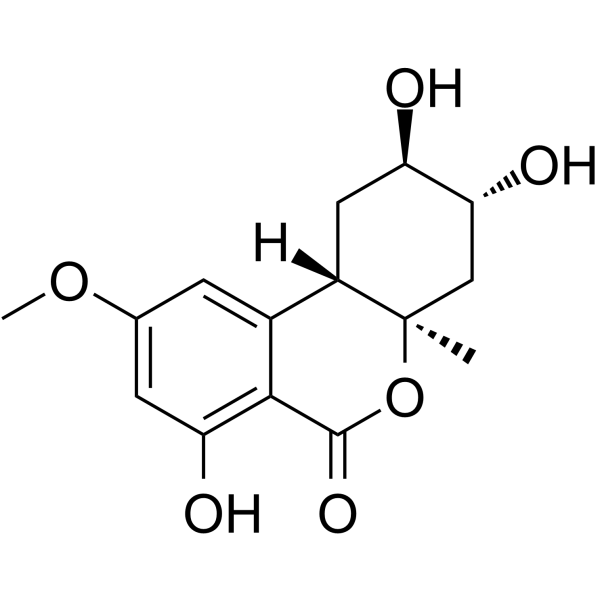
Cat. No.: HY-N10219
CAS No.: 887751-89-5
Dihydroaltenuene B is a potent mushroom tyrosinase inhibitor with an IC50 of 38.33 µM. Dihydroaltenuene B shows the hydrogen bonding interactions between the 3-OH and 4’-OH and the His244, Met280 and Gly281 residues of tyrosinase .
loading...
    loading...
Cat. No.: HY-134666A
Research Areas:  

Infection

Dioctatin A hydrochloride is a metabolite of Streptomyces and an inhibitor of human dipeptidyl aminopeptidase II. Dioctatin A hydrochloride can inhibit aflatoxin production by Aspergillus parasiticus with an IC50 of 4.0 μM. Dioctatin A hydrochloride can reduce the mRNA levels of aflatoxin biosynthetic genes and the regulatory gene aflR, inhibit conidiation and decrease the mRNA level of the brlA gene, and also promote kojic acid production. In addition, Dioctatin A hydrochloride can inhibit sterigmatocystin production. Dioctatin A hydrochloride has pleiotropic regulatory effects on the production and differentiation of fungal secondary metabolites .
loading...
    loading...
Cat. No.: HY-N4096R
CAS No.: 174391-64-1
Kojic acid dipalmitate (Standard) is the analytical standard of Kojic acid dipalmitate. This product is intended for research and analytical applications. Kojic acid dipalmitate (Kojic dipalmitate) is a derivative of Kojic acid (HY-W050154), a fungal metabolite that can be produced by species of Aspergillus, Acetobacter and Penicillium. Kojic acid dipalmitate is a slow and reversible competitive inhibitor of tyrosinase. Kojic acid dipalmitate can be used for skin‐lightening agent research .
loading...
    loading...
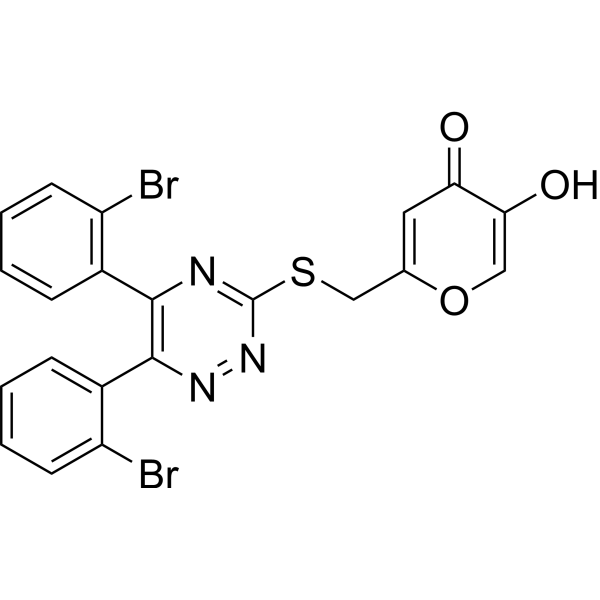
Cat. No.: HY-158235
CAS No.: 2966803-96-1
Target:  

Tyrosinase

Research Areas:  

Others

Tyrosinase-IN-27 (compound 6f) is a tyrosinase (TYR) inhibitor (IC50: 0.88 μM) that statically quenches TYR. Tyrosinase-IN-27 increases the hydrophobicity of the enzyme microenvironment by binding to TYR, reducing the content of α-helices in the enzyme and changing its secondary structure. Tyrosinase-IN-27 can be used in the food industry to effectively inhibit the browning of lotus root slices. .
loading...
    loading...
Cat. No.: HY-155247
Target:  

Tyrosinase

Research Areas:  

Others

Tyrosinase-IN-14 (compound 7m) is a tyrosinase inhibitor that reduces the catalytic activity of tyrosinase by changing its secondary structure. Tyrosinase-IN-14 has low cytotoxicity and anti-browning activity in fruits. Tyrosinase-IN-14 effectively inhibits banana browning during storage .
loading...
    loading...
Cat. No.: HY-162894
CAS No.: 1899025-43-4
Target:  

Tyrosinase

Research Areas:  

Others

Tyrosinase-IN-37 (Compound 3c) is an effective Tyrosinase inhibitor with an IC50 of 1.02 μM, exhibiting 14 times the inhibitory effect of kojic acid (Kojic acid, HY-W050154), which has an IC50 of 14.74 μM. Tyrosinase-IN-37 can effectively prevent the browning of Rosa roxburghii. Additionally, Tyrosinase-IN-37 can also inhibit browning that is not caused by Tyrosinase .
loading...
    loading...
Cat. No.: HY-162889
Target:  

Tyrosinase

Research Areas:  

Others

Tyrosinase-IN-36 is a moderate Tyrosinase inhibitor, with an inhibition percentage of 42.75% at 100 μM compared to kojic acid, and it exhibits antioxidant activity .
loading...
    loading...
Cat. No.: HY-121554
CAS No.: 68642-64-8
Target:  

GABA Receptor

Research Areas:  

Neurological Disease

Kojic amine is an orally active γ-aminobutyric acid (GABA) analog. Kojic amine acts as a GABA mimic that inhibits sodium-independent [ 3H]GABA binding to rat brain cell membranes. Kojic amine reduces flexor spasms in chronic spinal rat and cat models. Kojic amine prevents tonic extensor convulsions in mice. Kojic amine produces a transient, dose-dependent analgesic effect in the mouse hot-plate test. Kojic amine can be used in research related to skeletal muscle spasm, epilepsy and analgesia [1][2]
loading...
    loading...
Cat. No.: HY-161971
CAS No.: 1613467-47-2
Target:  

Tyrosinase

Research Areas:  

Cancer

Tyrosinase-IN-35 (compound 6g) is a human tyrosinase inhibitor (IC50: 2.09 μM), which is more potent than Kojic Acid (HY-W050154) (IC50: 16.38 μM). Tyrosinase-IN-35 can reduce the melanin content of melanoma B16F10 cells in vitro at doses of 4 μM and 8 μM .
loading...
    loading...
Cat. No.: HY-114881
CAS No.: 29119-03-7
Synonyms: NSC 246118
Frequentin, a secondary metabolite produced by Penicillium janthinellum, is influenced by environmental conditions such as cadmium nitrate and sodium chloride concentrations. In cadmium nitrate-free medium, P. janthinellum produces cyclopenin, carlosic acid, erythroskyrin, kojic acid, and patulin. At 100 ppm cadmium nitrate, it produces cyclopenin, carlosic acid, frequentin, and islandicin. In the presence of sodium chloride, frequentin is produced at 2% and 3% concentrations. These findings indicate that frequentin production is sensitive to specific environmental stressors, highlighting its potential variability under different growth conditions .
loading...
    loading...
  • 1

