1. Search Result
Search Result
Results for "

ligand-binding pocket

" in MedChemExpress (MCE) Product Catalog:

11

Inhibitors & Agonists

1

Peptides

1

Natural
Products

Cat. No. Product Name Target Research Areas Chemical Structure
  • HY-122616

    Trk Receptor Neurological Disease
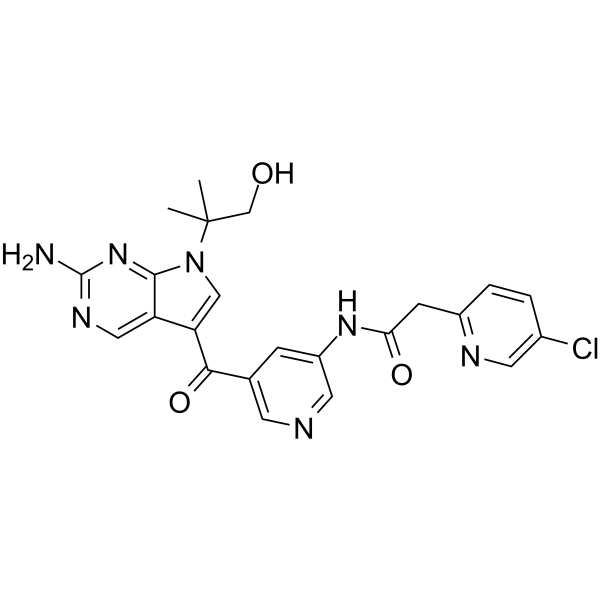
    PF-06273340 is a peripherally restricted pan-Trk inhibitor with IC50 values of 6, 4, 3 nM for TrkA, TrkB, and TrkC receptors. PF-06273340 binds in a DFG-out conformation, targeting less conserved kinase ligand binding domain regions outside the ATP binding pocket. PF-06273340 exhibits anti-hyperalgesic and analgesic effects. PF-06273340 can be used for the research of pain .
    PF-06273340
  • HY-171978

    Adrenergic Receptor Cardiovascular Disease
    LM-189 is a β2-adrenergic receptor (β2AR) ligand and G protein-biased modulator with a human β2AR Ki of 0.063 nM.LM-189 promotes β2AR coupling to Gαs and Gαi heterotrimers, stabilizes distinct β2AR conformations including a TM6 outward state, and increases β2AR ICL2 dynamics.LM-189 restricts β2AR ligand-binding pocket conformational heterogeneity, stabilizes polar ligand-receptor interaction networks, and exhibits bias toward Gαi signaling over Gαs signaling.LM-189 enabled cryo-EM structural characterization of the β2AR-Gi complex.LM-189 can be used for the research of congestive heart failure .
    LM-189
  • HY-120188

    PPAR Others
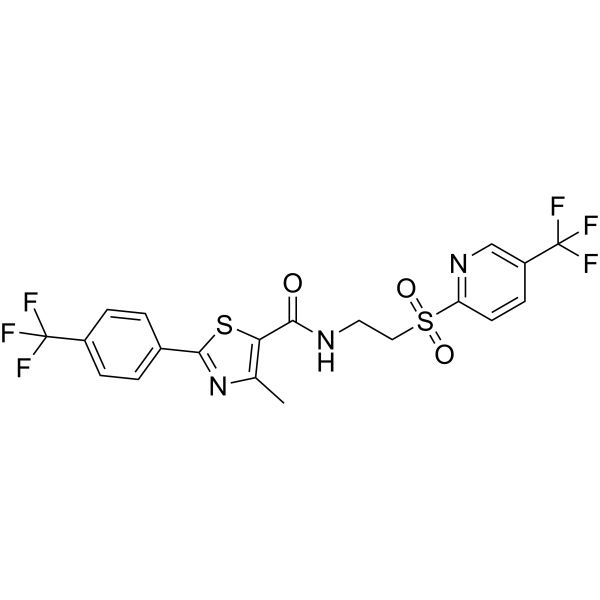
    CC618 is a selective PPARβ/δ antagonist. CC618 covalently modifies conserved Cys249 in the PPARβ/δ ligand-binding pocket via nucleophilic aromatic substitution, converting its thiol moiety to a 5-trifluoromethyl-2-pyridylthioether .
    CC618
  • HY-P10430

    Transmembrane Glycoprotein Neurological Disease
    Stalk peptide is a GPR110 activator. Stalk peptide is released from GPCR Autoproteolysis INducing domain by autocatalytic process and then Stalk peptide is inserted into the ligand-binding pocket of the receptor to activate the receptor. Stalk peptide can promote nerve growth and synaptic formation. Stalk peptide can be used to study neurodevelopmental and neurodegenerative diseases .
    Stalk peptide
  • HY-174391

    Androgen Receptor Apoptosis Cancer
    AR antagonist 15 is an orally active androgen receptor (AR) antagonist with the IC50 of 97 nM for ART787A. AR antagonist 15 disrupts AR nuclear translocation, hinders AR homodimerization, and suppresses transcription of AR-regulated genes by competitive binding to the ligand binding pocket. AR antagonist 15 can significantly lower the prostate-specific antigen (PSA) level. AR antagonist 15 induces apoptosis by reducing the expression of apoptosis pathway related proteins. AR antagonist 15 can be used for the research of prostate cancer.
    AR antagonist 15
  • HY-174407

    Bacterial Infection
    Antibacterial agent 281 (Compound 95,186) can bacteriostatically inhibit the growth of GAS. Antibacterial agent 281 binds to the ligand binding pocket of SPs0871 and competes with the ligand. Antibacterial agent 281 shows concentration-dependent growth inhibition against S. pyogenes .
    Antibacterial agent 281
  • HY-181652

    PPAR Endocrinology
    PPARδ agonist 13 is a potent, selective and orally active PPARδ agonist with an EC50 values of 0.50 nM. PPARδ agonist 13 binds to the PPARδ ligand-binding pocket and upregulates PPARδ target gene expression. PPARδ agonist 13 inhibits renal fibroblast activation, restores fatty acid oxidation, and attenuates TGF-β1-induced renal fibroblast activation. PPARδ agonist 13 exhibits anti-renal fibrosis effects in a mouse model of unilateral ureteral obstruction. PPARδ agonist 13 can be used for the research of renal fibrosis .
    PPARδ agonist 13
  • HY-N1749

    FXR Others
    2-Oxokolavenol is a selective agonist targeting the farnesoid X receptor (FXR), with an EC50 of ~3.7 μM. 2-Oxokolavenol exerts its activity against Acetaminophen (HY-66005)-induced hepatocyte damage in an FXR-dependent manner by binding to the FXR ligand-binding pocket, recruiting co-activators, and inducing FXR transcriptional activity. 2-Oxokolavenol can be naturally extracted from Aglaia spectabilis (a plant of the Aglaia genus in the Meliaceae family) and can be used in research related to liver diseases .
    2-Oxokolavenol
  • HY-182624

    Na+/H+ Exchanger (NHE) Wnt Apoptosis Cancer
    FJ9 is a NHERF1/PDZ inhibitor with human NHERF1 PDZ1 IC50 1540 μM, NHERF1 PDZ2 IC50 160 μM, and Frizzled-7-Dishevelled PDZ complex Ki 10 μM. FJ9 binds ligand-binding pockets of NHERF1 PDZ domains to block cognate ligand interactions, disrupts Frizzled-7-Dishevelled interactions, and down-regulates canonical Wnt signaling. FJ9 induces apoptosis in cancer cells with intact β-catenin signaling. FJ9 can be used for the research of non-small cell lung cancer, melanoma .
    FJ9
  • HY-18314B

    Orphan Nuclear Receptor Ferroptosis Cardiovascular Disease
    (Z)-GW 441756 is a hepatocyte nuclear factor 4α (HNF4α) activator, with an EC50 of 9.2 μM and a Ka of 4.6 μM in human systems. (Z)-GW 441756 directly interacts with the ligand-binding domain of HNF4α via persistent hydrogen bonds and hydrophobic interactions within the binding pocket. (Z)-GW 441756 reduces the accumulation of triglycerides and total cholesterol. (Z)-GW 441756 inhibits ferroptosis through a non-antioxidant mechanism. (Z)-GW 441756 decreases plasma triglyceride and total cholesterol levels in animal models of hyperlipidemia. (Z)-GW 441756 can be used in studies related to hyperlipidemia .
    (Z)-GW 441756
  • HY-181588

    Nuclear Hormone Receptor 4A/NR4A Neurological Disease Inflammation/Immunology
    NR4A agonist-2 is a selective pan-NR4A agonist designed based on Vidofludimus (HY-14908), with a Kd of 0.10 μM against NR4A1, and EC50 values of 0.098 μM, 0.092 μM and 0.09 μM against Nur77, Nurr1, NOR-1, respectively. NR4A agonist-2 exhibits 47-fold selectivity over DHODH, and shows no cytotoxic activity at concentrations up to 10 μM. By binding to a specific surface pocket in the ligand-binding domain of Nurr1, NR4A agonist-2 inhibits the formation of Nurr1 homodimers, activates response elements such as NBRE, NurRE, DR5, and then potently induces the expression of neuroprotective genes including BDNF, SOD2, thereby exerting neuroprotective activity. NR4A agonist-2 can be used in the research of neurodegenerative diseases such as Parkinson's disease, dementia and multiple sclerosis .
    NR4A agonist-2

Inquiry Online

Your information is safe with us. * Required Fields.

Salutation


Country or Region *

Applicant Name *


Organization Name *

Department *


Email Address *


Product Name *

Cat. No.


Requested quantity *

Phone Number *


Remarks

Inquiry Online

Inquiry Information

Product Name:
Cat. No.:
Quantity:
MCE Japan Authorized Agent:

