19 Results for "

metabolic breakdown

" in MedChemExpress (MCE) Product Catalog:
Products (19)

19 Results for "metabolic breakdown" in MCE Product Catalog:

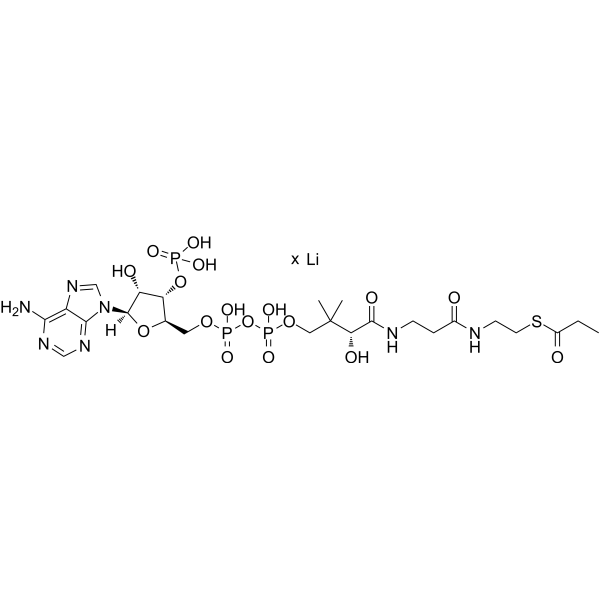
Cat. No.: HY-134424
CAS No.: 108321-21-7
Purity:  94%
Propionyl coenzyme A lithium, a coenzyme A derivative of propionic acid, is an important metabolic intermediate formed by the thioester bond between coenzyme A and propionic acid. The breakdown and production of Propionyl coenzyme A lithim is important for the metabolism of organisms .
loading...
    loading...
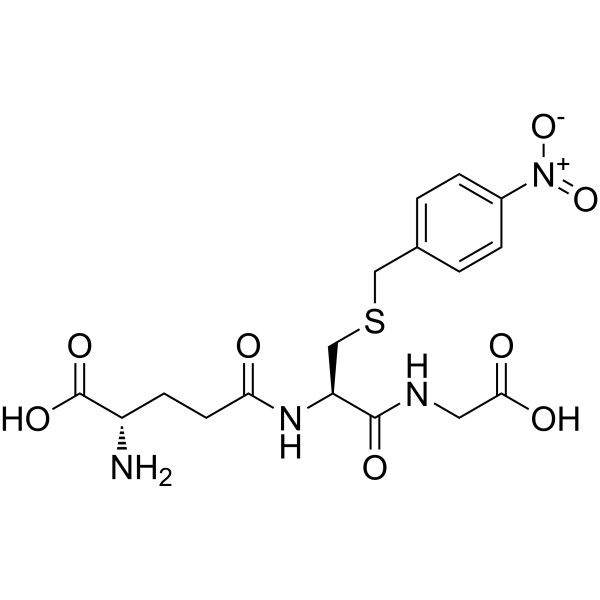
Cat. No.: HY-148208
CAS No.: 6803-19-6
Research Areas:  

Metabolic Disease

S-(p-Nitrobenzyl)glutathione is a competitive glutathionase inhibitor. S-(p-Nitrobenzyl)glutathione is converted to the corresponding cysteine derivatives by rat kidney microsomes. S-(p-Nitrobenzyl)glutathione can be used for the research of metabolic breakdown of glutathione by the glutathionase system .
loading...
    loading...
Cat. No.: HY-W415004
CAS No.: 120014-30-4
Target:  

Cholinesterase (ChE)

Research Areas:  

Neurological Disease

ACHE-IN-38 (Compound mol-8) inhibits the metabolic breakdown of the neurotransmitter acetylcholine (ACh) by the enzyme acetylcholinesterase (AChE) and hence alleviates memory deficits in patients with Alzheimer’s Disease by potentiating cholinergic transmission .
loading...
    loading...
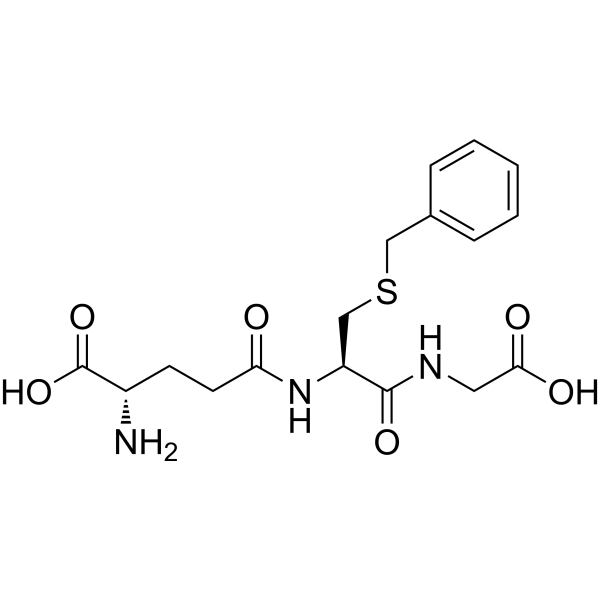
Cat. No.: HY-148207
CAS No.: 6803-17-4
Purity:  98.86%
Research Areas:  

Metabolic Disease

S-Benzylglutathione is a competitive glutathionase inhibitor. S-Benzylglutathione is converted to the corresponding cysteine derivatives by rat kidney microsomes. S-Benzylglutathione can be used for the research of metabolic breakdown of glutathione by the glutathionase system .
loading...
    loading...
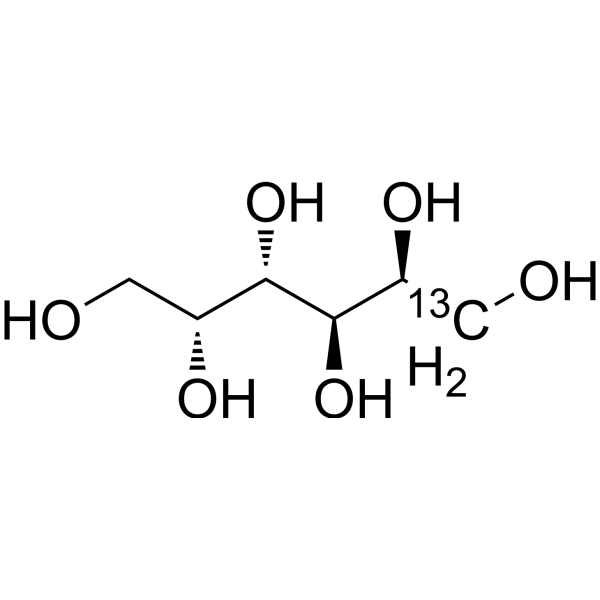
Cat. No.: HY-Y0418S
CAS No.: 2484171-11-9
Synonyms: Dulcitol-13C; Melampyrit-13C; NSC 1944-13C
Dulcite- 13C is the 13C labeled Dulcite. Dulcite is a sugar alcohol with a slightly sweet taste which is a metabolic breakdown product of galact .
loading...
    loading...
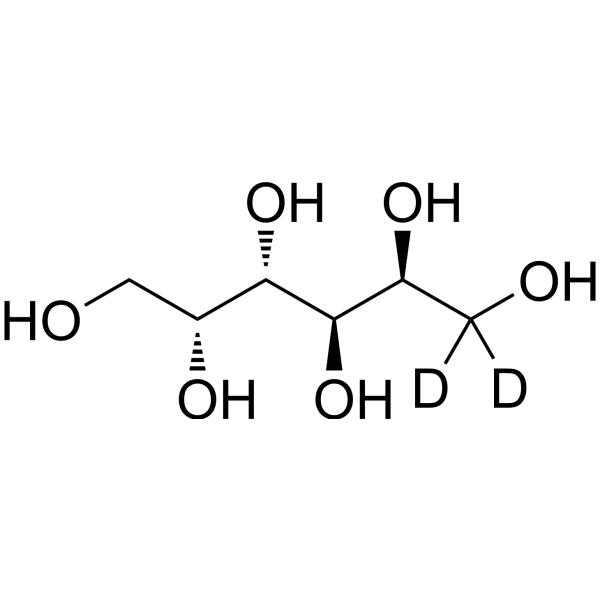
Cat. No.: HY-Y0418S4
CAS No.: 91992-02-8
Synonyms: Dulcitol-d2; Melampyrit-d2; NSC 1944-d2
Dulcite-d2 is the deuterium labeled Dulcite. Dulcite is a sugar alcohol with a slightly sweet taste which is a metabolic breakdown product of galact .
loading...
    loading...
Cat. No.: HY-Y0418R
CAS No.: 608-66-2
Synonyms: Dulcitol (Standard); Melampyrit (Standard); NSC 1944 (Standard)
Dulcite (Standard) is the analytical standard of Dulcite. This product is intended for research and analytical applications. Dulcite is a sugar alcohol with a slightly sweet taste which is a metabolic breakdown product of galactose.
loading...
    loading...
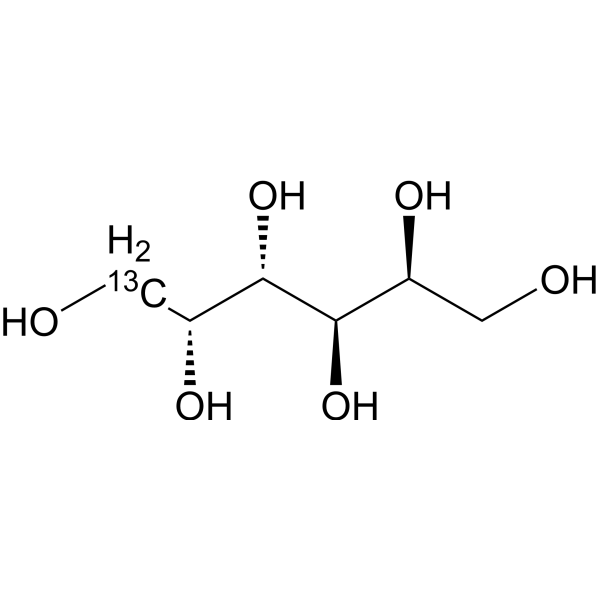
Cat. No.: HY-Y0418S1
Synonyms: Dulcitol-13C-1; Melampyrit-13C-1; NSC 1944-13C-1
Dulcite- 13C-1 is the 13C labeled Dulcite. Dulcite is a sugar alcohol with a slightly sweet taste which is a metabolic breakdown product of galact .
loading...
    loading...
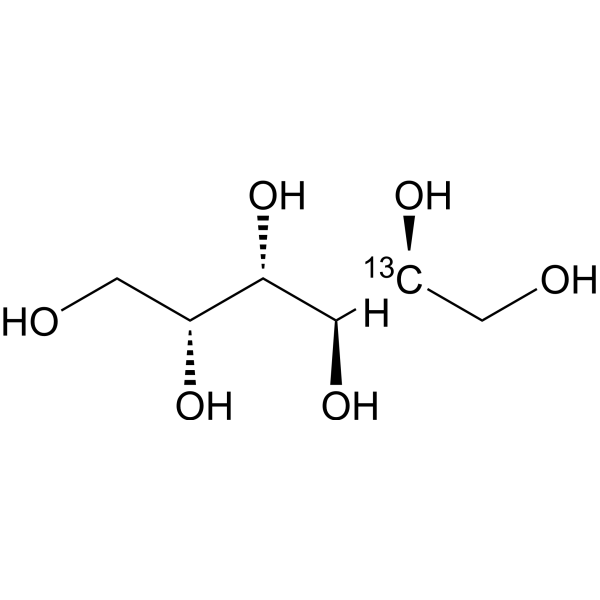
Cat. No.: HY-Y0418S2
Synonyms: Dulcitol-13C-2; Melampyrit-13C-2; NSC 1944-13C-2
Dulcite- 13C-2 is the 13C labeled Dulcite. Dulcite is a sugar alcohol with a slightly sweet taste which is a metabolic breakdown product of galact .
loading...
    loading...
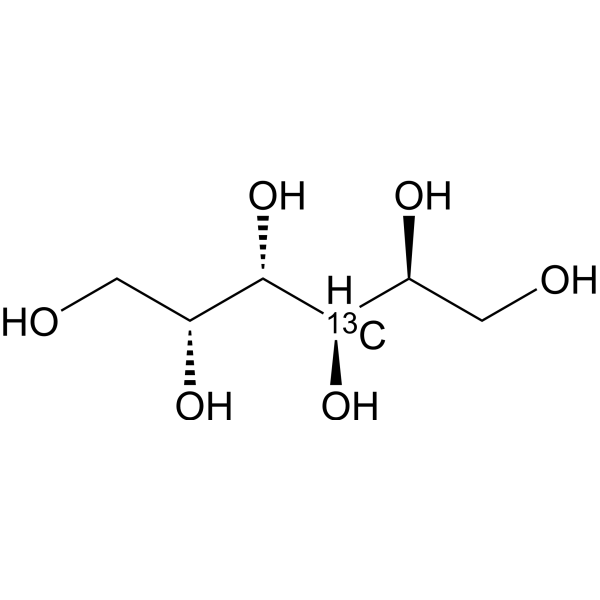
Cat. No.: HY-Y0418S3
Synonyms: Dulcitol-13C-3; Melampyrit-13C-3; NSC 1944-13C-3
Dulcite- 13C-3 is the 13C labeled Dulcite. Dulcite is a sugar alcohol with a slightly sweet taste which is a metabolic breakdown product of galact .
loading...
    loading...
Cat. No.: HY-W003576
CAS No.: 120013-39-0
Target:  

Cholinesterase (ChE)

Research Areas:  

Neurological Disease

ACHE-IN-38 hydrochloride (Compound 13b) inhibits the metabolic breakdown of the neurotransmitter acetylcholine (ACh) by the enzyme acetylcholinesterase (AChE) and hence alleviates memory deficits in patients with Alzheimer’s Disease by potentiating cholinergic transmission .
loading...
    loading...
Cat. No.: HY-17460AR
CAS No.: 223652-90-2
Synonyms: BMS284756 Mesylate hydrate (Standard)
ACHE-IN-38 (hydrochloride) (Standard) is the analytical standard of ACHE-IN-38 (hydrochloride). This product is intended for research and analytical applications. ACHE-IN-38 hydrochloride (Compound 13b) inhibits the metabolic breakdown of the neurotransmitter acetylcholine (ACh) by the enzyme acetylcholinesterase (AChE) and hence alleviates memory deficits in patients with Alzheimer’s Disease by potentiating cholinergic transmission .
loading...
    loading...
Cat. No.: HY-W003576R
CAS No.: 120013-39-0
ACHE-IN-38 (hydrochloride) (Standard) is the analytical standard of ACHE-IN-38 (hydrochloride). This product is intended for research and analytical applications. ACHE-IN-38 hydrochloride (Compound 13b) inhibits the metabolic breakdown of the neurotransmitter acetylcholine (ACh) by the enzyme acetylcholinesterase (AChE) and hence alleviates memory deficits in patients with Alzheimer’s Disease by potentiating cholinergic transmission .
loading...
    loading...
Cat. No.: HY-123004
CAS No.: 143199-54-6
Research Areas:  

Metabolic Disease

S 4404 is a prolyl-4-hydroxylase inhibitor. S 4404 functions as a non-substrate of hepatobiliary transport systems. S 4404 undergoes metabolic breakdown into fluorescent and red-colored metabolites. S 4404 can be used for the research of liver fibrosis .
loading...
    loading...
Cat. No.: HY-L146
4,407 compounds

Metabolism is the set of life-sustaining chemical reactions in organisms that maintain cell homeostasis. Metabolic pathways are enzyme-mediated biochemical reactions that lead to biosynthesis (anabolism) or breakdown (catabolism) of molecules including glucose metabolism, lipid metabolism and amino acid or protein metabolism within a cell or tissue. As catalysts, enzymes are crucial to metabolism as they allow a reaction to proceed more rapidly and tregulate the rate of a metabolic reaction. Due to the importance of metabolic balance in the organism, the abnormal function of metabolic enzymes often leads to the occurrence of a variety of metabolic diseases, such as diabetes, obesity, cardiovascular disease, etc.

MCE designs a unique collection of 4,407 metabolic enzymes related small molecules, which is an important tool for studying the metabolic activities of organisms and developing drugs for metabolic diseases.

Cat. No.: HY-L189
352 compounds

Amino acids, as one of the most fundamental organic compounds in living organisms, serve not only as the basic building blocks of proteins but also but also undertake the functions of energy supply, neurotransmitter synthesis, and maintenance of internal environment stability.Amino acid metabolic enzymes are a class of enzymes involved in the metabolic processes of amino acids, catalyzing their synthesis, breakdown, transformation, and interactions with other metabolic pathways. Abnormalities in amino acid metabolic enzymes can lead to various metabolic diseases, such as phenylketonuria and hyperammonemia, etc. Therefore, actively exploring and regulating the processes of amino acid metabolism is crucial for the development of drugs related to these diseases.

MCE designs a unique collection of 352 small molecules target amino acid metabolizing enzymes, which is an important tool for studying studying amino acid metabolism processes or metabolism-related drug development.

Cat. No.: HY-107852
CAS No.: 17040-19-6
Target:  

Insecticide

Research Areas:  

Infection

Demeton-S-methyl sulfone is an organophosphorus insecticide metabolite.Demeton-S-methyl sulfone serves as a substrate for metabolic breakdown.Demeton-S-methyl sulfone forms via oxidation of demeton S-methyl sulfoxide in sugar-beet cell suspension cultures.Demeton-S-methyl sulfone undergoes thioester bond cleavage, producing ethanethiols that convert into S-methylated compounds or S-glucosides .
loading...
    loading...
Cat. No.: HY-L012
7,360 compounds

Metabolism is the set of life-sustaining chemical reactions in organisms. Metabolic pathways are enzyme-mediated biochemical reactions that lead to biosynthesis (anabolism) or breakdown (catabolism) of natural product small molecules within a cell or tissue. Acting as catalysts, enzymes are crucial to metabolism - they allow a reaction to proceed more rapidly - and they also allow the regulation of the rate of a metabolic reaction. Proteases are used throughout an organism for various metabolic processes. Proteases control a great variety of physiological processes that are critical for life, including the immune response, cell cycle, cell death, wound healing, food digestion, and protein and organelle recycling. Imbalances in metabolic activities have been found to be critical in a number of pathologies, such as cardiovascular diseases, inflammation, cancer, and neurodegenerative diseases.

MCE designs a unique collection of 7,360 Metabolism/Protease-related small molecules that act as a useful tool for drug discovery of metabolism-related diseases.

Cat. No.: HY-L208
62 compounds

Bile acids are a class of amphiphilic molecules derived from the metabolic breakdown of cholesterol, primarily synthesized in the liver, and play a crucial role in the intestines. Based on their structural characteristics, bile acids are mainly divided into two categories: free bile acids (including Cholic acid, Deoxycholic acid, Chenodeoxycholic acid) and conjugated bile acids (including Glycocholic acid, Glycochenodeoxycholic acid, Taurocholic acid, etc.). Bile acids play a significant role in the pathophysiological research of liver and gastrointestinal diseases and are closely associated with the occurrence of metabolic diseases such as obesity, type II diabetes, non-alcoholic fatty liver disease, and atherosclerosis. Bile acids maintain metabolic balance within the body by regulating sugar metabolism, lipid metabolism, and amino acid metabolism, and they influence the activity of metabolism-related enzymes and transporters. In addition, Bile acids can also be used to construct a bile acid metabolism research platform, which helps to delve into the metabolic pathways and dynamic changes of bile acids in living organisms and aids in identifying new biomarkers for certain diseases.

MCE included 62 bile acids, including Cholic acid, Deoxycholic acid, Glycocholic acid, etc., which are effective tools for the study of liver and gallbladder diseases.

  • 1

