
26 Results for "

micro

" in MedChemExpress (MCE) Product Catalog:
Products (26)

26 Results for "micro" in MCE Product Catalog:

10
10 Publications Verification
Art. -Nr.: HY-16938
CAS. Nr.: 2457-80-9
Synonyms: 5'-(Methylthio)-5'-deoxyadenosine; 5'-Deoxy-5'-(methylthio)adenosine; 5'-S-Methyl-5'-thioadenosine
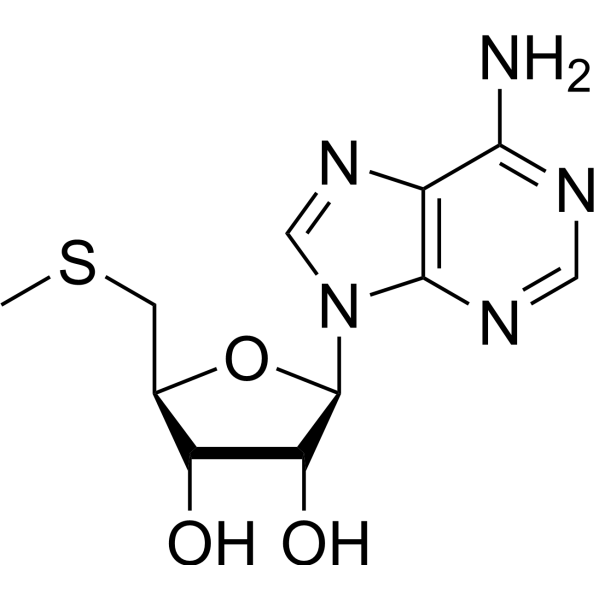
5'-Methylthioadenosine (5'-(Methylthio)-5'-deoxyadenosine) is a nucleoside generated from S-adenosylmethionine (SAM) during polyamine synthesis . 5'-Methylthioadenosine suppresses tumors by inhibiting tumor cell proliferation, invasion, and the induction of apoptosis while controlling the inflammatory micro-environments of tumor tissue. 5'-Methylthioadenosine and its associated materials have striking regulatory effects on tumorigenesis .
1
1 Cited Publications
Art. -Nr.: HY-16938S1
CAS. Nr.: 174838-38-1
Synonyms: 5'-(Methylthio)-5'-deoxyadenosine-d3; 5'-Deoxy-5'-(methylthio)adenosine-d3; 5'-S-Methyl-5'-thioadenosine-d3
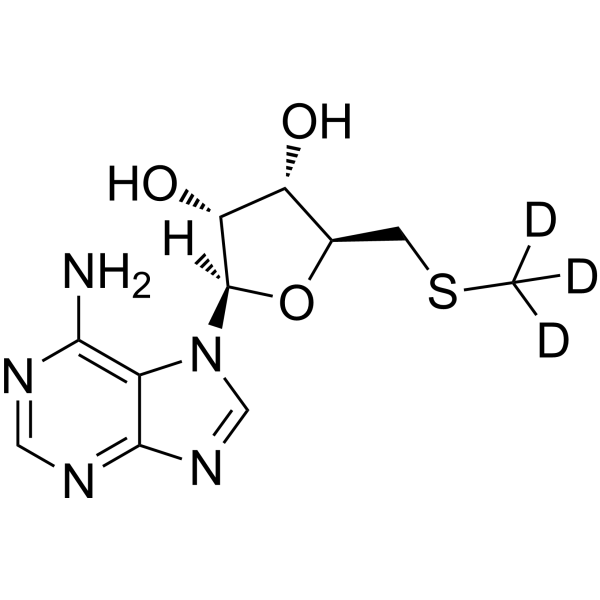
5'-Methylthioadenosine-d3 is the deuterium labeled 5'-Methylthioadenosine . 5'-Methylthioadenosine (5'-(Methylthio)-5'-deoxyadenosine) is a nucleoside generated from S-adenosylmethionine (SAM) during polyamine synthesis. 5'-Methylthioadenosine suppresses tumors by inhibiting tumor cell proliferation, invasion, and the induction of apoptosis while controlling the inflammatory micro-environments of tumor tissue. 5'-Methylthioadenosine and its associated materials have striking regulatory effects on tumorigenesis .
Art. -Nr.: HY-B2167R
CAS. Nr.: 6217-54-5
Synonyms: DHA (Standard); Cervonic acid (Standard)
Docosahexaenoic acid (Standard) is the analytical standard of Docosahexaenoic acid. This product is intended for research and analytical applications. Docosahexaenoic Acid (DHA) is an omega-3 fatty acid abundantly present brain and retina. It can be obtained directly from fish oil and maternal milk. In Vitro: Docosahexaenoic acid (DHA) is essential for the growth and functional development of the brain in infants. DHA is also required for maintenance of normal brain function in adults. The inclusion of plentiful DHA in the diet improves learning ability and memory . DHA is an essential requirement in every step of brain development like neural cell proliferation, migration, differentiation, synaptogenesis. The multiple double bonds and unique structure allow DHA to impart special membrane characteristics for effective cell signaling. Many development disorders like dyslexia, autism spectrum disorder, attention deficit hyperactivity disorder, schizophrenia etc. are causally related to decreased level of DHA . DHA is a potent RXR ligand inducing robust RXR activation already at low micro molar concentrations. The EC50 for RXRα activation by DHA is about 5-10 μM fatty acid . In Vivo: Docosahexaenoic acid administration over 10 weeks significantly reduces the number of reference memory errors, without affecting the number of working memory errors, and significantly increases the docosahexaenoic acid content and the docosahexaenoic acid/arachidonic acid ratio in both the hippocampus and the cerebral cortex . DHA treatment exerts neuroprotective actions on an experimental mouse model of PD. There is a decrease tendency in brain lipid oxidation of MPTP mice but it does not significantly .
Art. -Nr.: HY-132896
CAS. Nr.: 1068515-53-6
Reinheit:  99.36%
Target:  

Histone Demethylase

Forschungsgebiete:  

Cancer

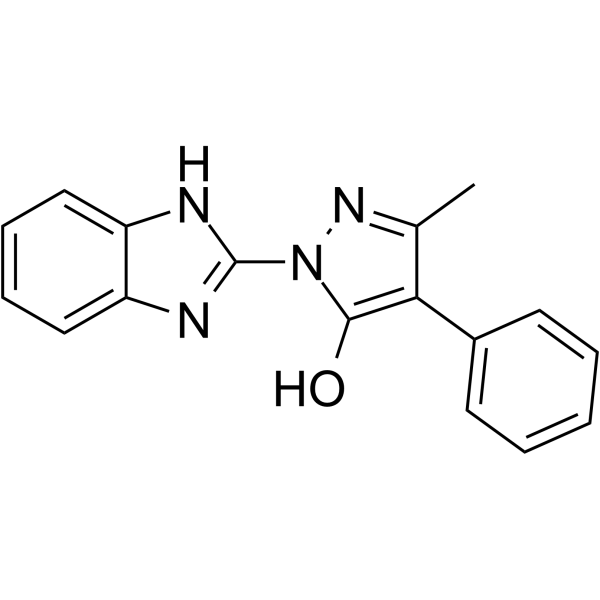
KDM4-IN-3 (Compound 15) is a KDM4 inhibitor (IC50 = 871 nM) that exhibits improved potency in biochemical assays. KDM4-IN-3 is cell-permeable and kills prostate cancer cells at low micro molar concentrations. KDM4-IN-3 inhibits growth of prostate cancer cell lines and increases the H3K9me3 abundance. KDM4-IN-3 can be studied in research for prostate cancer .
Art. -Nr.: HY-P5225
CAS. Nr.: 1400634-44-7
Target:  

PGC-1α

Forschungsgebiete:  

Others

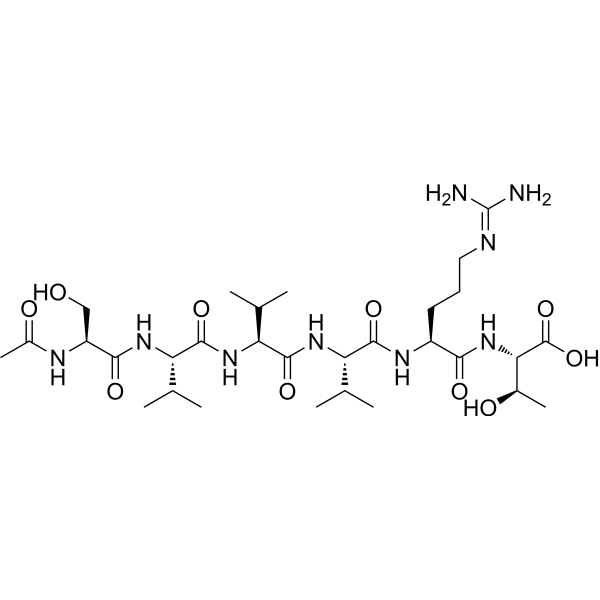
Acetyl hexapeptide-38 is a tissue repair promoter that targets fibroblasts in the dermis of the skin. It works by promoting collagen synthesis in the dermis and thickening of subcutaneous fat. Acetyl hexapeptide-38 can activate the skin repair mechanism, increase the collagen content in the dermis, improve the skin tissue structure, and has the activity of promoting local tissue repair. Acetyl hexapeptide-38 can be used in the field of cosmetic medicine to repair congenital soft tissue defects, reduce tear grooves and nasolabial folds, eliminate postoperative scars, and conduct micro-plastic surgery of skin tissue .
Art. -Nr.: HY-W267364
CAS. Nr.: 55804-65-4
Synonyms: C343
Target:  

Fluorescent Dye

Forschungsgebiete:  

Others

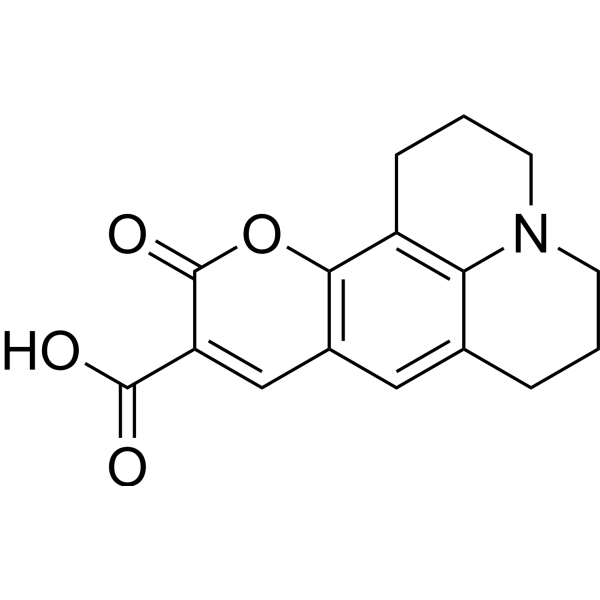
Coumarin 343 (C343) is a hydrophilic fluorescent probe for the micro water pool. λem is approximately 425 nm andλem is approximately from 425 nm to 550 nm by RF-1500 .
Art. -Nr.: HY-W391506
CAS. Nr.: 9011-14-7
Synonyms: Poly(methyl methacrylate), beads; PMMA
Poly(methyl methacrylate) (PMMA) serves as an effective material for the production of micro-fluidic chips.
Art. -Nr.: HY-W654139
CAS. Nr.: 2699607-01-5
5'-Deoxy-5'-(methylthio)adenosine-d3 is deuterium labeled 5'-Methylthioadenosine. 5'-Methylthioadenosine (5'-(Methylthio)-5'-deoxyadenosine) is a nucleoside generated from S-adenosylmethionine (SAM) during polyamine synthesis . 5'-Methylthioadenosine suppresses tumors by inhibiting tumor cell proliferation, invasion, and the induction of apoptosis while controlling the inflammatory micro-environments of tumor tissue. 5'-Methylthioadenosine and its associated materials have striking regulatory effects on tumorigenesis.
Art. -Nr.: HY-16938S
CAS. Nr.: 2421187-73-5
Synonyms: 5'-(Methylthio)-5'-deoxyadenosine-13C6; 5'-Deoxy-5'-(methylthio)adenosine-13C6; 5'-S-Methyl-5'-thioadenosine-13C6
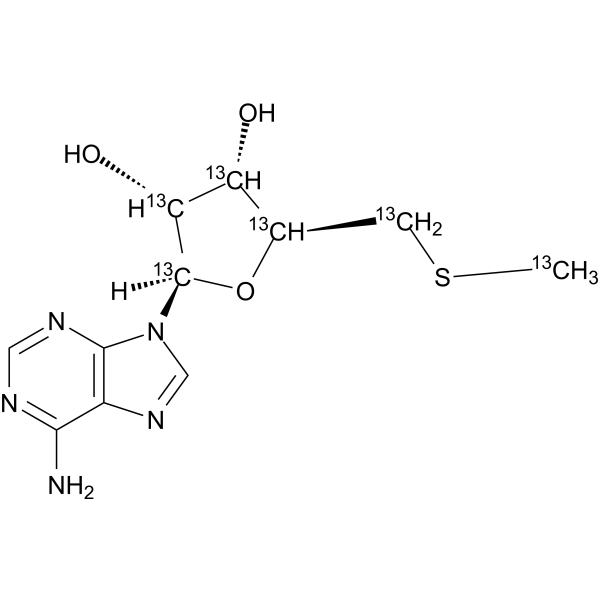
5'-Methylthioadenosine- 13C6 is the 13C-labeled 5'-Methylthioadenosine. 5'-Methylthioadenosine (5'-(Methylthio)-5'-deoxyadenosine) is a nucleoside generated from S-adenosylmethionine (SAM) during polyamine synthesis . 5'-Methylthioadenosine suppresses tumors by inhibiting tumor cell proliferation, invasion, and the induction of apoptosis while controlling the inflammatory micro-environments of tumor tissue. 5'-Methylthioadenosine and its associated materials have striking regulatory effects on tumorigenesis .
Art. -Nr.: HY-158220C
Synonyms: HAMA (MW 50000)
Hyaluronic acid methacryloyl (HAMA) (MW 50000) is a methacrylate-modified hyaluronic acid that serves as a hydrogel former, hydrolysis-resistant material, photocrosslinkable hydrogel scaffold, and drug delivery carrier for tissue engineering. Hyaluronic acid methacryloyl (MW 50000) forms hydrogels via photocrosslinking; when combined with AuMA NPs through a one-step photocrosslinking method, its effective swelling ratio increases, and the mechanical reinforcement effect of Au NPs compensates for the impact caused by reduced crosslinking density. Hyaluronic acid methacryloyl (MW 50000) can be combined with AuMA NPs via a one-step photocrosslinking method, enabling non-invasive monitoring of hydrogel degradation with contrast-enhanced micro-CT .
Art. -Nr.: HY-156786
CAS. Nr.: 1471479-22-7
TLD-1433 is the fourth-generation ruthenium (II) based photodynamic compound (PDC). TLD-1433 is activated by green light (525 ± 25 nm) and efficiently generates ROS to achieve pathogen inactivation. After photoinactivation, TLD-1433 significantly induces lipid peroxidation of the cell membrane, which can directly damage the integrity of the viral envelope. TLD-1433 has ID50 for enveloped viruses (such as H1N1 influenza virus, coronavirus OC43, HSV-1, Zika virus) is as low as nanomolar level; for non-enveloped viruses (such as adenovirus Ad5, mammalian rotavirus MRV), a concentration of micro-molar level is required for inactivation. TLD-1433 has antigen retention property and can be used for the preparation of inactivated vaccines .
Art. -Nr.: HY-146351
CAS. Nr.: 2408123-36-2
Target:  

HDAC

Forschungsgebiete:  

Neurological Disease

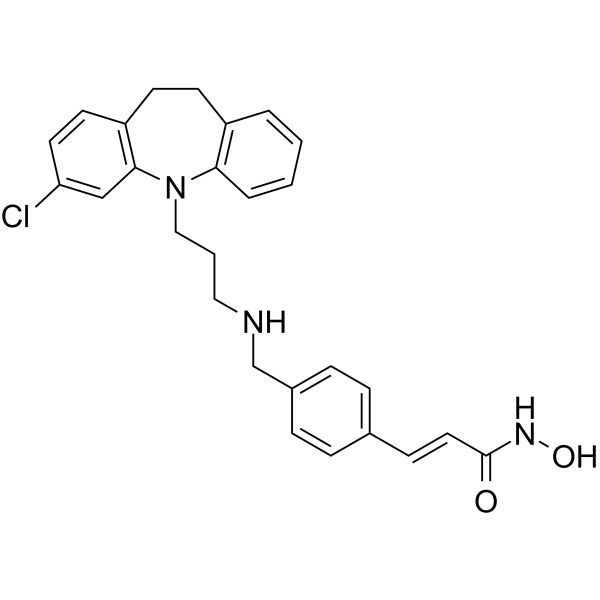
HDAC-IN-38 (compound 13) is a potent HDAC inhibitor. HDAC-IN-38 shows similar micro-molar inhibitory activity toward HDAC1, 2, 3, 5, 6, and 8. HDAC-IN-38 increases cerebral blood flow (CBF), attenuates cognitive impairment, and improves hippocampal atrophy. HDAC-IN-38 also increases the level of histone acetylation (H3K14 or H4K5) .
Art. -Nr.: HY-16938R
CAS. Nr.: 2457-80-9
Synonyms: 5'-(Methylthio)-5'-deoxyadenosine (Standard); 5'-Deoxy-5'-(methylthio)adenosine (Standard); 5'-S-Methyl-5'-thioadenosine (Standard)
5'-Methylthioadenosine (Standard) is the analytical standard of 5'-Methylthioadenosine. This product is intended for research and analytical applications. 5'-Methylthioadenosine (5'-(Methylthio)-5'-deoxyadenosine) is a nucleoside generated from S-adenosylmethionine (SAM) during polyamine synthesis[1]. 5'-Methylthioadenosine suppresses tumors by inhibiting tumor cell proliferation, invasion, and the induction of apoptosis while controlling the inflammatory micro-environments of tumor tissue. 5'-Methylthioadenosine and its associated materials have striking regulatory effects on tumorigenesis[2].
Art. -Nr.: HY-W753201
Synonyms: 5'-(Methylthio)-5'-deoxyadenosine-13C; 5'-Deoxy-5'-(methylthio)adenosine-13C; 5'-S-Methyl-5'-thioadenosine-13C
5'-Methylthioadenosine- 13C (5'-(Methylthio)-5'-deoxyadenosine- 13C) is the 13C-labeled 5'-Methylthioadenosine (HY-16938). 5'-Methylthioadenosine (5'-(Methylthio)-5'-deoxyadenosine) is a nucleoside generated from S-adenosylmethionine (SAM) during polyamine synthesis . 5'-Methylthioadenosine suppresses tumors by inhibiting tumor cell proliferation, invasion, and the induction of apoptosis while controlling the inflammatory micro-environments of tumor tissue. 5'-Methylthioadenosine and its associated materials have striking regulatory effects on tumorigenesis .
Art. -Nr.: HY-129613
CAS. Nr.: 85803-92-5
Target:  

Phytohormone

Forschungsgebiete:  

Others

Rhizonin A is a cyclic heptapeptide that can be isolated from Rhizopus micro-sporus van Tieghem and can promote plant growth .
Art. -Nr.: HY-147265A
Target:  

MicroRNA

Forschungsgebiete:  

Cancer

Eldocasiran sodium is a micro-ARN-193a-3p analogue, Eldocasiran sodium has anticancer activity, and can be used for cancer research .
Art. -Nr.: HY-147265
CAS. Nr.: 2615098-65-0
Target:  

MicroRNA

Forschungsgebiete:  

Cancer

Eldocasiran is a micro-ARN-193a-3p analogue, Eldocasiran has anticancer activity. Eldocasiran can be used for cancer research .
Art. -Nr.: HY-120269
CAS. Nr.: 139141-12-1
Reinheit:  ≥97.0%
CAY10512 is a NF-κB inhibitor. CAY10512 can suppress the upregulation of NF-κB-sensitive proinflammatory miRNAs (miRNA-9, miRNA-125b, miRNA-146a, miRNA-155) in cerebrospinal fluid and extracellular fluid. CAY10512 significantly reduces the release of pro-inflammatory cytokines (such as TNF-α, MCP-1, IL-8, IL-6). CAY10512 can be used for researchs on neuroinflammation, islet transplantation and microRNA regulation .
Art. -Nr.: HY-W076042
CAS. Nr.: 207683-22-5
Synonyms: Sodium tetrakis(4-fluorophenyl)borate dihydrate
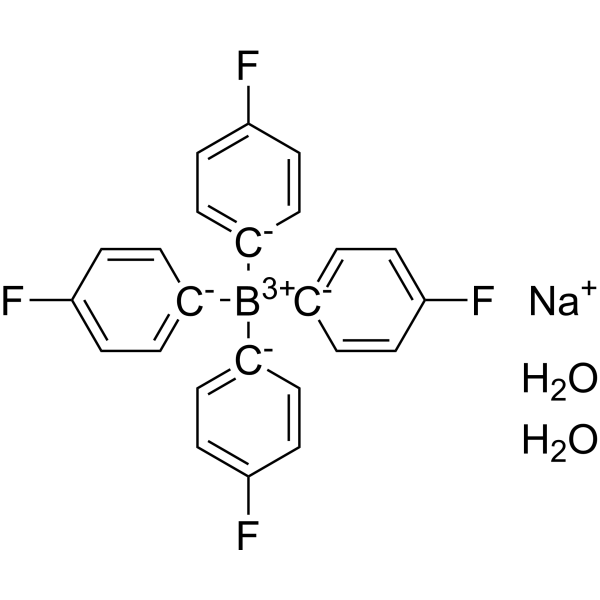
Cesibor dihydrate is an additive salt used in ion-selective electrodes (ISEs) and micro ion-selective field effect transistors (μ-ISFETs) to enhance or modulate their selective responses to specific ions .
Art. -Nr.: HY-13547
CAS. Nr.: 490035-90-0
Reinheit:  ≥95.0%
Target:  

Apoptosis

Forschungsgebiete:  

Cancer

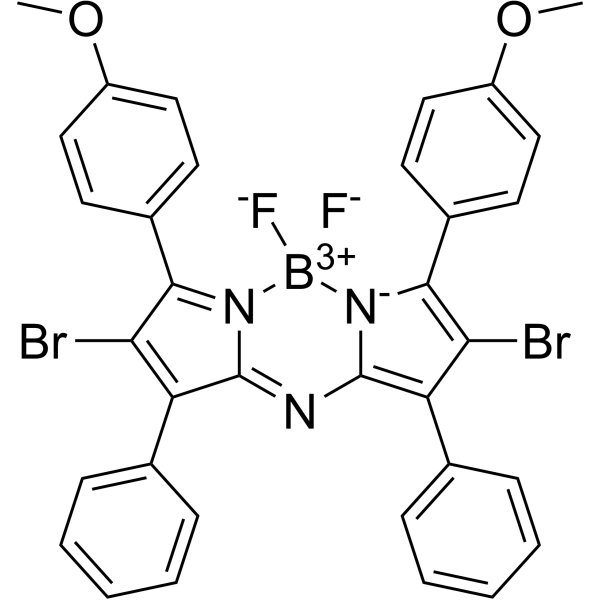
ADPM06, a lead candidate azadipyrromethene, is a novel nonporphyrin photodynamic therapeutic (PDT) agent. ADPM06 exhibits IC50 values in the micro-molar range in human tumor cells and induces apoptosis .

