21 Results for "

monkey liver microsomes

" in MedChemExpress (MCE) Product Catalog:
Products (21)

21 Results for "monkey liver microsomes" in MCE Product Catalog:

  • Targets Recommended:
1
1 Cited Publications
Cat. No.: HY-B1376
CAS No.: 77-41-8
Synonyms: Mesuximide; Celontin
Target:  

Cytochrome P450

Research Areas:  

Neurological Disease

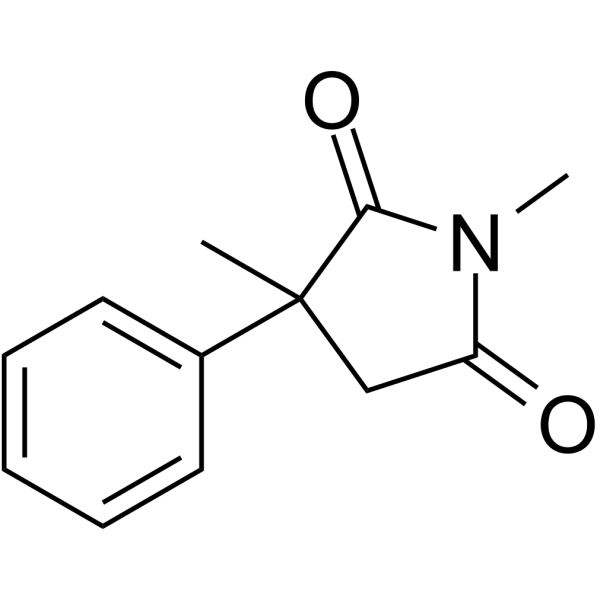
Methsuximide (Mesuximide) is an orally active succinimide-derived antiepileptic agent. Methsuximide interacts with cytochrome P-450, increases the level of hepatic microsomal cytochrome P-450, and inhibits or competes with the cytochrome P-450 CYP 2C9/10 subtype. Methsuximide can be used in epilepsy-related research .
loading...
    loading...
Cat. No.: HY-111358
CAS No.: 2178156-33-5
Purity:  98.19%
Research Areas:  

Inflammation/Immunology

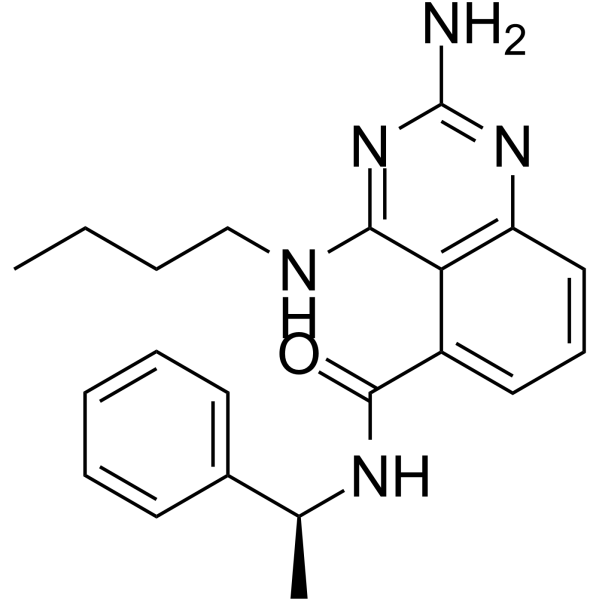
TLR7 agonist 1 is a selective TLR7 agonist with an LEC value of 90 nM. TLR7 agonist 1 activates downstream immune regulation and shows no activity against TLR8. TLR7 agonist 1 induces endogenous IFN-α production in mice .
loading...
    loading...
Cat. No.: HY-112487
CAS No.: 78934-83-5
Purity:  99.35%
Target:  

Acyltransferase

Research Areas:  

Metabolic Disease

Sandoz 58-035 is a selective acyl-CoA:cholesterol acyltransferase (ACAT) inhibitor. Sandoz 58-035 inhibits this enzyme in intact cells and isolated microsomal fractions. Sandoz 58-035 blocks the esterification of exogenous vesicle-derived cholesterol and the incorporation of oleic acid into cellular cholesterol esters, reducing the formation and accumulation of cholesterol esters. Sandoz 58-035 causes a slight increase in cellular free cholesterol, and at high concentrations, it also causes a slight reduction in overall cellular protein synthesis. Sandoz 58-035 can be used in studies related to cellular cholesterol regulation .
loading...
    loading...
Cat. No.: HY-N1483
CAS No.: 1394-48-5
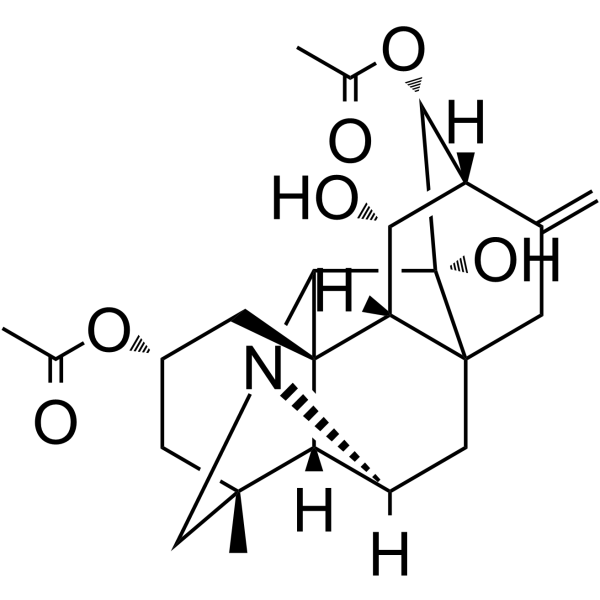
Guanfu base A is an antiarrhythmic alkaloid isolated from Aconitum coreanum and is a potent noncompetitive CYP2D6 inhibitor, with a Ki of 1.20 μM in human liver microsomes (HLMs) and a Ki of 0.37 μM for the human recombinant form (rCYP2D6). Guanfu base A is also a potent competitive inhibitor of CYP2D in monkey (Ki of 0.38 μM) and dog (Ki of 2.4 μM) microsomes . Guanfu base A also inhibits HERG channel current .
loading...
    loading...
Cat. No.: HY-150519
CAS No.: 1551460-43-5
Target:  

Factor XI Kallikrein

Research Areas:  

Cardiovascular Disease

FXIa/Plasma kallikrein-IN-1 is an inhibitor of coagulation factor XIa (FXIa) and plasma kallikrein with Ki values of 187.70 nM and 151.6 nM, respectively. FXIa/Plasma kallikrein-IN-1 can be used in the research of thromboembolic diseases .
loading...
    loading...
Cat. No.: HY-117428
CAS No.: 1513828-41-5
Target:  

11β-HSD

Research Areas:  

Metabolic Disease

INU-101 is a potent, selective and orally active 11β-hydroxysteroid dehydrogenase (11β-HSD) type 1 inhibitor. INU-101 has highly potent inhibitory activity in mouse, monkey and human 11β-HSD1, derived from liver microsomes. INU-101 can enhance insulin sensitivity and lower the fasting blood glucose level. INU-101 can be used for the research of metabolic disease, such as diabetes .
loading...
    loading...
Cat. No.: HY-172811
CAS No.: 2969158-02-7
Research Areas:  

Metabolic Disease

DA-302168S is an orally active and selective agonist targeting the GLP-1R, with EC50 value of 1.32 nM. DA-302168S reduces blood glucose levels and suppresses appetite, demonstrates minimal safety risks including low hERG channel inhibition and no significant off-target toxicity, and mitigates drug-drug interaction risk. DA-302168S can be used for the research of type 2 diabetes and obesity .
loading...
    loading...
Cat. No.: HY-U00369
CAS No.: 169474-77-5
Target:  

Acyltransferase

Research Areas:  

Cardiovascular Disease

FCE 28654 is an inhibitor of acylCoA: cholesterol acyltransferase (ACAT), weakly inhibiting ACAT in microsomes from rabbit aorta and intestine, and monkey liver, with IC50s of 2.55, 1.08 and 5.69 μM, respcetively.
loading...
    loading...
Cat. No.: HY-15042
CAS No.: 578727-68-1
Purity:  99.76%
Target:  

Bradykinin Receptor

Research Areas:  

Metabolic Disease

MK 0686, a potent bradykinin B1 receptor antagonist, demonstrates autoinduction of metabolism in rhesus monkeys after oral administration. It undergoes significant biotransformation primarily via oxidation pathways, leading to the formation of metabolites like M11 and M13 in rhesus liver microsomes. This metabolic induction is mediated by CYP2C75, as evidenced by increased mRNA expression, protein levels, and catalytic activity of this enzyme in hepatocytes and liver microsomes from MK 0686-treated animals. The autoinduction phenomenon suggests that MK 0686 enhances its own metabolism by upregulating CYP2C75, potentially influencing its systemic exposure and pharmacokinetics over time .
loading...
    loading...
Cat. No.: HY-162074
CAS No.: 2651908-78-8
Target:  

HIV

Research Areas:  

Infection

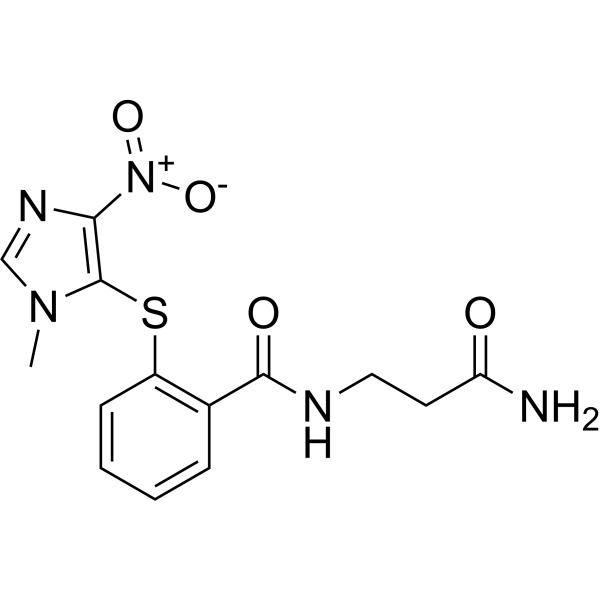
Nipamovir is an orally active anti-HIV prodrug. Nipamovir is cleaved in vivo by glutathione and other active thiols. Nipamovir inhibits the replication of HIV-1RF and HIV-192HT599 in cells, with EC50 values of 3.64 μM and 3.23 μM, respectively. Nipamovir can be used in studies related to HIV infection .
loading...
    loading...
Cat. No.: HY-132399S
CAS No.: 1189980-63-9
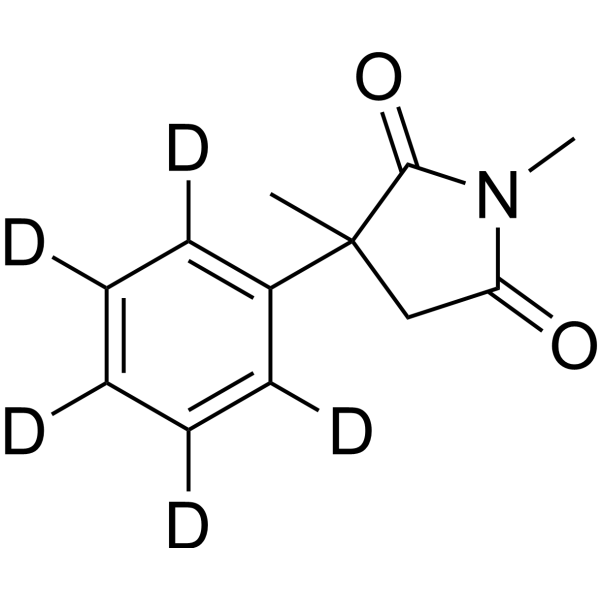
Methsuximide-d5 is the deuterated-labeled Methsuximide (HY-B1376). Methsuximide (Mesuximide) is an orally active succinimide-derived antiepileptic agent. Methsuximide interacts with cytochrome P-450, increases the level of hepatic microsomal cytochrome P-450, and inhibits or competes with the cytochrome P-450 CYP 2C9/10 subtype. Methsuximide can be used in epilepsy-related research .
loading...
    loading...
Cat. No.: HY-B1376R
CAS No.: 77-41-8
Synonyms: Mesuximide (Standard); Celontin (Standard)
Research Areas:  

Neurological Disease

Methsuximide (Standard) (Mesuximide (Standard); Celontin (Standard)) is the analytical standard of Methsuximide (HY-B1376). This product is intended for research and analytical applications. Methsuximide (Mesuximide) is an orally active succinimide-derived antiepileptic agent. Methsuximide interacts with cytochrome P-450, increases the level of hepatic microsomal cytochrome P-450, and inhibits or competes with the cytochrome P-450 CYP 2C9/10 subtype. Methsuximide can be used in epilepsy-related research .
loading...
    loading...
Cat. No.: HY-184864
CAS No.: 2570323-59-8
Target:  

HIV

Research Areas:  

Infection

HIV-IN-16 is a HIV replication inhibitor with an EC50 of 25 pM, and shows no activity in inducing CYP2B6. HIV-IN-16 inhibits HIV replication. HIV-IN-16 can be used in studies related to HIV infection and human immunodeficiency diseases .
loading...
    loading...
Cat. No.: HY-182349
CAS No.: 3034297-25-8
Research Areas:  

Cancer

Bax activator-2 is a pro-apoptotic agent targeting BAX, with an IC50 of 0.30 μM against human BAX. Bax activator-2 binds to the trigger site of BAX and induces its conformational change. Bax activator-2 induces mitochondrial depolarization, cytochrome c release, cleavage of caspase-3/9 and PARP, thereby initiating apoptosis. Bax activator-2 exhibits cytotoxicity against a variety of cancer cell lines. Bax activator-2 can be used in research related to acute myeloid leukemia and solid tumors .
loading...
    loading...
Cat. No.: HY-183983
CAS No.: 2173066-25-4
PAR4 antagonist 9 is an orally active protease-activated receptor 4 (PAR4) antagonist with an IC50 of 2 nM against human targets. PAR4 antagonist 9 functionally modulates PAR4 and inhibits platelet aggregation. PAR4 antagonist 9 can be used in studies related to arterial thrombosis .
loading...
    loading...
Cat. No.: HY-184965
CAS No.: 2020058-38-0
Target:  

Calcium Channel

Research Areas:  

Inflammation/Immunology

S-Y048 is an orally active OXE receptor-selective antagonist with picomolar-level IC50 values (0.02-30 nM) and pIC50 values of (10.47-10.81) against human receptors. S-Y048 selectively blocks the 5-oxo-ETE signaling pathway, inhibits actin polymerization, calcium mobilization, leukocyte migration, as well as allergen-induced leukocyte infiltration in skin and lung tissues, and reduces mucin-producing bronchial epithelial cells. S-Y048 undergoes benzyl, N-methyl and α-hydroxylation reactions to form metabolites in monkeys. S-Y048 can be used in research related to asthma, allergic asthma, allergic eosinophilic diseases, atopic dermatitis and allergic rhinitis .
loading...
    loading...
Cat. No.: HY-115499A
CAS No.: 1310540-31-8
Target:  

Drug Intermediate

Research Areas:  

Cancer

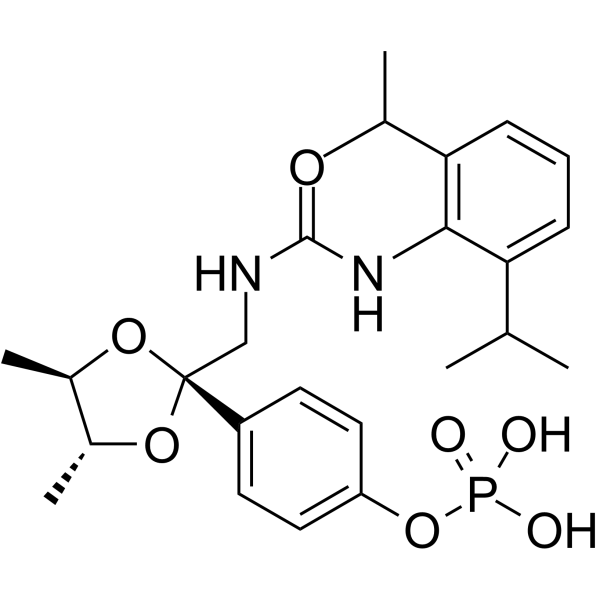
MPC-0767 free base is an orally active prodrug of Hsp90 inhibitor. MPC-0767 free base undergoes rapid biotransformation to the parent Hsp90 inhibitor MPC-3100 via enzyme-mediated luminal cleavage. MPC-0767 free base is applicable to the research of refractory and recurrent cancers .
loading...
    loading...
Cat. No.: HY-124183
CAS No.: 1240494-14-7
Target:  

CXCR

Research Areas:  

Inflammation/Immunology

SX-576 is a CXCR1 and CXCR2 antagonist with IC50 values of 31 nM and 21 nM, respectively. SX-576 inhibits neutrophil infiltration in a rat model of pulmonary inflammation. SX-576 can be used in studies related to pulmonary inflammation .
loading...
    loading...
Cat. No.: HY-184060
CAS No.: 1704716-36-8
Target:  

GABA Receptor

Research Areas:  

Neurological Disease

ASP8062 is an orally active, blood-brain barrier-permeable selective GABAB receptor positive allosteric modulator. ASP8062 enhances GABA-mediated activation of GABAB receptors and strengthens GABAergic neurotransmission. ASP8062 reverses Reserpine (HY-N0480)-induced myalgia, regulates the sleep-wake cycle, increases delta wave power during non-REM sleep, and impairs motor coordination at high doses. ASP8062 penetrates the central nervous system with a half-life of 40-50 h. ASP8062 can be used in research related to opioid use disorder, fibromyalgia, chronic pain, and alcohol use disorder .
loading...
    loading...
Cat. No.: HY-122163
CAS No.: 1149750-69-5
MK-3901 is a selective P2X3 receptor antagonist with an IC50 of 24 nM. MK-3901 inhibits UGT1A1 (with an IC50 of 1 μM) and CYP2C9 (with an IC50 of 5.7 μM). MK-3901 activates PXR. MK-3901 induces hyperbilirubinemia. MK-3901 can be used for the research of inflammatory pain .
loading...
    loading...

