1. Search Result
Search Result
Results for "

mouse hippocampus

" in MedChemExpress (MCE) Product Catalog:

17

Inhibitors & Agonists

1

Peptides

2

Natural
Products

Cat. No. Product Name Target Research Areas Chemical Structure
  • HY-B2167R

    DHA (Standard); Cervonic acid (Standard)

    Reference Standards Endogenous Metabolite Neurological Disease Cancer
    Docosahexaenoic acid (Standard) is the analytical standard of Docosahexaenoic acid. This product is intended for research and analytical applications. Docosahexaenoic Acid (DHA) is an omega-3 fatty acid abundantly present brain and retina. It can be obtained directly from fish oil and maternal milk. In Vitro: Docosahexaenoic acid (DHA) is essential for the growth and functional development of the brain in infants. DHA is also required for maintenance of normal brain function in adults. The inclusion of plentiful DHA in the diet improves learning ability and memory . DHA is an essential requirement in every step of brain development like neural cell proliferation, migration, differentiation, synaptogenesis. The multiple double bonds and unique structure allow DHA to impart special membrane characteristics for effective cell signaling. Many development disorders like dyslexia, autism spectrum disorder, attention deficit hyperactivity disorder, schizophrenia etc. are causally related to decreased level of DHA . DHA is a potent RXR ligand inducing robust RXR activation already at low micro molar concentrations. The EC50 for RXRα activation by DHA is about 5-10 μM fatty acid . In Vivo: Docosahexaenoic acid administration over 10 weeks significantly reduces the number of reference memory errors, without affecting the number of working memory errors, and significantly increases the docosahexaenoic acid content and the docosahexaenoic acid/arachidonic acid ratio in both the hippocampus and the cerebral cortex . DHA treatment exerts neuroprotective actions on an experimental mouse model of PD. There is a decrease tendency in brain lipid oxidation of MPTP mice but it does not significantly .
    Docosahexaenoic acid (Standard)
  • HY-N3415
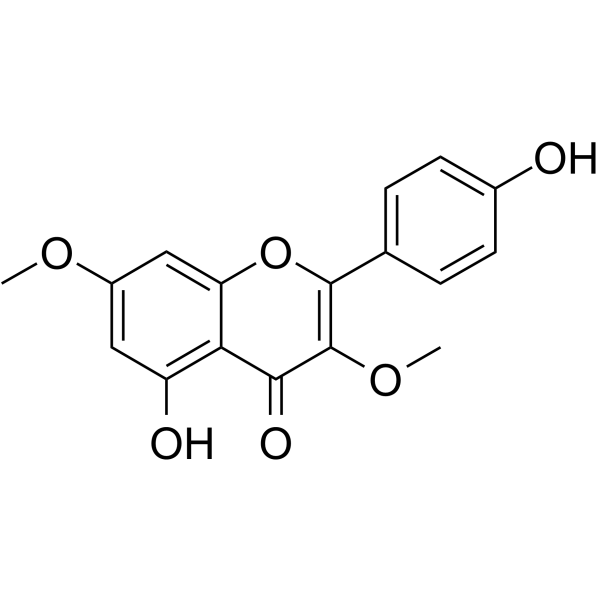
    Kumatakenin
    1 Publications Verification

    Apoptosis Autophagy Caspase Ferroptosis SARS-CoV Neurological Disease Inflammation/Immunology Cancer
    Kumatakenin is an orally active apoptosis inducer and autophagy inhibitor, with a Kd value of 2.94 μM for mouse ATG5. Kumatakenin increases the activities of caspase-3, caspase-8 and caspase-9, thereby inducing caspase-dependent apoptosis in ovarian cancer cells. Kumatakenin reduces the expression of chemokines and pro-oncogenic factors in ovarian cancer cells, and inhibits M2 macrophage polarization. Kumatakenin inactivates TRIM65 function, reduces the expression and stability of FASN, and thus inhibits the proliferation, migration, invasion and tumor progression of esophageal cancer cells. Kumatakenin interacts with ATG5 to reduce its protein level, decrease LC3 level, and reduce the number of autophagosomes in the hippocampus. Kumatakenin binds to Eno3 to upregulate its expression, reduce the stability and expression level of IRP1 mRNA, inhibit ferroptosis, alleviate intestinal inflammation, and restore epithelial barrier function. Kumatakenin enhances the efficacy of antibiotics against pathogenic bacteria, inhibits SARS-CoV-2 replication, and reduces cytokine production. Kumatakenin is applicable to research related to ovarian cancer, esophageal cancer, depression and colitis .
    Kumatakenin
  • HY-135115

    3,4-DHPEA-EA

    α-synuclein HDAC Adrenergic Receptor Inflammation/Immunology
    Oleuropein Aglycone (3,4-DHPEA-EA) is a polyphenol and the aglycone form of oleuropein (HY-N0292), formed by enzymatic, acidic or acetylated hydrolysis of oleuropein. Dietary intake of oleuropein Aglycone (50 mg/kg diet) increases the number of neuronal autophagic vesicles, reverses cognitive deficits in the TgCRND8 transgenic mouse model of Alzheimer's disease, and reduces the levels of histone deacetylase 2 (HDAC2) in the cortex and hippocampus. Oleuropein Aglycone increases urinary norepinephrine, interscapular brown adipose tissue epinephrine, and UCP1 protein levels, and reduced plasma leptin levels and total abdominal adipose tissue weight in a rat model of high-fat diet-induced obesity. Oleuropein Aglycone also reduced lung neutrophil infiltration, lipid peroxidation, and IL-1β levels in a mouse model of carrageenan-induced pleurisy.
    Oleuropein Aglycone
  • HY-P1212

    CST-14 (mouse, rat)

    Somatostatin Receptor Neurological Disease
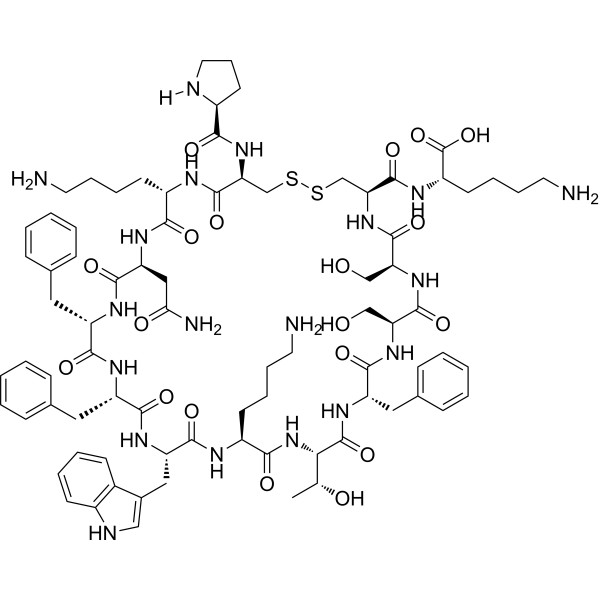
    Cortistatin 14, mouse, rat (CST-14, human, rat), a neuropeptide with neuronal depressant and sleep modulating properties, can bind to all five cloned somatostatin receptors (SSTRs) and ghrelin receptor to exert its biological activities and co-exists with GABA within the cortex and hippocampus .
    Cortistatin 14 (mouse, rat)
  • HY-136093B
    Lixumistat
    1 Publications Verification

    IM156 free base; HL156A free base; HL271 free base

    Mitochondrial Metabolism AMPK Neurological Disease Inflammation/Immunology
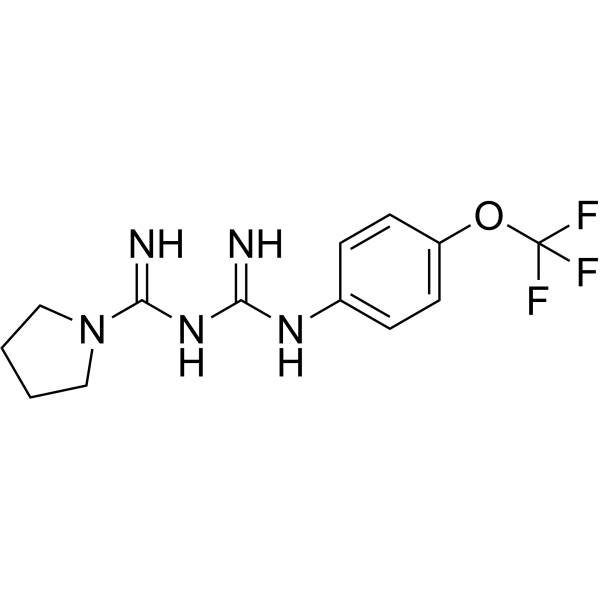
    Lixumistat (IM156 free base) is a potent and orally active AMPK activator and OXPHOS inhibitor. Lixumistat strongly activates AMPK, while it lacks the systemic metabolic regulatory effects of classic metformin, such as hypoglycemic and weight-lowering activities. Lixumistat exhibits significant therapeutic effects on cognitive decline associated with brain aging and pulmonary fibrosis .
    Lixumistat
  • HY-170409

    Trk Receptor Apoptosis Neurological Disease Inflammation/Immunology
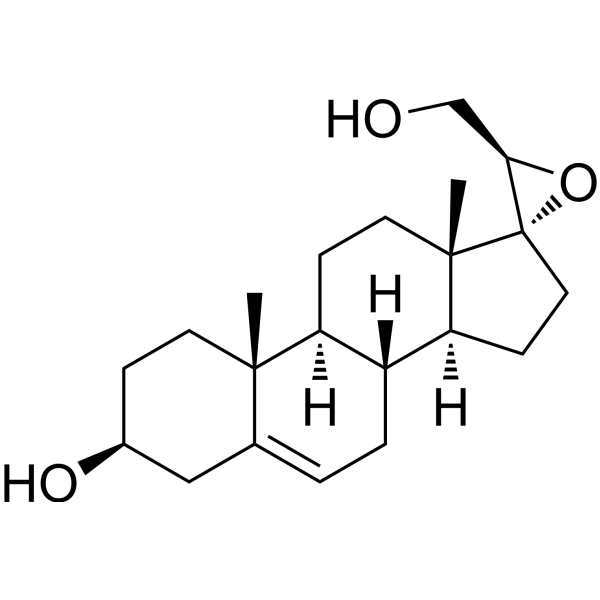
    BNN27 is the agonist for TrkA receptor and p75NTR receptor, that exhibits neurotrophic and anti-apoptotic effects. BNN27 increases the levels of glutamate, GABA, and glutamine in the rat hippocampus and prefrontal cortex, improves glutamate turnover. BNN27 exhibits neuroprotective efficacy in mouse amyotrophic lateral sclerosis (ALS) model, exhibits anti-inflammatory efficacy in experimental autoimmune encephalomyelitis (EAE) model, exhibits retinal protective efficacy in rat diabete models. BNN27 is blood-brain barrier penetrable .
    BNN27
  • HY-174285

    Thrombin Cardiovascular Disease
    NAPAP is a selective direct thrombin inhibitor. NAPAP rapidly binds to thrombin and inhibits its activity, and reduces LPS (HY-D1056)-induced brain inflammation and coagulation factor expression in vivo. NAPAP can be used in studies related to coagulation and neuroinflammation .
    NAPAP
  • HY-145549

    N-eicosanoyl-D-erythro-Sphingosylphosphorylcholine; SM(d18:1/20:0)

    Endogenous Metabolite Endocrinology
    C20 Sphingomyelin (d18:1/20:0) (N-eicosanoyl-D-erythro-Sphingosylphosphorylcholine; SM(d18:1/20:0)) is a naturally occurring sphingolipid. C20 Sphingomyelin (d18:1/20:0) levels are upregulated in the hippocampus of streptozotocin (HY-13753)-induced diabetic rats and in human plasma, positively correlating with insulin resistance in obese humans. C20 Sphingomyelin (d18:1/20:0) is also upregulated in the liver of a mouse model of Niemann-Pick C1 disease, a neurodegenerative cholesterol sphingolipid lysosomal storage disorder.
    C20 Sphingomyelin (d18:1/20:0)
  • HY-178356

    Cholinesterase (ChE) nAChR Interleukin Related TNF Receptor Neurological Disease Inflammation/Immunology
    BChE-IN-44 is a potent, brain-penetrant, highly selective BChE inhibitor [equine BChE IC50 = 18.00 pM, human BChE IC50 = 1.50 nM]. BChE-IN-44 shows neuroprotective effects against the Aβ1-42-induced injury model and inhibitory effects on Aβ1-42 self-aggregation. BChE-IN-44 reduces the levels of inflammatory factors (NO, IL-6, and TNF-α) in Lipopolysaccharides (HY-D1056)-induced BV2 cells. BChE-IN-44 can significantly ameliorate Scopolamine (HY-N0296)-induced cognition impairment. BChE-IN-44 exhibits capacity in the regulation of BChE and acetylcholine levels in the mouse hippocampus. BChE-IN-44 can be used for the study of Alzheimer’s disease (AD) .
    BChE-IN-44
  • HY-116143

    MAGL Metabolic Disease
    SAR127303 is an orally active, selective, competitive monoacylglycerol lipase (MAGL) covalent inhibitor with IC50s of 3.8 nM and 29 nM for mouse and human MAGL, respectively. SAR127303 potently elevates hippocampal levels of 2-AG in mice. SAR127303 decreased long term potentiation (LTP) of CA1 synaptic transmission and acetylcholine release in the hippocampus. SAR127303 produces antinociceptive effects in assays of inflammatory and visceral pain. SAR127303 slows down epileptogenesis .
    MAGL-IN-12
  • HY-156104

    PROTACs CaMK Neurological Disease
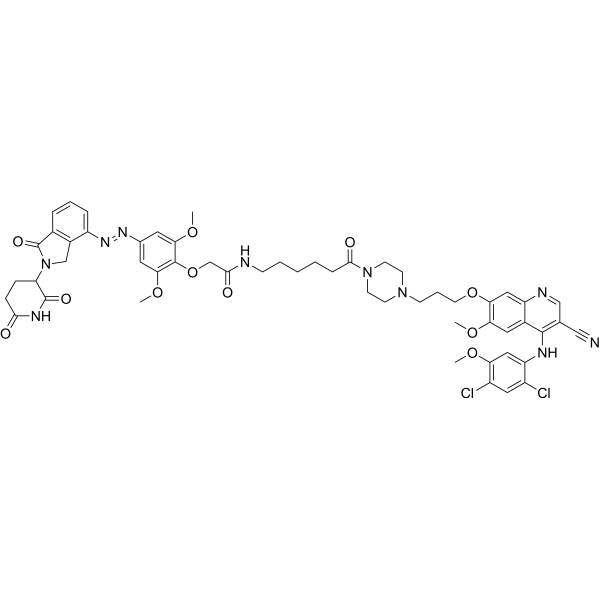
    CaMKIIα-PHOTAC is a photochemically targeted chimera (PHOTAC) targeting Ca2+/calmodulin-dependent protein kinase II α (CaMKIIα). Molecules such as PHOTAC can catalyze the ubiquitination and degradation of target proteins through the endogenous proteasome under specific wavelengths of light. CaMKIIα-PHOTAC reduces synaptic function under light conditions, and it attenuates the intensity of evoked field excitatory postsynaptic potentials in the mouse hippocampus in response to physiological stimuli. CaMKIIα-PHOTAC plays a critical role in maintaining long-term potentiation and memory capacity in subcellular dendritic domains .
    CaMKIIα-PHOTAC
  • HY-15076

    NS-1209 sodium

    iGluR Neurological Disease
    SPD-502 sodium is a novel glutamate antagonist with potential neuroprotective properties, particularly in brain ischemia. It selectively targets the AMPA receptor, showing high affinity (IC50 = 0.043 μM) and competitive inhibition of AMPA-induced effects in rat cortical membranes and cultured mouse cortical neurons. In vivo, SPD-502 sodium effectively blocks AMPA-evoked spike activity in the hippocampus after intravenous administration, significantly increasing the seizure threshold in mice and demonstrating robust protection against ischemia-induced damage to hippocampal neurons in gerbils. These findings suggest SPD-502 sodium may be promising for studying neurodegenerative conditions associated with glutamate excitotoxicity .
    SPD-502 sodium
  • HY-15074

    NS-1209

    iGluR Neurological Disease
    SPD-502 is a novel glutamate antagonist with potential neuroprotective properties, particularly in brain ischemia. It selectively targets the AMPA receptor, showing high affinity (IC50 = 0.043 μM) and competitive inhibition of AMPA-induced effects in rat cortical membranes and cultured mouse cortical neurons. In vivo, SPD-502 effectively blocks AMPA-evoked spike activity in the hippocampus after intravenous administration, significantly increasing the seizure threshold in mice and demonstrating robust protection against ischemia-induced damage to hippocampal neurons in gerbils. These findings suggest SPD-502 may be promising for studying neurodegenerative conditions associated with glutamate excitotoxicity .
    SPD-502
  • HY-180327

    Drug Derivative Apoptosis Keap1-Nrf2 Raf MEK ERK Neurological Disease Inflammation/Immunology
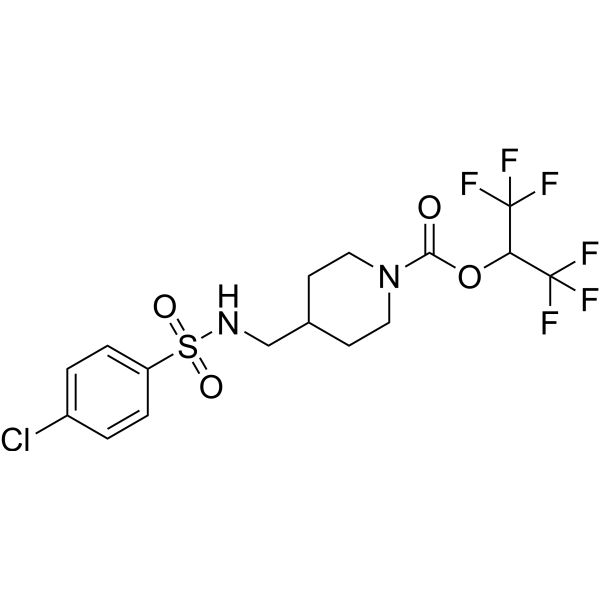
    NEPP11 is a cyclopentenone prostaglandin analogue. NEPP11 can inhibit glutamate-induced HT22 cell death in mouse hippocampus and prevent manganese-induced apoptosis in PC12 cells. NEPP11 can activate Nrf2 and maintain MEK1/2 and ERK1/2 activity by inhibiting c-Raf downregulation. NEPP11 exerts a neuroprotective effect in a mouse model of focal cerebral ischemia caused by permanent middle cerebral artery occlusion .
    NEPP11
  • HY-180056

    Carbonic Anhydrase NKCC mTOR Neurological Disease
    CAII-IN-12 (compound 6c) is a potent and selective carbonic anhydrase (CA) II and VII inhibitor (hCA II Ki = 47.8 nM, hCA VII Ki = 3.6 nM) with anti-epilepitic activity. CAII-IN-12 displays selectivity over hCA I (Ki = 370 nM). CAII-IN-12 exhibits potent anticonvulsant activity in both Pentylenetetrazol- and Pilocarpine (HY-B0726A)-induced seizure mouse models. CAII-IN-12 increases expression of KCC2 in the hippocampus, maintains neuronal integrity, and reduces mTOR activity. CAII-IN-12 can be used for epilepsy research .
    CAII-IN-12
  • HY-183166

    Cathepsin Neurological Disease
    Z-Arg-Lys-AOMK is a cathepsin B inhibitor that can cross the blood-brain barrier. Z-Arg-Lys-AOMK reduces cytosolic cathepsin B activity in homogenates of mouse cerebral cortex and hippocampal tissues, and alleviates motor dysfunction associated with CCI-TBI. Z-Arg-Lys-AOMK can be used in the research of traumatic brain injury .
    Z-Arg-Lys-AOMK
  • HY-182050

    AP-1 DNA Alkylator/Crosslinker Neurological Disease
    YL0441 is an inhibitor of ΔFOSB/JUND heterodimers and ΔFOSB homomultimers, with IC50 values of 13.7 μM and 12.3 μM, respectively. YL0441 blocks the binding of ΔFOSB to DNA. YL0441 reduces ΔFOSB bound to genomic DNA in the hippocampal tissues of APP mice. YL0441 is applicable to the research of Alzheimer's disease .
    YL0441

Inquiry Online

Your information is safe with us. * Required Fields.

Salutation


Country or Region *

Applicant Name *


Organization Name *

Department *


Email Address *


Product Name *

Cat. No.


Requested quantity *

Phone Number *


Remarks

Inquiry Online

Inquiry Information

Product Name:
Cat. No.:
Quantity:
MCE Japan Authorized Agent:

