8 Results for "

nitrogen heterocycles

" in MedChemExpress (MCE) Product Catalog:
Products (8)

8 Results for "nitrogen heterocycles" in MCE Product Catalog:

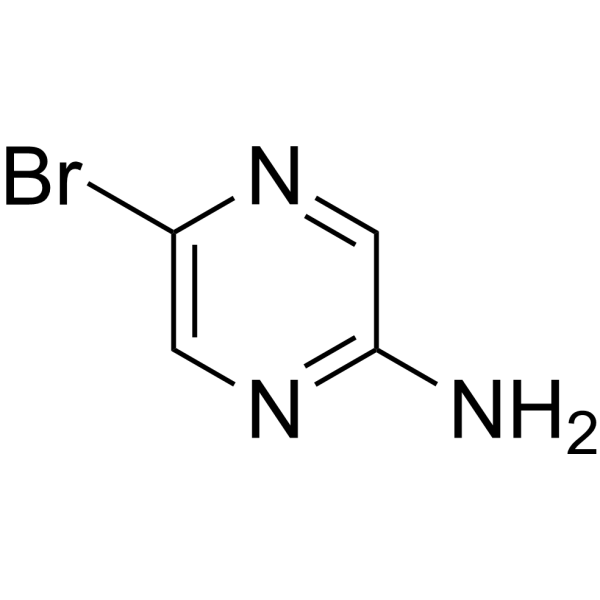
Cat. No.: HY-59261
CAS No.: 59489-71-3
2-Amino-5-bromopyrazine is a monobrominated 2-aminopyrazine derivative and functionalized intermediate for the synthesis of nitrogen heterocycles .
loading...
    loading...
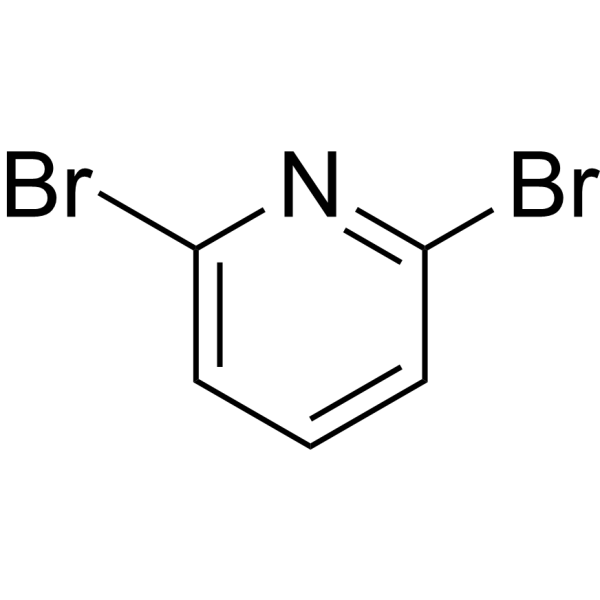
Cat. No.: HY-59162
CAS No.: 626-05-1
2,6-Dibromopyridine is a drug intermediate that can be used for the synthesis of IRK-4 inhibitors.
loading...
    loading...
Cat. No.: HY-142048
CAS No.: 2538293-52-4
Research Areas:  

Cancer

BI-9466 (Compound 2) is a nuclear receptor-binding SET domain 3 (NSD3)-PWWP1 domain antagonist with a Kd of 144 µM. BI-9466 is a negative control compound of BI-9321 (HY-114208). BI-9466 has no inhibitory activity against NSD3-PWWP1 domain by introduction of a much basic nitrogen heterocycle at the 5-position of BI-9321 .
loading...
    loading...
Cat. No.: HY-W017424R
CAS No.: 136-95-8
2-Aminobenzothiazole (Standard) is the analytical standard of 2-Aminobenzothiazole. This product is intended for research and analytical applications. 2-Aminobenzothiazole acts as a caspase 3/7 activator, an anticancer cytotoxic agent, and also exhibits neurotoxicity. 2-Aminobenzothiazole drives the apoptotic pathway by activating caspase 3/7, induces mitochondrial inner membrane depolarization, and triggers both early and late apoptosis via a caspase-dependent pathway. In zebrafish models, 2-Aminobenzothiazole induces oxidative damage in brain tissues and inhibits genes related to GABA and 5-HT synthesis pathways. Long-term exposure to 2-Aminobenzothiazole impairs motor ability, social behavior, anxiety-like state and cognitive function. 2-Aminobenzothiazole can be used in studies of human laryngeal carcinoma and related neurotoxicity .
loading...
    loading...
Cat. No.: HY-179030
CAS No.: 3055301-22-6
Target:  

Xanthine Oxidase

Research Areas:  

Metabolic Disease

Xanthine oxidase-IN-19 (Compound 13i) is an orally effective inhibitor of xanthine oxidase (XO), with an IC50 of 0.2 μM. Xanthine oxidase-IN-19 can significantly reduce serum uric acid levels in acute hyperuricemia rat models. Xanthine oxidase-IN-19 can be used for the study of acute hyperuricemia .
loading...
    loading...
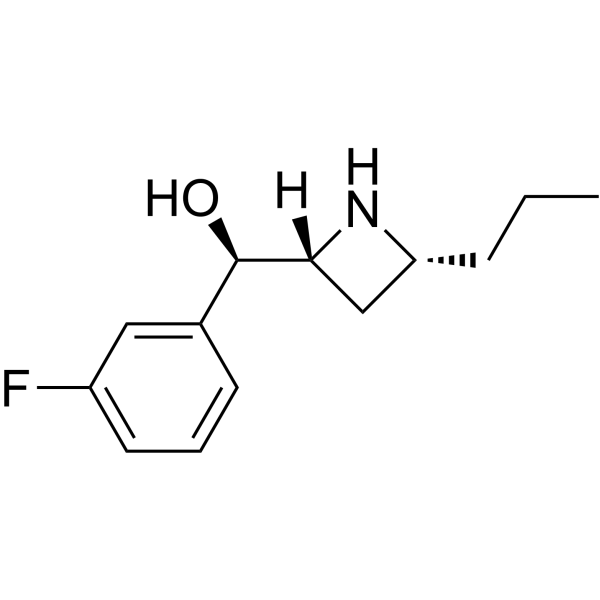
Cat. No.: HY-149727
Target:  

Adrenergic Receptor

Research Areas:  

Metabolic Disease

β2AR agonist 2(compound 8a) is a β2 -Adrenergic receptor (β2AR) agonist. β2AR agonist 2 is a saturated nitrogen ring compound containing 4- to 7-membered heterocycle. β2AR agonist 2 has a chiral structure (the -R form) by carrying carbon containing the essential hydroxyl, thereby enhancing cellular glucose uptake (GU) activity and significantly stimulating glucose uptake by skeletal muscle cells. β2AR agonist 2 can be used in the study of Type 2 Diabetes (T2D) .
loading...
    loading...
Cat. No.: HY-L138
6,553 compounds

Heterocyclic compounds are cyclic organic compounds which contain at least one hetero atom, the most common heteroatoms are nitrogen, oxygen ,and sulfur. Heterocycles are common in biology, featuring a wide range of structures from enzyme co-factors to amino acids and proteins. On the one hand, heterocycles are common structural units in approved drugs and in medicinal chemistry targets in the drug discovery process. In addition, heterocycles have been found as a key structure in medical chemistry and also they are frequently found in large percent of biomolecules such as vitamins, natural products ,and biologically active compounds including antifungal, anti-inflammatory, antibacterial, antioxidant, antiallergic, anti-HIV, antidiabetic, anticancer activity.

MCE offers a unique collection of 6,553 heterocyclic compounds which can be used for drug discovery for high throughput screening (HTS) and high content screening (HCS). MCE heterocyclic compound library is critical for drug discovery and development.

Cat. No.: HY-L0094V
1,398,968 compounds
The Chinese National Compound Library (CNCL) composes 1.4 million compounds possessing diversified structures. Coupled with this library will be advanced sample handling, information management and quality control systems. Most compounds in the library are drug-like, conforming to “Lipinski’s Rule of Five”, such as MW < 500, logP < 5, Hydrogen Bond Donors < 5.

