8 Results for "

normal human epidermal keratinocytes

" in MedChemExpress (MCE) Product Catalog:
Products (8)

8 Results for "normal human epidermal keratinocytes" in MCE Product Catalog:

  • Targets Recommended:
8
8 Cited Publications
Cat. No.: HY-115364
CAS No.: 14255-87-9
Purity:  99.87%
Synonyms: SKF 29044
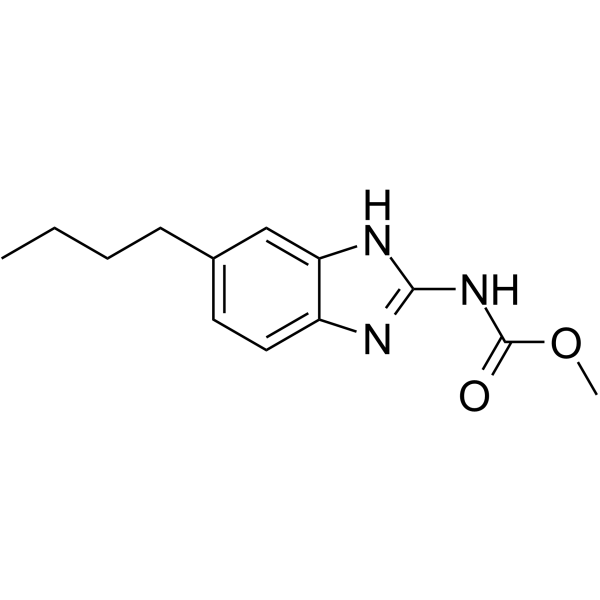
Parbendazole (SKF‑29044) is an orally active benzimidazole carbamate compound with multiple biological activities. Parbendazole binds to free tubulin and inhibits microtubule polymerization; it also activates the JNK/c‑Jun signaling axis and upregulates the expression of the downstream axonal repulsion factor Sema3A. Parbendazole upregulates KAL-1 mRNA expression, reduces nerve growth factor levels, and promotes the terminal differentiation of normal human epidermal keratinocytes. Parbendazole induces apoptosis in differentiated acute myeloid leukemia monocytes and exerts antileukemic activity in a mouse xenograft model of acute myeloid leukemia. Parbendazole exhibits broad-spectrum anthelmintic activity against various animal nematodes. Parbendazole is used in research related to acute myeloid leukemia and parasitic infections .
loading...
    loading...
Cat. No.: HY-W089800
CAS No.: 18829-56-6
Synonyms: trans-2-Nonen-1-al
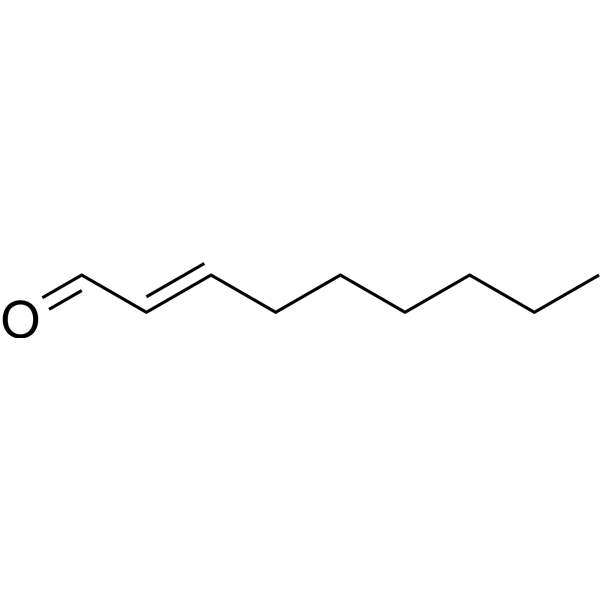
trans-2-Nonenal (trans-2-Nonen-1-al) is an endogenous peroxidation product of polyunsaturated fatty acids, acting as an inhibitor of COX and 12-LOX, as well as an inducer of apoptosis. trans-2-Nonenal is also a malodorous compound secreted by the human body, and its content gradually increases with aging. trans-2-Nonenal inhibits the activities of multiple enzymes such as platelet membrane-bound PTPase, preferentially covalently modifies proteins at lysine residues to form immunogenic adducts, and regulates platelet Arachidonic acid (HY-109590) metabolism. trans-2-Nonenal also exhibits significant cytotoxicity, reduces the viability of keratinocytes, promotes their apoptosis, and effectively decreases the thickness of epidermal models and the number of proliferating cells. trans-2-Nonenal is commonly used in studies of thrombotic, atherosclerotic diseases, renal adenocarcinoma, etc. .
loading...
    loading...
Cat. No.: HY-164826
CAS No.: 30881-23-3
Acetyl zingerone is an analog of Zingerone (HY-14621). Acetyl zingerone downregulates the expression of ROS metabolism-related genes, fibroblast senescence-related genes, keratinocyte differentiation-related genes, and IL-17A target genes. Acetyl zingerone inhibits the activities of MMP-1, MMP-3, and MMP-12, as well as the activation of NLRP3 inflammasome, pyroptosis (pyroptosis), ferroptosis (ferroptosis), cartilage destruction, and UVA-induced cyclobutane pyrimidine dimer formation. Acetyl zingerone upregulates the expression of collagen, proteoglycan, extracellular matrix glycoprotein, Notch pathway, and GPX4 gene, activates Nrf2 and HO-1, induces extracellular matrix synthesis and PINK1/Parkin-mediated mitophagy (mitophagy), and promotes chondrocyte survival. Acetyl zingerone alleviates the progression of osteoarthritis in mice . Acetyl zingerone can be used in research related to skin aging, inflammatory skin diseases, osteoarthritis, melanoma, and non-melanoma skin cancer .
loading...
    loading...
Cat. No.: HY-115364R
CAS No.: 14255-87-9
Synonyms: SKF 29044 (Standard)
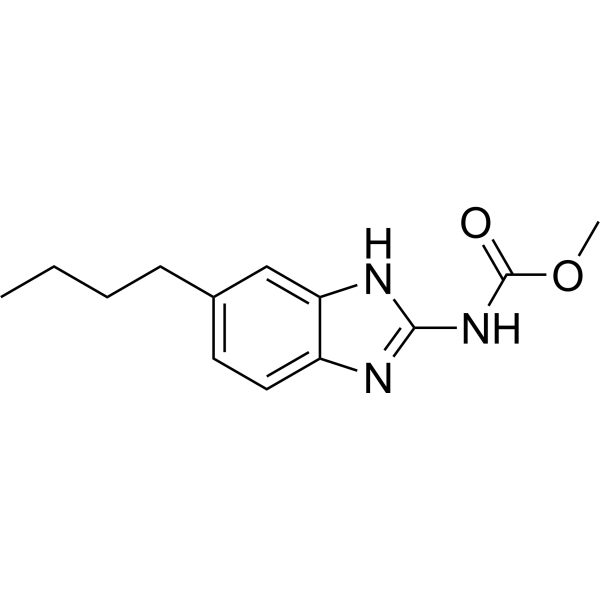
Parbendazole (Standard) (SKF 29044 (Standard)) is the analytical standard of Parbendazole (HY-115364). This product is intended for research and analytical applications. Parbendazole (SKF‑29044) is an orally active benzimidazole carbamate compound with multiple biological activities. Parbendazole binds to free tubulin and inhibits microtubule polymerization; it also activates the JNK/c‑Jun signaling axis and upregulates the expression of the downstream axonal repulsion factor Sema3A. Parbendazole upregulates KAL-1 mRNA expression, reduces nerve growth factor levels, and promotes the terminal differentiation of normal human epidermal keratinocytes. Parbendazole induces apoptosis in differentiated acute myeloid leukemia monocytes and exerts antileukemic activity in a mouse xenograft model of acute myeloid leukemia. Parbendazole exhibits broad-spectrum anthelmintic activity against various animal nematodes. Parbendazole is used in research related to acute myeloid leukemia and parasitic infections .
loading...
    loading...
Cat. No.: HY-115364S
CAS No.: 1613439-58-9
Synonyms: SKF 2904-d3
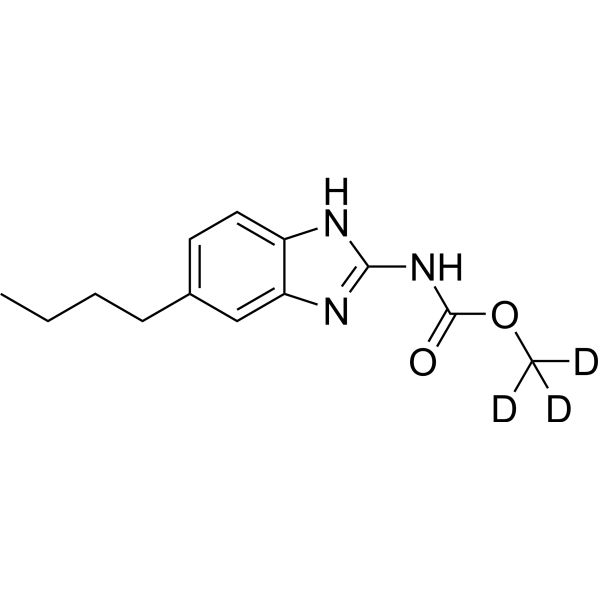
Parbendazole-d3 (SKF 2904-d3) is the deuterated-labeled Parbendazole (HY-115364). Parbendazole (SKF‑29044) is an orally active benzimidazole carbamate compound with multiple biological activities. Parbendazole binds to free tubulin and inhibits microtubule polymerization; it also activates the JNK/c‑Jun signaling axis and upregulates the expression of the downstream axonal repulsion factor Sema3A. Parbendazole upregulates KAL-1 mRNA expression, reduces nerve growth factor levels, and promotes the terminal differentiation of normal human epidermal keratinocytes. Parbendazole induces apoptosis in differentiated acute myeloid leukemia monocytes and exerts antileukemic activity in a mouse xenograft model of acute myeloid leukemia. Parbendazole exhibits broad-spectrum anthelmintic activity against various animal nematodes. Parbendazole is used in research related to acute myeloid leukemia and parasitic infections .
loading...
    loading...
Cat. No.: HY-115364A
CAS No.: 83601-81-4
Synonyms: SKF 29044 hydrochloride
Research Areas:  

Infection Cancer

Parbendazole hydrochloride (SKF‑29044 hydrochloride) is an orally active benzimidazole carbamate compound with multiple biological activities. Parbendazole hydrochloride binds to free tubulin and inhibits microtubule polymerization; it also activates the JNK/c‑Jun signaling axis and upregulates the expression of the downstream axonal repulsion factor Sema3A. Parbendazole hydrochloride upregulates KAL-1 mRNA expression, reduces nerve growth factor levels, and promotes the terminal differentiation of normal human epidermal keratinocytes. Parbendazole hydrochloride induces apoptosis in differentiated acute myeloid leukemia monocytes and exerts antileukemic activity in a mouse xenograft model of acute myeloid leukemia. Parbendazole hydrochloride exhibits broad-spectrum anthelmintic activity against various animal nematodes. Parbendazole hydrochloride is used in research related to acute myeloid leukemia and parasitic infections .
loading...
    loading...
Cat. No.: HY-P3395B
Target:  

Inhibitory Antibodies

Research Areas:  

Others

Catestatin sCst TFA is a scrambled control peptide that serves as a negative control for Catestatin TFA (HY-P1271A) .
loading...
    loading...
Cat. No.: HY-P3395A
Target:  

Inhibitory Antibodies

Research Areas:  

Others

Catestatin sCst is a scrambled control peptide that serves as a negative control for Catestatin (HY-P1271) .
loading...
    loading...

