


15 Results for "

pd+l1+1

" in MedChemExpress (MCE) Product Catalog:
Products (15)

15 Results for "pd+l1+1" in MCE Product Catalog:

35
35 Publications Verification
Cat. No.: HY-P9902A
Synonyms: MK-3475 (anti-PD-1); Lambrolizumab (anti-PD-1)

Target:  

PD-1/PD-L1

Research Areas:  

Cancer

Pembrolizumab (anti-PD-1) is a humanized IgG4 antibody and PD-1 inhibitor. Pembrolizumab produces PD-1 blockade, preventing PD-L1 and PD-L2 from connecting to PD-1. This avoids the uncontrolled regulation of T cells on cells that normally express PD-1 .
loading...
    loading...
4
4 Cited Publications
Cat. No.: HY-N0242
CAS No.: 28808-62-0
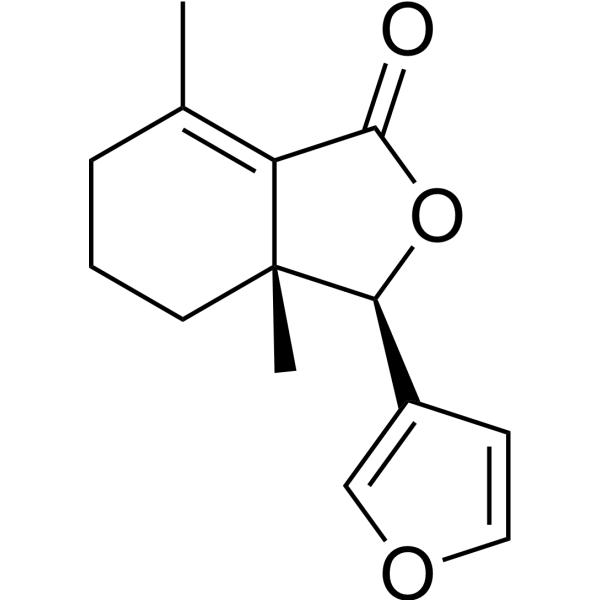
Fraxinellone is isolated from the root bark of the Rutaceae plant, Dictamnus dasycarpus. Fraxinellone is a PD-L1 inhibitor and inhibits HIF-1α protein synthesis without affecting HIF-1α protein degradation. Fraxinellone has the potential to be a valuable candidate for cancer treatment by targeting PD-L1 .
loading...
    loading...
3
3 Cited Publications
Cat. No.: HY-101454
CAS No.: 303126-97-8
Purity:  99.65%
Target:  

ROR

Research Areas:  

Inflammation/Immunology Cancer

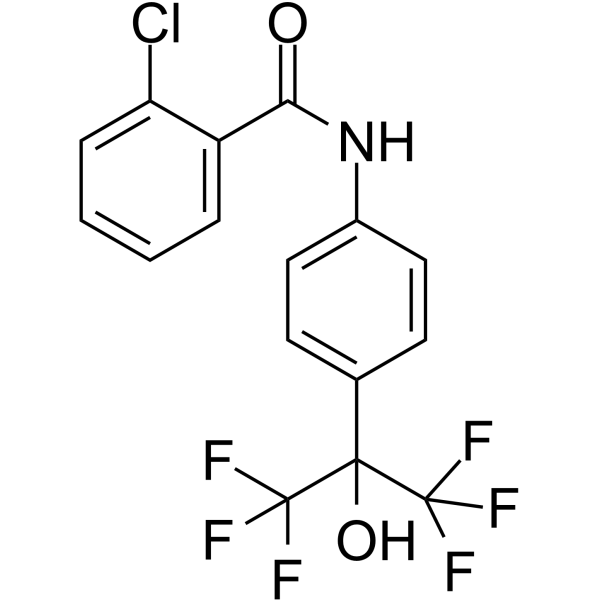
SR0987, a SR1078 analog, is a RORγt agonist, with an EC50 of 800 nM. SR0987 increases IL17 expression while repressing the expression of PD-1 .
loading...
    loading...
1
1 Cited Publications
Cat. No.: HY-116274
CAS No.: 1675201-90-7
Purity:  ≥98.0%
Target:  

PD-1/PD-L1

Research Areas:  

Cancer

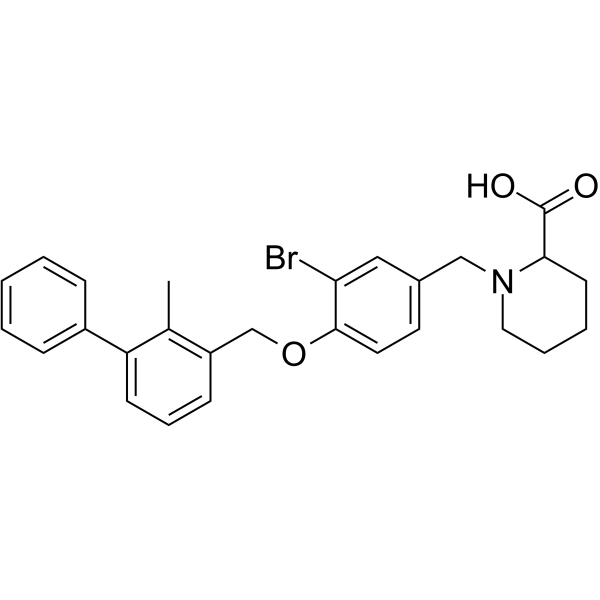
BMS-8 inhibits the PD-1/PD-L1 interaction with IC50 of 7.2 μM. BMS-8, binds directly to PD-L1 and induces formation of PD-L1 homodimers, which in turn prevents the interaction with PD-1 .
loading...
    loading...
Cat. No.: HY-P99457
CAS No.: 2148321-77-9
Synonyms: AGEN2034

Target:  

PD-1/PD-L1

Research Areas:  

Inflammation/Immunology Cancer

Balstilimab (AGEN2034) is a fully human monoclonal IgG4 antibody against PD-1 .
loading...
    loading...
Cat. No.: HY-126147
CAS No.: 2252395-44-9
Purity:  99.04%
Target:  

HDAC

Research Areas:  

Cancer

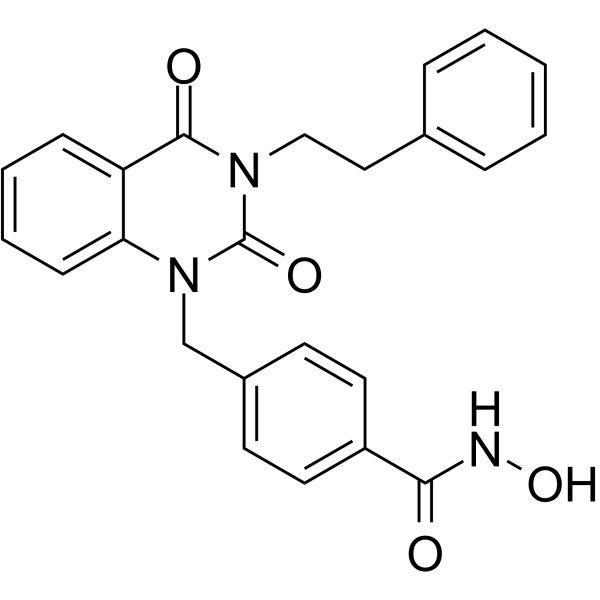
J22352 is a PROTAC (proteolysis-targeting chimeras)-like and highly selective HDAC6 inhibitor with an IC50 value of 4.7 nM. J22352 promotes HDAC6 degradation and induces anticancer effects by inhibiting autophagy and eliciting the antitumor immune response in glioblastoma cancers, and leading to the restoration of host antitumor activity by reducing the immunosuppressive activity of PD-L1 .
loading...
    loading...
Cat. No.: HY-144258
CAS No.: 2499965-12-5
Purity:  99.85%
Target:  

PD-1/PD-L1

Research Areas:  

Inflammation/Immunology Cancer

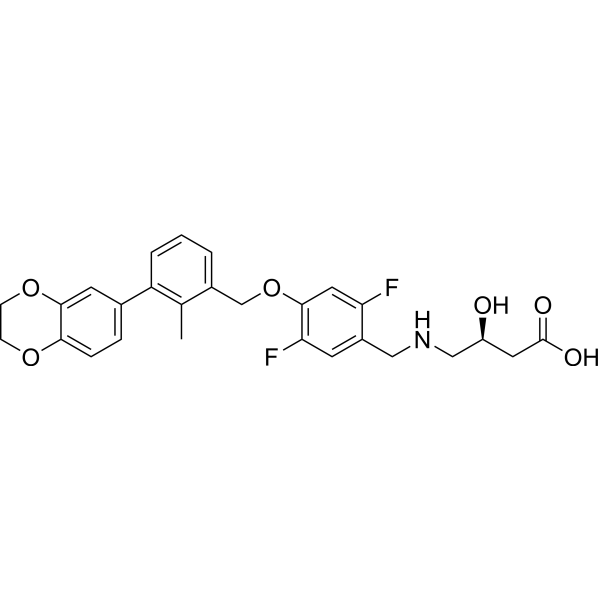
PD-1/PD-L1-IN-14 (compound 17) is a bifunctional inhibitor of PD-1/PD-L1 interactions, with an IC50 of 27.8 nM. PD-1/PD-L1-IN-14 (compound 17) inhibits PD-1/PD-L1 interactions and promotes dimerization, internalization, and degradation of PD-L1 .
loading...
    loading...
Cat. No.: HY-120402
CAS No.: 1675203-82-3
Target:  

PD-1/PD-L1

Research Areas:  

Inflammation/Immunology

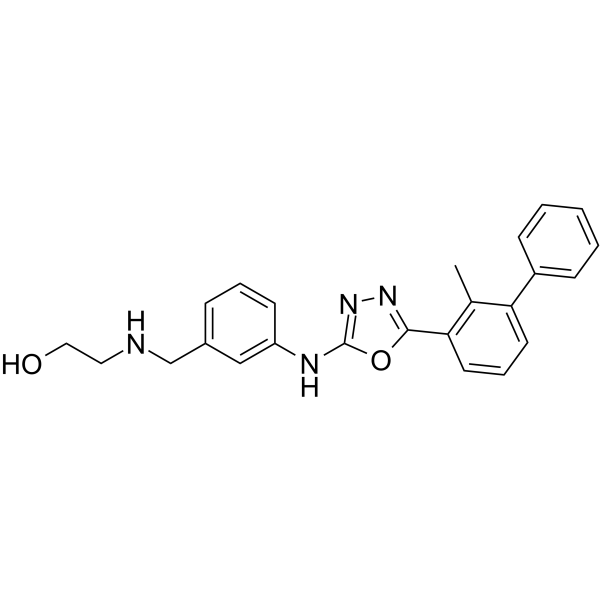
BMS-200 is a potent PD-1/PD-L1 interaction inhibitor with an IC50 of 80 nM. BMS-200 can induce dimerization of PD-L1 .
loading...
    loading...
Cat. No.: HY-P99106
CAS No.: 2506324-29-2

Target:  

PD-1/PD-L1

Research Areas:  

Cancer

Acrixolimab a humanized IgG4-κ antibody, targeting to PD-1 .
loading...
    loading...
Cat. No.: HY-P99679
CAS No.: 2329669-80-7

Target:  

PD-1/PD-L1

Research Areas:  

Inflammation/Immunology Cancer

Izuralimab is a bispecific IgG1 antibody targeting inducible T-cell costimulator (ICOS/CD278) and PD-1 .
loading...
    loading...
Cat. No.: HY-131187
CAS No.: 2447066-00-2
Purity:  97.18%
Research Areas:  

Cancer

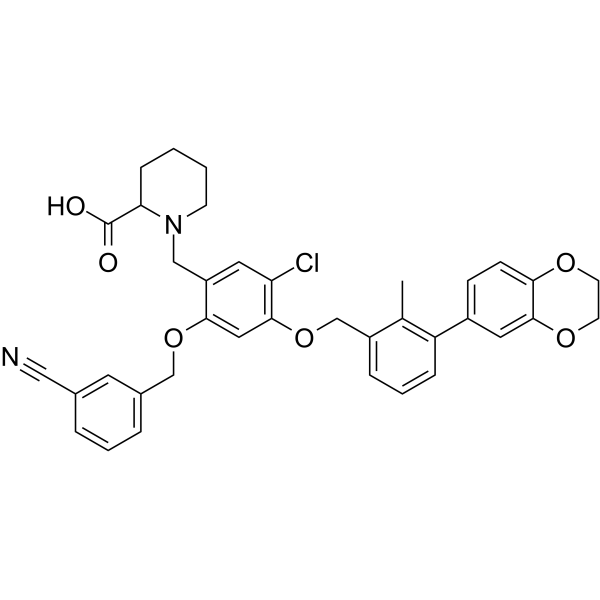
BMS-1166-N-piperidine-COOH, the BMS-1166-based moiety, binds to E3 ligase ligand via a linker to form PROTAC PD-1/PD-L1 degrader-1 (HY-131183) to degrade PD-1/PD-L1 . BMS-1166 is a potent PD-1/PD-L1 interaction inhibitor with an IC50 of 1.4 nM. BMS-1166 antagonizes the inhibitory effect of PD-1/PD-L1 immune checkpoint on T cell activation .
loading...
    loading...
Cat. No.: HY-N0242R
CAS No.: 28808-62-0
Fraxinellone (Standard) is the analytical standard of Fraxinellone. This product is intended for research and analytical applications. Fraxinellone is isolated from the root bark of the Rutaceae plant, Dictamnus dasycarpus. Fraxinellone is a PD-L1 inhibitor and inhibits HIF-1α protein synthesis without affecting HIF-1α protein degradation. Fraxinellone has the potential to be a valuable candidate for cancer treatment by targeting PD-L1 .
loading...
    loading...
Cat. No.: HY-N12537A
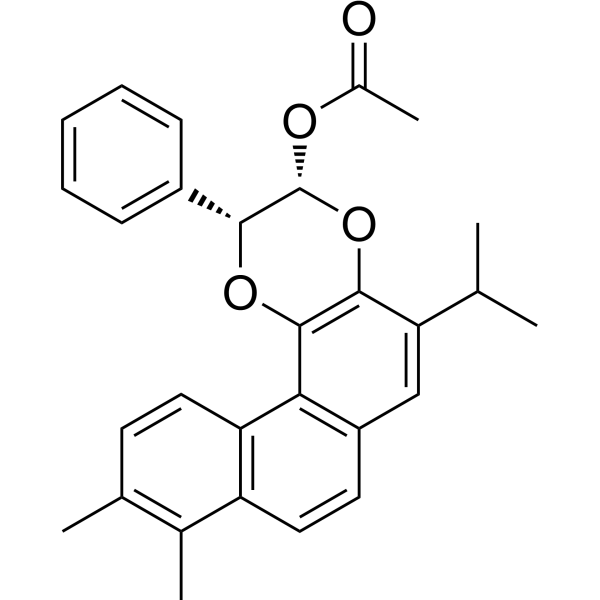
(2R,3S)-PD-1/PD-L1-IN-38 (Compound (±)-13e) is an orally active Ah receptor (AhR) antagonist with in vivo and in vitro anticancer activity. (2R,3S)-PD-1/PD-L1-IN-38 promotes the secretion of INF-γ by CD8 +T cells and inhibits the signal transduction of PD-1/PD-L1 .
loading...
    loading...
Cat. No.: HY-159892
CAS No.: 1393644-68-2
Research Areas:  

Cancer

PD-1/PD-L1-IN-54 (Compound 6) is a moderately affinic PD-1/PD-L1 inhibitor (KD: PD-1, 55.8 μM; PD-L1, 46.4 μM; IC50: 88.6 μM). PD-1/PD-L1-IN-54 inhibits PD-1/PD-L1 interactions and shows anticancer activity by activating CD8 + T cells, upregulating PD-1 expression, and increasing secretion of IFN-γ and IL-2. PD-1/PD-L1-IN-54 inhibits cancer cell proliferation and promotes apoptosis. PD-1/PD-L1-IN-54 also regulates T cell immunity through the PI3K/Akt pathway correlated with PD-1/PD-L1 .
loading...
    loading...
Cat. No.: HY-P992062

Target:  

PD-1/PD-L1

Research Areas:  

Inflammation/Immunology

Anti-Mouse CD80 Antibody (TKMG48) is an antibody that targets mouse CD80. By specifically binding to and disrupting the CD80:PD-L1 complex to release PD-L1, Anti-Mouse CD80 Antibody (TKMG48) functions as an indirect PD-1 agonist without blocking CD28 co-stimulation or CD80-CTLA4 binding. Anti-Mouse CD80 Antibody (TKMG48) inhibits T cell activation, reduces T cell effector functions and antigen-specific CD8 + T cell populations, and does not interfere with the differentiation, migration, antigen presentation or surface marker expression of dendritic cells. Anti-Mouse CD80 Antibody (TKMG48) significantly attenuates disease severity in mouse models of arthritis, spondyloarthritis, multiple sclerosis and Sjögren's syndrome, and its activity depends on the expression of PD-1 and PD-L1 .
loading...
    loading...
  • 1

