1. Search Result
Search Result
Results for "

peptidyl transferase

" in MedChemExpress (MCE) Product Catalog:

18

Inhibitors & Agonists

5

Natural
Products

1

Isotope-Labeled Compounds

1

Oligonucleotides

Cat. No. Product Name Target Research Areas Chemical Structure
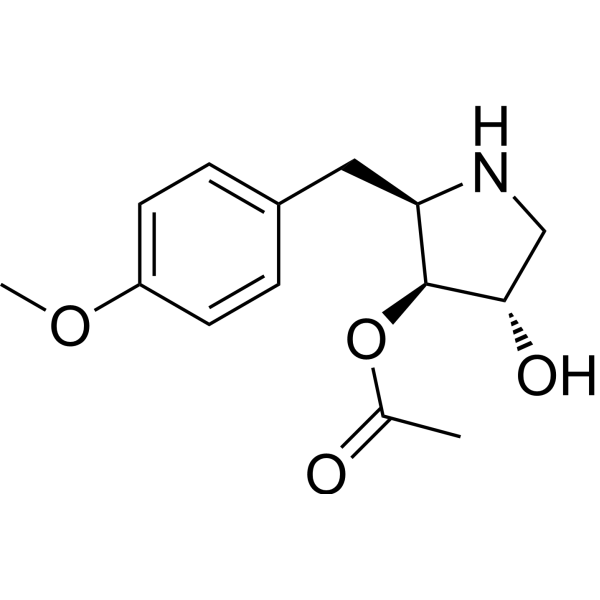
  • HY-18982
    Anisomycin
    135+ Cited Publications

    Flagecidin; Wuningmeisu C

    DNA/RNA Synthesis JNK Bacterial Apoptosis Antibiotic Parasite Infection Cancer
    Anisomycin is a potent protein synthesis inhibitor which interferes with protein and DNA synthesis by inhibiting peptidyl transferase or the 80S ribosome system . Anisomycin is a JNK activator, which increases phospho-JNK . Anisomycin is a bacterial antibiotic .
    Anisomycin
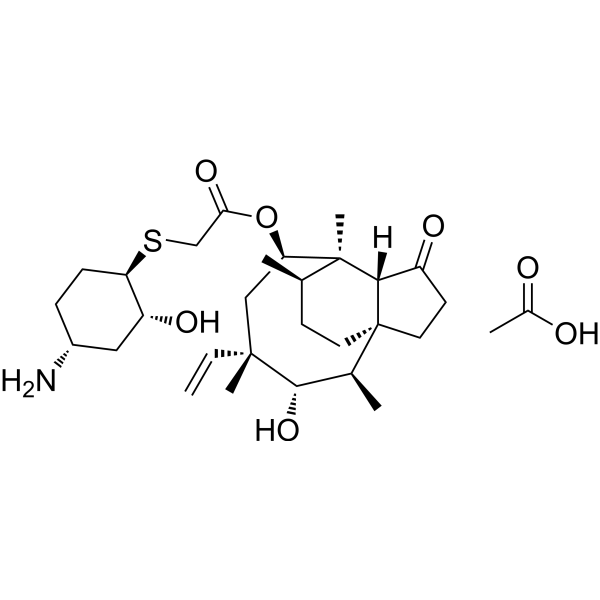
  • HY-16908A
    Lefamulin acetate
    4 Publications Verification

    BC-3781 acetate

    Bacterial Antibiotic Infection Inflammation/Immunology
    Lefamulin (BC-3781) acetate is an orally active antibiotic. Lefamulin acetate inhibits protein synthesis by binding to the peptidyl transferase center of the 50S bacterial ribosome. Lefamulin acetate has anti-inflammatory activity. Lefamulin acetate can be used in the research of bacterial infections, such as bacterial pneumonia .
    Lefamulin acetate
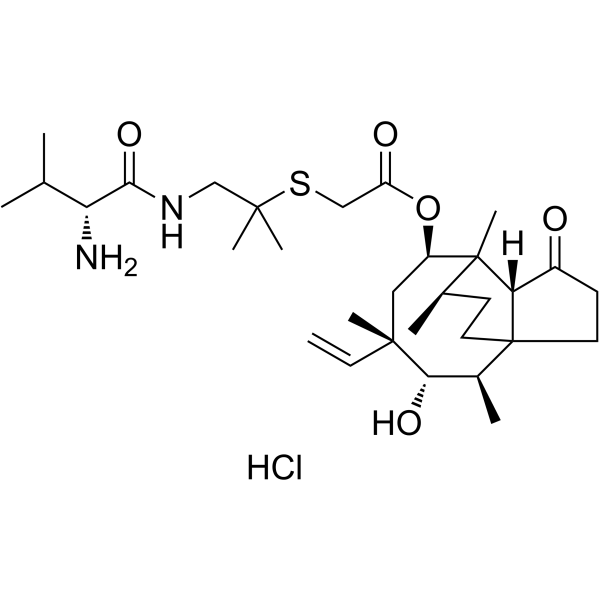
  • HY-B0027
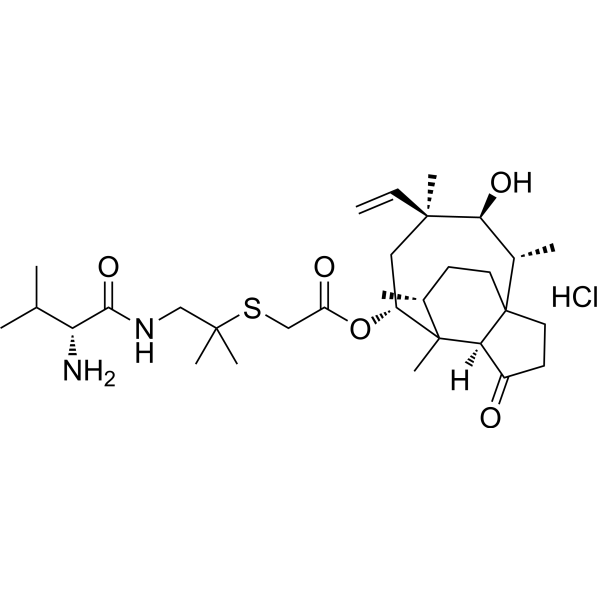
    Valnemulin hydrochloride
    2 Publications Verification

    Antibiotic Bacterial Infection Metabolic Disease
    Valnemulin hydrochloride is an orally effective truncated pleurotin antibiotic that inhibits protein synthesis in bacteria by binding to peptidyl transferase in the 50s ribosome subunit. Valnemulin hydrochloride effectively eliminates Mycobacterium bovis in the lungs in an experimental bovine model of Mycoplasma bovis infection. Valnemulin hydrochloride can reduce the mortality of epidemic rabbit enteropathy and has no adverse effect on the growth performance of rabbits .
    Valnemulin hydrochloride
  • HY-172815

    JNK Eukaryotic Initiation Factor (eIF) p38 MAPK Cancer
    IDB-001 is a human ribosomal peptidyl transferase center (PTC) inhibitor that induces conformational changes and blocks translational elongation in specific sequence contexts through complementary interactions with Asp/Glu residues in nascent polypeptides. IDB-001 preferentially stalls ribosomes at positions containing acidic peptide motifs, thereby inhibiting cancer cell proliferation, and activates the integrated stress response via eIF2α phosphorylation at high concentrations. In addition, IDB-001 mildly triggers ribotoxic stress responses through phosphorylation of JNK and p38. IDB-001 has been applied to mechanistic studies of triple-negative breast cancer .
    IDB-001
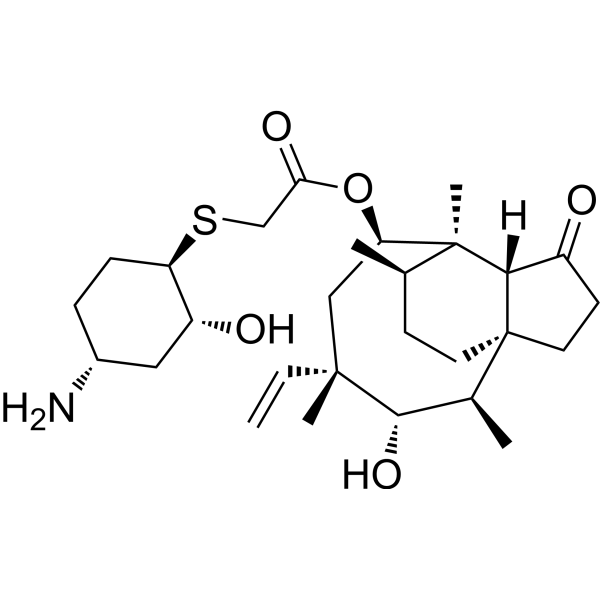
  • HY-16908
    Lefamulin
    4 Publications Verification

    BC-3781

    Bacterial Antibiotic Infection
    Lefamulin (BC-3781) is an orally active antibiotic. Lefamulin inhibits protein synthesis by binding to the peptidyl transferase center of the 50S bacterial ribosome. Lefamulin has anti-inflammatory activity. Lefamulin can be used in the research of bacterial infections, such as bacterial pneumonia .
    Lefamulin
  • HY-152296

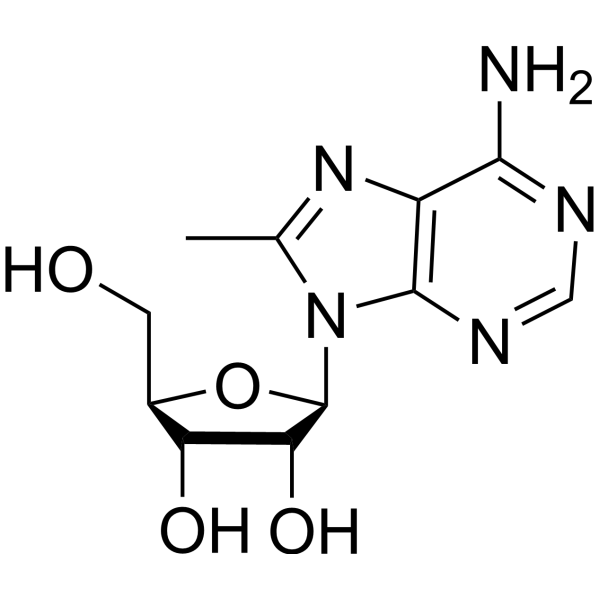
    Nucleoside Antimetabolite/Analog Bacterial Infection
    8-Methyladenosine is a modified adenosine nucleoside. Through methylation at the 8-position, 8-Methyladenosine confers bacterial resistance to five classes of antibiotics that bind to the ribosomal peptidyl transferase center. 8-Methyladenosine can be used in studies of antibiotic-resistant bacterial infections .
    8-Methyladenosine
  • HY-18982R

    Flagecidin (Standard); Wuningmeisu C (Standard)

    Reference Standards DNA/RNA Synthesis JNK Bacterial Apoptosis Antibiotic Parasite Infection Cancer
    Anisomycin (Standard) is the analytical standard of Anisomycin. This product is intended for research and analytical applications. Anisomycin is a potent protein synthesis inhibitor which interferes with protein and DNA synthesis by inhibiting peptidyl transferase or the 80S ribosome system[1]. Anisomycin is a JNK activator, which increases phospho-JNK[2][3]. Anisomycin is a bacterial antibiotic[4].
    Anisomycin (Standard)
  • HY-118593

    Madumycin II; Antibiotic A 2315A

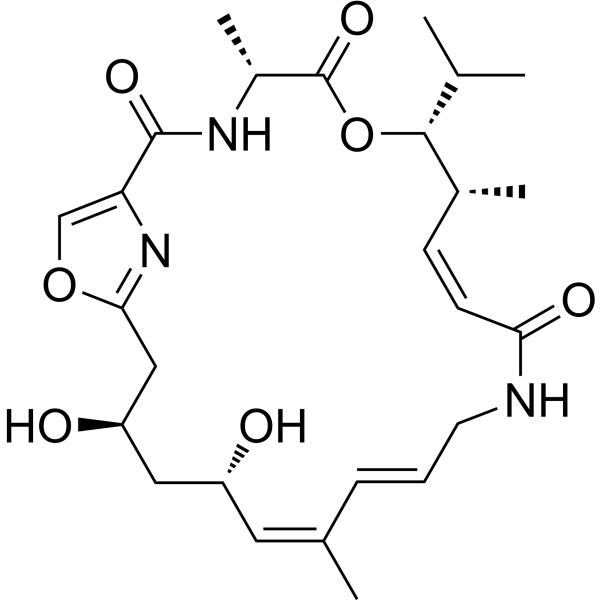
    Antibiotic Infection
    A2315A (Madumycin II) is an alanine-containing streptogramin A antibiotic. A2315A is a potent peptidyl transferase center (PTC) inhibitor. A2315A inhibits the ribosome prior to the first cycle of peptide bond formation .
    A2315A
  • HY-111903

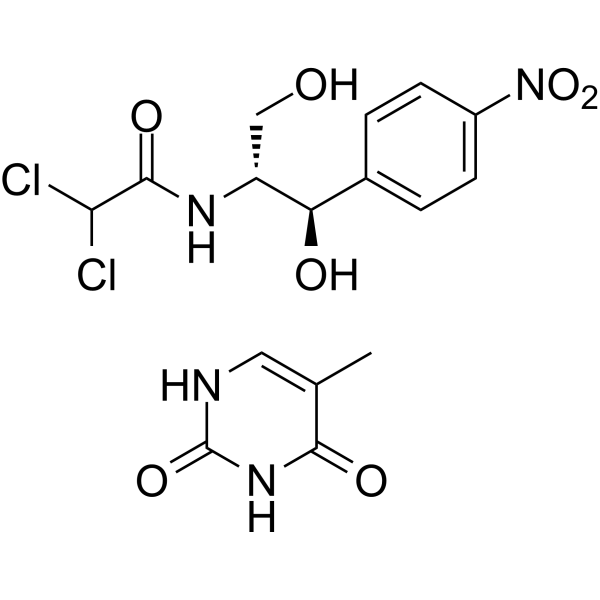
    Bacterial Infection
    Levomecol (Chloramphenicol), made up of Chloramphenicol, Methyluracil, is a broad-spectrum antibiotic that is derived from the bacterium Streptomyces venezuelae. Levomecol (Chloramphenicol)) stops bacterial growth by binding to the bacterial ribosome (blocking peptidyl transferase) and inhibiting protein synthesis .
    Levomecol
  • HY-N16459

    Antibiotic Bacterial Infection
    Albomycin δ1 is a selective bacterial ribosome-targeted antibiotic (MIC: 0.0625 μg/mL against S. pneumoniae). Albomycin δ1 exerts bactericidal activity via covalent binding to 70S ribosomes and irreversible inhibition of peptidyl transferase. Albomycin δ1 is promising for research of S. pneumoniae and S. aureus infections .
    Albomycin δ1
  • HY-B0239S3

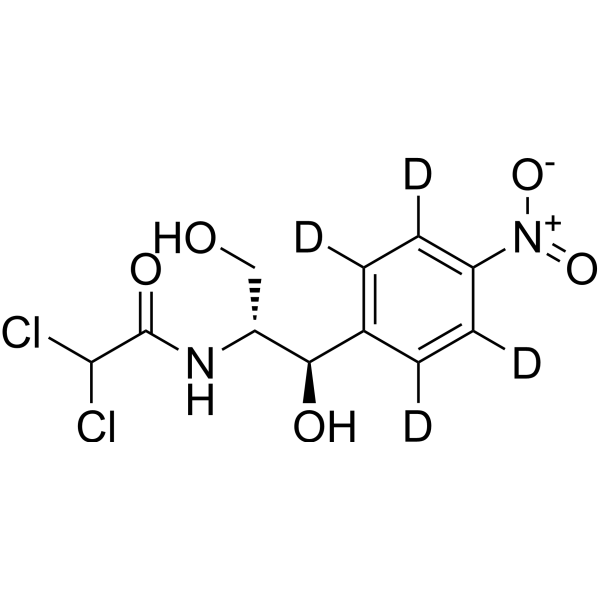
    Isotope-Labeled Compounds Bacterial Antibiotic Infection
    Chloramphenicol-d4 is deuterium labeled Chloramphenicol. Chloramphenicol, a broad-spectrum antibiotic, acts as a potent inhibitor of bacterial protein biosynthesis . Chloramphenicol acts primarily on the 50S subunit of bacterial 70S rihosomes and inhibits peptide bond formation by suppressing peptidyl transferase activity .
    Chloramphenicol-d4
  • HY-W686760A

    Bacterial Infection
    Bromamphenicol (Compound Ib) is a derivative of Chloramphenicol (HY-B0239), and exhibits antibacterial activity. Bromamphenicol binds to S50 ribosomal subunit, interfers with the activity of peptidyl transferase, and exhibits inhibitory activity against protein synthesis .
    Bromamphenicol
  • HY-16908AR

    BC-3781 acetate (Standard)

    Reference Standards Bacterial Antibiotic Infection Inflammation/Immunology
    Lefamulin (acetate) (Standard) is the analytical standard of Lefamulin (acetate). This product is intended for research and analytical applications. Lefamulin (BC-3781) acetate is an orally active antibiotic. Lefamulin acetate inhibits protein synthesis by binding to the peptidyl transferase center of the 50S bacterial ribosome. Lefamulin acetate has anti-inflammatory activity. Lefamulin acetate can be used in the research of bacterial infections, such as bacterial pneumonia[1].
    Lefamulin acetate (Standard)
  • HY-119673

    Antibiotic Others
    Lincophenicol is a hybrid antibiotic that has the activity of inhibiting the puromycin reaction catalyzed by Escherichia coli ribosomal peptidyl transferase and also inhibits the binding of specific compounds to the Escherichia coli ribosome.
    Lincophenicol
  • HY-168705

    Bacterial Infection
    Anti-MRSA agent 20 (Compound a4) is an anti-microbial agent (MIC: < 0.03125 μg/mL) against MRSA). Anti-MRSA agent 20 binds to the ribosomal peptidyl transferase center and inhibits bacterial survival by inhibiting MRSA toxin synthesis and bacterial division. Anti-MRSA agent 20 significantly reduces the MRSA load in the lungs and attenuates lung injury in the MRSA-infected mice (ED50 = 6.48 mg/kg) .
    Anti-MRSA agent 20
  • HY-B0027R

    Reference Standards Antibiotic Bacterial Metabolic Disease Inflammation/Immunology
    Valnemulin (hydrochloride) (Standard) is the analytical standard of Valnemulin (hydrochloride). This product is intended for research and analytical applications. Valnemulin (hydrochloride) is an orally effective truncated pleurotin antibiotic that inhibits protein synthesis in bacteria by binding to peptidyl transferase in the 50s ribosome subunit. Valnemulin hydrochloride effectively eliminates Mycobacterium bovis in the lungs in an experimental bovine model of Mycoplasma bovis infection. Valnemulin hydrochloride can reduce the mortality of epidemic rabbit enteropathy and has no adverse effect on the growth performance of rabbits .
    Valnemulin hydrochloride (Standard)
  • HY-W686760

    Bacterial Infection
    (Rac)-Bromamphenicol is the racemate of Bromamphenicol (HY-W686760). Bromamphenicol (Compound Ib) is a derivative of Chloramphenicol (HY-B0239), and exhibits antibacterial activity. Bromamphenicol binds to S50 ribosomal subunit, interfers with the activity of peptidyl transferase, and exhibits inhibitory activity against protein synthesis .
    (Rac)-Bromamphenicol
  • HY-179405

    Bacterial Infection
    Antibacterial agent 301 (compound 14c) is a pyridine-amide pleuromutilin derivative with broad-spectrum antibacterial and pronounced antimycoplasmal activity. Antibacterial agent 301 inhibits peptidyl transferase center (PTC), breaks down biofilms, and disrupts cell membranes in multidrug-resistant (MDR) bacteria. Antibacterial agent 301 exhibits activity in a systemic methicillin-resistant Staphylococcus aureus (MRSA) infection mouse model. Antibacterial agent 301 can be used for MDR bacterial infection research .
    Antibacterial agent 301

Inquiry Online

Your information is safe with us. * Required Fields.

Salutation


Country or Region *

Applicant Name *


Organization Name *

Department *


Email Address *


Product Name *

Cat. No.


Requested quantity *

Phone Number *


Remarks

Inquiry Online

Inquiry Information

Product Name:
Cat. No.:
Quantity:
MCE Japan Authorized Agent:

