1. Search Result
Search Result
Results for "

protein C

" in MedChemExpress (MCE) Product Catalog:

1385

Inhibitors & Agonists

8

Screening Libraries

19

Fluorescent Dyes

36

Biochemical Assay Reagents

132

Peptides

3

MCE Kits

33

Inhibitory Antibodies

141

Natural
Products

1739

Recombinant Proteins

164

Isotope-Labeled Compounds

549

Antibodies

13

Click Chemistry

83

Oligonucleotides

1

GMP Molecules

Cat. No. 상품명 Classification
  • HY-148842

    Cationic Lipids Cationic Lipids
    C14-4 is an ionizable lipid utilized for the synthesis of lipid nanoparticles (LNPs). C14-4 enhances mRNA delivery, enabling the effective transport of mRNA to primary human T cells, which in turn induces functional protein expression. C14-4 demonstrates high transfection efficiency while maintaining low cytotoxicity .
  • HY-132580
    Tofersen
    2 Publications Verification

    BIIB067; ISIS-SOD1Rx; ISIS 333611

    Antisense Oligonucleotides
    Tofersen (BIIB067) is an antisense oligonucleotide and SOD1 mRNA inhibitor with an IC50 of 320 pM. Tofersen mediates RNase H-dependent degradation of SOD1 mRNA to reduce SOD1 protein levels in cerebrospinal fluid and serum. Tofersen downregulates cerebrospinal fluid neurofilament light chain, neurofilament heavy chain, amyloid-beta 1-40, amyloid-beta 1-42, neuropeptide Y, ubiquitin C-terminal hydrolase L1, neuropentraxins 1, 2, R, corticotropin-releasing hormone, IL-15, and serum neurofilament light chain, neurofilament heavy chain. Tofersen can be used for the research of superoxide dismutase 1-associated amyotrophic lateral sclerosis .
  • HY-108610A
    Edelfosine
    1 Publications Verification

    ET-18-OCH3

    Phospholipids
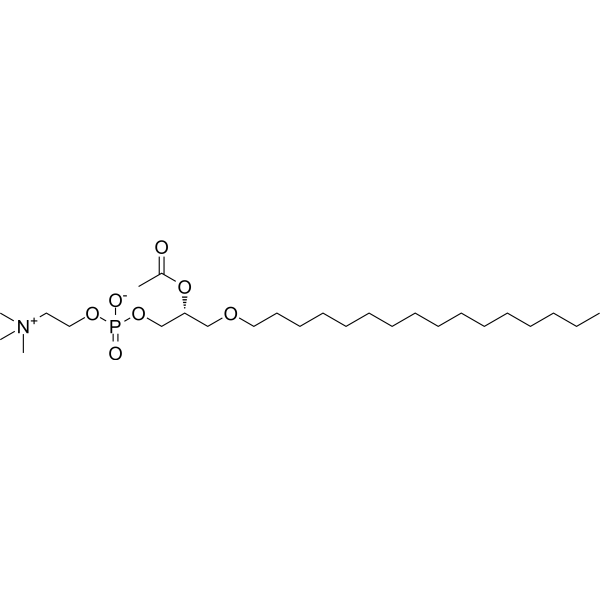
    Edelfosine (ET-18-OCH3) is an orally active lipid raft modulator and apoptosis inducer that alters membrane fluidity and preferentially inserts into tumor cell membranes. Edelfosine recruits death receptor ligands (FasL/CD95L, TRAIL) and Bid to lipid rafts to form death-inducing signaling complexes, thereby initiating mitochondria-dependent apoptosis and inducing cytochrome c release. Edelfosine also exerts anti-inflammatory effects, promotes L-Selectin shedding, and causes no gastrointestinal or organ toxicity. In addition, Edelfosine inhibits nucleic acid and protein synthesis in Leishmania donovani and exhibits antiproliferative activity. Edelfosine can be used in research on multiple myeloma, inflammatory bowel diseases (such as ulcerative colitis and Crohn's disease), and visceral leishmaniasis .
  • HY-132580A
    Tofersen sodium
    2 Publications Verification

    BIIB067 sodium; ISIS-SOD1Rx sodium; ISIS 333611 sodium

    Antisense Oligonucleotides
    Tofersen (BIIB067) sodium is an antisense oligonucleotide and SOD1 mRNA inhibitor with an IC50 of 320 pM. Tofersen sodium mediates RNase H-dependent degradation of SOD1 mRNA to reduce SOD1 protein levels in cerebrospinal fluid and serum. Tofersen sodium downregulates cerebrospinal fluid neurofilament light chain, neurofilament heavy chain, amyloid-beta 1-40, amyloid-beta 1-42, neuropeptide Y, ubiquitin C-terminal hydrolase L1, neuropentraxins 1, 2, R, corticotropin-releasing hormone, IL-15, and serum neurofilament light chain, neurofilament heavy chain. Tofersen sodium can be used for the research of superoxide dismutase 1-associated amyotrophic lateral sclerosis .
  • HY-143212

    1-Stearoyl-2-docosahexaenoyl-sn-glycerol

    Phospholipids
    18:0-22:6 DG (1-Stearoyl-2-docosahexaenoyl-sn-glycerol) is a diacylglycerol (DG) that can interact with RasGRP (Ras guanine nucleotide-releasing protein) (Ki = 8.37 μM) and modulate the activation of MAP kinases (such as ERK1/ERK2), which play a crucial role in cellular signaling processes. 18:0-22:6 DG can also activate protein kinase C (PKC) isozyme. 18:0-22:6 DG can be used for research of cancer, immunology and metabolic disease .
  • HY-150217
    CpG ODN 10101
    2 Publications Verification

    ODN 10101

    CpG ODNs
    CpG ODN 10101 (ODN 10101; CPG 10101) is a selective agonist targeting TLR9, a synthetic oligodeoxynucleotide modified with phosphate thioester. CpG ODN 10101 activates B cells and plasmacytoid dendritic cells (pDCs), inducing the production of cytokines and chemokines such as interferon-IFN-α, interferon-inducible protein IP-10, and 2'5'-oligoadenylate synthase (2'5'-OAS), regulating innate immunity and promoting Th1 adaptive immune responses. CpG ODN 10101 also possesses antiviral properties and enhances vaccine immunogenicity, making it suitable as an immunomodulator and vaccine adjuvant for vaccine development in chronic hepatitis C and infectious diseases such as melioidosis, pertussis, and respiratory syncytial virus (RSV) .
  • HY-145720

    ALN-CC5

    siRNAs siRNA drugs
    Cemdisiran (ALN-CC5) is an N-acetylgalactosamine-conjugated RNAi agent and also a complement component C5 inhibitor. Cemdisiran targets C5 mRNA, cleaves C5 mRNA via the endogenous RNA interference pathway, and inhibits the production of C5 protein in the liver. Cemdisiran exerts a dose-dependent inhibitory effect on total C5 concentrations in cynomolgus monkeys. When used in combination with Pozelimab (HY-P99786) in cynomolgus monkeys, Cemdisiran achieves a more sustained and complete inhibitory effect on complement activity. Cemdisiran can be used in the research of paroxysmal nocturnal hemoglobinuria and other complement-mediated diseases .
  • HY-130345

    Phospholipids
    C18-PAF, octadecane PAF, is the ligand of platelet-activating factor and PAF G protein-coupled receptor (PAFR). C18-PAF has renovasodilator properties and antihypertensive lipid properties. C18-PAF increases renal blood flow and causes dose-dependent systemic hypotension .
  • HY-158827A

    Antisense Oligonucleotides
    AZD8233 sodium, a liver-targeting antisense oligonucleotide (ASO), inhibits subtilisin/kexin type 9 (PCSK9) protein synthesis. AZD8233 sodium increases the available LDL receptors by reducing PCSK9 levels, thereby clearing LDL from the blood and decreasing LDL-C levels.
  • HY-147412

    QR-421a

    Antisense Oligonucleotides
    Ultevursen (QR-421a) is a splice-modulating antisense oligonucleotide targeting exon 13 of the USH2A gene, which restores the functional expression of Usherin protein by inducing exon skipping. Ultevursen binds to USH2A pre-mRNA and modulates the splicing process to specifically skip exon 13 carrying the pathogenic mutation c.2299delG, generating an in-frame transcript and a truncated yet functionally normal protein. Ultevursen exhibits concentration-dependent exon skipping activity in human cells and retinal organoid models, and restores Usherin expression and retinal function in zebrafish and gene-edited mouse models. Ultevursen can be used for related research on type 2 Usher syndrome and non-syndromic retinitis pigmentosa .
  • HY-145720A

    ALN-CC5 sodium

    siRNAs siRNA drugs
    Cemdisiran sodium is an N-acetylgalactosamine (GalNAc) conjugated siRNA for the research of complement-mediated diseases by suppressing liver production of complement 5 (C5) protein.
  • HY-148413
    Aprinocarsen sodium
    1 Publications Verification

    ISIS 3521 sodium

    Antisense Oligonucleotides
    Aprinocarsen (ISIS 3521) sodium, a specific antisense oligonucleotide inhibitor of protein kinase C-alpha (PKC-α). Aprinocarsen sodium is a 20-mer oligonucleotide, it regulates cell differentiation and proliferation. Aprinocarsen sodium inhibits the growth of human tumor cell lines in nude mice. Aprinocarsen sodium shows the value as a chemotherapeutic compound of human cancers .
  • HY-174728

    mRNA Chemokine & Receptors
    Human CXCR1 mRNA encodes the human C-X-C motif chemokine receptor 1 (CXCR1) protein, a member of the G-protein-coupled receptor family. CXCR1 is a receptor for interleukin 8 (IL8). It binds to IL8 with high affinity, and transduces the signal through a G-protein activated second messenger system.
  • HY-147412A

    QR-421a sodium

    Antisense Oligonucleotides
    Ultevursen sodium (QR-421a) is a splice-modulating antisense oligonucleotide targeting exon 13 of the USH2A gene, which restores the functional expression of Usherin protein by inducing exon skipping. Ultevursen sodium binds to USH2A pre-mRNA and modulates the splicing process to specifically skip exon 13 carrying the pathogenic mutation c.2299delG, generating an in-frame transcript and a truncated yet functionally normal protein. Ultevursen sodium exhibits concentration-dependent exon skipping activity in human cells and retinal organoid models, and restores Usherin expression and retinal function in zebrafish and gene-edited mouse models. Ultevursen sodium can be used for related research on type 2 Usher syndrome and non-syndromic retinitis pigmentosa .
  • HY-174761

    mRNA Chemokine & Receptors
    Human CCL21 mRNA encodes the human C-C motif chemokine ligand 21 (CCL21) protein, a chemokine that can inhibit hemopoiesis and stimulate chemotaxis. CCL21 is chemotactic in vitro for thymocytes and activated T cells, but not for B cells, macrophages, or neutrophils. It may also play a role in mediating homing of lymphocytes to secondary lymphoid organs.
  • HY-153489

    ISIS-CRPRx

    Antisense Oligonucleotides
    ISIS 329993 (ISIS-CRPRx) is an antisense oligonucleotide targeting to C-reactive protein (CRP). ISIS-CRPRx has been tested in a rodent model of rheumatoid arthritis (RA) and was shown to improve the clinical signs of arthritis
  • HY-160065

    Aptamers
    sgc8c aptamer sodium is an aptamer that specifically targets the human protein tyrosine kinase PTK-7, which is mainly expressed on cervical cancer HeLa cells. sgc8c aptamer sodium can precisely bring the nanotags connected to it to the surface of cells expressing PTK-7, thus achieving specific recognition and labeling of target cells .
  • HY-158827

    Antisense Oligonucleotides
    AZD8233, a liver-targeting antisense oligonucleotide (ASO), inhibits proprotein convertase subtilisin/kexin type 9 (PCSK9) protein synthesis. AZD8233 increases the available LDL receptors by reducing PCSK9 levels, thereby clearing LDL from the blood and decreasing LDL-C levels.
  • HY-W783254

    PA(18:0e/0:0)

    Phospholipids
    C18 LPA (PA(18:0e/0:0)) is a water-soluble phospholipid that functions as a signaling molecule, influencing various cellular responses through G protein-coupled receptors (GPCRs). It is known to promote smooth muscle contraction, cytoskeletal rearrangement, and chemotaxis, while also playing a role in neurotransmitter release, cell proliferation, platelet aggregation, and Ca2+ mobilization. Elevated levels of C18 LPA in human plasma are associated with ovarian cancer and atherosclerosis, suggesting its potential as a biomarker for ovarian cancer.
  • HY-174499

    mRNA Gene Editing
    Cas9 Nickase D10A mRNA expresses a version of the Streptococcus pyogenes SF370 Cas9 protein (CRISPR Associated Protein 9) that contains a D10A amino acid substitution. This mRNA also contains a C-terminal nuclear localization signal followed by a HA tag.Cas9 functions as part of the CRISPR (clustered regularly interspaced short palindromic repeats) genome editing system. In the CRISPR system, an RNA guide sequence targets the site of interest and the Cas9 protein is employed to perform the DNA cleavage. While wild-type Cas9 creates a double-stranded break at the target site, Cas9 nickase creates a single-stranded break. This favors homology-directed repair and decreases the occurrence of non-homologous end joining.
  • HY-132580S

    BIIB067-d27; ISIS-SOD1Rx-d27; ISIS 333611-d27

    Antisense Oligonucleotides
    Tofersen-d27 (BIIB067-d27) is the deuterium labeled Tofersen (HY-132580). Tofersen (BIIB067) is an antisense oligonucleotide and SOD1 mRNA inhibitor with an IC50 of 320 pM. Tofersen mediates RNase H-dependent degradation of SOD1 mRNA to reduce SOD1 protein levels in cerebrospinal fluid and serum. Tofersen downregulates cerebrospinal fluid neurofilament light chain, neurofilament heavy chain, amyloid-beta 1-40, amyloid-beta 1-42, neuropeptide Y, ubiquitin C-terminal hydrolase L1, neuropentraxins 1, 2, R, corticotropin-releasing hormone, IL-15, and serum neurofilament light chain, neurofilament heavy chain. Tofersen can be used for the research of superoxide dismutase 1-associated amyotrophic lateral sclerosis.
  • HY-177803

    Aptamers
    Protein C aptamer sodium is a 44mer-DNA aptamer that the anticoagulant functions of activated protein C. Activated protein C (APC) is a serine protease with anticoagulant, anti-inflammatory, and cytoprotective properties.
  • HY-174543

    mRNA
    Human PRKCA mRNA encodes the human protein kinase C alpha (PRKCA) protein, a member of Protein kinase C (PKC) family. PRKCA has been reported to play roles in many different cellular processes, such as cell adhesion, cell transformation, cell cycle checkpoint, and cell volume control.
  • HY-174542

    mRNA
    Human PRKCB mRNA encodes the human protein kinase C beta (PRKCB) protein, a member of Protein kinase C (PKC) family. PRKCB has been reported to be involved in many different cellular functions, such as B cell activation, apoptosis induction, endothelial cell proliferation, and intestinal sugar absorption.
  • HY-174726

    mRNA Chemokine & Receptors
    Human CXCR3 mRNA encodes the human C-X-C motif chemokine receptor 3 (CXCR3) protein, G protein-coupled receptor. Chemokines bind to CXCR3 protein can induce cellular responses that are involved in leukocyte traffic, integrin activation, cytoskeletal changes and chemotactic migration.
  • HY-174727

    mRNA Chemokine & Receptors
    Human CXCR2 mRNA encodes the human C-X-C motif chemokine receptor 2 (CXCR2) protein, a member of the G-protein-coupled receptor family. CXCR2 is a receptor for interleukin 8 (IL8). It binds to IL8 with high affinity, and transduces the signal through a G-protein activated second messenger system. This receptor also binds to chemokine (C-X-C motif) ligand 1 (CXCL1/MGSA), a protein with melanoma growth stimulating activity, and has been shown to be a major component required for serum-dependent melanoma cell growth.
  • HY-174768

    mRNA Chemokine & Receptors
    Human CCL15 mRNA encodes the human C-C motif chemokine ligand 15 (CCL15) protein, a chemotactic for T cells and monocytes, and acts through C-C chemokine receptor type 1 (CCR1).
  • HY-174730

    mRNA Chemokine & Receptors
    Human CXCL12 mRNA encodes the human C-X-C motif chemokine ligand 12 (CXCL12) protein, a stromal cell-derived alpha chemokine member of the intercrine family. CXCL12 functions as the ligand for the G-protein coupled receptor, chemokine (C-X-C motif) receptor 4, and plays a role in many diverse cellular functions, including embryogenesis, immune surveillance, inflammation response, tissue homeostasis, and tumor growth and metastasis.
  • HY-174724

    mRNA Chemokine & Receptors
    Human CXCR5 mRNA encodes the human C-X-C motif chemokine receptor 5 (CXCR5) protein, a multi-pass membrane protein that belongs to the CXC chemokine receptor family. CXCR5 is involved in B-cell migration into B-cell follicles of spleen and Peyer patches.
  • HY-174742

    mRNA Chemokine & Receptors
    Human CCR7 mRNA encodes the human C-C motif chemokine receptor 7 (CCR7) protein, a member of the G protein-coupled receptor family. CCR7 has been shown to control the migration of memory T cells to inflamed tissues, as well as stimulate dendritic cell maturation.
  • HY-174769

    mRNA Chemokine & Receptors
    Human CCL14 mRNA encodes the human C-C motif chemokine ligand 14 (CCL14) protein, a cytokine that induces changes in intracellular calcium concentration and enzyme release in monocytes.
  • HY-174753

    mRNA Chemokine & Receptors
    Human CCL3L1 mRNA encodes the human C-C motif chemokine ligand 3 like 1 (CCL3L1) protein. It is a ligand for CCR1, CCR3 and CCR5.
  • HY-171904

    Cationic Lipids
    BCP-NC2-C12 is an ionizable cationic lipid. BCP-NC2-C12 can be used to generate lipid nanoparticles (LNPs) for in vivo delivery of mRNA. BCP-NC2-C12 LNPs mediated an approximately 90% reduction in PCSK9 serum protein levels via CRISPR/Cas9 gene knockout .
  • HY-174583

    mRNA Transcription Factors
    Human MEF2C mRNA encodes the human myocyte enhancer factor 2C (MEF2C) protein, a member of the MADS box transcription enhancer factor 2 (MEF2) family. MEF2C has both trans-activating and DNA binding activities and may play a role in maintaining the differentiated state of muscle cells.
  • HY-174752

    mRNA Chemokine & Receptors
    Human CCL4L1 mRNA encodes the human C-C motif chemokine ligand 4 like 1 (CCL4L1) protein, a chemokine that can induce chemotaxis of cells expressing CCR5 or CCR1.
  • HY-174772

    mRNA Chemokine & Receptors
    Human CCL1 mRNA encodes the human C-C motif chemokine ligand 1 (CCL1) protein, a member of the CC subfamily. CCL1 is secreted by activated T cells and displays chemotactic activity for monocytes but not for neutrophils.
  • HY-174746

    mRNA Chemokine & Receptors
    Human CCR2 mRNA encodes the human C-C motif chemokine receptor 2 (CCR2) protein, a chemokine which specifically mediates monocyte chemotaxis. CCR2 can mediate agonist-dependent calcium mobilization and inhibition of adenylyl cyclase.
  • HY-W779204

    Phospholipids
    rac-3-Hexadecanamido-2-methoxypropan-1-ol Phosphocholine Monohydrate is a phospholipid and an inhibitor of Protein kinase C.
  • HY-174784

    mRNA
    Human ACVR1C mRNA encodes the human activin A receptor type 1C (ACVR1C) protein, a type I receptor for the TGFB family of signaling molecules. Upon ligand binding, type I receptors phosphorylate cytoplasmic SMAD transcription factors, which then translocate to the nucleus and interact directly with DNA or in complex with other transcription factors.
  • HY-174767

    mRNA Chemokine & Receptors
    Human CCL16 mRNA encodes the human C-C motif chemokine ligand 16 (CCL16) protein, a cytokine that displays chemotactic activity for lymphocytes and monocytes but not for neutrophils. CCL16 also shows a potent myelosuppressive activity and suppresses proliferation of myeloid progenitor cells.
  • HY-174506

    mRNA Chemokine & Receptors
    Human XCR1 mRNA encodes the human X-C motif chemokine receptor 1 (XCR1) protein, a G protein-coupled receptor that belongs to the CXC chemokine receptor family. XCR1 can transduce a signal by increasing the intracellular calcium ions level.
  • HY-174750

    mRNA Chemokine & Receptors
    Human CCL7 mRNA encodes the human C-C motif chemokine ligand 7 (CCL7) protein, a member of the CC subfamily which is characterized by two adjacent cysteine residues. CCL7 is an in vivo substrate of matrix metalloproteinase 2, an enzyme which degrades components of the extracellular matrix.
  • HY-174763

    mRNA Chemokine & Receptors
    Human CCL2 mRNA encodes the human C-C motif chemokine ligand 2 (CCL2) protein. CCL2 displays chemotactic activity for monocytes and basophils but not for neutrophils or eosinophils. It has been implicated in the pathogenesis of diseases characterized by monocytic infiltrates, like psoriasis, rheumatoid arthritis and atherosclerosis.
  • HY-174766

    mRNA Chemokine & Receptors
    Human CCL17 mRNA encodes the human C-C motif chemokine ligand 17 (CCL17) protein, a cytokine that displays chemotactic activity for T lymphocytes, but not monocytes or granulocytes. CCL17 plays important roles in T cell development in thymus as well as in trafficking and activation of mature T cells.
  • HY-174755

    mRNA Chemokine & Receptors
    Human CCL27 mRNA encodes the human C-C motif chemokine ligand 27 (CCL27) protein, a chemotactic for skin-associated memory T lymphocytes. CCL27 also plays a role in mediating homing of lymphocytes to cutaneous sites. It specifically binds to chemokine receptor 10 (CCR10).
  • HY-153489A

    ISIS-CRPRx sodium

    Antisense Oligonucleotides
    ISIS 329993 sodium is an antisense oligonucleotide targeting to C-reactive protein (CRP). ISIS-CRPRx sodium has been tested in a rodent model of rheumatoid arthritis (RA) and was shown to improve the clinical signs of arthritis
  • HY-174770

    mRNA Chemokine & Receptors
    Human CCL13 mRNA encodes the human C-C motif chemokine ligand 13 (CCL13) protein, a cytokine that displays chemotactic activity for monocytes, lymphocytes, basophils and eosinophils, but not neutrophils. CCL13 also plays a role in accumulation of leukocytes during inflammation and may be involved in the recruitment of monocytes into the arterial wall during artherosclerosis.
  • HY-174754

    mRNA Chemokine & Receptors
    Human CCL28 mRNA encodes the human C-C motif chemokine ligand 28 (CCL28) protein, a cytokine that displays chemotactic activity for resting CD4 or CD8 T cells and eosinophils. CCL28 may play a role in the physiology of extracutaneous epithelial tissues, including diverse mucosal organs.
  • HY-174764

    mRNA Chemokine & Receptors
    Human CCL19 mRNA encodes the human C-C motif chemokine ligand 19 (CCL19) protein, a cytokine that may play a role in normal lymphocyte recirculation and homing. CCL19 also plays an important role in trafficking of T cells in thymus, and in T cell and B cell migration to secondary lymphoid organs.
  • HY-169480

    Cationic Lipids
    Lipid C2 is an ionizable cationic lipid that has been used in the formation of lipid nanoparticles (LNP) for mRNA delivery in vivo. LNPs containing Lipid C2 and encapsulating an mRNA reporter selectively accumulate in the liver and spleen but not the heart, lungs, or kidneys in mice. LNP containing Lipid C2 and encapsulating mRNA encoding the Epstein-Barr virus (EBV) protein latent membrane protein 2 (LMP-2), in combination with an anti-programmed cell death protein 1 (PD-1) antibody, decrease tumor volume and reverse T cell exhaustion, as well as increase the percentage of CD3 +CD8 + central and CD3 +CD8 + effector memory T cells and decrease the percentage of CD3 + T cells expressing Pd-1, in the spleen in a CT26 murine EBV-infected colon cancer model .

온라인 문의

Your information is safe with us. * Required Fields.

호칭


Country or Region *

고객명 *


회사명 *

Department *


메일주소 *


상품명 *

Cat. No.


Requested quantity *

전화번호 *


비고

온라인 문의

Inquiry Information

상품명:
Cat. No.:
수량:
MCE Japan Authorized Agent:

