



1. Search Result
Search Result
Results for "

protein sulfhydryl groups

" in MedChemExpress (MCE) Product Catalog:

27

Inhibitors & Agonists

11

Fluorescent Dyes

10

Biochemical Assay Reagents

1

Peptides

1

Natural
Products

1

GMP Molecules

Cat. No. Product Name Target Research Areas Chemical Structure
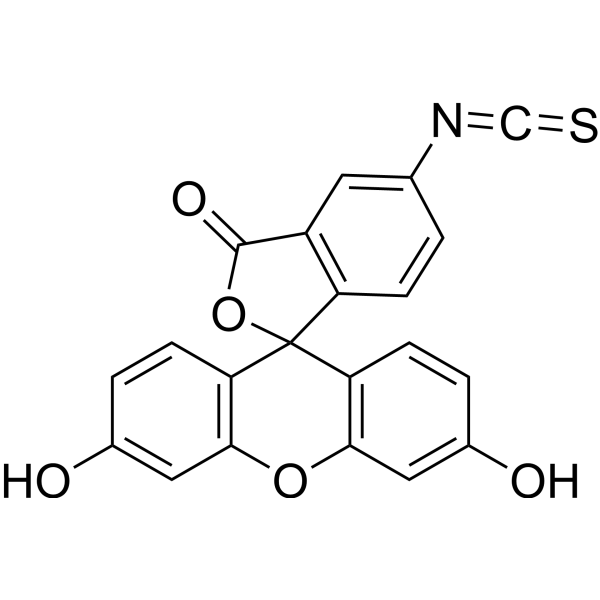
  • HY-66019
    FITC
    90+ Cited Publications

    Fluorescein 5-isothiocyanate

    Fluorescent Dye Inflammation/Immunology
    FITC (Fluorescein Isothiocyanate), is one of the green fluorescein derivatives widely used in biology. FITC has the characteristics of high absorptivity and excellent fluorescence quantum yield. The isothiocyanate group of FITC can be combined with amino, sulfhydryl, imidazole, tyrosyl, carbonyl and other groups on the protein, so as to achieve protein labeling including antibodies and lectins. In addition to its use as a protein marker, FITC can also be used as a fluorescent protein tracer to rapidly identify pathogens by labeling antibodies, or for microsequencing of proteins and peptides (HPLC). The maximum excitation wavelength of FITC is 494 nm. Once excited, it fluoresces yellow-green at a maximum emission wavelength of 520 nm. In addition, FITC is also a hapten that can induce contact hypersensitivity (CHS) and induce an atopic dermatitis model .
    FITC
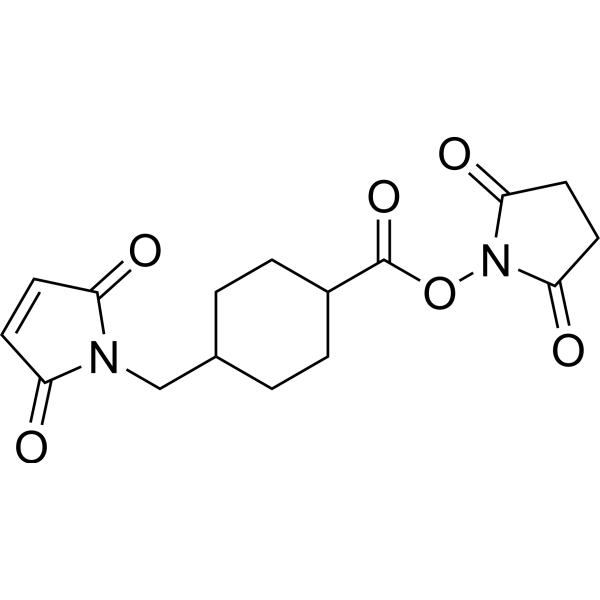
  • HY-42360
    SMCC
    1 Publications Verification

    ADC Linker Cancer
    SMCC is a protein crosslinker. SMCC contains an amine-reactive N-hydroxysuccinimide ester and a sulfhydryl-reactive maleimide group that can be used in the conjugation of proteins. SMCC-conjugated antigen coupled spleen cells to induce antigen-specific immune responses .
    SMCC
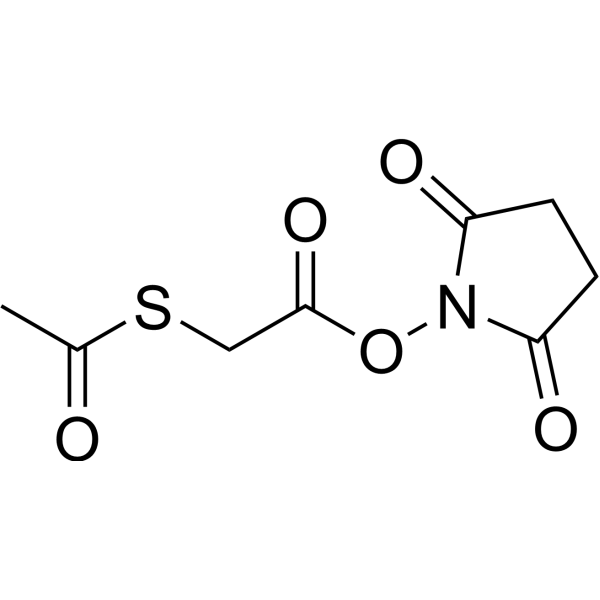
  • HY-135233

    SATA

    Biochemical Assay Reagents Others
    N-Succinimidyl S-acetylthioacetate (SATA) is a protein modifying agent. N-Succinimidyl S-acetylthioacetate adds sulfhydryl groups to proteins and other amine-containing molecules in a protected form. N-Succinimidyl-S-acetylthioacetate can thiolate antibodies, thereby promoting efficient attachment of antibodies to other molecules and exerting conjugation activity. N-Succinimidyl-S-acetylthioacetate can be used in immunoassays such as ELISA studies .
    N-Succinimidyl-S-acetylthioacetate
  • HY-W020780

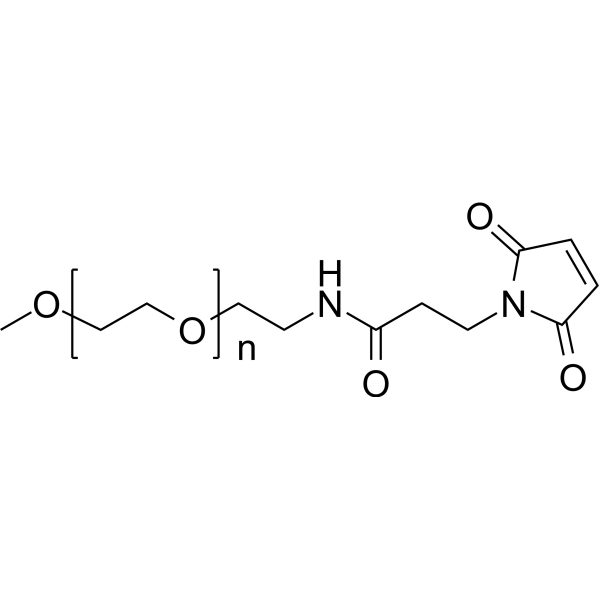
    mPEG5000-Maleimide

    Biochemical Assay Reagents Cancer
    mPEG5000-Mal (mPEG5000-Maleimide) is a PEG-derived selective covalent binding agent for sulfhydryl groups (RSGs), which can form irreversible thioether bonds with sulfhydryl groups under near-neutral conditions via the maleimide group. The mechanism of action of mPEG5000-Mal can be divided into two categories: firstly, as an enzyme modifier, it binds to target proteins through hydrophobic interactions, hydrogen bonds, and van der Waals forces, altering the protein's secondary structure; secondly, as a nanoparticle surface modifier, it covalently binds to sulfhydryl groups on the surface of red blood cells, changing the surface properties and morphology of the red blood cells, leading to their phagocytosis by macrophages of the reticuloendothelial system. mPEG5000-Mal can react with free cysteine in proteins, increasing the apparent molecular weight of the modified protein by 10-15 kDa for detection purposes. mPEG5000-Mal can enhance the thermal stability and catalytic activity of enzymes, and improve the macrophage targeting of nanoparticles, enabling targeted drug delivery. mPEG5000-Mal can be applied in enzyme engineering research in the food industry and in oncology, assisting radiotherapy by inhibiting tumor-associated macrophage infiltration and enhancing anti-tumor immune responses .
    mPEG5000-Mal
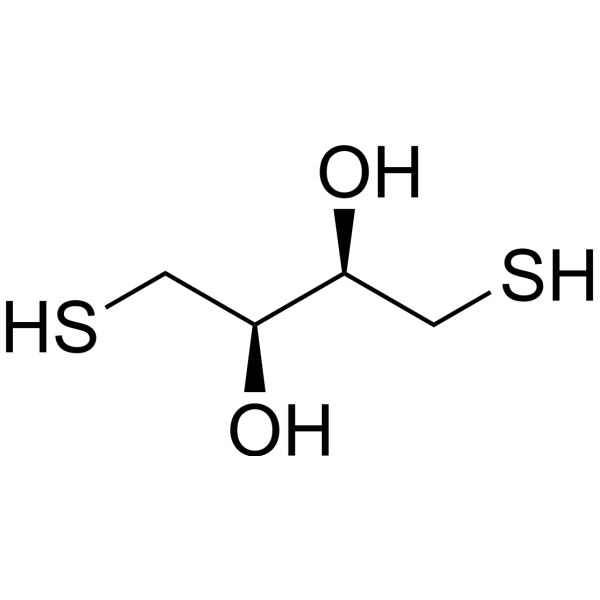
  • HY-15917A
    L-Dithiothreitol
    2 Publications Verification

    Biochemical Assay Reagents Others
    L-Dithiothreitol (DTT) is a reducing agent commonly used in various biochemical applications to break disulfide bonds in proteins, thereby denaturing proteins or preventing the formation of unwanted aggregates. DTT has a unique chemical property that cleaves the sulfur-sulfur bond in the disulfide bond to form a sulfhydryl group. This makes it a useful tool for protein purification, enzyme assays, and protein structure studies.
    L-Dithiothreitol
  • HY-DY1007

    Fluorescent Dye Inflammation/Immunology
    FITC (Fluorescein Isothiocyanate) (solution) , is one of the green fluorescein derivatives widely used in biology. FITC has the characteristics of high absorptivity and excellent fluorescence quantum yield. The isothiocyanate group of FITC can be combined with amino, sulfhydryl, imidazole, tyrosyl, carbonyl and other groups on the protein, so as to achieve protein labeling including antibodies and lectins. In addition to its use as a protein marker, FITC can also be used as a fluorescent protein tracer to rapidly identify pathogens by labeling antibodies, or for microsequencing of proteins and peptides (HPLC). The maximum excitation wavelength of FITC is 494 nm. Once excited, it fluoresces yellow-green at a maximum emission wavelength of 520 nm. In addition, FITC is also a hapten that can induce contact hypersensitivity (CHS) and induce an atopic dermatitis model .
    Solvent and concentration: DMSO: 20 mM
    The 1 mL volume is defined as the base specification. All larger sizes correspond to incremental volumes of this base.
    FITC (solution)
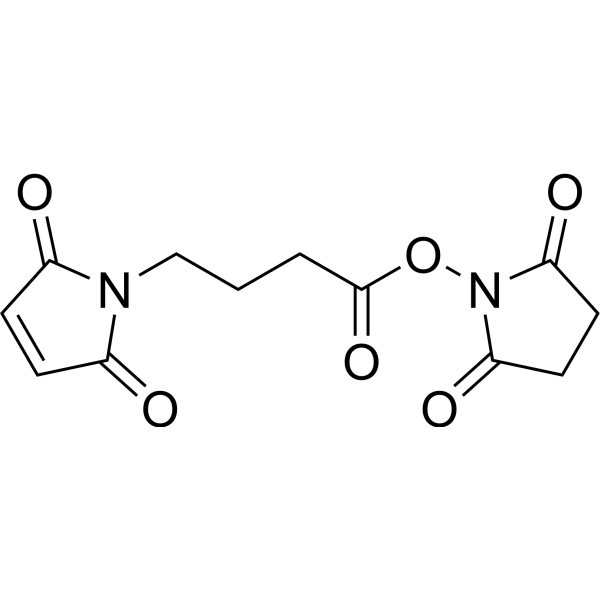
  • HY-W041994

    Fructose-1,6-bisphosphate aldolase Biochemical Assay Reagents Cancer
    GMBS is a heterobifunctional crosslinker targeting primary amines and sulfhydryl groups. GMBS can be used for chemical crosslinking of proteins and crosslinking mass spectrometry (CXMS) to study protein folding and map interfaces between interacting proteins .
    GMBS
  • HY-W998680

    5-FITC-Maleimide

    Fluorescent Dye Others
    Fluorescein-maleimide (5-FITC-Maleimide) is a thiol-reactive fluorescent derivatization reagent and non-specific protein labeling reagent. Fluorescein-maleimide covalently binds to protein thiol groups for protein labeling. Fluorescein-maleimide covalently binds to protein amino and imidazole groups under neutral pH conditions. Fluorescein-maleimide is used for fluorescent labeling of proteins, nucleic acids or other molecules containing one or more thiol groups (Ex/Em = 494/519 nm) .
    Fluorescein-maleimide
  • HY-W106411

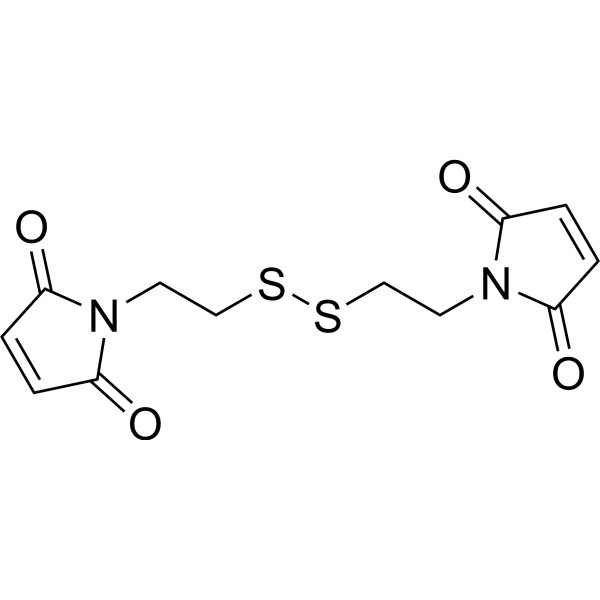
    Dithio-bis-maleimidoethane

    Biochemical Assay Reagents Others
    DTME (dithio-bis-maleimidoethane) is a homobifunctional, maleimide crosslinker specifically designed for conjugation between sulfhydryl groups (-SH). DTME, whose molecular structure consists of two maleimide groups connected by an ethylene disulfide bridge, can specifically react with thiol - containing molecules (such as cysteine residues) to form stable covalent bonds. DTME allows crosslinks that can be cleaved with reducing agents such as DTT (HY-15917). DTME is commonly utilized to explore and characterize protein structure, particularly oligomerization, or protein interactions .
    DTME
  • HY-129654

    Sodium (2-Sulfonatoethyl)methanethiosulfonate

    Biochemical Assay Reagents Others
    MTSES sodium (Sodium (2-Sulfonatoethyl)methanethiosulfonate) is a negatively charged, membrane-impermeable methanethiosulfonate (MTS). MTS is a compound that reacts with sulfhydryl groups to form mixed disulfide bonds and is often used to study cysteine ??residues on proteins.
    MTSES sodium
  • HY-D1260

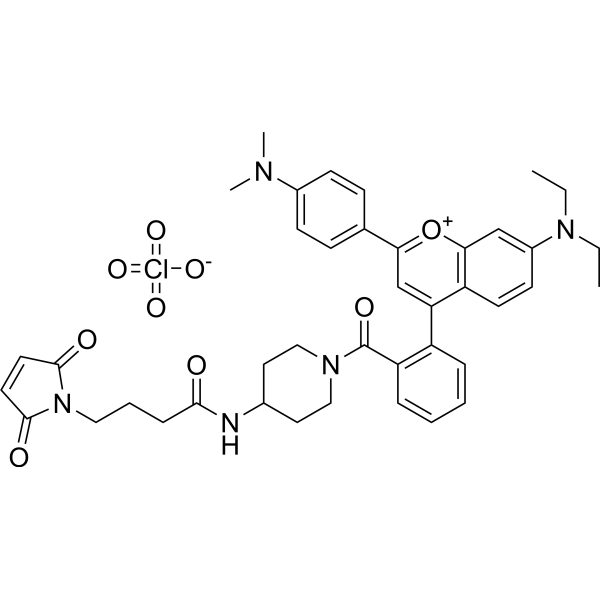
    PSH-red

    Fluorescent Dye Neurological Disease
    FM-red (PSH-red) is a red-emitting and environment-sensitive probe for selectively detecting and labeling protein thiols. FM-red can be used to image protein sulfhydryl groups in live cells and in vivo. FM-red also could be used to measure of the redox states of thioredoxin (Trx) .
    FM-red
  • HY-D1869

    Fluorescent Dye Others
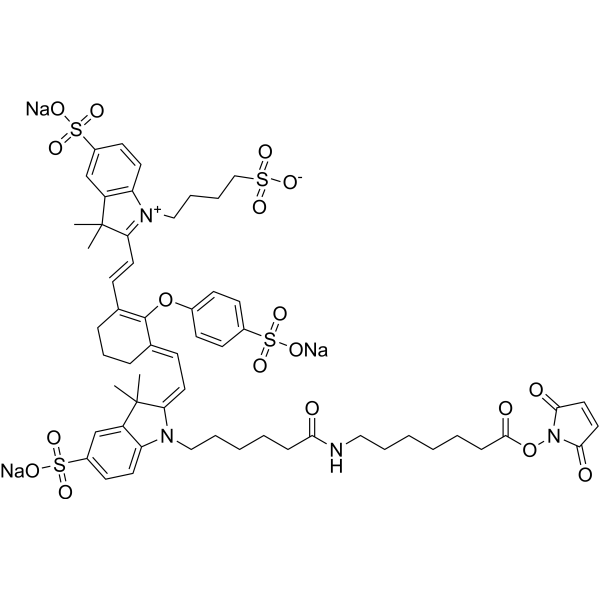
    800CW maleimide is an infrared dye that can be used for labeling molecules that contain free sulfhydryl (–SH) groups (Ex: 778 nm; Em: 796 nm). 800CW maleimide binds to plasma proteins .
    800CW maleimide
  • HY-P1801

    Cys-[HIV-Tat (47-57)]

    HIV Drug Derivative Others
    Cys-TAT(47-57) (Cys-[HIV-Tat (47-57)]), TAT (HY-P0281) derivative, is a Cysteine (HY-Y0337)-tagged cell-penetrating peptide (CPP) derived from the HIV TAT protein. Cys-TAT(47-57) can be used for the research for the research of drug delivery .
    Cys-TAT(47-57)
  • HY-D2182

    Fluorescent Dye Others
    Preactivated PE-Cy5 Maleimide is a sulfhydryl reactive dye that reacts with free sulfhydryl groups on proteins. Preactivated APC-Cy5.5 Maleimide binds easily to proteins or antibodies, and does not change the spectral characteristics of APC-Cy/YF after activation.
    Preactivated PE-Cy5 Maleimide
  • HY-D2180

    Fluorescent Dye Others
    Preactivated APC-Cy5.5 Maleimide is a sulfhydryl reactive dye that reacts with free sulfhydryl groups on proteins. Preactivated APC-Cy5.5 Maleimide binds easily to proteins or antibodies, and does not change the spectral characteristics of APC-Cy/YF after activation.
    Preactivated APC-Cy5.5 Maleimide
  • HY-D1618

    Fluorescent Dye Others
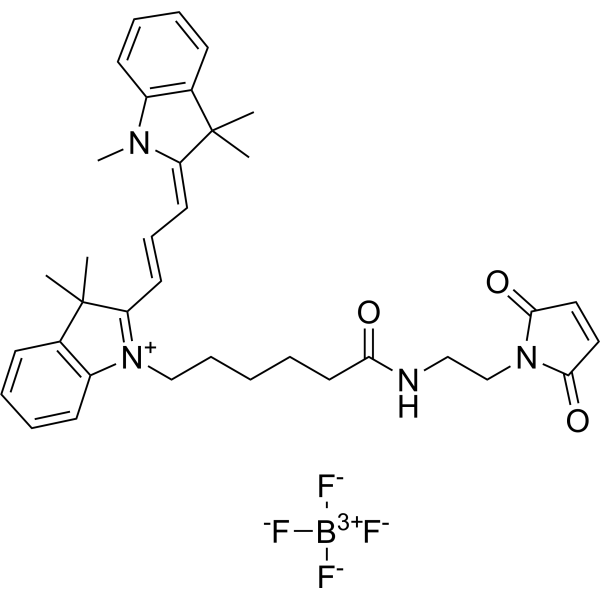
    Cyanine3 maleimide tetrafluoroborate is a specific labeling reagent for sulfhydryl groups with the λex of 550 nm and λem of 580 nm. Cyanine3 maleimide tetrafluoroborate can be used for protein and peptide labeling .
    Cyanine3 maleimide tetrafluoroborate
  • HY-157920

    N-Biotinyl-N'-[2-(N-maleimido)ethyl]piperazine

    Biochemical Assay Reagents Others
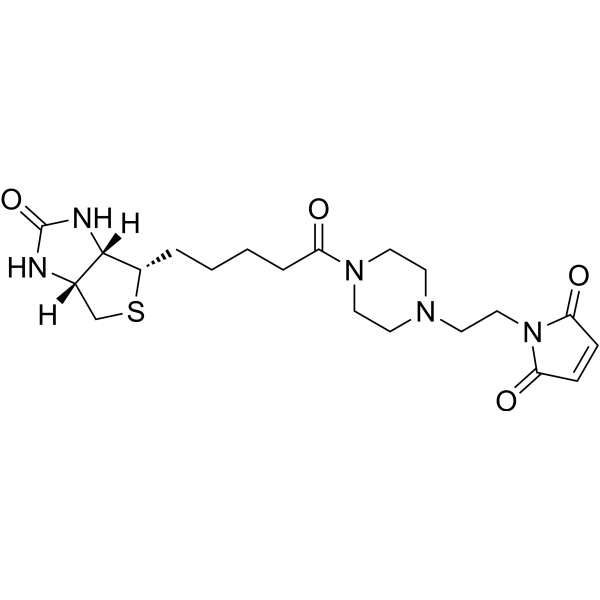
    Biotin-PE-maleimide (N-Biotinyl-N'-[2-(N-maleimido)ethyl]piperazine) is a bulky, membrane-impermeable, sulfhydryl-containing reagent with a relatively large molecular size. Biotin-PE-maleimide can be used for biotin labeling (such as thiol groups) and detection of proteins or other biomolecules .
    Biotin-PE-maleimide
  • HY-W698574

    Biochemical Assay Reagents
    Dansylamidoethyl mercaptan is a molecule that reacts with -SH groups of proteins and other sulfhydryl-containing molecules and has activity for detecting SS bonds in proteins.
    Dansylamidoethyl mercaptan
  • HY-D2094

    Fluorescent Dye Inflammation/Immunology Cancer
    PerCP Maleimide is a fluorescent dye that reacts with free sulfhydryl groups on proteins. PerCP is a red fluorescence albuminous dye for immunostaining and Maleimide can be leveraged for the preparation of fluorogenic probe, which is mainly used for the specific detection of thiol analytes .
    PerCP Maleimide
  • HY-174961

    Fmoc-NH-PEG1000-Mal

    Biochemical Assay Reagents Others
    Fmoc-PEG1000-Maleimide (Fmoc-NH-PEG1000-Mal) is a PEG derivative with an Fmoc protecting group and a Maleimide (HY-W007324) reactive group. Fmoc is a commonly used amino protecting group that protects the amino group from unwanted reactions until it is removed for a specific coupling reaction. Maleimide forms a stable thioether bond with sulfhydryl (-SH) groups. PEG modification can improve solubility and stability and reduce the immunogenicity of proteins and peptides .
    Fmoc-PEG1000-Maleimide
  • HY-174961C

    Fmoc-NH-PEG5000-Mal

    Biochemical Assay Reagents Others
    Fmoc-PEG5000-Maleimide (Fmoc-NH-PEG5000-Mal) is a PEG derivative with an Fmoc protecting group and a Maleimide (HY-W007324) reactive group. Fmoc is a commonly used amino protecting group that protects the amino group from unwanted reactions until it is removed for a specific coupling reaction. Maleimide forms a stable thioether bond with sulfhydryl (-SH) groups. PEG modification can improve solubility and stability and reduce the immunogenicity of proteins and peptides .
    Fmoc-PEG5000-Maleimide
  • HY-W800679

    Biochemical Assay Reagents Others
    Mal-Cyclohexyl-PEG3-Biotin is a PEG linker containing a maleimide moiety and a biotin group. Maleimides react specifically with sulfhydryl groups to form a stable thioether linkage when the pH is between 6.5 and 7.5. The biotinylation can react with amine molecules in the presence of activator EDC or HATU. PEG attached to the biotin gives an extended spacer arm that permits the biotin to reach into the binding pocket of the protein. The PEG moiety also increases solubility of Biotin-PEG conjugates considerably.
    Mal-Cyclohexyl-PEG3-Biotin
  • HY-D2763

    Fluorescent Dye Others
    BP Fluor 532 maleimide is a photostable, bright yellow-fluorescent dye with pH insensitive emission from pH 4 to pH 10. The excitation of BP Fluor 532 is ideally suited for the frequency-doubled Nd:YAG laser line. BP Fluor 532 dye can be conjugated to a variety of antibodies, peptides, proteins, tracers, and amplification substrates, and is often used for the generation of stable signals in imaging and flow cytometry. Maleimide is the most popular sulfhydryl-reactive group for conjugating the dye to a thiol group on a protein, oligonucleotide thiophosphate, or low molecular weight ligand. The maleimide group specifically and efficiently reacts with reduced thiols (sulfhydryl groups, –SH) at pH 6.5 to 7.5 to form a stable thioether bond. The resulting conjugates exhibit brighter fluorescence and greater photostability than the conjugates of many other spectrally similar fluorophores.
    BP Fluor 532 maleimide
  • HY-174961B

    Fmoc-NH-PEG3400-Mal

    Biochemical Assay Reagents Others
    Fmoc-PEG3400-Maleimide (Fmoc-NH-PEG3400-Mal) is a PEG derivative with an Fmoc protecting group and a Maleimide (HY-W007324) reactive group. Fmoc is a commonly used amino protecting group that protects the amino group from unwanted reactions until it is removed for a specific coupling reaction. Maleimide forms a stable thioether bond with sulfhydryl (-SH) groups. PEG modification can improve solubility and stability and reduce the immunogenicity of proteins and peptides .
    Fmoc-PEG3400-Maleimide
  • HY-174961A

    Fmoc-NH-PEG2000-Mal

    Biochemical Assay Reagents Others
    Fmoc-PEG2000-Maleimide (Fmoc-NH-PEG2000-Mal) is a PEG derivative with an Fmoc protecting group and a Maleimide (HY-W007324) reactive group. Fmoc is a commonly used amino protecting group that protects the amino group from unwanted reactions until it is removed for a specific coupling reaction. Maleimide forms a stable thioether bond with sulfhydryl (-SH) groups. PEG modification can improve solubility and stability and reduce the immunogenicity of proteins and peptides .
    Fmoc-PEG2000-Maleimide
  • HY-42360G

    ADC Linker Inflammation/Immunology Cancer
    SMCC (GMP) is the GMP level of SMCC (HY-42360). GMP guidelines are used to produce SMCC (HY-42360) (GMP). GMP small molecules works appropriately as an auxiliary reagent for cell research manufacture. SMCC (GMP) is a protein crosslinker. SMCC (GMP) contains an amine-reactive N-hydroxysuccinimide ester and a sulfhydryl-reactive maleimide group that can be used in the conjugation of proteins. SMCC-conjugated antigen coupled spleen cells to induce antigen-specific immune responses.
    SMCC
  • HY-N12639

    TRP Channel Others
    β-Sanshool is found in Zanthoxylum bungeanum and has a unique pungent taste. β-Sanshool is a TRPV1 activator that activates TRPV1 to increase intracellular calcium concentration. β-Sanshool has antioxidant effects and enhances free radical scavenging activity. β-Sanshool increases the thermal denaturation temperature and stabilizes protein structures. β-Sanshool induces sensory experiences of numbness and bitterness .
    β-Sanshool

Inquiry Online

Your information is safe with us. * Required Fields.

Salutation


Country or Region *

Applicant Name *


Organization Name *

Department *


Email Address *


Product Name *

Cat. No.


Requested quantity *

Phone Number *


Remarks

Inquiry Online

Inquiry Information

Product Name:
Cat. No.:
Quantity:
MCE Japan Authorized Agent:

