20 Results for "

proteolysis targeting chimeras (PROTACs)

" in MedChemExpress (MCE) Product Catalog:
Products (20)

20 Results for "proteolysis targeting chimeras (PROTACs)" in MCE Product Catalog:

15
15 Publications Verification
Cat. No.: HY-145388
CAS No.: 2380274-50-8
Purity:  99.89%
Target:  

PROTACs SWI/SNF Complex

Research Areas:  

Cancer

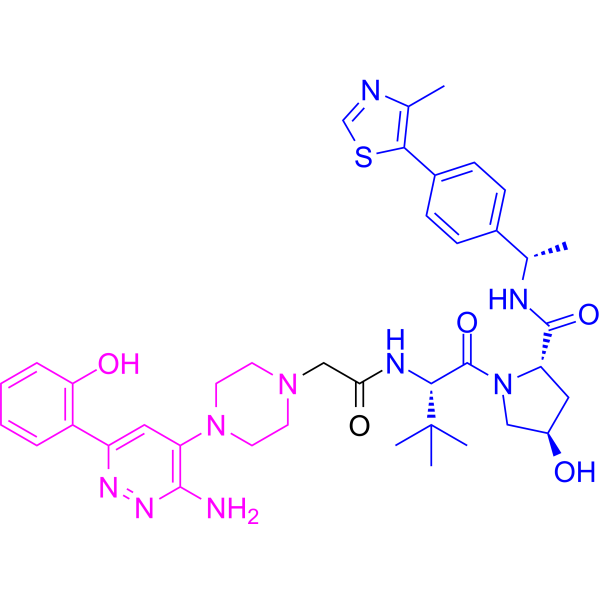
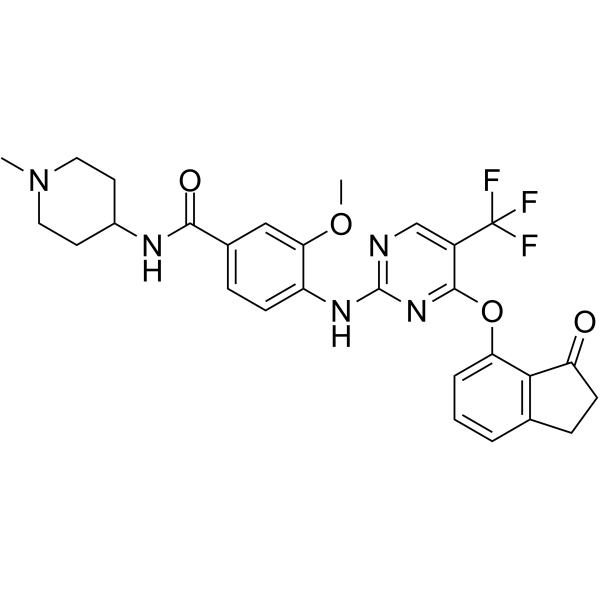
AU-15330 is a proteolysis-targeting chimera (PROTAC) degrader of the SWI/SNF ATPase subunits, SMARCA2 and SMARCA4. AU-15330 induces potent inhibition of tumour growth in xenograft models of prostate cancer and synergizes with the AR antagonist enzalutamide. AU-15330 induces disease remission in castration-resistant prostate cancer (CRPC) models without toxicity .
loading...
    loading...
5
5 Cited Publications
Cat. No.: HY-139156
CAS No.: 2523016-96-6
Purity:  99.86%
Target:  

PROTACs PARP

Research Areas:  

Cancer

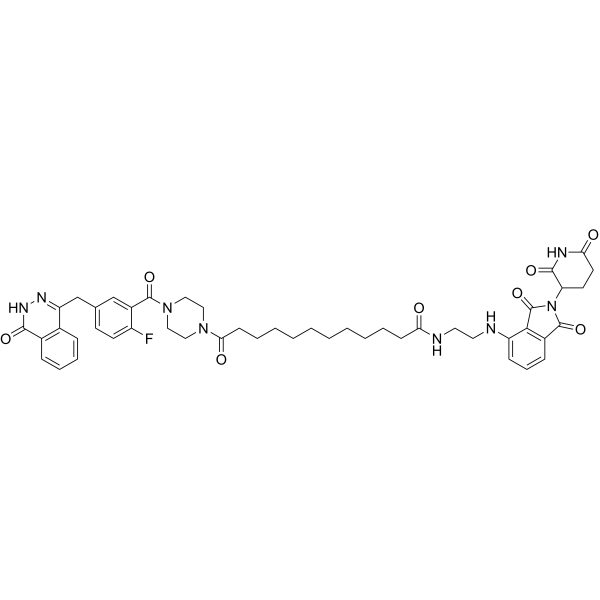
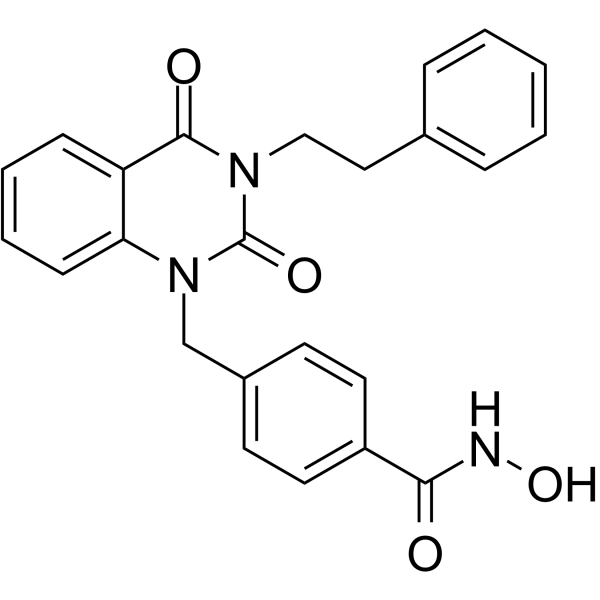
SK-575 is a highly potent and specific proteolysis-targeting chimera (PROTAC) degrader of PARP1, with an IC50 of 2.30 nM. SK-575 potently inhibits the growth of cancer cells bearing BRCA1/2 mutations .
loading...
    loading...
1
1 Cited Publications
Cat. No.: HY-125877
CAS No.: 2163793-38-0
Purity:  98.13%
Target:  

PROTACs Bcl-2 Family

Research Areas:  

Cancer

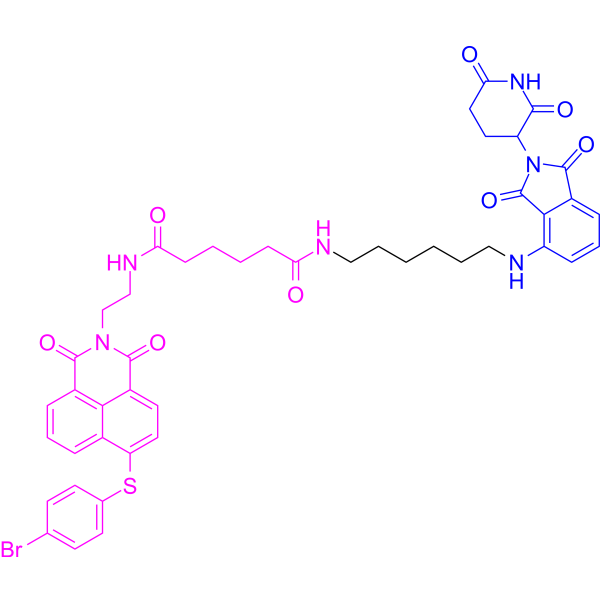
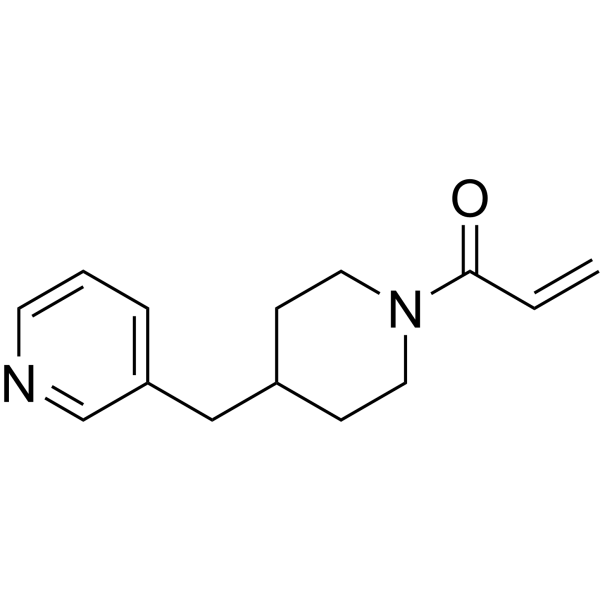
PROTAC Mcl1 degrader-1 (compound C3), a proteolysis targeting chimera (PROTAC) based on Cereblon ligand, is a potently and selectively Mcl-1 (Bcl-2 family member) inhibitor with an IC50 of 0.78 μM. PROTAC Mcl1 degrader-1 inhibits Bcl-2 with an IC50 of 0.54 μM .
loading...
    loading...
1
1 Cited Publications
Cat. No.: HY-156395
CAS No.: 3044099-90-0
Purity:  98.05%
Target:  

E1/E2/E3 Enzyme

Research Areas:  

Others

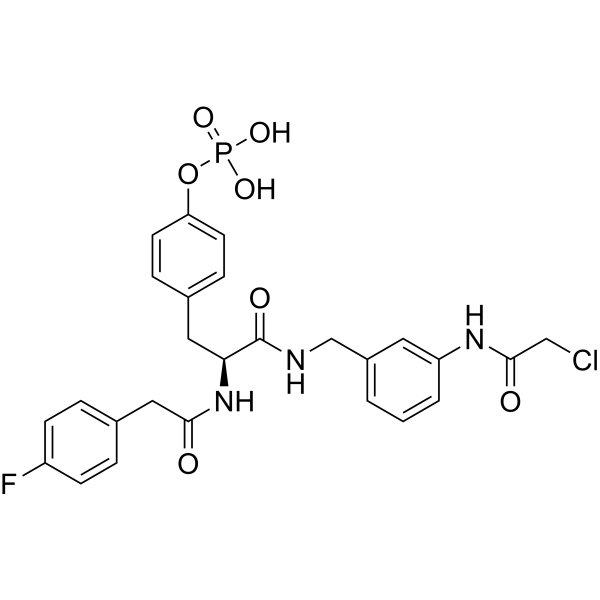
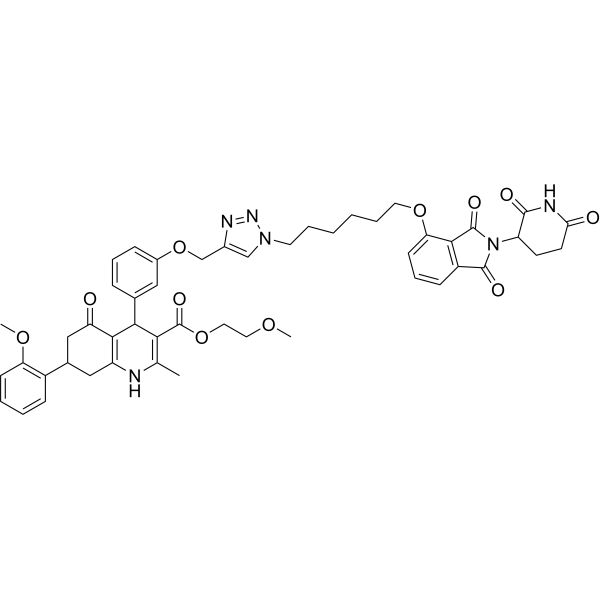
MN551 is a covalent modulator of SOCS2 and CISH, with selectivity for SOCS2 and CISH over SOCS4. MN551 covalently modifies Cys111 in the SH2 domain of SOCS2 and Cys144 in the EF loop of the CISH SH2 domain, while only minimally modifying Cys471 in the BG loop of the SOCS6 SH2 domain. MN551 increases the thermal stability of the recombinant SOCS2-ElonginB-ElonginC complex and competitively blocks the binding of SOCS2 to its substrate; when delivered via the prodrug MN714, it blocks the intracellular recruitment of substrates by SOCS2. MN551 can serve as a chemical probe for investigating the biological functions of SOCS2 and its CRL5 complex, and also act as an E3 ligase-binding module in proteolysis-targeting chimeras (PROTACs) .
loading...
    loading...
Cat. No.: HY-124625
CAS No.: 1227948-02-8
Purity:  98.64%
BI-4464 is a highly selective, ATP competitive PTK2/FAK protein kinase inhibitor with an IC50 value of 17 nM. BI-4464 is a FAK (HY-43760) ligand and linker conjugate. BI-4464 can be used to construct proteolysis targeting chimeras (PROTACs), such as PROTAC FAK degrader 4 (HY-178467). PROTAC FAK degrader 4 is a highly potent and selective FAK PROTAC degrader .
loading...
    loading...
Cat. No.: HY-126147
CAS No.: 2252395-44-9
Purity:  99.04%
Target:  

HDAC

Research Areas:  

Cancer

J22352 is a PROTAC (proteolysis-targeting chimeras)-like and highly selective HDAC6 inhibitor with an IC50 value of 4.7 nM. J22352 promotes HDAC6 degradation and induces anticancer effects by inhibiting autophagy and eliciting the antitumor immune response in glioblastoma cancers, and leading to the restoration of host antitumor activity by reducing the immunosuppressive activity of PD-L1 .
loading...
    loading...
Cat. No.: HY-P10446
CAS No.: 3036046-04-2
Research Areas:  

Cancer

TAT-PiET-PROTAC is a proteolysis-targeting chimera (PROTAC)-modified TAT-PiET (HY-P10445), which is a cell-penetrating peptide targeting the extra-terminal (ET) domain of BRD4. TAT-PiET-PROTAC can reduce BRD4 and JMJD6 levels and inhibit cell proliferation. TAT-PiET-PROTAC also resists the endocrine resistance of ERα-positive breast cancer cells. TAT-PiET-PROTAC can be used for the research of cancer, such as breast cancer .
loading...
    loading...
Cat. No.: HY-176261
Target:  

PROTACs

Research Areas:  

Cancer

DDD2 is a selective and potent VHL-mediated PROTAC NUDT5 degrader. DDD2 induces robust NUDT5 degradation. DDD2 can be used in cancer research, such as lymphocytic leukemia and osteosarcoma .
loading...
    loading...
Cat. No.: HY-163019
CAS No.: 2189497-60-5
EN884 is a BRD4 degrader via a SKP1- and proteasome-dependent manner. EN884 can be used in synthetic proteolysis targeting chimeras (PROTACs) .
loading...
    loading...
Cat. No.: HY-156814
CAS No.: 3093738-79-2
Target:  

Hedgehog

Research Areas:  

Cancer

HPP-9 is a Proteolysis-Targeting Chimeras PROTACs based on Hedgehog Pathway Inhibitor-1 (HPI-1), with the pIC50 of 6.71, that can degrade BET bromodomains. HPP-9 has antitumor activity [1[.
loading...
    loading...
Cat. No.: HY-175179
Research Areas:  

Cancer

LO-3-61, a JQ-1 (HY-13030) analog bearing a truncated fumaramide handle, is a PROTAC (proteolysis-targeting chimeras)-like BRD4 degrader. LO-3-61 degrades both the long and short isoforms of BRD4 CUL4DcAr16-dependently in cells. LO-3-61 shows selectivity for BRD3 and BRD4 degradation in MDA-MB-231 cells .
loading...
    loading...
Cat. No.: HY-173378
CAS No.: 2913165-27-0
Target:  

Ligands for E3 Ligase

Research Areas:  

Cancer

E3 ligase Ligand 59 (Compound 20e) is the E3 ubiquitin ligase ligand of FDU73 (HY-173125). E3 ligase Ligand 59 can be used to synthesize PROTACs .
loading...
    loading...
Cat. No.: HY-175562
LDH-IN-4 is a LDHA and LDHB inhibitor, as well as a ligand for target protein for PROTACs. LDH-IN-4 can be used to synthesize proteolysis-targeting chimeras (PROTAC), such as MS6105 (HY-152261). LDH-IN-4 is applicable to pancreatic cancer-related research .
loading...
    loading...
Cat. No.: HY-W947273
CAS No.: 2766178-72-5
Target:  

Ligands for E3 Ligase

Research Areas:  

Cancer

CRBN ligand-898 is a CRBN ligand with a Kd of 216 nM. CRBN ligand-898 binds to CRBN, and when incorporated into proteolysis targeting chimeras (PROTACs), mediates degradation of intended target proteins. CRBN ligand-898 does not induce degradation of IMiD-associated neosubstrates Ikaros (IKZF1) and Aiolos (IKZF3). CRBN ligand-898 can be used to synthesize PROTACs .
loading...
    loading...
Cat. No.: HY-L151
544 compounds

PROTACs (Proteolysis-targeting chimeras) is a class of molecules that utilize ubiquitin-proteasome system (UPS) to ubiquitinate and degrade target proteins. The PROTACs molecule consists of two ligands joined by a linker. The one-to-one interaction between PROTACs and target proteins determines the high efficiency of PROTACs, making it a potential molecule for targeted protein degradation (TPD) therapy.

MCE supplies a unique collection of 544 PROTACs that effectively degrade target proteins with more powerful screening capability. MCE PROTAC Library is a useful tool for signal pathway research, protein degradation therapy research, drug discovery and drug repurposing, etc.

Cat. No.: HY-184505
CAS No.: 2790482-16-3
Target:  

HDAC

Research Areas:  

Cancer

(±)-trans-BAS-2 is a hHDAC6 inhibitor with an IC50 value of 0.462 μM. (±)-trans-BAS-2 serves as a scaffold for the design of proteolysis-targeting chimeras (PROTACs) and induces proteasome-dependent degradation of hHDAC6 in cells. (±)-trans-BAS-2 can be used in the research of triple-negative breast cancer and multiple myeloma .
loading...
    loading...
Cat. No.: HY-184195
PROTAC AR Degrader-13 is a proteolysis-targeting chimera (PROTACs) that targets the androgen receptor (AR). PROTAC AR Degrader-13 has a DC50 of 0.90 nM in LNCaP cells and a DC50 of 0.23 nM in hDPC cells. PROTAC AR Degrader-13 induces AR degradation, downregulates TGF-β1 expression, upregulates β-catenin levels, and restores the Wnt/β-catenin pro-proliferation signaling in hair follicles. In a testosterone-induced androgenetic alopecia mouse model, PROTAC AR Degrader-13 accelerates hair regeneration rate, increases hair density and hair diameter. PROTAC AR Degrader-13 can be used for the research of androgenetic alopecia .
loading...
    loading...
Cat. No.: HY-L129
128 compounds

Proteolysis-targeting chimera (PROTAC) has been developed to be a useful technology for targeted protein degradation. PROTACs consist of a ligand for E3 ligase (E3 ligase binder), a linker and a ligand (mostly small-molecule inhibitor) for protein of interest(target binder). Upon binding to the target protein, the PROTACs can recruit E3 for target protein ubiquitination, which is subjected to proteasome-mediated degradation. Therefore, PROTACs execute their functions by degrading the target proteins rather than inhibiting them, which has a great superiority in overcoming resistance caused by target mutation or overexpression. To date, PROTAC technology has been applied to a variety of targets, including AR, ER, BTK, BET, and BCR-ABL to overcome resistance.

MCE carefully prepared a unique collection of 128 ligands for target proteins, which have been reported to be used in PROTAC design. MCE Target Protein Ligand Library is a useful tool for PROTAC development.

Cat. No.: HY-L128
187 compounds

Proteolysis-targeting chimera (PROTAC) has been developed to be a useful technology for targeted protein degradation. PROTACs consist of a ligand for E3 ligase (E3 ligase binder), a linker and a ligand (mostly small-molecule inhibitor) for protein of interest(target binder). Upon binding to the target protein, the PROTACs can recruit E3 for target protein ubiquitination, which is subjected to proteasome-mediated degradation.

Although there are more than 600 E3 ubiquitin ligases, only several with small molecule ligands have been used for designing PROTACs, including Skp1-Cullin-F box complex containing Hrt1 (SCF), Von Hippel-Lindau tumor suppressor (VHL), Cereblon (CRBN), inhibitor of apoptosis proteins (IAPs), and mouse double minute 2 homolog (MDM2).

MCE carefully prepared a unique collection of 187 ligands for E3 ligase, which have been reported to be used in PROTAC design. MCE E3 ligase ligand library is a useful tool for PROTAC development.

Cat. No.: HY-130646
CAS No.: 2472645-27-3
Target:  

PROTACs PARP

Research Areas:  

Cancer

iVeliparib-AP6 is a proteolysis-targeting chimera (PROTAC) molecule designed based on Veliparib (HY-10129), which targets PARP1/2. The DC50s of iVeliparib-AP6 for inducing the degradation of PARP1 and PARP2 are 36 nM and 63 nM, respectively, and its IC50s are 69 nM and 21 nM, respectively. iVeliparib-AP6 contains a Veliparib-based PARP inhibitor warhead linked to a CRBN E3 ligase binder; it uses Thalidomide (HY-14658) as a ligand to recruit CRBN E3 ubiquitin ligase and exerts the PARP2 degradation mechanism .
loading...
    loading...
  • 1

