10 Results for "

ribosomal genes

" in MedChemExpress (MCE) Product Catalog:
Products (10)

10 Results for "ribosomal genes" in MCE Product Catalog:

66
66 Publications Verification
Cat. No.: HY-135748A
Poly (I:C):Kanamycin (1:1) sodium is an isometric complex of Poly (I:C) (HY-135748) and Kanamycin (HY-16566). Poly(I:C) sodium, a synthetic analog of double-stranded RNA, is a TLR3 and retinoic acid-inducible gene I receptor (RIG-I and MDA5) agonist. Poly(I:C) sodium can be used as a vaccine adjuvant to enhance innate and adaptive immune responses and induce apoptosis in cancer cells . Kanamycin is an orally active antibacterial agent (Gram-negative/positive bacteria) that inhibits translocation and causes miscoding by binding to the 70S ribosomal subunit. Kanamycin shows good inhibitory activity against Mycobacterium tuberculosis (susceptible and drug-resistant) and Klebsiella pneumoniae, and can be used in the research of tuberculosis and pneumonia .
loading...
    loading...
1
1 Cited Publications
Cat. No.: HY-113138
CAS No.: 2140-69-4
Purity:  99.05%
Synonyms: N3-Methyluridine
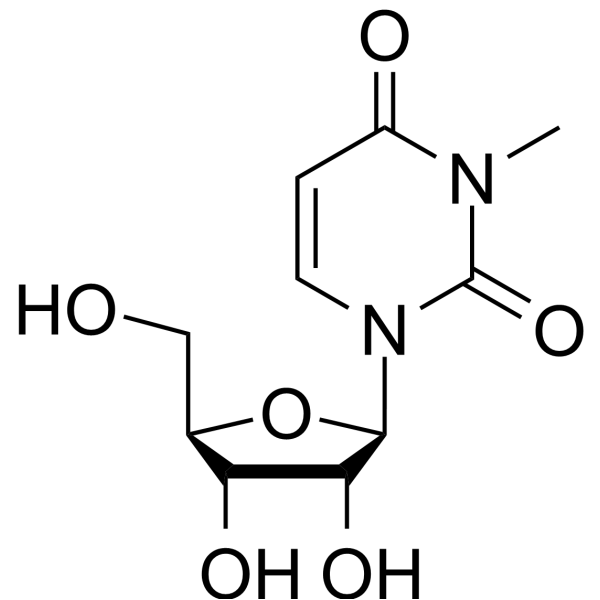
3-Methyluridine (m 3U; N3-Methyluridine) is a methylated nucleotide present in ribosomal RNA (rRNA), mainly targeting specific base sites of RNA molecules such as 23S rRNA. 3-Methyluridine can introduce a methyl group at the N3 position of uracil, affecting the secondary structure stability and base pairing ability of RNA, and regulating ribosome function. For example, it affects ribosomal subunit binding and tRNA interaction. 3-Methyluridine is often used as a key raw material for the synthesis of modified nucleotides, and is used to construct RNA oligonucleotides containing methylation modifications to study the effects of RNA methylation on gene expression and drug resistance .
loading...
    loading...
1
1 Cited Publications
Cat. No.: HY-113542
CAS No.: 100513-53-9
Synonyms: (+)-Blasticidin A
Target:  

Antibiotic Fungal

Research Areas:  

Infection

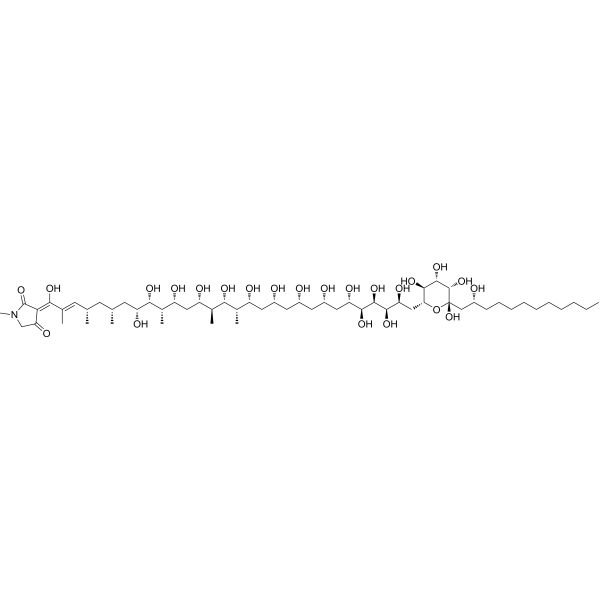
Blasticidin A ((+)-Blasticidin A) is a tetraamide acid derivative antibiotic produced by Streptomyces griseochromogenes, as well as a selective inhibitor of aflatoxin production. Blasticidin A exhibits antimicrobial activity against yeast. Blasticidin A can be used in research related to aflatoxin contamination (infection by Aspergillus sp.) .
loading...
    loading...
Cat. No.: HY-P10622
SHLP-3 is a mitochondrial derived peptide encoded by the 16S ribosomal RNA (MT-RNR2) gene. SHLP-3 increases cell viability and reduces apoptosis in insulinoma NIT-1β cells and human prostate cancer 22Rv1 cells. SHLP-3 increases mitochondrial function and exerts cytoprotective effects by increasing mitochondrial oxygen consumption rate (OCR), cellular ATP and reducing the ability to produce ROS. SHLP-3 can be used in the study of diabetes and cancer .
loading...
    loading...
Cat. No.: HY-P10624
CAS No.: 1191923-95-1
SHLP-5 is a mitochondrial-derived peptide, a biologically active microprotein encoded by the 16s ribosomal RNA (MT-RNR2) gene. SHLP-5 can be used in the research of diabetes, Alzheimer's disease, cardiovascular disease and prostate cancer .
loading...
    loading...
Cat. No.: HY-P10621
SHLP-1 is a mitochondrial-derived peptide, a biologically active microprotein encoded by the 16S ribosomal RNA (MT-RNR2) gene. SHLP-1 can be used in the research of diabetes, Alzheimer's disease, cardiovascular disease and prostate cancer .
loading...
    loading...
Cat. No.: HY-P10623
CAS No.: 1191923-94-0
SHLP-4 is a mitochondrial derived peptide, a biologically active microprotein encoded by the 16S ribosomal RNA (MT-RNR2) gene. SHLP-4 increases the proliferation of mouse NIT-1 cells. SHLP-4 can be used in the study of diabetes and cardiovascular diseases .
loading...
    loading...
Cat. No.: HY-P10625
CAS No.: 368431-25-8
Target:  

Apoptosis

Research Areas:  

Metabolic Disease Cancer

SHLP-6 is a mitochondrial-derived peptide, a biologically active microprotein encoded by the 16S ribosomal RNA (MT-RNR2) gene. SHLP6 increases apoptosis in insulinoma cells NIT1 and human prostate cancer cell 22Rv1. SHLP6 can be used in the study of diabetes and cancer .
loading...
    loading...
Cat. No.: HY-W160358
CAS No.: 3809-32-3
2,5-Dimethylcyclohexanol, a volatile organic compound, is a fatty acid that can be isolated from Amphora sp.. 2,5-Dimethylcyclohexanol has significant antineoplastic and antiviral activities with inhibition of SARS-CoV-2 Mpro. 2,5-Dimethylcyclohexanol also has potent antifungal activity against Pseudogymnoascus destructans. 2,5-Dimethylcyclohexanol compromises cell wall and membrane integrity while perturbing energy metabolism, increases the levels of ROS, ATP, Superoxide anion and GSH, and decreases CAT and SOD activities. And 2,5-Dimethylcyclohexanol alters virulence ribosomal genes expression, and disrupts the MAPK signaling pathways, inducing fungal cell apoptosis .
loading...
    loading...
Cat. No.: HY-113138R
CAS No.: 2140-69-4
Synonyms: N3-Methyluridine (Standard)
3-Methyluridine (Standard) is the analytical standard of 3-Methyluridine. This product is intended for research and analytical applications. 3-Methyluridine (m3U; N3-Methyluridine) is a methylated nucleotide present in ribosomal RNA (rRNA), mainly targeting specific base sites of RNA molecules such as 23S rRNA. 3-Methyluridine can introduce a methyl group at the N3 position of uracil, affecting the secondary structure stability and base pairing ability of RNA, and regulating ribosome function. For example, it affects ribosomal subunit binding and tRNA interaction. 3-Methyluridine is often used as a key raw material for the synthesis of modified nucleotides, and is used to construct RNA oligonucleotides containing methylation modifications to study the effects of RNA methylation on gene expression and drug resistance .
loading...
    loading...

