1. Search Result
Search Result
Results for "

sedative and anticonvulsant

" in MedChemExpress (MCE) Product Catalog:

22

Inhibitors & Agonists

1

Biochemical Assay Reagents

5

Natural
Products

Cat. No. 상품명 Target 연구분야 Chemical Structure
  • HY-W013507

    Environmental Pollutants Glutathione Peroxidase Phytohormone Reactive Oxygen Species (ROS) NF-κB Apoptosis Neurological Disease Inflammation/Immunology Cancer
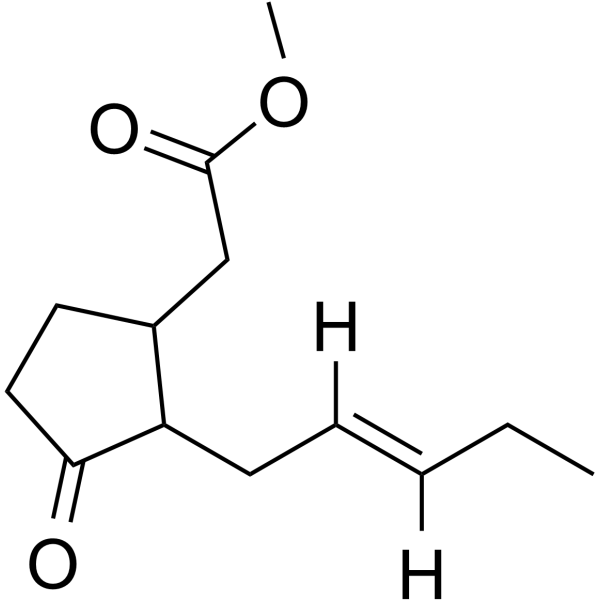
    (rac)-Methyl jasmonate is the racemate of Methyl jasmonate (HY-135663). Methyl jasmonate is a phytohormone that regulates the defense response of plants under biotic and biotic stress through jasmonate signaling pathway. Methyl jasmonate inhibits the activation of NF-κB signaling pathway. Methyl jasmonate can promote the mitochondrial ROS production, but also scavenges free radicals and reduces the oxidative stress. Methyl jasmonate exhibits anti-inflammatory, antitumor, anticonvulsant, antinociceptive and sedative activities .
    (rac)-Methyl jasmonate
  • HY-Y1673

    Environmental Pollutants Biochemical Assay Reagents Neurological Disease
    Potassium bromide, 99% is a salt, widely used as an anticonvulsant and a sedative. Potassium bromide is a redox reagent that can be used to remove peripheral membrane proteins in molecular biology .
    Potassium bromide, 99%
  • HY-B1229
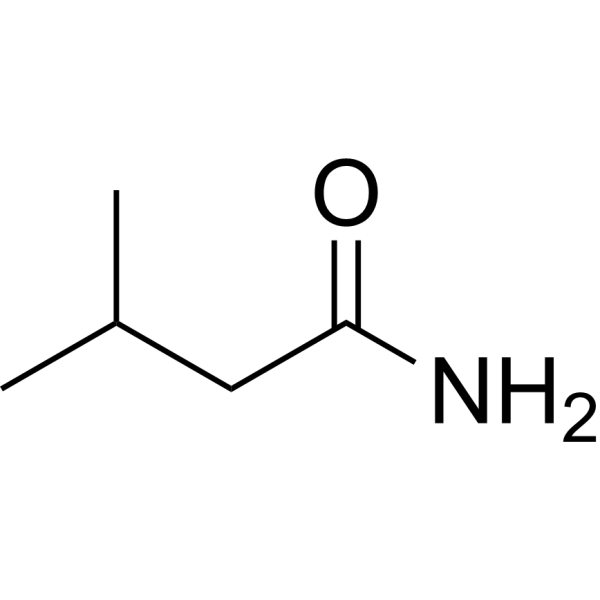
    Isovaleramide
    1 Publications Verification

    3-Methylbutanamide

    GABA Receptor Neurological Disease Metabolic Disease
    Isovaleramide (3-Methylbutanamide) is an orally active anticonvulsant. Isovaleramide inhibits alcohol dehydrogenase (ADH) activity and regulates GABAergic system. Isovaleramide reduces acute kidney injury. Isovaleramide has antiepileptic, anxiolytic, sedative and hypnotic effects[1] .
    Isovaleramide
  • HY-103505

    GABA Receptor Neurological Disease
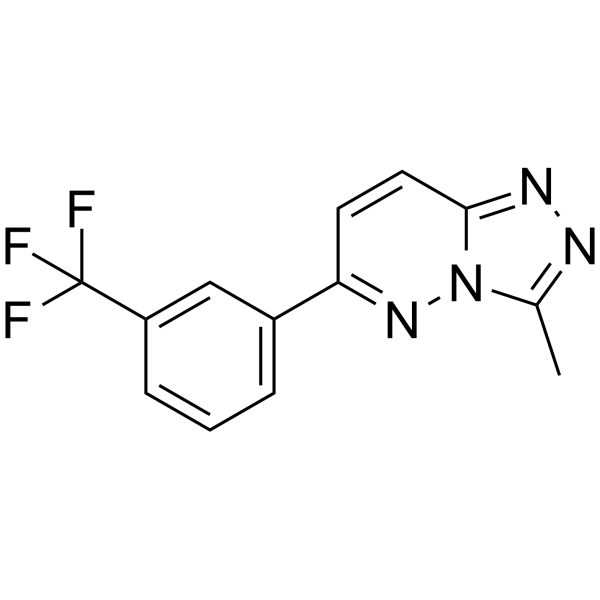
    CL 218872 is an orally active and selective ligand for the benzodiazepine receptor subtype BZ1. CL 218872 exhibits anxiolytic, sedative and anticonvulsant activities. CL 218872 can be used in researches of anxiety related disorders and epilepsy .
    CL 218872
  • HY-W050162
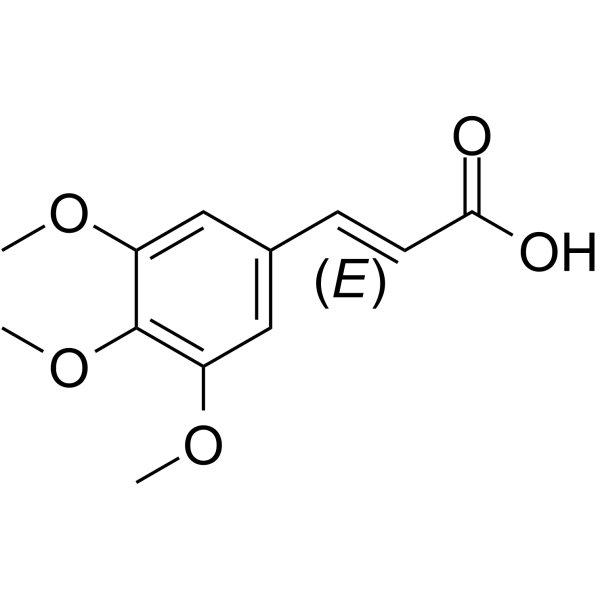
    (E)-3,4,5-Trimethoxycinnamic acid
    1 Publications Verification

    TMCA

    GABA Receptor 5-HT Receptor Neurological Disease
    (E)-3,4,5-Trimethoxycinnamic acid (TMCA) is a cinnamic acid substituted by multi-methoxy groups. (E)-3,4,5-Trimethoxycinnamic acid is an orally active and potent GABAA/BZ receptor agonist. (E)-3,4,5-Trimethoxycinnamic exhibits favourable binding affinity to 5-HT2C and 5-HT1A receptor, with IC50 values of 2.5 and 7.6 μM, respectively. (E)-3,4,5-Trimethoxycinnamic acid shows anticonvulsant and sedative activity. (E)-3,4,5-Trimethoxycinnamic acid can be used for the research of insomnia, headache and epilepsy .
    (E)-3,4,5-Trimethoxycinnamic acid
  • HY-N8303

    ERK PAK Neurological Disease Inflammation/Immunology
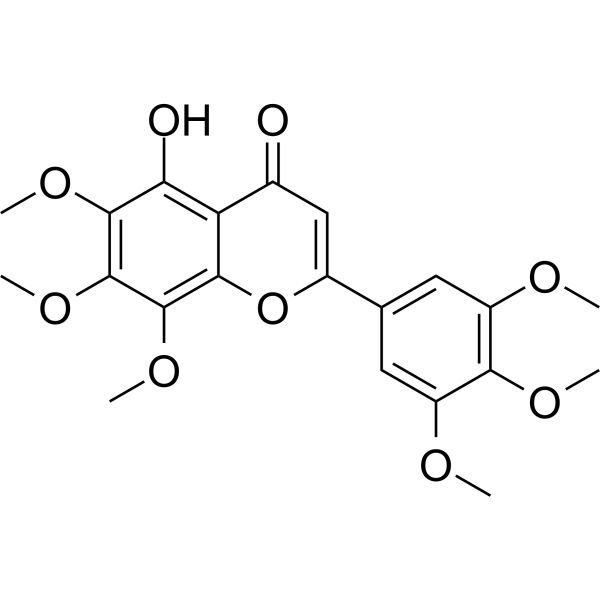
    Gardenin A is an orally active and synthetic PMF analogue with the neurotrophic effect for neurite outgrowth and neuronal differentiation. Gardenin A promotes neuritogenesis via activating MAPK/ERK, PKC, and PKA, but not TrkA, CREB signaling pathways. Gardenin A also has sedative, anxiolytic, antidepressant, and anticonvulsant effects .
    Gardenin A
  • HY-W013507R

    Reference Standards NF-κB Reactive Oxygen Species (ROS) Glutathione Peroxidase Phytohormone Apoptosis Neurological Disease Inflammation/Immunology Cancer
    (rac)-Methyl jasmonate (Standard) is the analytical standard of Methyl jasmonate. This product is intended for research and analytical applications. (rac)-Methyl jasmonate is the racemate of Methyl jasmonate (HY-135663). Methyl jasmonate is a phytohormone that regulates the defense response of plants under biotic and biotic stress through jasmonate signaling pathway. Methyl jasmonate inhibits the activation of NF-κB signaling pathway. Methyl jasmonate can promote the mitochondrial ROS production, but also scavenges free radicals and reduces the oxidative stress. Methyl jasmonate exhibits anti-inflammatory, antitumor, anticonvulsant, antinociceptive and sedative activities .
    (rac)-Methyl jasmonate (Standard)
  • HY-100377

    anticonvulsant 7903

    Others Neurological Disease
    Lvguidingan is a potent anticonvulsant agent. Lvguidingan also has sedative-hypnotic, tranquilizing, and muscle-relaxing actions. Lvguidingan can be used as antiepileptic agent .
    Lvguidingan
  • HY-171253

    Platelet-activating Factor Receptor (PAFR) Neurological Disease
    Clotizolam is a thienobenzodiazepine derivative that has antagonistic activity against platelet-activating factor (PAF). Clotizolam possesses sedative, anxiolytic, anticonvulsant,and muscle relaxant effects .
    Clotizolam
  • HY-119461

    Drug Derivative Neurological Disease
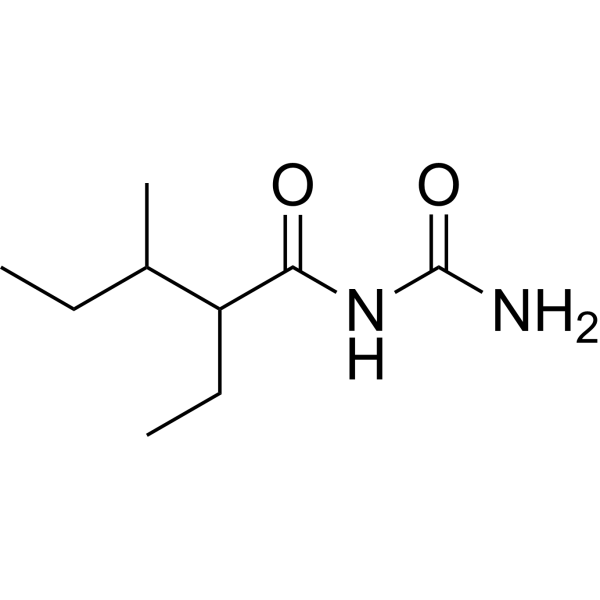
    Capuride is an orally active sedative agent. Capuride has anticonvulsant activity .
    Capuride
  • HY-107323

    QM 6008; Thiadipone; Tiadipone

    GABA Receptor Neurological Disease
    Bentazepam (Thiadipone) is a compound with short-action anxiolytic effect. Bentazepam shows anticonvulsant and sedative properties. Bentazepam can be used for the research of depressive disorder and anxiety .
    Bentazepam
  • HY-125508

    GABA Receptor Neurological Disease
    CCD-3693 is an orally active GABA receptor agonist. CCD-3693 has anxiolytic, anticonvulsant and sedative hypnotic activities and can be used in research related to neurological diseases .
    CCD-3693
  • HY-107323A

    QM 6008 hydrochloride; Thiadipone hydrochloride; Tiadipone hydrochloride

    GABA Receptor Neurological Disease
    Bentazepam (QM 6008, Thiadipone) hydrocholide is a compound with short-action anxiolytic effect. Bentazepam hydrocholide shows anticonvulsant and sedative properties. Bentazepam hydrocholide can be used for the research of depressive disorder and anxiety .
    Bentazepam hydrochloride
  • HY-119146

    CI-716 free base

    Drug Derivative Neurological Disease
    Zolazepam (CI-716 free base) is a benzodiazepine derivative with anxiolytic and anticonvulsant properties. Zolazepam combined with Tiletamine causes a decrease in ventilation, resulting in the development of respiratory acidosis. Zolazepam can be used as sedative and muscle relaxants .
    Zolazepam
  • HY-W197533

    GABA Receptor Neurological Disease
    3-Hydroxymethyl-β-carboline antagonizes the anxiolytic and anticonvulsant actions of Diazepam and reverses the sedative action of Flurazepam. 3-Hydroxymethyl-β-carboline also antagonizes the cerebrovascular and cerebral metabolic depression produced by Flurazepam .
    3-Hydroxymethyl-β-carboline
  • HY-106885

    Drug Derivative Neurological Disease
    F 2692 is an orally effective derivative of pyridazine. F 2692 has significant anti anxiety effects. F 2692 also has activities such as anticonvulsant, sedative, and muscle relaxant. F 2692 can be used for research on neurological disorders such as anxiety disorders .
    F 2692
  • HY-160978

    KC-7507 free base

    GABA Receptor Neurological Disease
    Timelotem (KC-7507 free base) is a representative of a class of 1, 2-cyclo1, 4-benzodiazepines. Timelotem shows significant antipsychotic properties. Timelotem produces sedative, anti-anxiety and anti-convulsant effects by enhancing the action of the neurotransmitter gamma-aminobutyric acid (GABA). Timelotem can be used in studies of schizophrenia and other mental disorders .
    Timelotem
  • HY-103505R

    Reference Standards GABA Receptor Neurological Disease
    CL 218872 (Standard) is the analytical standard of CL 218872 (HY-103505). This product is intended for research and analytical applications. CL 218872 is an orally active and selective ligand for the benzodiazepine receptor subtype BZ1. CL 218872 exhibits anxiolytic, sedative and anticonvulsant activities. CL 218872 can be used in researches of anxiety related disorders and epilepsy .
    CL 218872 (Standard)
  • HY-124148

    Drug Intermediate Neurological Disease Inflammation/Immunology
    Fenimide is an antipsychotic agent. Fenimide shows sedative, anticonvulsant and anesthetic activity. Fenimide has also prevented formation of stress-induced gastric lesions in the rat .
    Fenimide
  • HY-169651

    GABA Receptor Neurological Disease
    GABA-IN-4 (Compound 17) is a N-(indol-3-ylglyoxylyl)benzylamine derivative. GABA-IN-4 exhibits high affinity for the benzodiazepine receptor (BzR) (binding site in GABAA receptor complex) with Ki value of 67 nM. Benzodiazepines are widely used as antianxiety, sedative-hypnotic and anticonvulsant agents .
    GABA-IN-4
  • HY-N16538

    Drug Derivative Cardiovascular Disease Neurological Disease
    4-(Acetoxymethyl)phenyl glucoside is a type of gastrodin derivative that can cross the blood-brain barrier. 4-(Acetoxymethyl)phenyl glucoside exhibits sedative, anticonvulsant and analgesic effects in mouse models. 4-(Acetoxymethyl)phenyl glucoside can be used for research on senile cardiovascular and cerebrovascular diseases as well as brain nerve disorders .
    4-(Acetoxymethyl)phenyl glucoside
  • HY-182548

    GABA Receptor Sodium Channel iGluR Cardiovascular Disease Neurological Disease
    BTS 72664 is a broad-spectrum, non-sedating, orally effective anticonvulsant. Its anticonvulsant effect mainly arises from enhancing GABAA receptor (GABAA receptor)-mediated chloride channel currents, while it exerts weak blocking effects on Na + channels (Ki = 350 μM) and NMDA receptors (NMDA receptor) (IC50 = 43 μM). BTS 72664 prevents the elevation of extracellular glutamate, glycine and serine concentrations in neurons, reduces cerebral infarct size, promotes functional recovery, prevents multiple types of epileptic seizures, and has low sedative potential. BTS 72664 can be used for the research of epilepsy, stroke and migraine .
    BTS 72664

온라인 문의

Your information is safe with us. * Required Fields.

호칭


Country or Region *

고객명 *


회사명 *

Department *


메일주소 *


상품명 *

Cat. No.


Requested quantity *

전화번호 *


비고

온라인 문의

Inquiry Information

상품명:
Cat. No.:
수량:
MCE Japan Authorized Agent:

