


18 Results for "

solid cultures

" in MedChemExpress (MCE) Product Catalog:
Products (18)

18 Results for "solid cultures" in MCE Product Catalog:

1
1 Cited Publications
Cat. No.: HY-126437B
CAS No.: 25988-63-0
Research Areas:  

Others

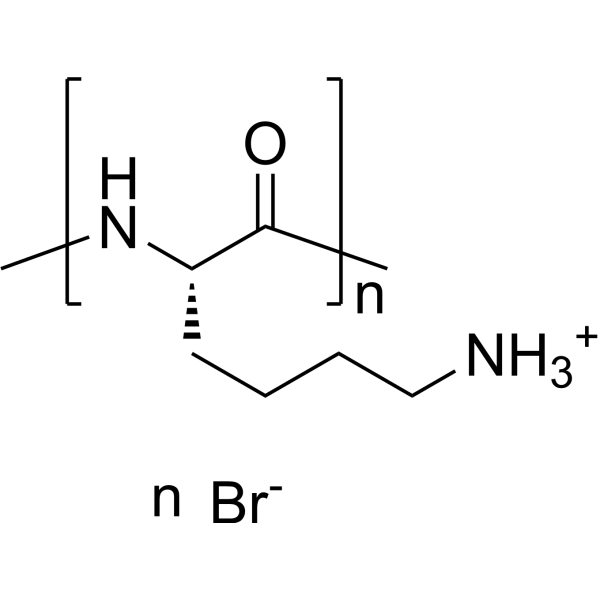
Poly-L-lysine (hydrobromide) (MW 70000-150000), a positively charged amino acid polymer, is a nonspecific attachment factor for cells. Poly-L-lysine (hydrobromide) (MW 70000-150000) has good biocompatibility. Poly-L-lysine (hydrobromide) (MW 70000-150000) is used to increase cell adhesion to solid substrates by enhancing electrostatic interaction between negatively charged ions of the cell membrane and the culture surface .
loading...
    loading...
1
1 Cited Publications
Cat. No.: HY-126437A
CAS No.: 26124-78-7
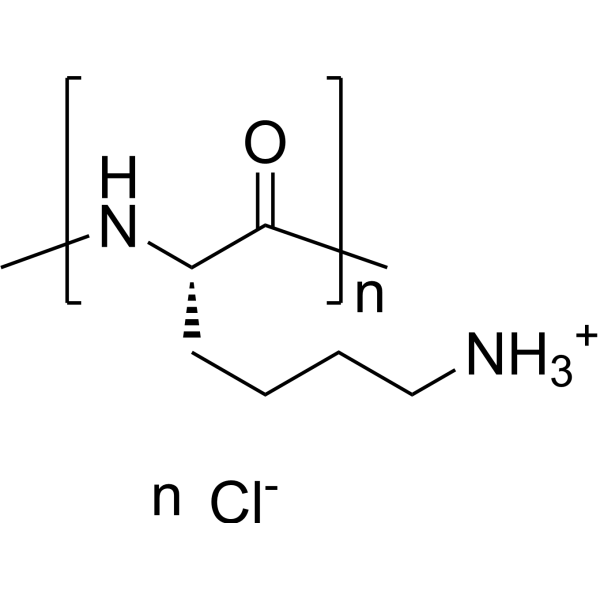
Poly-L-lysine hydrochloride is a nonspecific attachment factor for cells useful in promoting cell adhesion to solid substrates by enhancing electrostatic interaction between negatively charged ions of the cell membrane and the culture surface. Poly-L-lysine hydrochloride is a strong-attraction regulator that promotes liquid-liquid phase separation (LLPS) at low concentrations but suppresses LLPS at high concentrations. Antibacterial cationic peptide. .
loading...
    loading...
1
1 Cited Publications
Cat. No.: HY-126437H
CAS No.: 25988-63-0
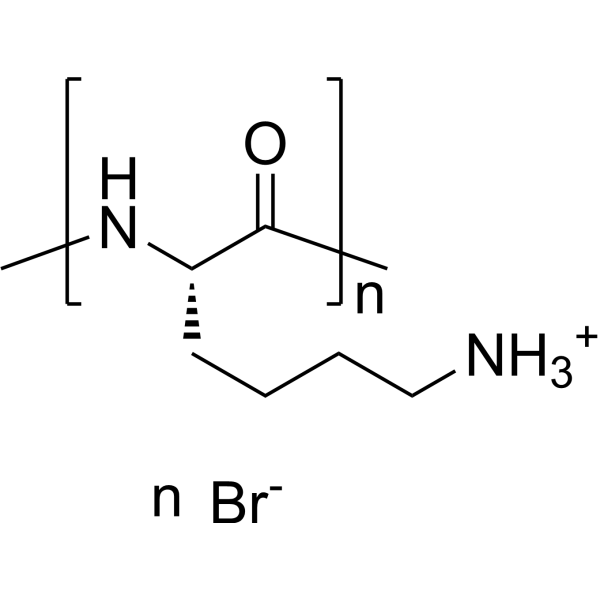
Poly-L-lysine hydrobromide (MW 4000-15000) is a positively charged amino acid polymer that acts as a non-specific attachment factor for cells. Poly-L-lysine hydrobromide (MW 4000-15000) enhances the electrostatic interaction between the negative ions of the cell membrane and the surface of the culture medium, thereby promoting the adhesion of cells to solid substrates. Poly-L-lysine hydrobromide (MW 4000-15000) can be used for gene delivery .
loading...
    loading...
Cat. No.: HY-126437C
CAS No.: 25988-63-0
Research Areas:  

Others

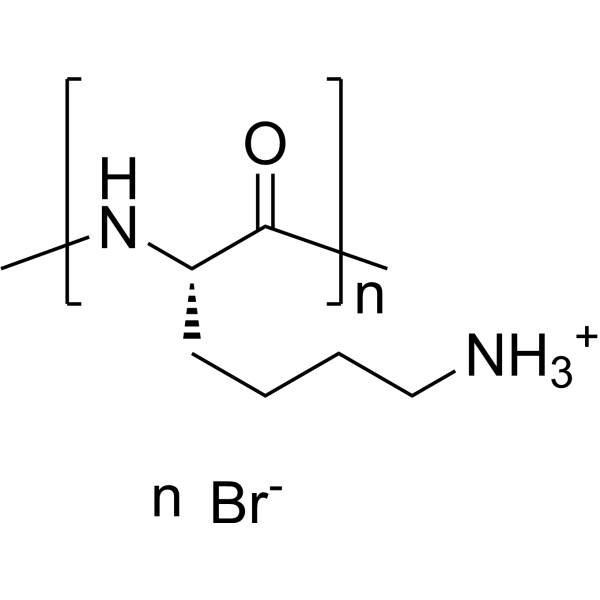
Poly-L-lysine (hydrobromide) (MW 150000-300000), a positively charged amino acid polymer, is a nonspecific attachment factor for cells. Poly-L-lysine (hydrobromide) (MW 150000-300000) has good biocompatibility. Poly-L-lysine (hydrobromide) (MW 150000-300000) is used to increase cell adhesion to solid substrates by enhancing electrostatic interaction between negatively charged ions of the cell membrane and the culture surface .
loading...
    loading...
Cat. No.: HY-150105
CAS No.: 2448172-22-1
Purity:  98.72%
Synonyms: BMF-219; Menin-MLL inhibitor 21
Icovamenib (BMF-219) is a selective, orally active, irreversible Menin inhibitor. Icovamenib forms a stable and irreversible covalent bond with Menin. Icovamenib promotes selective and controlled proliferation of beta cells and improvement of beta cell function in ex vivo human islet cultures. Icovamenib enhances glycemic control in animal diabetic models. Icovamenib induces a dose-dependent enhancement in insulin secretion potentiated by the GLP-1 RA. Icovamenib can be used for the study of multiple hematologic malignancies, solid tumors, and diabetes mellitus, such as diffuse large B-cell lymphoma (DLBCL), multiple myeloma (MM) and chronic lymphocytic leukemia and type 2 diabetes .
loading...
    loading...
Cat. No.: HY-126437J
CAS No.: 25988-63-0
Synonyms: PLL solution 0.01%, sterile-filtered, hydrobromide, MW 150000-300000, for cell culture
Poly-L-lysine solution (0.01%, sterile-filtered, MW 150000-300000), a positively charged amino acid polymer, is a nonspecific attachment factor for cells. Poly-L-lysine solution (0.01%, sterile-filtered, MW 150000-300000) has good biocompatibility. Poly-L-lysine solution (0.01%, sterile-filtered, MW 150000-300000) is used to increase cell adhesion to solid substrates by enhancing electrostatic interaction between negatively charged ions of the cell membrane and the culture surface .
loading...
    loading...
Cat. No.: HY-164919
CAS No.: 2847102-44-5
Synonyms: XMT-2056
Calotatug ginistinag (XMT-2056) is an antibody-drug conjugate (ADC) targeting HER2, linked to a payload composed of XMT-1519 conjugate-1 (HY-148067) and STING agonist-20 (HY-148068). Calotatug ginistinag activates the STING signaling pathway in tumor cells and tumor-resident immune cells, induces the production of type I interferons and cytokines (CXCL10, IFN-β, IL-6, TNF-α, triggers innate anti-tumor immune responses, and exerts a bystander effect. Calotatug ginistinag exhibits efficacy against HER2-expressing cancer cells in co-culture with PBMCs. Calotatug ginistinag induces tumor regression and reduces systemic inflammation in various tumor models. Combination treatment with Calotatug ginistinag, Trastuzumab (HY-P9907) and T-DXd (HY-138298) yields benefits. Calotatug ginistinag can be used in studies related to HER2-expressing solid tumors such as breast cancer, gastric cancer and ovarian cancer .
loading...
    loading...
Cat. No.: HY-126437D
CAS No.: 25988-63-0
Research Areas:  

Others

Poly-L-lysine hydrobromide (MW 150000-300000), a positively charged amino acid polymer, is a nonspecific attachment factor for cells. Poly-L-lysine hydrobromide (MW 150000-300000) has good biocompatibility. Poly-L-lysine hydrobromide (MW 150000-300000) is used to increase cell adhesion to solid substrates by enhancing electrostatic interaction between negatively charged ions of the cell membrane and the culture surface .
loading...
    loading...
Cat. No.: HY-157368
Bismuth Sulfite Agar is a selective solid medium that can be used for the isolation, determination and culture of Salmonella .
loading...
    loading...
Cat. No.: HY-157380
Synonyms: SS Agar
Salmonella-Shigella Agar (SS Agar) is a solid medium that can be used for the isolation, detection and culture of Salmonella and Shigella.
loading...
    loading...
Cat. No.: HY-N1777
CAS No.: 1521-41-1
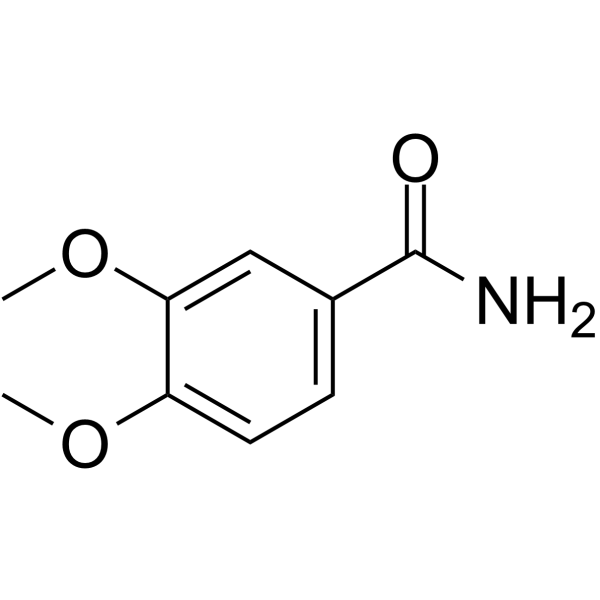
3,4-Dimethoxybenzamide, amide, is isolated from the solid culture of Streptoverticillium morookaense. 3,4-Dimethoxybenzamide can be used as the starting material to preparation Itopride hydrochloride .
loading...
    loading...
Cat. No.: HY-N10300
CAS No.: 1825374-58-0
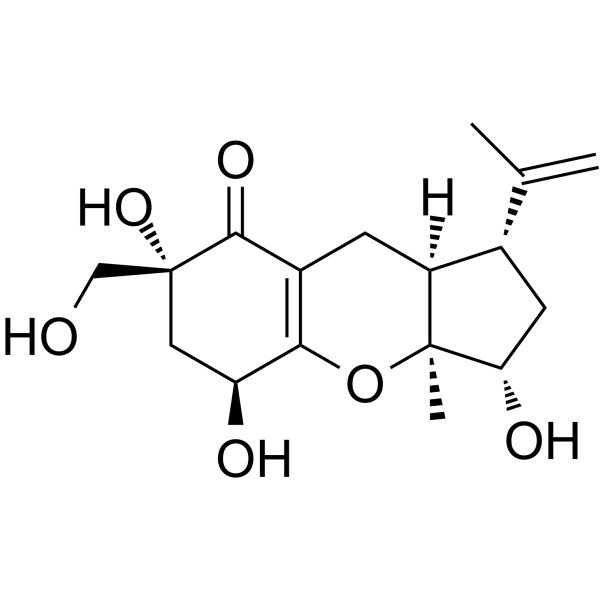
Guignardone K is a meroterpene compound isolated from solid cultures of the endophytic fungus Guignardia sp.. Guignardone K has antifungal activity .
loading...
    loading...
Cat. No.: HY-157360
Acetamide Agar is a solid culture media for non-fermenting bacteria. Acetamide Agar helps differentiate P. acidovorans from other non-sugar-soluble or weakly sugar-soluble Pseudomonas species. Acetamide Agar can be used to test the ability of microorganisms such as Pseudomonas aeruginosa to utilize acetamide through deamination .
loading...
    loading...
Cat. No.: HY-W164451
CAS No.: 3306-05-6
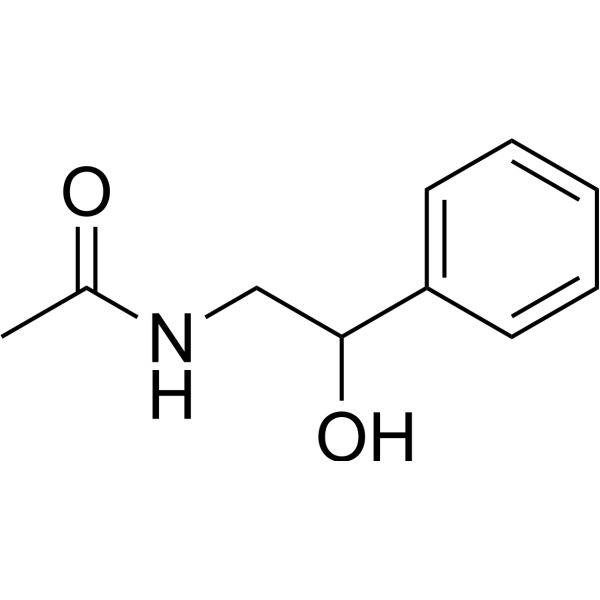
N-(2-hydroxy-2-phenylethyl)acetamide is isolated from the solid rice cultures of the endophytic fungus Diaporthe eucalyptorum KY-9. N-(2-hydroxy-2-phenylethyl)acetamide exhibits antifungal activities against Alternaria solani .
loading...
    loading...
Cat. No.: HY-N1777R
CAS No.: 1521-41-1
3,4-Dimethoxybenzamide (Standard) is the analytical standard of 3,4-Dimethoxybenzamide. This product is intended for research and analytical applications. 3,4-Dimethoxybenzamide, amide, is isolated from the solid culture of Streptoverticillium morookaense. 3,4-Dimethoxybenzamide can be used as the starting material to preparation Itopride hydrochloride[1][2].
loading...
    loading...
Cat. No.: HY-N7423A
CAS No.: 97966-29-5
Synonyms: (E)-Isoferulic acid methyl ester
(E)-Methyl isoferulate ((E)-Isoferulic acid methyl ester) is a derivative of Cinnamic acid (HY-N0610A) and NO inhibitor, with an IC50 > 100 μM against nitric oxide production. (E)-Methyl isoferulate is isolable from the solid cultures of the edible mushroom Neolentinus lepideus. (E)-Methyl isoferulate exerts mild anticancer effects against liver cancer and leukemia .
loading...
    loading...
Cat. No.: HY-DY2031
Target:  

Fluorescent Dye

Research Areas:  

Others

Dienes Mycoplasma Staining Solution is a Romanovsky type absorbent composite staining solution, containing Methylene Blue (HY-14536) and Azure II (HY-D0946). Dienes Mycoplasma Staining Solution is used for identifying mycoplasma colonies growing on solid agar, or for staining fixed cell cultures and tissue sections. Dienes Mycoplasma Staining Solution can distinguish between tiny cell-free bacteria and ordinary bacterial colonies under an optical microscope.
loading...
    loading...
Cat. No.: HY-182832
Synonyms: Dry skim milk; Non-fat milk solids; Skimmed milk powder
Skim Milk powder (Dry skim milk) is an orally effective, dairy-derived non-fat milk solid powder. Skim Milk powder serves as a nutrient source in microbial culture media and can also be used for blocking procedures in WB assays. Skim Milk powder protects zebrafish sperm from oxidative stress, DNA damage, membrane disruption and morphological abnormalities during cryopreservation, and improves their survival rate. After undergoing high Maillard reaction during moist-heat storage, Skim Milk powder exhibits negative metabolic activities such as inhibiting GLP-1/GIP and promoting intestinal inflammation. Skim Milk powder can be used in studies related to intestinal inflammation, diabetes and obesity .
loading...
    loading...
  • 1

