From 11:00 pm to 12:00 pm EST ( 8:00 pm to 9:00 pm PST ) on January 6th, the website will be under maintenance. We are sorry for the inconvenience. Please arrange your schedule properly.
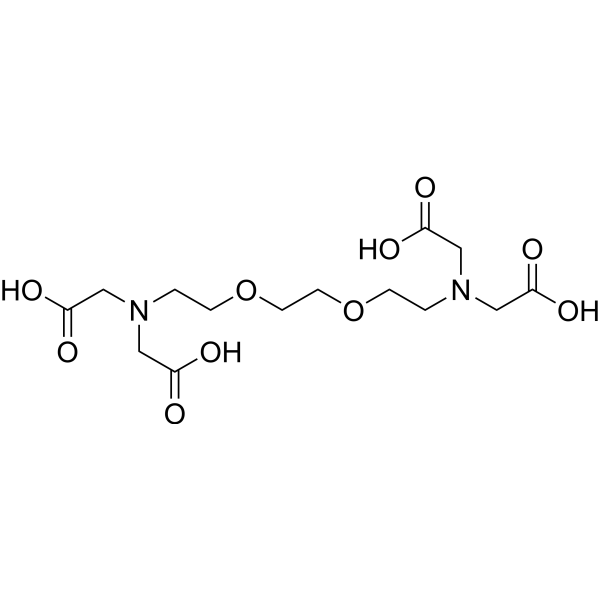
EGTA is a cell-impermeant specific calcium ion chelator. EGTA has an apparent calcium dissociation constant (Kd) of 60.5 nM at physiological pH (7.4) and has very high specificity for Ca 2+ over Mg 2+ (Mg 2+ Kd 1-10 mM). EGTA significantly inhibits the substrate adherence capacity of inflammatory macrophages .
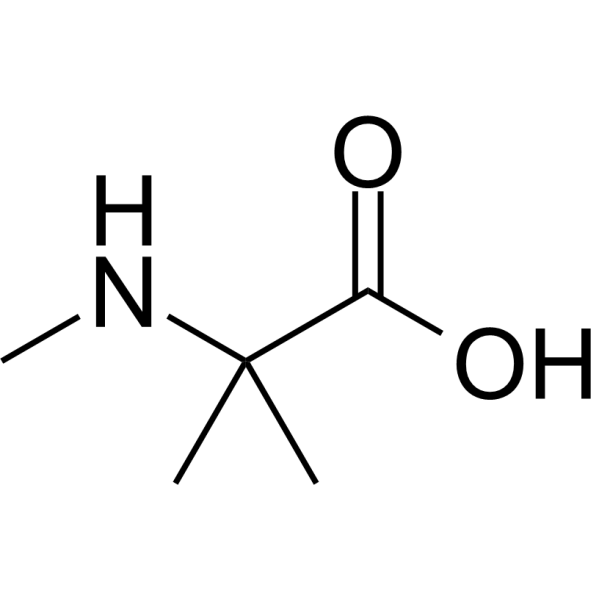
MeAIB (α-(Methylamino)isobutyric acid) is a specific?substrate for amino acid transport system A (ATA1). ATA mediate the uptake of short-chain neutral amino acids in a Na +-dependent manner .
Thymine, one of the four bases of DNA, is a substrate for rat liver dihydropyrimidine dehydrogenase (DPD), with a Km value of 2.2 μM, Ki of 24 μM (using 5-FU as the DPD substrate), and a specific activity of 0.68 nmol/min/mg .
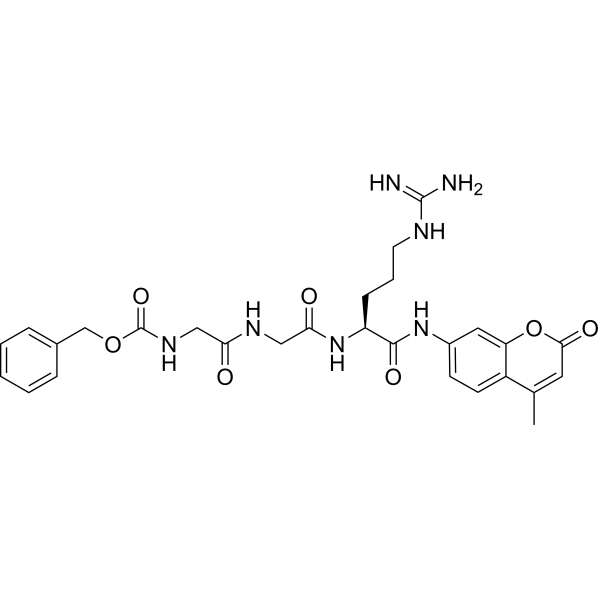
Z-Gly-Gly-Arg-AMC is a thrombin-specific fluorogenic substrate for testing of thrombin generation in PRP and platelet-poor plasma (PPP) (Ex/Em = 390/480 nm) .
Gly-Pro-AMC hydrobromide is a fluorescent dye, it can be used as a specific fluorescent substrate for detecting Dipeptidyl peptidase IV (DPP-IV) activity .
Trilysine is a tripeptide and also a substrate for specific peptidases. Trilysine serves as a hydrolytic substrate for the tripeptide-specific aminopeptidase TP and the oligopeptidase OP .
Prostate Specific Antigen Substrate is a prostate specific antigen (PSA) fluorescent substrate. Prostate Specific Antigen Substrate can be used for detect enzymatic activity of PSA .
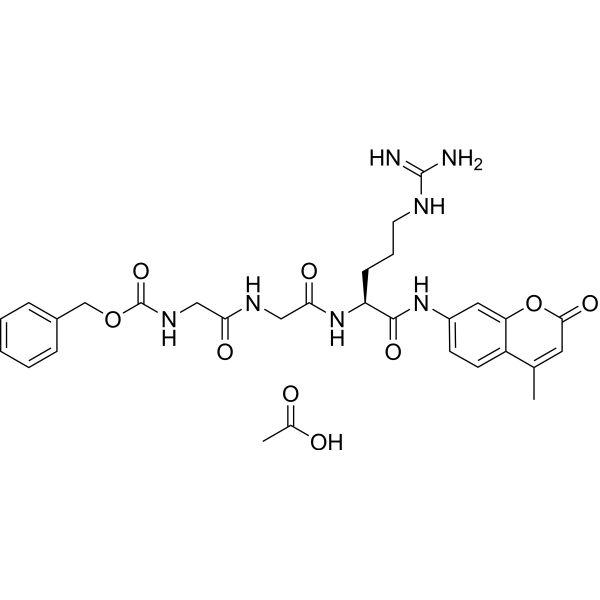
Z-Gly-Gly-Arg-AMC acetate is a thrombin-specific fluorogenic substrate for testing of thrombin generation in PRP and platelet-poor plasma (PPP) (Ex/Em = 390/480 nm) .
L-Arginine-7-amido-4-methylcoumarin (Arginine 4-methyl-7-coumarylamide) hydrochloride is a specificsubstrate of cathepsin H but not for cathepsins L and B .
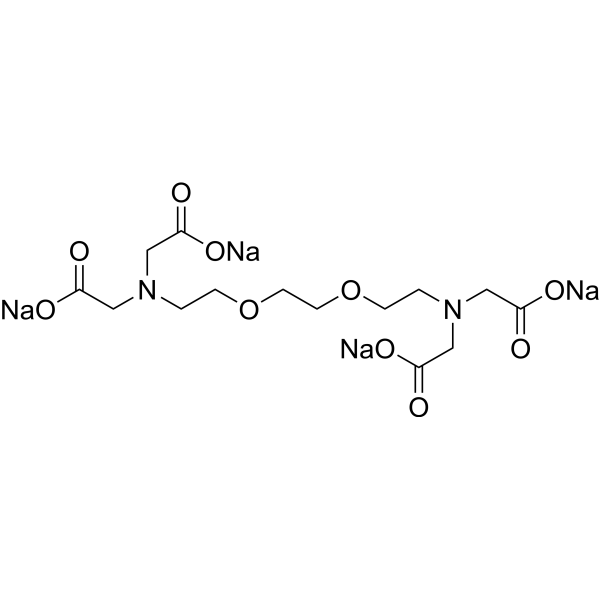
EGTA tetrasodium is a cell-impermeant specific calcium ion chelator. EGTA tetrasodium has an apparent calcium dissociation constant (Kd) of 60.5 nM at physiological pH (7.4) and has very high specificity for Ca 2+ over Mg 2+ (Mg 2+ Kd 1-10 mM). EGTA tetrasodium significantly inhibits the substrate adherence capacity of inflammatory macrophages .
LRRKtide is a polypeptide substrate. LRRKtide is a specific phosphorylation substrate of LRRK2, a kinase associated with Parkinson's disease, and its phosphorylation site is a threonine residue. LRRKtide can be used for characterization of the catalytic properties of LRRK2, as well as studies on kinase activity and inhibition. LRRKtide is applicable to research related to Parkinson's disease .
GGGYK-Biotin is a substrate peptide designed to study the substratespecificity of Sortase A. GGGYK-Biotin can be used to develop Sortase A variants with different substratespecificities .
PKA Regulatory Subunit II Substrate (RII phosphopeptide) is a tool peptide derived from the regulatory subunit Type II (RII) of cyclic AMP-dependent protein kinase (PKA). PKA Regulatory Subunit II Substrate is commonly used to mimic the phosphorylation of protein kinases and as a specificsubstrate for protein phosphatases to assess the activities of these enzymes .
D-Ala-Lys-AMCA hydrochloride is a known proton-coupled oligopeptide transporter 1 (PEPT1)substrate that emits blue fluorescence. D-Ala-Lys-AMCA hydrochloride may be transported into liver cancer cells and Caco-2 cells based on fluorescence analysis. D-Ala-Lys-AMCA hydrochloride can be used for characterizing PEPT1-specificsubstrates or inhibitors (Ex/Em = 390/480 nm) .
6-Azido-6-deoxy-D-galactose, 95% can be used as a substrate in enzymology to study the activity and specificity of galactosyltransferases and other glycosylation enzymes.
Ac-Nle-Pro-Nle-Asp-AMC is a specificsubstrate for 26S proteasome. Ac-Nle-Pro-Nle-Asp-AMC can be used for the 26S proteasome caspase-like activity analysis .
Allyl α-D-galactopyranoside is an α-galactoside and acceptor/donor substrate for transgalactosylation reactions. Allyl α-D-galactopyranoside acts as an acceptor substrate in α-galactosidase-catalyzed transgalactosylation, and serves as a donor substrate to form longer α-galactosyl-containing oligosaccharides. Allyl α-D-galactopyranoside serves as a model compound for investigating the catalytic mechanism and substratespecificity of glycoside hydrolases and glycosyltransferases .
Malantide is a synthetic dodecapeptide derived from the site phosphorylated by cAMP-dependent protein kinase (PKA) on the β-subunit of phosphorylase kinase. Malantide is a highly specificsubstrate for PKA with a Km of 15 μM and shows protein inhibitor (PKI) inhibition >90% substrate phosphorylation in various rat tissue extracts . Malantide is also an efficient substrate for PKC with a Km of 16 μM .
DYRKtide is a biological active peptide. (Dyrktide is designed as the optimal substrate sequence efficiently phosphorylated by DYRK1A, which is a dual-specificity protein kinase that is thought to be involved in brain development.)
Boc-Val-Leu-Lys-AMC is a sensitive, fluorogenic, and specificsubstrate of plasmin, as well as acrosin from the ascidian Halocynthia roretzi, porcine calpain isozymes I and II, and papain .
Ac-YVAD-pNA is a specificCaspase-1substrate. Ac-YVAD-pNA can be used to detect Caspase-1 activity. Caspase-1 is a key mediator of inflammatory processes .
ssK36 is a supersubstrate peptide of the histone methyltransferase (SET) domain protein 2 (SETD2), and ssK36 is designed for the SETD2 protein, a specific PKMT. ssK36 is responsible in human cells for adding methyl groups to the 36th lysine residue of histone H3 (H3K36) to form H3K36me3. ssK36 can be methylated by SETD2 at a rate more than 100 times faster than the natural substrate H3K36. ssK36 can be used to study the catalytic mechanism of PKMTs, especially substratespecificity and catalytic efficiency .
PKCδ Peptide Substrate is an absolutely specificsubstrate for the δ-type of PKC, with a sequence corresponding to sequence 422-443 of murine eEF-1α and containing Thr-431 .
D-Ala-Lys-AMCA is a known proton-coupled oligopeptide transporter 1 (PEPT1)substrate that emits blue fluorescence. D-Ala-Lys-AMCA may be transported into liver cancer cells and Caco-2 cells based on fluorescence analysis. D-Ala-Lys-AMCA can be used for characterizing PEPT1-specificsubstrates or inhibitors (Ex/Em = 390/480 nm) .
3,5-Difluoro-L-tyrosine is a functional, tyrosinase-resistant mimetic of tyrosine. 3,5-Difluoro-L-tyrosine can be used to analyze the substratespecificity of protein tyrosine phosphatases (PTPs) .
Fluorescent Substrate for Pro-Specific Proteases is a fluorescent substrate of pro-specific proteases. Fluorescent Substrate for Pro-Specific Proteases can be used to detect the hydrolysis rate and activity of target enzyme .
Benzoyl coenzyme A (Benzoyl CoA) is A derivative of Coenzyme A (CoA) in which the mercaptan group of CoA binds to the benzoyl group. Benzoyl coenzyme A is involved in the catalytic reaction as a substrate for the acyl transfer reaction. Benzoyl coenzyme A is a versatile metabolic intermediate that can be used to reveal substratespecificity of enzymes, metabolic regulation, and drug metabolism .
ssK36 TFA is a supersubstrate peptide of the histone methyltransferase (SET) domain protein 2 (SETD2) , and ssK36 TFA is designed for the SETD2 protein, a specific PKMT. ssK36 TFA is responsible in human cells for adding methyl groups to the 36th lysine residue of histone H3 (H3K36) to form H3K36me3. ssK36 TFA can be methylated by SETD2 at a rate more than 100 times faster than the natural substrate H3K36. ssK36 TFA can be used to study the catalytic mechanism of PKMTs, especially substratespecificity and catalytic efficiency .
p60c-src Substrate is an efficient and specificsubstrate for p60c-src protein tyrosine kinase (PTK). p60c-src Substrate can be used to synthesize chimeric branched peptides .
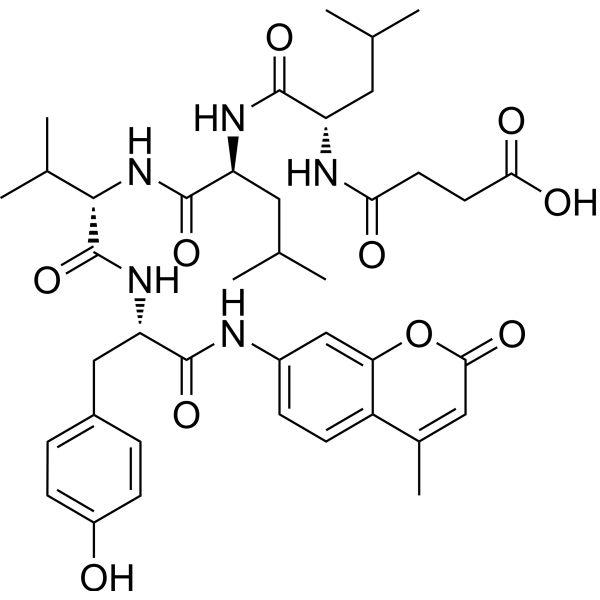
Suc-Leu-Leu-Val-Tyr-AMC (solution) is a membrane-permeable calpain-specific fluorogenic substrate (Ex/Em = 390/480 nm) . Solvent and concentration: DMSO: 20 mM
Resorufin methyl ether (Methoxyresorufin) is a cytochrome P450 fluorometric substrate . Resorufin methyl ether is a relatively specificsubstrate for CYP1A2 activity in rodents .
Protein Kinase C Peptide Substrate is targeted to a specific cellular compartment in a manner dependent on second messengers and on specific adapter proteins in response to extracellular signals that activate G-protein-coupled receptors, tyrosine kinase receptors, or tyrosine kinase-coupled receptors. Protein Kinase C Peptide Substrate then regulates various physiological functions including the activation of nervous, endocrine, exocrine, inflammatory, and immune systems .
Isocaproaldehyde is a product of side-chain cleavage of cholesterol. Isocaproaldehyde is an endogenous specificsubstrate of mouse vas deferens protein (MVDP) .
FA-Phe-Phe is a furylacryloyl (fa)-amino acid derivative, targeting to Angiotensin-converting Enzyme (ACE). FA-Phe-Phe is also a specificsubstrate of CathepsinA .
5-fluoro-dCTP is a fluorinated pyrimidine dNTP that can be used as a substrate for the incorporation of fluorine modification into specific DNA sequences by primer extension (PEX) catalyzed by Pwo polymerase .
CCK1-specific peptide substrate is a biological active peptide. (This peptide sequence is based on rabbit muscle glycogen synthase with Ser7 phosphorylated. It is a peptide substrate for Casein Kinase I (CK1). CK1 phosphorylates Ser10. Ser7 is phosphorylated by PKA in vivo.)
isoGTP (Isoguanosine-5'-O-triphosphate) sodium is an isomer of guanosine 5'-triphosphate and a phosphorylated form of Crotonoside (HY-N0071). isoGTP sodium inhibits transcription and induces T to C mutations in a reverse transcriptase assay. isoGTP sodium is promising for research of substratespecificity of phosphofructokinase and mutT homolog 1 (MTH1) .
Benzoyl coenzyme A (sodium) is the sodium salt form of Benzoyl coenzyme A (HY-134129). Benzoyl coenzyme A (sodium) is A derivative of Coenzyme A (CoA) in which the mercaptan group of CoA binds to the benzoyl group. Benzoyl coenzyme A (sodium) is involved in the catalytic reaction as a substrate for the acyl transfer reaction. Benzoyl coenzyme A (sodium) is a versatile metabolic intermediate that can be used to reveal substratespecificity of enzymes, metabolic regulation, and drug metabolism .
Trilysine TFA is a tripeptide and also a substrate for specific peptidases. Trilysine TFA serves as a hydrolytic substrate for the tripeptide-specific aminopeptidase TP and the oligopeptidase OP .
(E/Z)-Linoleoyl-CoA is a substrate used to study the specificity and kinetics of acyl-CoA. (E/Z)-Linoleoyl-CoA has the ability to replace substrates, and its specificity can be changed by amino acid substitution, thereby affecting the reaction with different desaturases. The study of (E/Z)-Linoleoyl-CoA helps to understand the substratespecificity of mammalian front-end fatty acid desaturases and provides support for the efficient production of value-added fatty acids .
CK2 Substrate peptide (Compound RRRADDSDDDDD) is a specificCK2 peptide substrate with Km of 13 μM. CK2 Substrate peptide can be used for the research of neurological disease, such as Alzheimer's Disease .
Protein kinase C substrate is a substrate of Protein kinase C, can be used to detect protein. Protein kinase C is a key regulatory element in signal transduction and exerts its effects by catalysing specificsubstrate phosphorylation .
CSK substrate is a specificsubstrate for C-terminal Src kinase (CSK), which binds CSK and downregulates the Src family members. CSK substrate preferentially phosphorylates certain amino acid residues that are distinct from the conserved Src C-terminal sequence .
Calpain-1 substrate, fluorogenic serves as a sensitive and specificsubstrate for calpain-1 that cleaves Tyr-Gly bond and results in enhanced fluorescence .(Ex/Em = 490 nm/518 nm)
Boc-GRR-AMC (TFA) is a tri-peptide Substrate. Boc-GRR-AMC can be used for a fluorogenic West Nile virus (WNV) substrate, profiling the substratespecificity for the NS2B-NS3 proteases or determining the pH optimum of LdMC activity .
N-Butylfluorescein is an alkyl-substituted fluorescein, can be used for synthesis of fluorogenic substrates for assaying phosphatidylinositol-specific phospholipase C .
HSV-1 Protease substrate is a peptide substrate for HSV-1 (Herpes Simplex Virus Type 1) protease, and the specificity constant (kcat/Km) at pH 7.5 for cleavage is 5.2 M -1 s -1 .
YD1342 is a prodrug of YD1130, which exhibits potent inhibitory effects on cellular substrate methylation, breast cancer cell clonogenicity, and tumor growth in animal models, exceeding or matching known PRMT4-specific inhibitors. .
D-Ala-Lys-AMCA TFA is a known proton-coupled oligopeptide transporter 1 (PEPT1) substrate that emits blue fluorescence. D-Ala-Lys-AMCA TFA may be transported into liver cancer cells and Caco-2 cells based on fluorescence analysis. D-Ala-Lys-AMCA TFA can be used for characterizing PEPT1-specificsubstrates or inhibitors (Ex/Em = 390/480 nm) .
β-Methylcrotonyl coenzyme A lithium is an intermediate in leucine metabolism and can be used as a substrate to study the specificity and kinetics of β-methylcrotonyl coenzyme A carboxylase (MCCase) .
smMLCK peptide is a specific inhibitor of smooth muscle myosin light chain kinase (smMLCK). The smMLCK peptide mimics the substrate and competitively inhibits the binding of the actual substrate to the enzyme, thereby inhibiting the kinase activity. This inhibition prevents the phosphorylation of the myosin light chain, thus inhibiting muscle contraction .
Malantide TFA is a synthetic dodecapeptide derived from the site phosphorylated by cAMP-dependent protein kinase (PKA) on the β-subunit of phosphorylase kinase. Malantide TFA is a highly specificsubstrate for PKA with a Km of 15 μM and shows protein inhibitor (PKI) inhibition >90% substrate phosphorylation in various rat tissue extracts . Malantide TFA is also an efficient substrate for PKC with a Km of 16 μM .
MBX-1162 is a bisindole compound. In the study of its resistance mechanism in Staphylococcus aureus, it did not show cross-resistance with related compounds and was related to the substratespecificity of MepA and MepR.
Ser-SNAC TFA is a small-molecule substrate for NRPS C domains. As for NRPSs, refers to nonribosomal peptide synthetases, are large multidomain proteins to catalyze the formation of biologically active natural products. Ser-SNAC TFA can be used for characterizing the substratespecificity of C domain-catalyzed peptide bond formation .
6-Phe-ADP is an ATP analog used as a precursor to prepare the corresponding radiolabeled triphosphate for chemical genetics approaches to study substratespecificity and catalytic efficiency of protein kinases .
5-fluoro-dCTP sodium is a fluorinated pyrimidine dNTP that can be used as a substrate for the incorporation of fluorine modification into specific DNA sequences by primer extension (PEX) catalyzed by Pwo polymerase .
T4 endonuclease VII displays broad substratespecificity and can bind and cleave single-base mismatches in a DNA duplex as well as three-way and four-way branched DNA structures .
Ac-LVSR-AMC is a tetrapeptide fluorescent substrate that can be used for in vitro quantitative detection of the specific activity of the Malt1 protease .
(R)-Benzylsuccinyl-CoA dehydrogenase (EC 1.3.8.3) exhibits high substrate-and enantiomer specificity; it is highly specific for (R)-Benzylsuccinyl-CoA and is inhibited by (S)-benzylsuccinyl-CoA.
Bovine Factor IXa Beta is an inactive and highly specific enzyme, with a minimal extended substrate recognition site and a preference for particular amino acid residues at specific subsites. Bovine Factor IXa Beta plays a role in the blood coagulation cascade .
(S)-Carnitine 3-dehydrogenase (EC 1.1.1.254) is specific for the (S)-enantiomer of carnitine, i.e., the enantiomer of the substrate of carnitine 3-dehydrogenase
Himandridine (compound I) is a compound synthesized by a specific chemical reaction and is an intermediate in the synthesis of related alkaloids. The success of its key reaction is sensitive to substrate structure and solvent.
AcdK is a non-natural amino acid and a precursor of allysine. AcdK allows site-specific incorporation into target proteins in E. coli via the amber suppression strategy. AcdK enables site-specific lysine dimethylation or monomethylation modification of target proteins. AcdK can synthesize site-specific lysine-methylated variants of histone H3 and p53, which is applicable for investigating the substratespecificity and catalytic function of epigenetic enzymes .
GCRRGPLGLSLGKRRCG is an MMP13-specificsubstrate peptide cleaved by MMP13. GCRRGPLGLSLGKRRCG contributes to an MMP13-responsive hydrogel microsphere system that achieves intelligent and controllable drug release in osteoarthritis (OA), decelerates disease progression, and promotes articular cartilage repair. GCRRGPLGLSLGKRRCG can be used for the research of osteoarthritis .
Highly purified Type II collagen from salmon nasal cartilage is a highly purified collagen that can stimulate the animal's immune system to produce specific antibodies against this collagen. Collagen is also a hydrolytic substrate for MMPs.
Proteinase A, from baker's yeast (S. cerevisiae) (EC 3.4.23.25), hydrolyzes proteins and exhibits broad specificity for peptide bonds. Proteinase A can cleave the leucine-leucine-valine-tyrosine bonds in synthetic substrates.
Suc-Gly-Pro-AMC is a fluorescent substrate. Suc-Gly-Pro-AMC is a fibroblast activation protein (FAP) specificsubstrate. Suc-Gly-Pro-AMC reacts with recombinant porcine prolyl oligopeptidase. Suc-Gly-Pro-AMC can be used to study the activity of FAP, prolyl endopeptidase (PREP). Suc-Gly-Pro-AMC is used in glioma research .
Palmitoyl thio-PC is a chromogenic substratespecific for PLA2 with a palmitoyl thioester at the sn-2 position. Palmitoyl thio-PC could be used to measure bee-venom sPLA2 activity in a phospholipid system .
Ac-VDVAD-AFC is a caspase-specificfluorescent substrate. Ac-VDVAD-AFC can measure caspase-3-like activity and caspase-2 activity and can be used for the research of tumor and cancer .
Protease, Streptomyces griseus, exhibits broad substratespecificity. Its active site consists of one aspartic acid residue, one histidine residue, and one serine residue. Protease tends to hydrolyze the peptide bond on the carboxyl side of glutamate or aspartate.
4-Pyridoxolactone (β-Pyracin) is a critical substrate in vitamin B6 degradation pathway I, primarily involved in the vitamin B6 metabolic process mediated by soil microorganisms. 4-Pyridoxolactone serves as the specificsubstrate for 4-pyridoxolactonase, undergoing a zinc-dependent lactone-ring hydrolysis reaction catalyzed by this enzyme to generate 4-pyridoxic acid (4PA) .
Suc-AAP-Abu-pNA (Colorimetric Elastase Substrate) is a specificsubstrate for pancreatic elastase (Km = 100 μM; Kcat/Km = 35,300 s -1 M -1 for rat pancreatic elastase; Km = 30 μM; Kcat/Km = 351,000 s -1 M -1 for porcine pancreatic elastase). Suc-AAP-Abu-pNA also promotes OPC migration .
ERK2 is a serine/threonine-specific protein kinase capable of phosphorylating multiple protein substrates within a cell. Biotin-ERK2 Recombinant Human Active Protein Kinase is obtained by expressing ERK2 proteins and is biotinylated .
1,4-b-D-Xylopentaose is a linear pentasaccharide composed of 5 β-D-xylose units linked via 1,4-glycosidic bonds, and serves as a specificsubstrate for barley α-L-arabinofuranosidase .
Ac-VDVAD-AFC TFA is a caspase-specificfluorescent substrate. Ac-VDVAD-AFC TFA can measure caspase-3-like activity and caspase-2 activity and can be used for the research of tumor and cancer .
Glucuronokinase (AtGlcAK) is a member of the GHMP-kinase. Glucuronokinase (AtGlcAK) shows unique substratespecificity for D-glucuronic acid with a Km value of 0.7 mM. Glucuronokinase (AtGlcAK) catalyzes D-glucuronic acid and ATP to produce D-glucuronic acid-1-phosphate and ADP .
5-Bromo-4-chloro-3-indoxyl myo-inositol-1-phosphate ammonium is a chromogenic substrate that can be used to detect the activity of phosphatidylinositol-specific phospholipase C (PI-PLC) .
TRAP-7 is a thrombin receptor (PAR) activating peptide. TRAP-7 stimulates total inositol phosphate (IP) accumulation and phosphorylation of a specific endogenous substrate for activated PKC. TRAP-7 can be used in cardiovascular disease research .
Arylsulfatase is a hydrolase with substratespecificity for potassium 6-benzoyl-2-naphthyl sulfate. Arylsulfatase exhibits optimal activity at 37°C, and its incubation time is tissue-dependent. Arylsulfatase can be used in tumor-related research .
UDP-Mannose exists in mouse brain, especially hypothalamus and neocortex at a higher concentration compared to other organs. UDP-Mannose regulates glycosylation, in particular mannosylation in specific organs or conditions. UDP-Mannose can be used as a substrate for structural study of glycosyltransferase .
ARI-3144 is an excellent and specificsubstrate for fibroblast activation protein (FAP). ARI-3144 is usually coupled with the fluorophore 7-Amino-4-methylcoumarin (HY-D0027) (AMC) for detection and quantification of FAP .
Aminopeptidase I, Streptomyces griseus (EC 3.4.11.22), exhibits broad substratespecificity, capable of removing the N-terminal residues of most proteins, except when the penultimate residue is an imino acid. Aminopeptidase I contains two Zn 2+ binding sites.
Z-Gly-Pro-Arg-pNA (z-GPR-pNA) is a photometric substrate in Prostate-Specific Antigen (PSA) activation protease assays. Z-Gly-Pro-Arg-pNA (z-GPR-pNA) can be used for the test of trypsin activity .
Boc-Val-Arg-AMC is a synthetic peptide compound. As a specific fluorescent substrate, Boc-Val-Arg-AMC can be specifically cleaved by specific enzymes, especially thrombin, to release a fluorescent molecule AMC (7-amino-4-methylcoumarin), which can be used to monitor thrombin activity. Boc-Val-Arg-AMC can be used to detect thrombin activity in plasma samples .
β-1,4-Galactosyltransferase 7 has exclusive specificity for the donor substrate UDP-galactose and all transfer galactose in a β-1,4 linkage to similar acceptor sugars: GlcNAc, Glc, and Xyl. .
H-D-Phe-Pip-Arg-pNA (S-2238) hydrochloride, a chromogenic substrate, is patterned after the N-terminal portion of the A alpha chain of fibrinogen, which is the natural substrate of thrombin. H-D-Phe-Pip-Arg-pNA hydrochloride is specific for thrombin and is used to measure antithrombin-heparin cofactor (AT-III). The AT-III assay using H-D-Phe-Pip-Arg-pNA hydrochloride is sensitive, accurate, and easy to perform .
13-Deoxydaunorubicin hydroxylase (EC 1.14.13.181) shows broad substratespecificity for structures based on an anthracycline aglycone, but have a strong preference for 4-methoxy anthracycline intermediates (13-Deoxydaunorubicin and 13-dihydrodaunorubicin) over their 4-hydroxy analogues (13-deoxycarminomycin and 13-dihydrocarminomycin) , as well as a preference for substrates hydroxylated at the C-13 rather than the C-14 position.
H-D-Phe-Pip-Arg-pNA (S-2238) acetate, a chromogenic substrate, is patterned after the N-terminal portion of the A alpha chain of fibrinogen, which is the natural substrate of thrombin. H-D-Phe-Pip-Arg-pNA acetate is specific for thrombin and is used to measure antithrombin-heparin cofactor (AT-III). The AT-III assay using H-D-Phe-Pip-Arg-pNA acetate is sensitive, accurate, and easy to perform .
H-D-Phe-Pip-Arg-pNA (S-2238), a chromogenic substrate, is patterned after the N-terminal portion of the A alpha chain of fibrinogen, which is the natural substrate of thrombin. H-D-Phe-Pip-Arg-pNA is specific for thrombin and is used to measure antithrombin-heparin cofactor (AT-III). The AT-III assay using H-D-Phe-Pip-Arg-pNA is sensitive, accurate, and easy to perform .
H-D-Phe-Pip-Arg-pNA (S-2238) dihydrochloride, a chromogenic substrate, is patterned after the N-terminal portion of the A alpha chain of fibrinogen, which is the natural substrate of thrombin. H-D-Phe-Pip-Arg-pNA dihydrochloride is specific for thrombin and is used to measure antithrombin-heparin cofactor (AT-III). The AT-III assay using H-D-Phe-Pip-Arg-pNA dihydrochloride is sensitive, accurate, and easy to perform .
MeAIB (Standard) is the analytical standard of MeAIB. This product is intended for research and analytical applications. MeAIB (α-(Methylamino)isobutyric acid) is a specificsubstrate for amino acid transport system A (ATA1). ATA mediate the uptake of short-chain neutral amino acids in a Na+-dependent manner .
Thymolphthalein monophosphate disodium hydrate is a chromogenic substrate for the determination of acid phosphatase and alkaline phosphatase. Thymolphthalein is released during the reaction, increases the pH of the medium for easy detection, produces color and stops hydrolysis. Thymolphthalein monophosphate disodium hydrate can be used for the specific detection of prostatic phosphatase in serum .
Obtusichromoneside C is a chromone C-glycoside found in the seeds of Cassia obtusifolia. Obtusichromoneside C regulates substance transport by inhibiting substrate uptake of specific transporters (e.g., OAT3, OATP1B3). Obtusichromoneside C is promising for research of drug transport .
Antitumor agent-152 (Compound 5) is a specificsubstrate and inhibitor of deoxycytidine kinase (dCK) with anticancer activity. Antitumor agent-152 can inhibit the uptake of 3H-dC in L1210 leukemia cells with an IC50 value of 1.12 μM .
FAD-dependent glucose dehydrogenase (EC 1.1.5.9), or glucose dehydrogenase (FAD)/Pseudomonas glucose dehydrogenase. FAD-dependent glucose dehydrogenase is insensitive to O2 and displays high substratespecificity to glucose and thus is especially attractive enzymes for use in glucose biosensor applications .
Thiencarbazone-methyl is a triazole herbicide and also a substrate for microbial degradation. Thiencarbazone-methyl can be degraded by specific fungi and strains. Thiencarbazone-methyl has intrinsic toxicity to the bladder and urinary function. Thiencarbazone-methyl possesses herbicidal activity and can be applied to corn, wheat, lawns and ornamental plants .
Lipoprotein lipase, Pseudomonas sp (LPL) is a multifunctional enzyme from adipose tissue, heart and skeletal muscle, islets and macrophages. Lipoprotein lipase promotes normal lipoprotein metabolism, delivery and utilization of tissue-specificsubstrates. Lipoprotein lipase catalyzes the rate-limiting step of lipids in blood circulation .
N-Acetyl-Ser-dAsp-Lys-Pro (Ac-SdKP) acetate is a specificsubstrate for the N-terminal active site of angiotensin-converting enzyme (ACE). N-Acetyl-Ser-dAsp-Lys-Pro acetate is a natural inhibitor of pluripotent hematopoietic stem cell proliferation. Anti-inflammatory and antifibrotic properties .
16S rRNA Pseudouridine516 synthase (EC 5.4.99.19) is specific for uridine516 in 16S rRNA. In vitro, the enzyme does not modify free 16S rRNA. The preferred substrate is a 5'-terminal fragment of 16S rRNA complexed with 30S ribosomal proteins.
Boc-Ala-Gly-Pro-Arg-AMC is a synthetic fluorescent substrate, widely used for the detection of protease activity. Boc-Ala-Gly-Pro-Arg-AMC can be used to detect the activity of serine proteases and the oligopeptide enzyme B of Trypanosoma brucei .
Highly purified Type I collagen, from canine skin (Canine Type I collagen, immunization grade) is an immune grade collagen derived from canine skin, which can stimulate the animal's immune system to produce specific antibodies against this collagen. Collagen is also a substrate for hydrolysis by MMPs .
Highly purified Type V collagen, from mouse intestine (Mouse Type II collagen, immunization grade) is an immune grade collagen derived from mouse intestine, which can stimulate the animal's immune system to produce specific antibodies against this collagen. Collagen is also a substrate for hydrolysis by MMPs .
Highly purified Type I collagen, from porcine skin (Porcine Type I collagen, immunization grade) is an immune grade collagen derived from porcine skin, which can stimulate the animal's immune system to produce specific antibodies against this collagen. Collagen is also a substrate for hydrolysis by MMPs .
Highly purified Type III collagen, from porcine skin (Porcine Type III collagen, immunization grade) is an immune grade collagen derived from porcine skin, which can stimulate the animal's immune system to produce specific antibodies against this collagen. Collagen is also a substrate for hydrolysis by MMPs .
Biotin-aniline is a probe with substantially high reactivity towards RNA and DNA. Biotin-aniline is also a novel APEX2 substrate. Biotin-aniline can label proteins via miniSOG. Biotin-aniline emerges as more efficient probe for capturing subcellular transcriptome in living cells with high spatial specificity .
Highly purified Type I collagen, from rabbit skin (Canine Type I collagen, immunization grade) is an immune grade collagen derived from rabbit skin, which can stimulate the animal's immune system to produce specific antibodies against this collagen. Collagen is also a substrate for hydrolysis by MMPs .
Highly purified Type III collagen, from bovine skin (Bovine Type III collagen, immunization grade) is an immune grade collagen derived from bovine skin, which can stimulate the animal's immune system to produce specific antibodies against this collagen. Collagen is also a substrate for hydrolysis by MMPs .
Highly purified Type I collagen, from rat skin (Rat Type I collagen, immunization grade) is an immune grade collagen derived from rat skin, which can stimulate the animal's immune system to produce specific antibodies against this collagen. Collagen is also a substrate for hydrolysis by MMPs .
Highly purified type I collagen, from mouse skin (Mouse Type I collagen, immunization grade) is an immune grade collagen derived from mouse skin, which can stimulate the animal's immune system to produce specific antibodies against this collagen. Collagen is also a substrate for hydrolysis by MMPs .
Highly purified Type I collagen, from chick skin (Chick type I collagen, immunization grade) is an immune grade collagen derived from chick skin, which can stimulate the animal's immune system to produce specific antibodies against this collagen. Collagen is also a substrate for hydrolysis by MMPs .
DABCYL-GABA-Ser-Gln-Asn-Tyr-Pro-Ile-Val-Gln-EDANS is a biological active peptide. (DABCYL-GABA-Ser-Gln-Asn-Tyr-Pro-Ile-Val-Gln-EDANS is also called HIV protease substrate I in some literature. It is widely used for the continuous assay for HIV protease activity. The 11-Kd protease (PR) encoded by the human immunodeficiency virus 1 (HIV-1) is essential for the correct processing of viral polyproteins and the maturation of infectious virus, and is therefore a target for the design of selective acquired immunodeficiency syndrome (AIDS) therapeutics. The FRET-based fluorogenic substrate is derived from a natural processing site for HIV-1 PR. Incubation of recombinant HIV-1 PR with the fluorogenic substrate resulted in specific cleavage at the Tyr-Pro bond and a time-dependent increase in fluorescence intensity that is linearly related to the extent of substrate hydrolysis. The fluorescence quantum yields of the HIV-1 PR substrate in the FRET assay increased by 40.0- and 34.4-fold, respectively, per mole of substrate cleaved. Because of its simplicity and precision in the determination of reaction rates required for kinetic analysis, this substrate offers many advantages over the commonly used HPLC or electrophoresis-based assays for peptide substrate hydrolysis by retroviral PRs. Abs/Em = 340nm/490nm.)
Highly purified Type XI collagen, from porcine articular cartilage (Porcine Type XI collagen, immunization grade) is an immune grade collagen derived from porcine articular cartilage, which can stimulate the animal's immune system to produce specific antibodies against this collagen. Collagen is also a substrate for hydrolysis by MMPs .
Highly purified Type XI collagen, from bovine articular cartilage (Bovine Type XI collagen, immunization grade) is an immune grade collagen derived from bovine articular cartilage, which can stimulate the animal's immune system to produce specific antibodies against this collagen. Collagen is also a substrate for hydrolysis by MMPs .
Highly purified type II collagen, from rat sternal cartilage (Rat Type II collagen, immunization grade) is an immune grade collagen derived from rat sternal cartilage, which can stimulate the animal's immune system to produce specific antibodies against this collagen. Collagen is also a substrate for hydrolysis by MMPs .
Highly purified Type II collagen, from chick sternal cartilage (Chick Type II collagen, immunization grade) is an immune grade collagen derived from chick sternal cartilage, which can stimulate the animal's immune system to produce specific antibodies against this collagen. Collagen is also a substrate for hydrolysis by MMPs .
2'-Deoxy-β-L-uridine is a nucledside analogue and a specificsubstrate for the viral enzyme, shows no stereospecificity against herpes simplex 1 (HSV1) thymidine kinase (TK). 2′-Deoxy-β-L-uridine exerts antiviral activity via the interation of 5'-triphosphates with the viral DNA polymerase .
Highly purified Type IX collagen, from chick articular cartilage (Chick Type IX collagen, immunization grade) is an immune grade collagen derived from chick articular cartilage, which can stimulate the animal's immune system to produce specific antibodies against this collagen. Collagen is also a substrate for hydrolysis by MMPs .
Gal-G2-CNP is a galactopyranosyl maltoside. Gal-G2-CNP is an amylase substratespecific to salivary amylase, which produces a yellow hydrolyzate upon decomposition. Gal-G2-CNP can serve as a matrix for the assays of novel amylases and pancreatic amylases .
Highly purified Type IX collagen, from bovine articular cartilage (Bovine Type IX collagen, immunization grade) is an immune grade collagen derived from bovine articular cartilage, which can stimulate the animal's immune system to produce specific antibodies against this collagen. Collagen is also a substrate for hydrolysis by MMPs .
Highly purified Type II collagen, from goat articular cartilage (Goat Type II collagen, immunization grade) is an immune grade collagen derived from goat articular cartilage, which can stimulate the animal's immune system to produce specific antibodies against this collagen. Collagen is also a substrate for hydrolysis by MMPs .
Highly purified Type XI collagen, from chick articular cartilage (Chick Type XI collagen, immunization grade) is an immune grade collagen derived from chick articular cartilage, which can stimulate the animal's immune system to produce specific antibodies against this collagen. Collagen is also a substrate for hydrolysis by MMPs .
Highly purified Type II collagen, from sheep articular cartilage (Sheep Type II collagen, immunization grade) is an immune grade collagen derived from sheep articular cartilage, which can stimulate the animal's immune system to produce specific antibodies against this collagen. Collagen is also a substrate for hydrolysis by MMPs .
2'-O-MB-cGMP (2′-O-Monobutyryl-cGMP) sodium is a cyclic GMP-specific phosphodiesterase inhibitor with an I50 value of 35 µM. 2'-O-MB-cGMP (2′-O-Monobutyryl-cGMP) sodium inhibits Ca 2+ dependent phosphodiesterase hydrolysis using cAMP or cGMP as substrate .
(2R)-Sulfolactate sulfo-lyase (EC 4.4.1.24) is an inducible enzyme participates in cysteate degradation by the bacterium Paracoccus pantotrophus NKNCYSA and in 3-sulfolactate degradation by the bacterium Chromohalobacter salexigens. (2R)-Sulfolactate sulfo-lyase (EC 4.4.1.24) is specific for the (R) isomer of its substrate.
Highly purified Type V collagen, from bovine amnion (Bovine Amnion Type V collagen, immunization grade) is an immune grade collagen derived from bovine amnion, which can stimulate the animal's immune system to produce specific antibodies against this collagen. Collagen is also a substrate for hydrolysis by MMPs .
Highly purified Type II collagen, from mouse sternal cartilage (Mouse Type II collagen, immunization grade) is an immune grade collagen derived from mouse sternal cartilage, which can stimulate the animal's immune system to produce specific antibodies against this collagen. Collagen is also a substrate for hydrolysis by MMPs .
Z-Gly-Gly-Arg-AMC TFA is the TFA salt form of Z-Gly-Gly-Arg-AMC (HY-P0019). Z-Gly-Gly-Arg-AMC TFA is a thrombin-specific fluorogenic substrate for testing of thrombin generation in PRP and platelet-poor plasma (PPP) (Ex/Em = 390/480 nm) .
Highly purified Type II collagen, from porcine articular cartilage (Porcine Type II collagen, immunization grade) is an immune grade collagen derived from porcine articular cartilage, which can stimulate the animal's immune system to produce specific antibodies against this collagen. Collagen is also a substrate for hydrolysis by MMPs .
Highly purified Type IX collagen, from porcine articular cartilage (Porcine Type IX collagen, immunization grade) is an immune grade collagen derived from porcine articular cartilage, which can stimulate the animal's immune system to produce specific antibodies against this collagen. Collagen is also a substrate for hydrolysis by MMPs .
Clostripain (Clostridiopeptidase B) is a thiol protease isolated from Clostridium histolyticum. Clostripain exhibits proteolytic activity as well as amidase-esterase activity. The specificity of Clostripain is primarily restricted to arginine residues, but it also shows minor hydrolytic activity toward most lysine-containing substrates. Clostripain catalyzes the ammonolysis of Carbobenzoxyarginyl methyl ester to generate various dipeptides .
(R)-Citramalate synthase (EC 2.3.1.182) is involved in a novel pyruvate pathway for isoleucine biosynthesis that is found in some, mainly archaeal, bacteria. (R)-Citramalate synthase (EC 2.3.1.182) can be inhibited by isoleucine, the end-product of the pathway, but not by leucine. (R)-Citramalate synthase (EC 2.3.1.182) is highly specific for pyruvate as substrate.
3-Methyl-L-tyrosine is a derivative of L-Tyrosine (HY-N0473). Structurally, 3-Methyl-L-tyrosine features a methyl modification at the third position of the aromatic ring of L-Tyrosine. As a substrate for the protein tyrosine kinase Csk, 3-Methyl-L-tyrosine's relative catalytic efficiency (kcat/Km) is 38% of L-Tyrosine, indicating that the methyl modification impacts the processing efficiency of Gsk significantly. 3-Methyl-L-tyrosine helps to deepen the understanding of Gsk's molecular recognition mechanisms of its substrates, which is crucial for developing specific inhibitors targeting Gsk .
Glabrone is an isoflavone found in Glycyrrhiza glabra roots. Glabrone exhibits significant PPAR-γ ligand binding activity. Glabrone is a specific UGT1A9 probe substrate, and its metabolites can block influenza virus release by inhibiting neuraminidase (NA). Glabrone can be used to screen for herb-drug interactions and for anti-influenza virus activity .
PS-915 dihydrochloride is a peptide substrate used in a colorimetric assay for plasma antithrombin III (ATIII). PS-915 dihydrochloride is highly specific for thrombin. By enzyme hydrolysis, PS-915 dihydrochloride liberates 3-carboxy-4-hydroxyaniline (CHA), which turns blue in color due to the complex formation with added alkaline-pentacyanoammine ferroate .
3-Thiophenecarboxaldehyde is a thiophene derivative substrate for biocatalytic reduction to 3-thiophenemethanol, and can be processed by Pseudomonas putida S12 cells. 3-Thiophenecarboxaldehyde functions as an intermediate compound. 3-Thiophenecarboxaldehyde exhibits toxicity toward Pseudomonas putida S12 cells at elevated concentrations, reducing specific growth rate and final biomass yield .
D-Ribose 1,5-diphosphate (R15P) is a metabolic intermediate and enzyme substrate. Purified Tk-E2b2 converts D-Ribose 1,5-diphosphate into Ribulose-1,5-bisphosphate, with a specific activity of 32.3 μmol min -1 mg -1[1] .
GPNA hydrochloride is a well known substrate of the enzyme γ-glutamyltransferase (GGT). GPNA hydrochloride is a specific glutamine (Gln) transporter ASCT2 inhibitor. GPNA hydrochloride also inhibit Na +-dependent carriers, such as SNAT family (SNAT1/2/4/5), and the Na +-independent leucine transporters LAT1/2. GPNA reversibly induces apoptosis in A549 cells .
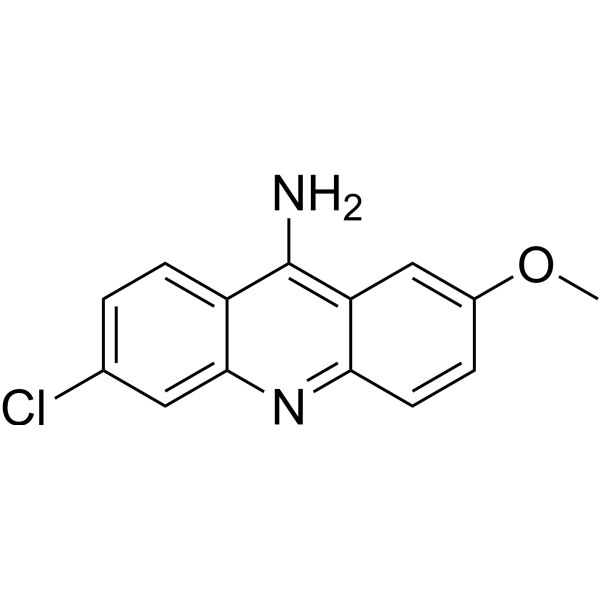
9-Amino-6-chloro-2-methoxyacridine is a pH sensitive fluorescent probe. 9-Amino-6-chloro-2-methoxyacridine has been frequently used to measure changes in vacuolar pH when a specificsubstrate crosses the tonoplast through a putative H +/solute antiport system .
PreQ1-biotin is a biotin conjugated preQ1substrate. PreQ1-biotin is used for RNA-TAG (transglycosylation at guanosine) and DNA-TAG. PreQ1-biotin can be used for affinity tagging and pull-down of specific RNAs that have been modified selectively by E. coli tRNA guanine transglycosylase (TGT) .
Multi-Leu peptide (ML-peptide) is a potent inhibitor of PACE4 (Ki=22 nM). Multi-Leu peptide can competitively bind to the active site of PACE4 by simulating the substrate sequence of PACE4, thereby inhibiting its catalytic activity. Multi-Leu peptide can be used to study the specific mechanism of PACE4 in the development of prostate cancer .
Abz-HPGGPQ-EDDnp (Cathepsin K substrate) is a biological active peptide. (Cathepsins are a class of globular lysosomal proteases, playing a vital role in mammalian cellular turnover. They degrade polypeptides and are distinguished by their substratespecificities. Cathepsin K is the lysosomal cysteine protease involved in bone remodeling and resorption. It has potential as a drug target in autoimmune diseases and osteoporosis.This FRET peptide can be used to monitor selectively cathepsin K activity in physiological fluids and cell lysates. Abz-HPGGPQ-EDDnp [where Abz represents o-aminobenzoic acid and EDDnp represents N -(2, 4-dinitrophenyl)-ethylenediamine], a substrate initially developed for trypanosomal enzymes, is efficiently cleaved at the Gly-Gly bond by cathepsin K. This peptide is resistant to hydrolysis by cathepsins B, F, H, L, S and V, Ex/Em=340 nm/420 nm.)
Lipase, Candida cylindracea (Immobilized) is an immobilized hydrolase and biocatalyst with relaxed positional and substratespecificity. Lipase, Candida cylindracea (Immobilized) can target primary and secondary ester bonds to completely hydrolyze triglycerides into fatty acids and glycerol, producing only trace amounts of monoglycerides. Lipase, Candida cylindracea (Immobilized) exhibits chain specificity, with a relatively fast hydrolysis rate for oleic acid and lauric acid chains, and the slowest hydrolysis rate for stearic acid chains. Lipase, Candida cylindracea (Immobilized) shows high catalytic activity toward long-chain triglycerides under the conditions of pH 8.0 and 37°C .
GW604714X is a potent inhibitor of mitochondrial respiration supported by pyruvate but not other substrates. GW604714X is a highly specific mitochondrial pyruvate carrier (MPC) inhibitor with a Ki <0.1 nM. GW604714X also inhibits L-lactate transport by the plasma membrane monocarboxylate transporter (MCT1), but at concentrations more than 4 orders of magnitude greater than the MPC .
Multi-Leu peptide (ML-peptide) triacetate is a potent inhibitor of PACE4 (Ki=22 nM). Multi-Leu peptide triacetate can competitively bind to the active site of PACE4 by simulating the substrate sequence of PACE4, thereby inhibiting its catalytic activity. Multi-Leu peptide triacetate can be used to study the specific mechanism of PACE4 in the development of prostate cancer .
α,α-Trehalose synthase (EC 2.4.1.245) requires Mg2+ for maximal activity. The enzyme-catalysed reaction is reversible. In the reverse direction to that shown above, α,α-Trehalose synthase (EC 2.4.1.245) is specific for α,α-Trehalose as substrate, as it cannot use α-or β-paranitrophenyl glucosides, maltose, sucrose, lactose or cellobiose.
DMN-Tre is a conjugate of a solvatochromic fluorescent dye and trehalose. DMN-Tre takes advantage of the substrate promiscuity of the endogenous antigen 85 protein complex in mycobacteria to be metabolically integrated into the hydrophobic mycobacterial membrane. Once entering this hydrophobic environment, the linked DMN dye fluorescence is "turned on", enabling specific labeling . DMN-Tre can be used to reflect bacterial metabolic activity and support physiological studies of Mycobacterium tuberculosis .
Arachidonoyl p-nitroaniline is a substrate for the hydrolysis of p-nitroaniline by FAAH in Dictyostelium discoideum with long-chain unsaturated fatty acids. Arachidonoyl p-nitroaniline can be used in enzyme kinetic studies. Examples include determining the hydrolysis rate of Arachidonoyl p-nitroaniline and analyzing the fatty acid amide hydrolase activity of recombinant His-FAAH purified from Dictyostelium to characterize the binding and catalytic specificity of mammalian FAAH enzymes .
Poly-L-lysine hydrobromide (MW 4000-15000) is a positively charged amino acid polymer that acts as a non-specific attachment factor for cells. Poly-L-lysine hydrobromide (MW 4000-15000) enhances the electrostatic interaction between the negative ions of the cell membrane and the surface of the culture medium, thereby promoting the adhesion of cells to solid substrates. Poly-L-lysine hydrobromide (MW 4000-15000) can be used for gene delivery .
AC3-I, myristoylated is a biological active peptide. (This is a myristoylated form of Autocamtide-3-Derived Inhibitory Peptide (AC3-I), a highly specific inhibitor of Calmodulin-Dependent Protein Kinase ll (CaMKII) that is resistant to proteolysis. AC3-I is derived from Autocamtide-3, a substrate for CaMKII, with the Thr-9 phosphorylation site substituted with Ala.)
IMT1 is a first-in-class specific and noncompetitive human mitochondrial RNA polymerase (POLRMT) inhibitor. IMT1 causes a conformational change of POLRMT, which blocks substrate binding and transcription in a dose-dependent way in vitro. IMT1 reduces deoxynucleoside triphosphate levels and citric acid cycle intermediates, resulting in a marked depletion of cellular amino acid levels. IMT1 has the potential for mitochondrial transcription disorders related diseases .
Enpp-1-IN-7 is a potent inhibitor of ectonucleotide pyrophosphatase-phosphodiesterase 1 (enpp-1). The ENPP 1 has broad specificity and can cleave a variety of substrates, including phosphodiester bonds of nucleotides and nucleotide sugars and pyrophosphate bonds nucleotides and nucleotide sugars. Enpp-1-IN-7 has the potential for the research of cancer and infectious diseases (extracted from patent WO2021203772A1, compound 51) .
Enpp-1-IN-6 is a potent inhibitor of ectonucleotide pyrophosphatase-phosphodiesterase 1 (enpp-1). The ENPP 1 has broad specificity and can cleave a variety of substrates, including phosphodiester bonds of nucleotides and nucleotide sugars and pyrophosphate bonds nucleotides and nucleotide sugars. Enpp-1-IN-6 has the potential for the research of cancer and infectious diseases (extracted from patent WO2021203772A1, compound 51) .
β-Glucosidase(thermostable) is a glucosidase enzyme located in on the brush border of the small intestine that acts upon β1->4 bonds linking two glucose or glucose-substituted molecules (i.e., the disaccharide cellobiose). β-Glucosidase(thermostable) is an exocellulase with specificity for a variety of beta-D-glycoside substrates. It catalyzes the hydrolysis of terminal non-reducing residues in beta-D-glucosides with release of glucose.
Enpp-1-IN-9 is a potent inhibitor of ectonucleotide pyrophosphatase-phosphodiesterase 1 (enpp-1). The ENPP 1 has broad specificity and can cleave a variety of substrates, including phosphodiester bonds of nucleotides and nucleotide sugars and pyrophosphate bonds nucleotides and nucleotide sugars. Enpp-1-IN-9 has the potential for the research of cancer and infectious diseases (extracted from patent WO2021203772A1, compound 51) .
Enpp-1-IN-8 is a potent inhibitor of ectonucleotide pyrophosphatase-phosphodiesterase 1 (enpp-1). The ENPP 1 has broad specificity and can cleave a variety of substrates, including phosphodiester bonds of nucleotides and nucleotide sugars and pyrophosphate bonds nucleotides and nucleotide sugars. Enpp-1-IN-8 has the potential for the research of cancer and infectious diseases (extracted from patent WO2021203772A1, compound 51) .
β-Glucanase 2(thermostable) is a glucosidase enzyme located in on the brush border of the small intestine that acts upon β1->4 bonds linking two glucose or glucose-substituted molecules (i.e., the disaccharide cellobiose). β-Glucanase 2 (thermostable) is an exocellulase with specificity for a variety of beta-D-glycoside substrates. It catalyzes the hydrolysis of terminal non-reducing residues in beta-D-glucosides with release of glucose.
β-Glucanase 1(thermostable) is a glucosidase enzyme located in on the brush border of the small intestine that acts upon β1->4 bonds linking two glucose or glucose-substituted molecules (i.e., the disaccharide cellobiose). β-Glucanase 1 (thermostable) is an exocellulase with specificity for a variety of beta-D-glycoside substrates. It catalyzes the hydrolysis of terminal non-reducing residues in beta-D-glucosides with release of glucose.
Pentaglycine (Tetraglycylglycine; NSC 96353) is a bridging structure composed of five glycine residues. Pentaglycine serves as a characteristic peptidoglycan cross-bridge component of staphylococci and a specificsubstrate for lysostaphin. Pentaglycine maintains the integrity of the peptidoglycan cell wall of Staphylococcus aureus via peptide chain cross-linking and regulates bacterial growth. Pentaglycine expression is downregulated in high-glucose environments, inhibiting bacterial proliferation. Pentaglycine can be applied to studies related to Staphylococcus aureus infection .
Butyrolactone 3 (MB-3) is a specifical small-molecule inhibitor of the histone acetyltransferase Gcn5 (IC50=100 μM), which has a high affinity to the Gcn5 enzyme comparable to that of its natural substrate, histone H3. Butyrolactone 3 shows weak inhibitory on CBP (IC50=0.5 mM). Butyrolactone 3 can be used in studies of cancer, metabolic, autoimmune and neurological diseases .
β-Glucosidase, Rhizobium etli (EC 3.2.1.21), is a glucosidase that acts on the β1→4 glycosidic bond connecting two glucose molecules or glucose-substituted molecules (e.g., disaccharide cellobiose). β-Glucosidase is an exonuclease specific for a variety of β-D-glycosidic substrates. β-Glucosidase catalyzes the hydrolysis of the terminal non-reducing residues of β-D-glucosides, releasing glucose.
6-Hexadecanoylamino-4-methylumbelliferyl β-D-galactopyranoside is a specific fluorescent substrate with the function of detecting galactosidase activity. 6-Hexadecanoylamino-4-methylumbelliferyl β-D-galactopyranoside can be used in biomedical research to observe the efficiency of enzyme-catalyzed reactions. 6-Hexadecanoylamino-4-methylumbelliferyl β-D-galactopyranoside is also widely used in the analysis of polysaccharides and carbohydrate enzymology.
β-Glucosidase, Clostridium thermocellum (EC 3.2.1.21), is a glucosidase that acts on the β1→4 glycosidic bond connecting two glucose molecules or glucose-substituted molecules (e.g., disaccharide cellobiose). β-Glucosidase is an exonuclease specific for a variety of β-D-glycosidic substrates. β-Glucosidase catalyzes the hydrolysis of the terminal non-reducing residues of β-D-glucosides, releasing glucose.
β-Glucosidase, Bacteroides fragilis (EC 3.2.1.21), is a glucosidase that acts on the β1→4 glycosidic bond connecting two glucose molecules or glucose-substituted molecules (e.g., disaccharide cellobiose). β-Glucosidase is an exonuclease specific for a variety of β-D-glycosidic substrates. β-Glucosidase catalyzes the hydrolysis of the terminal non-reducing residues of β-D-glucosides, releasing glucose.
T7 RNA polymerase is a polymerase expressed by Escherichia coli from the RNA polymerase gene of T7 bacteriophage. T7 RNA polymerase is highly specific and involved in in vitro transcription (IVT) of mRNA. In the presence of Mg 2+, T7 RNA polymerase only uses the single-stranded or double-stranded DNA containing the T7 promoter sequence as a template, and uses NTP as a substrate to synthesize RNA complementary to the single-stranded DNA downstream of the promoter .
Arachidonoyl Thio-PC is a substrate of many phospholipase A2 (PLA2), including sPLA2, cPLA2 and iPLA2. Cleavage of sn-2 fatty acids by PLA2 results in the production of free thiols, which react with chromogenic reagents such as DTNB (Ellman's reagent) and DTP, allowing quantification of PLA2 activity. Isozyme-specific cPLA2 activity can be measured by depleting or inhibiting sPLA2 and iPLA2 activity in the assay.
Mca-Lys-Pro-Leu-Gly-Leu-Dap(Dnp)-Ala-Arg-NH2 (FS-6) is a fluorescent peptide that is a quenched MMP peptide substrate. Mca-Lys-Pro-Leu-Gly-Leu-Dap(Dnp)-Ala-Arg-NH2 can be used for real-time quantification of MMP enzymatic activity. Mca-Lys-Pro-Leu-Gly-Leu-Dap(Dnp)-Ala-Arg-NH2 is an elongated peptide of MMP substrate (FS-1) and is active against collagenases (MMP-1, MMP-8, MMP-13 ) and MT1-MMP with higher specificity constants than FS-1 . (Ex/Em=325 nm/400 nm)
2'-Deoxy-N-methyl-AMP ammonium is an N6-substituted adenine nucleotide derivative and a glycosyl donor. On one hand, 2'-Deoxy-N-methyl-AMP ammonium acts as a specificsubstrate for N6-methyl-AMP aminohydrolase, and it is catalytically converted to dIMP to participate in the nucleotide metabolic cycle. On the other hand, 2'-Deoxy-N-methyl-AMP ammonium also serves as a guanosine diphosphate (GDP)-linked fucose derivative donor, driving site-specific glycoconjugation of proteins under the mediation of α-1,3-fucosyltransferase. 2'-Deoxy-N-methyl-AMP ammonium is an important molecular tool for investigating the mechanisms of nucleotide modification and protein glycosylation .
α-Glucuronidase 4A, Thermotoga maritima (EC 3.2.1.139) is an enzyme that catalyzes the chemical reaction: an alpha-D-glucuronoside + H2O ? an alcohol + D-glucuronate. Thus, the two substrates of this enzyme are alpha-D-glucuronoside and H2O, whereas its two products are alcohol and D-glucuronate. α-Glucuronidase 4A, Thermotoga maritima (EC 3.2.1.139) belongs to the family of hydrolases, to be specific those glycosidases that hydrolyse O-and S-glycosyl compounds.
Enpp-1-IN-5 is a potent inhibitor of ectonucleotide pyrophosphatase-phosphodiesterase 1 (enpp-1). The ENPP 1 has broad specificity and can cleave a variety of substrates, including phosphodiester bonds of nucleotides and nucleotide sugars and pyrophosphate bonds nucleotides and nucleotide sugars. Enpp-1-IN-5 has the potential for the research of cancer and infectious diseases (extracted from patent WO2019046778A1/WO2021203772A1, compound 1) .
trans-β-Terpineol is a cyclic monoterpene alcohol present in Greek propolis and the essential oil of Peganum harmala seeds, with biological activities. trans-β-Terpineol serves as a substrate for biotransformation in tobacco suspension cells, where allylic hydroxylation occurs at specific sites. trans-β-Terpineol can be isolated from the leaves of Euryops arabicus. Terpineol (HY-N7851) exhibits antioxidant and antibacterial activities, and trans-β-terpineol is the bioactive compound responsible for the antibacterial effect in Euryops arabicus .
Adenosine 3'-phosphate 5'-phosphosulfate, an adenine nucleotide derivative, is a selective P2Y1 antagonist with no effect on P2Y2, P2Y4, or P2Y6 receptors. Adenosine 3'-phosphate 5'-phosphosulfate can competitive inhibit ADP-induced platelet aggregation, as well as the ability of ADP to cause shape change and increases in Ca 2+ in platelets, but had no effect on the inhibition of stimulated adenylate cyclase by ADP. Adenosine 3'-phosphate 5'-phosphosulfate is a co-substrate used for the sulfonation of glycans. Adenosine 3'-phosphate 5'-phosphosulfate can be used for Golgi-resident PAP-specific 3'-phosphatase-coupled sulfotransferase assays, which as donor substrate to transfer a sulfonate group .
Adenosine 3'-phosphate 5'-phosphosulfate triethylamine, an adenine nucleotide derivative, is a selective P2Y1 antagonist with no effect on P2Y2, P2Y4, or P2Y6 receptors. Adenosine 3'-phosphate 5'-phosphosulfate triethylamine can competitive inhibit ADP-induced platelet aggregation, as well as the ability of ADP to cause shape change and increases in Ca 2+ in platelets, but had no effect on the inhibition of stimulated adenylate cyclase by ADP. Adenosine 3'-phosphate 5'-phosphosulfate triethylamine is a co-substrate used for the sulfonation of glycans. Adenosine 3'-phosphate 5'-phosphosulfate triethylamine can be used for Golgi-resident PAP-specific 3'-phosphatase-coupled sulfotransferase assays, which as donor substrate to transfer a sulfonate group .
Adenosine 3'-phosphate 5'-phosphosulfate lithium, an adenine nucleotide derivative, is a selective P2Y1 antagonist with no effect on P2Y2, P2Y4, or P2Y6 receptors. Adenosine 3'-phosphate 5'-phosphosulfate lithium can competitive inhibit ADP-induced platelet aggregation, as well as the ability of ADP to cause shape change and increases in Ca 2+ in platelets, but had no effect on the inhibition of stimulated adenylate cyclase by ADP. Adenosine 3'-phosphate 5'-phosphosulfate lithium is a co-substrate used for the sulfonation of glycans. Adenosine 3'-phosphate 5'-phosphosulfate lithium can be used for Golgi-resident PAP-specific 3'-phosphatase-coupled sulfotransferase assays, which as donor substrate to transfer a sulfonate group .
Adenosine 3'-phosphate 5'-phosphosulfate lithium hydrate, an adenine nucleotide derivative, is a selective P2Y1 antagonist with no effect on P2Y2, P2Y4, or P2Y6 receptors. Adenosine 3'-phosphate 5'-phosphosulfate lithium hydrate can competitive inhibit ADP-induced platelet aggregation, as well as the ability of ADP to cause shape change and increases in Ca 2+ in platelets, but had no effect on the inhibition of stimulated adenylate cyclase by ADP. Adenosine 3'-phosphate 5'-phosphosulfate lithium hydrate is a co-substrate used for the sulfonation of glycans. Adenosine 3'-phosphate 5'-phosphosulfate lithium hydrate can be used for Golgi-resident PAP-specific 3'-phosphatase-coupled sulfotransferase assays, which as donor substrate to transfer a sulfonate group .
Crotonyl-CoA, a high-energy acyl donor, is an intermediate in the fermentation of butyric acid, and in the metabolism of lysine and tryptophan. Crotonyl-CoA is important in the metabolism of fatty acids and amino acids. Crotonyl-CoA acts as a substrate for p300’s histone crotonyltransferase activity, competing with acetyl-CoA for p300-mediated histone acylation reactions. Crotonyl-CoA regulates global and gene-specific histone crotonylation levels in cells, with cellular concentration changes altering histone crotonylation at regulatory elements of activated genes. Crotonyl-CoA serves as the substrate for crotonyl-CoA reductase/carboxylase (CCRC)-catalyzed NADPH-mediated reduction and carbon dioxide trapping to form unusual alkylmalonyl-CoA polyketide synthase extender units. Crotonyl-CoA can be used for the research of LPS-induced inflammatory response .
β-Glucosidase 1A, Saccharophagus degradans (EC 3.2.1.21) is a glucosidase enzyme that acts upon β1->4 bonds linking two glucose or glucose-substituted molecules (i.e., the disaccharide cellobiose) . β-Glucosidase is one of the cellulases, enzymes involved in the decomposition of cellulose and related polysaccharides; more specifically, an exocellulase with specificity for a variety of beta-D-glycoside substrates. It catalyzes the hydrolysis of terminal non-reducing residues in beta-D-glucosides with release of glucose.
β-Glucosidase 1A, Thermus thermophilus (EC 3.2.1.21) is a glucosidase enzyme that acts upon β1->4 bonds linking two glucose or glucose-substituted molecules (i.e., the disaccharide cellobiose) . β-Glucosidase is one of the cellulases, enzymes involved in the decomposition of cellulose and related polysaccharides; more specifically, an exocellulase with specificity for a variety of beta-D-glycoside substrates. It catalyzes the hydrolysis of terminal non-reducing residues in beta-D-glucosides with release of glucose.
β-Glucosidase 1A, Caldicellulosiruptor saccharolyticus (EC 3.2.1.21) is a glucosidase enzyme that acts upon β1->4 bonds linking two glucose or glucose-substituted molecules (i.e., the disaccharide cellobiose) . β-Glucosidase is one of the cellulases, enzymes involved in the decomposition of cellulose and related polysaccharides; more specifically, an exocellulase with specificity for a variety of beta-D-glycoside substrates. It catalyzes the hydrolysis of terminal non-reducing residues in beta-D-glucosides with release of glucose.
β-Glucosidase 1A, Thermobifida fusca (EC 3.2.1.21) is a glucosidase enzyme that acts upon β1->4 bonds linking two glucose or glucose-substituted molecules (i.e., the disaccharide cellobiose) . β-Glucosidase is one of the cellulases, enzymes involved in the decomposition of cellulose and related polysaccharides; more specifically, an exocellulase with specificity for a variety of beta-D-glycoside substrates. It catalyzes the hydrolysis of terminal non-reducing residues in beta-D-glucosides with release of glucose.
β-Glucosidase 1A, Clostridium cellulovorans (EC 3.2.1.21) is a glucosidase enzyme that acts upon β1->4 bonds linking two glucose or glucose-substituted molecules (i.e., the disaccharide cellobiose) . β-Glucosidase is one of the cellulases, enzymes involved in the decomposition of cellulose and related polysaccharides; more specifically, an exocellulase with specificity for a variety of beta-D-glycoside substrates. It catalyzes the hydrolysis of terminal non-reducing residues in beta-D-glucosides with release of glucose.
β-Glucosidase 1A, Bacillus halodurans (EC 3.2.1.21) is a glucosidase enzyme that acts upon β1->4 bonds linking two glucose or glucose-substituted molecules (i.e., the disaccharide cellobiose) . β-Glucosidase is one of the cellulases, enzymes involved in the decomposition of cellulose and related polysaccharides; more specifically, an exocellulase with specificity for a variety of beta-D-glycoside substrates. It catalyzes the hydrolysis of terminal non-reducing residues in beta-D-glucosides with release of glucose.
PF-5177624 is a specific and potent inhibitor of PDK1, a key enzyme in the PI3K/AKT signaling pathway that is frequently dysregulated in breast cancer. PDK1 phosphorylates AKT at T308 and other substrates, activating downstream signaling pathways that are important for tumor progression. PF-5177624 blocks IGF-1-stimulated PDK1 activity and downstream AKT and p70S6K phosphorylation, reducing cell proliferation and transformation in breast cancer cells .
β-Glucosidase 1A, Bacillus halodurans (EC 3.2.1.21) is a glucosidase enzyme that acts upon β1->4 bonds linking two glucose or glucose-substituted molecules (i.e., the disaccharide cellobiose) . β-Glucosidase is one of the cellulases, enzymes involved in the decomposition of cellulose and related polysaccharides; more specifically, an exocellulase with specificity for a variety of beta-D-glycoside substrates. It catalyzes the hydrolysis of terminal non-reducing residues in beta-D-glucosides with release of glucose.
E234G HYPE-IN-1 (Compound I2.10) is an inhibitor of AMPylation directed by the Huntingtin-interacting protein E (HYPE), possessing low micromolar bioactivity, low cytotoxicity, and blood-brain barrier permeability. E234G HYPE-IN-1 can inhibit the AMPylation of B-cell immunoglobulin-binding protein (BiP), the primary substrate of HYPE. E234G HYPE-IN-1 is suitable for development as a HYPE-specific therapeutic agent for clinical conditions such as neurodegenerative diseases and diabetes .
β-Glucosidase 1A, Thermotoga petrophila (EC 3.2.1.21) is a glucosidase enzyme that acts upon β1->4 bonds linking two glucose or glucose-substituted molecules (i.e., the disaccharide cellobiose) . β-Glucosidase is one of the cellulases, enzymes involved in the decomposition of cellulose and related polysaccharides; more specifically, an exocellulase with specificity for a variety of beta-D-glycoside substrates. It catalyzes the hydrolysis of terminal non-reducing residues in beta-D-glucosides with release of glucose.
H-Ala-pNA is an L-amino acid p-nitroaniline (pNA) derivative and a specificsubstrate for leukotriene A4 hydrolase. The D-enantiomer of H-Ala-pNA shows no activity toward leukotriene A4 hydrolase. H-Ala-pNA can be catalytically hydrolyzed by leukotriene A4 hydrolase, and the p-nitroaniline produced during the reaction is monitored spectrophotometrically at 405 nm to enable quantitative detection of enzyme activity. H-Ala-pNA is used to evaluate the potency of inhibitors targeting the amidase activity of leukotriene A4 hydrolase .
β-Glucosidase 1A, Pectobacterium carotovorum (EC 3.2.1.21) is a glucosidase enzyme that acts upon β1->4 bonds linking two glucose or glucose-substituted molecules (i.e., the disaccharide cellobiose) . β-Glucosidase is one of the cellulases, enzymes involved in the decomposition of cellulose and related polysaccharides; more specifically, an exocellulase with specificity for a variety of beta-D-glycoside substrates. It catalyzes the hydrolysis of terminal non-reducing residues in beta-D-glucosides with release of glucose.
Dibenzylfluorescein (DBF) is a fluorogenic probe (Fluoresecent dye) that acts as a substrate for specific cytochrome P450 (CYP) isoforms, including CYP3A4, CYP2C8, CYP2C9, CYP2C19, and aromatase (CYP19). Dibenzylfluorescein is typically used near its Km value of 0.87-1.9 μM (Ex=485 nm,Em=535 nm). Dibenzylfluorescein is used to detect changes in CYP catalytic activity caused by drugs or disease .
β-Glucosidase 1A, Paenibacillus polymyxa (EC 3.2.1.21) is a glucosidase enzyme that acts upon β1->4 bonds linking two glucose or glucose-substituted molecules (i.e., the disaccharide cellobiose) . β-Glucosidase is one of the cellulases, enzymes involved in the decomposition of cellulose and related polysaccharides; more specifically, an exocellulase with specificity for a variety of beta-D-glycoside substrates. It catalyzes the hydrolysis of terminal non-reducing residues in beta-D-glucosides with release of glucose.
β-Glucosidase 3A, Bacteroides ovatus (EC 3.2.1.21) is a glucosidase enzyme that acts upon β1->4 bonds linking two glucose or glucose-substituted molecules (i.e., the disaccharide cellobiose) . β-Glucosidase is one of the cellulases, enzymes involved in the decomposition of cellulose and related polysaccharides; more specifically, an exocellulase with specificity for a variety of beta-D-glycoside substrates. It catalyzes the hydrolysis of terminal non-reducing residues in beta-D-glucosides with release of glucose.
Crotonyl-CoA tetrasodium, a high-energy acyl donor, is an intermediate in the fermentation of butyric acid, and in the metabolism of lysine and tryptophan. Crotonyl-CoA tetrasodium is important in the metabolism of fatty acids and amino acids. Crotonyl-CoA tetrasodium acts as a substrate for p300’s histone crotonyltransferase activity, competing with acetyl-CoA for p300-mediated histone acylation reactions. Crotonyl-CoA tetrasodium regulates global and gene-specific histone crotonylation levels in cells, with cellular concentration changes altering histone crotonylation at regulatory elements of activated genes. Crotonyl-CoA tetrasodium serves as the substrate for crotonyl-CoA reductase/carboxylase (CCRC)-catalyzed NADPH-mediated reduction and carbon dioxide trapping to form unusual alkylmalonyl-CoA polyketide synthase extender units. Crotonyl-CoA tetrasodium can be used for the research of LPS-induced inflammatory response .
Crotonyl-CoA tetralithium, a high-energy acyl donor, is an intermediate in the fermentation of butyric acid, and in the metabolism of lysine and tryptophan. Crotonyl-CoA tetralithium is important in the metabolism of fatty acids and amino acids. Crotonyl-CoA tetralithium acts as a substrate for p300’s histone crotonyltransferase activity, competing with acetyl-CoA for p300-mediated histone acylation reactions. Crotonyl-CoA tetralithium regulates global and gene-specific histone crotonylation levels in cells, with cellular concentration changes altering histone crotonylation at regulatory elements of activated genes. Crotonyl-CoA tetralithium serves as the substrate for crotonyl-CoA reductase/carboxylase (CCRC)-catalyzed NADPH-mediated reduction and carbon dioxide trapping to form unusual alkylmalonyl-CoA polyketide synthase extender units. Crotonyl-CoA tetralithium can be used for the research of LPS-induced inflammatory response .
CaMKI (299-320) refers to a peptide consisting of residues 299-320 of Calcium/calmodulin-dependent protein kinase I (CaMKI). CaMKI (299-320), as a protein kinase, has a high affinity interaction with Ca 2+-CAM (Kd≤1 nM≤1 nM), which can phosphorylate specificsubstrate proteins, thereby regulating their activity. CaMKI (299-320) contains the CAM-binding domain and the self-inhibition domain, and CaMKI (299-320) can be used to study cell physiological processes, including cell proliferation, differentiation, and apoptosis .
L-Hydroxyproline 7-amido-4-methylcoumarin hydrochloride is a fluorescent substrate with biological activity for enzyme activity detection. L-Hydroxyproline 7-amido-4-methylcoumarin hydrochloride is often used in biochemical research to detect reactions associated with specific enzymes. L-Hydroxyproline 7-amido-4-methylcoumarin hydrochloride helps scientists monitor the progress of reactions through its fluorescent properties. L-Hydroxyproline 7-amido-4-methylcoumarin hydrochloride has important application value in compound development and basic biological research.
5-Bromo-4-chloro-3-indolyl β-D-glucopyranoside, a chromogenic substrate for the detection of β-galactosidase activity. It is commonly used in molecular biology techniques such as gene expression analysis and reporter gene analysis. When β-galactosidase cleaves X-Gluc, a blue precipitate is produced, which can be observed by microscopy or other detection methods. X-Gluc has high sensitivity and specificity for the detection of β-galactosidase activity, making it a widely used tool in molecular biology research.
2-Phenylphenol sodium is a phenolic disinfectant and toxic agent with bactericidal, fungicidal and growth-inhibiting activities. 2-Phenylphenol sodium serves as a post-harvest agricultural fungicide and food preservative. At specific concentrations, 2-Phenylphenol sodium inhibits the growth of E. coli strains, while at high concentrations, 2-Phenylphenol sodium completely blocks their proliferation. 2-Phenylphenol sodium acts as a substrate for biocatalytic conversion, and is converted to 3-phenylcatechol by 2-hydroxybiphenyl 3-monooxygenase in recombinant E. coli. 2-Phenylphenol sodium also undergoes electrochemical oxidation in phosphate buffer solution .
11S(12R)-EET is a dominant enantiomer of epoxytrienoic acid (EET) that is metabolized at a higher rate in rat organs. It shows enantiomeric-dependent reaction selectivity in hydration, especially in the case of 11,12-EET, where water addition is non-regioselective, while in 8,9-EET, water addition occurs mainly at the C9 position. In addition, 11S(12R)-EET generates diol products with specific stereochemistry through enzymatic hydration reactions, which are affected by the selective recognition of epoxidases, reaction conversion rates, and substrate binding parameters .
CARM1-IN-1 (compound 7g) is a highly potent and selective inhibitor of CARM1 (IC50=8.6 μM, CARM1/PABP1), with low inhibitory activity against PRMT1 and SET7 (IC50 >667 μM). CARM1-IN-1 inhibits the methylation activity of CARM1 and the methylation levels of different substrates, such as PABP1, CA150, SmB, and H3. CARM1-IN-1 also inhibits the promoter activity of prostate-specific antigen (PSA) without significant cytotoxicity .
CARM1-IN-1 (compound 7g) hydrochloride is a highly potent and selective inhibitor of CARM1 (IC50=8.6 μM, CARM1/PABP1), with low inhibitory activity against PRMT1 and SET7 (IC50 >667 μM). CARM1-IN-1 hydrochloride inhibits the methylation activity of CARM1 and the methylation levels of different substrates, such as PABP1, CA150, SmB, and H3. CARM1-IN-1 hydrochloride also inhibits the promoter activity of prostate-specific antigen (PSA) without significant cytotoxicity .
RO 16-6491 Free base is a selective, reversible inhibitor of monoamine oxidase type B (MAO-B), exhibiting high affinity and specificity for binding sites in human frontal cortex mitochondria and platelet membranes. RO 16-6491 demonstrates a fast dissociation of bound radioactivity at 20 degrees C, indicating its dynamic binding properties. RO 16-6491 also acts as a substrate for MAO-B, suggesting that its oxidation may produce a stable intermediate responsible for its potent inhibitory effects. RO 16-6491 serves as an excellent radioligand probe for investigating the regional tissue distribution of MAO-B in various physiological and pathological states.
Silk Fibroin Methacryloyl (FibMA) is methacrylated silk fibroin with excellent biocompatibility, stable mechanical properties and good processing properties, and was selected as the substrate for multifunctional microneedle (MN) patches. . MN patches made of Silk Fibroin Methacryloyl exhibit excellent biocompatibility, sustained drug release, pro-angiogenic, antioxidant and antibacterial properties depending on the specific drug encapsulated . Silk Fibroin Methacryloyl needs to self-assemble into fibrous hydrogel under the action of photoinitiator LAP (HY-44076), and target bioactive adhesion sites, play an inherent supporting role for tissue cells and biodegradable activity. Application: cell culture, biological 3D printing, tissue engineering, etc.
Thermostable T7 RNA Polymerase is a thermostable version of T7 RNA Polymerase (HY-E70090). Compared with T7 RNA Polymerase, it has high temperature resistance and stable activity. T7 RNA polymerase is a polymerase expressed by Escherichia coli from the RNA polymerase gene of T7 bacteriophage. T7 RNA polymerase is highly specific and involved in in vitro transcription (IVT) of mRNA. In the presence of Mg 2+, T7 RNA polymerase only uses the single-stranded or double-stranded DNA containing the T7 promoter sequence as a template, and uses NTP as a substrate to synthesize RNA complementary to the single-stranded DNA downstream of the promoter .
1,3,5-Trimethoxybenzene (TRIMETHYL PHLOROGLUCINOL) is an electrophilic substitution reaction substrate targeting free chlorine (Cl +) and free bromine (Br +). 1,3,5-Trimethoxybenzene has highly selective electrophilic addition characteristics. By capturing halogens, it undergoes specific substitution reactions to generate stable halogenated products. 1,3,5-Trimethoxybenzene can not only quench residual oxidants, but also quantify the halogen concentration by detecting the product without affecting the stability of redox-sensitive disinfection byproducts (DBPs). 1,3,5-Trimethoxybenzene is mainly used in water quality testing and quantitative analysis of free chlorine/bromine in water. At the same time, in phytochemistry, it is a key component of rose fragrance and participates in the study of pollination attraction mechanism .
D574-0246 is a dual-activity inhibitor of OXCT1, inhibiting both the ketolytic and succinyltransferase activities of OXCT1. D574-0246 reduces substrate-specific (LACTB K284) and global protein succinylation and decreases OXCT1 ketolytic activity in HepG2 cells. D574-0246 inhibits the viability of HCC cells (IC50: 16.49 μM in PLC cells, 6.656 μM in HepG2 cells). D574-0246 exerts anti-tumor efficacy in nude mice bearing OXCT1-overexpressing HepG2 xenograft tumors. D574-0246 can be used for the study of hepatocellular carcinoma (HCC) .
N-[3-(2-Furyl)acryloyl]-Phe-Gly-Gly (FAPGG) is a specificsubstrate of angiotensin converting enzyme (ACE) with a Ki of 2.546×10 -4 M. It is used as a chromogenic probe for quantitative detection of ACE activity. N-[3-(2-Furyl)acryloyl]-Phe-Gly-Gly can be hydrolyzed by ACE to generate N-[3-(2-furyl)acryloyl]-Phe (FAP) and Gly-Gly, and the ACE inhibitory effect is monitored by photometry. FAPGG competitively binds to the active center of ACE and is a key tool for screening ACE inhibitors such as Captopril (HY-B0368) and Dioscorin. Its reversible mechanism of action supports hypertension research and drug development targeting the renin-angiotensin system .
DMP 323 is a potent, nonpeptide cyclic urea inhibitor of HIV protease, effective against both HIV type 1 and type 2. Designed using structural information and database searching, it competitively inhibits the cleavage of both peptide and HIV-1 gag polyprotein substrates. DMP 323 shows comparable potency to other highly effective HIV protease inhibitors like A-80987 and Ro-31-8959. Importantly, its efficacy against HIV protease remains unaffected by human plasma or serum, suggesting low affinity for plasma proteins. Furthermore, DMP 323 demonstrates minimal inhibition of various mammalian proteases at concentrations much higher than those needed for HIV protease inhibition, highlighting its specificity for viral targets .
18-Crown-6-ether is a type of crown ether compound and a specific structure dissociating agent. 18-Crown-6-ether can compete with K + for binding to G-quadruplexes, disrupting their stable structure to regulate the functions of related systems. 18-Crown-6-ether combines with K + and other metal ions to achieve precise ion transmembrane transport. 18-Crown-6-ether can act as an "susceptibility substrate" for the multi-drug efflux pump EmrE (a bacterial multidrug resistance transporter), ultimately inhibiting bacterial growth. 18-Crown-6-ether can be used in microcapsule controlled release and the research on developing antibacterial enhancers .
1,3,5-Trimethoxybenzene (TRIMETHYL PHLOROGLUCINOL) is an electrophilic substitution reaction substrate targeting free chlorine (Cl+) and free bromine (Br+). 1,3,5-Trimethoxybenzene has highly selective electrophilic addition characteristics. By capturing halogens, it undergoes specific substitution reactions to generate stable halogenated products. 1,3,5-Trimethoxybenzene can not only quench residual oxidants, but also quantify the halogen concentration by detecting the product without affecting the stability of redox-sensitive disinfection byproducts (DBPs). 1,3,5-Trimethoxybenzene is mainly used in water quality testing and quantitative analysis of free chlorine/bromine in water. At the same time, in phytochemistry, it is a key component of rose fragrance and participates in the study of pollination attraction mechanism .
β-1,3-1,4-glucanase (Endo-β-1,3-1,4-glucanase) is a glycoside hydrolase family 16 enzyme (some members belong to subfamily 25). β-1,3-1,4-glucanase shows high substratespecificity toward mixed‑linked β‑glucans and cleaves β‑1,4 glycosidic bonds adjacent to β‑1,3 linkages in an endo‑type pattern. β-1,3-1,4-glucanase can be used in industrial enzyme applications and monogastric animal feed supplementation .
Bexobrutideg (NX-5948) is an orally active chimeric targeting molecule (CTM) that induces specificBTK protein degradation by the cereblon E3 ligase (CRBN) complex without degradation of other cereblon neo-substrates. Bexobrutideg mediates potent anti-inflammatory activity via BTK degradation with resultant inhibition of B cell activation. Bexobrutideg exhibits potent tumor growth inhibition in TMD8 xenograft models that contain either wild-type BTK or BTKi-resistant mutations. Bexobrutideg is efficacious in a mouse collageninduced arthritis (CIA) model. Bexobrutideg can cross the blood brain barrier (BBB). Bexobrutideg is a PROTAC composed of the ligand for target protein, a linker, and a cereblon E3 ligase (CRBN) complex (Red: BTK ligand (HY-170324); Blue: CRBN ligand (HY-171893); Black: linker) .
Hippuryl-His-Leu-OH (N-Benzoyl-Gly-His-Leu) is a specificsubstrate for angiotensin-converting enzyme (ACE I) and a molecular tool used for ACE activity detection in in vitro experiments. Hippuryl-His-Leu-OH is hydrolyzed by ACE through competitive binding. Under ACE catalysis, Hippuryl-His-Leu-OH undergoes hydrolysis to produce hippuric acid (HA). The amount of HA produced can be used to quantitatively assess ACE activity or screen for ACE inhibitors. The released His-Leu can also react with o-phthalaldehyde or Fluorescamine (HY-D0715) for fluorescence detection. Hippuryl-His-Leu-OH can be applied to the in vitro screening of ACE inhibitors for hypertension and cardiovascular diseases, and is also used in the study of ACE activity changes in physiological and pathological processes such as renal compensatory hypertrophy .
5-Methyl-2'-deoxycytidine (5mdC) is an endogenous substrate of DNA methyltransferases (such as mammalian 5-C-MTase) and binds to DNA dependent on the formation of DNA stem-loop structures. 5-Methyl-2'-deoxycytidine guides de novo DNA methylation by acting as a methylation mark and activates the methylation of adjacent CpG sites in single-stranded DNA through cis action. 5-Methyl-2'-deoxycytidine regulates DNA methylation patterns by recruiting methyltransferases to specific chromatin regions, affecting chromatin condensation and gene expression. Its distribution in plant cells is related to cell proliferation and differentiation stages. The methylation level of 5-Methyl-2'-deoxycytidine is low in proliferating cells and high in differentiated cells .
5,10,15,20-Tetrakis(p-tolyl)porphyrin (TTP) is an organic compound belonging to the class of porphyrins, a cyclic molecule composed of four pyrrole rings linked together. TTP is a synthetic porphyrin commonly used as a sensitizer for dye-sensitized solar cells and a catalyst for organic reactions. Due to its unique structure, TTP has a series of interesting properties, including at specific wavelengths and its potential as a catalyst for various chemical reactions. In dye-sensitized solar cells, TTPs help convert sunlight into electricity by absorbing photons and transferring electrons to the semiconductor layer of the device. In organic chemistry, TTP is often used as a catalyst for various organic compounds in reactions such as oxidation and reduction. Its ability to selectively bind certain substrates makes it a useful tool for synthesizing complex molecules and studying their properties.
5-Methyl-2'-deoxycytidine (5mdC) is an endogenous substrate of DNA methyltransferases (such as mammalian 5-C-MTase) and binds to DNA dependent on the formation of DNA stem-loop structures. 5-Methyl-2'-deoxycytidine guides de novo DNA methylation by acting as a methylation mark and activates the methylation of adjacent CpG sites in single-stranded DNA through cis action. 5-Methyl-2'-deoxycytidine regulates DNA methylation patterns by recruiting methyltransferases to specific chromatin regions, affecting chromatin condensation and gene expression. Its distribution in plant cells is related to cell proliferation and differentiation stages. The methylation level of 5-Methyl-2'-deoxycytidine is low in proliferating cells and high in differentiated cells .
Biotin-16-dCTP is a biotinylated deoxycytidine triphosphate that serves as an important DNA labeling substrate. Biotin-16-dCTP can be enzymatically incorporated into the 3' end of DNA probes via terminal deoxynucleotidyl transferase, forming a 1-3 nucleotide-long tail to achieve biotinylation of the probes. Biotin-16-dCTP enhances chemiluminescent detection of low-abundance targets such as specific tRNA isoacceptors through Northern blotting. Biotin-16-dCTP can also replace conventional dCTP to be integrated into single-stranded DNA generated by asymmetric polymerase chain reaction, which is applicable for bioconjugation or pull-down assays. Repeated freeze-thaw cycles of Biotin-16-dCTP should be avoided to prevent degradation of its function for probe biotinylation .
(R,R)-Bexobrutideg is the (R,R)-enantiomer of Bexobrutideg (HY-153321). Bexobrutideg (NX-5948) is an orally active PROTAC that induces specificBTK protein degradation via a cereblon E3 ligase (CRBN) complex without degrading other cereblon neo substrates. Bexobrutideg mediates potent anti-inflammatory activity through BTK degradation, thereby inhibiting B cell activation. Bexobrutideg exhibits potent tumor growth inhibition in TMD8 xenograft models containing wild-type BTK or BTKi resistance mutations. Bexobrutideg is effective in a mouse model of collagen-induced arthritis (CIA). Bexobrutideg can cross the blood-brain barrier. NX-5948 consists of a target protein ligand, a linker, and a VHL E3 ubiquitin ligase (Red: BTK ligand (HY-170324); Blue: CRBN ligand (HY-171893); Black: linker) .
Hippuryl-His-Leu-OH (N-Benzoyl-Gly-His-Leu) hydrate is a specificsubstrate for angiotensin-converting enzyme ACE I and is a molecular tool used for ACE activity detection in in vitro experiments. Hippuryl-His-Leu-OH hydrate is hydrolyzed by ACE through competitive binding. Under ACE catalysis, Hippuryl-His-Leu-OH hydrate undergoes hydrolysis to produce hippuric acid (HA). The amount of HA produced can be used to quantitatively assess ACE activity or screen for ACE inhibitors. The His-Leu released from Hippuryl-His-Leu-OH hydrate can also react with o-phthalaldehyde or Fluorescamine (HY-D0715) for fluorescence detection. Hippuryl-His-Leu-OH hydrate can be applied to the in vitro screening of ACE inhibitors for hypertension and cardiovascular diseases, and is also used in the study of changes in ACE activity during physiological and pathological processes such as renal compensatory hypertrophy .
2-Chloro-ATP sodium (2-Chloro ATP) is an adenine nucleotide and an analog of ATP. It is an antagonist of the purinergic P2Y1 receptor and inhibits intracellular calcium mobilization induced by ADP (HY-W010918) in Jurkat cells expressing the human receptor (Ki=2.3 μM). 2-Chloro-ATP sodium is an agonist of the purinergic P2X receptor and induces inward currents in HEK293 cells expressing human bladder smooth muscle or rat PC12 forms of the receptor (EC50=0.5 and 2.5 μM). 2-Chloro-ATP sodium induces relaxation of precontracted guinea pig cecal strips in a concentration-dependent manner. 2-Chloro-ATP sodium has been used to study the substratespecificity of cyclic nucleotide-dependent protein kinases such as protein kinase A (PKA) and PKG.
TASP0434299 (Compound 10) is a radiolabeled ligand for the vasopressin V1b receptor. TASP0434299 exhibits high binding affinity for human and murine V1B receptors, with IC50 values of 0.526 nM and 0.641 nM, respectively, and shows potent antagonistic activity against the human V1B receptor with an IC50 of 0.639 nM. TASP0434299 is a substrate for human and rhesus monkey P-glycoprotein, resulting in low brain uptake in rhesus monkeys. TASP0434299 binds to V1B receptors in rat and monkey pituitary tissues in a saturable and specific manner both in vitro and in vivo. When radiolabeled with tritium or 11C, TASP0434299 serves as a prototype V1B receptor radiotracer to visualize V1B receptor in the pituitary gland of anesthetized monkeys via positron emission tomography .
7-Deaza-2'-deoxyadenosine is an isosteric dATP analog of 2'-deoxyadenosine. 7-Deaza-2'-deoxyadenosine is recognized by various DNA polymerases and incorporated into DNA strands as a substrate. 7-Deaza-2'-deoxyadenosine undergoes a bioorthogonal inverse electron demand Diels-Alder reaction with tetrazine-modified molecules, enabling site-specific labeling of DNA, surface antibody immobilization and intracellular fluorescent labeling. 7-Deaza-2'-deoxyadenosine reduces the DNA curvature of d(A6)·d(T6) fragments and the stability of DNA/RNA double helices, and leads to decreased antisense activity against SV40 T Antigen. 7-Deaza-2'-deoxyadenosine finds application in the research field of SV40 T Antigen-related cancers .
5-Methyl-2'-deoxycytidine-d3 (5-Methyldeoxycytidine-d3) is the deuterium labeled Methyl-2'-deoxycytidine (HY-W012078). 5-Methyl-2'-deoxycytidine (5mdC) is an endogenous substrate of DNA methyltransferases (such as mammalian 5-C-MTase) and binds to DNA dependent on the formation of DNA stem-loop structures. 5-Methyl-2'-deoxycytidine guides de novo DNA methylation by acting as a methylation mark and activates the methylation of adjacent CpG sites in single-stranded DNA through cis action. 5-Methyl-2'-deoxycytidine regulates DNA methylation patterns by recruiting methyltransferases to specific chromatin regions, affecting chromatin condensation and gene expression. Its distribution in plant cells is related to cell proliferation and differentiation stages. The methylation level of 5-Methyl-2'-deoxycytidine is low in proliferating cells and high in differentiated cells .
Methyl α-D-mannopyranoside (α-Methyl-D-mannoside) is a methyl glycoside derivative and conformational stabilizer of α-D-mannopyranose. The glycosidic bond conformation of Methyl α-D-mannopyranoside is significantly affected by the environment. In aqueous solution, Methyl α-D-mannopyranoside stabilizes into a trans conformation via intermolecular hydrogen bonds; in the gas phase, however, steric interactions drive Methyl α-D-mannopyranoside to prefer a clockwise gauche conformation. Methyl α-D-mannopyranoside also serves as a major component of secondary cell wall polymers in some bacteria and an active precursor site for virus-targeted glycoproteins. Methyl α-D-mannopyranoside acts as an acceptor substrate for alternansucrase, mediating the transfer of D-glucopyranosyl groups to generate a variety of glycosylated oligosaccharide products, with methyl α-D-glucopyranosyl-(1→6)-α-D-mannopyranoside as the main component. Methyl α-D-mannopyranoside is applicable to studies on bacterial pathogenic mechanisms associated with mannose-specific fimbrial lectins .
Dextran T2 (Dextran 2; Dextran T2(MW 1600-2400)) is a natural high molecular weight polysaccharide, the glycosidic bonds in its structure can be recognized by endo-dextranase and exo-dextranase. Dextran T2 (MW 2,000) breaks the glycosidic bonds in the enzymatic hydrolysis mechanism, releasing products such as D-glucose, Isomaltose (IM2), and Isomaltotriose (IM3). Dextran T2 (MW 2,000) can be used as a model substrate to characterize the catalytic properties of dextranase (such as optimal pH, temperature and product specificity), and to study enzymatic mechanism research and polysaccharide degradation pathways in glycobiology. The Dextran series of compounds are also a natural polysaccharide drug carrier, which can be connected to drugs through covalent bonding methods such as ester bonds, amide bonds or click chemistry, or self-assembled to form carriers such as nanoparticles and hydrogels. Dextran is biodegradable and biocompatible, and can achieve targeted delivery and controlled release of drugs. Dextran derivatives can prolong drug half-life, increase local concentration and reduce immune clearance activity .
2A3 (2-aminopyridine-3-carboxylic acid imidazolide) is a T cell activator that specifically binds to CEACAM6 and CEACAM5. 2A3 exhibits enzymatic activity that catalyzes the glucuronidation of specificsubstrates (e.g., 1-naphthol), and possesses significant cytotoxic activity. When integrated into CAR T cells or used alone, 2A3 acts by inducing cytokine release, degranulation, and direct cytotoxicity. 2A3 kills pancreatic and breast cancer cells with high target antigen expression in vitro, and significantly inhibits the growth of pancreatic cancer xenografts in vivo. 2A3 broadly targets malignant tumors with overexpressed CEACAM5, CEACAM6, or co-expressed both, and shows high expression mainly in tissues such as the liver and colon. 2A3 serves as an important research tool for the immunotherapy of pancreatic and breast cancer . 2A3 is a novel SHAPE reagent, which can be used for the analysis of RNA structure both in vitro and in vivo . 2A3 is an electrophilic chemical probe that acylates the 2'-OH in the RNA backbone. 2A3 can be used for RNA SHAPE-MaP experiments and is capable of analyzing the RNA secondary structures at single nucleotide resolution.
Protein phosphorylation is a key post-translational modification underlying the regulation of many cellular processes. Phosphatases and kinases contribute to the regulation of protein phosphorylation homeostasis in the cell. This reversible regulation of protein phosphorylation is critical for the proper control of a wide range of cellular activities, including cell cycle, proliferation and differentiation, metabolism, cell-cell interactions, etc.
Protein phosphatases have evolved in separate families that are structurally and mechanistically distinct. Based on substratespecificity and functional diversity, protein phosphatases are classified into two superfamilies: Protein serine/threonine phosphatases and Protein tyrosine phosphatases. Ser/Thr phosphatases are metalloenzymes belonging to two major gene families termed PPP (phosphoprotein phosphatase) and PPM (metal-dependent protein phosphatases), whereas protein tyrosine phosphatases (PTPs) belong to distinct classes of enzymes that utilize a phospho-cysteine enzyme intermediate as a part of their catalytic action.
MCE supplies a unique collection of 175 phosphatase inhibitors that mainly targeting protein tyrosine phosphatases (PTPs) and serine/threonine-specific protein phosphatases. MCE Phosphatase Inhibitor Library is a useful tool for phosphatase drug discovery and related research.
On May 15, 2024, "Dimerization and antidepressant recognition at noradrenaline transporter" was published online by Nature. The research findings were an effort from Shanghai Institute of Materia Medica, Chinese Academy of Sciences. This study unraveled the important neural system target - the noradrenaline transporter (NET), obtaining the binding modes of human NET homodimers with the natural substrate norepinephrine (NE) and six selective antidepressants. It laid an important theoretical foundation for understanding the physiological regulation mechanisms of NET and other monoamine transporters.
The Norepinephrine Transporter (NET) Compound Library is obtained by computer-aided virtual screening based on the HY-L901 compound library . The specific screening process includes molecular docking screening, key pharmacophore screening, and CNS-MPO screening, which can be used for new drug discovery targeting the noradrenaline transporter.
N-[3-(2-Furyl)acryloyl]-Phe-Gly-Gly (FAPGG) is a specificsubstrate of angiotensin converting enzyme (ACE) with a Ki of 2.546×10 -4 M. It is used as a chromogenic probe for quantitative detection of ACE activity. N-[3-(2-Furyl)acryloyl]-Phe-Gly-Gly can be hydrolyzed by ACE to generate N-[3-(2-furyl)acryloyl]-Phe (FAP) and Gly-Gly, and the ACE inhibitory effect is monitored by photometry. FAPGG competitively binds to the active center of ACE and is a key tool for screening ACE inhibitors such as Captopril (HY-B0368) and Dioscorin. Its reversible mechanism of action supports hypertension research and drug development targeting the renin-angiotensin system .
Z-Gly-Gly-Arg-AMC is a thrombin-specific fluorogenic substrate for testing of thrombin generation in PRP and platelet-poor plasma (PPP) (Ex/Em = 390/480 nm) .
Gly-Pro-AMC hydrobromide is a fluorescent dye, it can be used as a specific fluorescent substrate for detecting Dipeptidyl peptidase IV (DPP-IV) activity .
DMN-Tre is a conjugate of a solvatochromic fluorescent dye and trehalose. DMN-Tre takes advantage of the substrate promiscuity of the endogenous antigen 85 protein complex in mycobacteria to be metabolically integrated into the hydrophobic mycobacterial membrane. Once entering this hydrophobic environment, the linked DMN dye fluorescence is "turned on", enabling specific labeling . DMN-Tre can be used to reflect bacterial metabolic activity and support physiological studies of Mycobacterium tuberculosis .
Z-Gly-Gly-Arg-AMC acetate is a thrombin-specific fluorogenic substrate for testing of thrombin generation in PRP and platelet-poor plasma (PPP) (Ex/Em = 390/480 nm) .
9-Amino-6-chloro-2-methoxyacridine is a pH sensitive fluorescent probe. 9-Amino-6-chloro-2-methoxyacridine has been frequently used to measure changes in vacuolar pH when a specificsubstrate crosses the tonoplast through a putative H +/solute antiport system .
Dibenzylfluorescein (DBF) is a fluorogenic probe (Fluoresecent dye) that acts as a substrate for specific cytochrome P450 (CYP) isoforms, including CYP3A4, CYP2C8, CYP2C9, CYP2C19, and aromatase (CYP19). Dibenzylfluorescein is typically used near its Km value of 0.87-1.9 μM (Ex=485 nm,Em=535 nm). Dibenzylfluorescein is used to detect changes in CYP catalytic activity caused by drugs or disease .
D-Ala-Lys-AMCA hydrochloride is a known proton-coupled oligopeptide transporter 1 (PEPT1)substrate that emits blue fluorescence. D-Ala-Lys-AMCA hydrochloride may be transported into liver cancer cells and Caco-2 cells based on fluorescence analysis. D-Ala-Lys-AMCA hydrochloride can be used for characterizing PEPT1-specificsubstrates or inhibitors (Ex/Em = 390/480 nm) .
D-Ala-Lys-AMCA is a known proton-coupled oligopeptide transporter 1 (PEPT1)substrate that emits blue fluorescence. D-Ala-Lys-AMCA may be transported into liver cancer cells and Caco-2 cells based on fluorescence analysis. D-Ala-Lys-AMCA can be used for characterizing PEPT1-specificsubstrates or inhibitors (Ex/Em = 390/480 nm) .
Suc-Leu-Leu-Val-Tyr-AMC (solution) is a membrane-permeable calpain-specific fluorogenic substrate (Ex/Em = 390/480 nm) . Solvent and concentration: DMSO: 20 mM
Resorufin methyl ether (Methoxyresorufin) is a cytochrome P450 fluorometric substrate . Resorufin methyl ether is a relatively specificsubstrate for CYP1A2 activity in rodents .
Thymolphthalein monophosphate disodium hydrate is a chromogenic substrate for the determination of acid phosphatase and alkaline phosphatase. Thymolphthalein is released during the reaction, increases the pH of the medium for easy detection, produces color and stops hydrolysis. Thymolphthalein monophosphate disodium hydrate can be used for the specific detection of prostatic phosphatase in serum .
D-Ala-Lys-AMCA TFA is a known proton-coupled oligopeptide transporter 1 (PEPT1) substrate that emits blue fluorescence. D-Ala-Lys-AMCA TFA may be transported into liver cancer cells and Caco-2 cells based on fluorescence analysis. D-Ala-Lys-AMCA TFA can be used for characterizing PEPT1-specificsubstrates or inhibitors (Ex/Em = 390/480 nm) .
EGTA is a cell-impermeant specific calcium ion chelator. EGTA has an apparent calcium dissociation constant (Kd) of 60.5 nM at physiological pH (7.4) and has very high specificity for Ca 2+ over Mg 2+ (Mg 2+ Kd 1-10 mM). EGTA significantly inhibits the substrate adherence capacity of inflammatory macrophages .
Poly-L-lysine hydrobromide (MW 4000-15000) is a positively charged amino acid polymer that acts as a non-specific attachment factor for cells. Poly-L-lysine hydrobromide (MW 4000-15000) enhances the electrostatic interaction between the negative ions of the cell membrane and the surface of the culture medium, thereby promoting the adhesion of cells to solid substrates. Poly-L-lysine hydrobromide (MW 4000-15000) can be used for gene delivery .
18-Crown-6-ether is a type of crown ether compound and a specific structure dissociating agent. 18-Crown-6-ether can compete with K + for binding to G-quadruplexes, disrupting their stable structure to regulate the functions of related systems. 18-Crown-6-ether combines with K + and other metal ions to achieve precise ion transmembrane transport. 18-Crown-6-ether can act as an "susceptibility substrate" for the multi-drug efflux pump EmrE (a bacterial multidrug resistance transporter), ultimately inhibiting bacterial growth. 18-Crown-6-ether can be used in microcapsule controlled release and the research on developing antibacterial enhancers .
L-Arginine-7-amido-4-methylcoumarin (Arginine 4-methyl-7-coumarylamide) hydrochloride is a specificsubstrate of cathepsin H but not for cathepsins L and B .
EGTA tetrasodium is a cell-impermeant specific calcium ion chelator. EGTA tetrasodium has an apparent calcium dissociation constant (Kd) of 60.5 nM at physiological pH (7.4) and has very high specificity for Ca 2+ over Mg 2+ (Mg 2+ Kd 1-10 mM). EGTA tetrasodium significantly inhibits the substrate adherence capacity of inflammatory macrophages .
Dextran T2 (Dextran 2; Dextran T2(MW 1600-2400)) is a natural high molecular weight polysaccharide, the glycosidic bonds in its structure can be recognized by endo-dextranase and exo-dextranase. Dextran T2 (MW 2,000) breaks the glycosidic bonds in the enzymatic hydrolysis mechanism, releasing products such as D-glucose, Isomaltose (IM2), and Isomaltotriose (IM3). Dextran T2 (MW 2,000) can be used as a model substrate to characterize the catalytic properties of dextranase (such as optimal pH, temperature and product specificity), and to study enzymatic mechanism research and polysaccharide degradation pathways in glycobiology. The Dextran series of compounds are also a natural polysaccharide drug carrier, which can be connected to drugs through covalent bonding methods such as ester bonds, amide bonds or click chemistry, or self-assembled to form carriers such as nanoparticles and hydrogels. Dextran is biodegradable and biocompatible, and can achieve targeted delivery and controlled release of drugs. Dextran derivatives can prolong drug half-life, increase local concentration and reduce immune clearance activity .
Adenosine 3'-phosphate 5'-phosphosulfate lithium, an adenine nucleotide derivative, is a selective P2Y1 antagonist with no effect on P2Y2, P2Y4, or P2Y6 receptors. Adenosine 3'-phosphate 5'-phosphosulfate lithium can competitive inhibit ADP-induced platelet aggregation, as well as the ability of ADP to cause shape change and increases in Ca 2+ in platelets, but had no effect on the inhibition of stimulated adenylate cyclase by ADP. Adenosine 3'-phosphate 5'-phosphosulfate lithium is a co-substrate used for the sulfonation of glycans. Adenosine 3'-phosphate 5'-phosphosulfate lithium can be used for Golgi-resident PAP-specific 3'-phosphatase-coupled sulfotransferase assays, which as donor substrate to transfer a sulfonate group .
6-Azido-6-deoxy-D-galactose, 95% can be used as a substrate in enzymology to study the activity and specificity of galactosyltransferases and other glycosylation enzymes.
5-Bromo-4-chloro-3-indolyl β-D-glucopyranoside, a chromogenic substrate for the detection of β-galactosidase activity. It is commonly used in molecular biology techniques such as gene expression analysis and reporter gene analysis. When β-galactosidase cleaves X-Gluc, a blue precipitate is produced, which can be observed by microscopy or other detection methods. X-Gluc has high sensitivity and specificity for the detection of β-galactosidase activity, making it a widely used tool in molecular biology research.
Allyl α-D-galactopyranoside is an α-galactoside and acceptor/donor substrate for transgalactosylation reactions. Allyl α-D-galactopyranoside acts as an acceptor substrate in α-galactosidase-catalyzed transgalactosylation, and serves as a donor substrate to form longer α-galactosyl-containing oligosaccharides. Allyl α-D-galactopyranoside serves as a model compound for investigating the catalytic mechanism and substratespecificity of glycoside hydrolases and glycosyltransferases .
β-1,4-Galactosyltransferase 7 has exclusive specificity for the donor substrate UDP-galactose and all transfer galactose in a β-1,4 linkage to similar acceptor sugars: GlcNAc, Glc, and Xyl. .
Highly purified type I collagen, from mouse skin (Mouse Type I collagen, immunization grade) is an immune grade collagen derived from mouse skin, which can stimulate the animal's immune system to produce specific antibodies against this collagen. Collagen is also a substrate for hydrolysis by MMPs .
Highly purified Type II collagen, from chick sternal cartilage (Chick Type II collagen, immunization grade) is an immune grade collagen derived from chick sternal cartilage, which can stimulate the animal's immune system to produce specific antibodies against this collagen. Collagen is also a substrate for hydrolysis by MMPs .
Silk Fibroin Methacryloyl (FibMA) is methacrylated silk fibroin with excellent biocompatibility, stable mechanical properties and good processing properties, and was selected as the substrate for multifunctional microneedle (MN) patches. . MN patches made of Silk Fibroin Methacryloyl exhibit excellent biocompatibility, sustained drug release, pro-angiogenic, antioxidant and antibacterial properties depending on the specific drug encapsulated . Silk Fibroin Methacryloyl needs to self-assemble into fibrous hydrogel under the action of photoinitiator LAP (HY-44076), and target bioactive adhesion sites, play an inherent supporting role for tissue cells and biodegradable activity. Application: cell culture, biological 3D printing, tissue engineering, etc.
5,10,15,20-Tetrakis(p-tolyl)porphyrin (TTP) is an organic compound belonging to the class of porphyrins, a cyclic molecule composed of four pyrrole rings linked together. TTP is a synthetic porphyrin commonly used as a sensitizer for dye-sensitized solar cells and a catalyst for organic reactions. Due to its unique structure, TTP has a series of interesting properties, including at specific wavelengths and its potential as a catalyst for various chemical reactions. In dye-sensitized solar cells, TTPs help convert sunlight into electricity by absorbing photons and transferring electrons to the semiconductor layer of the device. In organic chemistry, TTP is often used as a catalyst for various organic compounds in reactions such as oxidation and reduction. Its ability to selectively bind certain substrates makes it a useful tool for synthesizing complex molecules and studying their properties.
7-Deaza-2'-deoxyadenosine is an isosteric dATP analog of 2'-deoxyadenosine. 7-Deaza-2'-deoxyadenosine is recognized by various DNA polymerases and incorporated into DNA strands as a substrate. 7-Deaza-2'-deoxyadenosine undergoes a bioorthogonal inverse electron demand Diels-Alder reaction with tetrazine-modified molecules, enabling site-specific labeling of DNA, surface antibody immobilization and intracellular fluorescent labeling. 7-Deaza-2'-deoxyadenosine reduces the DNA curvature of d(A6)·d(T6) fragments and the stability of DNA/RNA double helices, and leads to decreased antisense activity against SV40 T Antigen. 7-Deaza-2'-deoxyadenosine finds application in the research field of SV40 T Antigen-related cancers .
Highly purified Type XI collagen, from porcine articular cartilage (Porcine Type XI collagen, immunization grade) is an immune grade collagen derived from porcine articular cartilage, which can stimulate the animal's immune system to produce specific antibodies against this collagen. Collagen is also a substrate for hydrolysis by MMPs .
Gal-G2-CNP is a galactopyranosyl maltoside. Gal-G2-CNP is an amylase substratespecific to salivary amylase, which produces a yellow hydrolyzate upon decomposition. Gal-G2-CNP can serve as a matrix for the assays of novel amylases and pancreatic amylases .
Arachidonoyl Thio-PC is a substrate of many phospholipase A2 (PLA2), including sPLA2, cPLA2 and iPLA2. Cleavage of sn-2 fatty acids by PLA2 results in the production of free thiols, which react with chromogenic reagents such as DTNB (Ellman's reagent) and DTP, allowing quantification of PLA2 activity. Isozyme-specific cPLA2 activity can be measured by depleting or inhibiting sPLA2 and iPLA2 activity in the assay.
Highly purified Type III collagen, from bovine skin (Bovine Type III collagen, immunization grade) is an immune grade collagen derived from bovine skin, which can stimulate the animal's immune system to produce specific antibodies against this collagen. Collagen is also a substrate for hydrolysis by MMPs .
Highly purified Type V collagen, from mouse intestine (Mouse Type II collagen, immunization grade) is an immune grade collagen derived from mouse intestine, which can stimulate the animal's immune system to produce specific antibodies against this collagen. Collagen is also a substrate for hydrolysis by MMPs .
Highly purified Type III collagen, from porcine skin (Porcine Type III collagen, immunization grade) is an immune grade collagen derived from porcine skin, which can stimulate the animal's immune system to produce specific antibodies against this collagen. Collagen is also a substrate for hydrolysis by MMPs .
Highly purified Type I collagen, from rat skin (Rat Type I collagen, immunization grade) is an immune grade collagen derived from rat skin, which can stimulate the animal's immune system to produce specific antibodies against this collagen. Collagen is also a substrate for hydrolysis by MMPs .
Highly purified Type XI collagen, from bovine articular cartilage (Bovine Type XI collagen, immunization grade) is an immune grade collagen derived from bovine articular cartilage, which can stimulate the animal's immune system to produce specific antibodies against this collagen. Collagen is also a substrate for hydrolysis by MMPs .
Adenosine 3'-phosphate 5'-phosphosulfate lithium hydrate, an adenine nucleotide derivative, is a selective P2Y1 antagonist with no effect on P2Y2, P2Y4, or P2Y6 receptors. Adenosine 3'-phosphate 5'-phosphosulfate lithium hydrate can competitive inhibit ADP-induced platelet aggregation, as well as the ability of ADP to cause shape change and increases in Ca 2+ in platelets, but had no effect on the inhibition of stimulated adenylate cyclase by ADP. Adenosine 3'-phosphate 5'-phosphosulfate lithium hydrate is a co-substrate used for the sulfonation of glycans. Adenosine 3'-phosphate 5'-phosphosulfate lithium hydrate can be used for Golgi-resident PAP-specific 3'-phosphatase-coupled sulfotransferase assays, which as donor substrate to transfer a sulfonate group .
β-Methylcrotonyl coenzyme A lithium is an intermediate in leucine metabolism and can be used as a substrate to study the specificity and kinetics of β-methylcrotonyl coenzyme A carboxylase (MCCase) .
Highly purified Type I collagen, from canine skin (Canine Type I collagen, immunization grade) is an immune grade collagen derived from canine skin, which can stimulate the animal's immune system to produce specific antibodies against this collagen. Collagen is also a substrate for hydrolysis by MMPs .
Highly purified Type I collagen, from porcine skin (Porcine Type I collagen, immunization grade) is an immune grade collagen derived from porcine skin, which can stimulate the animal's immune system to produce specific antibodies against this collagen. Collagen is also a substrate for hydrolysis by MMPs .
Highly purified Type I collagen, from rabbit skin (Canine Type I collagen, immunization grade) is an immune grade collagen derived from rabbit skin, which can stimulate the animal's immune system to produce specific antibodies against this collagen. Collagen is also a substrate for hydrolysis by MMPs .
Highly purified type II collagen, from rat sternal cartilage (Rat Type II collagen, immunization grade) is an immune grade collagen derived from rat sternal cartilage, which can stimulate the animal's immune system to produce specific antibodies against this collagen. Collagen is also a substrate for hydrolysis by MMPs .
Highly purified Type IX collagen, from bovine articular cartilage (Bovine Type IX collagen, immunization grade) is an immune grade collagen derived from bovine articular cartilage, which can stimulate the animal's immune system to produce specific antibodies against this collagen. Collagen is also a substrate for hydrolysis by MMPs .
Highly purified Type II collagen, from goat articular cartilage (Goat Type II collagen, immunization grade) is an immune grade collagen derived from goat articular cartilage, which can stimulate the animal's immune system to produce specific antibodies against this collagen. Collagen is also a substrate for hydrolysis by MMPs .
Highly purified Type II collagen, from porcine articular cartilage (Porcine Type II collagen, immunization grade) is an immune grade collagen derived from porcine articular cartilage, which can stimulate the animal's immune system to produce specific antibodies against this collagen. Collagen is also a substrate for hydrolysis by MMPs .
Highly purified Type IX collagen, from porcine articular cartilage (Porcine Type IX collagen, immunization grade) is an immune grade collagen derived from porcine articular cartilage, which can stimulate the animal's immune system to produce specific antibodies against this collagen. Collagen is also a substrate for hydrolysis by MMPs .
6-Hexadecanoylamino-4-methylumbelliferyl β-D-galactopyranoside is a specific fluorescent substrate with the function of detecting galactosidase activity. 6-Hexadecanoylamino-4-methylumbelliferyl β-D-galactopyranoside can be used in biomedical research to observe the efficiency of enzyme-catalyzed reactions. 6-Hexadecanoylamino-4-methylumbelliferyl β-D-galactopyranoside is also widely used in the analysis of polysaccharides and carbohydrate enzymology.
L-Hydroxyproline 7-amido-4-methylcoumarin hydrochloride is a fluorescent substrate with biological activity for enzyme activity detection. L-Hydroxyproline 7-amido-4-methylcoumarin hydrochloride is often used in biochemical research to detect reactions associated with specific enzymes. L-Hydroxyproline 7-amido-4-methylcoumarin hydrochloride helps scientists monitor the progress of reactions through its fluorescent properties. L-Hydroxyproline 7-amido-4-methylcoumarin hydrochloride has important application value in compound development and basic biological research.
Highly purified Type II collagen from salmon nasal cartilage is a highly purified collagen that can stimulate the animal's immune system to produce specific antibodies against this collagen. Collagen is also a hydrolytic substrate for MMPs.
Highly purified Type I collagen, from chick skin (Chick type I collagen, immunization grade) is an immune grade collagen derived from chick skin, which can stimulate the animal's immune system to produce specific antibodies against this collagen. Collagen is also a substrate for hydrolysis by MMPs .
Highly purified Type IX collagen, from chick articular cartilage (Chick Type IX collagen, immunization grade) is an immune grade collagen derived from chick articular cartilage, which can stimulate the animal's immune system to produce specific antibodies against this collagen. Collagen is also a substrate for hydrolysis by MMPs .
Highly purified Type XI collagen, from chick articular cartilage (Chick Type XI collagen, immunization grade) is an immune grade collagen derived from chick articular cartilage, which can stimulate the animal's immune system to produce specific antibodies against this collagen. Collagen is also a substrate for hydrolysis by MMPs .
Highly purified Type II collagen, from sheep articular cartilage (Sheep Type II collagen, immunization grade) is an immune grade collagen derived from sheep articular cartilage, which can stimulate the animal's immune system to produce specific antibodies against this collagen. Collagen is also a substrate for hydrolysis by MMPs .
Highly purified Type V collagen, from bovine amnion (Bovine Amnion Type V collagen, immunization grade) is an immune grade collagen derived from bovine amnion, which can stimulate the animal's immune system to produce specific antibodies against this collagen. Collagen is also a substrate for hydrolysis by MMPs .
Highly purified Type II collagen, from mouse sternal cartilage (Mouse Type II collagen, immunization grade) is an immune grade collagen derived from mouse sternal cartilage, which can stimulate the animal's immune system to produce specific antibodies against this collagen. Collagen is also a substrate for hydrolysis by MMPs .
Hippuryl-His-Leu-OH (N-Benzoyl-Gly-His-Leu) hydrate is a specificsubstrate for angiotensin-converting enzyme ACE I and is a molecular tool used for ACE activity detection in in vitro experiments. Hippuryl-His-Leu-OH hydrate is hydrolyzed by ACE through competitive binding. Under ACE catalysis, Hippuryl-His-Leu-OH hydrate undergoes hydrolysis to produce hippuric acid (HA). The amount of HA produced can be used to quantitatively assess ACE activity or screen for ACE inhibitors. The His-Leu released from Hippuryl-His-Leu-OH hydrate can also react with o-phthalaldehyde or Fluorescamine (HY-D0715) for fluorescence detection. Hippuryl-His-Leu-OH hydrate can be applied to the in vitro screening of ACE inhibitors for hypertension and cardiovascular diseases, and is also used in the study of changes in ACE activity during physiological and pathological processes such as renal compensatory hypertrophy .
N-[3-(2-Furyl)acryloyl]-Phe-Gly-Gly (FAPGG) is a specificsubstrate of angiotensin converting enzyme (ACE) with a Ki of 2.546×10 -4 M. It is used as a chromogenic probe for quantitative detection of ACE activity. N-[3-(2-Furyl)acryloyl]-Phe-Gly-Gly can be hydrolyzed by ACE to generate N-[3-(2-furyl)acryloyl]-Phe (FAP) and Gly-Gly, and the ACE inhibitory effect is monitored by photometry. FAPGG competitively binds to the active center of ACE and is a key tool for screening ACE inhibitors such as Captopril (HY-B0368) and Dioscorin. Its reversible mechanism of action supports hypertension research and drug development targeting the renin-angiotensin system .
Z-Gly-Gly-Arg-AMC is a thrombin-specific fluorogenic substrate for testing of thrombin generation in PRP and platelet-poor plasma (PPP) (Ex/Em = 390/480 nm) .
Mca-Lys-Pro-Leu-Gly-Leu-Dap(Dnp)-Ala-Arg-NH2 (FS-6) is a fluorescent peptide that is a quenched MMP peptide substrate. Mca-Lys-Pro-Leu-Gly-Leu-Dap(Dnp)-Ala-Arg-NH2 can be used for real-time quantification of MMP enzymatic activity. Mca-Lys-Pro-Leu-Gly-Leu-Dap(Dnp)-Ala-Arg-NH2 is an elongated peptide of MMP substrate (FS-1) and is active against collagenases (MMP-1, MMP-8, MMP-13 ) and MT1-MMP with higher specificity constants than FS-1 . (Ex/Em=325 nm/400 nm)
H-D-Phe-Pip-Arg-pNA (S-2238) hydrochloride, a chromogenic substrate, is patterned after the N-terminal portion of the A alpha chain of fibrinogen, which is the natural substrate of thrombin. H-D-Phe-Pip-Arg-pNA hydrochloride is specific for thrombin and is used to measure antithrombin-heparin cofactor (AT-III). The AT-III assay using H-D-Phe-Pip-Arg-pNA hydrochloride is sensitive, accurate, and easy to perform .
H-D-Phe-Pip-Arg-pNA (S-2238) acetate, a chromogenic substrate, is patterned after the N-terminal portion of the A alpha chain of fibrinogen, which is the natural substrate of thrombin. H-D-Phe-Pip-Arg-pNA acetate is specific for thrombin and is used to measure antithrombin-heparin cofactor (AT-III). The AT-III assay using H-D-Phe-Pip-Arg-pNA acetate is sensitive, accurate, and easy to perform .
Trilysine is a tripeptide and also a substrate for specific peptidases. Trilysine serves as a hydrolytic substrate for the tripeptide-specific aminopeptidase TP and the oligopeptidase OP .
Prostate Specific Antigen Substrate is a prostate specific antigen (PSA) fluorescent substrate. Prostate Specific Antigen Substrate can be used for detect enzymatic activity of PSA .
Z-Gly-Gly-Arg-AMC acetate is a thrombin-specific fluorogenic substrate for testing of thrombin generation in PRP and platelet-poor plasma (PPP) (Ex/Em = 390/480 nm) .
LRRKtide is a polypeptide substrate. LRRKtide is a specific phosphorylation substrate of LRRK2, a kinase associated with Parkinson's disease, and its phosphorylation site is a threonine residue. LRRKtide can be used for characterization of the catalytic properties of LRRK2, as well as studies on kinase activity and inhibition. LRRKtide is applicable to research related to Parkinson's disease .
CCP peptide TFA is a synthetic cyclic citrullinated peptide (CCP) and used as the substrate for detecting anti-CCP antibodies serologically. CCP peptide TFA functions as a target for autoantibodies with a very high specificity for rheumatoid arthritis (RA) .
Pentaglycine (Tetraglycylglycine; NSC 96353) is a bridging structure composed of five glycine residues. Pentaglycine serves as a characteristic peptidoglycan cross-bridge component of staphylococci and a specificsubstrate for lysostaphin. Pentaglycine maintains the integrity of the peptidoglycan cell wall of Staphylococcus aureus via peptide chain cross-linking and regulates bacterial growth. Pentaglycine expression is downregulated in high-glucose environments, inhibiting bacterial proliferation. Pentaglycine can be applied to studies related to Staphylococcus aureus infection .
GGGYK-Biotin is a substrate peptide designed to study the substratespecificity of Sortase A. GGGYK-Biotin can be used to develop Sortase A variants with different substratespecificities .
PKA Regulatory Subunit II Substrate (RII phosphopeptide) is a tool peptide derived from the regulatory subunit Type II (RII) of cyclic AMP-dependent protein kinase (PKA). PKA Regulatory Subunit II Substrate is commonly used to mimic the phosphorylation of protein kinases and as a specificsubstrate for protein phosphatases to assess the activities of these enzymes .
D-Ala-Lys-AMCA hydrochloride is a known proton-coupled oligopeptide transporter 1 (PEPT1)substrate that emits blue fluorescence. D-Ala-Lys-AMCA hydrochloride may be transported into liver cancer cells and Caco-2 cells based on fluorescence analysis. D-Ala-Lys-AMCA hydrochloride can be used for characterizing PEPT1-specificsubstrates or inhibitors (Ex/Em = 390/480 nm) .
Multi-Leu peptide (ML-peptide) triacetate is a potent inhibitor of PACE4 (Ki=22 nM). Multi-Leu peptide triacetate can competitively bind to the active site of PACE4 by simulating the substrate sequence of PACE4, thereby inhibiting its catalytic activity. Multi-Leu peptide triacetate can be used to study the specific mechanism of PACE4 in the development of prostate cancer .
Ac-Nle-Pro-Nle-Asp-AMC is a specificsubstrate for 26S proteasome. Ac-Nle-Pro-Nle-Asp-AMC can be used for the 26S proteasome caspase-like activity analysis .
Malantide is a synthetic dodecapeptide derived from the site phosphorylated by cAMP-dependent protein kinase (PKA) on the β-subunit of phosphorylase kinase. Malantide is a highly specificsubstrate for PKA with a Km of 15 μM and shows protein inhibitor (PKI) inhibition >90% substrate phosphorylation in various rat tissue extracts . Malantide is also an efficient substrate for PKC with a Km of 16 μM .
DYRKtide is a biological active peptide. (Dyrktide is designed as the optimal substrate sequence efficiently phosphorylated by DYRK1A, which is a dual-specificity protein kinase that is thought to be involved in brain development.)
Boc-Val-Leu-Lys-AMC is a sensitive, fluorogenic, and specificsubstrate of plasmin, as well as acrosin from the ascidian Halocynthia roretzi, porcine calpain isozymes I and II, and papain .
Ac-YVAD-pNA is a specificCaspase-1substrate. Ac-YVAD-pNA can be used to detect Caspase-1 activity. Caspase-1 is a key mediator of inflammatory processes .
H-D-Phe-Pip-Arg-pNA (S-2238) dihydrochloride, a chromogenic substrate, is patterned after the N-terminal portion of the A alpha chain of fibrinogen, which is the natural substrate of thrombin. H-D-Phe-Pip-Arg-pNA dihydrochloride is specific for thrombin and is used to measure antithrombin-heparin cofactor (AT-III). The AT-III assay using H-D-Phe-Pip-Arg-pNA dihydrochloride is sensitive, accurate, and easy to perform .
ssK36 is a supersubstrate peptide of the histone methyltransferase (SET) domain protein 2 (SETD2), and ssK36 is designed for the SETD2 protein, a specific PKMT. ssK36 is responsible in human cells for adding methyl groups to the 36th lysine residue of histone H3 (H3K36) to form H3K36me3. ssK36 can be methylated by SETD2 at a rate more than 100 times faster than the natural substrate H3K36. ssK36 can be used to study the catalytic mechanism of PKMTs, especially substratespecificity and catalytic efficiency .
PKCδ Peptide Substrate is an absolutely specificsubstrate for the δ-type of PKC, with a sequence corresponding to sequence 422-443 of murine eEF-1α and containing Thr-431 .
Boc-GRR-AMC is a tri-peptide Substrate. Boc-GRR-AMC can be used for a fluorogenic West Nile virus (WNV) substrate, profiling the substratespecificity for the NS2B-NS3 proteases or determining the pH optimum of LdMC activity .
D-Ala-Lys-AMCA is a known proton-coupled oligopeptide transporter 1 (PEPT1)substrate that emits blue fluorescence. D-Ala-Lys-AMCA may be transported into liver cancer cells and Caco-2 cells based on fluorescence analysis. D-Ala-Lys-AMCA can be used for characterizing PEPT1-specificsubstrates or inhibitors (Ex/Em = 390/480 nm) .
CCP peptide is a synthetic cyclic citrullinated peptide (CCP) and used as the substrate for detecting anti-CCP antibodies serologically. CCP peptide functions as a target for autoantibodies with a very high specificity for rheumatoid arthritis (RA) .
TRAP-7 is a thrombin receptor (PAR) activating peptide. TRAP-7 stimulates total inositol phosphate (IP) accumulation and phosphorylation of a specific endogenous substrate for activated PKC. TRAP-7 can be used in cardiovascular disease research .
Z-Gly-Pro-Arg-pNA (z-GPR-pNA) is a photometric substrate in Prostate-Specific Antigen (PSA) activation protease assays. Z-Gly-Pro-Arg-pNA (z-GPR-pNA) can be used for the test of trypsin activity .
Fluorescent Substrate for Pro-Specific Proteases is a fluorescent substrate of pro-specific proteases. Fluorescent Substrate for Pro-Specific Proteases can be used to detect the hydrolysis rate and activity of target enzyme .
H-D-Phe-Pip-Arg-pNA (S-2238), a chromogenic substrate, is patterned after the N-terminal portion of the A alpha chain of fibrinogen, which is the natural substrate of thrombin. H-D-Phe-Pip-Arg-pNA is specific for thrombin and is used to measure antithrombin-heparin cofactor (AT-III). The AT-III assay using H-D-Phe-Pip-Arg-pNA is sensitive, accurate, and easy to perform .
ssK36 TFA is a supersubstrate peptide of the histone methyltransferase (SET) domain protein 2 (SETD2) , and ssK36 TFA is designed for the SETD2 protein, a specific PKMT. ssK36 TFA is responsible in human cells for adding methyl groups to the 36th lysine residue of histone H3 (H3K36) to form H3K36me3. ssK36 TFA can be methylated by SETD2 at a rate more than 100 times faster than the natural substrate H3K36. ssK36 TFA can be used to study the catalytic mechanism of PKMTs, especially substratespecificity and catalytic efficiency .
p60c-src Substrate is an efficient and specificsubstrate for p60c-src protein tyrosine kinase (PTK). p60c-src Substrate can be used to synthesize chimeric branched peptides .
N-Acetyl-Ser-dAsp-Lys-Pro (Ac-SdKP) acetate is a specificsubstrate for the N-terminal active site of angiotensin-converting enzyme (ACE). N-Acetyl-Ser-dAsp-Lys-Pro acetate is a natural inhibitor of pluripotent hematopoietic stem cell proliferation. Anti-inflammatory and antifibrotic properties .
Myosin light chain kinase fragment 11-19 amide (MLCK(11-19) amide) is a substrate-specific peptide inhibitor of MLCK. Myosin light chain kinase fragment 11-19 amide inhibits hypotonicity-induced Ca 2+ entry. Myosin light chain kinase fragment 11-19 amide can be used in the research of human cervical cancer .
Hippuryl-His-Leu-OH (N-Benzoyl-Gly-His-Leu) is a specificsubstrate for angiotensin-converting enzyme (ACE I) and a molecular tool used for ACE activity detection in in vitro experiments. Hippuryl-His-Leu-OH is hydrolyzed by ACE through competitive binding. Under ACE catalysis, Hippuryl-His-Leu-OH undergoes hydrolysis to produce hippuric acid (HA). The amount of HA produced can be used to quantitatively assess ACE activity or screen for ACE inhibitors. The released His-Leu can also react with o-phthalaldehyde or Fluorescamine (HY-D0715) for fluorescence detection. Hippuryl-His-Leu-OH can be applied to the in vitro screening of ACE inhibitors for hypertension and cardiovascular diseases, and is also used in the study of ACE activity changes in physiological and pathological processes such as renal compensatory hypertrophy .
Protein Kinase C Peptide Substrate is targeted to a specific cellular compartment in a manner dependent on second messengers and on specific adapter proteins in response to extracellular signals that activate G-protein-coupled receptors, tyrosine kinase receptors, or tyrosine kinase-coupled receptors. Protein Kinase C Peptide Substrate then regulates various physiological functions including the activation of nervous, endocrine, exocrine, inflammatory, and immune systems .
FA-Phe-Phe is a furylacryloyl (fa)-amino acid derivative, targeting to Angiotensin-converting Enzyme (ACE). FA-Phe-Phe is also a specificsubstrate of CathepsinA .
Ac-VDVAD-AFC is a caspase-specificfluorescent substrate. Ac-VDVAD-AFC can measure caspase-3-like activity and caspase-2 activity and can be used for the research of tumor and cancer .
Multi-Leu peptide (ML-peptide) is a potent inhibitor of PACE4 (Ki=22 nM). Multi-Leu peptide can competitively bind to the active site of PACE4 by simulating the substrate sequence of PACE4, thereby inhibiting its catalytic activity. Multi-Leu peptide can be used to study the specific mechanism of PACE4 in the development of prostate cancer .
Abz-HPGGPQ-EDDnp (Cathepsin K substrate) is a biological active peptide. (Cathepsins are a class of globular lysosomal proteases, playing a vital role in mammalian cellular turnover. They degrade polypeptides and are distinguished by their substratespecificities. Cathepsin K is the lysosomal cysteine protease involved in bone remodeling and resorption. It has potential as a drug target in autoimmune diseases and osteoporosis.This FRET peptide can be used to monitor selectively cathepsin K activity in physiological fluids and cell lysates. Abz-HPGGPQ-EDDnp [where Abz represents o-aminobenzoic acid and EDDnp represents N -(2, 4-dinitrophenyl)-ethylenediamine], a substrate initially developed for trypanosomal enzymes, is efficiently cleaved at the Gly-Gly bond by cathepsin K. This peptide is resistant to hydrolysis by cathepsins B, F, H, L, S and V, Ex/Em=340 nm/420 nm.)
AC3-I, myristoylated is a biological active peptide. (This is a myristoylated form of Autocamtide-3-Derived Inhibitory Peptide (AC3-I), a highly specific inhibitor of Calmodulin-Dependent Protein Kinase ll (CaMKII) that is resistant to proteolysis. AC3-I is derived from Autocamtide-3, a substrate for CaMKII, with the Thr-9 phosphorylation site substituted with Ala.)
CCK1-specific peptide substrate is a biological active peptide. (This peptide sequence is based on rabbit muscle glycogen synthase with Ser7 phosphorylated. It is a peptide substrate for Casein Kinase I (CK1). CK1 phosphorylates Ser10. Ser7 is phosphorylated by PKA in vivo.)
CaMKI (299-320) refers to a peptide consisting of residues 299-320 of Calcium/calmodulin-dependent protein kinase I (CaMKI). CaMKI (299-320), as a protein kinase, has a high affinity interaction with Ca 2+-CAM (Kd≤1 nM≤1 nM), which can phosphorylate specificsubstrate proteins, thereby regulating their activity. CaMKI (299-320) contains the CAM-binding domain and the self-inhibition domain, and CaMKI (299-320) can be used to study cell physiological processes, including cell proliferation, differentiation, and apoptosis .
Trilysine TFA is a tripeptide and also a substrate for specific peptidases. Trilysine TFA serves as a hydrolytic substrate for the tripeptide-specific aminopeptidase TP and the oligopeptidase OP .
CK2 Substrate peptide (Compound RRRADDSDDDDD) is a specificCK2 peptide substrate with Km of 13 μM. CK2 Substrate peptide can be used for the research of neurological disease, such as Alzheimer's Disease .
Protein kinase C substrate is a substrate of Protein kinase C, can be used to detect protein. Protein kinase C is a key regulatory element in signal transduction and exerts its effects by catalysing specificsubstrate phosphorylation .
CSK substrate is a specificsubstrate for C-terminal Src kinase (CSK), which binds CSK and downregulates the Src family members. CSK substrate preferentially phosphorylates certain amino acid residues that are distinct from the conserved Src C-terminal sequence .
Calpain-1 substrate, fluorogenic serves as a sensitive and specificsubstrate for calpain-1 that cleaves Tyr-Gly bond and results in enhanced fluorescence .(Ex/Em = 490 nm/518 nm)
Boc-GRR-AMC (TFA) is a tri-peptide Substrate. Boc-GRR-AMC can be used for a fluorogenic West Nile virus (WNV) substrate, profiling the substratespecificity for the NS2B-NS3 proteases or determining the pH optimum of LdMC activity .
HSV-1 Protease substrate is a peptide substrate for HSV-1 (Herpes Simplex Virus Type 1) protease, and the specificity constant (kcat/Km) at pH 7.5 for cleavage is 5.2 M -1 s -1 .
D-Ala-Lys-AMCA TFA is a known proton-coupled oligopeptide transporter 1 (PEPT1) substrate that emits blue fluorescence. D-Ala-Lys-AMCA TFA may be transported into liver cancer cells and Caco-2 cells based on fluorescence analysis. D-Ala-Lys-AMCA TFA can be used for characterizing PEPT1-specificsubstrates or inhibitors (Ex/Em = 390/480 nm) .
smMLCK peptide is a specific inhibitor of smooth muscle myosin light chain kinase (smMLCK). The smMLCK peptide mimics the substrate and competitively inhibits the binding of the actual substrate to the enzyme, thereby inhibiting the kinase activity. This inhibition prevents the phosphorylation of the myosin light chain, thus inhibiting muscle contraction .
Malantide TFA is a synthetic dodecapeptide derived from the site phosphorylated by cAMP-dependent protein kinase (PKA) on the β-subunit of phosphorylase kinase. Malantide TFA is a highly specificsubstrate for PKA with a Km of 15 μM and shows protein inhibitor (PKI) inhibition >90% substrate phosphorylation in various rat tissue extracts . Malantide TFA is also an efficient substrate for PKC with a Km of 16 μM .
Kemptide (amide) is a heptapeptide with properties of a cytophilic substrate. Kemptide is a molecule preserving cell membrane intactness, is phosphorylated by PKI, the inhibitory protein specific for cAMP-dependent protein kinase (PK) .
Suc-AAP-Abu-pNA (Colorimetric Elastase Substrate) is a specificsubstrate for pancreatic elastase (Km = 100 μM; Kcat/Km = 35,300 s -1 M -1 for rat pancreatic elastase; Km = 30 μM; Kcat/Km = 351,000 s -1 M -1 for porcine pancreatic elastase). Suc-AAP-Abu-pNA also promotes OPC migration .
Ac-VDVAD-AFC TFA is a caspase-specificfluorescent substrate. Ac-VDVAD-AFC TFA can measure caspase-3-like activity and caspase-2 activity and can be used for the research of tumor and cancer .
DABCYL-GABA-Ser-Gln-Asn-Tyr-Pro-Ile-Val-Gln-EDANS is a biological active peptide. (DABCYL-GABA-Ser-Gln-Asn-Tyr-Pro-Ile-Val-Gln-EDANS is also called HIV protease substrate I in some literature. It is widely used for the continuous assay for HIV protease activity. The 11-Kd protease (PR) encoded by the human immunodeficiency virus 1 (HIV-1) is essential for the correct processing of viral polyproteins and the maturation of infectious virus, and is therefore a target for the design of selective acquired immunodeficiency syndrome (AIDS) therapeutics. The FRET-based fluorogenic substrate is derived from a natural processing site for HIV-1 PR. Incubation of recombinant HIV-1 PR with the fluorogenic substrate resulted in specific cleavage at the Tyr-Pro bond and a time-dependent increase in fluorescence intensity that is linearly related to the extent of substrate hydrolysis. The fluorescence quantum yields of the HIV-1 PR substrate in the FRET assay increased by 40.0- and 34.4-fold, respectively, per mole of substrate cleaved. Because of its simplicity and precision in the determination of reaction rates required for kinetic analysis, this substrate offers many advantages over the commonly used HPLC or electrophoresis-based assays for peptide substrate hydrolysis by retroviral PRs. Abs/Em = 340nm/490nm.)
Z-Gly-Gly-Arg-AMC TFA is the TFA salt form of Z-Gly-Gly-Arg-AMC (HY-P0019). Z-Gly-Gly-Arg-AMC TFA is a thrombin-specific fluorogenic substrate for testing of thrombin generation in PRP and platelet-poor plasma (PPP) (Ex/Em = 390/480 nm) .
Ac-LVSR-AMC is a tetrapeptide fluorescent substrate that can be used for in vitro quantitative detection of the specific activity of the Malt1 protease .
GCRRGPLGLSLGKRRCG is an MMP13-specificsubstrate peptide cleaved by MMP13. GCRRGPLGLSLGKRRCG contributes to an MMP13-responsive hydrogel microsphere system that achieves intelligent and controllable drug release in osteoarthritis (OA), decelerates disease progression, and promotes articular cartilage repair. GCRRGPLGLSLGKRRCG can be used for the research of osteoarthritis .
Boc-Ala-Gly-Pro-Arg-AMC is a synthetic fluorescent substrate, widely used for the detection of protease activity. Boc-Ala-Gly-Pro-Arg-AMC can be used to detect the activity of serine proteases and the oligopeptide enzyme B of Trypanosoma brucei .
5-Methyl-2'-deoxycytidine (5mdC) is an endogenous substrate of DNA methyltransferases (such as mammalian 5-C-MTase) and binds to DNA dependent on the formation of DNA stem-loop structures. 5-Methyl-2'-deoxycytidine guides de novo DNA methylation by acting as a methylation mark and activates the methylation of adjacent CpG sites in single-stranded DNA through cis action. 5-Methyl-2'-deoxycytidine regulates DNA methylation patterns by recruiting methyltransferases to specific chromatin regions, affecting chromatin condensation and gene expression. Its distribution in plant cells is related to cell proliferation and differentiation stages. The methylation level of 5-Methyl-2'-deoxycytidine is low in proliferating cells and high in differentiated cells .
1,3,5-Trimethoxybenzene (TRIMETHYL PHLOROGLUCINOL) is an electrophilic substitution reaction substrate targeting free chlorine (Cl +) and free bromine (Br +). 1,3,5-Trimethoxybenzene has highly selective electrophilic addition characteristics. By capturing halogens, it undergoes specific substitution reactions to generate stable halogenated products. 1,3,5-Trimethoxybenzene can not only quench residual oxidants, but also quantify the halogen concentration by detecting the product without affecting the stability of redox-sensitive disinfection byproducts (DBPs). 1,3,5-Trimethoxybenzene is mainly used in water quality testing and quantitative analysis of free chlorine/bromine in water. At the same time, in phytochemistry, it is a key component of rose fragrance and participates in the study of pollination attraction mechanism .
1,4-b-D-Xylopentaose is a linear pentasaccharide composed of 5 β-D-xylose units linked via 1,4-glycosidic bonds, and serves as a specificsubstrate for barley α-L-arabinofuranosidase .
Crotonyl-CoA, a high-energy acyl donor, is an intermediate in the fermentation of butyric acid, and in the metabolism of lysine and tryptophan. Crotonyl-CoA is important in the metabolism of fatty acids and amino acids. Crotonyl-CoA acts as a substrate for p300’s histone crotonyltransferase activity, competing with acetyl-CoA for p300-mediated histone acylation reactions. Crotonyl-CoA regulates global and gene-specific histone crotonylation levels in cells, with cellular concentration changes altering histone crotonylation at regulatory elements of activated genes. Crotonyl-CoA serves as the substrate for crotonyl-CoA reductase/carboxylase (CCRC)-catalyzed NADPH-mediated reduction and carbon dioxide trapping to form unusual alkylmalonyl-CoA polyketide synthase extender units. Crotonyl-CoA can be used for the research of LPS-induced inflammatory response .
Glabrone is an isoflavone found in Glycyrrhiza glabra roots. Glabrone exhibits significant PPAR-γ ligand binding activity. Glabrone is a specific UGT1A9 probe substrate, and its metabolites can block influenza virus release by inhibiting neuraminidase (NA). Glabrone can be used to screen for herb-drug interactions and for anti-influenza virus activity .
D-Ribose 1,5-diphosphate (R15P) is a metabolic intermediate and enzyme substrate. Purified Tk-E2b2 converts D-Ribose 1,5-diphosphate into Ribulose-1,5-bisphosphate, with a specific activity of 32.3 μmol min -1 mg -1[1] .
1,3,5-Trimethoxybenzene (TRIMETHYL PHLOROGLUCINOL) is an electrophilic substitution reaction substrate targeting free chlorine (Cl+) and free bromine (Br+). 1,3,5-Trimethoxybenzene has highly selective electrophilic addition characteristics. By capturing halogens, it undergoes specific substitution reactions to generate stable halogenated products. 1,3,5-Trimethoxybenzene can not only quench residual oxidants, but also quantify the halogen concentration by detecting the product without affecting the stability of redox-sensitive disinfection byproducts (DBPs). 1,3,5-Trimethoxybenzene is mainly used in water quality testing and quantitative analysis of free chlorine/bromine in water. At the same time, in phytochemistry, it is a key component of rose fragrance and participates in the study of pollination attraction mechanism .
Isocaproaldehyde is a product of side-chain cleavage of cholesterol. Isocaproaldehyde is an endogenous specificsubstrate of mouse vas deferens protein (MVDP) .
4-Pyridoxolactone (β-Pyracin) is a critical substrate in vitamin B6 degradation pathway I, primarily involved in the vitamin B6 metabolic process mediated by soil microorganisms. 4-Pyridoxolactone serves as the specificsubstrate for 4-pyridoxolactonase, undergoing a zinc-dependent lactone-ring hydrolysis reaction catalyzed by this enzyme to generate 4-pyridoxic acid (4PA) .
11S(12R)-EET is a dominant enantiomer of epoxytrienoic acid (EET) that is metabolized at a higher rate in rat organs. It shows enantiomeric-dependent reaction selectivity in hydration, especially in the case of 11,12-EET, where water addition is non-regioselective, while in 8,9-EET, water addition occurs mainly at the C9 position. In addition, 11S(12R)-EET generates diol products with specific stereochemistry through enzymatic hydration reactions, which are affected by the selective recognition of epoxidases, reaction conversion rates, and substrate binding parameters .
5-Methyl-2'-deoxycytidine (5mdC) is an endogenous substrate of DNA methyltransferases (such as mammalian 5-C-MTase) and binds to DNA dependent on the formation of DNA stem-loop structures. 5-Methyl-2'-deoxycytidine guides de novo DNA methylation by acting as a methylation mark and activates the methylation of adjacent CpG sites in single-stranded DNA through cis action. 5-Methyl-2'-deoxycytidine regulates DNA methylation patterns by recruiting methyltransferases to specific chromatin regions, affecting chromatin condensation and gene expression. Its distribution in plant cells is related to cell proliferation and differentiation stages. The methylation level of 5-Methyl-2'-deoxycytidine is low in proliferating cells and high in differentiated cells .
β-Methylcrotonyl coenzyme A lithium is an intermediate in leucine metabolism and can be used as a substrate to study the specificity and kinetics of β-methylcrotonyl coenzyme A carboxylase (MCCase) .
Obtusichromoneside C is a chromone C-glycoside found in the seeds of Cassia obtusifolia. Obtusichromoneside C regulates substance transport by inhibiting substrate uptake of specific transporters (e.g., OAT3, OATP1B3). Obtusichromoneside C is promising for research of drug transport .
Himandridine (compound I) is a compound synthesized by a specific chemical reaction and is an intermediate in the synthesis of related alkaloids. The success of its key reaction is sensitive to substrate structure and solvent.
HCLS1, a substrate of antigen receptor-coupled tyrosine kinase, is pivotal in lymphoid cell antigen receptor signaling, influencing clonal expansion and deletion. Beyond signaling, it may regulate gene expression. HCLS1 forms associations with LCK, LYN, and ANKRD54, exhibiting intricate involvement in signaling networks. Interactions with FES/FPS and FGR add to its functional complexity, emphasizing its role in diverse cellular processes. HCLS1 Protein, Human (HEK293, His) is the recombinant human-derived HCLS1 protein, expressed by HEK293 , with C-6*His labeled tag.
5-Methyl-2'-deoxycytidine-d3 (5-Methyldeoxycytidine-d3) is the deuterium labeled Methyl-2'-deoxycytidine (HY-W012078). 5-Methyl-2'-deoxycytidine (5mdC) is an endogenous substrate of DNA methyltransferases (such as mammalian 5-C-MTase) and binds to DNA dependent on the formation of DNA stem-loop structures. 5-Methyl-2'-deoxycytidine guides de novo DNA methylation by acting as a methylation mark and activates the methylation of adjacent CpG sites in single-stranded DNA through cis action. 5-Methyl-2'-deoxycytidine regulates DNA methylation patterns by recruiting methyltransferases to specific chromatin regions, affecting chromatin condensation and gene expression. Its distribution in plant cells is related to cell proliferation and differentiation stages. The methylation level of 5-Methyl-2'-deoxycytidine is low in proliferating cells and high in differentiated cells .
AcdK is a non-natural amino acid and a precursor of allysine. AcdK allows site-specific incorporation into target proteins in E. coli via the amber suppression strategy. AcdK enables site-specific lysine dimethylation or monomethylation modification of target proteins. AcdK can synthesize site-specific lysine-methylated variants of histone H3 and p53, which is applicable for investigating the substratespecificity and catalytic function of epigenetic enzymes .
Thymine, one of the four bases of DNA, is a substrate for rat liver dihydropyrimidine dehydrogenase (DPD), with a Km value of 2.2 μM, Ki of 24 μM (using 5-FU as the DPD substrate), and a specific activity of 0.68 nmol/min/mg .
Adenosine 3'-phosphate 5'-phosphosulfate lithium, an adenine nucleotide derivative, is a selective P2Y1 antagonist with no effect on P2Y2, P2Y4, or P2Y6 receptors. Adenosine 3'-phosphate 5'-phosphosulfate lithium can competitive inhibit ADP-induced platelet aggregation, as well as the ability of ADP to cause shape change and increases in Ca 2+ in platelets, but had no effect on the inhibition of stimulated adenylate cyclase by ADP. Adenosine 3'-phosphate 5'-phosphosulfate lithium is a co-substrate used for the sulfonation of glycans. Adenosine 3'-phosphate 5'-phosphosulfate lithium can be used for Golgi-resident PAP-specific 3'-phosphatase-coupled sulfotransferase assays, which as donor substrate to transfer a sulfonate group .
Adenosine 3'-phosphate 5'-phosphosulfate, an adenine nucleotide derivative, is a selective P2Y1 antagonist with no effect on P2Y2, P2Y4, or P2Y6 receptors. Adenosine 3'-phosphate 5'-phosphosulfate can competitive inhibit ADP-induced platelet aggregation, as well as the ability of ADP to cause shape change and increases in Ca 2+ in platelets, but had no effect on the inhibition of stimulated adenylate cyclase by ADP. Adenosine 3'-phosphate 5'-phosphosulfate is a co-substrate used for the sulfonation of glycans. Adenosine 3'-phosphate 5'-phosphosulfate can be used for Golgi-resident PAP-specific 3'-phosphatase-coupled sulfotransferase assays, which as donor substrate to transfer a sulfonate group .
2'-Deoxy-β-L-uridine is a nucledside analogue and a specificsubstrate for the viral enzyme, shows no stereospecificity against herpes simplex 1 (HSV1) thymidine kinase (TK). 2′-Deoxy-β-L-uridine exerts antiviral activity via the interation of 5'-triphosphates with the viral DNA polymerase .
7-Deaza-2'-deoxyadenosine is an isosteric dATP analog of 2'-deoxyadenosine. 7-Deaza-2'-deoxyadenosine is recognized by various DNA polymerases and incorporated into DNA strands as a substrate. 7-Deaza-2'-deoxyadenosine undergoes a bioorthogonal inverse electron demand Diels-Alder reaction with tetrazine-modified molecules, enabling site-specific labeling of DNA, surface antibody immobilization and intracellular fluorescent labeling. 7-Deaza-2'-deoxyadenosine reduces the DNA curvature of d(A6)·d(T6) fragments and the stability of DNA/RNA double helices, and leads to decreased antisense activity against SV40 T Antigen. 7-Deaza-2'-deoxyadenosine finds application in the research field of SV40 T Antigen-related cancers .
2'-Deoxy-N-methyl-AMP ammonium is an N6-substituted adenine nucleotide derivative and a glycosyl donor. On one hand, 2'-Deoxy-N-methyl-AMP ammonium acts as a specificsubstrate for N6-methyl-AMP aminohydrolase, and it is catalytically converted to dIMP to participate in the nucleotide metabolic cycle. On the other hand, 2'-Deoxy-N-methyl-AMP ammonium also serves as a guanosine diphosphate (GDP)-linked fucose derivative donor, driving site-specific glycoconjugation of proteins under the mediation of α-1,3-fucosyltransferase. 2'-Deoxy-N-methyl-AMP ammonium is an important molecular tool for investigating the mechanisms of nucleotide modification and protein glycosylation .
Adenosine 3'-phosphate 5'-phosphosulfate lithium hydrate, an adenine nucleotide derivative, is a selective P2Y1 antagonist with no effect on P2Y2, P2Y4, or P2Y6 receptors. Adenosine 3'-phosphate 5'-phosphosulfate lithium hydrate can competitive inhibit ADP-induced platelet aggregation, as well as the ability of ADP to cause shape change and increases in Ca 2+ in platelets, but had no effect on the inhibition of stimulated adenylate cyclase by ADP. Adenosine 3'-phosphate 5'-phosphosulfate lithium hydrate is a co-substrate used for the sulfonation of glycans. Adenosine 3'-phosphate 5'-phosphosulfate lithium hydrate can be used for Golgi-resident PAP-specific 3'-phosphatase-coupled sulfotransferase assays, which as donor substrate to transfer a sulfonate group .
Inquiry Online
Your information is safe with us. * Required Fields.
Western blot analysis of extracts from THP-1(lane 2(20μg), Jurkat (lane 3(20μg) and NIH3T3(lane 4(20μg) using FOXO1A (HY-P80132) Rabbit mAb. Proteins were transferred
to a PVDF membrane and blocked with 5% non-fat milk in TBST for 2 hour at room temperature. The primary antibody (1/1000) and Loading control antibody (Beta Actin, HY-P80438, 1/10000) was
used in 5% non-fat milk in TBST at 4°C overnight. Goat Anti-Mouse/Rabbit IgG-HRP Secondary Antibody (1/10000) was used for 1 hour at room temperature.
Western blot analysis of extracts from THP-1(lane 2(20μg), Jurkat (lane 3(20μg) and NIH3T3(lane 4(20μg) using FOXO1A (HY-P80132) Rabbit mAb. Proteins were transferred
to a PVDF membrane and blocked with 5% non-fat milk in TBST for 2 hour at room temperature. The primary antibody (1/1000) and Loading control antibody (Beta Actin, HY-P80438, 1/10000) was
used in 5% non-fat milk in TBST at 4°C overnight. Goat Anti-Mouse/Rabbit IgG-HRP Secondary Antibody (1/10000) was used for 1 hour at room temperature.
Western blot analysis of extracts from THP-1(lane 2(20μg), Jurkat (lane 3(20μg) and NIH3T3(lane 4(20μg) using FOXO1A (HY-P80132) Rabbit mAb. Proteins were transferred
to a PVDF membrane and blocked with 5% non-fat milk in TBST for 2 hour at room temperature. The primary antibody (1/1000) and Loading control antibody (Beta Actin, HY-P80438, 1/10000) was
used in 5% non-fat milk in TBST at 4°C overnight. Goat Anti-Mouse/Rabbit IgG-HRP Secondary Antibody (1/10000) was used for 1 hour at room temperature.
Western blot analysis of extracts from THP-1(lane 2(20μg), Jurkat (lane 3(20μg) and NIH3T3(lane 4(20μg) using FOXO1A (HY-P80132) Rabbit mAb. Proteins were transferred
to a PVDF membrane and blocked with 5% non-fat milk in TBST for 2 hour at room temperature. The primary antibody (1/1000) and Loading control antibody (Beta Actin, HY-P80438, 1/10000) was
MedchemExpress Validation 03
Western blot analysis of extracts from THP-1(lane 2(20μg), Jurkat (lane 3(20μg) and NIH3T3(lane 4(20μg) using FOXO1A (HY-P80132) Rabbit mAb. Proteins were transferred
MedchemExpress Validation 04
Western blot analysis of extracts from THP-1(lane 2(20μg), Jurkat (lane 3(20μg) and NIH3T3(lane 4(20μg) using FOXO1A (HY-P80132) Rabbit mAb. Proteins were transferred
to a PVDF membrane and blocked with 5% non-fat milk in TBST for 2 hour at room temperature. The primary antibody (1/1000) and Loading control antibody (Beta Actin, HY-P80438, 1/10000) was
used in 5% non-fat milk in TBST at 4°C overnight. Goat Anti-Mouse/Rabbit IgG-HRP Secondary Antibody (1/10000) was used for 1 hour at room temperature.
MedchemExpress Validation
Western blot analysis of extracts from THP-1(lane 2(20μg), Jurkat (lane 3(20μg) and NIH3T3(lane 4(20μg) using FOXO1A (HY-P80132) Rabbit mAb. Proteins were transferred
to a PVDF membrane and blocked with 5% non-fat milk in TBST for 2 hour at room temperature. The primary antibody (1/1000) and Loading control antibody (Beta Actin, HY-P80438, 1/10000) was
used in 5% non-fat milk in TBST at 4°C overnight. Goat Anti-Mouse/Rabbit IgG-HRP Secondary Antibody (1/10000) was used for 1 hour at room temperature.
Western blot analysis of extracts from THP-1(lane 2(20μg), Jurkat (lane 3(20μg) and NIH3T3(lane 4(20μg) using FOXO1A (HY-P80132) Rabbit mAb. Proteins were transferred
to a PVDF membrane and blocked with 5% non-fat milk in TBST for 2 hour at room temperature. The primary antibody (1/1000) and Loading control antibody (Beta Actin, HY-P80438, 1/10000) was
used in 5% non-fat milk in TBST at 4°C overnight. Goat Anti-Mouse/Rabbit IgG-HRP Secondary Antibody (1/10000) was used for 1 hour at room temperature.
MedchemExpress Validation
Western blot analysis of extracts from THP-1(lane 2(20μg), Jurkat (lane 3(20μg) and NIH3T3(lane 4(20μg) using FOXO1A (HY-P80132) Rabbit mAb. Proteins were transferred
to a PVDF membrane and blocked with 5% non-fat milk in TBST for 2 hour at room temperature. The primary antibody (1/1000) and Loading control antibody (Beta Actin, HY-P80438, 1/10000) was
used in 5% non-fat milk in TBST at 4°C overnight. Goat Anti-Mouse/Rabbit IgG-HRP Secondary Antibody (1/10000) was used for 1 hour at room temperature.
MedchemExpress Validation
Western blot analysis of extracts from THP-1(lane 2(20μg), Jurkat (lane 3(20μg) and NIH3T3(lane 4(20μg) using FOXO1A (HY-P80132) Rabbit mAb. Proteins were transferred
to a PVDF membrane and blocked with 5% non-fat milk in TBST for 2 hour at room temperature. The primary antibody (1/1000) and Loading control antibody (Beta Actin, HY-P80438, 1/10000) was
used in 5% non-fat milk in TBST at 4°C overnight. Goat Anti-Mouse/Rabbit IgG-HRP Secondary Antibody (1/10000) was used for 1 hour at room temperature.
MedchemExpress Validation
Western blot analysis of extracts from THP-1(lane 2(20μg), Jurkat (lane 3(20μg) and NIH3T3(lane 4(20μg) using FOXO1A (HY-P80132) Rabbit mAb. Proteins were transferred
to a PVDF membrane and blocked with 5% non-fat milk in TBST for 2 hour at room temperature. The primary antibody (1/1000) and Loading control antibody (Beta Actin, HY-P80438, 1/10000) was
used in 5% non-fat milk in TBST at 4°C overnight. Goat Anti-Mouse/Rabbit IgG-HRP Secondary Antibody (1/10000) was used for 1 hour at room temperature.
MedchemExpress Validation
Western blot analysis of extracts from THP-1(lane 2(20μg), Jurkat (lane 3(20μg) and NIH3T3(lane 4(20μg) using FOXO1A (HY-P80132) Rabbit mAb. Proteins were transferred
to a PVDF membrane and blocked with 5% non-fat milk in TBST for 2 hour at room temperature. The primary antibody (1/1000) and Loading control antibody (Beta Actin, HY-P80438, 1/10000) was
used in 5% non-fat milk in TBST at 4°C overnight. Goat Anti-Mouse/Rabbit IgG-HRP Secondary Antibody (1/10000) was used for 1 hour at room temperature.
MedchemExpress Validation
Western blot analysis of extracts from THP-1(lane 2(20μg), Jurkat (lane 3(20μg) and NIH3T3(lane 4(20μg) using FOXO1A (HY-P80132) Rabbit mAb. Proteins were transferred
to a PVDF membrane and blocked with 5% non-fat milk in TBST for 2 hour at room temperature. The primary antibody (1/1000) and Loading control antibody (Beta Actin, HY-P80438, 1/10000) was
used in 5% non-fat milk in TBST at 4°C overnight. Goat Anti-Mouse/Rabbit IgG-HRP Secondary Antibody (1/10000) was used for 1 hour at room temperature.
MedchemExpress Validation
Western blot analysis of extracts from THP-1(lane 2(20μg), Jurkat (lane 3(20μg) and NIH3T3(lane 4(20μg) using FOXO1A (HY-P80132) Rabbit mAb. Proteins were transferred
to a PVDF membrane and blocked with 5% non-fat milk in TBST for 2 hour at room temperature. The primary antibody (1/1000) and Loading control antibody (Beta Actin, HY-P80438, 1/10000) was
used in 5% non-fat milk in TBST at 4°C overnight. Goat Anti-Mouse/Rabbit IgG-HRP Secondary Antibody (1/10000) was used for 1 hour at room temperature.
MedChemExpress values your privacy and your trust is important to us. We use cookies to enhance your website experience. Some cookies are necessary to run the website.
Privacy and Cookie Policy

