



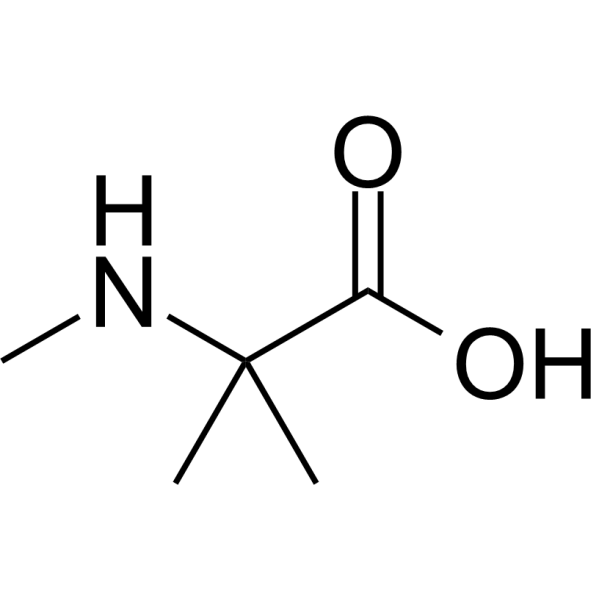
MeAIB
Based on 4 publication(s) in Google Scholar
MeAIB (α-(Methylamino)isobutyric acid) is a specific?substrate for amino acid transport system A (ATA1). ATA mediate the uptake of short-chain neutral amino acids in a Na+-dependent manner.
For research use only. We do not sell to patients.
- Purity : 99.96%
- CAS No.: 2566-34-9
- Formula: C5H11NO2
- Molecular Weight:117.15
-
Storage:
4°C, protect from light
* In solvent : -80°C, 6 months; -20°C, 1 month (protect from light)

To place orders, for customer services and technical support, please contact: MedChemExpress USA
Tel: 609-228-6898 E-mail: [email protected] [email protected]


-
 Biological Activity
-
Chemical Information
-
Solvent & Solubility
- Purity & Documentation
- References
-
 Help & FAQs


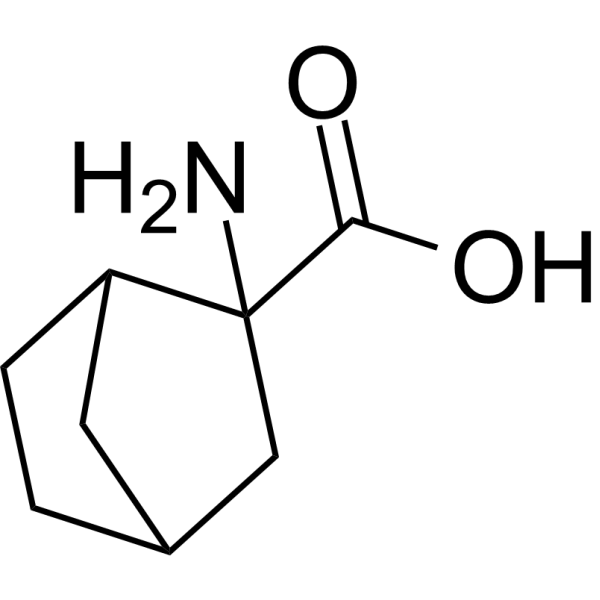
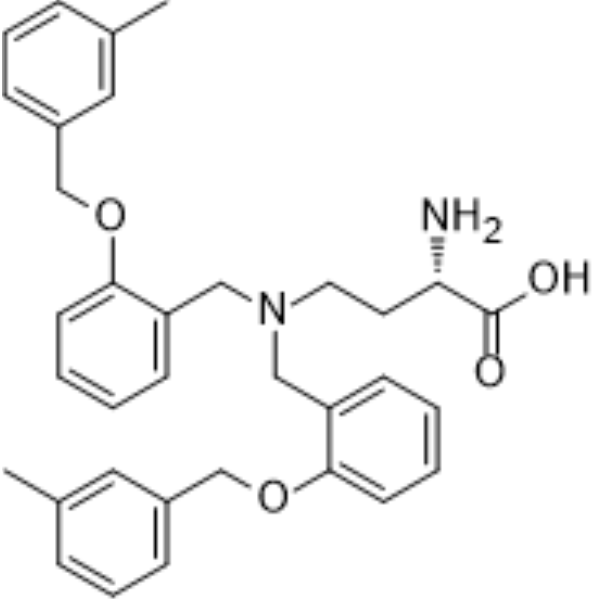
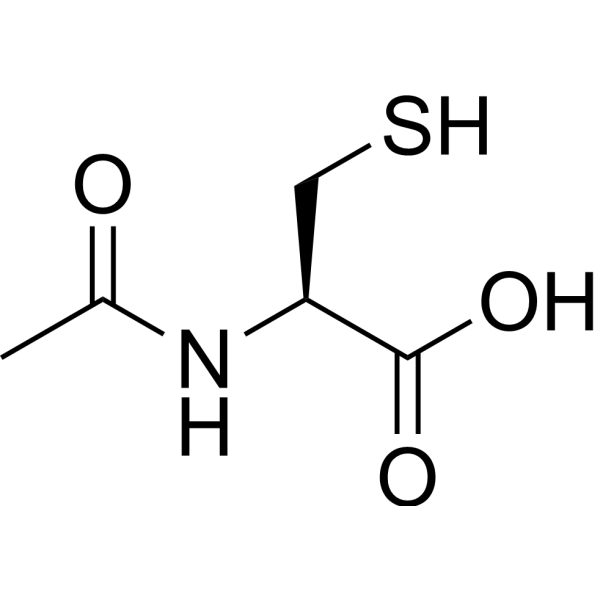


Publications Citing Use of MedChemExpress (MCE) MeAIB
More Customer Validation & Images

-
Bio/Physico-chemical Assay
-
In Vivo Efficacy Study


Biological Activity
Description
In Vitro
ATA3 is a new subtype of amino acid transport system A, primarily expressed in the liver and skeletal muscle. ATA1 (also known as GlnT) and ATA2 (also known as SAT2), have been cloned from rat and human tissues. These transporters mediate the uptake of short-chain neutral amino acids in a Na+-dependent manner[1].
MedChemExpress (MCE) has not independently confirmed the accuracy of these methods. They are for reference only.
Clinical Trial
| NCT Number | Sponsor | Condition | Start Date |
Phase

|
|---|---|---|---|---|
| NCT01329991 | Plexxikon| | 2011-05 | PHASE1 |


Chemical Information
-
CAS No. 2566-34-9
-
Appearance Solid
-
Molecular Weight 117.15
-
Formula C5H11NO2
-
Color White to off-white
-
SMILES
CC(C)(NC)C(O)=O
-
Synonyms
α-(Methylamino)isobutyric acid
-
Shipping
Room temperature in continental US; may vary elsewhere.
-
Storage
4°C, protect from light
* In solvent : -80°C, 6 months; -20°C, 1 month (protect from light)


Publications (4)
-
Journal Impact Factor
-
Most Recent
-
Cell
A two-front nutrient supply environment fuels small intestinal physiology through differential regulation of nutrient absorption and host defense. [Abstract]2024 Oct 31;187(22):6251-6271.e20. PMID: 39427662 -
Cell Metab
2022 Nov 1;34(11):1843-1859.e11. PMID: 36103895
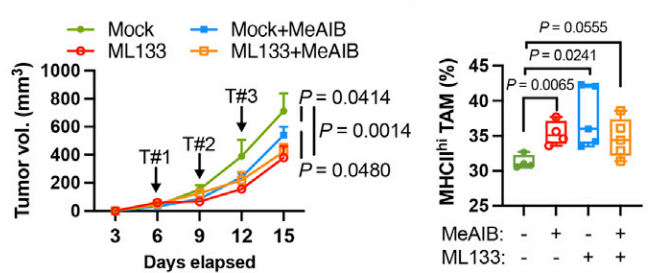
MeAIB purchased from MedChemExpress. Usage Cited in: Cell Metab. 2022 Nov 1;34(11):1843-1859.e11. [Abstract]
Tumor growth curves of B16F10 with intratumoral injection of mock, ML133 (n = 6), mock + MeAIB (50 mM), and ML133 + MeAIB as indicated.
-
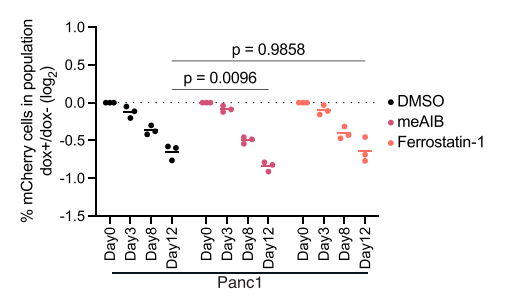
MeAIB purchased from MedChemExpress. Usage Cited in: bioRxiv. 2026 Jan 26.
To evaluate the dependency of cells with CA on L-gln uptake, we used 2-methylamino isobutyrate (meAIB), a specific inhibitor of SNAT1/SLC38A1, in dual-color competition experiments. Our findings revealed that SNAT1-mediated L-gln import is critically required for the survival of Panc1 cells with CA.
-
bioRxiv
Surface avidity of anionic polypeptide coatings target nanoparticles to cancer-associated amino acid transporters. [Abstract]2025 Jul 31:2025.07.28.667320. PMID: 40766676


Solvent & Solubility
In Vitro:
H2O : 100 mg/mL (853.61 mM; Need ultrasonic)
DMSO : 50 mg/mL (426.80 mM; ultrasonic and warming and adjust pH to 2 with 1M HCl and heat to 60°C; Hygroscopic DMSO has a significant impact on the solubility of product, please use newly opened DMSO)
Please refer to the solubility information to select the appropriate solvent. Once prepared, please aliquot and store the solution to prevent product inactivation from repeated freeze-thaw cycles.
Storage method and period of stock solution: -80°C, 6 months; -20°C, 1 month (protect from light). When stored at -80°C, please use it within 6 months. When stored at -20°C, please use it within 1 month.
* Note: If you choose water as the stock solution, please dilute it to the working solution, then filter and sterilize it with a 0.22 μm filter before use.
Please refer to the solubility information to select the appropriate solvent. Once prepared, please aliquot and store the solution to prevent product inactivation from repeated freeze-thaw cycles.
Storage method and period of stock solution: -80°C, 6 months; -20°C, 1 month (protect from light). When stored at -80°C, please use it within 6 months. When stored at -20°C, please use it within 1 month.
* Note: If you choose water as the stock solution, please dilute it to the working solution, then filter and sterilize it with a 0.22 μm filter before use.
Concentration (start) × Volume (start) = Concentration (final) × Volume (final)
In Vivo:
Select the appropriate dissolution method based on your experimental animal and administration route.
- For the following dissolution methods, please ensure to first prepare a clear stock solution using an In Vitro approach and then sequentially add co-solvents:
- To ensure reliable experimental results, the clarified stock solution can be appropriately stored based on storage conditions. As for the working solution for In Vivo experiments, it is recommended to prepare freshly and use it on the same day.
- The percentages shown for the solvents indicate their volumetric ratio in the final prepared solution. If precipitation or phase separation occurs during preparation, heat and/or sonication can be used to aid dissolution.
Add each solvent one by one: 10% DMSO 40% PEG300 5% Tween-80 45% Saline
Solubility: ≥ 2.5 mg/mL (21.34 mM); Clear solution
This protocol yields a clear solution of ≥ 2.5 mg/mL (saturation unknown).
Taking 1 mL working solution as an example, add 100 μL DMSO stock solution (25.0 mg/mL) to 400 μL PEG300, and mix evenly; then add 50 μL Tween-80 and mix evenly; then add 450 μL Saline to adjust the volume to 1 mL.
Preparation of Saline: Dissolve 0.9 g sodium chloride in ddH₂O and dilute to 100 mL to obtain a clear Saline solution.
Add each solvent one by one: 10% DMSO 90% (20% SBE-β-CD in Saline)
Solubility: ≥ 2.5 mg/mL (21.34 mM); Clear solution
This protocol yields a clear solution of ≥ 2.5 mg/mL (saturation unknown).
Taking 1 mL working solution as an example, add 100 μL DMSO stock solution (25.0 mg/mL) to 900 μL 20% SBE-β-CD in Saline, and mix evenly.
Preparation of 20% SBE-β-CD in Saline (4°C, storage for one week): 2 g SBE-β-CD powder is dissolved in 10 mL Saline, completely dissolve until clear.
For the following dissolution methods, please prepare the working solution directly:
It is recommended to prepare fresh solutions and use them promptly within a short period of time.
The percentages shown for the solvents indicate their volumetric ratio in the final prepared solution. If precipitation or phase separation occurs during preparation, heat and/or sonication can be used to aid dissolution.
Add each solvent one by one: PBS
Solubility: 100 mg/mL (853.61 mM); Clear solution; Need ultrasonic
In Vivo Dissolution Calculator
Please enter the basic information of animal experiments:
-
-
-
-
Recommended: Prepare an additional quantity of animals to account for potential losses during experiments.
Working solution concentration: 0.22 mg/mL
This product has good water solubility, please refer to the measured solubility data in water/PBS/Saline for details.


Purity & Documentation
-
Data Sheet (273 KB)
-
SDS (394 KB)
- English - EN (394 KB)
- Français - FR (394 KB)
- Deutsch - DE (394 KB)
- Norwegian - NO (394 KB)
- Español - ES (394 KB)
- Swedish - SV (394 KB)
- Italian - IT (394 KB)
- Korean - KR (394 KB)
- Portuguese - PT (394 KB)
-
Handling Instructions (2659 KB)
References
[1]. M Sugawara, et al. Structure and function of ATA3, a new subtype of amino acid transport system A, primarily expressed in the liver and skeletal muscle. Biochim Biophys Acta. 2000 Dec 20;1509(1-2):7-13. [Content Brief]
[2]. Y Kudo, et al. Changes in expression and function of syncytin and its receptor, amino acid transport system B(0) (ASCT2), in human placental choriocarcinoma BeWo cells during syncytialization. Placenta. 2002 Aug;23(7):536-41. [Content Brief]


Complete Stock Solution Preparation Table
Please refer to the solubility information to select the appropriate solvent. Once prepared, please aliquot and store the solution to prevent product inactivation from repeated freeze-thaw cycles.
Storage method and period of stock solution: -80°C, 6 months; -20°C, 1 month (protect from light). When stored at -80°C, please use it within 6 months. When stored at -20°C, please use it within 1 month.
| Optional Solvent | Concentration Solvent Mass | 1 mg | 5 mg | 10 mg | 25 mg |
|---|---|---|---|---|---|
| DMSO / H2O | 1 mM | 8.5361 mL | 42.6803 mL | 85.3606 mL | 213.4016 mL |
| 5 mM | 1.7072 mL | 8.5361 mL | 17.0721 mL | 42.6803 mL | |
| 10 mM | 0.8536 mL | 4.2680 mL | 8.5361 mL | 21.3402 mL | |
| 15 mM | 0.5691 mL | 2.8454 mL | 5.6907 mL | 14.2268 mL | |
| 20 mM | 0.4268 mL | 2.1340 mL | 4.2680 mL | 10.6701 mL | |
| 25 mM | 0.3414 mL | 1.7072 mL | 3.4144 mL | 8.5361 mL | |
| 30 mM | 0.2845 mL | 1.4227 mL | 2.8454 mL | 7.1134 mL | |
| 40 mM | 0.2134 mL | 1.0670 mL | 2.1340 mL | 5.3350 mL | |
| 50 mM | 0.1707 mL | 0.8536 mL | 1.7072 mL | 4.2680 mL | |
| 60 mM | 0.1423 mL | 0.7113 mL | 1.4227 mL | 3.5567 mL | |
| 80 mM | 0.1067 mL | 0.5335 mL | 1.0670 mL | 2.6675 mL | |
| 100 mM | 0.0854 mL | 0.4268 mL | 0.8536 mL | 2.1340 mL |
* Note: If you choose water as the stock solution, please dilute it to the working solution, then filter and sterilize it with a 0.22 μm filter before use.


MeAIB Related Classifications
HY-134452 Related Classifications
 Powered by Bioz