



1. Search Result
Search Result
Results for "

terminal

" in MedChemExpress (MCE) Product Catalog:

1102

Inhibitors & Agonists

6

Screening Libraries

37

Fluorescent Dyes

240

Biochemical Assay Reagents

257

Peptides

1

MCE Kits

26

Inhibitory Antibodies

25

Natural
Products

89

Recombinant Proteins

21

Isotope-Labeled Compounds

66

Antibodies

94

Click Chemistry

28

Oligonucleotides

Targets Recommended:
Cat. No. Product Name Target Research Areas Chemical Structure
  • HY-18975
    I-BRD9
    5+ Cited Publications

    Epigenetic Reader Domain Inflammation/Immunology Cancer
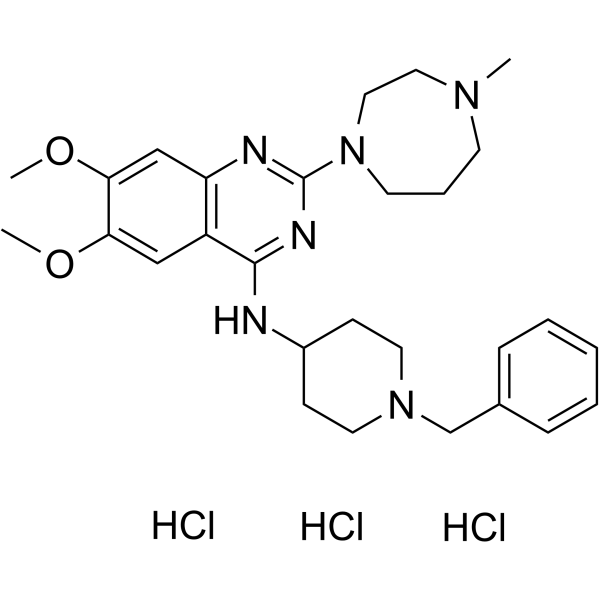
    I-BRD9 is a selective cellular chemical probe of bromodomain-containing protein 9 (BRD9) with pIC50 value of 7.3 μM. I-BRD9 has high selectivity for bromodomain and extra terminal domain (BET) family and highly homologous bromodomain-containing protein 7 (BRD7). I-BRD9 can be used to identify genes regulated by BRD9 in Kasumi-1 cells involved in oncology and immune response pathways .
    I-BRD9
  • HY-13506
    M344
    2 Publications Verification

    D 237; MS 344

    HDAC Cancer
    M344 (D 237) is an inhibitor of histone deacetylase (IC50=100 nM) and an inducer of terminal cell fifferentiation.
    M344
  • HY-E70563

    Biochemical Assay Reagents Others
    Endoproteinase Lys-N (MS grade) is a protease that specifically hydrolyzes the N-terminal peptide bond of lysine fragments .
    Endoproteinase Lys-N (MS grade)
  • HY-109076

    EBC-46

    PKC Caspase Cancer
    Tigilanol tiglate (EBC-46) is a protein kinase C (PKC)/C1 domain activator. Tigilanol tiglate is associated with mitochondrial/endoplasmic reticulum (ER) dysfunction, leading to activation of the unfolded protein response (UPRmt/ER) and subsequent induction of ATP depletion, organelles expansion, Caspase activation, gasdermin E cleavage, and terminal necrosis. Tigilanol tiglate, as a small anti-tumor molecule with immunomodulatory effects, can be used in the study of head and neck squamous cell carcinoma and soft tissue sarcoma .
    Tigilanol tiglate
  • HY-158712

    Others
    3'-ONH2-dATP (sodium) solution (100 mM) is a 3'-O-blocked reversible terminator deoxynucleotide triphosphate.3'-ONH2-dATP (sodium) solution (100 mM) stops DNA polymerization after single-nucleotide addition to an initiator strand, and its 3'-ONH2 blocking group can be removed to restore a free 3'-OH for subsequent extension.3'-ONH2-dATP (sodium) solution (100 mM) incorporates into an oligonucleotide chain by engineered terminal deoxynucleotidyl transferase from Zonotrichia albicollis to enable template-free, stepwise de novo enzymatic DNA synthesis .
    3'-ONH2-dATP sodium solution (100 mM)
  • HY-E70055

    Sialyltransferase Others
    alpha-2,6-Sialyltransferase (Pd26ST) (EC 2.4.99.1) is capable of sialylating both terminal and internal galactose and N-acetylgalactosamine, which producing terminal α2,6-sialosides .
    α-2,6-Sialyltransferase, pasteurella multocida (P-1059)
  • HY-B0344
    Methscopolamine bromide
    1 Publications Verification

    (-)-Scopolamine methyl bromide; Hyoscine methyl bromide

    mAChR Neurological Disease
    Methscopolamine bromide ((-)-Scopolamine methyl bromide; Hyoscine methyl bromide) is a peripherally acting muscarinic receptor (mAChR) antagonist that cannot cross the blood-brain barrier. Methscopolamine bromide blocks the muscarinic negative feedback regulation of acetylcholine release from striatal cholinergic terminals, thereby increasing acetylcholine release in the striatum of freely moving rats. Methscopolamine bromide does not induce motor excitation in freely moving rats, nor does it alter the duration of ethanol-induced loss of righting reflex in mice. Methscopolamine bromide fails to antagonize the arecoline-mediated reduction in the duration of ethanol-induced loss of righting reflex in mice .
    Methscopolamine bromide
  • HY-103076
    EZ-482
    1 Publications Verification

    Apolipoprotein Neurological Disease
    EZ-482, a novel ligand of apolipoprotein (apoE), binds to sites on apoE in the C-terminal domain with Kds of 5-10 μM for apoE3 and apoE4. EZ-482 binds to apoE4 by a unique N-terminal allosteric effect. EZ482 has the potential for Alzheimer’s diseas .
    EZ-482
  • HY-P2746

    EC 3.4.2.2

    Endogenous Metabolite Metabolic Disease
    Carboxypeptidase B, Porcine pancreas (EC 3.4.2.2) is a peptide exonuclease that can specifically degrade peptide chains. Carboxypeptidase B is progressively degraded from the C-terminal to release free amino acids. Carboxypeptidase B hydrolyzes only peptide bonds with basic amino acids (such as arginine and lysine) as C-terminal residues .
    Carboxypeptidase B, Porcine pancreas
  • HY-P99777
    Ontorpacept
    1 Publications Verification

    TTI-621

    CD47 Cancer
    Ontorpacept (TTI-621) is a soluble fusion protein that consists of the human SIRPα N-terminal (1-118) linked to the Fc region of human IgG1. The N-terminal (1-118)-fragment of ontorpacept is a binding domain for CD47 which is an inhibitor of phagocytosis by macrophages. Ontorpacept is a CD47-blocking checkpoint inhibitor with antitumor activity .
    Ontorpacept
  • HY-NP0149

    SNA (Biotinylated)

    Biochemical Assay Reagents Others
    Sambucus Nigra Lectin (SNA) (Biotinylated) is a terminal sialic acid (SA) residue-binding lectin with biotinylation modification. Sambucus Nigra Lectin (Biotinylated) binds specifically to terminal sialic acid residues on captured IgG and its subclasses .
    Sambucus Nigra Lectin (Biotinylated)
  • HY-D1668

    DNA Stain Reverse Transcriptase Infection Neurological Disease Cancer
    Biotin-11-dCTP is a biotinylated deoxynucleoside triphosphate and an important DNA labeling reagent. In random primer DNA labeling reactions, Biotin-11-dCTP incorporates into newly synthesized DNA strands to generate labeled DNA probes suitable for hybridization applications. In addition, Biotin-11-dCTP can serve as a substrate for terminal deoxynucleotidyl transferase to end-label oligonucleotides for telomere sequence detection, or to label the cut ends of linearized DNA molecules, thereby supporting streptavidin-based electron microscopy analysis. For example, Biotin-11-dCTP can label the cut ends of linearized DNA molecules under the action of dGTP and avian myeloblastosis virus reverse transcriptase .
    Biotin-11-dCTP
  • HY-41074

    Biochemical Assay Reagents Others
    N,O-Dimethylhydroxylamine hydrochloride is a biochemical reagent used as a terminal protecting group in oligosaccharide synthesis .
    N,O-Dimethylhydroxylamine hydrochloride
  • HY-168940B

    Drug Intermediate Cancer
    NH2-PEG2000-COOH is a heterofunctional polyethylene glycol with one amino terminal group and one carboxyl terminal group. NH2-PEG2000-COOH reacts with N-succinimidyl-6-maleimidohexanoate to introduce a maleimide terminal group, followed by conjugation with thiolated RGD peptide via a thiol-maleimide coupling reaction to synthesize RGD-PEG-COOH. NH2-PEG2000-COOH can be used in cancer research .
    NH2-PEG2000-COOH
  • HY-W009216
    2'-Deoxycytidine-5'-monophosphate
    1 Publications Verification

    5'-dCMP; Deoxy-CMP; 2'-Deoxycytidine-5'-monophosphoric acid

    DNA/RNA Synthesis Infection
    2'-Deoxycytidine-5'-monophosphate (5'-dCMP) is a compound that binds to the adenovirus terminal protein with a molecular weight of 80000 daltons. 2'-Deoxycytidine-5'-monophosphate forms a covalent complex with this protein and is associated with adenovirus DNA replication .
    2'-Deoxycytidine-5'-monophosphate
  • HY-52101A
    FMK
    4 Publications Verification

    Ribosomal S6 Kinase (RSK) Cancer
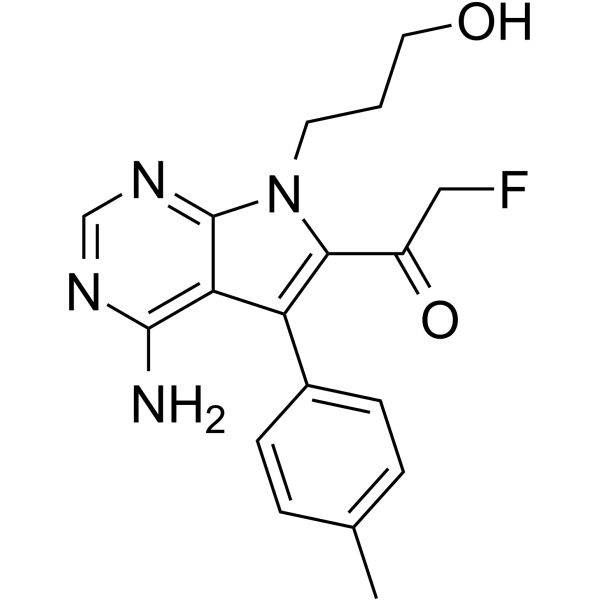
    FMK is a an irreversible RSK2 kinase inhibitor, that covalently modifies the C-terminal kinase domain of RSK.
    FMK
  • HY-N1455
    Falcarinol
    1 Publications Verification

    Panaxynol; Carotatoxin

    HSP Apoptosis Cancer
    Falcarinol (Panaxynol) is a natural, orally active Hsp90 inhibitor targeting both the N-terminal and C-terminal of Hsp90 with limited toxicities. Falcarinol (Panaxynol) induces apoptosis . Falcarinol is a click chemistry reagent, it contains an Alkyne group and can undergo copper-catalyzed azide-alkyne cycloaddition (CuAAc) with molecules containing Azide groups.
    Falcarinol
  • HY-E70201

    EC 3.4.2.2 (MS grade)

    Endogenous Metabolite Others
    Carboxypeptidase B (MS grade) is a peptide exonuclease that can specifically degrade peptide chains. Carboxypeptidase B (MS grade) is progressively degraded from the C-terminal to release free amino acids. Carboxypeptidase B (MS grade) hydrolyzes only peptide bonds with basic amino acids (such as arginine and lysine) as C-terminal residues .
    Carboxypeptidase B (MS grade)
  • HY-138246

    Biochemical Assay Reagents Others
    Pentynoic acid STP ester sodium is a click chemistry reagent containing a terminal propargyl group and a STP ester group. Pentynoic acid STP ester sodium is suitable for protein modification .
    Pentynoic acid STP ester sodium
  • HY-E70029

    Others Others
    alpha-1,6-Fucosidase (LpAlfC(E274A)) (EC 3.2.1.51) cleaves branched non-reducing terminal fucose, linked α(1-6) to the core N-acetylglucosamine of N-linked oligosaccharides. alpha-1,6-Fucosidase (LpAlfC(E274A)) is useful for determining core fucosylation .
    α-1,6-Fucosidase, lactobacillus casei
  • HY-150145

    Nucleoside Antimetabolite/Analog Fluorescent Dye Others
    Cy5-UTP is a fluorescently labeled ribonucleotide triphosphate that can be used as a substrate for terminal deoxynucleotidyl transferase (TdT). Cy5-UTP can be employed to label RNA probes generated in vitro (Ex/Em: 650/665 nm). Cy5-UTP can be applied in FISH, multi-color fluorescence analysis, especially in dual-color expression arrays that combine with Cy5-UTP .
    Cy5-UTP
  • HY-W015461

    DL-α-Aminocaprylic acid; DL-2-Aminocaprylic acid

    Bacterial Infection
    2-Aminooctanoic acid (DL-α-Aminocaprylic acid) is a fatty acid with an amino functional group that can be directly coupled at both the C-terminal and N-terminal with antimicrobial peptides (AMP) derived from lactoferrin B to enhance antibacterial activity .
    2-Aminooctanoic acid
  • HY-145125

    PROTACs Others
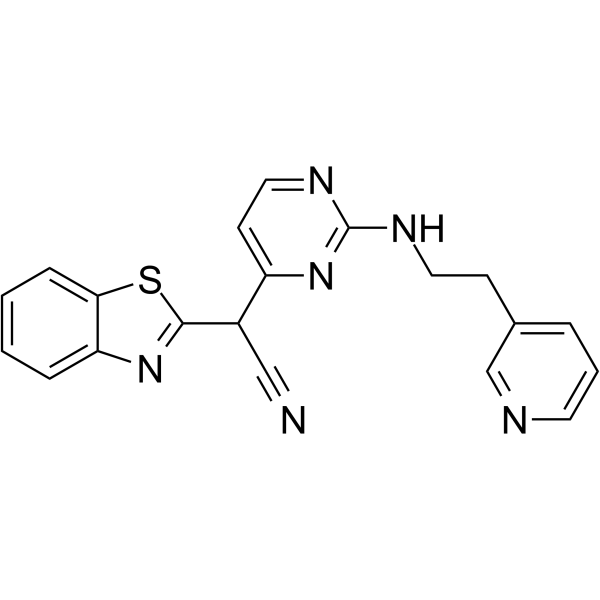
    SJ995973 (PROTAC) is a uniquely potent degrader of bromodomain and extra-terminal (BET) proteins.
    SJ995973
  • HY-P1499

    Somatostatin Receptor Neurological Disease
    Somatostatin-28 (1-14) is an N-terminal fragment of the neuropeptide somatostatin-28.
    Somatostatin-28 (1-14)
  • HY-P1170

    Ac-L-Tyr-Gly-Gly-L-Phe-D-Leu-COOH

    Opioid Receptor Neurological Disease
    N-terminally acetylated Leu-enkephalin is the N-terminally acetylated form of Leu-enkephalin. Leu-enkephalin is a five amino acid endogenous peptide that acts as an agonist at opioid receptors.
    N-terminally acetylated Leu-enkephalin
  • HY-P2219A

    Amino Acid Derivatives Cancer
    CGGRGD TFA, a RGD derivative with cysteine as its N-terminal .
    CGGRGD TFA
  • HY-E70016

    TdT

    DNA/RNA Synthesis Others Cancer
    Terminal deoxyribonucleotidyltransferase (TdT) catalyses the condensation of deoxyribonucleotide triphosphates onto the 3' hydroxyl ends of DNA strands and adds N-regions to gene segment junctions during V(D)J recombination. Terminal deoxyribonucleotidyltransferase is expressed in immature, pre-B, pre-T lymphoid cells, and acute lymphoblastic leukemia/lymphoma cells .
    Terminal deoxyribonucleotidyltransferase
  • HY-D1721

    Fluorescent Dye Thrombin Others
    Fluorescein-12-dATP is a fluorescein-labeled deoxyadenosine triphosphate and signal amplifier. Fluorescein-12-dATP can be incorporated into the 3'-end of exposed thrombin-binding aptamers via terminal deoxynucleotidyl transferase to form multi-labeled nucleic acid chains, which are used for signal amplification in thrombin detection. Fluorescein-12-dATP acts as a fluorescent detection probe in chip-based aptamer sandwich biosensors for the detection of thrombin in serum. Fluorescein-12-dATP can be used in studies related to thrombin detection .
    Fluorescein-12-dATP
  • HY-P2219

    Amino Acid Derivatives Cancer
    CGGRGD, a RGD derivative with cysteine as its N-terminal .
    CGGRGD
  • HY-160841

    DNA Stain DNA/RNA Synthesis Others
    Biotin-16-dCTP is a biotinylated deoxycytidine triphosphate that serves as an important DNA labeling substrate. Biotin-16-dCTP can be enzymatically incorporated into the 3' end of DNA probes via terminal deoxynucleotidyl transferase, forming a 1-3 nucleotide-long tail to achieve biotinylation of the probes. Biotin-16-dCTP enhances chemiluminescent detection of low-abundance targets such as specific tRNA isoacceptors through Northern blotting. Biotin-16-dCTP can also replace conventional dCTP to be integrated into single-stranded DNA generated by asymmetric polymerase chain reaction, which is applicable for bioconjugation or pull-down assays. Repeated freeze-thaw cycles of Biotin-16-dCTP should be avoided to prevent degradation of its function for probe biotinylation .
    Biotin-16-dCTP
  • HY-P1228

    GCGR Metabolic Disease
    HAEGTFT is the first N-terminal 1-7 residues of GLP-1 peptide.
    HAEGTFT
  • HY-177124

    VYN201

    Epigenetic Reader Domain Cancer
    Repibresib (VYN201) is a bromodomain and extra-terminal motif (BET) inhibitor. Repibresib shows antineoplastic activity .
    Repibresib
  • HY-B1348

    Drug Metabolite Neurological Disease
    Dimethadione is the primary metabolite of trimethadione. Dimethadione causes depression of neuromuscular transmission. Dimethadione primarily decreases transmitter release from the nerve terminal .
    Dimethadione
  • HY-16094

    BW 467C60

    Adrenergic Receptor Cardiovascular Disease Neurological Disease
    Bethanidine sulfate (BW 467C60) is an orally active antihypertensive agent and adrenergic neuron blocker. Bethanidine sulfate exerts its antihypertensive effect by inhibiting the release of norepinephrine from sympathetic nerve terminals. Bethanidine sulfate exhibits anti-ventricular arrhythmic activity. Bethanidine sulfate can be used in research related to hypertension, ventricular tachycardia, and ventricular fibrillation .
    Bethanidine sulfate
  • HY-P2932A

    Cholecystokinin Receptor Neurological Disease
    Cholecystokinin-33 free acid is an analogue of Cholecystokinin (HY-P2932). C-terminal amidation is important for binding of Cholecystokinin to its receptors, and removing the amide group would decrease Cholecystokinin activity. Cholecystokinin-33 free acid can be used to study C-terminal amidation of Cholecystokinin-33 .
    Cholecystokinin-33 free acid
  • HY-133053

    Hydroxy-PEG8-acid

    Biochemical Assay Reagents Others
    HO-PEG8-CH2CH2COOH (Hydroxy-PEG8-acid) is a PEG derivative containing a hydroxyl group with a terminal carboxylic acid. The terminal carboxylic acid can be reacted with primary amine groups in the presence of activators to form a stable amide bond .
    HO-PEG8-CH2CH2COOH
  • HY-139623

    Androgen Receptor Cancer
    A4B17 is an androgen receptor N-terminal inhibitor for researching androgen-responsive prostate cancer.
    A4B17
  • HY-P2549

    Fluorescent Dye Neurological Disease
    Biotin-β-Amyloid (1-40) is a N-terminal-labelled biotinylated amyloid-β-(1-40) peptide.
    Biotin-β-Amyloid (1-40)
  • HY-P2643

    Endogenous Metabolite Cardiovascular Disease
    Angiotensin I/II (4-8), a major metabolite of Angiotensin II, is a C-terminal 4-8 pentapeptide .
    Angiotensin I/II (4-8)
  • HY-P5984

    mTOR Others
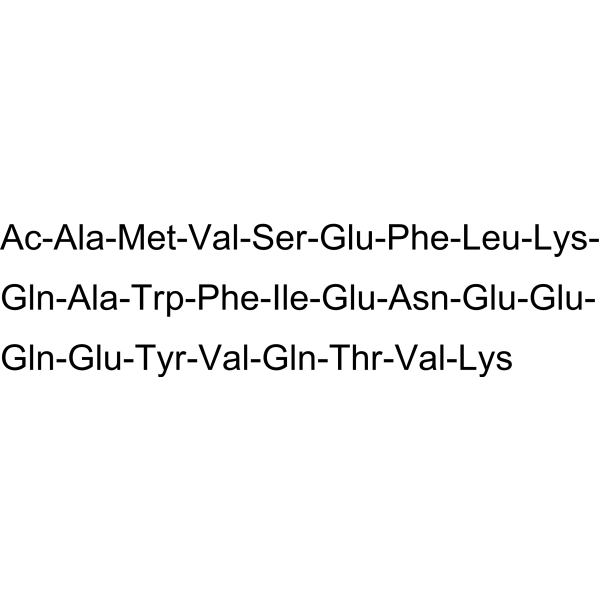
    Thioether-cyclized helix B peptide, CHBP can improve metabolic stability and renoprotective effect through inducing autophagy via inhibition of mTORC1 and activation of mTORC2 .
    Thioether-cyclized helix B peptide, CHBP
  • HY-132273

    Biochemical Assay Reagents Others
    Alkyne Phosphoramidite, 5'-terminal (Compound 2) can be used for synthesis of oligo-nucleotides.
    Alkyne Phosphoramidite, 5'-terminal
  • HY-P11345

    Biochemical Assay Reagents Others
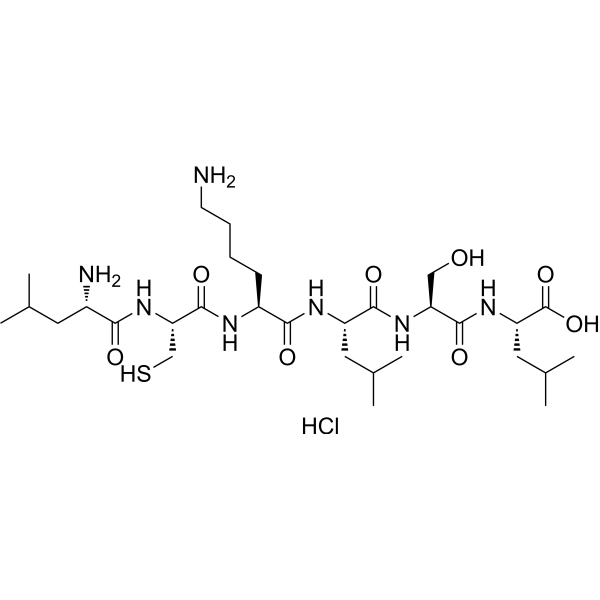
    VPS35 c-terminal peptide is a peptide that can bind to VPS35. VPS35 c-terminal peptide can be used in immunoprecipitation experiments to specifically elute VPS35 and its interacting proteins, facilitating the identification of VPS35-interacting molecules .
    VPS35 c-terminal peptide
  • HY-W269700

    L-Isoleucyl-L-leucine

    Drug Intermediate Neurological Disease
    Ile-Leu-OH (L-Isoleucyl-L-leucine) is a hydrophobic dipeptide fragment and is a component of the neurotensin C-terminal heptapeptide Pro-Arg-Arg-Pro-Tyr-Ile-LeuOH .
    Ile-Leu-OH
  • HY-N5123

    Endogenous Metabolite Metabolic Disease
    α-L-Rhamnose is a neutral sugar present in plants, animals, viruses and bacteria. α-L-Rhamnose is a ligand for α-L-rhamnose-recognizing lectin sites, trigger intracellular signaling pathways. α-L-Rhamnose induces rhaE and rhaA expression as a specific carbon source in Aspergillus nidulans, while glucose inhibits its cellular uptake. α-L-Rhamnose induces rapid and transient increases in intracellular free Ca 2+ concentration in normal human dermal fibroblasts .
    α-L-Rhamnose
  • HY-D1517

    Fluorescent Dye Others
    FM 2-10 is a fluorescent dye. FM 2-10 is a less hydrophobic version of FM 1-43 (HY-D1434). FM 2-10 can be used for identifying actively firing neurons and investigating the mechanisms of activity-dependent vesicle cycling .
    FM 2-10
  • HY-W615095

    Biochemical Assay Reagents Others
    Biotin-PEG2-alkyne is a short PEG linker featuring a biotin group and a terminal alkyne. Biotin is useful for affinity-based applications such as pull-down assays while terminal alkynes are used in copper (I) click chemistry with azides.
    Biotin-PEG2-alkyne
  • HY-P2627

    Cholecystokinin Receptor Others
    CCK (27-33) is the C-terminal heptapeptide of cholecystokinin (CCK) .
    CCK (27-33)
  • HY-400345

    Biochemical Assay Reagents Others
    t-butyl-C18-D-Glu-OtBu is comprised of an octadecanedioic acid with a terminal t-butyl ester and a glutamic acid, which is also protected by a terminal t-butyl ester. The t-butyl groups can be deprotected under acidic conditions. Glutamic acid is an α-amino acid that is used in the biosynthesis of proteins.
    tBu-C18 diacid-D-Glu-OtBu
  • HY-P1224

    GCGR Metabolic Disease
    HAEGTFTSDVS is the first N-terminal 1-11 residues of GLP-1 peptide.
    HAEGTFTSDVS
  • HY-P5984A

    mTOR Others
    Thioether-cyclized helix B peptide, CHBP (TFA) is the TFA form of Thioether-cyclized helix B peptide, CHBP (HY-P5984). Thioether-cyclized helix B peptide, CHBP (TFA) can improve metabolic stability and renoprotective effect through inducing autophagy via inhibition of mTORC1 and activation of mTORC2 .
    Thioether-cyclized helix B peptide, CHBP TFA

Inquiry Online

Your information is safe with us. * Required Fields.

Salutation


Country or Region *

Applicant Name *


Organization Name *

Department *


Email Address *


Product Name *

Cat. No.


Requested quantity *

Phone Number *


Remarks

Inquiry Online

Inquiry Information

Product Name:
Cat. No.:
Quantity:
MCE Japan Authorized Agent:

