



Ac2-26
Based on 9 publication(s) in Google Scholar
Ac2-26 is the N-terminal peptide of annexin 1, and has anti-inflammatory activity. Ac2-26 induces a decrease in IKKβ protein in lysosomes by chaperone-mediated autophagy (CMA). Ac2-26 ameliorates lung ischemia-reperfusion injury. Ac2-26 also inhibits airway inflammation and hyperresponsiveness in an asthma rat model.
Nur für Forschungszwecke. Wir verkaufen nicht an Patienten.
- Reinheit : 99.43%
- CAS. Nr.: 151988-33-9
- Formel: C141H210N32O44S
- Molecular Weight:3089.43
-
Speicherung:
Sealed storage, away from moisture and light.
Powder -80°C, 2 years , -20°C, 1 year* In solvent : -80°C, 6 months; -20°C, 1 month (sealed storage, away from moisture and light)

To place orders, for customer services and technical support, please contact: MedChemExpress USA
Tel: 609-228-6898 E-mail: [email protected] [email protected]


-
 Biologische Aktivität
-
Chemical Information
-
Lösungsmittel & Löslichkeit
- Protokoll
- Reinheit & Dokumentation
- Verweise
-
 Help & FAQs


-
HY-P1119
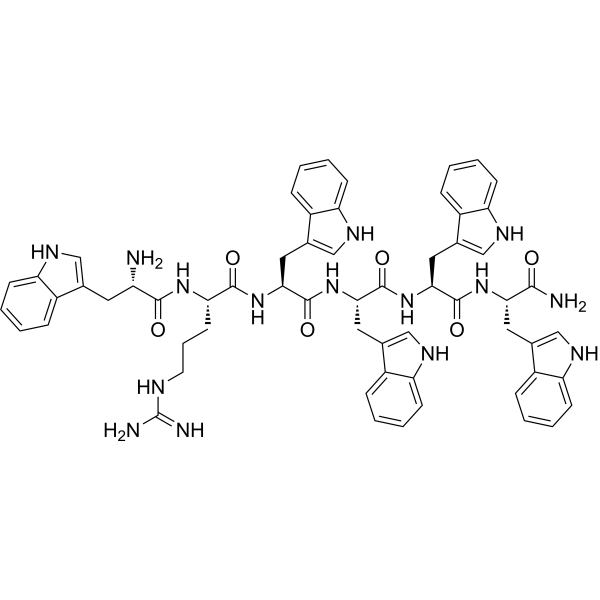
WRW4FPRL1 Antagonist -
HY-Y0873
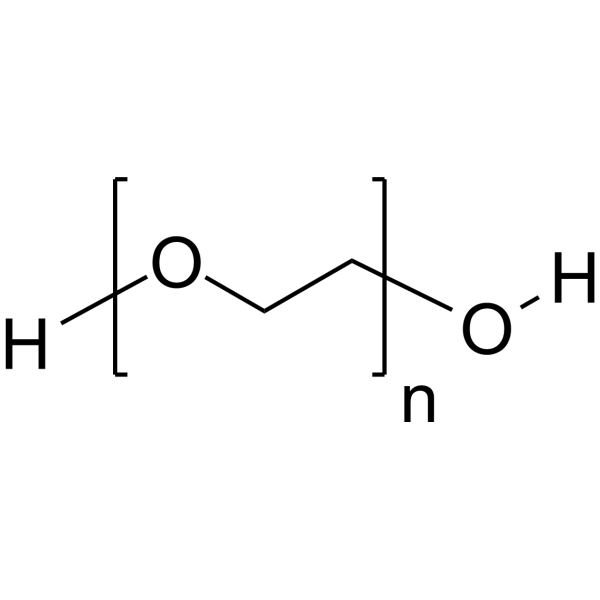
PEG300Neutral Polymer -

HY-Y0320
Dimethyl sulfoxide, meets analytical specification of Ch.P.Aprotic Solvent -

HY-Y1891
Tween 80 -
HY-D1301
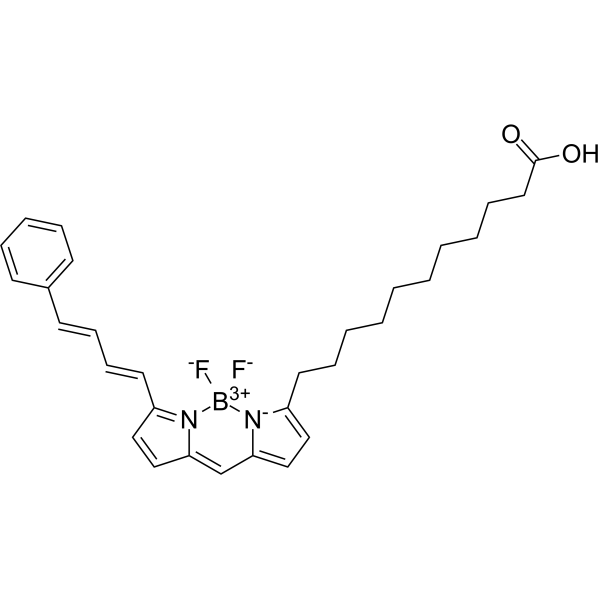
BODIPY 581/591 C11Fluorescent Dye -

HY-P1222
LL-37, humanAntimicrobial Peptide -

HY-P7512
Annexin A1/ANXA1 Protein, Human -

HY-P1099
Ac2-12
Publications Citing Use of MedChemExpress (MCE) Ac2-26
More- Signal Transduct Target Ther. 2024 Aug 23;9(1):218. [Abstract]
- Cancer Cell. 2023 May 8;41(5):903-918.e8. [Abstract]
- Nat Nanotechnol. 2025 Aug 11. [Abstract]
- Mater Today Bio. 2025 Mar 20:32:101690. [Abstract]
- World J Gastroenterol. 2023 Jun 14;29(22):3422-3439. [Abstract]
- iScience. 2023 Oct 6;26(11):108153. [Abstract]
- Exp Cell Res. 2026 Jan 1;454(1):114825. [Abstract]
- Biol Reprod. 2025 Jun 15;112(6):1256-1272. [Abstract]
- Exp Eye Res. 2026 Jul 21:271:111181. [Abstract]
 Customer Validation & Images

-
WB
-
RT-PCR
-
Cell Imaging/Staining
-
In Vivo Efficacy Study
-
In Vivo Efficacy Study


Biologische Aktivität
Beschreibung
In Vitro
Ac2-26 (0.5 μM, 24 h) inhibits the production of infammatory cytokines and apoptosis in LPS-induced HK-2 cells[5]. Ac2-26 (1 μM, 48 h) increases rat cardiomyocyte expression of rFprs and prevents cell injury[6].
MedChemExpress (MCE) has not independently confirmed the accuracy of these methods. They are for reference only.
In Vivo
MedChemExpress (MCE) has not independently confirmed the accuracy of these methods. They are for reference only.


Chemical Information
-
CAS. Nr. 151988-33-9
-
Appearance Solid
-
Molecular Weight 3089.43
-
Formel C141H210N32O44S
-
Color White to off-white
-
Sequence
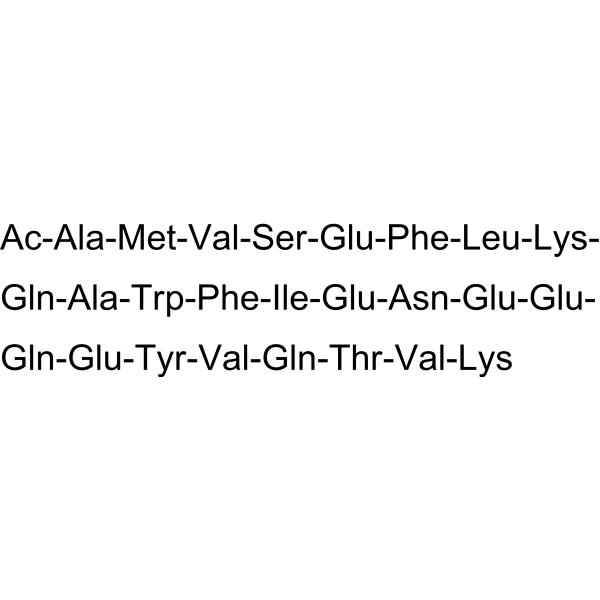
Ac-Ala-Met-Val-Ser-Glu-Phe-Leu-Lys-Gln-Ala-Trp-Phe-Ile-Glu-Asn-Glu-Glu-Gln-Glu-Tyr-Val-Gln-Thr-Val-Lys
-
Sequence Shortening
Ac-AMVSEFLKQAWFIENEEQEYVQTVK
-
Versand
Room temperature in continental US; may vary elsewhere.
-
Speicherung
Sealed storage, away from moisture and light
Powder -80°C 2 years -20°C 1 year * In solvent : -80°C, 6 months; -20°C, 1 month (sealed storage, away from moisture and light)


Publications (9)
-
Journal Impact Factor
-
Most Recent
-
Signal Transduct Target Ther
2024 Aug 23;9(1):218. PMID: 39174522
Ac2-26 purchased from MedChemExpress. Usage Cited in: Signal Transduct Target Ther. 2024 Aug 23;9(1):218. [Abstract]
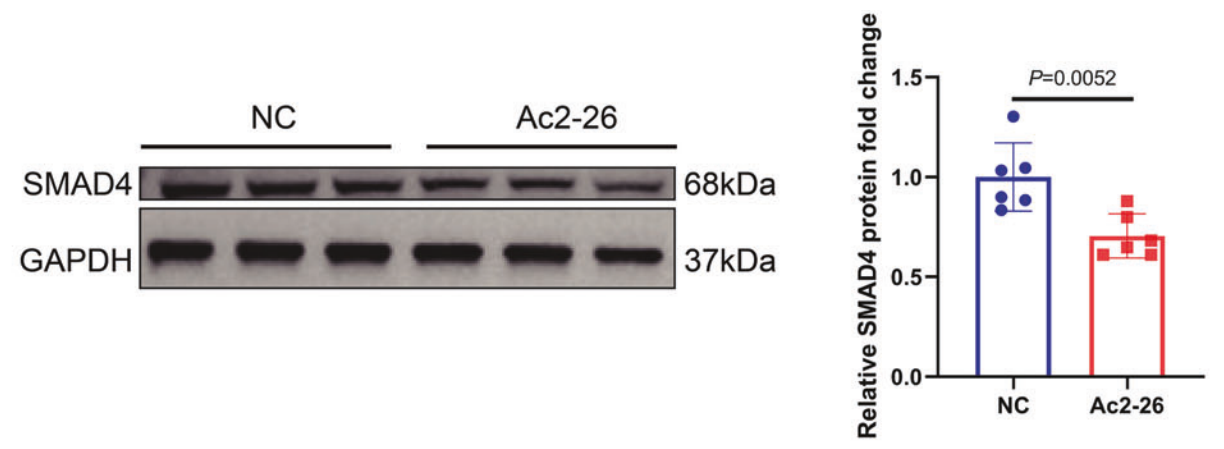
Ac2-26 (0.1 mg/mL; 48 h) significantly reduced SMAD4 protein levels in SVFs.
Ac2-26 purchased from MedChemExpress. Usage Cited in: Signal Transduct Target Ther. 2024 Aug 23;9(1):218. [Abstract]
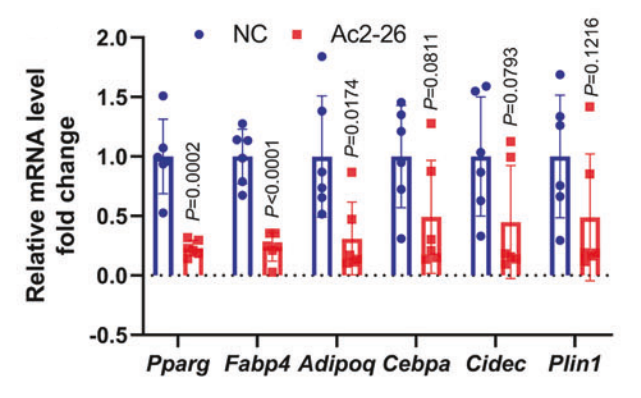
Ac2-26 (0.1 mg/mL; 48 h) significantly decreased mRNA levels of key genes in adipogenesis of SVFs.
Ac2-26 purchased from MedChemExpress. Usage Cited in: Signal Transduct Target Ther. 2024 Aug 23;9(1):218. [Abstract]
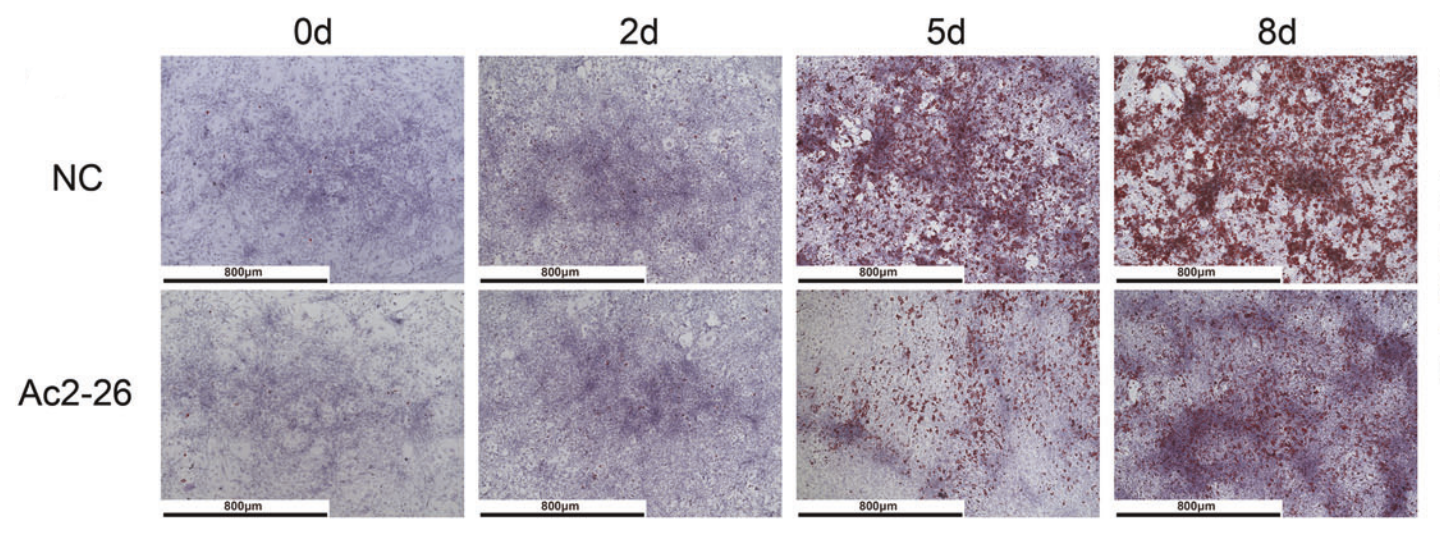
Ac2-26 (0.1 mg/mL; 48 h) significantly reduced the induced differentiation potential of SVFs.
Ac2-26 purchased from MedChemExpress. Usage Cited in: Signal Transduct Target Ther. 2024 Aug 23;9(1):218. [Abstract]
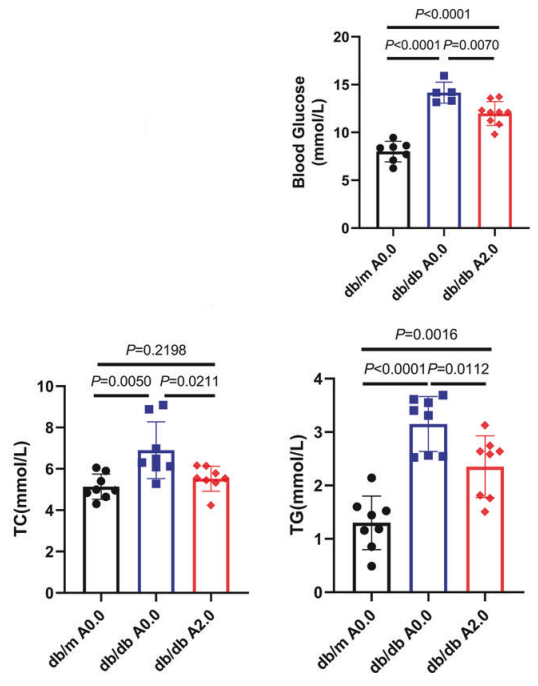
Ac2-26 (2 mg/kg; i.p.; every other day for 10 weeks) significantly decreased the blood glucose, TC, and TG levels in 8-week-old db/db mice fed with HFD.
-
Cancer Cell
2023 May 8;41(5):903-918.e8. PMID: 36963399
Ac2-26 purchased from MedChemExpress. Usage Cited in: Cancer Cell. 2023 May 8;41(5):903-918.e8. [Abstract]
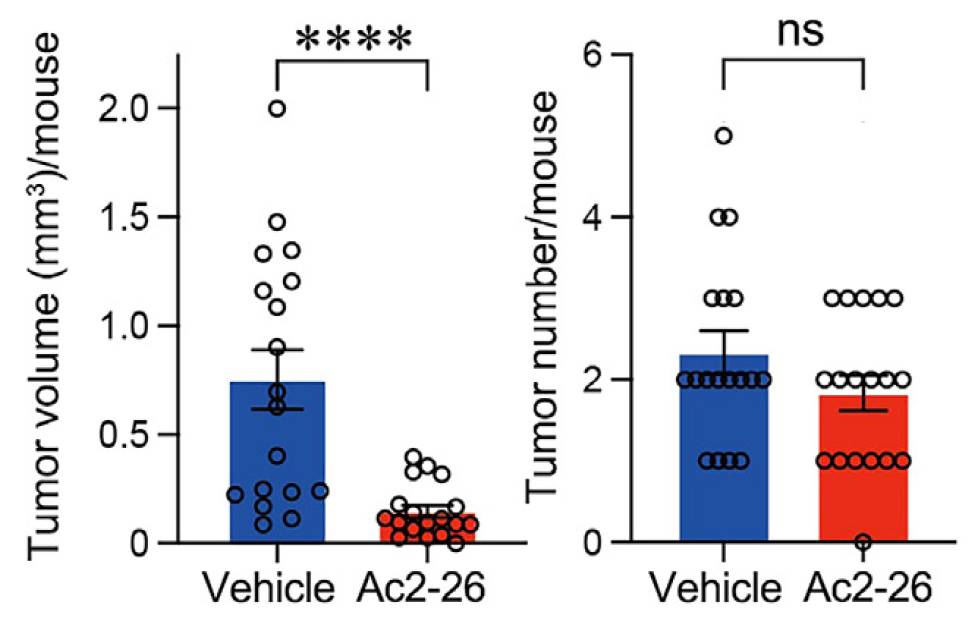
Ac2-26 (100 mg; i.p.; 3 times a week for 5 weeks) significantly reduced the tumor burdens in ESCC (esophageal squamous-cell carcinoma) mice induced by the carcinogen 4-NQO.
-
Nat Nanotechnol
Annexin A1 mRNA-loaded liposomes alleviate acute pancreatitis by suppressing STING pathway and promoting efferocytosis in macrophages. [Abstract]2025 Aug 11. PMID: 40789923 -
Mater Today Bio
Peptide loaded self-healing hydrogel promotes diabetic skin wound healing through macrophage orchestration and inflammation inhibition. [Abstract]2025 Mar 20:32:101690. PMID: 40225136 -
World J Gastroenterol
Mechanism of annexin A1/N-formylpeptide receptor regulation of macrophage function to inhibit hepatic stellate cell activation through Wnt/β-catenin pathway. [Abstract]2023 Jun 14;29(22):3422-3439. PMID: 37389234 -
iScience
2023 Oct 6;26(11):108153. PMID: 37867938 -
Exp Cell Res
2026 Jan 1;454(1):114825. PMID: 41241173 -
Biol Reprod
2025 Jun 15;112(6):1256-1272. PMID: 40143407 -
Exp Eye Res
Annexin A1-Fpr2/ALX signaling in Candida keratitis: Regulatory role in pathogenesis and resolution. [Abstract]2026 Jul 21:271:111181. PMID: 42480956


Lösungsmittel & Löslichkeit
In Vitro:
DMSO : 20 mg/mL (6.47 mM; ultrasonic and adjust pH to 2 with HCl; Hygroscopic DMSO has a significant impact on the solubility of product, please use newly opened DMSO)
H2O : 7.14 mg/mL (2.31 mM; adjust pH to 10 with NaOH)
Please refer to the solubility information to select the appropriate solvent. Once prepared, please aliquot and store the solution to prevent product inactivation from repeated freeze-thaw cycles.
Storage method and period of stock solution: -80°C, 6 months; -20°C, 1 month (sealed storage, away from moisture and light). When stored at -80°C, please use it within 6 months. When stored at -20°C, please use it within 1 month.
* Note: If you choose water as the stock solution, please dilute it to the working solution, then filter and sterilize it with a 0.22 μm filter before use.
Please refer to the solubility information to select the appropriate solvent. Once prepared, please aliquot and store the solution to prevent product inactivation from repeated freeze-thaw cycles.
Storage method and period of stock solution: -80°C, 6 months; -20°C, 1 month (sealed storage, away from moisture and light). When stored at -80°C, please use it within 6 months. When stored at -20°C, please use it within 1 month.
* Note: If you choose water as the stock solution, please dilute it to the working solution, then filter and sterilize it with a 0.22 μm filter before use.
Konzentration (Stammlösung) × Volumen (Stammlösung) = Konzentration (Ziellösung) × Volumen (Ziellösung)
In Vivo:
For the following dissolution methods, please prepare the working solution directly:
It is recommended to prepare fresh solutions and use them promptly within a short period of time.
The percentages shown for the solvents indicate their volumetric ratio in the final prepared solution. If precipitation or phase separation occurs during preparation, heat and/or sonication can be used to aid dissolution.
Add each solvent one by one: PBS
Solubility: ≥ 3.33 mg/mL (1.08 mM); Clear solution


Reinheit & Dokumentation
-
Data Sheet (281 KB)
-
SDS (252 KB)
- English - EN (252 KB)
- Français - FR (252 KB)
- Deutsch - DE (252 KB)
- Norwegian - NO (252 KB)
- Español - ES (252 KB)
- Swedish - SV (252 KB)
- Italian - IT (252 KB)
- Korean - KR (252 KB)
- Portuguese - PT (252 KB)
-
Handling Instructions (2659 KB)
Verweise
[1]. Wang LM, et al. Annexin 1-derived peptide Ac2-26 inhibits eosinophil recruitment in vivo via decreasing prostaglandin D₂. Int Arch Allergy Immunol. 2011;154(2):137-48. [Content Brief]
[2]. Liu L, et al. Ac2-26 Induces IKKβ Degradation Through Chaperone-Mediated Autophagy Via HSPB1 in NCM-Treated Microglia. Front Mol Neurosci. 2018 Mar 15;11:76. [Content Brief]
[3]. Gong J, et al. Ac2-26 ameliorates lung ischemia-reperfusion injury via the eNOS pathway. Biomed Pharmacother. 2019 Sep;117:109194. [Content Brief]
[4]. Luo Z, et al. Annexin-1 Mimetic Peptide Ac2-26 Suppresses Inflammatory Mediators in LPS-Induced Astrocytes and Ameliorates Pain Hypersensitivity in a Rat Model of Inflammatory Pain. Cell Mol Neurobiol. 2020 May;40(4):569-585. [Content Brief]
[5]. Zheng Y, et al. Annexin A1 (Ac2-26)-dependent Fpr2 receptor alleviates sepsis-induced acute kidney injury by inhibiting inflammation and apoptosis in vivo and in vitro. Inflamm Res. 2023 Feb;72(2):347-362. [Content Brief]
[6]. Qin CX, et al. Cardioprotective Actions of the Annexin-A1 N-Terminal Peptide, Ac2-26, Against Myocardial Infarction. Front Pharmacol. 2019 Apr 3;10:269. [Content Brief]


Complete Stock Solution Preparation Table
Please refer to the solubility information to select the appropriate solvent. Once prepared, please aliquot and store the solution to prevent product inactivation from repeated freeze-thaw cycles.
Storage method and period of stock solution: -80°C, 6 months; -20°C, 1 month (sealed storage, away from moisture and light). When stored at -80°C, please use it within 6 months. When stored at -20°C, please use it within 1 month.
| Optional Solvent | Concentration Solvent Mass | 1 mg | 5 mg | 10 mg | 25 mg |
|---|---|---|---|---|---|
| H2O / DMSO | 1 mM | 0.3237 mL | 1.6184 mL | 3.2368 mL | 8.0921 mL |
| DMSO | 5 mM | 0.0647 mL | 0.3237 mL | 0.6474 mL | 1.6184 mL |
* Note: If you choose water as the stock solution, please dilute it to the working solution, then filter and sterilize it with a 0.22 μm filter before use.


Ac2-26 Related Classifications
HY-P1098 Related Classifications
 Powered by Bioz