1. Search Result
Search Result
Results for "

tomato fruits

" in MedChemExpress (MCE) Product Catalog:

11

Inhibitors & Agonists

9

Natural
Products

Cat. No. Product Name Target Research Areas Chemical Structure
  • HY-N0287
    Lycopene
    15+ Cited Publications

    Reactive Oxygen Species (ROS) Endogenous Metabolite Cardiovascular Disease Cancer
    Lycopene is naturally occurring carotenoids found in tomato, tomato products, and in other red fruits and vegetables; exhibits antioxidant effects.
    Lycopene
  • HY-N0153
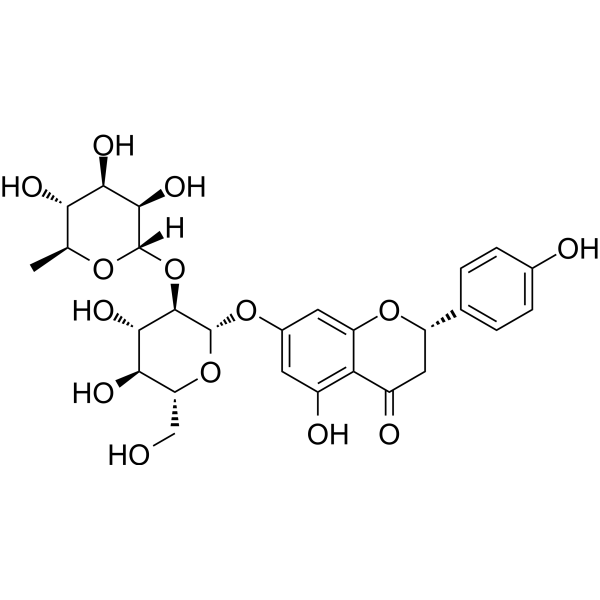
    Naringin
    Maximum Cited Publications
    24 Publications Verification

    Naringoside

    Cytochrome P450 Autophagy Mitophagy Endogenous Metabolite Inflammation/Immunology Cancer
    Naringin is a major flavanone glycoside obtained from tomatoes, grapefruits, and many other citrus fruits. Naringin exhibits biological properties such as antioxidant, anti-inflammatory, and antiapoptotic activities. Naringin also inhibits proliferation and invasion and induces apoptosis in human osteosarcoma cells by inhibiting zinc finger E-box binding homeobox 1 (Zeb1) .
    Naringin
  • HY-N0119
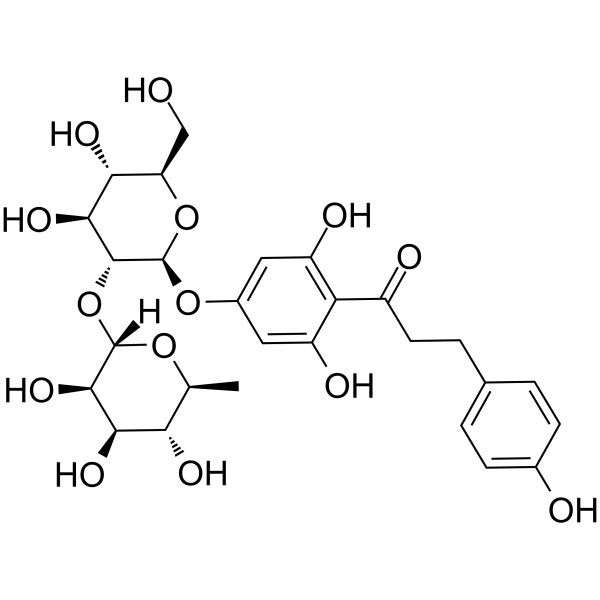
    Naringin Dihydrochalcone
    4 Publications Verification

    Naringin DC

    NF-κB Cancer
    Naringin Dihydrochalcone is an artificial sweetener derived from naringin. Naringin is a major flavanone glycoside obtained from tomatoes, grapefruits, and many other citrus fruits. Naringin exhibits biological properties such as antioxidant, anti-inflammatory, and antiapoptotic activities. Naringin suppresses NF-κB signaling pathway.
    Naringin Dihydrochalcone
  • HY-121584
    Lycoperodine-1
    1 Publications Verification

    Cyclomethyltryptophan

    CaSR Metabolic Disease
    Lycoperodine-1 (Cyclomethyltryptophan) is an active product that can be isolated from tomato fruits (Lycopersicon sculentum). Lycoperodine-1 act as an agonist of Ca 2+ sensing receptors (CaSR) .
    Lycoperodine-1
  • HY-N0153R
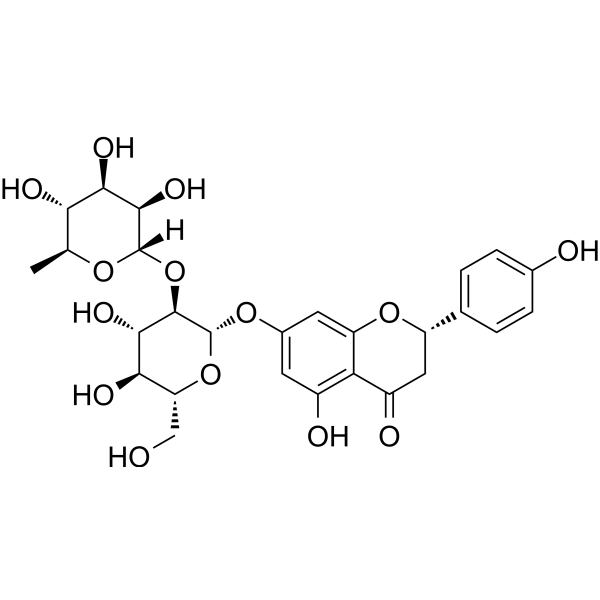
    Naringin (Standard)
    Maximum Cited Publications
    24 Publications Verification

    Naringoside (Standard)

    Endogenous Metabolite Cytochrome P450 Mitophagy Autophagy Reference Standards Inflammation/Immunology Cancer
    Naringin is a major flavanone glycoside obtained from tomatoes, grapefruits, and many other citrus fruits. Naringin exhibits biological properties such as antioxidant, anti-inflammatory, and antiapoptotic activities. Naringin also inhibits proliferation and invasion and induces apoptosis in human osteosarcoma cells by inhibiting zinc finger E-box binding homeobox 1 (Zeb1) .
    Naringin (Standard)
  • HY-121584R

    Cyclomethyltryptophan (Standard)

    CaSR Reference Standards Metabolic Disease
    Lycoperodine-1 (Standard) is the analytical standard of Lycoperodine-1. This product is intended for research and analytical applications. Lycoperodine-1 (Cyclomethyltryptophan) is an active product that can be isolated from tomato fruits (Lycopersicon sculentum). Lycoperodine-1 act as an agonist of Ca2+ sensing receptors (CaSR) .
    Lycoperodine-1 (Standard)
  • HY-124385

    Biochemical Assay Reagents Others
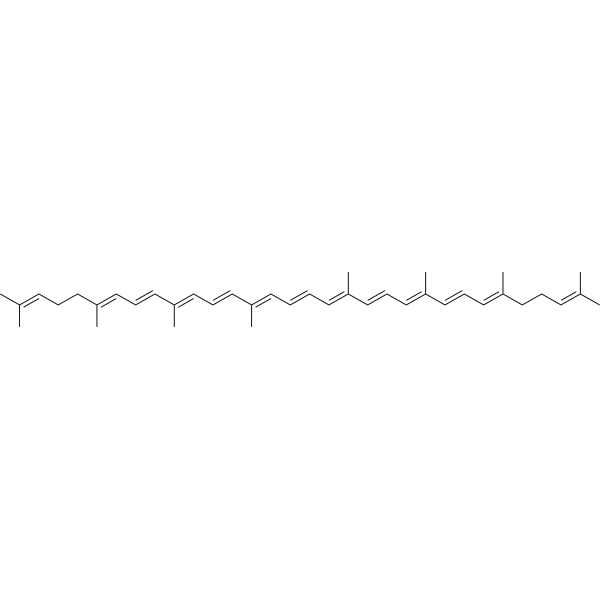
    Tunaxanthin is a xanthophyll, exists in fruits of various tomato strains and their hybrid. Tunaxanthin is also a carotenoid present in fish .
    Tunaxanthin
  • HY-N0119R

    Naringin DC (Standard)

    Reference Standards NF-κB Cancer
    Naringin Dihydrochalcone (Standard) is the analytical standard of Naringin Dihydrochalcone. This product is intended for research and analytical applications. Naringin Dihydrochalcone is an artificial sweetener derived from naringin. Naringin is a major flavanone glycoside obtained from tomatoes, grapefruits, and many other citrus fruits. Naringin exhibits biological properties such as antioxidant, anti-inflammatory, and antiapoptotic activities. Naringin suppresses NF-κB signaling pathway.
    Naringin Dihydrochalcone (Standard)
  • HY-N16514

    Others Others
    8(S)-HPETE, short for 8(S)-hydroperoxy-5Z,9E,11Z,14Z-eicosatetraenoic acid, is a major oxygenation product generated when arachidonic acid acts as a substrate for the lipoxygenase purified from ripe tomato fruits .
    8(S)-HPETE
  • HY-176552

    Fungal Microtubule/Tubulin Infection
    Tubulin polymerization-IN-83 (Compound A23) is a flavonol derivative. Tubulin polymerization-IN-83 exhibits antifungal activity against various phytopathogenic fungi, with an EC50 of 0.338 μg/mL against Botrytis cinerea. Tubulin polymerization-IN-83 exerts its effects by targeting β-tubulin, disrupting mycelial morphology, and increasing cell membrane permeability, with relatively low ecological and environmental risks .
    Tubulin polymerization-IN-83
  • HY-135442

    Fungal Infection
    Simeconazole is a demethylation inhibitor-class fungicide. Simeconazole prevents the infection of barley leaves by Blumeria graminis f sp hordei, inhibits the development of powdery mildew on barley and cucumber leaves, and exhibits cuticular membrane permeability in tomato fruits. Simeconazole can be used in research related to barley powdery mildew and cucumber powdery mildew .
    Simeconazole

Inquiry Online

Your information is safe with us. * Required Fields.

Salutation


Country or Region *

Applicant Name *


Organization Name *

Department *


Email Address *


Product Name *

Cat. No.


Requested quantity *

Phone Number *


Remarks

Inquiry Online

Inquiry Information

Product Name:
Cat. No.:
Quantity:
MCE Japan Authorized Agent:

