
1. Search Result
Search Result
Results for "

translocations

" in MedChemExpress (MCE) Product Catalog:

487

Inhibitors & Agonists

1

Screening Libraries

8

Fluorescent Dyes

11

Biochemical Assay Reagents

36

Peptides

4

Inhibitory Antibodies

146

Natural
Products

20

Isotope-Labeled Compounds

3

Click Chemistry

3

Oligonucleotides

4

GMP Molecules

Cat. No. Product Name Target Research Areas Chemical Structure
  • HY-16950
    4-Hydroxytamoxifen
    50+ Cited Publications

    (Z)-4-Hydroxytamoxifen; trans-4-Hydroxytamoxifen; (Z)-Afimoxifene

    Estrogen Receptor/ERR Cancer
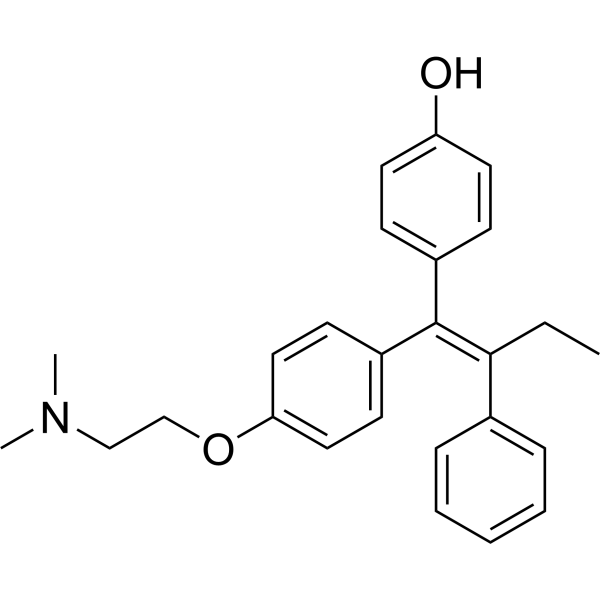
    4-Hydroxytamoxifen ((Z)-4-Hydroxytamoxifen) is an orally active, selective estrogen receptor modulator (SERM). 4-Hydroxytamoxifen ((Z)-4-Hydroxytamoxifen) is also the active metabolic form of Tamoxifen (HY-13757A) in vivo and can be used to induce gene knockout in transgenic mice expressing CreER .
    4-Hydroxytamoxifen
  • HY-18749
    SC79
    305+ Cited Publications

    Akt Neurological Disease Inflammation/Immunology Cancer
    SC79, a unique specific and BBB permeable Akt activator, activates Akt in the cytosol and inhibits Akt membrane translocation. SC79 specifically binds to the PH domain of Akt .
    SC79
  • HY-101872
    GSK-872
    95+ Cited Publications

    RIP kinase Inflammation/Immunology
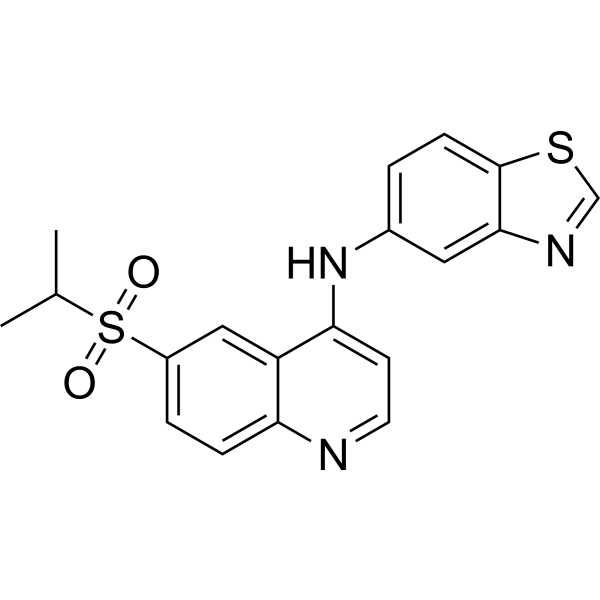
    GSK-872 is a RIPK3 inhibitor, which binds RIP3 kinase domain with an IC50 of 1.8 nM, and inhibits kinase activity with an IC50 of 1.3 nM. GSK-872 decreases the RIPK3-mediated necroptosis and subsequent cytoplasmic translocation and expression of HMGB1, as well as ameliorates brain edema and neurological deficits in early brain injury .
    GSK-872
  • HY-N0290
    Mangiferin
    15+ Cited Publications

    NF-κB Keap1-Nrf2 Apoptosis Cancer
    Mangiferin is a Nrf2 activator. Mangiferin suppresses nuclear translocation of the NF-κB subunits p65 and p50. Mangiferin exhibits antioxidant, antidiabetic, antihyperuricemic, antiviral, anticancer and antiinflammatory activities .
    Mangiferin
  • HY-14645
    (-)-DHMEQ
    30+ Cited Publications

    Dehydroxymethylepoxyquinomicin

    NF-κB Inflammation/Immunology Cancer
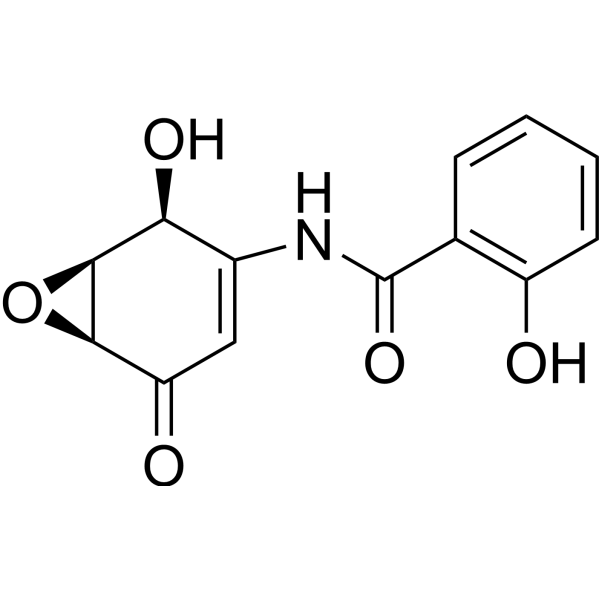
    (-)-DHMEQ (Dehydroxymethylepoxyquinomicin) is a potent, selective and irreversible NF-κB inhibitor that covalently binds to a cysteine residue. (-)-DHMEQ inhibits nuclear translocation of NF-κB and shows anti-inflammatory and anticancer activity .
    (-)-DHMEQ
  • HY-149652

    Toll-like Receptor (TLR) Inflammation/Immunology
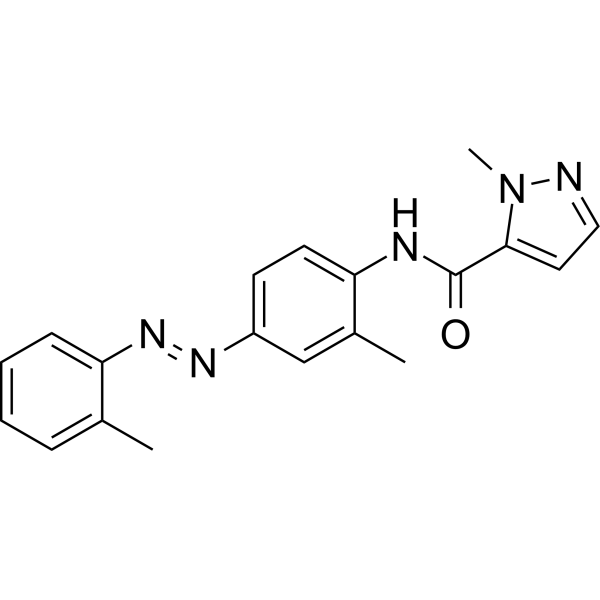
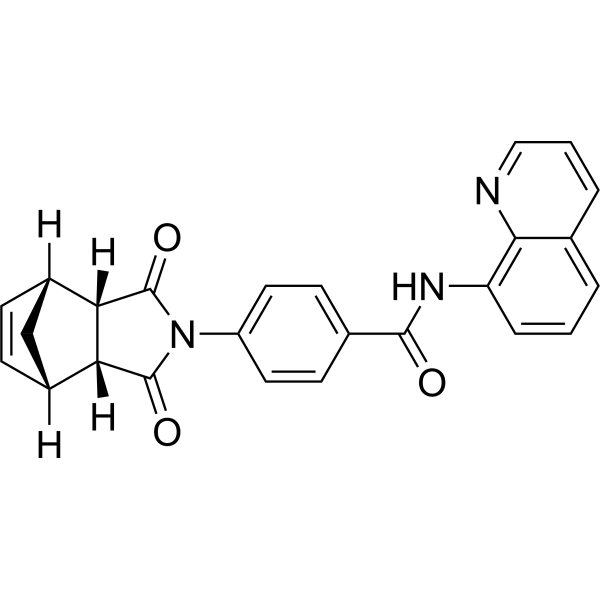
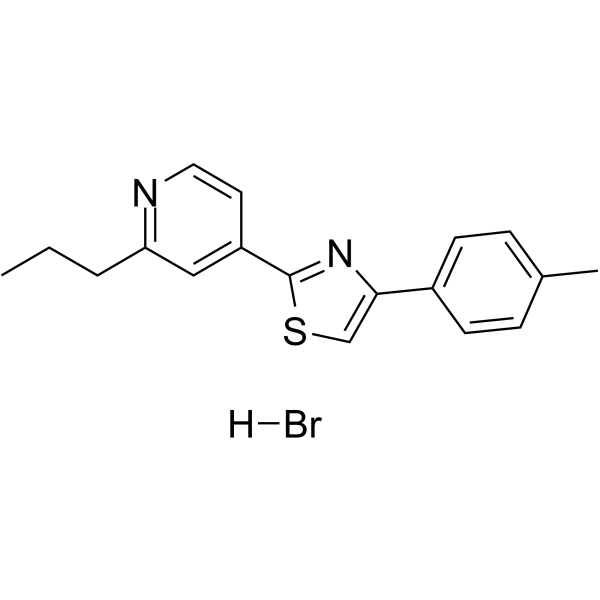
    IRF5-IN-1 (Compound C5) is a conformationally locked inhibitor for SLC15A4. IRF5-IN-1 blocks the downstream IRF5 activation, inhibits the TLR7/8 signaling pathway. IRF5-IN-1 exhibits anti-inflammatory responses .
    IRF5-IN-1
  • HY-15614
    SC144
    5+ Cited Publications

    Interleukin Related Apoptosis Cancer
    SC144 is a first-in-class, orally active gp130 (IL6-beta) inhibitor. SC144 binds gp130, induces gp130 phosphorylation (S782) and deglycosylation, abrogates Stat3 phosphorylation and nuclear translocation, and further inhibits the expression of downstream target genes. SC144 shows potent inhibition of gp130 ligand-triggered signaling. SC144 induces apoptosis in human ovarian cancer cells .
    SC144
  • HY-N0101
    Neohesperidin
    5+ Cited Publications

    Hesperetin 7-O-neohesperidoside

    β-catenin Wnt Inflammation/Immunology
    Neohesperidin is a flavonoid compound abundant in citrus plants with antioxidant and anti-inflammatory effects. Neohesperidin can upregulate the Wnt/β-catenin signaling pathway, enhance the nuclear translocation of β-catenin and the differentiation of bone marrow stromal cells .
    Neohesperidin
  • HY-N0694
    Schisantherin A
    2 Publications Verification

    Gomisin-C; Schizantherin-A; Wuweizi ester-A

    NF-κB Inflammation/Immunology
    Schisantherin A is a dibenzocyclooctadiene lignan. Schisantherin A inhibits p65-NF-κB translocation into the nucleus by IκBα degradation.
    Schisantherin A
  • HY-N7057
    Nonanoic acid
    1 Publications Verification

    Pelargonic acid

    Environmental Pollutants Endogenous Metabolite Bacterial Infection
    Nonanoic acid (Pelargonic acid) is a naturally-occurring saturated fatty acid with nine carbon atoms. Nonanoic acid significantly reduces bacterial translocation, enhances antibacterial activity, and remarkably increases the secretion of porcine β-defensins 1 (pBD-1) and pBD-2 .
    Nonanoic acid
  • HY-110258
    ML334
    10+ Cited Publications

    LH601A

    Quinone Reductase Keap1-Nrf2 Cancer
    ML334 is a potent, cell permeable activator of NRF2 by inhibition of Keap1-NRF2 protein-protein interaction. ML334 binds to Keap1 Kelch domain with a Kd of 1 μM. ML334 stimulates NRF2 expression and nuclear translocation and induces antioxidant response elements (ARE) activity .
    ML334
  • HY-112292
    GW806742X
    20+ Cited Publications

    Mixed Lineage Kinase VEGFR Others
    GW806742X, an ATP mimetic and a potent MLKL (Mixed Lineage Kinase Domain-Like protein) inhibitor, binds the MLKL pseudokinase domain with a Kd of 9.3 μM. GW806742X has activity against VEGFR2 (IC50=2 nM). GW806742X retards MLKL membrane translocation and inhibits necroptosis .
    GW806742X
  • HY-P0151
    SN50
    Maximum Cited Publications
    44 Publications Verification

    NF-κB Inflammation/Immunology
    SN50 is a cell permeable inhibitor of NF-κB translocation.
    SN50
  • HY-101872A
    GSK-872 hydrochloride
    95+ Cited Publications

    RIP kinase Inflammation/Immunology
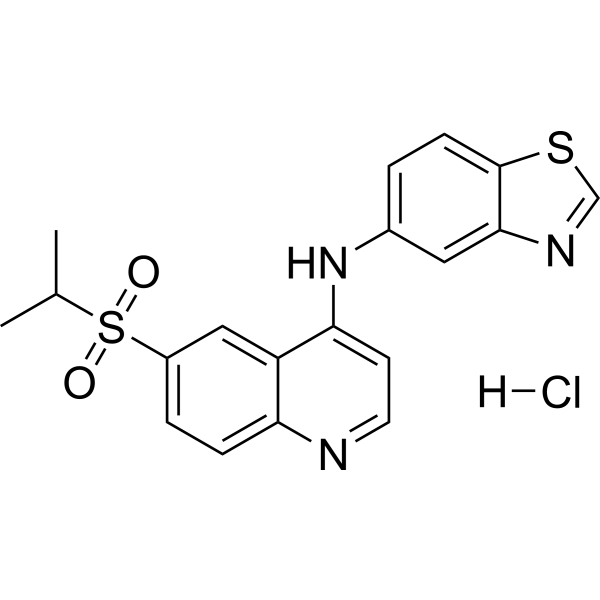
    GSK-872 hydrochloride is a RIPK3 inhibitor, which binds RIP3 kinase domain with an IC50 of 1.8 nM, and inhibits kinase activity with an IC50 of 1.3 nM. GSK-872 hydrochloride decreases the RIPK3-mediated necroptosis and subsequent cytoplasmic translocation and expression of HMGB1, as well as ameliorates brain edema and neurological deficits in early brain injury .
    GSK-872 hydrochloride
  • HY-124500
    AC-4-130
    5+ Cited Publications

    STAT Apoptosis Cancer
    AC-4-130 is a potent STAT5 SH2 domain inhibitor. AC-4-130 directly binds to STAT5 and disrupts STAT5 activation, dimerization, nuclear translocation, and STAT5-dependent gene transcription. AC-4-130 induces cell cycle arrest and apoptosis in FLT3-ITD-driven leukemic cells. AC-4-130 has anti-cancer activity and can efficiently block pathological levels of STAT5 activity in acute myeloid leukemia (AML) .
    AC-4-130
  • HY-170621

    STAT NO Synthase COX Interleukin Related TNF Receptor Neurological Disease Metabolic Disease Inflammation/Immunology Cancer
    STAT1/3-IN-1 is a potent STAT1/3 inhibitor with potent anti-inflammatory effect. STAT1/3-IN-1 inhibits phosphorylation and nuclear translocation of STAT1/3 to modulate microglial inflammation, reduces LPS (HY-D1056)-induced pro-inflammatory cytokines (NO, IL-1β, IL-6, and TNF-α) and inflammatory mediators (iNOS, COX-2). STAT1/3-IN-1 exhibits low toxicity in mice. STAT1/3-IN-1 can be used for the research of neuroinflammation .
    STAT1/3-IN-1
  • HY-N0866
    20-Deoxyingenol
    5 Publications Verification

    Autophagy Inflammation/Immunology
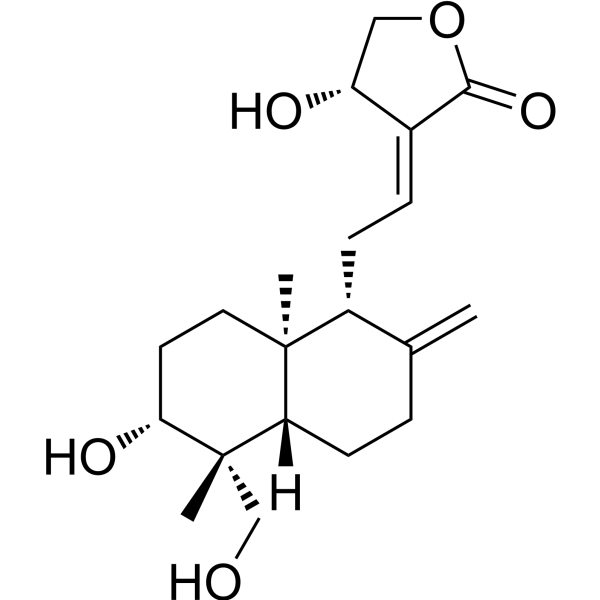
    20-Deoxyingenol, a diterpene, is isolated from the roots of Euphorbia kansui. 20-Deoxyingenol can promote autophagy and lysosomal biogenesis by promoting the nuclear translocation of transcription factor EB (TFEB) in vitro. 20-Deoxyingenol can be used for the research of osteoarthritis (OA) .
    20-Deoxyingenol
  • HY-15614A
    SC144 hydrochloride
    5+ Cited Publications

    Interleukin Related Apoptosis Cancer
    SC144 hydrochloride is a first-in-class, orally active gp130 (IL6-beta) inhibitor. SC144 hydrochloride binds gp130, induces gp130 phosphorylation (S782) and deglycosylation, abrogates Stat3 phosphorylation and nuclear translocation, and further inhibits the expression of downstream target genes. SC144 hydrochloride shows potent inhibition of gp130 ligand-triggered signaling. SC144 hydrochloride induces apoptosis in human ovarian cancer cells .
    SC144 hydrochloride
  • HY-148853
    SRI-42127
    1 Publications Verification

    HuR Others
    SRI-42127 is a HuR translocation inhibitor. HuR is an RNA regulator that binds to AREs, and HuR translocations promote the production of inflammatory cytokines in glial cells. However, SRI-42127 can destroy mRNA stability and inhibit gene promoter activation. SRI-42127 also inhibits microglial cell activation and attenuates recruitment/chemotaxis of neutrophils and monocytes .
    SRI-42127
  • HY-129111
    EACC
    4 Publications Verification

    Autophagy Infection Neurological Disease
    EACC is a reversible autophagy inhibitor, which can block autophagic flux. EACC selectively inhibits the translocation of autophagosome-specific SNARE Stx17 thereby blocking autophagosome-lysosome fusion .
    EACC
  • HY-148765
    CLK8
    1 Publications Verification

    Cryptochrome Metabolic Disease Cancer
    CLK8 is a potent and specific CLOCK inhibitor that can disrupt the interaction between CLOCK and BMAL1 and interfere with nuclear translocation of CLOCK. CLK8 can be used for the research of disorders associated with dampened circadian rhythms .
    CLK8
  • HY-158128

    HIV Reverse Transcriptase Infection
    MK-8527 is an orally active HIV inhibitor and nucleoside reverse transcriptase translocation inhibitor (NRTTI) with antiviral activity. MK-8527 has a similar inhibitory mechanism to ISL (HY-104012) .
    MK-8527
  • HY-W009731

    Environmental Pollutants Keap1-Nrf2 Metabolic Disease Cancer
    Dibenzoylmethane, a minor ingredient in licorice, activates Nrf2 and prevents various cancers and oxidative damage. Dibenzoylmethane, an analog of curcumin, results in dissociation from Keap1 and nuclear translocation of Nrf2 .
    Dibenzoylmethane
  • HY-136390
    ML417
    1 Publications Verification

    Dopamine Receptor Neurological Disease
    ML417 is a selective and brain penetrant D3 dopamine receptor (D3R) agonist, with an EC50 of 38 nM. ML417 potently promotes D3R-mediated β-arrestin translocation, G protein mediated signaling, and pERK phosphorylation with minimal effects on other GPCR-mediated signaling. ML417 exhibits neuroprotection against toxin-induced neurodegeneration of dopaminergic neurons .
    ML417
  • HY-W107024

    TGF-β Receptor Inflammation/Immunology Cancer
    BMS-986260, an immuno-oncology agent, is a potent, selective, and orally active TGFβR1 inhibitor (IC50=1.6 nM). BMS-986260 displays exquisite selectivity for TGFβR1 over its isozyme TGFβR2, as well as in a panel of more than 200 kinases examined. BMS-986260 inhibits TGFβ mediated nuclear translocation of pSMAD2/3 in MINK and NHLF cells lines with an IC50 of 350 nM and 190 nM, respectively .
    BMS-986260
  • HY-N10661

    Ipom-F

    SARS-CoV Infection Cancer
    Ipomoeassin F is a potent and selective endoplasmic reticulum (ER) protein-translocation inhibitor by targeting the pore-forming subunit of the Sec61 complex (Sec61α) at the ER membrane. Ipomoeassin F selectively inhibits the ER membrane translocation of SARS-CoV-2 proteins. Ipomoeassin F block the ER translocation of secretory proteins and type I transmembrane proteins (TMPs), but not type III TMPs .
    Ipomoeassin F
  • HY-122246

    GPR55 PKC ERK Arrestin Metabolic Disease
    ML192 is a selective ligand antagonist of GPR55. ML192 inhibits the β-arrestin trafficking, ERK1/2 phosphorylation and PKCβII translocation .
    ML192
  • HY-P0154
    Epsilon-V1-2
    5 Publications Verification

    ε-V1-2; EAVSLKPT

    PKC Inflammation/Immunology
    Epsilon-V1-2 (ε-V1-2), a PKCε-derived peptide, is a selective PKCε inhibitor. Epsilon-V1-2 inhibits the translocationof PKCε, but not α-, β-, and δPKC .
    Epsilon-V1-2
  • HY-158420

    Autophagy Cancer
    STL001 is potent and selective FOXM1 inhibitor. STL001 induces the translocation of nuclear FOXM1 to the cytoplasm and promotes its autophagic degradation. STL001 sensitizes human cancers to a broad-spectrum of cancer therapies .
    STL001
  • HY-19337
    Ketodarolutamide
    1 Publications Verification

    BAY 1896953; ORM-15341

    Androgen Receptor Cancer
    Ketodarolutamide (ORM-15341) is a potent, high-affinity nonsteroidal competitive full antagonist of androgen receptor (AR). Ketodarolutamide displays a Ki value of 8 nM for rat wild-type AR and an IC50 value of 38 nM in AR-HEK293 cells . Ketodarolutamide inhibits testosterone-induced nuclear translocation of the AR and antagonizes both overexpressed and mutant ARs . Ketodarolutamide specifically suppresses the proliferation of AR-dependent prostate cancer cells and exhibits antitumor activity in models of castration-resistant prostate cancer (CRPC) . Ketodarolutamide is suitable for the mechanistic and therapeutic research of prostate cancer .
    Ketodarolutamide
  • HY-112391
    SD-1029
    1 Publications Verification

    JAK STAT Cancer
    SD-1029 is a JAK2/STAT3 inhibitor . SD-1029 inhibits STAT3 nuclear translocation. SD-1029 is an inhibitor of STAT3 activation due to inhibition of JAK2 phosphorylation .
    SD-1029
  • HY-P6437A

    Dynamin Cardiovascular Disease Neurological Disease
    Drp1 peptide inhibitor P110 (Compound P110) TFA is a selective Drp1 peptide inhibitor with neuroprotective properties. Drp1 peptide inhibitor P110 TFA can inhibit the activation of Drp1, prevent MPTP (HY-15608)-induced Drp1 mitochondrial translocation, and alleviate MPTP-induced dopaminergic neuron loss, dopaminergic nerve terminal damage, and behavioral deficits, and can be used in the study of Alzheimer's disease. Additionally, Drp1 peptide inhibitor P110 TFA can reduce mitochondrial damage and organ injury in animal models of Huntington's disease, cerebral ischemic injury, and myocardial infarction .
    Drp1 peptide inhibitor P110 TFA
  • HY-117078

    Apoptosis Cancer
    justicidin A is a nature product that could be isolated form Justicia procumbens. justicidin A decreases the level of Ku70 leading to translocation of Bax from the cytosol to mitochondria to induce apoptosis. justicidin A can be used in research of cancer .
    Justicidin A
  • HY-132234

    Epigenetic Reader Domain Cancer
    M‑1121 is a covalent and orally active inhibitor of the menin-MLL interaction capable of achieving complete and persistent tumor regression .
    M-1211
  • HY-P10114

    PpYLKTK-mts; STAT3 PI

    STAT Cancer
    STAT3-IN-24, cell-permeable (PpYLKTK-mts) is a STAT3 peptide inhibitor. STAT3-IN-24, cell-permeable inhibits recruitment of STAT3 to Jak2 and phosphorylation of Y705, thus preventing the dimerization and the nuclear translocation of STAT3 .
    STAT3-IN-24, cell-permeable
  • HY-11028

    PF-2413873

    Progesterone Receptor Endocrinology
    PF-02413873 (PF-2413873) is a potent selective, fully competitive and orally active nonsteroidal progesterone receptor (PR) antagonist, with a Ki of 2.6 nM. PF-02413873 can block progesterone binding and PR nuclear translocation, and inhibit endometrial growth in vivo .
    PF-02413873
  • HY-139308
    T0467
    2 Publications Verification

    PINK1/Parkin Mitochondrial Metabolism Neurological Disease
    T0467 activates parkin mitochondrial translocation in a PINK1-dependent manner in vitro. T0467 do not induce mitochondrial accumulation of PINK1in dopaminergic neurons. T0467 is a potential compound for PINK1-Parkin signaling activation, and can be used for parkinson's disease and related disorders research .
    T0467
  • HY-W018324

    5hmC

    Endogenous Metabolite Neurological Disease Metabolic Disease Cancer
    5-Hydroxymethylcytosine (5hmC) is an oxidized forms of 5-methylcytosine (5mC) in mammalian DNA. 5-Hydroxymethylcytosine is produced from 5mC in an enzymatic pathway involving three 5mC oxidases, Ten-eleven translocation (TET)1, TET2, and TET3. The conversion of 5mC into 5hmC can be the first step in a pathway leading towards DNA demethylation. 5-Hydroxymethylcytosine is associated with gene transcription and frequently used as a mark to investigate dynamic DNA methylation conversion during mammalian development. 5-Hydroxymethylcytosine can be used for the study of non-small cell lung cancer (NSCLC), neurodegenerative diseases (Alzheimer’s, Parkinson’s) and hematological malignancies (acute myeloid leukemia, myelodysplastic syndromes) .
    5-Hydroxymethylcytosine
  • HY-123984

    NF-κB Metabolic Disease
    LTβR-IN-1 (Compound 919278) is a potent, selective lymphotoxin β receptor (LTβR) inhibitor. LTβR-IN-1 also selectively inhibits the nuclear translocation of p52 depended on TNF12A, instead of the nuclear translocation of p65 mediated by TNF-α receptor. LTβR-IN-1 regulates the NF-kB signaling pathway IN a ligand-independent manner .
    LTβR-IN-1
  • HY-B1026
    Adelmidrol
    2 Publications Verification

    NF-κB COX PPAR Inflammation/Immunology
    Adelmidrol exerts important anti-inflammatory effects that are partly dependent on PPARγ. Adelmidrol reduces NF-κB translocation, and COX-2 expression.
    Adelmidrol
  • HY-W039943

    Molecular Glues Cancer
    Acetyl-cyclosporin A aldehyde is an acetylated Cyclosporin A (HY-B0579) derivative with a reducing aldehyde group. Cyclosporin A is a potent calmodulin inhibitor and cyclophilin binder that can target the nuclear translocation of NF-AT and cause mitochondrial damage.
    Acetyl-cyclosporin A aldehyde
  • HY-135366

    IKK Inflammation/Immunology
    HPN-01 is a potent and selective IKK inhibitor, with pIC50 values of 6.4, 7.0 and <4.8 for IKK-α, IKK-β and IKK-ε, respectively. HPN-01 displays greater 50-fold selectivity over a panel of more than 50 other kinases, including ALK5, CDK-2, EGFR, ErbB2, GSK3β, PLK1, Src, and VEGFR-2 .
    HPN-01
  • HY-124867

    TSH Receptor Endocrinology
    D3-βArr is a positive allosteric modulator for thyrotropin receptor (TSHR), which initiates translocation of β-Arr 1 by direct TSHR activation and potentiates TSH-mediated preosteoblast differentiation in vitro .
    D3-βArr
  • HY-112292A
    GW806742X hydrochloride
    20+ Cited Publications

    Mixed Lineage Kinase VEGFR Cancer
    GW806742X hydrochloride, an ATP mimetic and a potent MLKL (Mixed Lineage Kinase Domain-Like protein) inhibitor, binds the MLKL pseudokinase domain with a Kd of 9.3 μM. GW806742X hydrochloride has activity against VEGFR2 (IC50=2 nM). GW806742X hydrochloride retards MLKL membrane translocation and inhibits necroptosis .
    GW806742X hydrochloride
  • HY-162946

    Ligands for Target Protein for PROTAC Cancer
    Alkyne-P60 is a potent 15-mer peptide inhibitor of Foxp3. Alkyne-P60 can bind with Foxp3, hinder its nuclear translocation, and diminish Foxp3-mediated inhibition of NFKB and NFAT functions. Alkyne-P60 is a ligand for target protein for PROTAC (HY-162943).
    Alkyne-P60
  • HY-W018158R

    5,6-Dihydroxyindole-2-carboxylic acid (Standard)

    Reference Standards Endogenous Metabolite GPR35 Arrestin DNA/RNA Synthesis Drug Intermediate SOD Cancer
    DHICA (Standard) is an analytical standard of DHICA (HY-W018158). This product is for research and analytical applications. DHICA (5,6-Dihydroxyindole-2-carboxylic acid) is an eumelanin building block, GPR35 agonist and melanin synthesis intermediate. DHICA activates GPR35, triggering dynamic mass redistribution and β-arrestin translocation. DHICA interacts with DNA and interferes with Fpg activity . DHICA promotes the generation of single-strand breaks in plasmid DNA. DHICA increases the activity and expression levels of SOD and Catalase. DHICA is applicable to research related to skin cancer and colon cancer .
    DHICA (Standard)
  • HY-141430

    Histone Methyltransferase Cancer
    AS-85 is a potent ASH1L histone methyltransferase inhibitor (IC50=0.6 μM) with anti-leukemic activity. AS-85 strongly binds to the ASH1L SET domain, with the Kd value of 0.78 μM .
    AS-85
  • HY-118438

    Aryl Hydrocarbon Receptor Inflammation/Immunology
    10-Cl-BBQ is a high affinity AhR ligand with immunosuppressive activity. 10-Cl-BBQ promotes cytosol to nuclear translocation of AhR and activates the AhR-regulated reporter gene at nanomolar concentrations .
    10-Cl-BBQ
  • HY-W540188A

    Ketomalonic acid calcium trihydrate; Mesoxalic acid calcium trihydrate; Oxomalonic acid calcium trihydrate

    Biochemical Assay Reagents Metabolic Disease
    Calcium mesoxalate trihydrate (Ketomalonic acid; Mesoxalic acid; Oxomalonic acid) can promote B cell proliferation and has potential anti-diabetic activity. Derivatives of Calcium mesoxalate trihydrate also inhibit the translocation of HIC-1 reverse transcriptase .
    Calcium mesoxalate trihydrate
  • HY-120571

    Leukotriene Receptor Lipoxygenase Cancer
    L-674573 is a quinoline leukotriene synthesis inhibitor, inhibiting Calcimycin (HY-N6687)- and N-Formyl-Met-Leu-Phe (HY-P0224)-induced leukotriene production with IC50s of 100 nM and 50 nM, respectively. L-674573 selectively inhibits Calcimycin- and N-Formyl-Met-Leu-Phe-induced 5-lipoxygenase translocation .
    L-674573

Inquiry Online

Your information is safe with us. * Required Fields.

Salutation


Country or Region *

Applicant Name *


Organization Name *

Department *


Email Address *


Product Name *

Cat. No.


Requested quantity *

Phone Number *


Remarks

Inquiry Online

Inquiry Information

Product Name:
Cat. No.:
Quantity:
MCE Japan Authorized Agent:

