Search Result
Results for "
triazole linkages
" in MedChemExpress (MCE) Product Catalog:
7
Biochemical Assay Reagents
| Cat. No. |
Product Name |
Target |
Research Areas |
Chemical Structure |
-
- HY-W598198
-
|
|
Biochemical Assay Reagents
|
Others
|
|
Ethyl 3-azidopropanoate comprises an ethyl ester and a terminal azide group with a 2-carbon linker. The azide can react with alkyne, BCN, DBCO via Click Chemistry to yield a stable triazole linkage. The methyl ester groups can be hydrolyzed, reduced, or substituted under different conditions.
|
-
-
- HY-W190926
-
|
|
Biochemical Assay Reagents
|
Others
|
|
2,5 -Dioxo-1-pyrrolidinyl 11-azidoundecanoate is a linker containing an azide group and an NHS ester. The azide group can react with alkyne, BCN, DBCO via Click Chemistry to yield a stable triazole linkage. The NHS ester can be used to label the primary amines (-NH2) of proteins, amine-modified oligonucleotides, and other amine-containing molecules.
|
-
-
- HY-W190881
-
|
|
Biochemical Assay Reagents
|
Others
|
|
N3-PEG11-CH2CH2Br is a PEG linker containing a bromine and an azide group. The hydrophilic PEG spacer increases solubility in aqueous media. The azide group can react with alkyne, BCN, DBCO via Click Chemistry to yield a stable triazole linkage. The bromine (Br) is a very good leaving group for nucleophilic substitution reactions.
|
-
-
- HY-151647
-
|
|
Biochemical Assay Reagents
|
Others
|
|
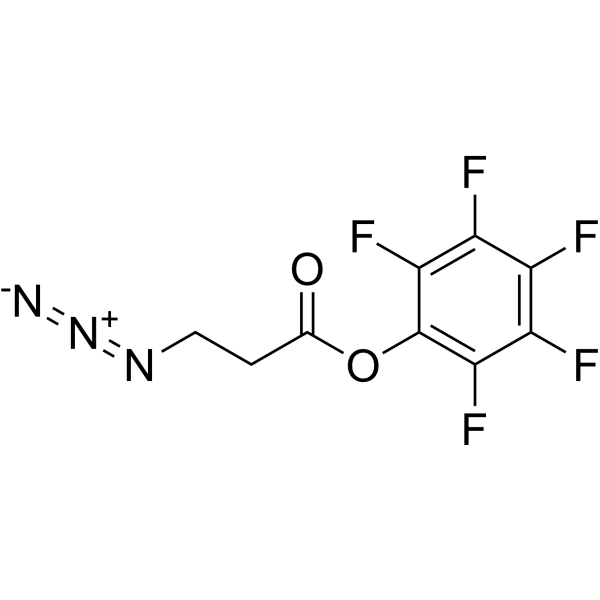
3-Azidopropanoic acid-PFP ester is an azidopropanoic acid linker that contains an activated PFP ester. The azide group can undergo copper-catalyzed Click Chemistry reactions with alkynes, DBCO and BCN to form triazole linkages. The activated PFP ester can react with amine groups to form stable amide bonds . 3-Azidopropanoic acid-PFP ester is a click chemistry reagent, it contains an Azide group and can undergo copper-catalyzed azide-alkyne cycloaddition reaction (CuAAc) with molecules containing Alkyne groups. It can also undergo strain-promoted alkyne-azide cycloaddition (SPAAC) reactions with molecules containing DBCO or BCN groups.
|
-
-
- HY-130809A
-
|
|
Biochemical Assay Reagents
|
Others
|
|
DBCO-PEG1000-Biotin is a click chemistry biotinylation that can enable copper-free click chemistry with azide molecules to form a stable triazole linkage .
|
-
-
- HY-130809C
-
|
|
Biochemical Assay Reagents
|
Others
|
|
DBCO-PEG3400-Biotin is a click chemistry biotinylation that can enable copper-free click chemistry with azide molecules to form a stable triazole linkage .
|
-
-
- HY-130809H
-
|
|
Biochemical Assay Reagents
|
Others
|
|
DBCO-PEG40000-Biotin is a click chemistry biotinylation that can enable copper-free click chemistry with azide molecules to form a stable triazole linkage .
|
-
-
- HY-130809I
-
|
|
Biochemical Assay Reagents
|
Others
|
|
DBCO-PEG20000-Biotin is a click chemistry biotinylation that can enable copper-free click chemistry with azide molecules to form a stable triazole linkage .
|
-
-
- HY-130809D
-
|
|
Biochemical Assay Reagents
|
Others
|
|
DBCO-PEG5000-Biotin is a click chemistry biotinylation that can enable copper-free click chemistry with azide molecules to form a stable triazole linkage .
|
-
-
- HY-130809B
-
|
|
Biochemical Assay Reagents
|
Others
|
|
DBCO-PEG2000-Biotin is a click chemistry biotinylation that can enable copper-free click chemistry with azide molecules to form a stable triazole linkage .
|
-
-
- HY-D2748
-
|
|
Fluorescent Dye
|
Others
|
|
5-JOE azide is a fluorescent dye with the emission in yellow region of the spectrum. The azide group can react with alkyne, BCN, DBCO via Click Chemistry to yield a stable triazole linkage.
|
-
-
- HY-W800671
-
|
1,5-Pentane diazide
|
Biochemical Assay Reagents
|
Others
|
|
1,5-Diazidopentane (1,5-Pentane diazide) is a linker with two azide groups which can react with alkyne, BCN, DBCO via Click Chemistry to yield a stable triazole linkage.
|
-
-
- HY-W590545
-
|
1-Azidooctane
|
Biochemical Assay Reagents
|
Others
|
|
Octyl azide (1-Azidooctane) is a compound with an azide head and a 8-carbon tail. The azide (N3) group can react with alkyne, BCN, DBCO via Click Chemistry to yield a stable triazole linkage.
|
-
-
- HY-W800808
-
|
|
Fluorescent Dye
|
Others
|
|
ROX azide, 5-isomer is a red-emitting rhodamine dye possessing high brightness and fluorescence quantum yield. The azide group can react with alkyne, BCN, DBCO via Click Chemistry to yield a stable triazole linkage.
|
-
-
- HY-W800657
-
|
|
Biochemical Assay Reagents
|
Others
|
|
Azido-PEG1-hydrazide hydrochloride is a bifunctional PEG linker containing an azide group and a hydrazide group. The azide group can react with alkyne, BCN, DBCO via Click Chemistry to yield a stable triazole linkage. Hydrazine moiety reacts with an aldehyde to form semi-permanent hydrazone bonds.
|
-
-
- HY-W591964
-
|
|
Biochemical Assay Reagents
|
Others
|
|
t-Boc-Aminooxy-pentane-azide is a linker containing an azide group and Boc-protected amino group. The azide group can react with alkyne, BCN, DBCO via Click Chemistry to yield a stable triazole linkage. The Boc group can be deprotected under mild acidic conditions to form the free amine.
|
-
-
- HY-W190917
-
|
|
Biochemical Assay Reagents
|
Others
|
|
N1, N4-Bisazidospermine bistosylate is a spermine linker containing two azide groups. The azide group can react with alkyne, BCN, DBCO via Click Chemistry to yield a stable triazole linkage. Spermidine is a polyamine that modulates various cellular activities like cellular development and differentiation, stability of DNA, and apoptosis.
|
-
-
- HY-W457953
-
|
|
Biochemical Assay Reagents
|
Others
|
|
tert-Butyl N-(4-azidobutyl)carbamate is N-Boc protected crosslinker. tert-Butyl N-(4-azidobutyl)carbamate can react with alkyne, BCN, DBCO via Click Chemistry to yield a stable triazole linkage. The Boc group can be deprotected under mild acidic conditions to form the free amine.
|
-
-
- HY-W591962
-
|
1-Pentanol, 5-azido-
|
Biochemical Assay Reagents
|
Others
|
|
5-Azidopentan-1-ol (1-Pentanol, 5-azido-) is a linker containing an azide group and a terminal hydroxyl group. The azide group can react with alkyne, BCN, DBCO via Click Chemistry to yield a stable triazole linkage. The hydroxyl group enables further derivatization or replacement with other reactive functional groups.
|
-
-
- HY-W800670
-
|
|
Biochemical Assay Reagents
|
Others
|
|
Mal-amido-PEG5-alkyne is a PEG linker containing a maleimide group and an alkyne. The hydrophilic PEG spacer increases solubility in aqueous media. The alkyne group can react with azide-bearing compounds or biomolecules via copper catalyzed azide-alkyne Click Chemistry to yield a stable triazole linkage. The maleimide group will react with a thiol group to form a covalent bond, enabling the connection of biomolecule with a thiol.
|
-
-
- HY-W591390
-
|
|
Biochemical Assay Reagents
|
Others
|
|
6-Azidohexanoic Acid STP Ester is an amine-reactive, water-soluble labeling reagent with an azide group and a terminal 4-Sulfo-2,3,5,6-tetrafluorophenyl (STP) group. 6-Azidohexanoic Acid STP Ester is used to modify proteins, antibodies, and other amine-containing biopolymers in aqueous media. The azide group can react with alkyne, BCN, DBCO via Click Chemistry to yield a stable triazole linkage. STP esters can react with primary amines, forming covalent amide bonds, and typically display much better stability toward hydrolysis in aqueous media, resulting in more efficiency and better reproducible labeling of biopolymers.
|
-
-
- HY-W347315
-
|
|
Biochemical Assay Reagents
|
Others
|
|
6-(Biotinamido)hexylazide is a click chemistry biotinylation reagent that can react with alkyne molecule to form a stable triazole linkage.
|
-
-
- HY-W800689
-
|
|
Biochemical Assay Reagents
|
Others
|
|
Tri(propargyl-NHCO-ethyloxyethyl)amine is a crosslinker that can react with azide compounds or biomolecules via copper catalyzed Click Chemistry to form a stable triazole linkage.
|
-
-
- HY-130809E
-
|
|
Biochemical Assay Reagents
|
Others
|
|
DBCO-PEG10000-Biotin is a click chemistry biotinylation that can enable copper-free click chemistry with azide molecules to form a stable triazole linkage .
|
-
-
- HY-W800807
-
|
|
Fluorescent Dye
|
Others
|
|
R6G azide, 5-isomer is a xanthene dye with a terminal azide. The azide group can react with alkyne, BCN, DBCO via Click Chemistry to yield a stable triazole linkage.
|
-
-
- HY-W590544
-
|
|
Biochemical Assay Reagents
|
Others
|
|
1-Azidodecane is a compound with an azide head and a 10-carbon tail. The azide (N3) group can react with alkyne, BCN, DBCO via Click Chemistry to yield a stable triazole linkage.
|
-
-
- HY-W590592
-
|
|
Biochemical Assay Reagents
|
Others
|
|
Azido-PEG12-azide is a monodisperse PEG linker containing two azide groups. The azide group can react with alkyne, BCN, or DBCO via Click Chemistry to yield a stable triazole linkage.
|
-
-
- HY-W251756
-
|
|
Biochemical Assay Reagents
|
Others
|
|
3-(2-Iodoethoxy)prop-1-yne is a crosslinker that can be used in copper catalyzed azide-alkyne Click Chemistry to form a stable triazole linkage with azides. The iodine (I) acts as a good leaving group for nucleophilic substitution reactions.
|
-
-
- HY-W590575
-
|
|
Biochemical Assay Reagents
|
Others
|
|
Azido-PEG3-flouride is a PEG linker containing a fluorine atom and an azide group. The hydrophilic PEG spacer increases solubility in aqueous media. The azide group can react with alkyne, BCN, DBCO via Click Chemistry to yield a stable triazole linkage.
|
-
-
- HY-W598194
-
|
|
Biochemical Assay Reagents
|
Others
|
|
1-((4-Azidobutoxy)methyl)-4-methoxybenzene is a compound with a methyl phenol group and a butyl tail ending in a terminal azide. The azide (N3) group can react with alkyne, BCN, DBCO via Click Chemistry to yield a stable triazole linkage.
|
-
-
- HY-W197430
-
|
|
Biochemical Assay Reagents
|
Others
|
|
Ethyl 6-azidohexanoate comprises an ethyl ester and a terminal azide group with a 5-carbon linker. The azide can react with alkyne, BCN, DBCO via Click Chemistry to yield a stable triazole linkage. The methyl ester groups can be hydrolyzed, reduced, or substituted under different conditions.
|
-
-
- HY-W598199
-
|
|
Biochemical Assay Reagents
|
Others
|
|
Ethyl 4-azidobutyrate comprises an ethyl ester and a terminal azide group with a 3-carbon linker. The azide can react with alkyne, BCN, DBCO via Click Chemistry to yield a stable triazole linkage. The methyl ester groups can be hydrolyzed, reduced, or substituted under different conditions.
|
-
-
- HY-W591963
-
|
Tos-pentane-azide
|
Biochemical Assay Reagents
|
Others
|
|
5-Azidopentyl 4-methylbenzenesulfonate (Tos-pentane-azide) is a linker containing an azide group and a tosyl group. The azide group can react with alkyne, BCN, DBCO via Click Chemistry to yield a stable triazole linkage. The tosyl group is a good leaving group for nucleophilic substitution reactions.
|
-
-
- HY-W598195
-
|
|
Biochemical Assay Reagents
|
Others
|
|
11-Azido-1-undecanol is a compound with an azide head and a undecanol tail. The azide (N3) group can react with alkyne, BCN, DBCO via Click Chemistry to yield a stable triazole linkage. The hydroxyl group enables further derivatization or replacement with other reactive functional groups.
|
-
-
- HY-W591360
-
|
|
Biochemical Assay Reagents
|
Others
|
|
Iodoacetamido-PEG6-azide is an aqueous soluble PEG linker containing an azide and a terminal Iodoacetamido group. The azide group can react with alkyne, BCN, DBCO via Click Chemistry to yield a stable triazole linkage. The Iodoacetamido moiety is commonly used to bind covalently with the thiol group of cysteine so the protein cannot form disulfide bonds.
|
-
-
- HY-W454989
-
|
|
Biochemical Assay Reagents
|
Others
|
|
Hept-6-yn-1-yl 4-methylbenzenesulfonate is a linker containing a tosyl group and a propargyl group. The tosyl group is a very good leaving group for nucleophilic substitution reactions. The propargyl group can react with azide-bearing compounds or biomolecules via copper catalyzed azide-alkyne Click Chemistry to yield a stable triazole linkage.
|
-
-
- HY-W800706
-
|
|
Biochemical Assay Reagents
|
Others
|
|
Azidobutanamide-tri-(carboxyethoxymethyl)-methane is a aqueous soluble PEG linker with an azide group with three terminal carboxylic acids. The azide group can react with alkyne, BCN, DBCO via Click Chemistry to yield a stable triazole linkage. The terminal carboxylic acids can react with primary amine groups in the presence of activators (e.g. EDC, or HATU) to form a stable amide bond.
|
-
-
- HY-W190928
-
|
|
Biochemical Assay Reagents
|
Others
|
|
2-(Azido-PEG2-amido)-1,3-bis-(tert-butyldimethylsilanoxy)propane is a PEG linker containing a TBDMS acid labile, alcohol protecting group. The azide group is able to participate in copper-catalyzed Click Chemistry reactions with alkynes, DBCO and BCN to generate triazole linkages. The hydrophilic PEG linker increases the solubility properties of compounds in aqueous media.
|
-
-
- HY-W1052510
-
|
|
Biochemical Assay Reagents
|
Others
|
|
N3-PEG2-CH2CO2-NHS is a PEG derivative containing an azide group and an NHS ester. The azide group can react with alkyne, BCN, DBCO via Click Chemistry to yield a stable triazole linkage. The NHS ester can be used to label the primary amines (-NH2) of proteins, amine-modified oligonucleotides, and other amine-containing molecules.
|
-
-
- HY-W800664
-
|
|
Biochemical Assay Reagents
|
Others
|
|
5-(Azido-PEG4)-pent-2-yn-1-Ol is a PEG linker containing an azide group and a terminal hydroxyl group. The hydrophilic PEG spacer increases solubility in aqueous media. The azide group can react with alkyne, BCN, DBCO via Click Chemistry to yield a stable triazole linkage. The hydroxyl group enables further derivatization or replacement with other reactive functional groups.
|
-
-
- HY-W800709
-
|
|
Biochemical Assay Reagents
|
Others
|
|
N-(acid-PEG10)-N-bis(PEG10-azide) is a very popular PEG reagent containing a terminal carboxylic acid and two azide groups. The hydrophilic PEG spacer increases solubility in aqueous media. The azide groups can react with alkyne, BCN, DBCO via Click Chemistry to yield a stable triazole linkage. The terminal carboxylic acid can react with primary amine groups in the presence of activators (e.g. EDC, or HATU) to form a stable amide bond.
|
-
-
- HY-185423
-
|
|
DNA/RNA Synthesis
Biochemical Assay Reagents
|
Cardiovascular Disease
|
|
PreQ1-DBCO is a strained cyclooctyne commonly used in click chemistry. PreQ1-DBCO undergoes TGT-catalyzed guanine base exchange in DNA oligonucleotide stem-loops to replace guanine. PreQ1-DBCO functionalizes custom DNA oligonucleotide sequences. DBCO-modified DNA oligonucleotides are conjugated with azide peptides via strain-promoted azide-alkyne click chemistry (SPAAC). PreQ1-DBCO can be used in studies of hemophilia B (Christmas disease) .
|
-
| Cat. No. |
Product Name |
Type |
-
- HY-D2748
-
|
|
Fluorescent Dyes
|
|
5-JOE azide is a fluorescent dye with the emission in yellow region of the spectrum. The azide group can react with alkyne, BCN, DBCO via Click Chemistry to yield a stable triazole linkage.
|
-
- HY-W800808
-
|
|
Fluorescent Dyes
|
|
ROX azide, 5-isomer is a red-emitting rhodamine dye possessing high brightness and fluorescence quantum yield. The azide group can react with alkyne, BCN, DBCO via Click Chemistry to yield a stable triazole linkage.
|
-
- HY-W800807
-
|
|
Fluorescent Dyes
|
|
R6G azide, 5-isomer is a xanthene dye with a terminal azide. The azide group can react with alkyne, BCN, DBCO via Click Chemistry to yield a stable triazole linkage.
|
| Cat. No. |
Product Name |
Type |
-
- HY-130809A
-
|
|
Biochemical Assay Reagents
|
|
DBCO-PEG1000-Biotin is a click chemistry biotinylation that can enable copper-free click chemistry with azide molecules to form a stable triazole linkage .
|
-
- HY-130809C
-
|
|
Biochemical Assay Reagents
|
|
DBCO-PEG3400-Biotin is a click chemistry biotinylation that can enable copper-free click chemistry with azide molecules to form a stable triazole linkage .
|
-
- HY-130809H
-
|
|
Biochemical Assay Reagents
|
|
DBCO-PEG40000-Biotin is a click chemistry biotinylation that can enable copper-free click chemistry with azide molecules to form a stable triazole linkage .
|
-
- HY-130809I
-
|
|
Biochemical Assay Reagents
|
|
DBCO-PEG20000-Biotin is a click chemistry biotinylation that can enable copper-free click chemistry with azide molecules to form a stable triazole linkage .
|
-
- HY-130809D
-
|
|
Biochemical Assay Reagents
|
|
DBCO-PEG5000-Biotin is a click chemistry biotinylation that can enable copper-free click chemistry with azide molecules to form a stable triazole linkage .
|
-
- HY-130809B
-
|
|
Biochemical Assay Reagents
|
|
DBCO-PEG2000-Biotin is a click chemistry biotinylation that can enable copper-free click chemistry with azide molecules to form a stable triazole linkage .
|
-
- HY-130809E
-
|
|
Biochemical Assay Reagents
|
|
DBCO-PEG10000-Biotin is a click chemistry biotinylation that can enable copper-free click chemistry with azide molecules to form a stable triazole linkage .
|
| Cat. No. |
Product Name |
|
Classification |
-
- HY-W190881
-
|
|
|
Azide
|
|
N3-PEG11-CH2CH2Br is a PEG linker containing a bromine and an azide group. The hydrophilic PEG spacer increases solubility in aqueous media. The azide group can react with alkyne, BCN, DBCO via Click Chemistry to yield a stable triazole linkage. The bromine (Br) is a very good leaving group for nucleophilic substitution reactions.
|
-
- HY-151647
-
|
|
|
Azide
|
|
3-Azidopropanoic acid-PFP ester is an azidopropanoic acid linker that contains an activated PFP ester. The azide group can undergo copper-catalyzed Click Chemistry reactions with alkynes, DBCO and BCN to form triazole linkages. The activated PFP ester can react with amine groups to form stable amide bonds . 3-Azidopropanoic acid-PFP ester is a click chemistry reagent, it contains an Azide group and can undergo copper-catalyzed azide-alkyne cycloaddition reaction (CuAAc) with molecules containing Alkyne groups. It can also undergo strain-promoted alkyne-azide cycloaddition (SPAAC) reactions with molecules containing DBCO or BCN groups.
|
-
- HY-130809A
-
|
|
|
DBCO
|
|
DBCO-PEG1000-Biotin is a click chemistry biotinylation that can enable copper-free click chemistry with azide molecules to form a stable triazole linkage .
|
-
- HY-130809C
-
|
|
|
DBCO
|
|
DBCO-PEG3400-Biotin is a click chemistry biotinylation that can enable copper-free click chemistry with azide molecules to form a stable triazole linkage .
|
-
- HY-130809H
-
|
|
|
DBCO
|
|
DBCO-PEG40000-Biotin is a click chemistry biotinylation that can enable copper-free click chemistry with azide molecules to form a stable triazole linkage .
|
-
- HY-130809I
-
|
|
|
DBCO
|
|
DBCO-PEG20000-Biotin is a click chemistry biotinylation that can enable copper-free click chemistry with azide molecules to form a stable triazole linkage .
|
-
- HY-130809D
-
|
|
|
DBCO
|
|
DBCO-PEG5000-Biotin is a click chemistry biotinylation that can enable copper-free click chemistry with azide molecules to form a stable triazole linkage .
|
-
- HY-130809B
-
|
|
|
DBCO
|
|
DBCO-PEG2000-Biotin is a click chemistry biotinylation that can enable copper-free click chemistry with azide molecules to form a stable triazole linkage .
|
-
- HY-D2748
-
|
|
|
Azide
|
|
5-JOE azide is a fluorescent dye with the emission in yellow region of the spectrum. The azide group can react with alkyne, BCN, DBCO via Click Chemistry to yield a stable triazole linkage.
|
-
- HY-W800657
-
|
|
|
Azide
|
|
Azido-PEG1-hydrazide hydrochloride is a bifunctional PEG linker containing an azide group and a hydrazide group. The azide group can react with alkyne, BCN, DBCO via Click Chemistry to yield a stable triazole linkage. Hydrazine moiety reacts with an aldehyde to form semi-permanent hydrazone bonds.
|
-
- HY-W457953
-
|
|
|
Azide
|
|
tert-Butyl N-(4-azidobutyl)carbamate is N-Boc protected crosslinker. tert-Butyl N-(4-azidobutyl)carbamate can react with alkyne, BCN, DBCO via Click Chemistry to yield a stable triazole linkage. The Boc group can be deprotected under mild acidic conditions to form the free amine.
|
-
- HY-W591390
-
|
|
|
Azide
|
|
6-Azidohexanoic Acid STP Ester is an amine-reactive, water-soluble labeling reagent with an azide group and a terminal 4-Sulfo-2,3,5,6-tetrafluorophenyl (STP) group. 6-Azidohexanoic Acid STP Ester is used to modify proteins, antibodies, and other amine-containing biopolymers in aqueous media. The azide group can react with alkyne, BCN, DBCO via Click Chemistry to yield a stable triazole linkage. STP esters can react with primary amines, forming covalent amide bonds, and typically display much better stability toward hydrolysis in aqueous media, resulting in more efficiency and better reproducible labeling of biopolymers.
|
-
- HY-130809E
-
|
|
|
DBCO
|
|
DBCO-PEG10000-Biotin is a click chemistry biotinylation that can enable copper-free click chemistry with azide molecules to form a stable triazole linkage .
|
-
- HY-W590592
-
|
|
|
Azide
|
|
Azido-PEG12-azide is a monodisperse PEG linker containing two azide groups. The azide group can react with alkyne, BCN, or DBCO via Click Chemistry to yield a stable triazole linkage.
|
-
- HY-W590575
-
|
|
|
Azide
|
|
Azido-PEG3-flouride is a PEG linker containing a fluorine atom and an azide group. The hydrophilic PEG spacer increases solubility in aqueous media. The azide group can react with alkyne, BCN, DBCO via Click Chemistry to yield a stable triazole linkage.
|
-
- HY-W591360
-
|
|
|
Azide
|
|
Iodoacetamido-PEG6-azide is an aqueous soluble PEG linker containing an azide and a terminal Iodoacetamido group. The azide group can react with alkyne, BCN, DBCO via Click Chemistry to yield a stable triazole linkage. The Iodoacetamido moiety is commonly used to bind covalently with the thiol group of cysteine so the protein cannot form disulfide bonds.
|
-
- HY-W190928
-
|
|
|
Azide
|
|
2-(Azido-PEG2-amido)-1,3-bis-(tert-butyldimethylsilanoxy)propane is a PEG linker containing a TBDMS acid labile, alcohol protecting group. The azide group is able to participate in copper-catalyzed Click Chemistry reactions with alkynes, DBCO and BCN to generate triazole linkages. The hydrophilic PEG linker increases the solubility properties of compounds in aqueous media.
|
-
- HY-W1052510
-
|
|
|
Azide
|
|
N3-PEG2-CH2CO2-NHS is a PEG derivative containing an azide group and an NHS ester. The azide group can react with alkyne, BCN, DBCO via Click Chemistry to yield a stable triazole linkage. The NHS ester can be used to label the primary amines (-NH2) of proteins, amine-modified oligonucleotides, and other amine-containing molecules.
|
-
- HY-W800664
-
|
|
|
Azide
|
|
5-(Azido-PEG4)-pent-2-yn-1-Ol is a PEG linker containing an azide group and a terminal hydroxyl group. The hydrophilic PEG spacer increases solubility in aqueous media. The azide group can react with alkyne, BCN, DBCO via Click Chemistry to yield a stable triazole linkage. The hydroxyl group enables further derivatization or replacement with other reactive functional groups.
|
Your information is safe with us. * Required Fields.
Inquiry Information
- Product Name:
- Cat. No.:
- Quantity:
- MCE Japan Authorized Agent:

