
1. Search Result
Search Result
Pathways Recommended: Stem Cell/Wnt Cell Cycle/DNA Damage
Results for "

tumor cell migration

" in MedChemExpress (MCE) Product Catalog:

343

Inhibitors & Agonists

1

Screening Libraries

2

Fluorescent Dyes

4

Biochemical Assay Reagents

19

Peptides

19

Inhibitory Antibodies

51

Natural
Products

12

Isotope-Labeled Compounds

2

Click Chemistry

4

Oligonucleotides

Cat. No. Product Name Target Research Areas Chemical Structure
  • HY-15150
    Bemcentinib
    Maximum Cited Publications
    62 Publications Verification

    R428; BGB324

    TAM Receptor Cancer
    Bemcentinib (R428) is a selective and orally active Axl inhibitor with an IC50 of 14 nM. Bemcentinib retards cancer cell migration and invasion. Bemcentinib exhibits >100-fold selectivity for Axl versus Abl and 50- and >100-fold selectivity over TAM family kinases Mer and Tyro3, respectively, in cells. Bemcentinib blocks tumor spread and prolongs survival in models of metastatic breast cancer .
    Bemcentinib
  • HY-N0416
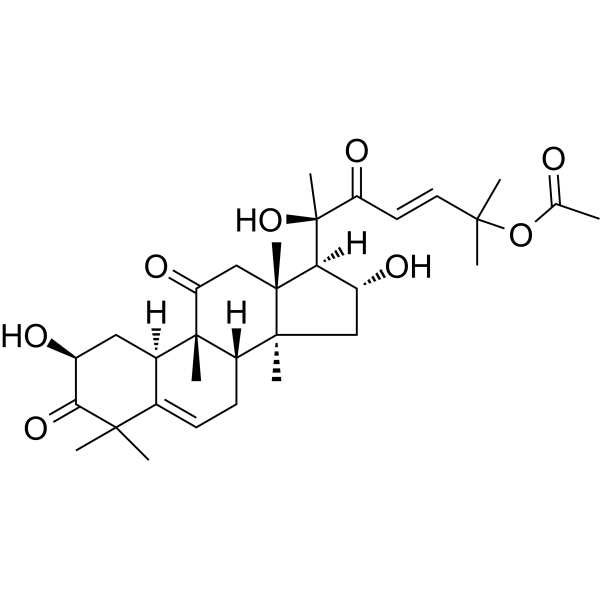
    Cucurbitacin B
    10+ Cited Publications

    HIF/HIF Prolyl-Hydroxylase Integrin Autophagy Apoptosis Endogenous Metabolite ROS Kinase COX Others Neurological Disease Inflammation/Immunology Cancer
    Cucurbitacin B belongs to a class of highly oxidized tetracyclic triterpenoids and is oral active. Cucurbitacin B inhibits tumor cell growth, migration and invasion and cycle arrest, but induces cell apoptosis. Cucurbitacin B has potent anti-inflammatory, antioxidant, antiviral, hypoglycemic, hepatoprotective, neuroprotective activity .
    Cucurbitacin B
  • HY-P9933

    APN-311; Ch14.18; MAb-14.18

    Apoptosis PERK mTOR Cancer
    Dinutuximab (APN-311) is a chimeric human-mouse anti-GD2 monoclonal antibody. Dinutuximab can bind to GD2 on the cell surface, triggering antibody-dependent cell-mediated cytotoxicity and complement-dependent cytotoxicity, and promoting tumor regression. Dinutuximab can inhibit the growth, invasion, and migration and induce apoptosis of tumor cells. Dinutuximab can be used in the research of tumors such as neuroblastoma and breast cancer .
    Dinutuximab
  • HY-101374A

    (+)-BRD4780

    Imidazoline Receptor Caspase Mitochondrial Metabolism Lactate Dehydrogenase Cardiovascular Disease Neurological Disease Cancer
    AGN 192403 (BRD4780) hydrochloride is a potent and selective imidazoline-1 receptor antagonist with a Ki value of 42 nM. AGN 192403 hydrochloride is also a TMED9 inhibitor. AGN 192403 hydrochloride shows protective effects on oxidative cytotoxicity and mitochondrial inhibitor-induced cytotoxicity in astrocytes. AGN 192403 hydrochloride mitigates the proliferation and migration of differentiated glioma tumor cells. AGN 192403 hydrochloride can be used for glioma tumor and neurological diseases research .
    AGN 192403 hydrochloride
  • HY-P1120

    WKYMVm-amide; W-Peptide

    Formyl Peptide Receptor (FPR) PERK Apoptosis Neurological Disease Metabolic Disease Inflammation/Immunology Cancer
    WKYMVm is a selective formylpeptide receptor 2 (FPR2) agonist. WKYMVm has a powerful anti-inflammatory effect that can reduce lung injury and spinal cord injury. WKYMVm ameliorates obesity by regulating lipid metabolism and leptin signaling. WKYMVm is involved in the regulation of immune cells by activating FPRs. WKYMVm can promote the chemotactic migration of immune cells and inhibit the apoptosis of phagocytes. In addition, WKYMVm may play a favorable or unfavorable role in tumors, depending on the type of tumor .
    WKYMVm
  • HY-157122
    VJDT
    3 Publications Verification

    TREM receptor Transmembrane Glycoprotein Akt PI3K Interleukin Related NF-κB Inflammation/Immunology Cancer
    VJDT is a TREM1 inhibitor that can effectively block TREM1 signaling. VJDT inhibits tumor cell proliferation and migration and induces cell cycle arrest. VJDT has immunomodulatory and antitumor activities, and can be used for the research of tumors such as melanoma .
    VJDT
  • HY-18981
    Decursin
    2 Publications Verification

    (+)-Decursin

    PKC Apoptosis CXCR Neurological Disease Inflammation/Immunology Cancer
    Decursin ((+)-Decursin) is a potent anti-tumor agent. Decursin also is a cytotoxic agent and a potent protein kinase C activator. Decursin induces apoptosis and cell cycle arrest at G1 phase. Decursin decreases the expression of CDK2, CDK4, CDK6, cyclin D1 protein at 48 h. Decursin inhibits cell proliferation and migration. Decursin shows anti-tumor, anti-inflammatory and analgesic activities .
    Decursin
  • HY-A0020
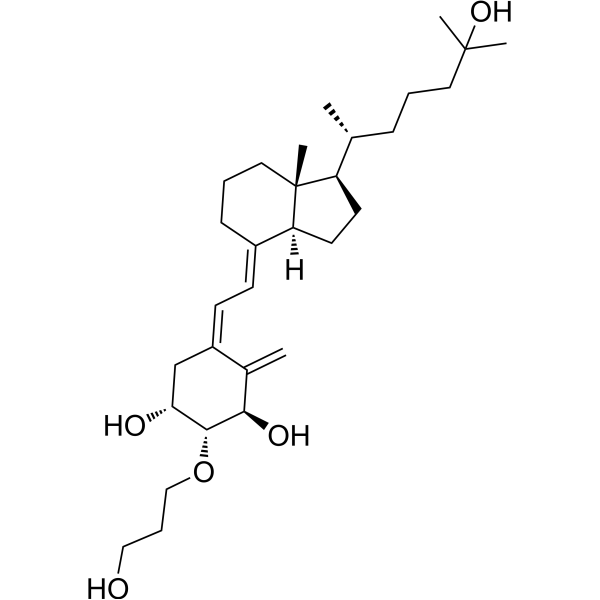
    Eldecalcitol
    4 Publications Verification

    ED-71; 2-(3-hydroxypropoxy)-1,25-dihydroxyvitamin D3

    VD/VDR Apoptosis Metabolic Disease Inflammation/Immunology Cancer
    Eldecalcitol (ED-71) is an orally active vitamin D3 analogue, inhibits bone resorption and increases bone mineral density. Eldecalcitol (ED-71) displays anti-tumor effect and inhibits cell proliferation, migration and induces apoptosis by suppressing GPx-1 .
    Eldecalcitol
  • HY-N2584A
    Isoxanthohumol
    3 Publications Verification

    HSV Apoptosis Reactive Oxygen Species (ROS) Autophagy CMV Fungal Integrin S100 Protein Infection Metabolic Disease Inflammation/Immunology Cancer
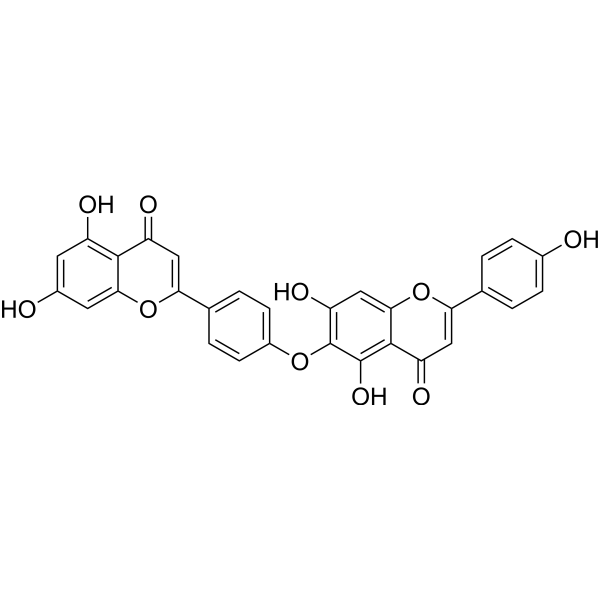
    Isoxanthohumol is an orally active flavonoid compound. Isoxanthohumol has biological activities such as anti-tumor, anti-inflammatory, antioxidant, antiviral, antifungal, and inhibition of adipogenesis. Isoxanthohumol can induce apoptosis, autophagy, and migration of tumor cells. Isoxanthohumol is active against viruses such as HSV, BVDV, CMV, and Rhino. Isoxanthohumol can be used for the research of tumors, metabolic, and inflammatory diseases .
    Isoxanthohumol
  • HY-13561

    M475271

    Src Apoptosis Cancer
    AZM475271 (M475271) is an orally active and selective Src kinase inhibitor. AZM475271 inhibits phosphorylation of c-Src kinase, Lck, c-yes (IC50s = 0.01, 0.03, 0.08 μM, respectively). AZM475271 induces apoptosis. AZM475271 reduces tumor cell proliferation and migration in vitro and in vivo, and reduces microvessel density (MVD). AZM475271 inhibits tumor growth and metastasis. AZM475271 sensitizes tumor cells to the cytotoxic effects of Gemcitabine (HY-17026) .
    AZM475271
  • HY-114657A
    Benproperine phosphate
    2 Publications Verification

    Arp2/3 Complex Inflammation/Immunology Cancer
    Benproperine phosphate is an orally active, potent actin-related protein 2/3 complex subunit 2 (ARPC2) inhibitor. Benproperine phosphate attenuates the actin polymerization rate of action polymerization nucleation by impairing Arp2/3 function. Benproperine phosphate has the potential for a cough suppressant and suppresses cancer cell migration and tumor metastasis .
    Benproperine phosphate
  • HY-154954
    Ogremorphin
    2 Publications Verification

    OGM; GPR68-IN-1; OGM-8345

    GPR68 Ferroptosis Inflammation/Immunology Cancer
    Ogremorphin (OGM) is a G protein coupled sensor GPR68 inhibitor with anti-inflammatory and anti-tumor activities. Ogremorphin can inhibit the migration of human melanoma cells and induce ferroptosis in glioblastoma cells .
    Ogremorphin
  • HY-165740

    Disialoganglioside GD2

    Apoptosis Cancer
    Ganglioside GD2 (Disialoganglioside GD2) is a tumor-associated antigen. Ganglioside GD2 shows limited expression in normal tissues but is overexpressed in multiple tumor types, and thus can serve as a target in cancer. Ganglioside GD2 is associated with tumor development and malignant phenotypes, and its mechanism of action relies on enhancing cell proliferation, motility, migration, adhesion and invasion, with specific effects depending on the tumor type .
    Ganglioside GD2
  • HY-A0084A
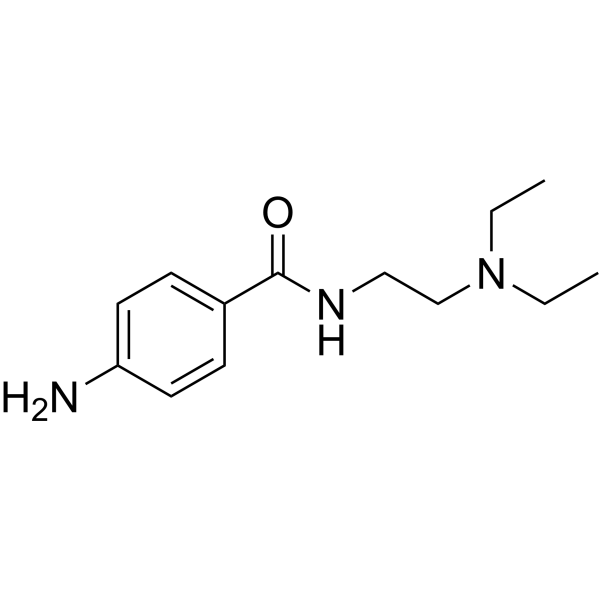
    Procainamide
    5+ Cited Publications

    Procaine amide; SP 100

    DNA Methyltransferase Potassium Channel Cardiovascular Disease Cancer
    Procainamide (Procaine amide) is a specific and potent inhibitor of DNA methyltransferase 1 (DNMT1), which reactivates the expression of tumor suppressor factors by demethylating tumor suppressor genes. Procainamide induces vacuolization in various cell types and reduces cell proliferation and migration. Procainamide relaxes airway smooth muscle by activating potassium channels. Procainamide can be used in cancer and arrhythmia research .
    Procainamide
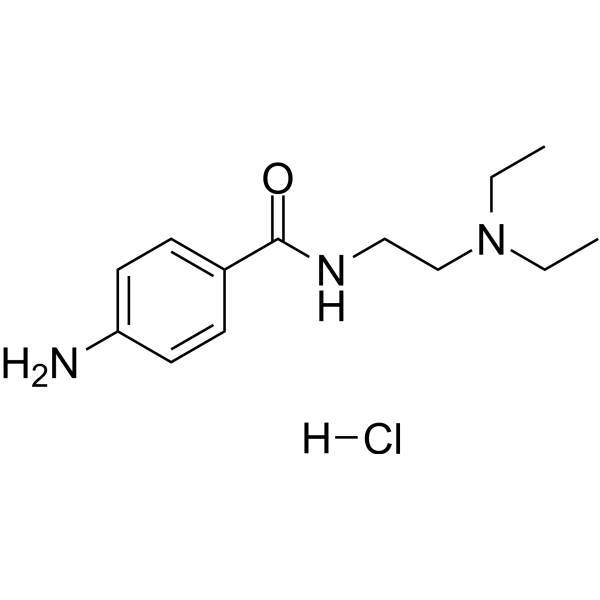
  • HY-A0084
    Procainamide hydrochloride
    5+ Cited Publications

    Procaine amide hydrochloride; SP 100 hydrochloride

    DNA Methyltransferase Potassium Channel Cancer
    Procainamide hydrochloride (Procaine amide hydrochloride) is a specific and potent inhibitor of DNA methyltransferase 1 (DNMT1), which reactivates the expression of tumor suppressor factors by demethylating tumor suppressor genes. Procainamide hydrochloride induces vacuolization in various cell types and reduces cell proliferation and migration. Procainamide hydrochloride relaxes airway smooth muscle by activating potassium channels. Procainamide hydrochloride can be used in cancer and arrhythmia research .
    Procainamide hydrochloride
  • HY-114169
    WRG-28
    2 Publications Verification

    Discoidin Domain Receptor Inflammation/Immunology Cancer
    WRG-28 is a selective, extracellularly acting DDR2 allosteric inhibitor, with an IC50 of 230 nM. WRG-28 inhibits tumor invasion, migration and tumor-supporting effects of cancer-associated fibroblasts (CAFs). WRG-28 inhibits metastatic breast tumor cell colonization in the lungs. WRG-28 also shows good activity of relieving rheumatoid arthritis in CAIA model of mice .
    WRG-28
  • HY-P2230
    Angstrom6
    1 Publications Verification

    A6 Peptide

    PAI-1 Cancer
    Angstrom6 (A6 Peptide) is an 8 amino-acid peptide derived from single-chain urokinase plasminogen activator (scuPA) and interferes with the uPA/uPAR cascade and abrogates downstream effects. Angstrom6 binds to CD44 resulting in the inhibition of migration, invasion, and metastasis of tumor cells, and the modulation of CD44-mediated cell signaling .
    Angstrom6
  • HY-75954
    2-Hydroxyhexanoic acid
    2 Publications Verification

    Endogenous Metabolite Cancer
    2-Hydroxyhexanoic acid is a metabolite. 2-Hydroxyhexanoic acid is elevated in metastatic pancreatic neuroendocrine tumors. 2-Hydroxyhexanoic acid does not promote the proliferation, migration or invasion of pancreatic neuroendocrine tumor cells. 2-Hydroxyhexanoic acid can be used in the research of metastatic pancreatic neuroendocrine tumors .
    2-Hydroxyhexanoic acid
  • HY-148385

    Endogenous Metabolite Integrin FAK Src ERK p38 MAPK Neurological Disease Cancer
    Ganglioside GM2 is a human tumor antigen predominantly found in human tumor cells and fetal brain tissue. As a sialylated glycosphingolipid, Ganglioside GM2 is involved in processes such as cell signaling, adhesion, and motility. Ganglioside GM2 abnormal expression and accumulation are associated with tumors and neurodegenerative disorders. Ganglioside GM2 promotes tumor cell migration and invasion by directly binding to the integrin β1 receptor, activating the FAK/Src/Erk-MAPK signaling pathway, and inducing actin cytoskeleton remodeling .
    Ganglioside GM2
  • HY-16916
    NS1643
    1 Publications Verification

    Potassium Channel Autophagy Cancer
    NS1643 is a partial agonist of human ether-a-go-go-related gene (hERG) K + channels with an EC50 of 10.5 μM. NS1643 inhibits the growth of breast cancer tumors in TNBC mouse models. NS1643 inhibits cell migration and invasion of breast cancer cells .
    NS1643
  • HY-P99296

    CNTO 95; Anti-Human CD51 Recombinant Antibody

    Integrin Apoptosis Cancer
    Intetumumab (CNTO 95) is a human monoclonal antibody targeting αv integrin, with a Kd value of 1-24 nM. Through high-affinity binding to αv integrin, Intetumumab inhibits its interaction with extracellular matrix proteins (such as vitronectin and fibronectin), thereby blocking the downstream focal adhesion kinase signaling pathway. This further inhibits the adhesion, migration and invasion of tumor cells as well as the proliferation of vascular endothelial cells, promotes cell apoptosis, and exerts anti-tumor and anti-angiogenic effects. Intetumumab can be used in research related to head and neck cancer, non-small cell lung cancer and uterine serous papillary carcinoma .
    Intetumumab
  • HY-P99291

    LM609; MEDI-522

    Integrin Apoptosis Akt Cancer
    Etaracizumab (LM 609) is an αvβ3 integrin IgG mAb. Etaracizumab is developed to target αvβ3+ cancer cells via NK cell-mediated cytotoxicity. Etaracizumab sterically hinders access of large ligands to the RGD-binding pocket, without obstructing it. Etaracizumab decreases p-Akt in vitro. Etaracizumab can decrease cancer proliferation and invasion. Etaracizumab induces tumor cell apoptosis, and inhibition ofαvβ3-mediated cell adhesion, endothelial cell migration and osteoclast-mediated bone resorption. Etaracizumab can be studied in anti-tumor research against cancers such as ovarian cancer, metastatic melanoma as well as advanced solid tumors. Recommend Isotype Control: Human IgG1 kappa, Isotype Control (HY-P99001) .
    Etaracizumab
  • HY-124632
    WJ460
    3 Publications Verification

    Ferroptosis Autophagy Cancer
    WJ460 is a potent inhibitor of myoferlin (MYOF) that interacts directly with MYOF. WJ460 inhibits the migration and growth, induces cell cycle arrest, mitochondrial autophagy, lipid peroxidation and ferroptosis in tumor cells. WJ460 has anti-tumor activity .
    WJ460
  • HY-N8284
    Tomentosin
    1 Publications Verification

    Apoptosis Reactive Oxygen Species (ROS) Fungal SOD Interleukin Related NF-κB Toll-like Receptor (TLR) Keap1-Nrf2 Infection Neurological Disease Inflammation/Immunology Cancer
    Tomentosin is an orally active natural sesquiterpenoid lactone. Tomentosin exhibits multiple activities such as anti-tumor, anti-fungal, anti-inflammatory, anti-oxidant and neuroprotective effects. Tomentosin can inhibit tumor cell proliferation, migration and invasion, and induce apoptosis. Tomentosin can be used in the research of tumors, inflammation and nervous system diseases .
    Tomentosin
  • HY-147218

    ARRY-067

    TAM Receptor Cancer
    PF-07265807 (ARRY-067) is a kinase inhibitor with primary targets AXL, MERTK, and TYRO3. PF-07265807 acts as an immunomodulator that cross-activates CD8 + T cells by enhancing dendritic cell function. PF-07265807 blocks downstream signal transduction of AXL and MERTK, and inhibits the proliferation and migration of tumor cells with high expression of these two kinases. PF-07265807 is applicable to research related to advanced or metastatic solid tumors, such as colorectal cancer .
    PF-07265807
  • HY-144448
    FAK-IN-2
    1 Publications Verification

    FAK Apoptosis Cancer
    FAK-IN-2 is a potent and orally active focal adhesion kinase (FAK) inhibitor, with anticancer activity (FAK IC50= 35 nM). FAK-IN-2 covalently inhibits the autophosphorylation of FAK in a dose-dependent manner, and inhibits the clone formation and migration of tumor cells, inducing apoptosis .
    FAK-IN-2
  • HY-144707

    Apoptosis VEGFR MMP PTEN Cancer
    AK-778-XXMU is a potent DNA binding inhibitor 2 (ID2) antagonist with a KD of 129 nM. AK-778-XXMU can inhibit cell migration and invasion of glioma cell lines, induce apoptosis, and exhibits significant cancer-suppressing potency. AK-778-XXMU inhibits the ID2-KDR signaling axis, thereby down-regulating the downstream angiogenic factors (VEGFA) and invasion-related proteins (MMP2/9), and up-regulating the tumor suppressor factor (PTEN). AK-778-XXMU can be used for the study of glioma .
    AK-778-XXMU
  • HY-N8207
    Gypenoside LI
    1 Publications Verification

    Apoptosis MicroRNA Cancer
    Gypenoside LI, a gypenoside monomer, possesses anti-tumor activity. Gypenoside LI induces cell apoptosis, cell cycle and migration .
    Gypenoside LI
  • HY-170964

    DNA/RNA Synthesis TGF-β Receptor Cancer
    HPH-15 is an anti-migration compound that inhibits cell migration by binding to hnRNP U or suppressing TGF-β signaling. In addition, HPH-15 can also inhibit epithelial-mesenchymal transition (EMT). HPH-15 holds promise for research in the fields of anti-tumor metastasis and anti-fibrosis .
    HPH-15
  • HY-114356

    c-Met/HGFR Cancer
    BPI-9016M is a potent, orally active, and selective dual c-Met and AXL tyrosine kinases inhibitor. BPI-9016M suppresses tumor cell growth, migration and invasion of lung adenocarcinoma .
    BPI-9016M
  • HY-105218A
    Ifetroban sodium
    1 Publications Verification

    BMS-180291 sodium

    Prostaglandin Receptor Cardiovascular Disease Endocrinology Cancer
    Ifetroban (BMS-180291) sodium is an orally active antagonist of thromboxane A2 (TXA2) or prostaglandin H2 (PGH2) receptor. Ifetroban sodium shows antiplatelet activity, and inhibits tumor cell migration without affecting cell proliferation. Ifetroban sodium can be used for myocardial ischemia, hypertension, stroke, thrombosis, cardiomyopathy research .
    Ifetroban sodium
  • HY-105218
    Ifetroban
    1 Publications Verification

    BMS-180291

    Prostaglandin Receptor Cardiovascular Disease Endocrinology Cancer
    Ifetroban (BMS-180291) is an orally active antagonist of thromboxane A2 (TXA2) or prostaglandin H2 (PGH2) receptor. Ifetroban shows antiplatelet activity, and inhibits tumor cell migration without affecting cell proliferation. Ifetroban can be used for myocardial ischemia, hypertension, stroke, thrombosis, cardiomyopathy research .
    Ifetroban
  • HY-117522
    Sepin-1
    2 Publications Verification

    Separase Cancer
    Sepin-1 is a potent separase inhibitor with an IC50 value of 14.8 µM. Sepin-1 inhibits cell proliferation, migration and wound healing. Sepin-1 decreases the expression of FoxM1 protein and mRNA level. Sepin-1 shows anti-tumor activity .
    Sepin-1
  • HY-P11288

    PACAP Receptor Apoptosis Cancer
    ANT308 is a vasoactive intestinal polypeptide (VIP receptor) antagonist. ANT308 significantly enhances the activation and proliferation of T cells. ANT308 inhibits the migration and metastasis, induces apoptosis of melanoma tumor cells by inhibiting VIP-VPAC2 signaling and reducing the expression of MCAM and N-cadherin. ANT308 can be used for the studies of acute myeloid leukemia (AML) and uveal melanoma (UVM) .
    ANT308
  • HY-175202

    Discoidin Domain Receptor Apoptosis Caspase Interleukin Related PERK Cancer
    CIDD-8633 is a potent DDR2 inhibitor with an IC50 of 6.105 μM. CIDD-8633 inhibits cell migration and halts the cell cycle and induces apoptosis, significantly suppressing pancreatic ductal adenocarcinoma (PDAC) tumor growth. CIDD-8633 can be used for the study of pancreatic cancer such as PDAC .
    CIDD-8633
  • HY-161742

    AUTOTACs MetAP Autophagy p62 Cancer
    Fumagilin-105 is an autophagy-targeting chimera (AUTOTAC) that degrades MetAP2 via p62-mediated macroautophagy in a ubiquitination-independent manner. Fumagilin-105 can inhibit the migration of tumor cells and induce programmed cell death. Fumagilin-105 has anti-tumor activity. (p62-ZZ ligand (HY-W489121); target-binding ligand (HY-B0751); linker (HY-W245803)) .
    Fumagilin-105
  • HY-170933

    SGK Cancer
    SGK1-IN-6 is a selective SGK1 inhibitor with an IC50 of 0.39 μM, showing selectivity over SGK2/3. SGK1-IN-6 inhibits cancer cell migration and invasion, improves SGK1 protein thermal stability. SGK1-IN-6 decreases SGK1 protein levels in tumor tissues, suppresses tumor growth in mouse xenograft models. SGK1-IN-6 can be used for the research of prostate cancer .
    SGK1-IN-6
  • HY-100498A
    GSK-2256098 hydrochloride
    5+ Cited Publications

    FAK Apoptosis Cancer
    GSK-2256098 hydrochloride is a focal adhesion kinase (FAK) inhibitor that exhibits potential antiangiogenic and antineoplastic activities. GSK-2256098 hydrochloride targets FAK to inhibit tumor cell growth by regulating cell adhesion, migration, proliferation, and survival.
    GSK-2256098 hydrochloride
  • HY-N7325

    PTEN Orexin Receptor (OX Receptor) Neurological Disease Cancer
    Valerosidate is an OX2R antagonist. Valerosidate increases expression of tumor suppressor proteins p53 and PTEN, selectively reduces colon cancer cell viability, and suppresses colon cancer cell migration. Valerosidate can be used for the research of colon cancer and insomnia .
    Valerosidate
  • HY-116269

    Ras Apoptosis PAK ERK Cancer
    AZA197 is a selective small molecule inhibitor of Cdc42.AZA197 suppresses colon cancer cell proliferation, cell migration, invasion and increases apoptosis by down-regulating the PAK1 and ERK signaling pathways in vitro. AZA197 reduces tumor growth and significantly increases mouse survival in SW620 tumor xenografts. AZA197 can be used for the study of colon cancer .
    AZA197
  • HY-135562

    Parasite Antibiotic Infection Cancer
    Ascofuranone is an orally active inhibitor of Trypanosoma brucei brucei (TAO) with a Ki value of 2.38 nM. Ascofuranone inhibits IGF-1-induced cancer cell migration, invasion, motility and actin cytoskeleton formation, and exerts anti-tumor effects. Ascofuranone can be used in research related to tumor metastasis, African trypanosomiasis, bacterial infections, lung cancer and hepatocellular carcinoma .
    Ascofuranone
  • HY-134000

    NSC624610

    p38 MAPK NF-κB ERK JNK VEGFR MMP Cancer
    Emodic acid (NSC624610) is an anthraquinone compound isolated from A. microcarpus, which can inhibit the proliferation of cancer cells by inhibiting the activity of NF-κB. Emodic acid can also inhibit the phosphorylation of p38, ERK and JNK, the secretion of tumor-promoting cytokines IL-1β and IL-6, and the expression of VEGF and MMP, thereby inhibiting the invasion and migration potential of cancer cells .
    Emodic acid
  • HY-160843

    Apoptosis Cancer
    N-ω-chloroacetyl-L-ornithine (NCAO) is a potent reversible competitive ornithine decarboxylase (ODC) inhibitor that exerts cytotoxic and antiproliferative effects on tumor cell lines with EC50 values ranging from 1 to 50.6 µM. NCAO induces tumor cell Apoptosis and inhibits tumor cell migration in vitro. NCAO also exhibits a potent antitumor activity against both solid and ascitic tumors in a mouse model using the myeloma (Ag8) cell line. NCAO is promising for research of antitumor agents .
    NCAO
  • HY-144898

    Microtubule/Tubulin Apoptosis Cancer
    SB-216 is an BBB-penetrable tubulin polymerization inhibitor. SB-216 can inhibit the proliferation and migration, and induce apoptosis and cell cycle arrest of tumor cells. SB-216 has good in vivo metabolic stability and low toxicity, but its oral bioavailability is limited. SB-216 has antitumor activity and can be used in the research of tumors such as melanoma .
    SB-216
  • HY-149631

    HDAC Cancer
    HFY-4A is a HDAC inhibitor. HFY-4A inhibits breast cancer cell proliferation, migration, and invasion, and induces cell apoptosis. HFY-4A induces immunogenic cell death (ICD). HFY-4A inhibits tumor growth in breast cancer xenograft mouse models .
    HFY-4A
  • HY-120409

    LPL Receptor Apoptosis Cancer
    AB1 is a highly selective S1P2 receptor antagonist (IC50=3.5 nM). AB1 inhibits sphingosine-1-phosphate (S1P) signaling, suppressing tumor cell migration, angiogenesis, and profibrotic mediator CTGF expression while inducing apoptosis. AB1 is promising for research of solid tumors .
    AB1
  • HY-101931

    VEGFR Cancer
    hVEGF-IN-1, a quinazoline derivative, could specifically bind to the G-rich sequence in the internal ribosome entry site A (IRES-A) and destabilize the G-quadruplex structure. hVEGF-IN-1 binds to the IRES-A (WT) with a Kd of 0.928 μM in SPR experiments. hVEGF-IN-1 could hinder tumor cells migration and repress tumor growth by decreasing VEGF-A protein expression .
    hVEGF-IN-1
  • HY-101374

    (+)-BRD4780 free base

    Imidazoline Receptor Mitochondrial Metabolism Caspase Lactate Dehydrogenase Cardiovascular Disease Neurological Disease Cancer
    AGN 192403 (BRD4780) is a potent and selective imidazoline-1 receptor antagonist with a Ki value of 42 nM. AGN 192403 is also a TMED9 inhibitor. AGN 192403 shows protective effects on oxidative cytotoxicity and mitochondrial inhibitor-induced cytotoxicity in astrocytes. AGN 192403 mitigates the proliferation and migration of differentiated glioma tumor cells. AGN 192403 can be used for glioma tumor and neurological diseases research .
    AGN 192403
  • HY-148291

    LPL Receptor Phosphodiesterase (PDE) Cancer
    BrP-LPA sodium is a pan-opposite agent for lysophosphatidic acid (LPA). It has antagonistic activity against LPA1 (IC50 = 4520 nM), LPA2 (IC50 = 468 nM), LPA3, and LPA4. BrP-LPA sodium also has partial agonistic activity for LPA5, with its EC50 being 1282 nM. BrP-LPA sodium has ATX inhibitory activity. BrP-LPA sodium effectively inhibits the migration and invasion of breast cancer cells. BrP-LPA sodium achieves tumor regression and anti-angiogenesis in mice breast cancer xenograft model. BrP-LPA sodium can be used for the study of breast cancer .
    BrP-LPA sodium
  • HY-120429

    Apoptosis Cancer
    SKLB-163 is an orally active inhibitor for Rho GDP-dissociation (RhoGDI). SKLB-163 inhibits highly expressed RhoGDI tumor cell proliferation and migration, and increases radiosensitivity of tumor cells. SKLB-163 induces cancer cell Apoptosis .
    SKLB-163

Inquiry Online

Your information is safe with us. * Required Fields.

Salutation


Country or Region *

Applicant Name *


Organization Name *

Department *


Email Address *


Product Name *

Cat. No.


Requested quantity *

Phone Number *


Remarks

Inquiry Online

Inquiry Information

Product Name:
Cat. No.:
Quantity:
MCE Japan Authorized Agent:

