





1. Search Result
Search Result
Results for "

tumor-specific

" in MedChemExpress (MCE) Product Catalog:

36

Inhibitors & Agonists

1

Fluorescent Dye

8

Peptides

12

Inhibitory Antibodies

5

Natural
Products

2

Isotope-Labeled Compounds

2

Click Chemistry

Cat. No. Product Name Target Research Areas Chemical Structure
  • HY-19792
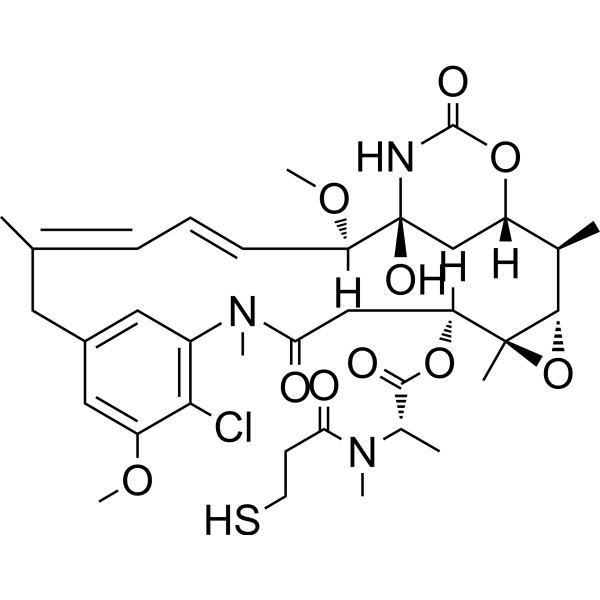
    Mertansine
    Maximum Cited Publications
    27 Publications Verification

    DM1; Maytansinoid DM1

    Microtubule/Tubulin ADC Payload Cancer
    Mertansine (DM1) is a microtubulin inhibitor and is an antibody-conjugatable maytansinoid that is developed to overcome systemic toxicity associated with maytansine and to enhance tumor-specific delivery. Mertansine can be attached to a monoclonal antibody with a linker to create an antibody-drug conjugate (ADC) .
    Mertansine
  • HY-P99634

    PankoMab; DS-3939a antibody

    Mucin Cancer
    Gatipotuzumab (PankoMab) is a humanized monoclonal antibody which recognizes the tumor-specific epitope of mucin-1 (TA-MUC1). Gatipotuzumab reveals a potent tumor-specific antibody-dependent cell cytotoxicity (ADCC) .
    Gatipotuzumab
  • HY-P99117
    Cadonilimab
    1 Publications Verification

    AK104

    PD-1/PD-L1 CTLA-4 Inflammation/Immunology Cancer
    Cadonilimab (AK104) is a humanized tetravalent IgG1 bispecific antibody targeting PD1/CTLA4. Cadonilimab blocks both PD-1 and CTLA-4 pathways, thereby relieving their corresponding immunosuppressive effects and reversing tumor specific T cell exhaustion. Cadonilimab significantly downregulates Fc-mediated effector functions, including antibody-dependent cell-mediated cytotoxicity (ADCC), antibody-dependent cellular phagocytosis (ADCP), complement dependent cytotoxicity (CDC). Cadonilimab can be used for research of metastatic cervical cancer, as well as other malignancies such as gastric cancer, GEJ adenocarcinoma and non-small cell lung cancer (NSCLC) .
    Cadonilimab
  • HY-P99742
    Mitazalimab
    1 Publications Verification

    ADC-1013; JNJ-64457107; Vanalimab

    TNF Receptor Cancer
    Mitazalimab (ADC-1013; JNJ-64457107) is FcγR-dependent CD40 agonist with tumor-directed activity. Mitazalimab activates antigen-presenting cells, e.g. dendritic cells (DC), to initiate tumor-reactive T cells. Therefore, Mitazalimab induces tumor-specific T cells to infiltrate and kill tumors. Mitazalimab remodels the tumor-infiltrating myeloid microenvironment .
    Mitazalimab
  • HY-177434

    Precem-TcT; M 9140

    Antibody-Drug Conjugates (ADCs) Transmembrane Glycoprotein Topoisomerase Cancer
    Precemtabart tocentecan (Precem-TcT; M 9140) is an anti-CEACAM5 (carcinoembryonic antigen-related cell adhesion molecule 5) antibody-drug conjugate (ADC). Precemtabart tocentecan consists of a tumor-specific anti-CEACAM5 monoclonal antibody Precemtabart (HY-P990940), a highly hydrophilic and stable cleavable β-glucuronide linker, and a topoisomerase 1 inhibitor payload Exatecan (HY-13631), and the drug-linker conjugate for ADC is Mal-Gly-PAB-Exatecan-D-glucuronic acid (HY-153179). Precemtabart tocentecan inhibits the growth of CEACAM5-positive cancer cells. Precemtabart tocentecan exhibits significant antitumor activity in CEACAM5-expressing xenograft models. Precemtabart tocentecan can be used for the study of CEACAM5-expressing advanced solid tumors, especially mCRC .
    Precemtabart tocentecan
  • HY-P99849

    ABT-806

    EGFR Cancer
    Depatuxizumab is a brain-penetrant and humanized tumor-specific anti EGFR monoclonal antibody. Depatuxizumab inhibits the growth of xenograft models of mutant EGFRvIII and wild-type EGFR. Depatuxizumab can be used for research on cancer .
    Depatuxizumab
  • HY-117800
    BJE6-106
    5 Publications Verification

    B106

    PKC Apoptosis Inflammation/Immunology Cancer
    BJE6-106 (B106) is a potent, selective 3 rd generation PKCδ inhibitor with an IC50 of 0.05 μM and targets selectivity over classical PKC isozyme PKCα (IC50=50 μM). BJE6-106 (B106) induces caspase-dependent apoptosis. BJE6-106 (B106) possesses tumor-specific effect.
    BJE6-106
  • HY-P991149

    YH32367; ABL105

    TNF Receptor Cancer
    Nesfrotamig (YH32367; ABL105) is a bispecific activator targeting HER2 and 4-1BB. The Kd values of Nesfrotamig for human HER2 and human 4-1BB are 0.48 nM and 3.36 nM, respectively. By blocking tumor cell growth signals, activating HER2-dependent local 4-1BB in tumors to maintain T cell survival, and inducing NK cell-mediated antibody-dependent cellular cytotoxicity, Nesfrotamig enhances the cytotoxicity and tumor infiltration ability of immune cells. Nesfrotamig promotes the generation of tumor-specific memory T cells, drives T cell-mediated tumor lysis, exhibits significant anti-tumor efficacy against both HER2-positive and HER2-low-expressing tumors, and shows synergistic activity when combined with anti-PD-1 antibodies. In cynomolgus monkey studies, Nesfrotamig demonstrates good safety and is suitable for research related to HER2-positive and HER2-low-expressing tumors .
    Nesfrotamig
  • HY-P99572

    BNT-312; DuoBody-CD40x-4-1BB; GEN1042

    TNF Receptor Inflammation/Immunology Cancer
    Tecaginlimab (BNT-312) is a Fc-inert bispecific antibody for dual targeting and conditional stimulation of CD40 and 4-1BB. Tecaginlimab can enhance priming and reactivation of tumor-specific immunity .
    Tecaginlimab
  • HY-P990981

    ALPS-12; RG-6524; RO 7616789

    CD3 Inflammation/Immunology Cancer
    Clesitamig (ALPS-12) is a trispecific T cell engager with two CD3/CD137 dual-specific Fabs and one DLL3 Fab. Clesitamig engages CD3 and CD137 on T cells to activate and co-stimulate T cells, promoting their proliferation, survival, and antitumor activity. Clesitamig binds to DLL3 on tumor cells for tumor-specific recognition. Clesitamig can be used for the research of small cell lung cancer (SCLC) .
    Clesitamig
  • HY-N2123
    Neoliquiritin
    1 Publications Verification

    Caspase Neurological Disease Cancer
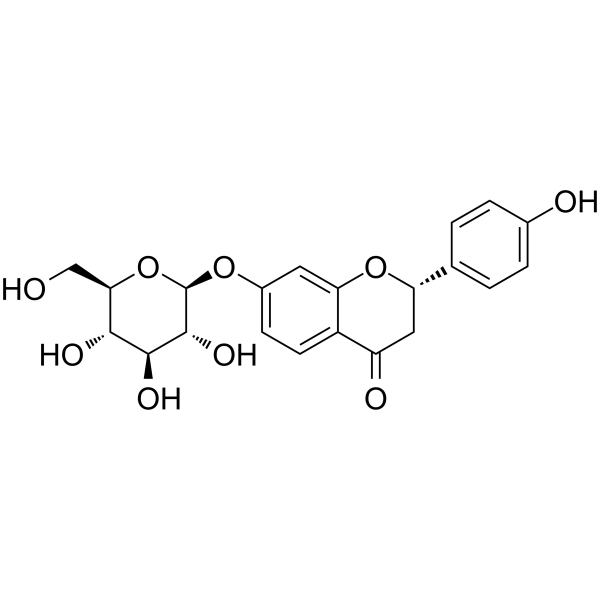
    Neoliquiritin is a flavonoid and flavanone-derived cytotoxic agent with anticancer activity and neuroprotective effects. Neoliquiritin exhibits excellent tumor specificity, exerting a more pronounced killing effect on cancer cells compared with normal oral cells. Neoliquiritin also exerts neuroprotective effects by inhibiting ATP depletion and the elevation of caspase 3/7 activity. Widely present in the roots of Glycyrrhiza uralensis, Glycyrrhiza inflata and Glycyrrhiza glabra, Neoliquiritin can be applied to studies on human oral squamous cell carcinoma, leukemia, Parkinson's disease and other conditions .
    Neoliquiritin
  • HY-136261

    Drug-Linker Conjugates for ADC Cancer
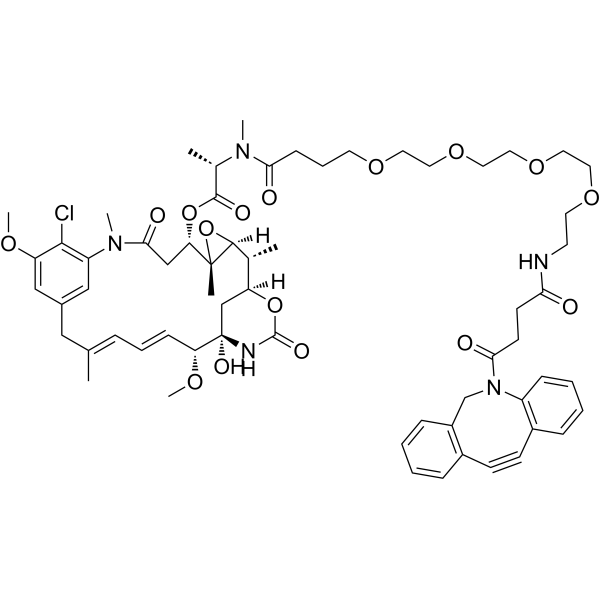
    DM1-(PEG)4-DBCO is a agent-linker conjugate composed of a potent microtubulin inhibitor DM1 and a linker DBCO-PEG4-Ahx to make antibody agent conjugate (ADC). Mertansine (DM1) is a microtubulin inhibitor and is an antibody-conjugatable maytansinoid that is developed to overcome systemic toxicity associated with maytansine and to enhance tumor-specific delivery. DM1-PEG4-DBCO is a click chemistry reagent, it contains a DBCO group that can undergo strain-promoted alkyne-azide cycloaddition (SPAAC) with molecules containing Azide groups.
    DM1-PEG4-DBCO
  • HY-P991740

    PD-1/PD-L1 Interleukin Related Cancer
    IBI-363 is a PD-1/IL-2 bispecific antibody with functions of blocking the PD-1/PD-L1 pathway and activating the IL-2 pathway. The IL-2 arm of IBI-363 retains affinity for IL-2Rα but attenuates binding ability to IL-2Rβ and IL-2Rγ to reduce toxicity. The PD-1 binding arm of IBI-363 enables PD-1 blockade and selective delivery of IL-2. IBI-363 can be used in cancer research, such as non-small cell lung cancer .
    IBI-363
  • HY-177542

    Emi-Le; XMT-1660

    Cancer
    Emiltatug ledadotin (Emi-Le; XMT-1660) is a B7-H4-targeted antibody-drug conjugate (ADC). Emiltatug ledadotin consists of the tumor-specific anti-B7-H4 monoclonal antibody Emiltatug (HY-P990918) and the linker-payload system Ledadotin (HY-177541), with site-specific conjugation achieved via GlycoConnect click chemistry. Emiltatug ledadotin inhibits the growth of B7-H4-positive cancer cells. Emiltatug ledadotin can be used to study advanced solid tumors with B7-H4 overexpression, particularly breast cancer, ovarian cancer, and endometrial cancer .
    Emiltatug ledadotin
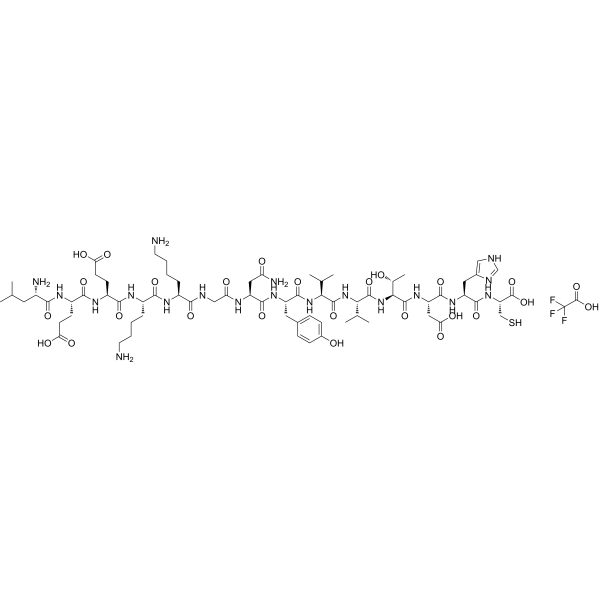
  • HY-P1828A

    EGFR Cancer
    EGFRvIII peptide (PEPvIII) TFA is a tumor-specific mutation that is widely expressed in glioblastoma multiforme (GBM) and other neoplasms and its expression enhances tumorigenicity. EGFRvIII peptide TFA represents a truly tumor-specific target for antitumor immunotherapy .
    EGFRvIII peptide (PEPvIII) TFA
  • HY-W024604

    4,4-Dimethylcyclopent-2-enone

    Others Cancer
    4,4-Dimethyl-2-cyclopenten-1-one, a natural compound from Apocyniveneti Folium, displays higher tumor-specific cytotoxicity .
    4,4-Dimethyl-2-cyclopenten-1-one
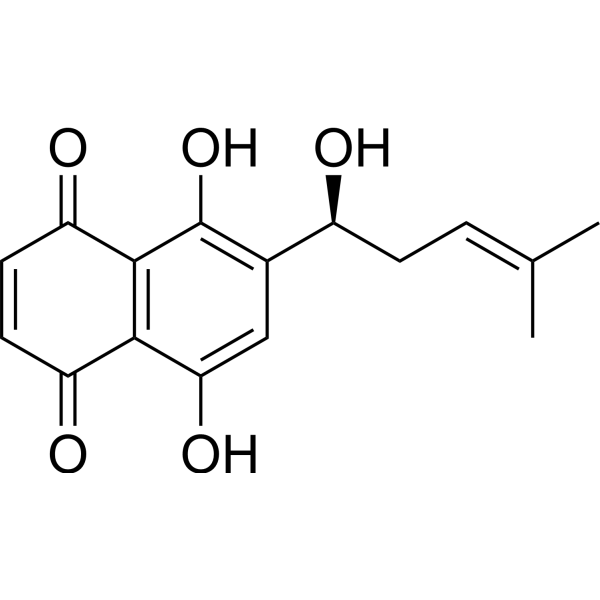
  • HY-119874

    Pyruvate Kinase Inflammation/Immunology Cancer
    Alkannin is a potent and specific inhibitor of tumor-specific pyruvate kinase-M2 (PKM2). Alkannin does not inhibit PKM1 and pyruvate kinase-L (PKL). Alkannin acts as a potential anticancer agent .
    Alkannin
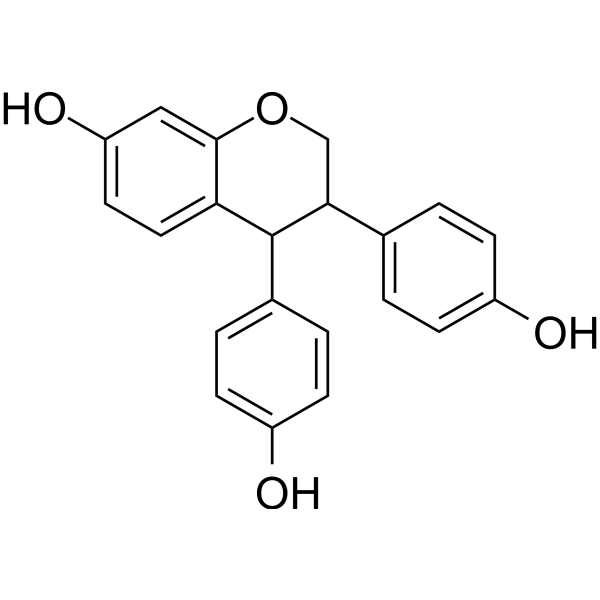
  • HY-111936

    BML283

    Pyruvate Kinase Cancer
    ML083 is a member of a series of highly specific allosteric activators for the tumor-specific isoform of human pyruvate kinase (M2 isoform). ML083 affects the cooperativity of phosphoenolpyruvate (PEP) binding. ML083 can be used in the research of tumors .
    ML 083
  • HY-13675

    NV-143

    Wnt Endogenous Metabolite Cancer
    ME-143 is a second-generation tumor-specific inhibitor of NADH oxidase. ME-143 inhibits the WNT/β-catenin pathway in colorectal cancer cells. ME-143 has broadly active against cancers in vitro and in vivo .
    ME-143
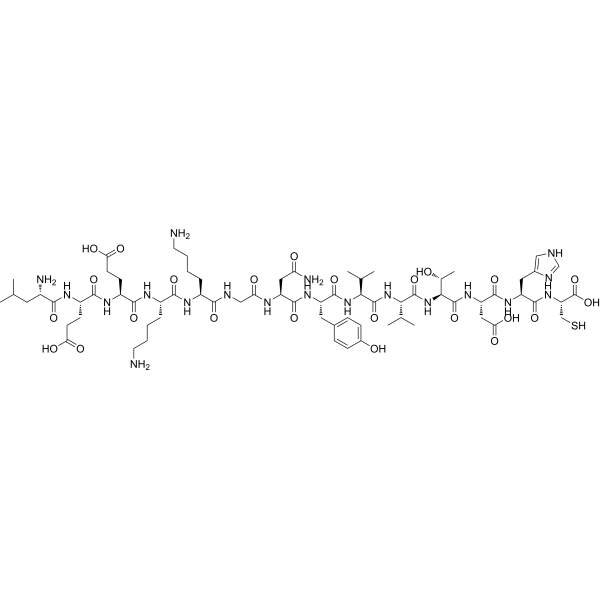
  • HY-P1828

    EGFR Cancer
    EGFRvIII peptide (PEPvIII) is a tumor-specific mutation that is widely expressed in glioblastoma multiforme (GBM) and other neoplasms and its expression enhances tumorigenicity. EGFRvIII peptide represents a truly tumor-specific target for antitumor immunotherapy .
    EGFRvIII peptide (PEPvIII)
  • HY-155100

    STING Inflammation/Immunology Cancer
    BI 7446 is a cyclic dinucleotide (CDN)-based potent and selective stimulator of interferon genes (STING) agonist. BI 7446 can activate all five STING variants in cells and induce tumor-specific immune-mediated tumor rejection. BI 7446 can be used for immuno-oncology research .
    BI 7446
  • HY-P991525

    TNF Receptor Cancer
    2141-V11 is an anti-CD40 agonist antibody with enhanced binding to FcγRIIB. 2141-V11 results in effective tumor-specific T-cell responses in vivo. 2141-V11 can be used for the study of BCG-unresponsive non-muscle invasive bladder cancer .
    2141-V11
  • HY-136260

    Drug-Linker Conjugates for ADC Cancer
    DBCO-PEG4-Ahx-DM1 is a agent-linker conjugate composed of a potent microtubulin inhibitor DM1 and a linker DBCO-PEG4-Ahx to make antibody agent conjugate (ADC). Mertansine (DM1) is a microtubulin inhibitor and is an antibody-conjugatable maytansinoid that is developed to overcome systemic toxicity associated with maytansine and to enhance tumor-specific delivery. DBCO-PEG4-Ahx-DM1 is a click chemistry reagent, it contains a DBCO group that can undergo strain-promoted alkyne-azide cycloaddition (SPAAC) with molecules containing Azide groups.
    DBCO-PEG4-Ahx-DM1
  • HY-146819

    Carbonic Anhydrase Cancer
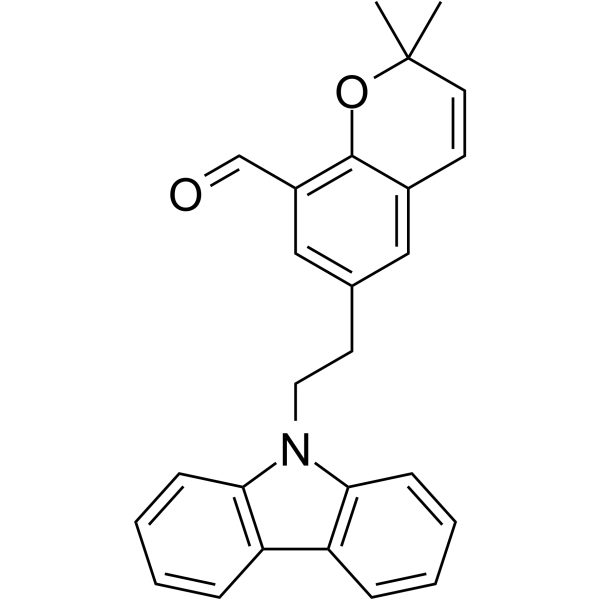
    Compound 9 is the most effective against tumor specific Ca ix/ca XII (ki=29.1 and 8.8 nm), so it is possible to evaluate its cytotoxicity and selectivity to HepG-2, HCT-116 and MCF-7 cancer cell lines in vitro, and its IC50 values to tumor cells are 1.78, 1.94 and 3.07, respectively μ M. It showed that it had obvious cytotoxicity.
    CAIX/CAXII-IN-1
  • HY-P5520

    Bombesin Receptor Radionuclide-Drug Conjugates (RDCs) Cancer
    GB-6 is a short linear peptide that targets the gastrin releasing peptide receptor (GRPR). GRPR is overexpressed in pancreatic cancer. Based on the tumor selectivity and tumor-specific accumulation properties of GB-6, GB-6 labeled with near infrared (NIR) fluorescent dyes or radionuclide netium-99m (99mTc) can be used as a high-contrast imaging probe. GB-6 has excellent in vivo stability, with tumor to pancreatic and intestinal fluorescence signal ratios of 5.2 and 6.3, respectively, in SW199 0 subcutaneous xenograft models. GB-6 can rapidly target tumors and accurately delineate tumor boundaries, which has broad application prospects .
    GB-6
  • HY-W705394

    Bacterial Cancer
    Nopaline is a tumor-specific compound. Nopaline can be used to study the mechanism of plant tumorigenesis induced by Agrobacterium tumefaciens .
    Nopaline
  • HY-155717

    Autophagy Pim Cancer
    NDBM is a probe and binds to tumor-specific Pim-1 kinase, releases strong fluorescence, and produces cytotoxicity, thus achieving cell screening and killing effects. NDBM can specifically target lysosomes and sensitively respond to pH. NDBM can be used to track the pH changes in the intracellular environment under conditions of autophagy and external stimulation .
    NDBM
  • HY-161750

    PROTACs Anaplastic lymphoma kinase (ALK) Cancer
    PROTAC ALK degrader-2 (B1-PEG) is an ALK degrader based on PROTACs, with the DC50 of 45 nM in H3122 EML4-ALK DC50 (GSH+). PROTAC ALK degrader-2, through PEGylation, is engineered to self-organize into micelles in water and releases its active form in response to the tumor-specific high GSH environment .
    PROTAC ALK degrader-2
  • HY-122637

    SF3B1 Cancer
    Sudemycin K is a selective splicing inhibitor targeting SF3B1. Sudemycin K blocks U2 snRNP recognition of branch point sequences in pre-mRNA, inducing tumor-specific splicing deregulation and apoptosis. Sudemycin K is promising for research of SF3B1-mutated malignancies such as chronic lymphocytic leukemia (CLL) and myelodysplastic syndromes (MDS) .
    Sudemycin K
  • HY-123221

    Interleukin Related Inflammation/Immunology Cancer
    RS-0481 is an orally active lymphocyte population function restorer. RS-0481 enhances IL-2 production activity. RS-0481 can re-establish the function of certain lymphoid cell populations impaired by the presence of a growing tumor in an animal. RS-0481 markedly augments the tumor-specific cytotoxic T lymphocytes, TDTH, and the nonspecific lymphokine-activated-killer-cell-like cell responses .
    RS-0481
  • HY-149465

    Phosphodiesterase (PDE) STING Neurological Disease Cancer
    STF-1623 is a highly potent ENPP1 inhibitor with an IC50 of 0.6 nM. STF-1623 inhibits ENPP1, activates tumor-specific STING signaling. STF-1623 blocks breast, pancreatic, colon, and brain cancer progression .
    STF-1623
  • HY-19792S2

    DM1-d3; Maytansinoid DM1-d3

    Isotope-Labeled Compounds Microtubule/Tubulin ADC Payload Cancer
    Mertansine-d3 (DM1-d3) is the deuterium labeled Mertansine (HY-19792). Mertansine (DM1) is a microtubulin inhibitor and is an antibody-conjugatable maytansinoid that is developed to overcome systemic toxicity associated with maytansine and to enhance tumor-specific delivery. Mertansine can be attached to a monoclonal antibody with a linker to create an antibody-drug conjugate (ADC) .
    Mertansine-d3
  • HY-19792S

    DM1-13C,d3; Maytansinoid DM1-13C,d3

    Isotope-Labeled Compounds Microtubule/Tubulin ADC Payload Cancer
    Mertansine- 13C,d3 (DM1- 13C,d3) is the 13C- and deuterium labeled Mertansine (HY-19792). Mertansine (DM1) is a microtubulin inhibitor and is an antibody-conjugatable maytansinoid that is developed to overcome systemic toxicity associated with maytansine and to enhance tumor-specific delivery. Mertansine can be attached to a monoclonal antibody with a linker to create an antibody-drug conjugate (ADC) .
    Mertansine-13C,d3
  • HY-P992459

    ADC Antibody Transmembrane Glycoprotein Cancer
    SGM-101 Antibody is a chimeric monoclonal antibody targeting carcinoembryonic antigen (CEA). SGM-101 Antibody can serve as a tumor-specific fluorescent imaging probe after being covalently conjugated with the near-infrared fluorescent dye BM104 . SGM-101 Antibody accumulates in CEA-positive tumor tissues via antigen-antibody specific binding, and emits near-infrared fluorescence to enable imaging of tumor lesions. SGM-101 Antibody can be used in research related to gastric cancer, colorectal cancer, pancreatic cancer, non-small cell lung cancer, breast cancer, peritoneal carcinomatosis, and liver metastases .
    SGM-101 Antibody
  • HY-P992060

    CD20 NF-κB Inflammation/Immunology Cancer
    Anti-Mouse CD20 Antibody (18B12) is a B cell depleting agent that targets mouse CD20. Anti-Mouse CD20 Antibody (18B12) not only inhibits the growth of mesothelioma, lung cancer and thymoma, but also significantly enhances the efficacy of adenoviral tumor antigen vaccines and induces tumor regression by increasing the number of tumor-specific CD8 + T cells. Anti-Mouse CD20 Antibody (18B12) reduces B cell infiltration into the central nervous system of mice with experimental autoimmune encephalomyelitis, and delays motor dysfunction and neuronal death after spinal cord injury by alleviating inflammatory responses and tissue damage. Anti-Mouse CD20 Antibody (18B12) is widely applicable to research in fields related to mesothelioma, lung cancer, thymoma, experimental autoimmune encephalomyelitis and spinal cord injury .
    Anti-Mouse CD20 Antibody (18B12)
  • HY-N17359

    Drug Derivative Cancer
    Mulberrofuran W is a 2-arylbenzofuran with a farnesyl group that exists in the root bark of Morus mongolica. It also acts as a cytotoxic agent with low cytotoxicity and weak tumor specificity .
    Mulberrofuran W

Inquiry Online

Your information is safe with us. * Required Fields.

Salutation


Country or Region *

Applicant Name *


Organization Name *

Department *


Email Address *


Product Name *

Cat. No.


Requested quantity *

Phone Number *


Remarks

Inquiry Online

Inquiry Information

Product Name:
Cat. No.:
Quantity:
MCE Japan Authorized Agent:

