



SR12343

Based on 1 Customer Validation
SR12343 is a IKK/NF-κB inhibitor and a mimetic of the NF-κB essential modulator (NEMO)-binding domain (NBD). SR12343 inhibits TNF-α- and LPS-induced NF-κB activation by blocking the interaction between IKKβ and NEMO. SR12343 suppresses LPS-induced acute pulmonary inflammation in mice. SR12343 extends the healthspan of naturally aged and accelerated aging mice. SR12343 can be used for research on inflammatory and degenerative diseases.
For research use only. We do not sell to patients.
- Purity : 99.66%
- CAS No.: 2055101-86-3
- Formula: C15H15BrClN3O
- Molecular Weight:368.66
-
Storage:Powder -20°C, 3 years , 4°C, 2 years ; In solvent -80°C, 6 months , -20°C, 1 month


To place orders, for customer services and technical support, please contact: MedChemExpress USA
Tel: 609-228-6898 E-mail: [email protected] [email protected]


-
 Biological Activity
-
Chemical Information
-
Solvent & Solubility
- Protocols
- Purity & Documentation
- References
-
 Help & FAQs


-
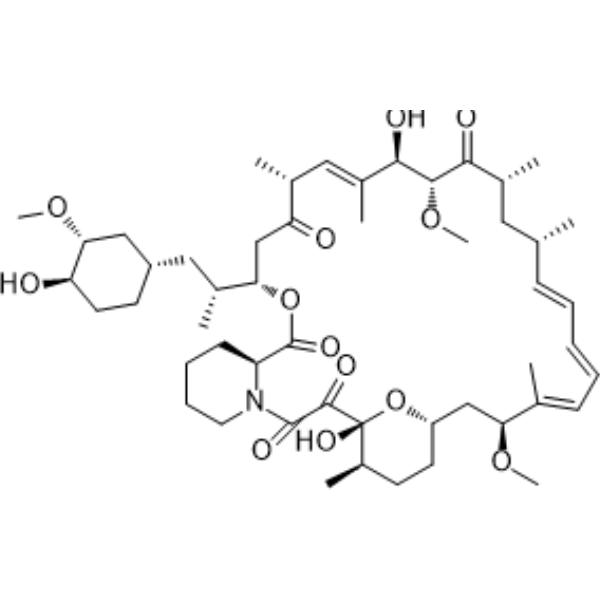
HY-10219
RapamycinmTOR Inhibitor -
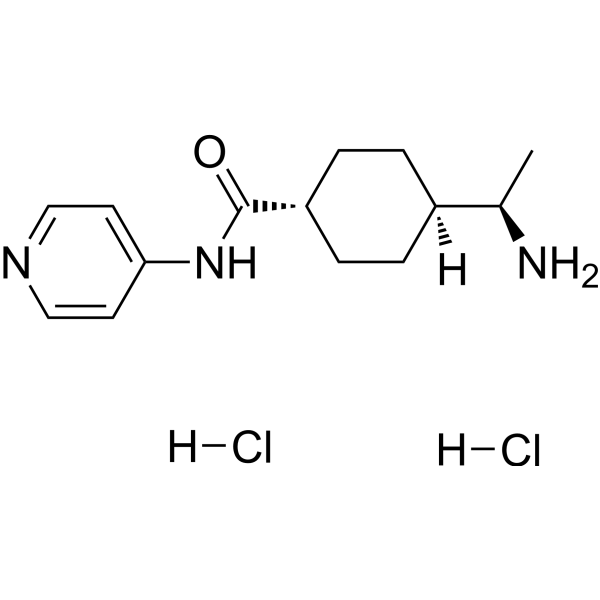
HY-10583
Y-27632 dihydrochlorideROCK Inhibitor -
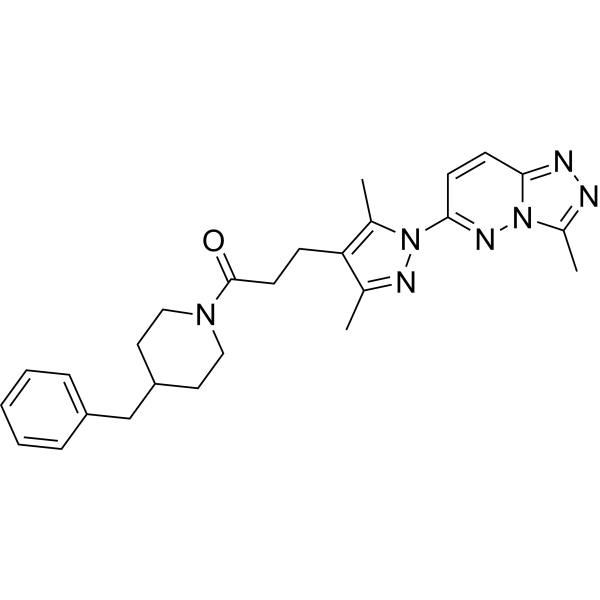
HY-120934
C25-140TRAF6-Ubc13 Inhibitor -
HY-K0208
Streptavidin Magnetic Beads -
HY-117430
HymeglusinHMG-CoA Synthase Inhibitor -
HY-W028393
Indole-3-pyruvic acidAHR Agonist -
HY-133807A
(Rac)-BenpyrineTNF-α Inhibitor -
HY-118660
Anhydrotetracycline hydrochlorideTetracycline Destructase Enzymes Inhibitor -
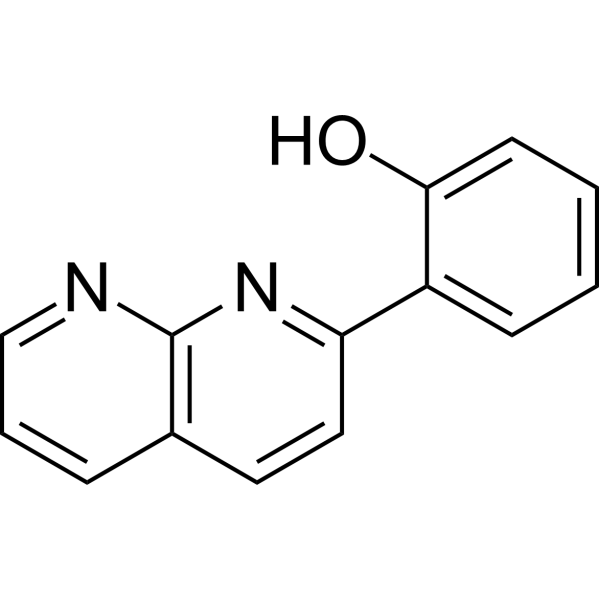
HY-W013523
2-NPSTAT1 Enhancer -
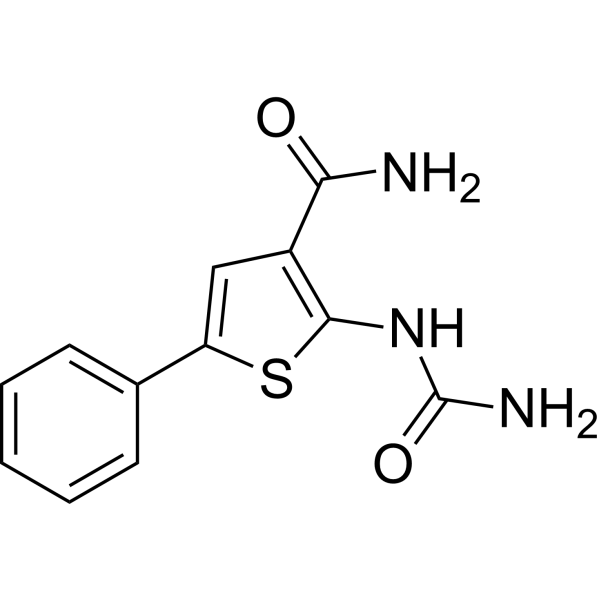
HY-112456
IKK2-IN-4IKK-2 Inhibitor -
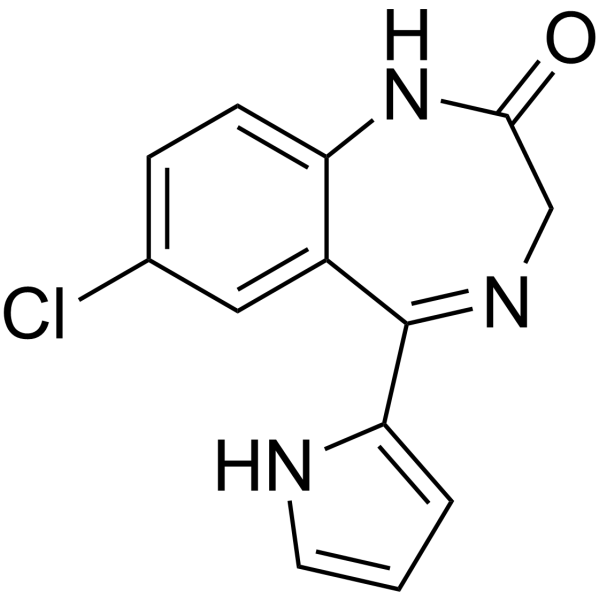
HY-108470
Ro5-3335RUNX1-CBFB Inhibitor -
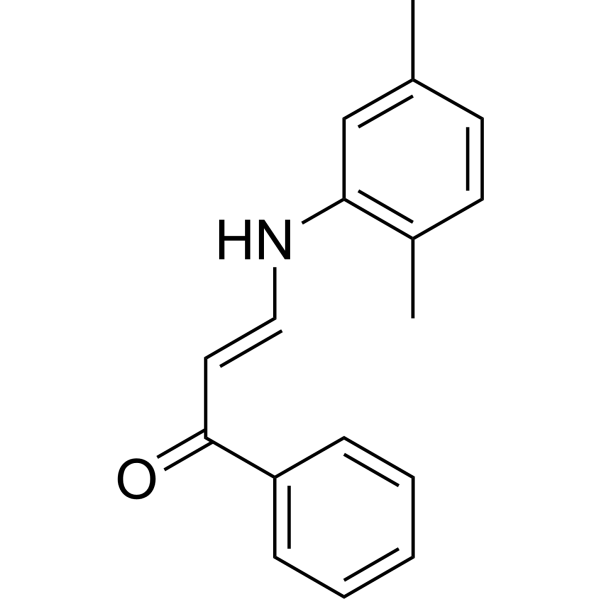
HY-110247
TRAF-STOP inhibitor 6877002CD40-TRAF6 Interaction Inhibitor


Biological Activity
Description
In Vitro
SR12343 (25-150 μM; 30 min) inhibits TNF-α-induced NF-κB activation in HEK293 cells in a dose-dependent manner, with an IC50 of 37.02 μM[2].
SR12343 (50 μM; 30 min) significantly inhibits the expression of COX-2, IL-6 and iNOS in Raw 264.7 macrophages induced by LPS (HY-D1056)[2].
SR12343 (25-50 μM; 1 h) inhibits LPS-induced IL-6 secretion in Raw 264.7 macrophages[2].
SR12343 (25-150 μM; 30 min) dose-dependently disrupts the interaction between endogenous NEMO and IKKβ in Raw 264.7 macrophages, while exerting minimal effect on the binding of NEMO and IKKα[2].
SR12343 (150 μM; 30 min) inhibits the activation of the canonical IKK/NF-κB pathway induced by TNF-α and LPS in Raw 264.7 macrophages, without affecting the JNK or p38MAPK signaling pathways[2].
MedChemExpress (MCE) has not independently confirmed the accuracy of these methods. They are for reference only.
-
Cell Line:Raw 264.7 macrophages
-
Concentration:50 μM
-
Incubation Time:30 min
-
Result:Significantly inhibited LPS-induced expression of cyclooxygenase 2 (COX-2), interleukin-6 (IL-6), and inducible nitric oxide synthase (iNOS).
Did not significantly inhibit expression of IL-1β, TNF-α, or IκBα.
-
Cell Line:Raw 264.7 macrophages
-
Concentration:25 μM, 50 μM
-
Incubation Time:1 h
-
Result:Reduced LPS-induced IL-6 secretion to ~1.2 ng/mL at 25 μM.
Reduced LPS-induced IL-6 secretion to ~1.4 ng/mL at 50 μM, compared to ~2.8 ng/mL in LPS-only controls.
-
Cell Line:Raw 264.7 macrophages
-
Concentration:150 μM
-
Incubation Time:30 min
-
Result:Reduced TNF-α- and LPS-induced phosphorylation of IKKα/β, IκBα, and p65.
Partially reduced IκBα degradation.
Did not affect phosphorylation of JNK or p38MAPK.
Did not affect total levels of JNK, p38MAPK, IKKα, IKKβ, or p65.
In Vivo
SR12343 (30 mg/kg; i.p.; 3 times per week; 4 weeks) improves muscular pathology, reduces inflammation and fibrosis, enhances muscle regeneration, and increases forelimb strength in mdx mice, a model of DMD, with no overt toxicity[2].
MedChemExpress (MCE) has not independently confirmed the accuracy of these methods. They are for reference only.
-
Animal Model:C57BL/6J (female, 8-10 weeks old, 20-30 g, intraperitoneal injection of 10 mg/kg LPS (strain O111:B4) induced model)[2]
-
Dosage:10 mg/kg
-
Administration:i.p.; single dose
-
Result:Significantly inhibited mRNA expression of iNOS, IκBα, COX-2, and IL-6 in lung tissue.
Significantly inhibited only COX-2 mRNA expression in liver tissue.
Reduced LPS-induced phosphorylation of IκBα and COX-2 expression in both lung and liver at the protein level.
Reduced serum IL-6 levels that increased significantly after LPS induction.
Slightly reduced white blood cell and neutrophil counts.
-
Animal Model:C57BL/10ScSn-Dmdmdx/J (sex-matched, 3 weeks old at study start, 7 weeks old at endpoint, spontaneous model)[2]
-
Dosage:30 mg/kg
-
Administration:i.p.; 3 times per week; 4 weeks
-
Result:Significantly reduced the percentage of necrotic and inflammatory area in TA muscle by ~90% relative to vehicle controls.
Reduced muscle fibrosis by ~40% in diaphragm muscle and ~35% in TA muscle.
Reduced CD68+ macrophage infiltration by ~50% in both diaphragm and TA muscle.
Significantly increased mRNA expression of embryonic myosin heavy chain (eMyHC) and Pax7 in TA muscle relative to vehicle.
Reduced the Feret diameter of centrally nucleated and non-centrally nucleated myofibers in TA muscle.
Increased forelimb grip strength normalized to body weight significantly relative to vehicle controls at both 2 weeks and 4 weeks post-treatment start.
Caused no significant weight loss or liver toxicity (assessed by serum AST, ALT, ALP levels).
Reduced NF-κB DNA binding activity in TA muscle 2 hours post single 30 mg/kg dose injection.


Chemical Information
-
CAS No. 2055101-86-3
-
Appearance Solid
-
Molecular Weight 368.66
-
Formula C15H15BrClN3O
-
Color Off-white to light yellow
-
SMILES
O=C(NCCC1=CC=CC(Br)=C1)CNC2=NC=C(Cl)C=C2
-
Shipping
Room temperature in continental US; may vary elsewhere.
-
Storage
Powder -20°C 3 years 4°C 2 years In solvent -80°C 6 months -20°C 1 month


Solvent & Solubility
In Vitro:
DMSO : 100 mg/mL (271.25 mM; Need ultrasonic; Hygroscopic DMSO has a significant impact on the solubility of product, please use newly opened DMSO)
Please refer to the solubility information to select the appropriate solvent. Once prepared, please aliquot and store the solution to prevent product inactivation from repeated freeze-thaw cycles.
Storage method and period of stock solution: -80°C, 6 months; -20°C, 1 month. When stored at -80°C, please use it within 6 months. When stored at -20°C, please use it within 1 month.
Please refer to the solubility information to select the appropriate solvent. Once prepared, please aliquot and store the solution to prevent product inactivation from repeated freeze-thaw cycles.
Storage method and period of stock solution: -80°C, 6 months; -20°C, 1 month. When stored at -80°C, please use it within 6 months. When stored at -20°C, please use it within 1 month.
Concentration (start) × Volume (start) = Concentration (final) × Volume (final)


Purity & Documentation
-
Data Sheet (277 KB)
-
SDS (251 KB)
- English - EN (251 KB)
- Français - FR (251 KB)
- Deutsch - DE (251 KB)
- Norwegian - NO (251 KB)
- Español - ES (251 KB)
- Swedish - SV (251 KB)
- Italian - IT (251 KB)
- Korean - KR (251 KB)
- Portuguese - PT (251 KB)
-
Handling Instructions (2659 KB)
References
[1]. Benhamú B, et al. New Trends in Aging Drug Discovery. Biomedicines. 2022;10(8):2006. Published 2022 Aug 18. [Content Brief]
[2]. Zhao J, et al. Development of novel NEMO-binding domain mimetics for inhibiting IKK/NF-κB activation. PLoS Biol. 2018;16(6):e2004663. Published 2018 Jun 11. [Content Brief]


Complete Stock Solution Preparation Table
Please refer to the solubility information to select the appropriate solvent. Once prepared, please aliquot and store the solution to prevent product inactivation from repeated freeze-thaw cycles.
Storage method and period of stock solution: -80°C, 6 months; -20°C, 1 month. When stored at -80°C, please use it within 6 months. When stored at -20°C, please use it within 1 month.
| Optional Solvent | Concentration Solvent Mass | 1 mg | 5 mg | 10 mg | 25 mg |
|---|---|---|---|---|---|
| DMSO | 1 mM | 2.7125 mL | 13.5626 mL | 27.1253 mL | 67.8132 mL |
| 5 mM | 0.5425 mL | 2.7125 mL | 5.4251 mL | 13.5626 mL | |
| 10 mM | 0.2713 mL | 1.3563 mL | 2.7125 mL | 6.7813 mL | |
| 15 mM | 0.1808 mL | 0.9042 mL | 1.8084 mL | 4.5209 mL | |
| 20 mM | 0.1356 mL | 0.6781 mL | 1.3563 mL | 3.3907 mL | |
| 25 mM | 0.1085 mL | 0.5425 mL | 1.0850 mL | 2.7125 mL | |
| 30 mM | 0.0904 mL | 0.4521 mL | 0.9042 mL | 2.2604 mL | |
| 40 mM | 0.0678 mL | 0.3391 mL | 0.6781 mL | 1.6953 mL | |
| 50 mM | 0.0543 mL | 0.2713 mL | 0.5425 mL | 1.3563 mL | |
| 60 mM | 0.0452 mL | 0.2260 mL | 0.4521 mL | 1.1302 mL | |
| 80 mM | 0.0339 mL | 0.1695 mL | 0.3391 mL | 0.8477 mL | |
| 100 mM | 0.0271 mL | 0.1356 mL | 0.2713 mL | 0.6781 mL |


SR12343 Related Classifications
HY-123936 Related Classifications
 Powered by Bioz