



Trimethylamine N-oxide dihydrate (Standard)
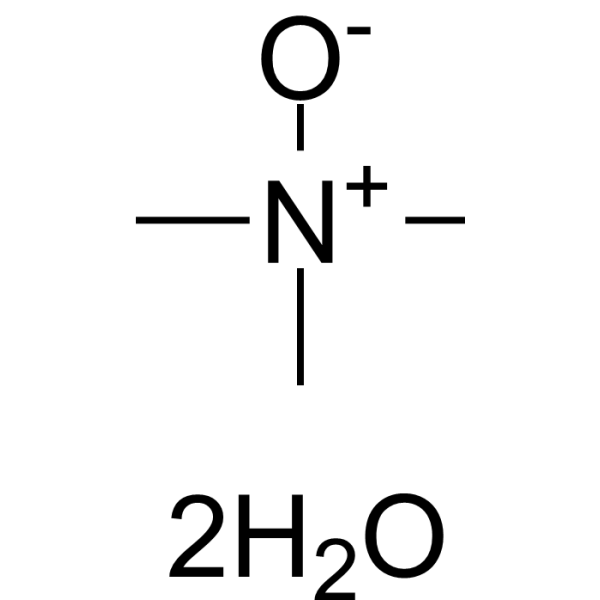
Trimethylamine N-oxide (dihydrate) (Standard) is the analytical standard of Trimethylamine N-oxide (dihydrate). This product is intended for research and analytical applications. Trimethylamine N-oxide dihydrate is a gut microbe-dependent metabolite of dietary choline and other trimethylamine-containing nutrients. Trimethylamine N-oxide dihydrate induces inflammation by activating the ROS/NLRP3 inflammasome. Trimethylamine N-oxide dihydrate also accelerates fibroblast-myofibroblast differentiation and induces cardiac fibrosis by activating the TGF-β/smad2 signaling pathway.
For research use only. We do not sell to patients.
- Purity : 95%
- CAS No.: 62637-93-8
- Formula: C3H13NO3
- Molecular Weight:111.14
-
Storage:
Please store the product under the recommended conditions in the Certificate of Analysis.


To place orders, for customer services and technical support, please contact: MedChemExpress USA
Tel: 609-228-6898 E-mail: [email protected] [email protected]


-
 Product Information
-
Chemical Information
- Purity & Documentation
-
 Help & FAQs





Product Information
Information
Application
The compound is the grade of analytical standard, which is the reference standard supplied assay. It is commonly used in qualitative, quantitative and methodological research experiments in HPLC, GC and MS.


Chemical Information
-
CAS No. 62637-93-8
-
Molecular Weight 111.14
-
Formula C3H13NO3
-
SMILES
C[N+](C)([O-])C.[2H2O]
-
Structure Classification
-
Initial Source
-
Shipping
Room temperature in continental US; may vary elsewhere.
-
Storage
Please store the product under the recommended conditions in the Certificate of Analysis.


Purity & Documentation
References
[1]. Videja M, et al. Data on cardiac and vascular functionality in ex vivo and in vivo models following acute administration of trimethylamine N-oxide. Data Brief. 2023 Jan 11;46:108890. [Content Brief]
[2]. Li Z, et al. Gut microbe-derived metabolite trimethylamine N-oxide induces cardiac hypertrophy and fibrosis. Lab Invest. 2019 Mar;99(3):346-357. [Content Brief]
[3]. Wei Shuai, et al. High-choline Diet Exacerbates Cardiac Dysfunction, Fibrosis, and Inflammation in a Mouse Model of Heart Failure With Preserved Ejection Fraction. J Card Fail. 2020 May 14;S1071-9164(19)31802-0. [Content Brief]
[4]. Wenlong Yang, et al. Gut Microbe-Derived Metabolite Trimethylamine N-oxide Accelerates Fibroblast-Myofibroblast Differentiation and Induces Cardiac Fibrosis. J Mol Cell Cardiol. 2019 Sep;134:119-130. [Content Brief]
[5]. Manuel T Velasquez, et al. Trimethylamine N-Oxide: The Good, the Bad and the Unknown. Toxins (Basel). 2016 Nov 8;8(11):326. [Content Brief]

Calculators
Concentration (start) × Volume (start) = Concentration (final) × Volume (final)


Trimethylamine N-oxide dihydrate (Standard) Related Classifications
HY-108915R Related Classifications
 Powered by Bioz
Keywords