



Cefdinir
Based on 4 publication(s) in Google Scholar
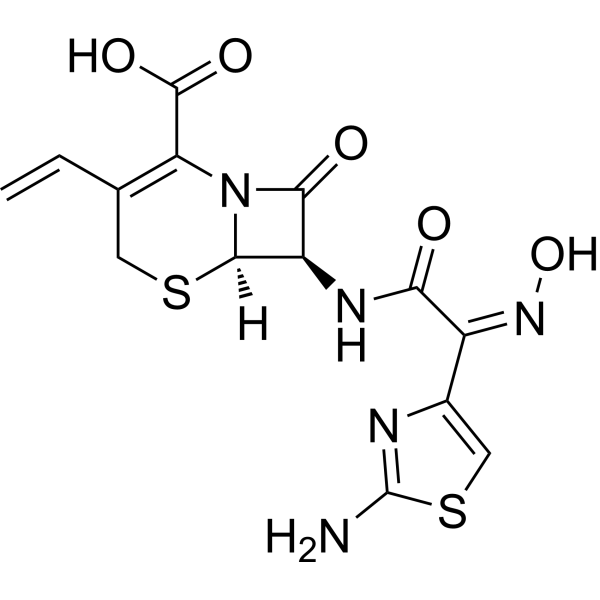
Cefdinir (FK-482) is a semi-synthetic, broad-spectrum antibiotic in the third generation of the cephalosporin class, which is proved to be effective for infections caused by several Gram-negative and Gram-positive bacteria. Cefdinir can be used for the research of common bacterial infections of the ear, sinus, throat, and skin.
For research use only. We do not sell to patients.
- Purity : 98.67%
- CAS No.: 91832-40-5
- Formula: C14H13N5O5S2
- Molecular Weight:395.41
-
Storage:Powder -20°C, 3 years , 4°C, 2 years ; In solvent -80°C, 2 years , -20°C, 1 year

To place orders, for customer services and technical support, please contact: MedChemExpress USA
Tel: 609-228-6898 E-mail: [email protected] [email protected]


-
 Biological Activity
-
Chemical Information
-
Solvent & Solubility
- Protocols
- Purity & Documentation
- References
-
 Help & FAQs


-
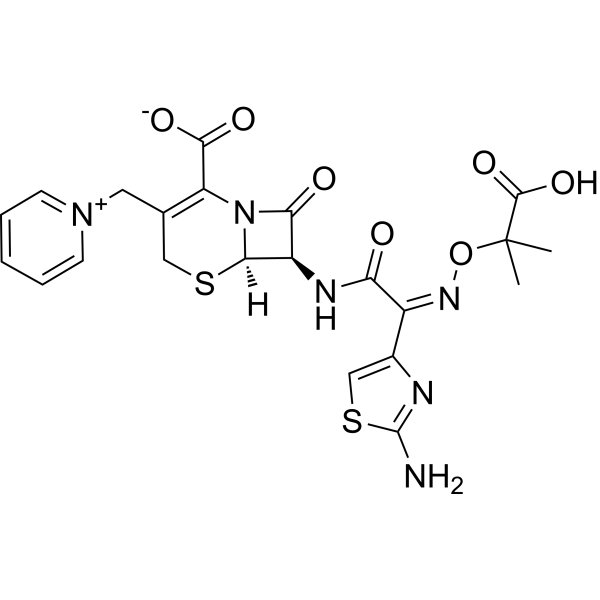
HY-B0593
CeftazidimeAntibiotic -
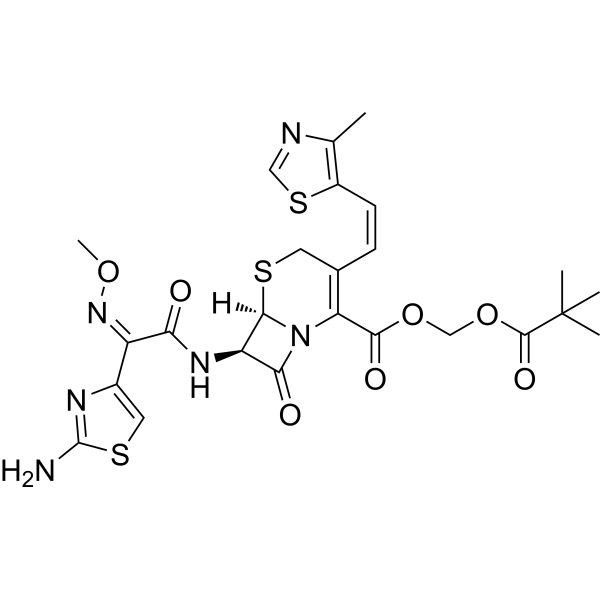
HY-17452A
Cefditoren PivoxilAntibacterial Agent -
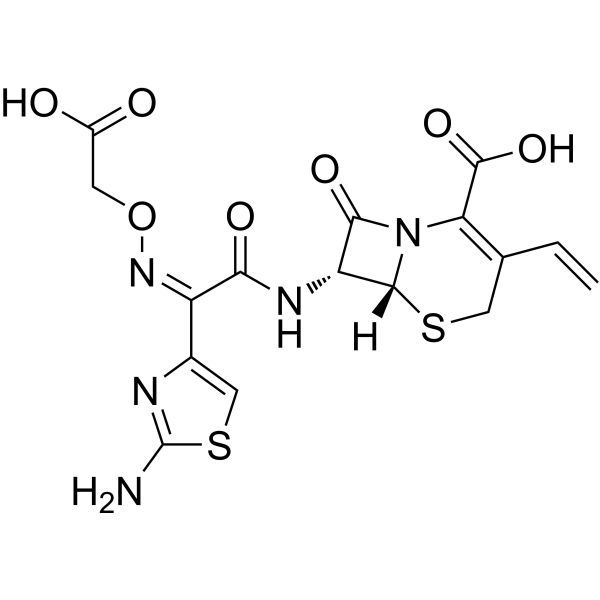
HY-B1381
CefiximeBacterial Inhibitor -
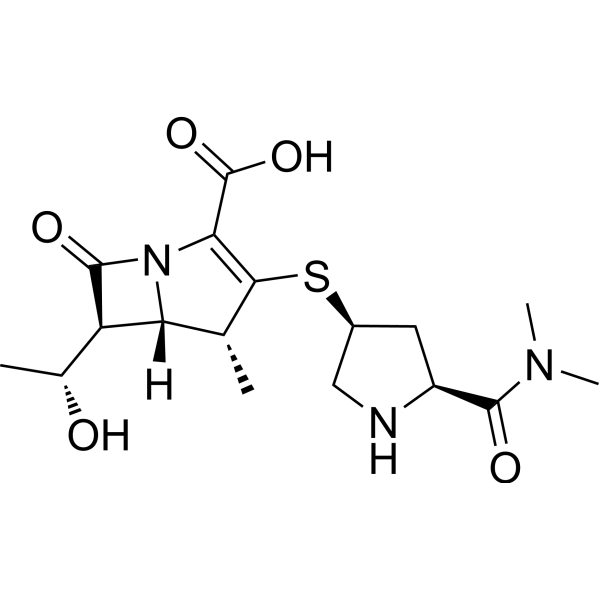
HY-13678
MeropenemAntimicrobial Agent -
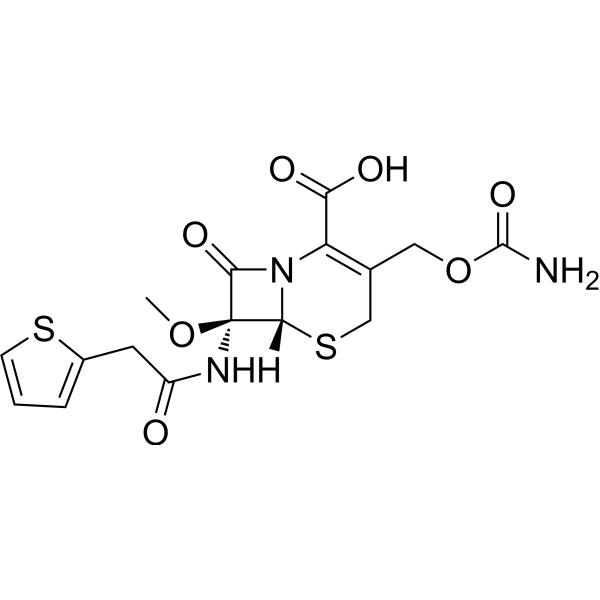
HY-B1825
CefoxitinAntibiotic -
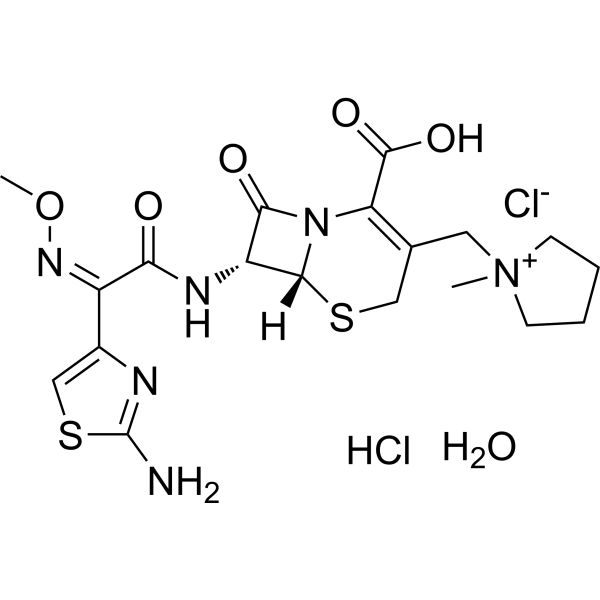
HY-B0616
Cefepime Dihydrochloride MonohydratehPON1 Inhibitor -
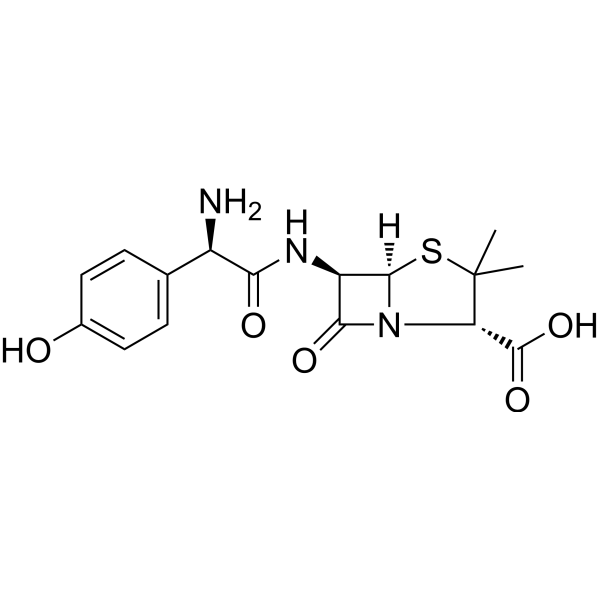
HY-B0467A
AmoxicillinAntibiotic -

HY-B0136R
Cefdinir (Standard)Bacterial Inhibitor -
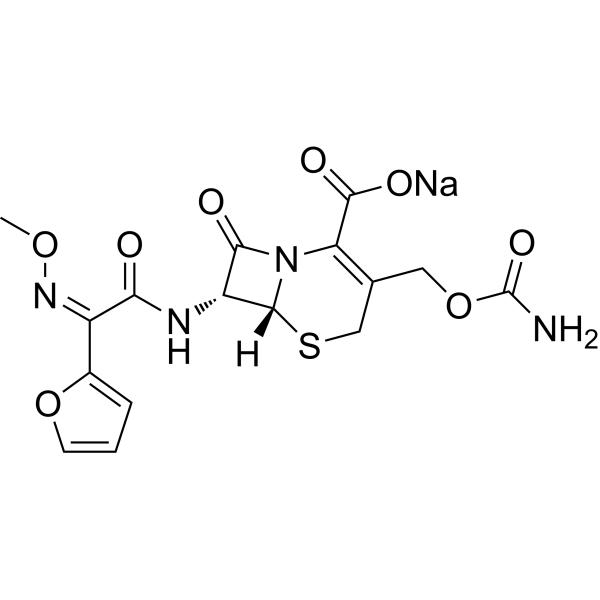
HY-B1256
Cefuroxime sodiumAntibiotic -
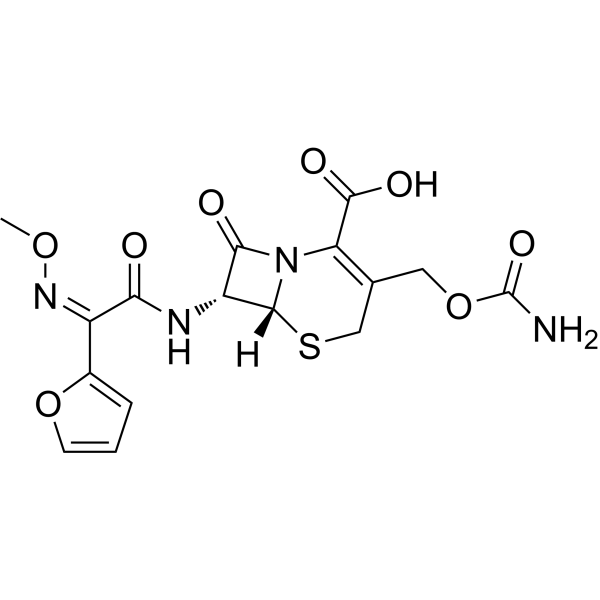
HY-B1256A
CefuroximeAntibiotic -
HY-B0198
CefaclorAntibiotic -
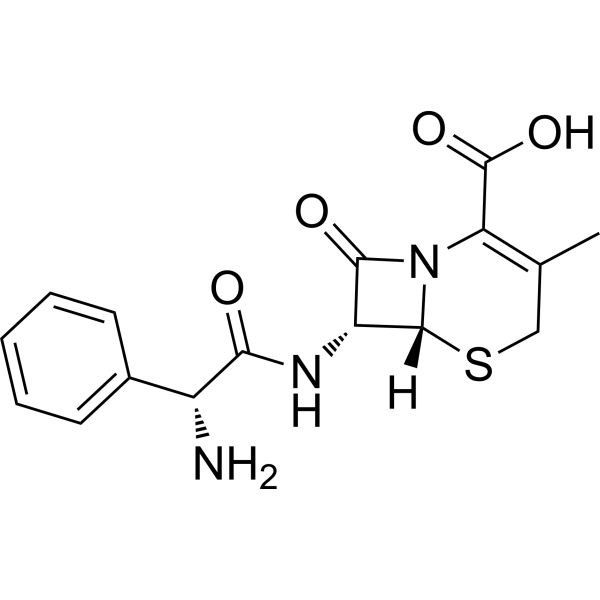
HY-B0200
CephalexinCephalosporin Antibiotic
Publications Citing Use of MedChemExpress (MCE) Cefdinir
MoreAll Antibiotic Isoforms
More

Biological Activity
Description
IC50 & Target
|
β-lactam |
In Vitro
Cefdinir (FK-482) is a third generation oral cephalosporin antibiotic. Cefdinir (Omnicef) is a semi-synthetic, broad-spectrum antibiotic in the third generation of the cephalosporin class, which is proved to be effective for common bacterial infections of the ear, sinus, throat, and skin. It can be used to treat infections caused by several Gram-negative and Gram-positive bacteria. It is available in US as Omnicef by Abbott Laboratories and in India as Cednir by Abbott, Kefnir by Glenmark and Cefdiel by Ranbaxy. As of 2008, cefdinir was the highest-selling cephalosporin antibiotic in the United States, with more than US$585 million in retail sales of its generic versions alone[1]. Cefdinir (FK-482), a new oral 2-amino-5-thiazolyl cephalosporin, inhibited the luminol-amplified chemiluminescence (LACL) response of human neutrophils stimulated by PMA but not opsonized zymosan, in a concentration-dependent but not time-dependent manner. The LACL response to opsonized zymosan in cytochalasin B-treated neutrophils was, however, inhibited by cefdinir. Furthermore, cefdinir inhibited LACL generation in cell-free systems consisting of H2O2, NaI, and either horseradish peroxidase or a myeloperoxidase-containing neutrophil extract. Orthodianisidine oxidation in these two acellular systems was inhibited by cefdinir[2].
MedChemExpress (MCE) has not independently confirmed the accuracy of these methods. They are for reference only. Further protocols information, click here.
Clinical Trial
| NCT Number | Sponsor | Condition | Start Date |
Phase

|
|---|---|---|---|---|
| NCT01329991 | Plexxikon| | 2011-05 | PHASE1 |


Chemical Information
-
CAS No. 91832-40-5
-
Appearance Solid
-
Molecular Weight 395.41
-
Formula C14H13N5O5S2
-
Color Light yellow to yellow
-
SMILES
O=C(C(N12)=C(C=C)CS[C@]2([H])[C@H](NC(/C(C3=CSC(N)=N3)=N\O)=O)C1=O)O
-
Synonyms
FK-482; CI-983
-
Shipping
Room temperature in continental US; may vary elsewhere.
-
Storage
Powder -20°C 3 years 4°C 2 years In solvent -80°C 2 years -20°C 1 year


Publications (4)
-
Journal Impact Factor
-
Most Recent
-
Nat Microbiol
Characterization of antibiotic resistomes by reprogrammed bacteriophage-enabled functional metagenomics in clinical strains. [Abstract]2023 Mar;8(3):410-423. PMID: 36759752 -
J Exp Med
2026 Mar 2;223(3):e20241287. PMID: 41400657 -
-


Solvent & Solubility
In Vitro:
DMSO : 33.33 mg/mL (84.29 mM; Need ultrasonic; Hygroscopic DMSO has a significant impact on the solubility of product, please use newly opened DMSO)
Please refer to the solubility information to select the appropriate solvent. Once prepared, please aliquot and store the solution to prevent product inactivation from repeated freeze-thaw cycles.
Storage method and period of stock solution: -80°C, 2 years; -20°C, 1 year. When stored at -80°C, please use it within 2 years. When stored at -20°C, please use it within 1 year.
Please refer to the solubility information to select the appropriate solvent. Once prepared, please aliquot and store the solution to prevent product inactivation from repeated freeze-thaw cycles.
Storage method and period of stock solution: -80°C, 2 years; -20°C, 1 year. When stored at -80°C, please use it within 2 years. When stored at -20°C, please use it within 1 year.
Concentration (start) × Volume (start) = Concentration (final) × Volume (final)
In Vivo:
Select the appropriate dissolution method based on your experimental animal and administration route.
- For the following dissolution methods, please ensure to first prepare a clear stock solution using an In Vitro approach and then sequentially add co-solvents:
- To ensure reliable experimental results, the clarified stock solution can be appropriately stored based on storage conditions. As for the working solution for In Vivo experiments, it is recommended to prepare freshly and use it on the same day.
- The percentages shown for the solvents indicate their volumetric ratio in the final prepared solution. If precipitation or phase separation occurs during preparation, heat and/or sonication can be used to aid dissolution.
Add each solvent one by one: 10% DMSO 40% PEG300 5% Tween-80 45% Saline
Solubility: ≥ 2.5 mg/mL (6.32 mM); Clear solution
This protocol yields a clear solution of ≥ 2.5 mg/mL (saturation unknown).
Taking 1 mL working solution as an example, add 100 μL DMSO stock solution (25.0 mg/mL) to 400 μL PEG300, and mix evenly; then add 50 μL Tween-80 and mix evenly; then add 450 μL Saline to adjust the volume to 1 mL.
Preparation of Saline: Dissolve 0.9 g sodium chloride in ddH₂O and dilute to 100 mL to obtain a clear Saline solution.
Add each solvent one by one: 10% DMSO 90% (20% SBE-β-CD in Saline)
Solubility: ≥ 2.5 mg/mL (6.32 mM); Clear solution
This protocol yields a clear solution of ≥ 2.5 mg/mL (saturation unknown).
Taking 1 mL working solution as an example, add 100 μL DMSO stock solution (25.0 mg/mL) to 900 μL 20% SBE-β-CD in Saline, and mix evenly.
Preparation of 20% SBE-β-CD in Saline (4°C, storage for one week): 2 g SBE-β-CD powder is dissolved in 10 mL Saline, completely dissolve until clear.
In Vivo Dissolution Calculator
Please enter the basic information of animal experiments:
-
-
-
-
Recommended: Prepare an additional quantity of animals to account for potential losses during experiments.
Please enter your animal formula composition:
-
%DMSO +
Recommended: Keep the proportion of DMSO in working solution below 2% if your animal is weak.
-
%+
-
+%Tween-80 + +
-
%Saline +
The co-solvents required include: DMSO, . All of co-solvents are available by MedChemExpress (MCE). , Tween 80. All of co-solvents are available by MedChemExpress (MCE).
Working solution concentration: 0.22 mg/mL
Method for preparing stock solution: mg drug dissolved in μL DMSO. Stock solution concentration: mg/mL.
1. Take μL DMSO stock solution;
2. Add μL .
μL , mix evenly;
3. Then add μL Tween 80, mix evenly;
4. Then add μL
Please ensure that the stock solution in the first step is dissolved to a clear state, and add co-solvents in sequence. You can use ultrasonic heating (ultrasonic cleaner, recommended frequency 20-40 kHz), vortexing, etc. to assist dissolution.

Protocols
-
Gram Staining of Tissue Sections
Gram staining of tissue sections is a histochemical technique used to differentiate Gram-positive and Gram-negative bacteria within histological specimens based on differences in bacterial cell wall structure and dye retention, adapted from classical bacteriological Gram staining into tissue-compatible “histological Gram stain” variants. In tissue applications, modifications of the Brown-Hopps and Brown-Brenn methods are commonly used to improve differentiation of microorganisms embedded within host connective tissue and to reduce overstaining or loss of Gram-negative signal, which are known limitations of earlier approaches. The principle relies on crystal violet-iodine complex retention in Gram-positive organisms and subsequent decolorization and counterstaining steps that allow contrast visualization of Gram-negative organisms against tissue background.


Purity & Documentation
-
Data Sheet (280 KB)
-
SDS (419 KB)
- English - EN (419 KB)
- Français - FR (419 KB)
- Deutsch - DE (419 KB)
- Norwegian - NO (419 KB)
- Español - ES (419 KB)
- Swedish - SV (419 KB)
- Italian - IT (419 KB)
- Korean - KR (419 KB)
- Portuguese - PT (419 KB)
-
Handling Instructions (2659 KB)
References
[1]. Soejima R. Cefdinir. Jpn J Antibiot. 1992 Oct;45(10):1239-52. [Content Brief]
[2]. Labro MT, et al. Cefdinir (CI-983), a new oral amino-2-thiazolyl cephalosporin, inhibits human neutrophil myeloperoxidase in the extracellular medium but not the phagolysosome. J Immunol. 1994 Mar 1;152(5):2447-55. [Content Brief]


Complete Stock Solution Preparation Table
Please refer to the solubility information to select the appropriate solvent. Once prepared, please aliquot and store the solution to prevent product inactivation from repeated freeze-thaw cycles.
Storage method and period of stock solution: -80°C, 2 years; -20°C, 1 year. When stored at -80°C, please use it within 2 years. When stored at -20°C, please use it within 1 year.
| Optional Solvent | Concentration Solvent Mass | 1 mg | 5 mg | 10 mg | 25 mg |
|---|---|---|---|---|---|
| DMSO | 1 mM | 2.5290 mL | 12.6451 mL | 25.2902 mL | 63.2255 mL |
| 5 mM | 0.5058 mL | 2.5290 mL | 5.0580 mL | 12.6451 mL | |
| 10 mM | 0.2529 mL | 1.2645 mL | 2.5290 mL | 6.3226 mL | |
| 15 mM | 0.1686 mL | 0.8430 mL | 1.6860 mL | 4.2150 mL | |
| 20 mM | 0.1265 mL | 0.6323 mL | 1.2645 mL | 3.1613 mL | |
| 25 mM | 0.1012 mL | 0.5058 mL | 1.0116 mL | 2.5290 mL | |
| 30 mM | 0.0843 mL | 0.4215 mL | 0.8430 mL | 2.1075 mL | |
| 40 mM | 0.0632 mL | 0.3161 mL | 0.6323 mL | 1.5806 mL | |
| 50 mM | 0.0506 mL | 0.2529 mL | 0.5058 mL | 1.2645 mL | |
| 60 mM | 0.0422 mL | 0.2108 mL | 0.4215 mL | 1.0538 mL | |
| 80 mM | 0.0316 mL | 0.1581 mL | 0.3161 mL | 0.7903 mL |


Cefdinir Related Classifications
HY-B0136 Related Classifications
 Powered by Bioz