



Cefdinir (Standard)

Based on 1 Customer Validation
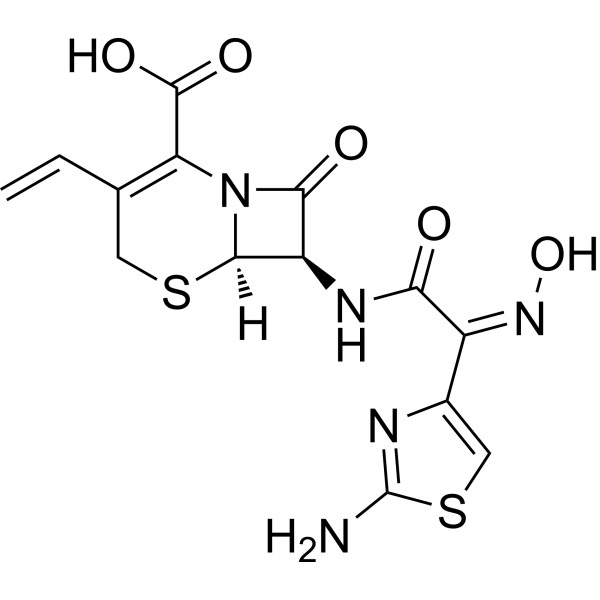
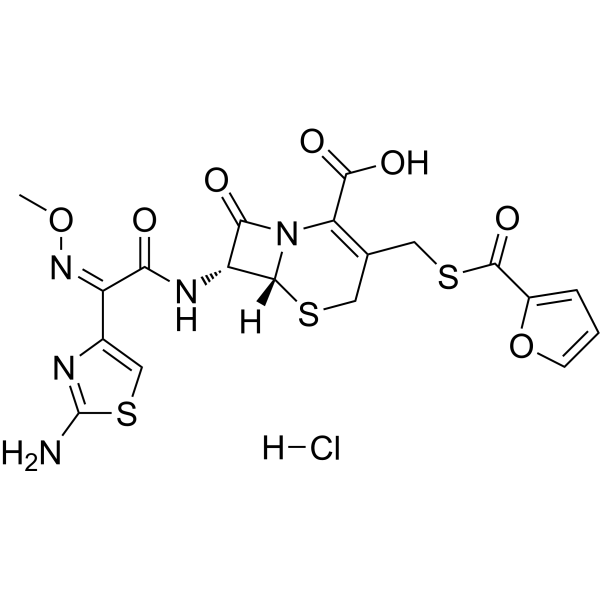
Cefdinir (Standard) is the analytical standard of Cefdinir. This product is intended for research and analytical applications. Cefdinir (FK-482) is a semi-synthetic, broad-spectrum antibiotic in the third generation of the cephalosporin class, which is proved to be effective for infections caused by several Gram-negative and Gram-positive bacteria. Cefdinir can be used for the research of common bacterial infections of the ear, sinus, throat, and skin.
For research use only. We do not sell to patients.
- Purity : 99.10%
- CAS No.: 91832-40-5
- Formula: C14H13N5O5S2
- Molecular Weight:395.41
-
Storage:
Please store the product under the recommended conditions in the Certificate of Analysis.


To place orders, for customer services and technical support, please contact: MedChemExpress USA
Tel: 609-228-6898 E-mail: [email protected] [email protected]


-
 Product Information
-
Chemical Information
- Purity & Documentation
-
 Help & FAQs


-
HY-B0136
CefdinirBacterial Inhibitor -
HY-17452A
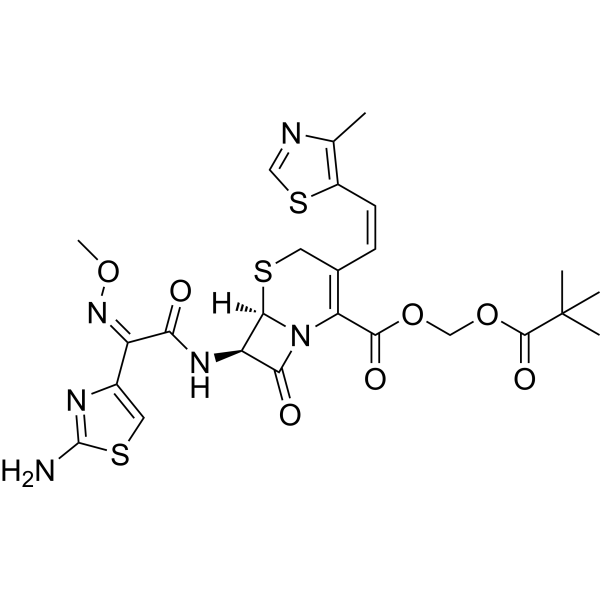
Cefditoren PivoxilAntibacterial Agent -
HY-B1256
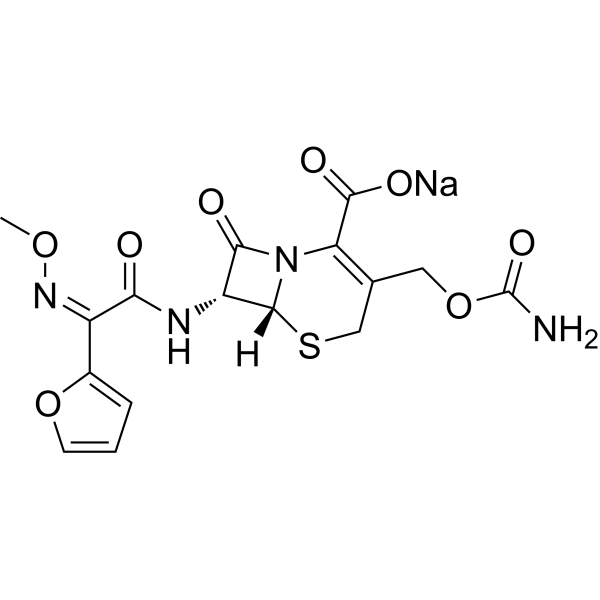
Cefuroxime sodiumAntibiotic -
HY-B1117
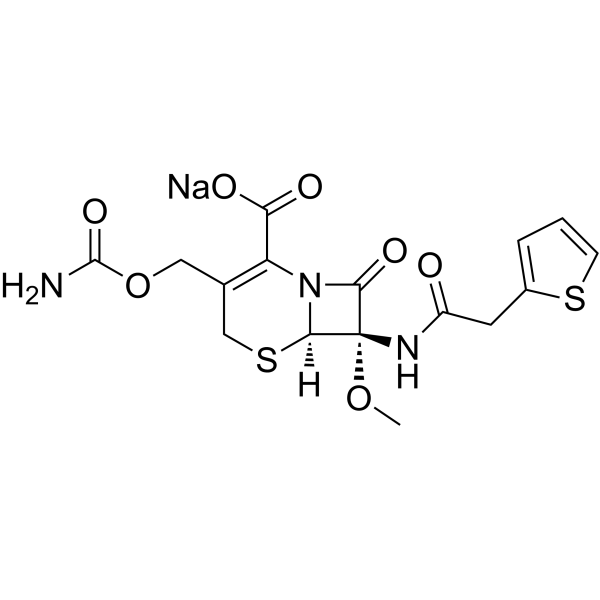
Cefoxitin sodiumAntibiotic -

HY-17452AR
Cefditoren Pivoxil (Standard)Antibacterial Agent -
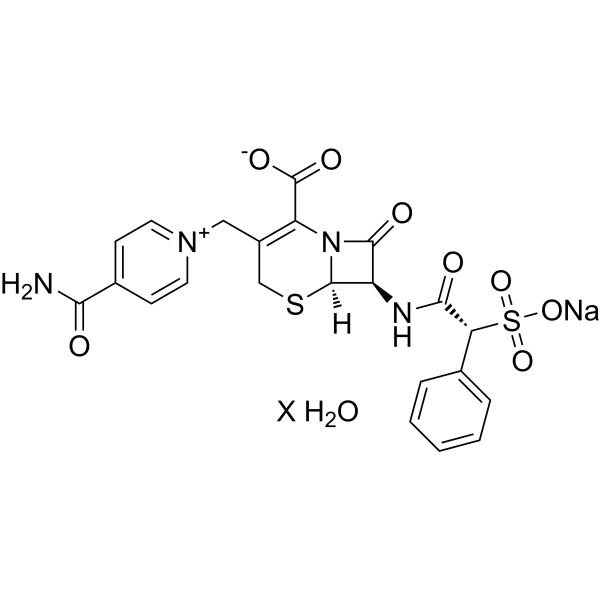
HY-13588B
Cefsulodin sodium hydratemPTPB Inhibitor -
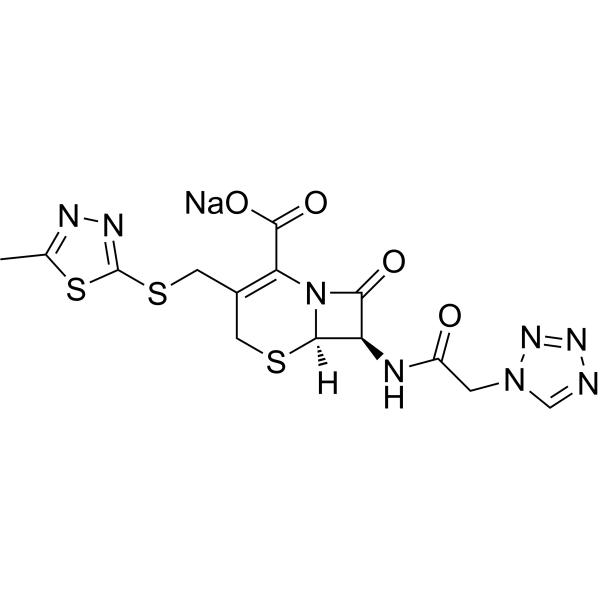
HY-B1078
Cefazolin sodiumCephalosporin Antibiotic -
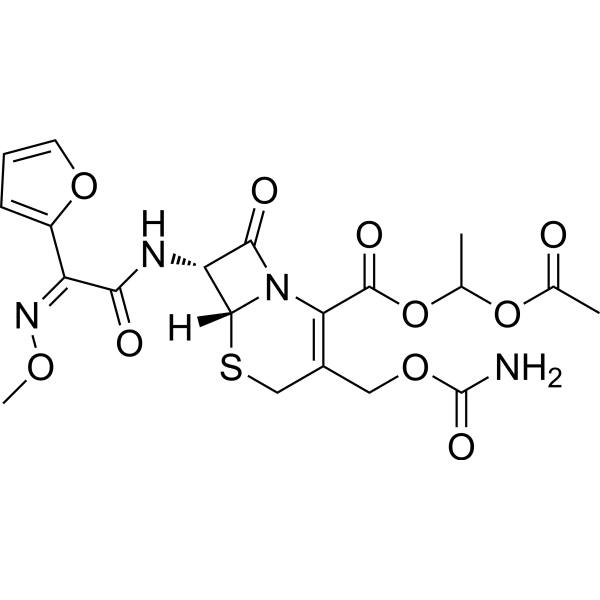
HY-B1325
Cefuroxime axetilBacterial Inhibitor -

HY-B1117R
Cefoxitin sodium (Standard)Antibiotic -
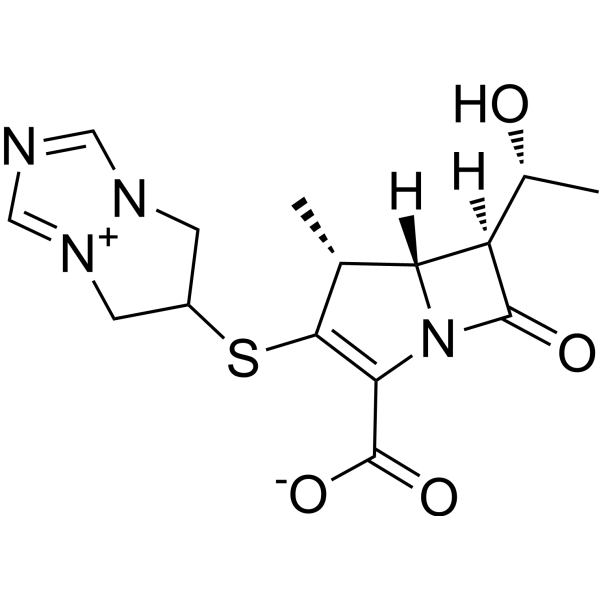
HY-13573
BiapenemAntibiotic -
HY-B0026
Ceftiofur hydrochlorideBacterial Inhibitor -

HY-B1256R
Cefuroxime sodium (Standard)Antibiotic


Product Information
Information
Application
The compound is the grade of analytical standard, which is the reference standard supplied assay. It is commonly used in qualitative, quantitative and methodological research experiments in HPLC, GC and MS.


Chemical Information
-
CAS No. 91832-40-5
-
Appearance Solid
-
Molecular Weight 395.41
-
Formula C14H13N5O5S2
-
Color Light yellow to yellow
-
SMILES
O=C(C(N12)=C(C=C)CS[C@]2([H])[C@H](NC(/C(C3=CSC(N)=N3)=N\O)=O)C1=O)O
-
Synonyms
FK-482 (Standard); CI-983 (Standard)
-
Shipping
Room temperature in continental US; may vary elsewhere.
-
Storage
Please store the product under the recommended conditions in the Certificate of Analysis.


Purity & Documentation
-
SDS (419 KB)
- English - EN (419 KB)
- Français - FR (419 KB)
- Deutsch - DE (419 KB)
- Norwegian - NO (419 KB)
- Español - ES (419 KB)
- Swedish - SV (419 KB)
- Italian - IT (419 KB)
- Korean - KR (419 KB)
- Portuguese - PT (419 KB)
-
Handling Instructions (2659 KB)
References
[1]. Soejima R. Cefdinir. Jpn J Antibiot. 1992 Oct;45(10):1239-52. [Content Brief]
[2]. Labro MT, et al. Cefdinir (CI-983), a new oral amino-2-thiazolyl cephalosporin, inhibits human neutrophil myeloperoxidase in the extracellular medium but not the phagolysosome. J Immunol. 1994 Mar 1;152(5):2447-55. [Content Brief]

Calculators
Concentration (start) × Volume (start) = Concentration (final) × Volume (final)


Cefdinir (Standard) Related Classifications
HY-B0136R Related Classifications
 Powered by Bioz