



Cholinesterase (ChE)
Cholinesterase (ChE) is a family of enzymes present in the central nervous system, particularly in nervous tissue, muscle and red cells, which catalyze the hydrolysis of the neurotransmitter acetylcholine into choline and acetic acid, a reaction necessary to allow a cholinergic neuron to return to its resting state after activation. It is one of many important enzymes needed for the proper functioning of the nervous systems of humans.
There are two types: acetylcholinesterase (AChE, acetylcholine hydrolase) and butyrylcholinesterase (BChE, acylcholine acylhydrolase), also known as nonspecific cholinesterase or pseudocholinesterase. AChE is primarily found in the blood on red blood cell membranes, in neuromuscular junctions, and in neural synapses, while BChE is produced in the liver and found primarily in plasma. The difference between the two types of cholinesterase is their relative preferences for substrates: AChE hydrolyzes acetylcholine faster while BChE hydrolyzes butyrylcholine faster.
Cholinesterase (ChE) Isoform Specific Products
All Product Categories
-
Cholinesterase (ChE) Inhibitors
(910)
View all products
-
Cholinesterase (ChE) Agonists
(5)
View all products
-
Cholinesterase (ChE) Antagonists
(10)
View all products
-
Cholinesterase (ChE) Activators
(32)
View all products
-
Cholinesterase (ChE) Modulators
(10)
View all products
-
Cholinesterase (ChE) Chemical
(1)
View all products
-
Cholinesterase (ChE) Inducer
(1)
View all products
-
Cholinesterase (ChE) Controls
(6)
View all products
-
Cholinesterase (ChE) Substrates
(2)
View all products
-
Cholinesterase (ChE) Related Products (1058)
Related Products (1058)

-
Antibodies (2)
-
Cholinesterase (ChE) Isoform Comparison
-
AChE/BChE-IN-16
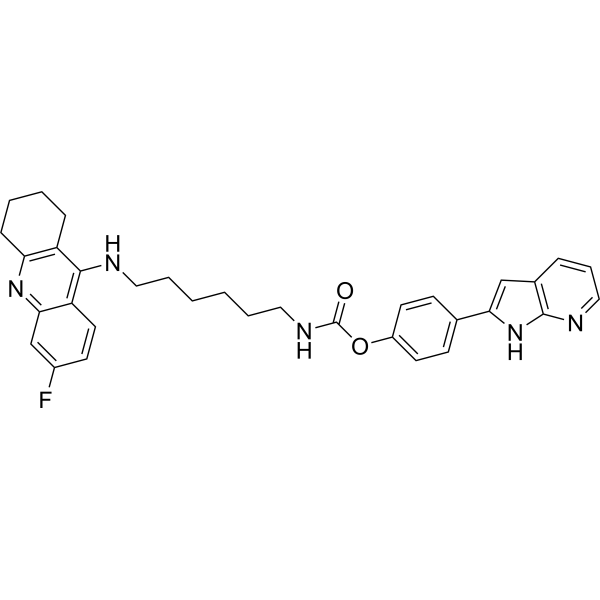 0 ImagesCat. No.: HY-157437CAS No.: 3038810-09-9AChE/BChE-IN-16 (compound C7) is a potent cholinesterase (ChE) inhibitor with IC50s of 30 nM and 48 nM for human acetylcholinesterase (hAChE) and human butyrylcholinesterase (hBChE), respectively. AChE/BChE-IN-16 exhibits a remarkable capacity to safeguard PC12 cells against H2O2-induced apoptosis and effectively suppresses the production of reactive oxygen species (ROS).
-
Anti-Candida auris β-1, 3 glucans Antibody (2G8)
 0 ImagesCat. No.: HY-P992076Anti-Candida auris β-1,3-glucans Antibody (2G8) is an antibody targeting Candida auris β-1,3-glucans, and also acts as an inhibitor of AChE and TGF-β receptor 2. Anti-Candida auris β-1,3-glucans Antibody (2G8) also targets fungal cell wall components, effectively inhibits fungal growth and interferes with capsule formation, thereby significantly reducing the fungal load in mouse tissues. Anti-Candida auris β-1,3-glucans Antibody (2G8) not only blocks TGF-β receptor binding to inhibit the Smad signaling pathway, reduces fibroblast activation and collagen deposition, but also induces epithelial differentiation of tumor cells and reduces pancreatic tumor metastasis. Anti-Candida auris β-1,3-glucans Antibody (2G8) specifically binds to the conserved N-linked glycoepitope on AChE to inhibit its activity without interfering with BChE, and can be used in studies of cryptococcosis and related tumor mechanisms.The isotype control is Human IgG1 kappa, Isotype Control (HY-P99001).

-
BChE/MAO-B-IN-6
 0 ImagesCat. No.: HY-183798BChE/MAO-B-IN-6 is a dual inhibitor with inhibitory activity against both butyrylcholinesterase (BChE) and monoamine oxidase B (MAO B), with an IC50 of 557 nM against BChE and an IC50 of 142 nM against MAO B. BChE/MAO-B-IN-6 reduces IL-6 release from stimulated microglia and antagonizes 6-hydroxydopamine (HY-B1081) toxicity in neuroblastoma cells. BChE/MAO-B-IN-6 can be used in the research of neurodegenerative diseases.
-
hAChE/Aβ1-42-IN-1
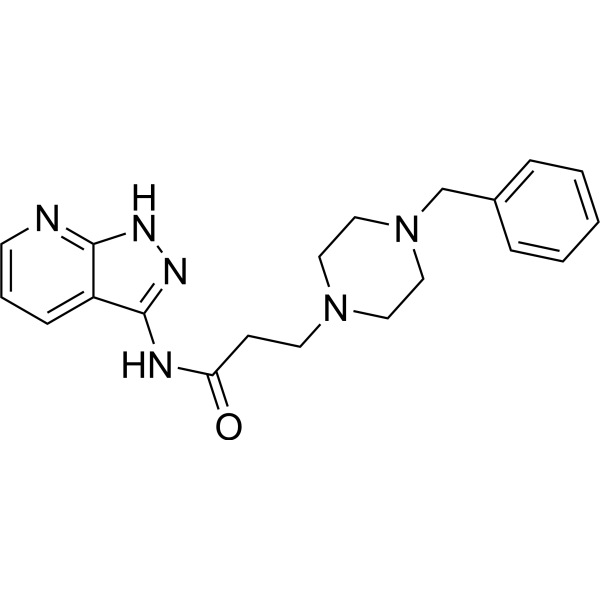 0 ImagesCat. No.: HY-144389CAS No.: 2761149-17-9hAChE/Aβ1-42-IN-1 (Compound 16) is a potent inhibitor of hAChE and Aβ1-42 aggregation. hAChE/Aβ1-42-IN-1 shows acceptable relative safety upon hepG2 cell line and excellent BBB penetration with wide safety margin. hAChE/Aβ1-42-IN-1 has the potential for the research of Alzheimer disease (AD).
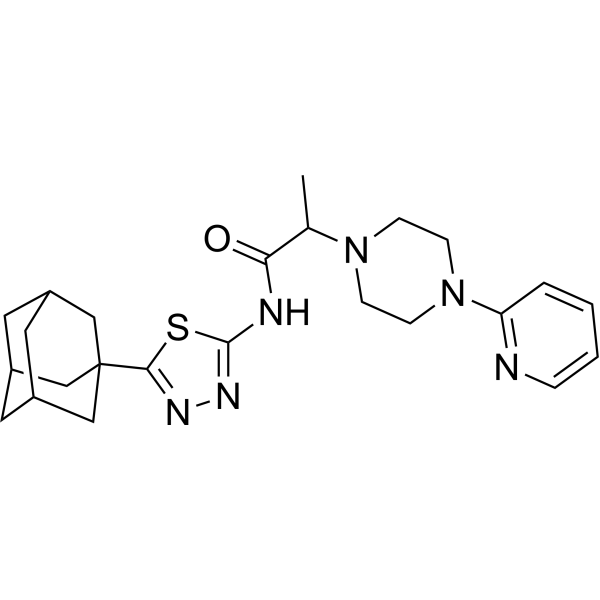
-
AChE/hCA I-IN-1
 0 ImagesCat. No.: HY-170560CAS No.: 155140-19-5AChE/hCA I-IN-1 (Compound L3) is the inhibitor for acetylcholinesterase (AChE) and carbonic anhydrase (CA), that inhibits AChE, hCA I and hCA II with IC50 of 302, 265 and 283 nM, respectively.
-
BChE-IN-19
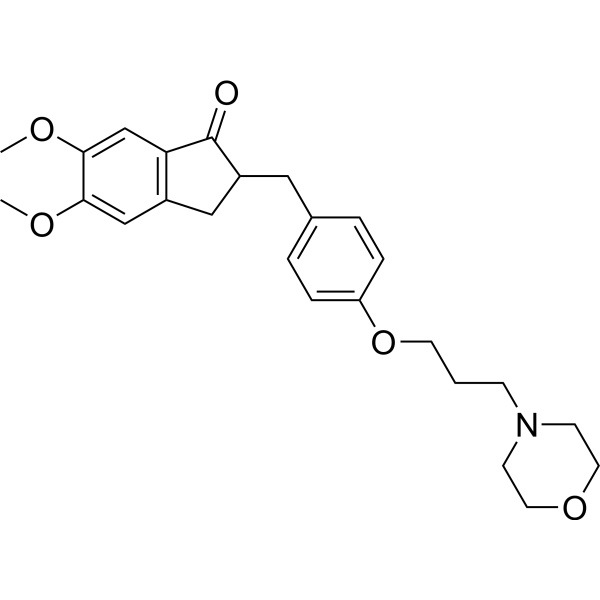 0 ImagesCat. No.: HY-156031BChE-IN-19 (Compound 7b) is a para-substituted derivative of indone (7b) with inhibitory activity of butyryl cholinesterase (BChE) (IC50=0.04 μM). BChE-IN-19 improves cholinergic scheduling in the nervous system. BChE-IN-19 can be used against Alzheimer's disease.
-
Donepezil Hydrochloride (Standard)
 0 ImagesSynonyms: E2020 (Standard)Donepezil (Hydrochloride) (Standard) is the analytical standard of Donepezil (Hydrochloride). This product is intended for research and analytical applications. Donepezil Hydrochloride (E2020) is a reversible, selective AChE inhibitor with an IC50 of 6.7 nM for AChE activity. Donepezil shows high selectivity for AChE over BuChE. Donepezil exhibits neuroprotective effect on Aβ42 neurotoxicity.
-
Isonaringin
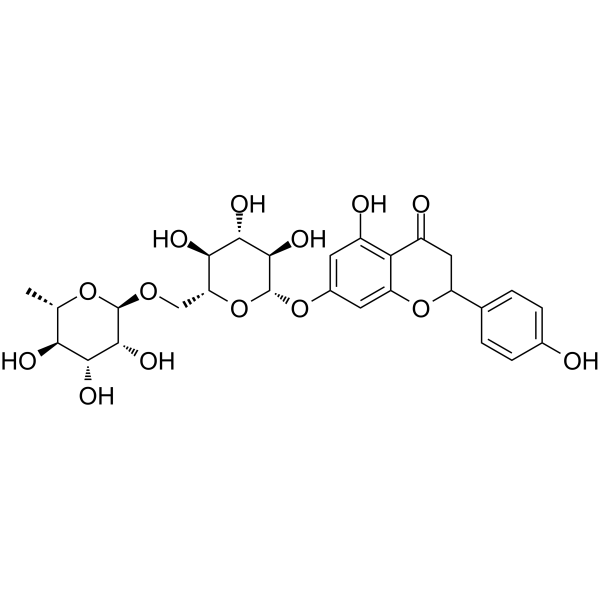 0 ImagesCat. No.: HY-N0804ACAS No.: 108815-81-2Isonaringin shows anti-Alzheimer’s activity by inhibiting AChE.
-
sEH inhibitor-5
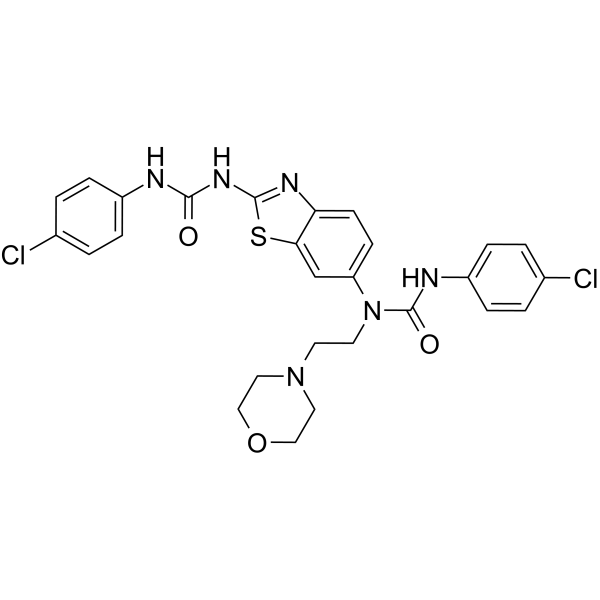 0 ImagesCat. No.: HY-147733CAS No.: 2752467-28-8sEH inhibitor-5 (compound D016) is a potent sEH (soluble epoxide hydrolase) inhibitor with an IC50 value of 0.1 nM.
-
MAO-B-IN-7
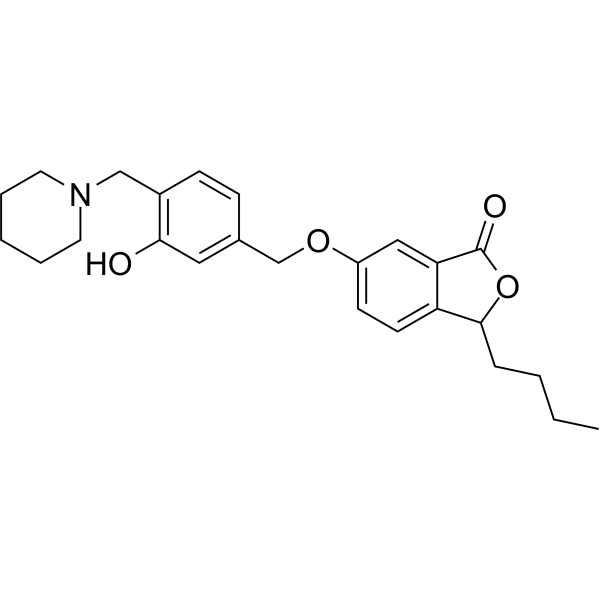 0 ImagesCat. No.: HY-146762CAS No.: 2851012-65-0
-
Isonaringin (Standard)
 0 ImagesCat. No.: HY-N0804ARCAS No.: 108815-81-2Isonaringin (Standard) is the analytical standard of Isonaringin. This product is intended for research and analytical applications. Isonaringin shows anti-Alzheimer’s activity by inhibiting AChE.
-
Zifrosilone
 0 ImagesCat. No.: HY-106440CAS No.: 132236-18-1Zifrosilone is an orally active acetylcholinesterase (AChE) inhibitor with a mean maximum inhibition of 20.9% at 10 mg. Zifrosilone can be used for the research of neurological disease.
-
Ambenonium dichloride tetrahydrate
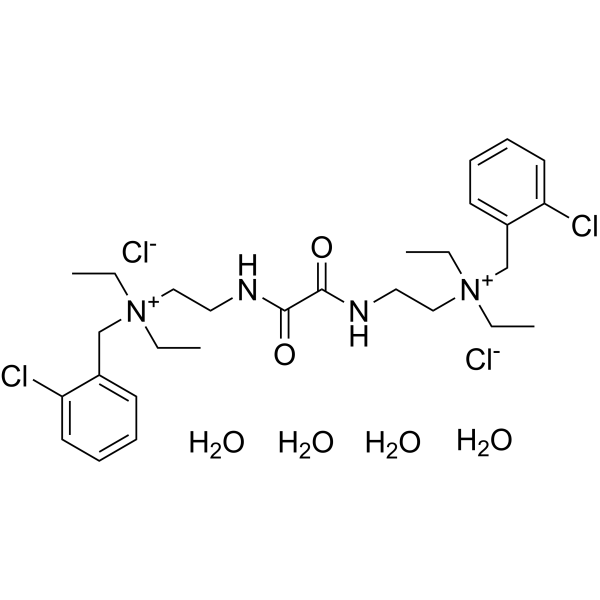 0 ImagesCat. No.: HY-118533ACAS No.: 52022-31-8Synonyms: WIN 8077 dichloride tetrahydrate
-
AChE/Aβ-IN-3
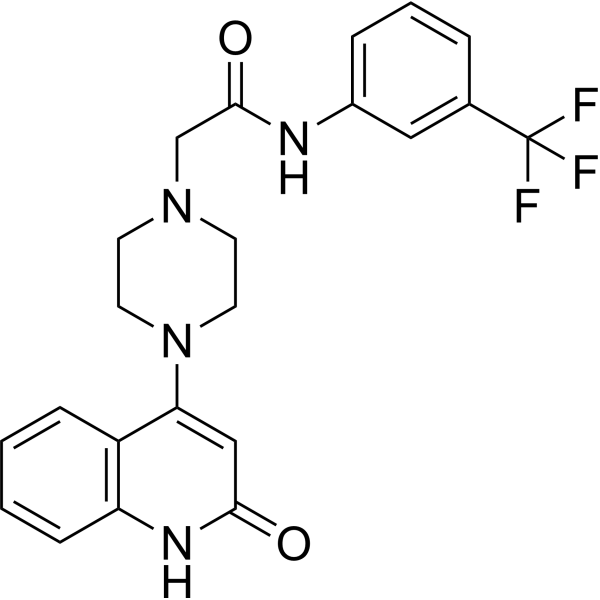 0 ImagesCat. No.: HY-157440AChE/Aβ-IN-3 (compound AM5) is a dual inhibitor of AChE and Amyloid-β aggregation with IC50<.sub> values of 1.29 and 4.93 μM, respectively. AChE/Aβ-IN-3 has antioxidant properties that scavenge ROS and restore their normal levels. AChE/Aβ-IN-3 can be used in the study of neurological diseases, such as Alzheimer's disease.
-
AChE/hCA I/II-IN-1
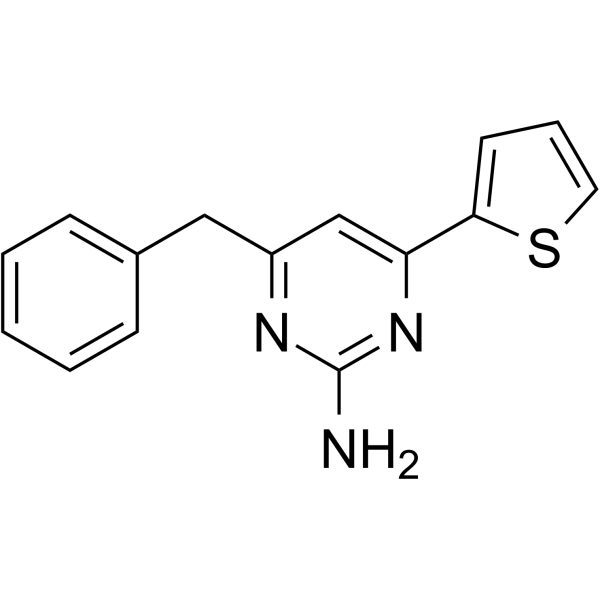 0 ImagesCat. No.: HY-149012CAS No.: 2049681-10-7AChE/hCA I/II-IN-1 (Compound 6) is a potent inhibitor of AChE/Hca with IC50 values of 22.21, 60.79 and 66.64 nM for AChE, Hca Ⅰ and Hca Ⅱ. AChE/hCA I/II-IN-1 can be used for the rsearch for glaucoma, Alzheimer's disease, diabetes.
-
BuChE-IN-7
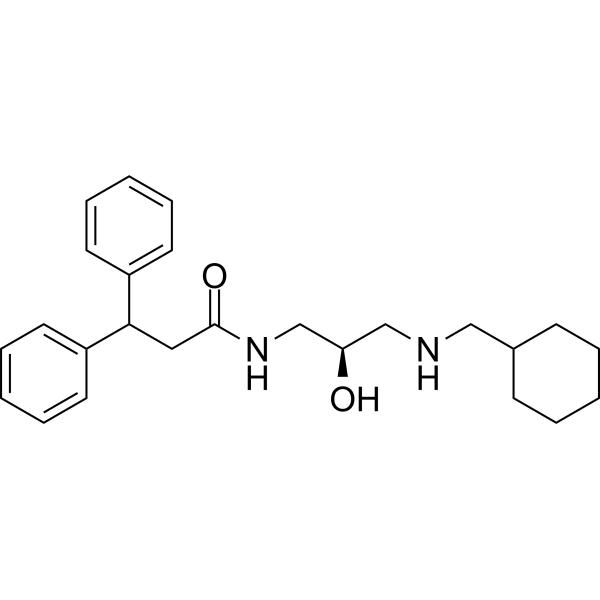 0 ImagesCat. No.: HY-152632CAS No.: 3041971-93-8BuChE-IN-7 is a highly selective inhibitor of hBuChe and eqBuChE with IC50 values of 40 nM, 80 nM respectively. BuChE-IN-7 can promote cognitive with blood-brain penetration and improves situational and phobic memory, showing preference for new things.




