



Cholinesterase (ChE)
Cholinesterase (ChE) is a family of enzymes present in the central nervous system, particularly in nervous tissue, muscle and red cells, which catalyze the hydrolysis of the neurotransmitter acetylcholine into choline and acetic acid, a reaction necessary to allow a cholinergic neuron to return to its resting state after activation. It is one of many important enzymes needed for the proper functioning of the nervous systems of humans.
There are two types: acetylcholinesterase (AChE, acetylcholine hydrolase) and butyrylcholinesterase (BChE, acylcholine acylhydrolase), also known as nonspecific cholinesterase or pseudocholinesterase. AChE is primarily found in the blood on red blood cell membranes, in neuromuscular junctions, and in neural synapses, while BChE is produced in the liver and found primarily in plasma. The difference between the two types of cholinesterase is their relative preferences for substrates: AChE hydrolyzes acetylcholine faster while BChE hydrolyzes butyrylcholine faster.
Cholinesterase (ChE) Isoform Specific Products
All Product Categories
-
Cholinesterase (ChE) Inhibitors
(910)
View all products
-
Cholinesterase (ChE) Agonists
(5)
View all products
-
Cholinesterase (ChE) Antagonists
(10)
View all products
-
Cholinesterase (ChE) Activators
(32)
View all products
-
Cholinesterase (ChE) Modulators
(10)
View all products
-
Cholinesterase (ChE) Chemical
(1)
View all products
-
Cholinesterase (ChE) Inducer
(1)
View all products
-
Cholinesterase (ChE) Controls
(6)
View all products
-
Cholinesterase (ChE) Substrates
(2)
View all products
-
Cholinesterase (ChE) Related Products (1058)
Related Products (1058)

-
Antibodies (2)
-
Cholinesterase (ChE) Isoform Comparison
-
BuChE-IN-23
 0 ImagesCat. No.: HY-183352CAS No.: 3067571-93-8BuChE-IN-23 is an orally active, blood-brain barrier permeable butyrylcholinesterase (eqBuChE) inhibitor with an IC50 of 15.59 μM and a Ki of 29.33 μM. BuChE-IN-23 exhibits an IC50 of 38.65 μM against hBuChE and shows selectivity for butyrylcholinesterase over acetylcholinesterase. BuChE-IN-23 inhibits LPS (HY-D1056)-induced nitric oxide production, attenuates hippocampal glial cell activation and neuroinflammation, suppresses the TLR4/p38 MAPK signaling pathway, and regulates the IL-1β/C3-mediated microglia-astrocyte inflammatory axis. BuChE-IN-23 can be used for the research of Alzheimer's disease.
-
BChE-IN-20
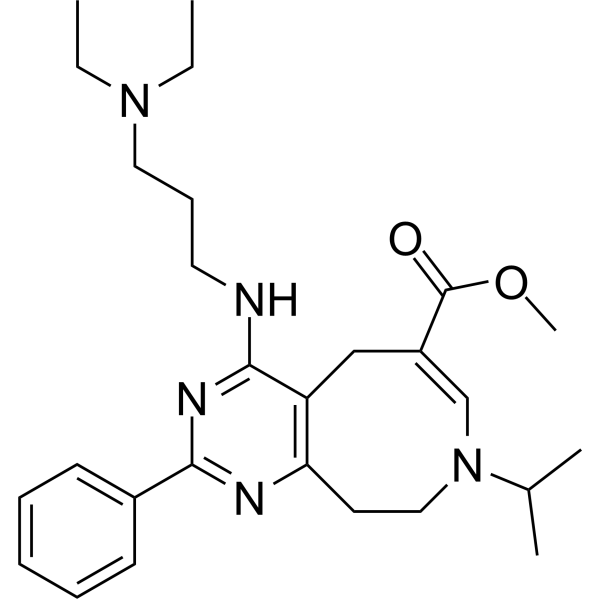 0 ImagesCat. No.: HY-155368CAS No.: 1428439-79-5BChE-IN-20 (compound 7c) is a highly potent BChE-selective inhibitor and exhibits IC50s of 105 and 2.3 nM for eqBChE and hBChE, respectively. BChE-IN-20 inhibits P glycoprotein with IC50 of 0.27 μM. BChE-IN-20 is a promising template to improve design and development of BChE-selective ligands of pharmaceutical interest, including inhibitors and fluorogenic probes.
-
AChE-IN-111
 0 ImagesCat. No.: HY-182332AChE-IN-111 is an acetylcholinesterase inhibitor with a IC50 of 0.37 μM. AChE-IN-111 scavenges various reactive oxygen and nitrogen species. AChE-IN-111 exhibits significant antioxidant potential and iron regulatory protein levels. AChE-IN-111 can be used for the research of Alzheimer's disease.
-
BChE-IN-52
 0 ImagesCat. No.: HY-184704BChE-IN-52 is a selective butyrylcholinesterase (BChE) inhibitor with an IC50 of 0.25 μM against horse serum-derived BChE. BChE-IN-52 exhibits weak antioxidant activity, shows no mutagenicity, and displays photochemical instability under UV irradiation. BChE-IN-52 can be used in the research of Alzheimer's disease.
-
Corydaline (Standard)
 0 ImagesCorydaline (Standard) is the analytical standard of Corydaline. This product is intended for research and analytical applications. Corydaline ((+)-Corydaline), an isoquinoline alkaloid isolated from Corydalis yanhusuo, is an AChE inhibitor with an IC50 of 226 μM. Corydaline is a μ-opioid receptor (Ki of 1.23 μM) agonist and inhibits enterovirus 71 (EV71) replication (IC50 of 25.23 μM). Corydaline has anti-angiogenic, anti-allergic and gastric-emptying and antinociceptive activities.
-
BChE/MAO-A-IN-1
 0 ImagesCat. No.: HY-179126BChE/MAO-A-IN-1 (compound 7j) is a BChE/MAO-A inhibitor. BChE/MAO-A-IN-1 exhibits inhibitory activity against BChE (IC50 = 0.03 nM) and MAO-A (IC50 = 0.32 nM), while also having inhibitory effects on MAO-B. BChE/MAO-A-IN-1 has good anti glycation, antioxidant activity, and low cytotoxicity. BChE/MAO-A-IN-1 can be used in the research of diabetes and Alzheimer's disease.
-
Blestrin D
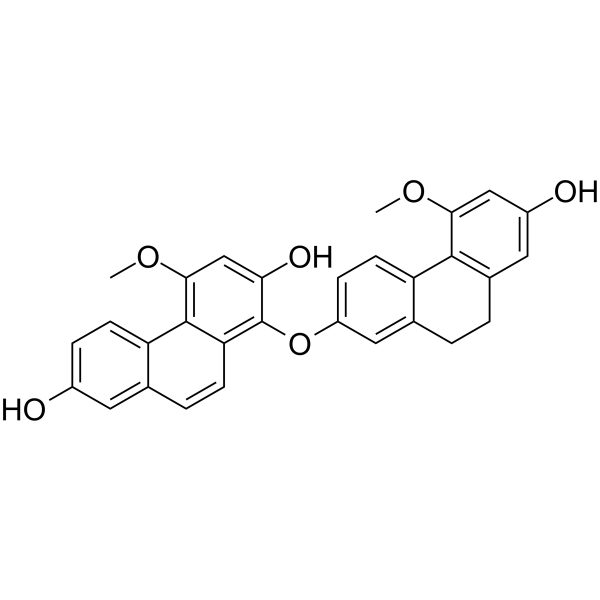 0 ImagesCat. No.: HY-N10490CAS No.: 145701-19-5Blestrin D is a potent butyrylcholinesterase (BChE) mixed-type inhibitor with an IC50 value of 8.1 μM. Blestrin D can be isolated from Bletilla striata. Blestrin D can be used for the research of Alzheimer's disease (AD).
-
Dyclonine
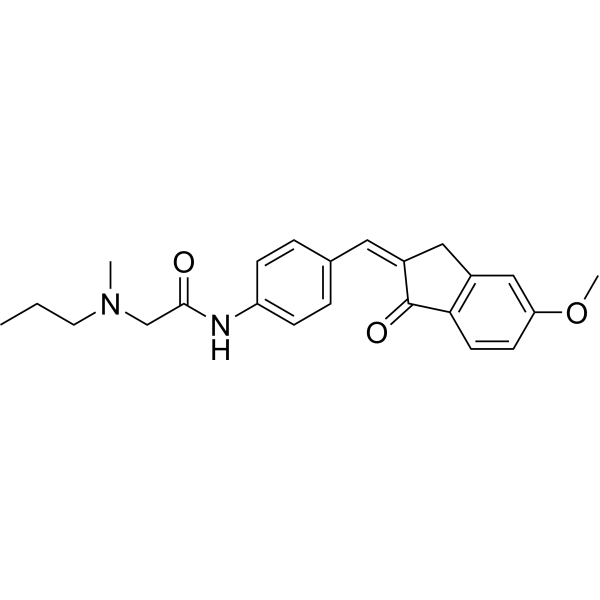
 0 ImagesDyclonine (Dyclocaine) is an orally active, blood-brain barrier-permeable piperidine phenylacetone small molecule commonly used as a local anesthetic. Dyclonine acts as a highly selective allosteric antagonist of TRPV3; it also reversibly inhibits G9a, ALDH2 and ALDH3A1, non-competitively blocks AChE. Dyclonine activates the Nrf2/ARE pathway, relieves the epigenetic silencing of FXN, blocks Aβ42 aggregation, and promotes remyelination and reparative polarization of microglia. Dyclonine alleviates pruritus via TRPV3 inhibition; it is used in studies of neurodegenerative disease models based on its AChE inhibitory, antioxidant and remyelinating effects; it sensitizes drug-resistant tumors through ALDH inhibition, and combined use with protease inhibitors induces more tumor cell apoptosis; it inhibits Candida albicans in vitro. Dyclonine can be used for research on multiple diseases including neurodegenerative diseases, cancer and pruritic dermatitis.
-
ZLWH-23
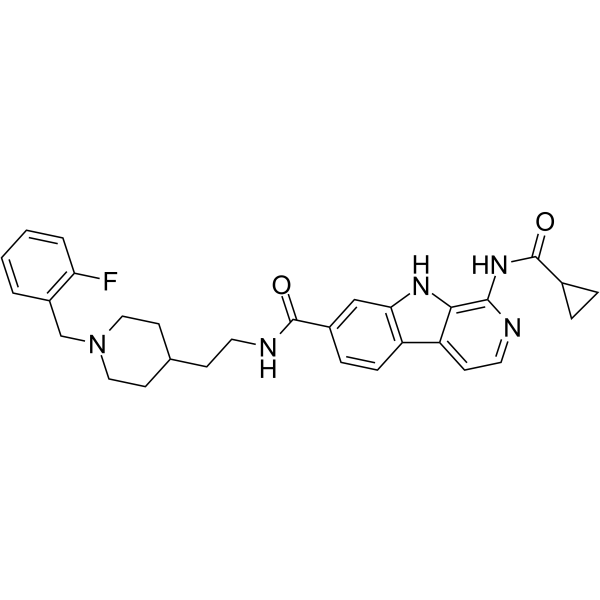 0 ImagesCat. No.: HY-144316CAS No.: 2765251-12-3
-
(+)-(R)-Ribalinine
 0 ImagesCat. No.: HY-N21822CAS No.: 62928-56-7Synonyms: Folifine
-
BChE-IN-24
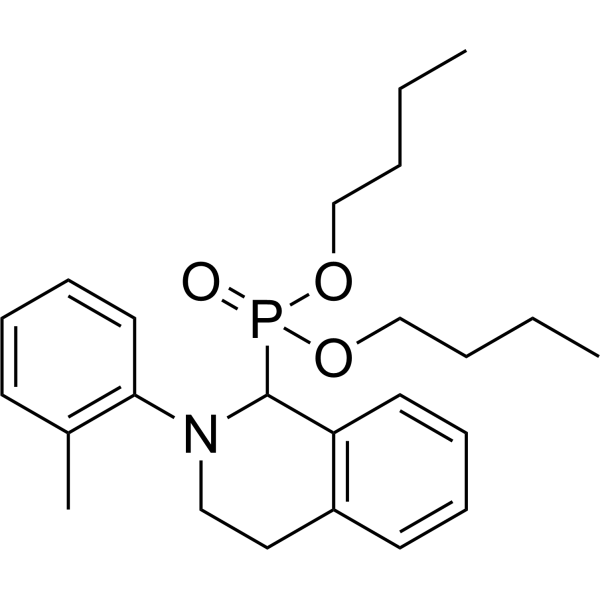 0 ImagesCat. No.: HY-163175CAS No.: 3037216-33-1BChE-IN-24 is a selective and reversible BChE inhibitor with an IC50 of 9 nM. BChE-IN-24 can be used for the research of Alzheimer’s disease and related neurodegenerative disorders.
-
Uridine 5'-monophosphate-15N2 dilithium
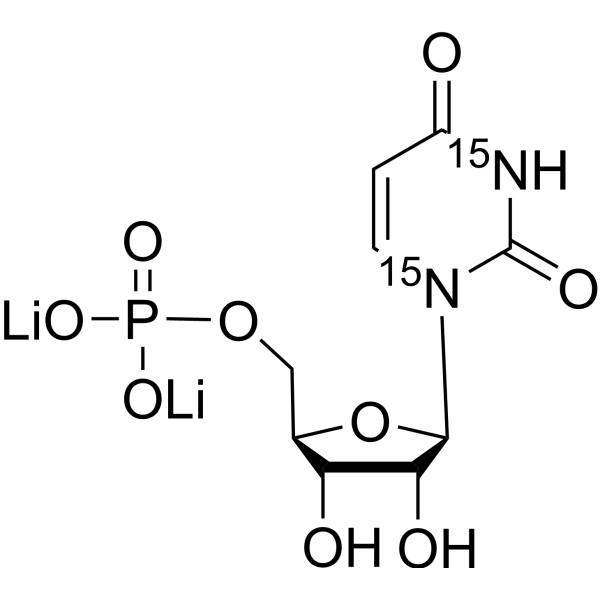 0 ImagesCat. No.: HY-101981S5Purity: 98.00%Synonyms: 5'-Uridylic acid-15N2 dilithiumUridine 5'-monophosphate-15N2 (5'- Uridylic acid-15N2) dilithium is 15N labeled Uridine 5'-monophosphate (HY-101981). Uridine 5'-monophosphate (5'-Uridylic acid) is an orally active mitochondrial ATP-dependent potassium channel activator that has a protective effect on the heart. Uridine 5'-monophosphate can promote the synthesis of CDP-choline and induce apoptosis in intestinal epithelial cells, which is beneficial for gut development and reduces diarrhea.
-
AChE-IN-94
 0 ImagesCat. No.: HY-175758AChE-IN-94 is an orally active and blood-brain barrier penetrable AChE inhibitor with an IC50 of 0.40 μM and Ki of 0.28 μM. AChE-IN-94 prevents self-induced and AChE-mediated Aβ1-42 aggregation. AChE-IN-94 alleviates cognitive/memory deficits in Scopolamine (HY-N0296)-induced amnesic model. AChE-IN-94 can be used for the study of Alzheimer's disease (AD).
-
BChE-IN-46
 0 ImagesCat. No.: HY-179363BChE-IN-46 is a selective and brain-penetrant BChE inhibitor (eqBChE IC50 = 7.44 × 10⁻⁵ μM, SI > 270,000; hBChE, IC50 = 1.48 × 10⁻³ μM). BChE-IN-46 has COX-2 inhibitory activity (IC50 = 0.11 μM). BChE-IN-46 exhibits neuroprotective effects, enhances acetylcholine levels, and alleviates cognitive deficits, anxiety, and learning/memory impairments. BChE-IN-46 can be used for the development of anti-Alzheimer's disease drugs.
-
AChE-IN-22
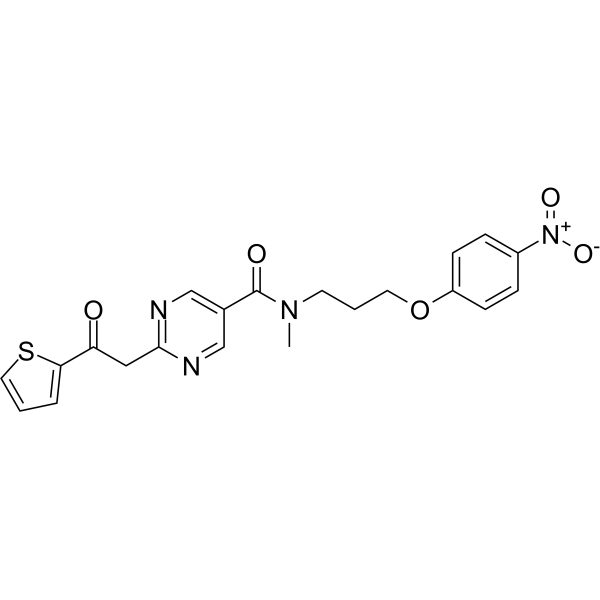 0 ImagesCat. No.: HY-150728CAS No.: 3032264-62-0AChE-IN-22 (compound 10q) is a selective acetylcholinesterase (AChE) inhibitor against AChE and BuChE with the IC50 values of 0.88 μM and 10 μM, respectively. AChE-IN-22 can bind to both the CAS (catalytic active site) and PAS (peripheral anionic site) of AChE and has the potential for the research of Alzheimer's disease.
-
AChE/Aβ-IN-1
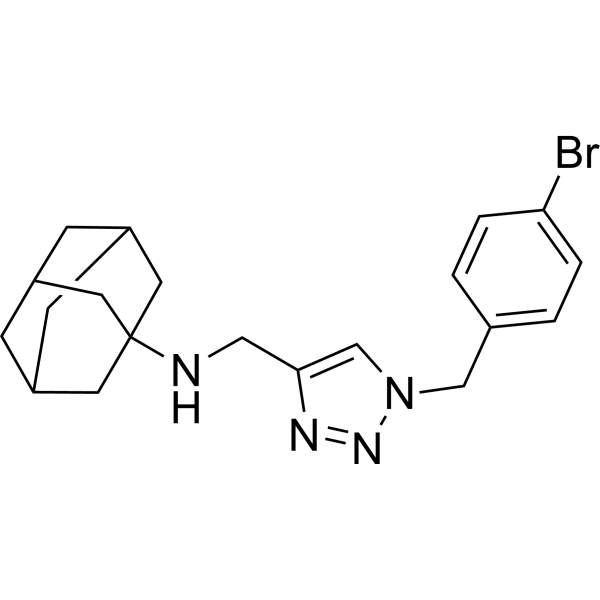 0 ImagesCat. No.: HY-155733AChE/Aβ-IN-1 (compound 32) is a potent and orally active inhibitor of acetylcholinesterase (AChE) with an IC50 of 86 nM, as well as an antagonist of NMDA receptor (GluN1-1b/GluN2B subunit combination) with IC50 of 3.876 μM. AChE/Aβ-IN-1 also inhibits Aβ aggregation and shows good blood-brain barrier permeability and neuroprotection. AChE/Aβ-IN-1 improves cognitive and spatial memory impairment in rats model.
-
BChE/MAO-B-IN-2
 0 ImagesCat. No.: HY-175524BChE/MAO-B-IN-2 is a dual inhibitor of BChE (IC50 = 0.05 μM, Ki = 0.01 μM) and MAO-B (IC50 = 0.45 μM, Ki = 0.08 μM) with good blood-brain barrier permeability. BChE/MAO-B-IN-2 exhibits antioxidant activity, including DPPH radical scavenging, CUPRAC copper ion reduction, and superoxide anion scavenging. BChE/MAO-B-IN-2 can be used for the study of Alzheimer's disease (AD).
-
Leiokinine A
 0 ImagesCat. No.: HY-116574CAS No.: 132587-63-4Leiokinine A is a 4-quinolinone alkaloid and can be isolated from Esenbeckia leiocarpa.
-
eeAChE-IN-2
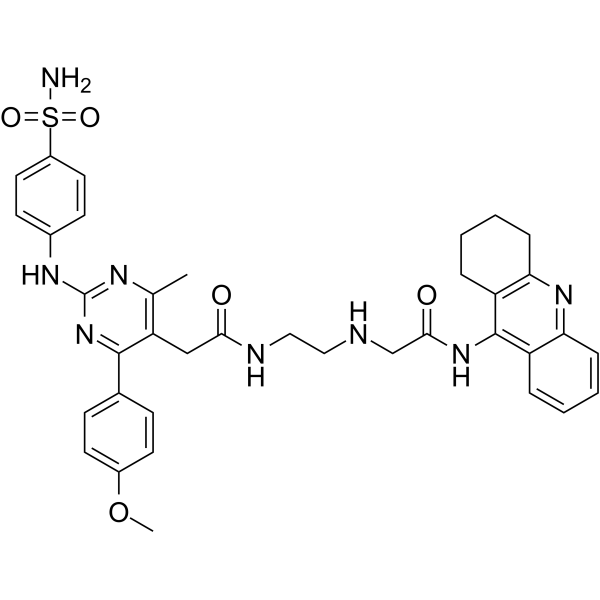 0 ImagesCat. No.: HY-132904CAS No.: 2763366-33-0eeAChE-IN-2 is a potent eeAChE inhibitor with an IC50 value of 2 nM.




