FGFR
Fibroblast growth factor receptor
FGFR (Fibroblast growth factor receptors) are the receptors that bind to members of the fibroblast growth factor family of proteins. Some of these receptors are involved in pathological conditions. A point mutation in FGFR3 can lead to achondroplasia. Five distinct membrane FGFR have been identified in vertebrates and all of them belong to the tyrosine kinase superfamily (FGFR1, FGFR2, FGFR3, FGFR4, FGFR6). The fibroblast growth factor family constitutes one of the most important groups of paracrine factors that act during development. They are responsible for determining certain cells to become mesoderm, for the production of blood vessels, for limb outgrowth, and for the growth and differentiation of numerous cell types.
All Product Categories
-
FGFR Inhibitors
(317)
View all products
-
FGFR Agonists
(4)
View all products
-
FGFR Antagonist
(1)
View all products
-
FGFR Activators
(5)
View all products
-
FGFR Modulators
(3)
View all products
-
FGFR Degraders
(11)
View all products
-
FGFR Control
(1)
View all products
-
FGFR Ligand
(1)
View all products
-
FGFR Proteins
(97)
View all products
-
FGFR-1 Proteins
(20)
View all products
-
FGFR-2 Proteins
(31)
View all products
-
FGFR-3 Proteins
(26)
View all products
-
FGFR-4 Proteins
(18)
View all products
-
FGFR Related Products (383)
Related Products (383)

-
Recombinant Proteins (97)
-
Antibodies (11)
-
ODM-203
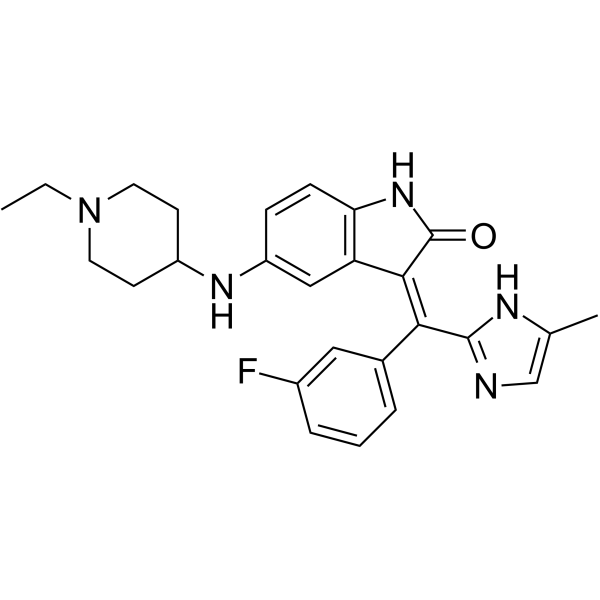
 0 ImagesODM-203 is an orally active and selective FGFR/VEGFR inhibitor with IC50 values of 6, 11, 16, 5, 9, 26 and 35 nM for FGFR3/1/2 and VEGFR3/2/1/4, respectively. ODM-203 has strong anti-tumour activity and activates immune responses in the tumour microenvironment.
-
FGFR2-IN-2
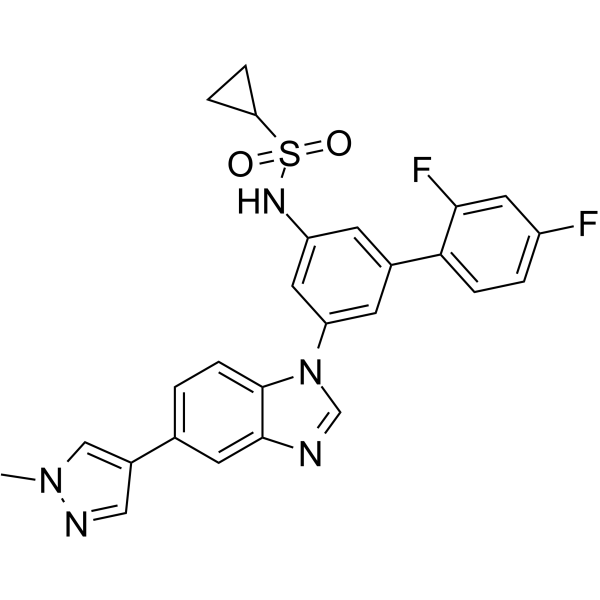
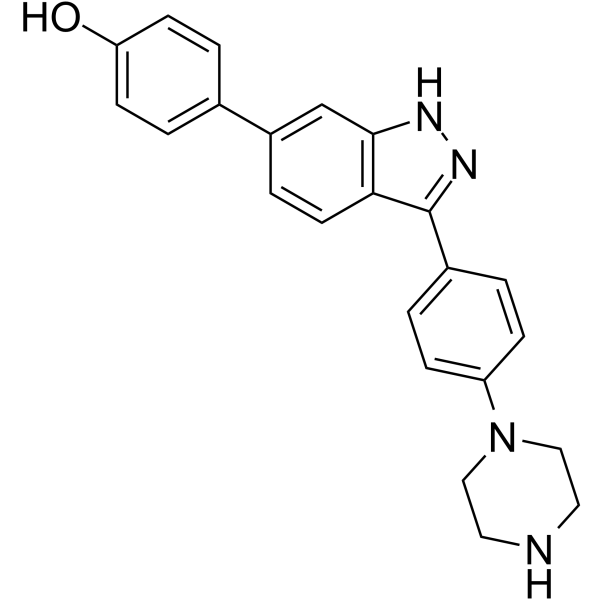 0 ImagesFGFR2-IN-2 (Compound 38) is a selective FGFR2 inhibitor with IC50s of 389, 29, and 758 nM for FGFR1, FGFR2, and FGFR3, respectively.
-
U3-1784
 0 ImagesCat. No.: HY-P990672
-
LC-MB12
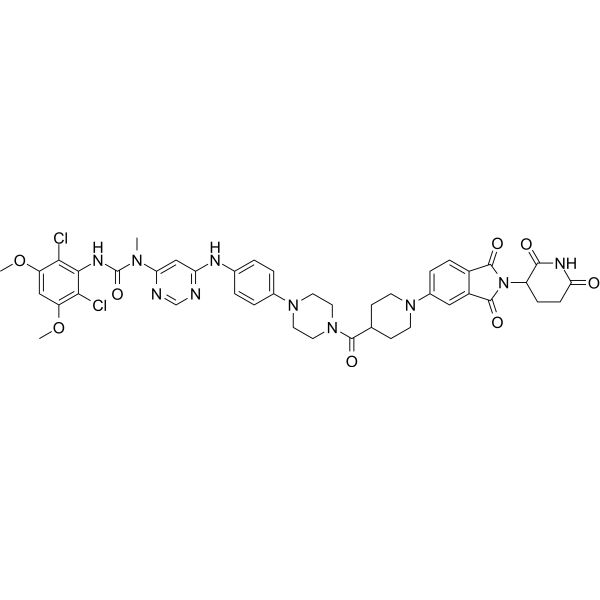 0 ImagesLC-MB12 is an orally active PROTAC compound targets FGFR2 degradation with a DC50 of 11.8 nM. LC-MB12 contains BGJ398 (a FGFR2 inhibitor), PROTAC linker and CRBN.LC-MB12 inhibits FGFR2 signaling in gastric cancer cells and has anti-tumor activity.
-
Resigratinib
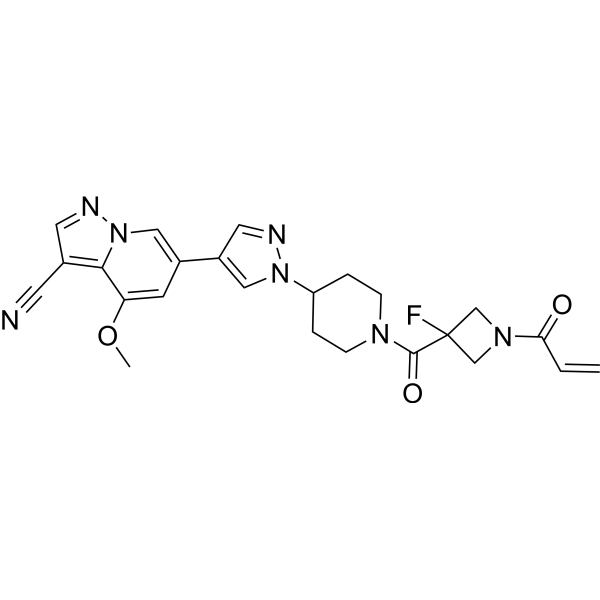
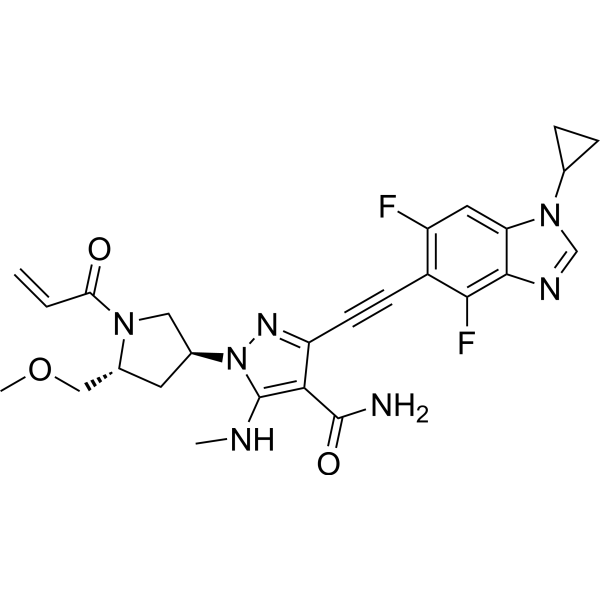 0 ImagesSynonyms: KIN-3248Resigratinib (KIN-3248) is an irreversible and orally active covalent inhibitor of FGFR1-4 that effectively inhibits wild-type and drug-resistant mutations (such as FGFR2 V565F, FGFR3 V555M). Resigratinib covalently binds to the Cys492 site of FGFR, blocks the FGFR signaling pathway, inhibits tumor cell proliferation and induces apoptosis. Resigratinib can be used for the study of FGFR2/3-driven solid tumors (such as cholangiocarcinoma and bladder cancer).
-
Gunagratinib
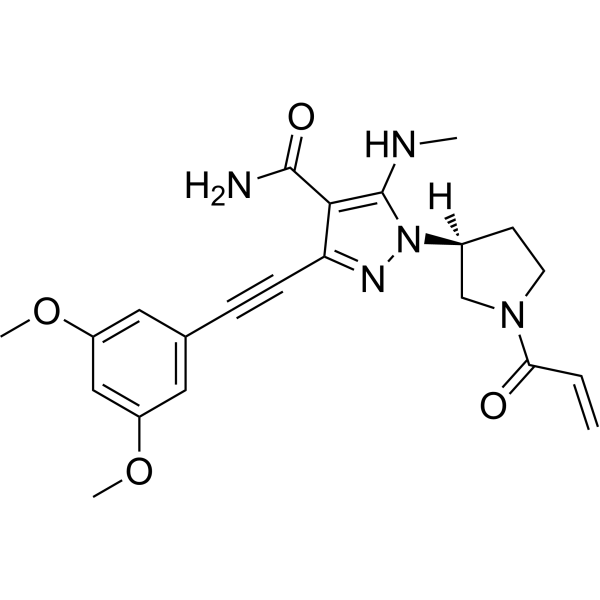 0 ImagesSynonyms: ICP-192Gunagratinib (ICP-192) is a low toxicity and orally active pan-FGFR (fibroblast growth factor receptors) inhibitor that potently and selectively inhibits FGFR activities irreversibly by covalent binding. Gunagratinib can be used for the research of cancer. Gunagratinib is a click chemistry reagent, it contains an Alkyne group and can undergo copper-catalyzed azide-alkyne cycloaddition (CuAAc) with molecules containing Azide groups.
-
Aprutumab
 0 ImagesSynonyms: BAY 1179470Aprutumab (BAY 1179470) is a fully human fibroblast growth factor receptor 2 (FGFR2)-specific monoclonal antibody. Aprutumab induces FGFR2 endocytosis and degradation in cancer cells expressing FGFR2. Aprutumab serves as the targeted monoclonal antibody component of the antibody-drug conjugate BAY 1187982 (HY-141600) and mediates the endocytosis of the antibody-drug conjugate into FGFR2-positive cells. Aprutumab can be used for the research of FGFR2-positive solid tumors, including studies on gastric cancer and triple-negative breast cancer.
-
MAX-40279
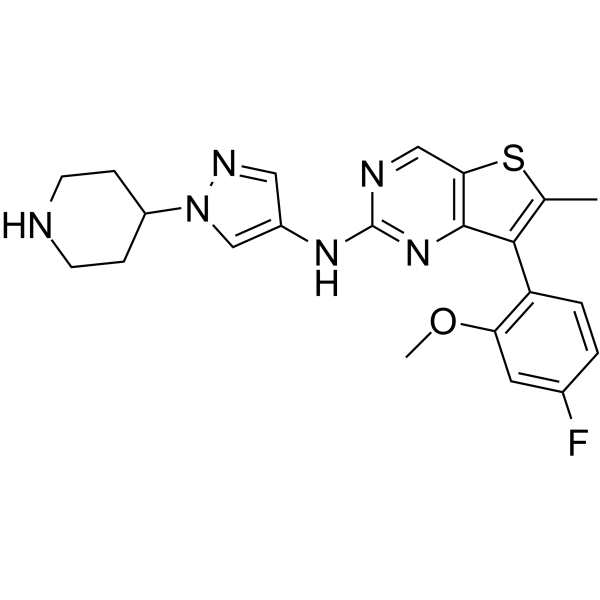 0 ImagesCat. No.: HY-145723CAS No.: 2070931-57-4MAX-40279 is a dual and orally active inhibitor of FLT3 kinase and FGFR kinase. MAX-40279 is also effective against the FLT3 mutants such as FLT3D835Y, suggesting that it can overcome resistance to Quizartinib (HY-13001) and Sorafenib (HY-10201). MAX-40279 inhibits NDRG1 phosphorylation at Ser330 and suppresses endothelial-to-mesenchymal transition (EndMT). MAX-40279 can be used for the research of acute myelogenous leukemia (AML).
-
VSPPLTLGQLLS
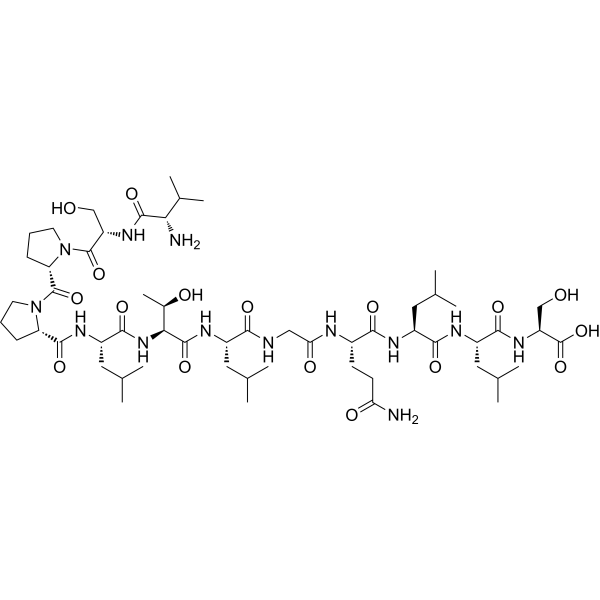 0 ImagesVSPPLTLGQLLS is a small peptide FGFR3 inhibitor, peptide P3, inhibits FGFR3 phosphorylation. VSPPLTLGQLLS inhibits 9-cisRA-induced tracheal lymphangiogenesis and blocks lymphatic endothelial cell (LEC) proliferation, migration, and tubule formation.
-
PRX-08066
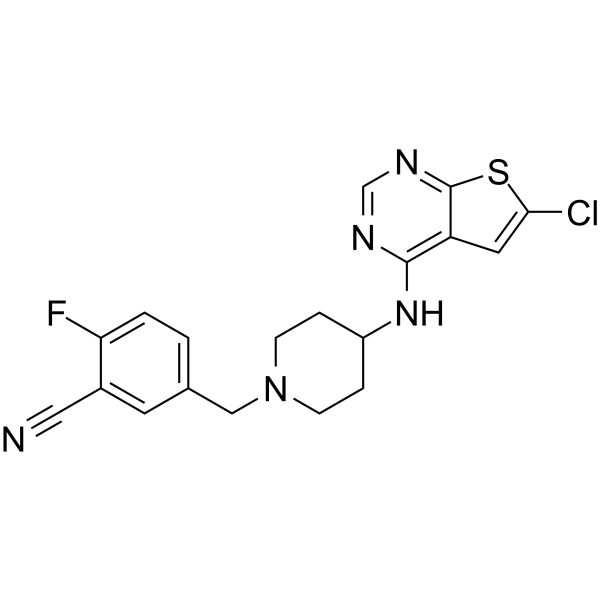 0 ImagesCat. No.: HY-15472CAS No.: 866206-54-4PRX-08066 is a selective and orally active 5-hydroxytryptamine receptor 2B (5-HT2BR) antagonist with a Ki of 3.4 nM. PRX-08066 inhibits the MAPK pathway, 5-HT release and fibrotic factor (TGFβ1, CTGF and FGF2) expression. PRX-08066 inhibits the proliferation of KRJ-I cells and induces apoptosis (caspase-3 activation). PRX-08066 inhibits pulmonary vascular remodeling. PRX-08066 can be used of pulmonary Arterial Hypertension (PAH) and neuroendocrine tumor (NET).
-
FGFR1/DDR2 inhibitor 1
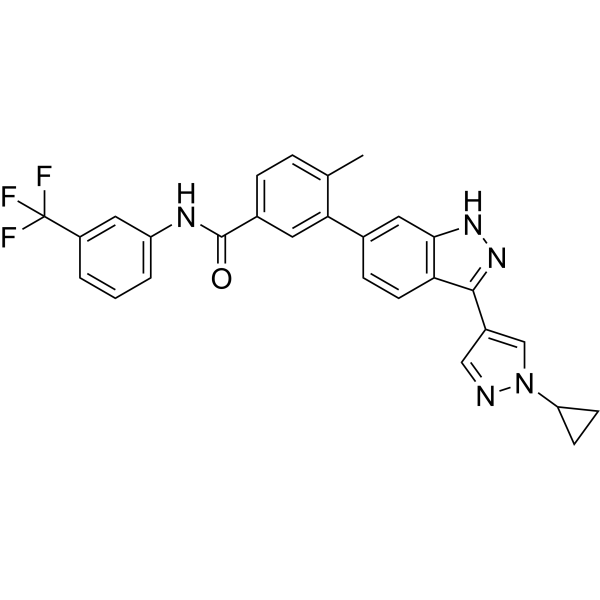 0 ImagesFGFR1/DDR2 inhibitor 1 is an orally active inhibitor of fibroblast growth factor receptor 1 (FGFR1) and discoindin domain receptor 2 (DDR2), with IC50 values of 31.1 nM and 3.2 nM, respectively. Antitumor activity.
-
TG 100801
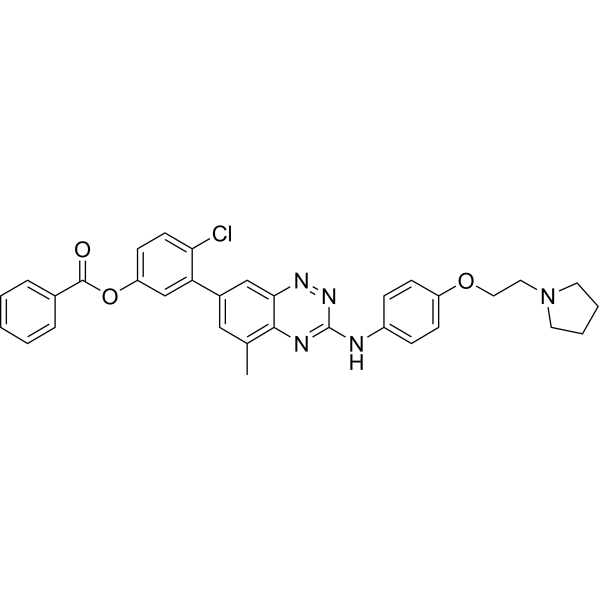 0 ImagesTG 100801 is a proagent that generates TG 100572 by de-esterification in development to treat age-related macular degeneration. TG 100572 is a multi-targeted kinase inhibitor which inhibits receptor tyrosine kinases and Src kinases; has IC50s of 2, 7, 2, 16, 13, 5, 0.5, 6, 0.1, 0.4, 1, 0.2 nM for VEGFR1, VEGFR2, FGFR1, FGFR2, PDGFRβ, Fgr, Fyn, Hck, Lck, Lyn, Src, Yes, respectively.
-
FGFR1 inhibitor-10
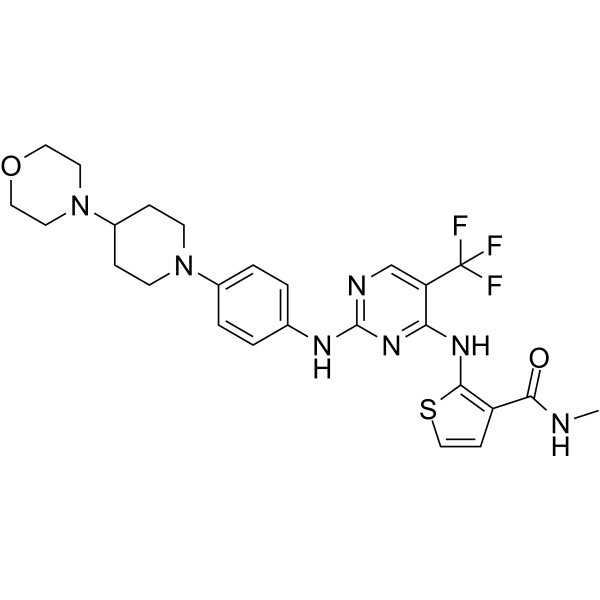 0 ImagesFGFR1 inhibitor-10 (Compound 4i) is an FGFR1 inhibitor (IC50: 28 nM). FGFR1 inhibitor-10 inhibits the phosphorylation of FGFR1. FGFR1 inhibitor-10 has anti-angiogenic, anti-invasion activity, and anti-tumor effect.
-
TCB-32 hydrochloride
 0 ImagesCat. No.: HY-176862ACAS No.: 169764-95-8TCB-32 (Compound I-1) hydrochloride is a FGFR1 agonist with an EC50 of 0.88 μM. TCB-32 hydrochloride significantly increases cell proliferation through activating FGFR1 signaling pathway as bFGF and its downstream ERK1/2 with excellent thermal stability. TCB-32 hydrochloride can replace bFGF in serum-free cell culture media. TCB-32 hydrochloride can be used for tissue repair and wound healing related diseases like psoriasis and eczema research.
-
Lirafugratinib hydrochloride
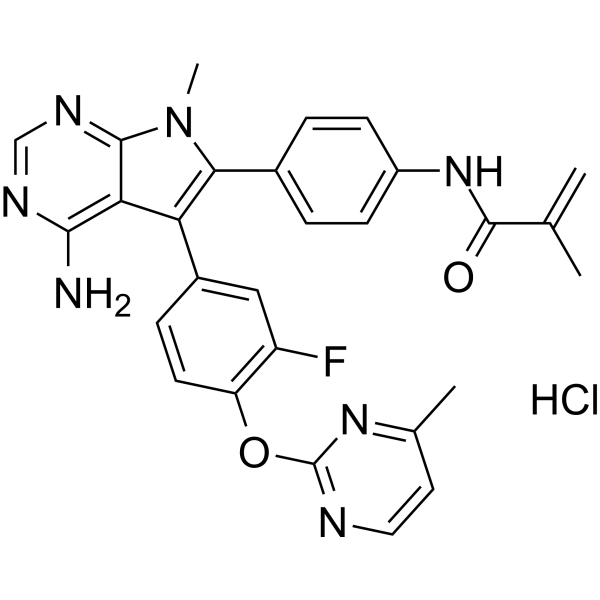 0 ImagesSynonyms: RLY-4008 hydrochlorideLirafugratinib (RLY-4008) hydrochloride is an orally active, irreversible and highly selective FGFR2 inhibitor with an IC50 of 3 nM. Lirafugratinib hydrochloride covalently binds to Cys491. Lirafugratinib hydrochloride targets FGFR2 primary alterations and resistance mutations and induces tumor regression while sparing other FGFRs.
-
SU4984
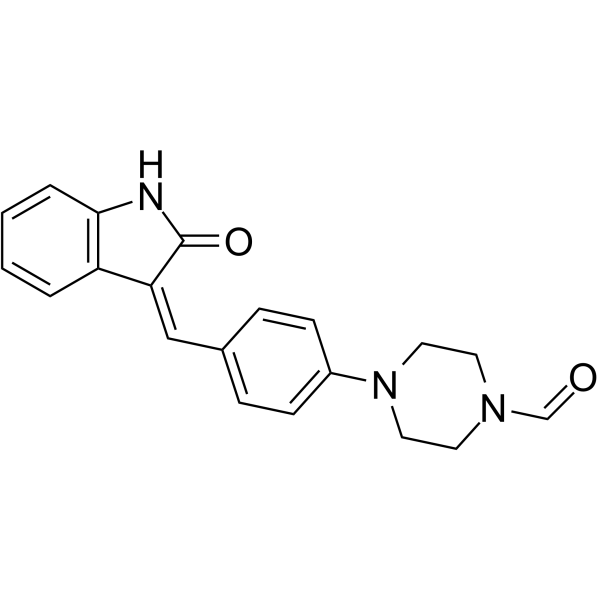 0 ImagesSU4984 is a protein tyrosine kinase inhibitor, with an IC50 of 10-20 μM for fibroblast growth factor receptor 1 (FGFR1). SU4984 is also inhibits platelet-derived growth factor receptor, and insulin receptor. SU4984 can be used for the research of cancer.