



Fluorescent Dye
Fluorescence is a phenomenon of photoluminescence in luminescence. When an atom is irradiated by light, some electrons around the nucleus jump from their original orbitals to higher energy orbitals under the influence of light energy, i.e., from the ground state to the first or second excited single-line state, etc. Due to the instability of the first or second excited singlet state, the electron returns from the excited singlet state to the ground state accompanied by released energy, resulting in fluorescence.
Fluorescent dyes can be covalently bound or physically adsorbed in the structure of the substance. The fluorescence properties allow for the characterization, localization and quantitative analysis of the labeled object. Fluorescent dyes have shown great potential for the detection of proteins, nucleic acids, cells, and immunoassays, attributed to the advantages in non-radioactive contamination, simple experimental operation and easy observation.
Fluorescent dyes have penetrated many fields such as pharmacology, physiology, environmental science, and information science, as well as functional studies of proteins and drug screening.
All Product Categories
-
Fluorescent Dye Related Products (4888)
Related Products (4888)

-
Antibodies (4)
-
Dusquench2 NHS ester
 0 ImagesCat. No.: HY-D3350Dusquench2 NHS ester is a non-fluorescent quencher containing an amine-reactive group, which can be used to label amine-modified oligonucleotides, amine-containing proteins and other molecules. The maximum absorption wavelength of Dusquench2 NHS ester is 552 nm. Dusquench2 NHS ester can serve as an acceptor in fluorescence resonance energy transfer (RET) and nucleic acid detection applications.
-
Pyrromethene 605
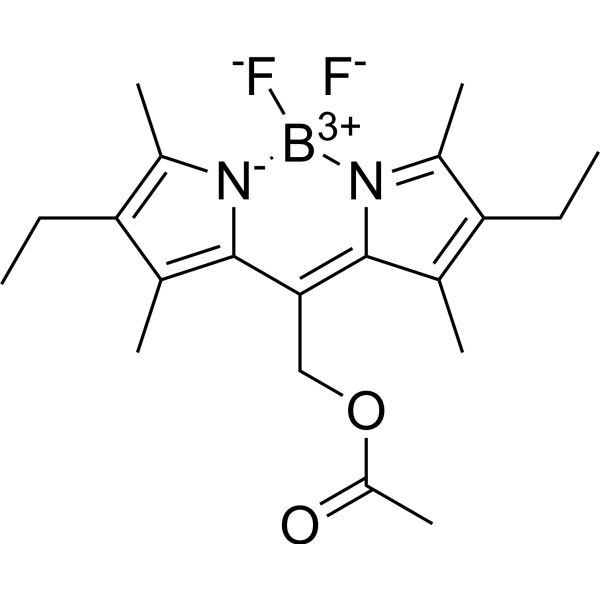 0 ImagesCat. No.: HY-D1777CAS No.: 137829-80-2Synonyms: PM605Pyrromethene 605 (PM605) is a green-fluorescent polar tracer dye. It is used for investigations of membrane fusion, lysis, and gap-junctional communication and to detect volume changes in cells or liposomes.
-
Cy3 labled ISIS 14803 sodium
 0 ImagesCat. No.: HY-153837ECy3 labled ISIS 14803 sodium is a Cy3 labled ISIS 14803 sodium.
-
RB-PEG600-N3
 0 ImagesCat. No.: HY-D2886ASynonyms: Rhodamine B-PEG600-N3RB-PEG600-N3 (Rhodamine B-PEG600-N3) is a fluorescent dye composed of Rhodamine B (HY-Y0016), PEG and azide group (N3). RB-PEG600-N3 is a click chemistry reagent, it contains an Azide group and can undergo copper-catalyzed azide-alkyne cycloaddition reaction (CuAAc) with molecules containing Alkyne groups. It can also undergo strain-promoted alkyne-azide cycloaddition (SPAAC) reactions with molecules containing DBCO or BCN groups (Ex/Em=546/610 nm).
-
DAF-2T
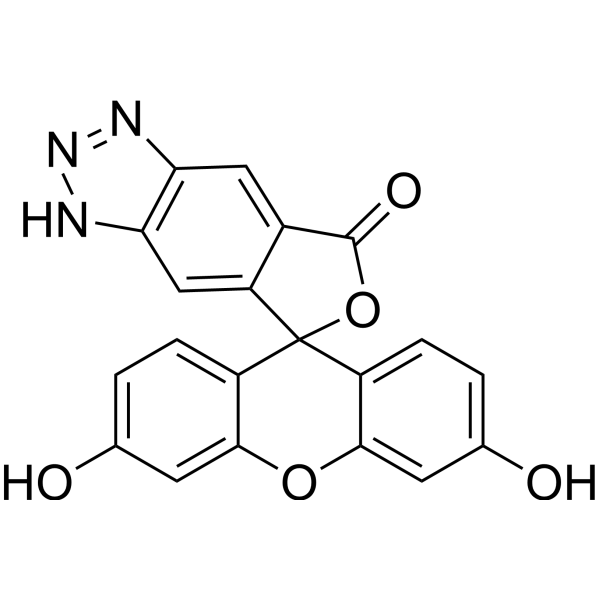 0 ImagesCat. No.: HY-D0070CAS No.: 208850-35-5Synonyms: Diaminofluorescein 2TDAF-2T (Diaminofluorescein 2T) is a multifunctional dye. Dyes are important tools in biological experiments. They can help researchers observe and analyze cell structures, track biomolecules, evaluate cell functions, distinguish cell types, detect biomolecules, study tissue pathology and monitor microorganisms. Their applications range from basic scientific research to clinical A wide range of diagnostics. Dyes are also widely used in traditional fields such as textile dyeing, as well as in emerging fields such as functional textile processing, food pigments and dye-sensitized solar cells.
-
Di-4-AN(F)EPPTEA
 0 ImagesCat. No.: HY-D3146CAS No.: 1418017-91-0Di-4-AN (F) EPPTEA is a voltage-sensitive dye used for membrane potential imaging and optical recording of electrical activity in excitable cells and tissues. Its detection mechanism is based on electrochromism (also known as the molecular Stark effect). The single-photon excitation/emission wavelengths measured in ethanol solution are Ex/Em = 444/610 nm, and it can be excited via 1064 nm two-photon excitation in optical recording applications. Di-4-AN (F) EPPTEA can be used to record backpropagating action potentials in individual dendritic spines of brain cortical slices, map subcellular action potential characteristics of single cardiomyocytes, and perform real-time recording of multicellular action potentials in cerebellar slices.
-
AF647 Cadaverine
 0 ImagesCat. No.: HY-D3567AF647 Cadaverine is a far-red fluorescent polarity tracer. AF647 Cadaverine possesses a primary amine group that enables covalent labeling of carboxylic acids via carbodiimide activation or covalent labeling of glutamine residues through transamidation, rendering it applicable for bioconjugation, cell imaging, and blood-brain barrier permeability assays (Ex/Em = 651/670 nm).
-
Di-sulfo squarefluor 640/660 free acid
 0 ImagesCat. No.: HY-N16315CAS No.: 263889-50-5Di-sulfo squarefluor 640/660 free acid is a fluorescent lipid that can be used to visualize cell membranes (Ex/Em = 640/660 nm).
-
PE-Cy7
 0 ImagesCat. No.: HY-D3276PE-Cy7 is a tandem dye conjugate based on fluorescence resonance energy transfer (FRET). Composed of phycoerythrin (PE) as the donor and Cy7 as the acceptor fluorescent dye, PE-Cy7 is suitable for multicolor flow cytometry, laser scanning cytometry and immunofluorescence applications. PE-Cy7 can be conjugated to antibodies or used in the biotin-streptavidin system to label cell surface antigens in immunophenotyping and multiparametric cell analysis. PE-Cy7 undergoes photon-induced oxidative degradation, whose rate depends on light intensity and storage conditions, leading to reduced FRET efficiency and increased PE leakage. PE-Cy7 can be excited at wavelengths of 488 nm, 532 nm or ~760 nm, and its emission signal can be detected using 780/60 nm, 810/90 nm or 785/50 nm bandpass filters, with a Stokes shift of 300 nm.
-
AOI 987
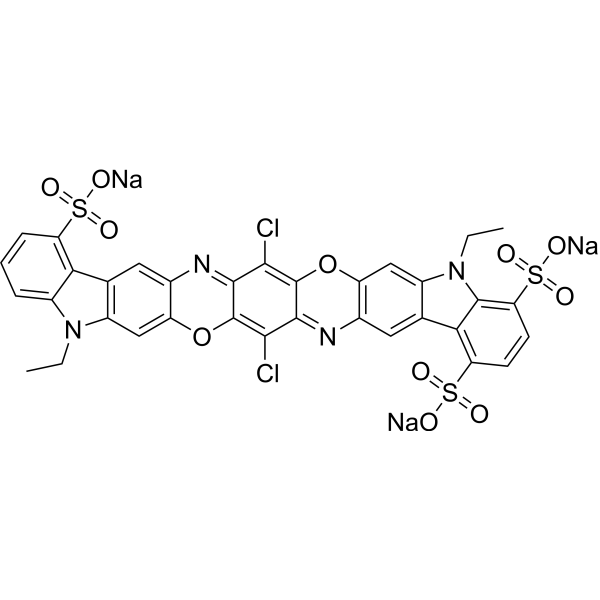
 0 ImagesCat. No.: HY-W738478CAS No.: 846022-21-7AOI 987 is an oxazine dye and fluorescent molecule. AOI 987 can bind to biological macromolecules.
-
FAM-dT phosphoramidite
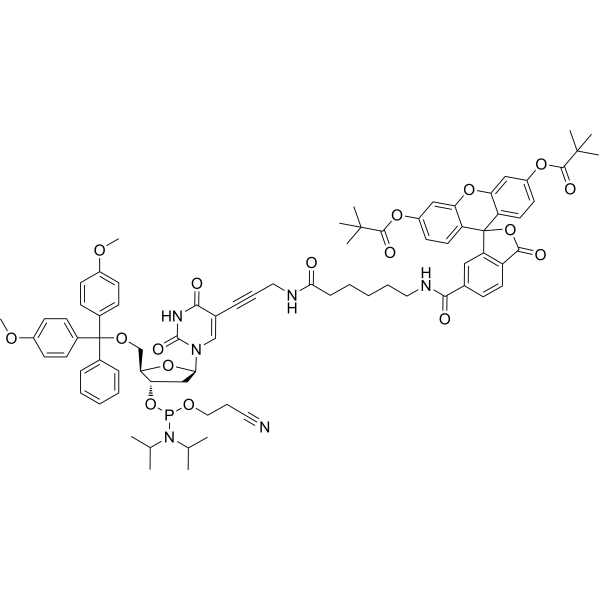 0 ImagesCat. No.: HY-D1901CAS No.: 637330-26-8FAM-dT phosphoramidite (Compound 21) is a fully protected labelled nucleoside phosphoramidite that can be incorporated into oligonucleotides.
-
CAQ
 0 ImagesCat. No.: HY-D2962CAQ is a near-infrared fluorescent probe based on a curcumin scaffold (Ex/Em = 565/635). CAQ exhibits high affinity for Aβ1-42 aggregates (Kd = 78.89 nM) and excellent selectivity toward common biomolecules. CAQ’s emission wavelength shows significant solvent dependence. CAQ, by incorporating intramolecular rotation donors and quinoline functional groups, can be used for the specific detection and imaging of Aβ aggregates in Alzheimer's disease.
-
PE-VF594
 0 ImagesCat. No.: HY-D3277PE-VF594 is a high-brightness fluorescent dye used in flow cytometry, primarily for labeling antibodies or streptavidin to help identify specific cell subpopulations. PE-VF594 is a tandem dye composed of two covalently linked fluorescent groups: one is phycoerythrin (PE), responsible for absorbing laser energy; the other is the receptor molecule VF594. Energy is transferred from PE to VF594 via fluorescence resonance energy transfer (FRET) mechanism (Ex/Em = 450-500 nm/614 nm) .

-
AF 555 carboxylic acid
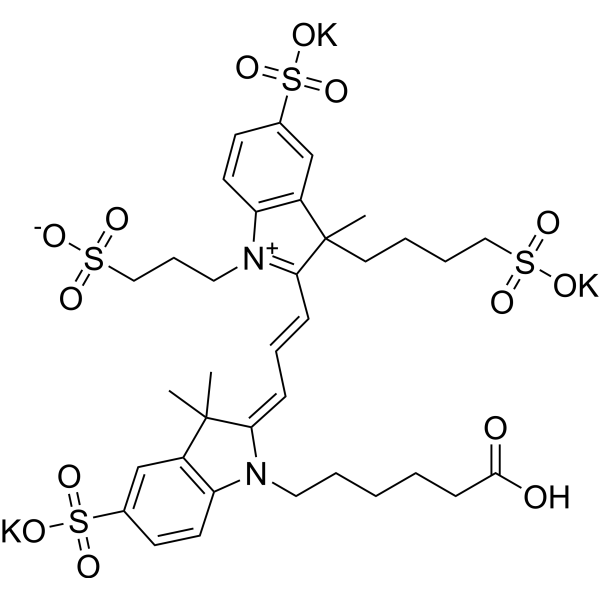 0 ImagesCat. No.: HY-D2176AF 555 carboxylic acid is a derivative of the orange fluorescent dye AF 555. AF 555 carboxylic acid is widely used in cell dyes, biological dyes, biomolecules and particle fluorescent labeling. AF 555 exhibits average excitation wavelengths under green laser and red laser of 510 nm and 610 nm, respectively.

-
Cy3 labled GNKG168 sodium
 0 ImagesCat. No.: HY-177635DCy3 labled GNKG168 sodium is a Cy3 labled GNKG168 sodium.
-
ATTO 465
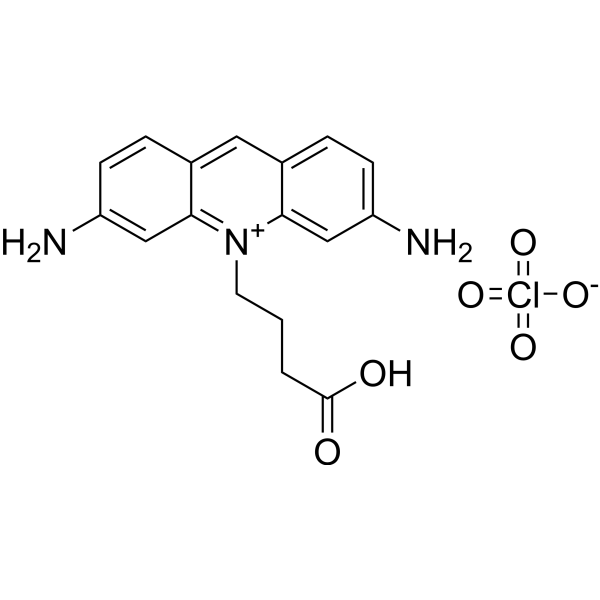 0 ImagesCat. No.: HY-D1934CAS No.: 1173022-07-5ATTO 465 is a new fluorescent dye with good photostability and maximum excitation/emission wavelength: 453/506 nm.
-
Hoechst 33342 analog trihydrochloride
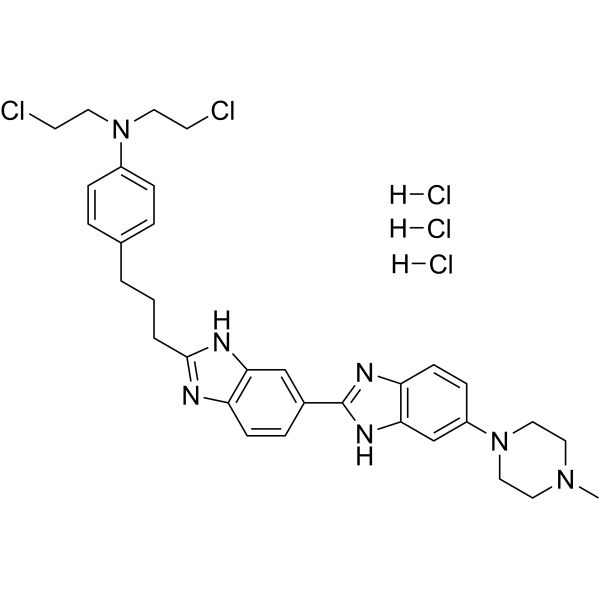 0 ImagesCat. No.: HY-15627ACAS No.: 159277-19-7Hoechst 33342 analog trihydrochloride is a marker dye in Hoechst series. Hoechst is A live nuclear marker dye. Hoechst binds to the grooves in the DNA double strand, which tends to be A/ T-rich DNA strand. Although it binds to all nucleic acids, the A/ T-rich double strand DNA significantly enhances fluorescence intensity Therefore,Hoechst dye can be used for living cell labeling. The fluorescence intensity of Hoechst dye increases with the increase of pH of solution. Storage: Keep away from light.




